THE ANARCHIST INTERNATIONAL
www.anarchy.no
INTERNATIONAL INSTITUTE FOR ORGANIZATION RESEARCH
http://www.anarchy.no/iifor.html - IIFOR P.B. 4777 Sofienberg N- 0506 Oslo - Norway
LIBERAL SOCIAL DEMOCRACY DEBATE =
REAL DEMOCRACY DEBATE =
ANARCHY DEBATE
Send a post to this debate - Click here!
THE FIGHT AGAINST THE CLIMATE CRISIS – THE GREEN GLOBAL SPRING (GGS) – CONTINUES AT FULL SPEED, SEE: http://www.anarchy.no/green.html & http://www.anarchy.no/ggs1.html.
The Norwegian Anarkidebatt, see (Click on): https://www.anarchy.no/andebatt.html.
INTRODUCTION
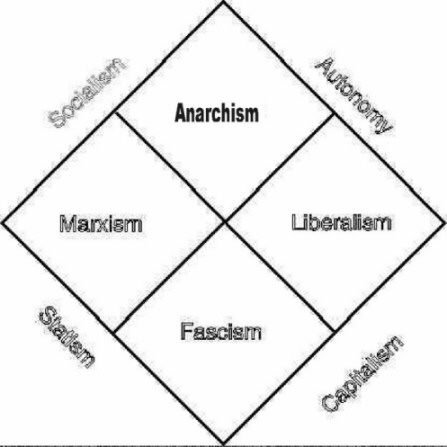
This debate is a moderated debate forum, open for all kinds of anarchists, i.e. real democrats and liberal social democrats, not only networkmembers/subscribers of the Anarchist International. Anarchism = socialism + autonomy = libertarian, see System theory and Economic-political map. Anarchism and anarchy are also Real Democracy, i.e. including Green. The main purpose of this debate is to develop anarchism, as opposed to marxism, liberalism and fascism. The debate is open to individualist anarchists, collectivist anarchists, commune/communist anarchists and social-individualist anarchists (included mutualists) and for different aspects such as anarchosyndicalists, anarchafeminists and eco/green anarchists. All real democrats, i.e. liberal social democrats = anarchists, have however a significant green tendency, not only the proclaimed eco-anarchists. And all real democrats, i.e. de facto anarchists, are welcome to this debate, also they who don't use the label "anarchist" about themselves, mainly social-individualist anarchists - e.g. several supporters of the 3. alternative real democracy (see, click on: Ragnar Frisch).
Platformists (collectivists) to the left (marxists) and "anarcho"-capitalists (individualists) to the right (liberalists) on the economical political map, are not really anarchists = real democrats, and have in general, i.e. unless special cases, no place in this debate. "Anarcho"-capitalism, is "anarcho"-(economical) plutarchy = anarchy-plutarchy, an oxymoron, in practice significant economical hierarchy, and thus not anarchist. Platformism with majority rule combined with a central committee, means in practice significant political/administrative hierarchy, and is too leftist, marxistoid to be anarchist. Also non-anarchists and other people and organizations are however welcome to participate, in special cases, i.e. if the contribution sheds light on anarchism = real democracy, etc. Feel free to use a nick-name, or your real name. The editor-group may shorten posts to the debate. Anarchism i.e. real democracy, is, a. o. t., based on dialog and free, matter of fact, criticism. Feel free to send us a comment/contribution.
The Anarchist International AI/IFA's main policy, a bit simplified, is in general to increase the libertarian degree, i.e. the degree of democracy, of countries and their economic-political systems, as much as much as possible, in the world in a dynamic perspective. As anarchy & anarchism are real democracy, i.e. including green, this also mainly means participation in The Green Global Spring Revolution. Sometimes this implies a struggle to prevent a decline in the libertarian = democracy degree as much as possible, namely when other factors pull in the negative direction. AI/IFA puts some extra weight at a) the 3 anarchies of today, i.e. Norway, The Swiss Confederation and Iceland, and policy towards higher anarchy = libertarian = democracy degree in these countries, as they are only anarchies of rather low degree, b) to get more countries to be anarchies, e.g. of them relatively near anarchy today, c) and to improve the situations and hike the libertarian degrees in the most authoritarian - least libertarian & democratic countries. The green element of real democracy, i.e. anarchism & anarchy, is more and more important, especially solutions to the increasing problem of manmade global warming, and this is reflected in the work and actions of anarchists i.e. real democrats, world wide...
In all cases AI/IFA concentrates on situations with significant momentum, e.g. popular revolt and more or less revolutions, in libertarian, i.e. including green - direction, and with a Bottom - Up approach. The general aim is Real (i.e. including Green) Democracy = Anarchy & Anarchism - and more of it = higher degree of democracy = libertarian = anarchist degree. NB! The Degree of Anarchy/Anarchism is only defined within the Quadrant of Anarchism (= Real Democracy) of the economical political map, and similar in the reality. As mentioned Anarchy and Anarchism are Real (i.e. including Green) Democracy, documented at Real democracy defined, this also including human rights, see Anarchism and human rights. A purpose of this debate is to contribute to this aim and policy, discuss strategy and tactics, etc.! We are not imposing any system. The people, among them anarchists, make and develop their own real democracies = anarchisms (systems) in general voluntarely, with a Bottom - Up approach. An opposite of system in this context is ochlarchy, i.e. mob rule broadly defined including chaos, that is not anarchist. Freedom is a basic anarchist principle. We are for freedom, a Bottom - Up approach in general, including the Green!
THE LIBERAL SOCIAL DEMOCRACY DEBATE = REAL DEMOCRACY DEBATE = ANARCHY DEBATE, IS FREQUENTLY UPDATED! CONTRIBUTIONS FROM NOAM CHOMSKY, JENS HERMUNDSTAD ØSTMOE, ANNA QUIST, IIFOR AND MANY MORE!!! READ AND BE WISE & SMART!!!!!!
The Peoples' Journal
www.anarchy.no
Thousands of anarchists world wide have contributed to the www.anarchy.no.
The www.anarchy.no is independent and autonomous, financed by anarchists and not by capitalist commercials or state-subsidies.
The www.anarchy.no has for the time being about 15 000 visitors and 50 000 hits per month.
The www.anarchy.no has been on Internet since July 1996.
The Anarchist International AI/IFA consists of groups and individuals, all in all more than 50 thousand anarchists world wide.
NB! Anarchism is the progressive middle in politics, not far left or right, see Economic-Political Map on anarchy.no, i.e. https://www.anarchy.no/a_e_p_m.html. This model does not define the left by its rejection of hierarchy and the right by its acceptance, the map is two-dimensional. With Marxism to the left and liberalism to the right. And fascism downwards on the map, and anarchism as the progressive middle, and upwards. According to the political model presented on anarchy.no, anarchism occupies a unique position as the "progressive middle" on a two-dimensional map, distinct from traditional left-right classifications. This model places Marxism to the left, liberalism to the right, fascism downwards, and anarchism upwards, representing a movement towards a society without authority or hierarchy. Also read more about this model at fagerhus.no. More information at: https://www.anarchy.no/andebate.html.
Links
THE IDEAL OF DEMOCRACY.
THE ANARCHIST MOVEMENT IS A PRO-DEMOCRACY MOVEMENT.
MORE THAN 67 % AUTHORITARIAN DEGREE MEANS TOTALITARIAN, ULTRA-AUTHORITARIAN AND EXTREMISM.
LESS THAN 67% AUTHORITARIAN DEGREE IS A FORM OF DEMOCRACY.
The most important political struggle of our time is not between right and left, but between democracy vs. dictatorship!
THE IDEAL OF DEMOCRACY
The anarchist (= liberal social-democratic) ideal - the long-term economic-political goal of the anarchists (the liberal social-democrats)!
AI-generated video about the 100% anarchist = real democratic, ideal. Click on: http://www.anarchy.no/anarchistideal.mp4
The anarchist ideal is generally a society organized as far as possible according to anarchist principles, as a guiding star for the economic-political management, etc. The principles for the anarchist ideal society are: 100% socialism and autonomy in the broadest sense, efficiency (Pareto-optimality, also with regard on environmental factors) and justice (the exchange criterion, that no one will exchange positions with anyone else, after all), minimal rank and salary differences - political/administrative and economic hierarchy, including freedom (without deprivation of others' freedom, slavery and tyranny), equality, solidarity; social justice including libertarian (freedomly) law (adopted directly by the people themselves or via delegates) and optimal order, rule of law and human rights, free contracts (not slave contracts), free initiatives, atheism (anarchism is a secular project, but implies full freedom of religion), antimilitarism (based on mutual disarmament and balance of forces), internationalism (not supranationalism, or nationalism), decentralism, self-government and federalism (not hierarchical, EU-like), self-management (autogestion) and libertarian communalism, i.e. decisions are mainly taken locally by the significantly and concretely affected - from anyone according to ability - to anyone according to need. This is the essence of "system and governance without a ruler and ruling" = an-arch-y. That is real democracy.
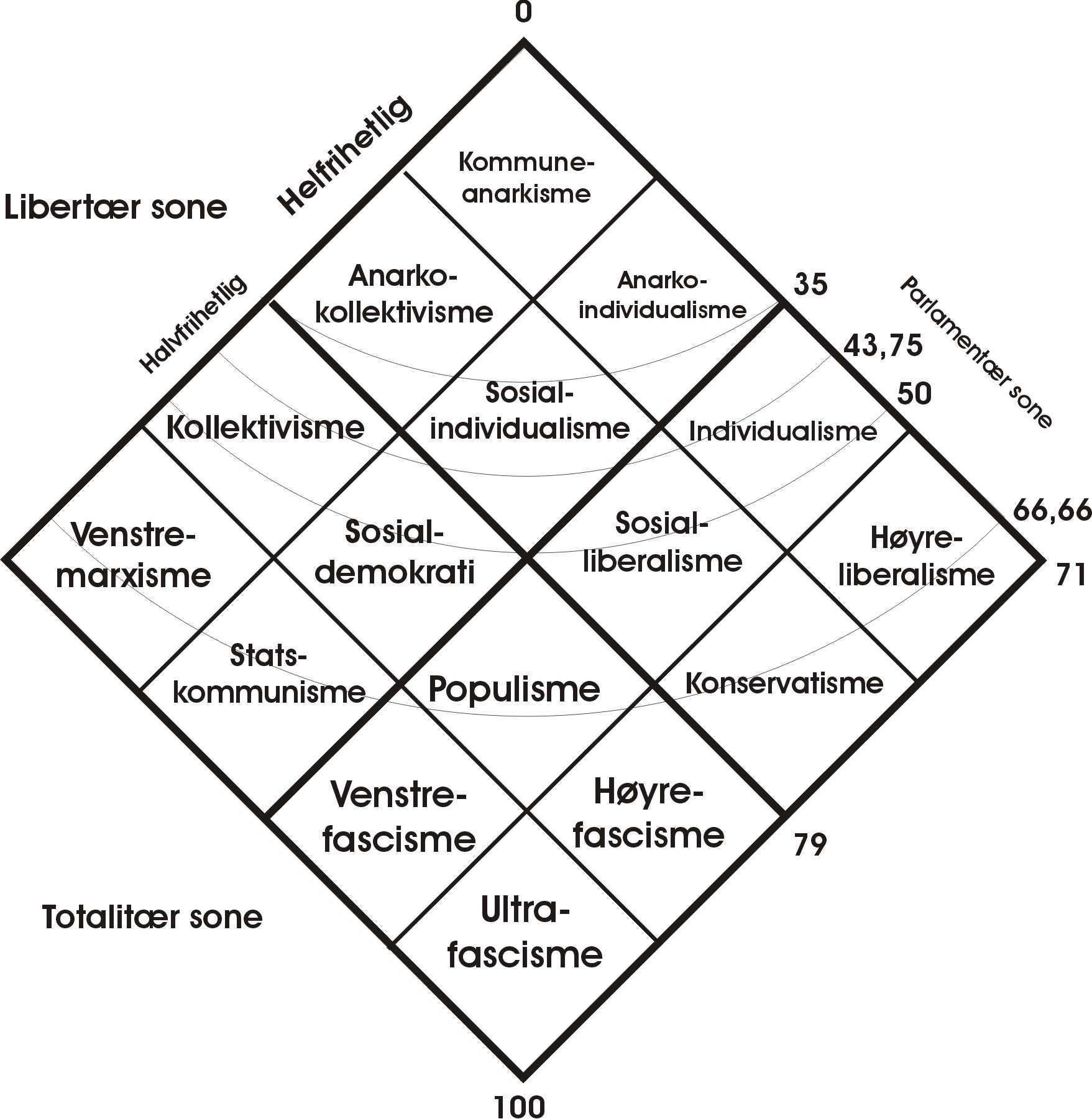
The usual left vs. the right dimension alone is completely insufficient to provide an adequate picture of the economic-political landscape. The two-dimensional economic-political map presented here gives an adequate picture of the economic-political landscape.
Freedom, i.e. the degree of freedom, is measured by the libertarian degree = 100% - the authoritarian degree. The libertarian degree = the degree of democracy. Freedom, i.e. freedom without harming others' freedom, not freedom at others expence, economically and/or political/administrative, in the widest sense! Real freedom = or > 50% libertarian & democratic, i.e. both economic and political/administrative in the widest sense = Anarchy and Anarchism. Real freedom = or > 50% socialism & autonomy broadly defined = Anarchy and Anarchism. Real democracy always includes green policy, i.e. significant. Real democracy means society should be managed and run from the bottom up, i.e. from the People – grassroots, and upwards, not from the top – down, i.e. significant. This is real federalism. This is freedom in societal perspective. Anarchism is liberal social-democracy = real democracy. Must not be mixed up with Marxist socialdemocracy.
 "
"
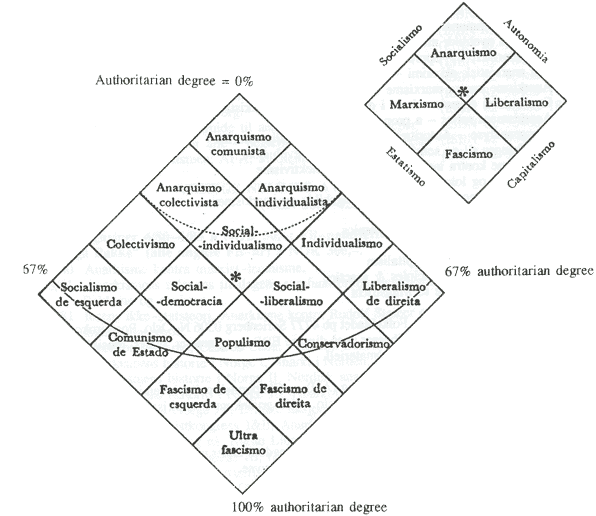
Fig. 1. The Economic-Political Map
The anarchy degree is 100% - the authoritarian degree within the anarchist quadrant. "Esquerda" means left, and "direita" means right.
The star "*" indicates the Norwegian economic-political system after the velvet anarchist revolution in 1994/95. The anarchist ideal, i.e. real democratic ideal, is at the top of the map.
We use the term semi-libertarian for all systems that are not totalitarian and are not anarchist.
For nedenfra og opp styring!
Vi er for betydelig nedenfra – fra Folket – og opp til Øvrigheten - innflytelse på styringen. Dette er reelt demokrati = ANARKI.
For bottom-up governance!
We are for significant bottom-up – from the People – and up to the Authority – influence on governance. This is real democracy = ANARCHY.
About democracy and anarchy - Om demokrati og anarki:
https://www.anarchy.no/democracy.html
THE 25 HIGHEST RANKING COUNTRIES ACCORDING TO LIBERTARIAN DEGREE ETC.
THE LIBERTARIAN DEGREE = THE DEGREE OF DEMOCRACY = 100 % - THE AUTHORITARIAN DEGREE
SYSTEM ANALYSIS. DATA FROM 2003-2007.
Countries: |
Rank of country according to libertarian degree, and type of system |
Libertarian degree and (authoritarian degree) % |
Degree of socialism |
Degree of autonomy and |
Gini-index |
Norway |
1 Anarchy |
54,0 (46,0) |
55,0 (45.0) |
53,2 (46,8) |
25,8 |
Switzerland |
2 Anarchy |
53,0 (47,0) |
51,0 (49,0) |
55,1 (44,9) |
33,1 |
Iceland |
3 Anarchy |
52,0 (48,0) |
54,0 (46,0) |
50,1 (49,9) |
25,0 (est.) |
Liechtenstein |
4 Soc.dem. |
49,5 (50,5) |
51,4 (48,6) |
47,7 (52,3) |
32,0 (est.) |
Luxembourg |
5 Soc.dem. |
49,2 (50,8) |
52,1 (47,9) |
46,5 (53,5) |
30,8 |
Denmark |
6 Soc.dem. |
48,8 (51,2) |
55,3 (44,7) |
43,0 (57,0) |
24,7 |
Japan |
7 Soc.dem. |
48,5 (51,5) |
55,2 (44,8) |
42,6 (57,4) |
24,9 |
Belgium |
8 Soc.dem. |
48,2 (51,8) |
54,0 (46,0) |
43,0 (57,0) |
25,0 |
Finland |
9 Soc.dem. |
47,9 (52,1) |
53,8 (46,2) |
42,6 (57,4) |
26,9 |
Sweden |
10 Soc.dem. |
47,5 (52,5) |
54,0 (46,0) |
41,7 (58,3) |
25,0 |
Netherlands |
11 Soc.dem. |
47,2 (52,8) |
52,0 (48,0) |
42,8 (57,2) |
30,9 |
Canada |
12 Soc.dem. |
46,8 (53,2) |
50,9 (49,1) |
43,0 (57,0) |
33,1 |
Austria |
13 Soc.dem. |
46,5 (53,5) |
52,1 (47,9) |
41,4 (58,6) |
30,0 |
Ireland |
14 Populist |
46,2 (53,8) |
45,0 (55,0) |
47,4 (52,6) |
35,9 |
Germany |
15 Soc.dem. |
45,9 (54,1) |
53,0 (47,0) |
39,6 (60,4) |
28,3 |
Spain |
16 Soc.dem. |
45,5 (54,5) |
51,5 (48,5) |
40,1 (59,9) |
32,5 |
Australia |
17 Populist |
45,0 (55,0) |
48,0 (52,0) |
42,2 (57,8) |
35,2 |
United King. |
18 Populist |
44,5 (55,5) |
44,7 (55,3) |
44,3 (55,7) |
36.0 |
New Zealand |
19 Populist |
44,0 (56,0) |
44,6 (55,4) |
42,4 (57,6) |
36,2 |
France |
20 Soc.dem. |
43,5 (56,5) |
51,4 (48,6) |
36,6 (63,4) |
32,7 |
Italy |
21 Populist |
43,0 (57,0) |
44,7 (55,3) |
41,3 (58,7) |
36,0 |
USA |
22 Cons. lib. |
42,5 (57,5) |
24,5 (75,5) |
69,8 (30,2) |
40,8 |
Israel |
23 Populist |
42,3 (57,7) |
47,8 (52,2) |
37,3 (62,7) |
35,5 |
Hong Kong |
24 Cons. lib. |
42,1 ( 57,9) |
22,1 (77,9) |
74,8 (25,2) |
43,4 |
Greece |
25 Populist |
42,0 (58,0) |
47,9 (52,1) |
36,6 (63,4) |
35,4 |
The estimates are approximately figures. © IIFOR/IJA ISSN 0800 - 0220 2007 and later. Anarchy = here social-individualist anarchism; Soc. dem. = social democrat marxism; Populist = here moderate parliamentarian democratic fascism; Cons. lib. = Conservative liberalism. See economic-political map at System theory and EP-map. Ranking of countries according to libertarian degree, estimates of the libertarian degree in general, and information on methodology, see Ranking and System theory - Chapter V.B.. According to ThesaurusLegend: approximately = (of quantities) imprecise but fairly close to correct. Thus: The estimates are approximately figures = The estimates are imprecise but fairly close to correct figures. We have used " , ", the European standard instead of American/UK standard, i.e. " . " as decimal separator. The term "ca" is an abbreviation for the latin circa, which means about or approximately. A gini index below 35 indicates socialism, and above indicates capitalism. NB! TRUMPISM IS ULTRA-FASCIST = NO DEMOCRACY AND TOTALITARIAN AND EXTREMIST!
BEST REGARDS PROF. DR. JENS HERMUNDSTAD ØSTMOE AT NØI-INDECO-OSE AND IIFOR-PGU.
NØI-INDECO-OSE, WEB: www.indeco.no
IIFOR, WEB: http://www.anarchy.no/iifor.html
PGU, WEB: http://www.anarchy.no/au.html
CONSULTANT FOR FOLKEBLADET – THE PEOPLES’ JOURNAL, WEB: www.anarchy.no
PS. This note is also published on www.anarchy.no, https://www.indeco.no/archive/samgrep.htm, http://www.anarchy.no/ija151.html, https://www.anarchy.no/ija155.html and https://www.anarchy.no/afis.html.
The website www.anarchy.no, is an independent and autonomous platform for anarchists, active since 1996. The site is financed by anarchists and features an "Economic-Political Map" which places anarchism as the "progressive middle" in a two-dimensional political model, distinct from the traditional left-right spectrum. According to this model, anarchism is located upwards, fascism downwards, Marxism to the left, and liberalism to the right.
About www.anarchy.no
Anarchist International AI/IFA
The "Economic-Political Map"
Other information
BLACK STAR TO NOAM CHOMSKY
Noam Chomsky identifies as an anarcho-syndicalist and libertarian socialist, viewing anarchism as a challenge to unjustified authority and emphasizing grassroots democracy and worker control. The website anarchy.no hosts texts and links relevant to anarchism, including works related to Chomsky's ideas and also has contributions from Noam Chomsky himself, i.e. he has participated actively in the ANARCHY DEBATE, see: https://www.anarchy.no/andebate.html.
Chomsky's anarchism
Noam Chomsky was nominated to the BLACK STAR Prize by cand. oecon. polit. libertar. Anna Quist which also has proposed him for the Nobel Peace Prize. The BLACK STAR was published 28.10.2025.
The BLACK STAR Prize is awarded by the International Anarchist Tribunal. The mandate of the International Anarchist Tribunal is presented here.

NØI-INDECO-OSE og FABS gratulerer Noam Chomsky med Black Star Prisen. NØI-INDECO-OSE and FABS congratulate Noam Chomsky on the Black Star Prize.
Hei Prof. Dr. Noam Chomsky
Gratulerer med Black Star prisen.
Vi har nettopp feiret Black Star prisen din med en Bayer-øl og en god sigar her på morgenkvisten.
Hi Prof. Dr. Noam Chomsky.
Congratulations on your Black Star award.
We just celebrated your Black Star award with a Bayer beer and a nice cigar this morning.
Best regards PROF. DR. JENS HERMUNDSTAD ØSTMOE AT NØI-INDECO-OSE AND IIFOR-PGU
.
NØI-INDECO-OSE, WEB: www.indeco.no
IIFOR, WEB: http://www.anarchy.no/iifor.html
PGU, WEB: http://www.anarchy.no/au.html
CONSULTANT FOR FOLKEBLADET – THE PEOPLES’ JOURNAL, WEB: www.anarchy.no
PS. We listen to Sheryl Crow's "All I Wanna Do", click on: https://www.youtube.com/watch?v=ClbmWkbocoY.
PPS. About Noam Chomsky's health.
by IIFOR 29.09.2007, updated 16.12.2007
We have found a use of the anarchist economical-political map at a (no longer existing) webpage on internet, see Fig 2.. It is an attempt to put some economical-political organizations on the map. We don't agree to everything, but this could be discussed more. We have first put up the original map of the Anarchist International, see Fig 1. then the other.
Authoritarian degree % = 100 % - the libertarian degree % =
"
*) The stars indicate the position of the Norwegian economical-political system after the revolutionary change in 1994/95.
Fig. 1. Picture of the Anarchist Economical-Political Map
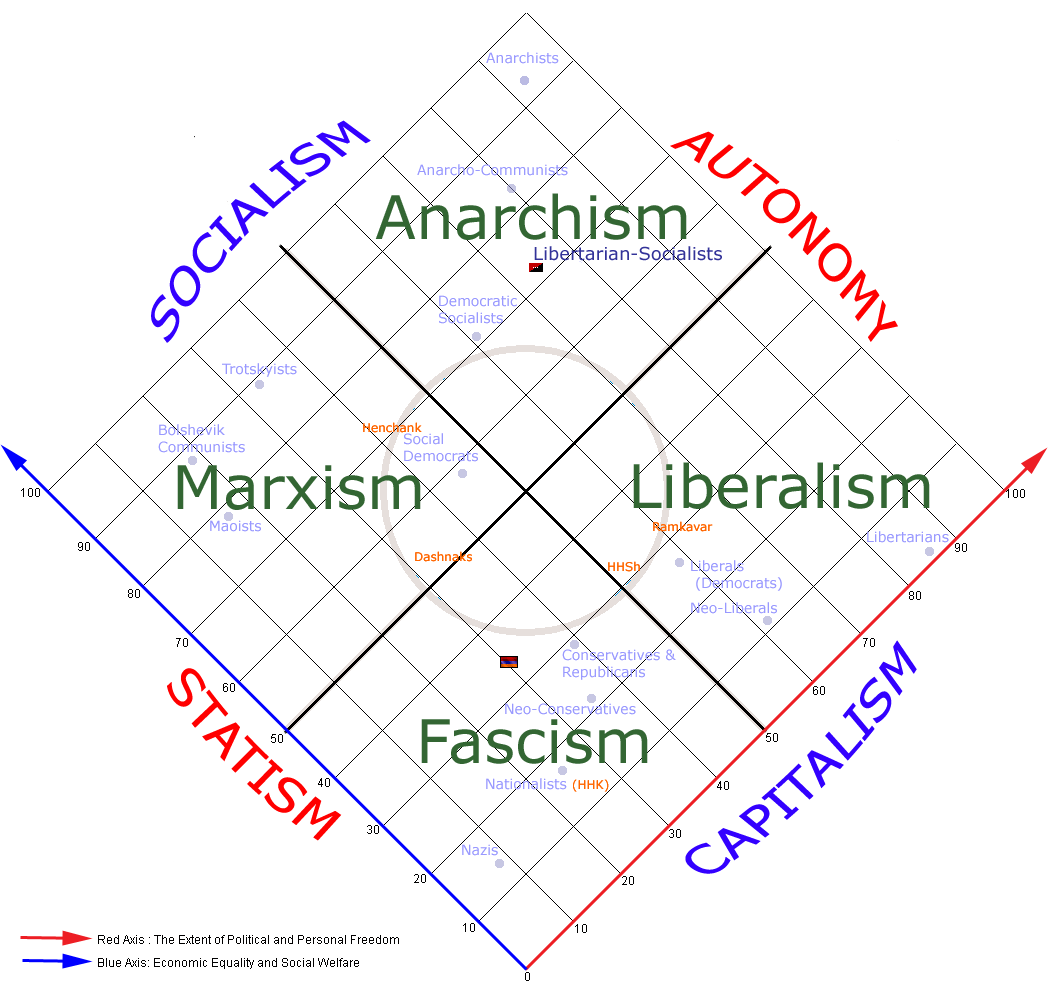
Fig. 2. An attempt to use the map on several economical-political organizations
***
A general comment to Fig 1. and Fig. 2.: Fig. 2 is basically, in the big picture, the same as Fig. 1 and is practically certain derived from Fig. 1, the original IIFOR and AI EP-map. However the explanations of the variables on the two main axis related to Fig. 2. represent an oversimplification and are quite imprecise, and are thus somewhat misleading. 1. The degree of socialism is in general (blue axis on Fig. 2.) not only dependent on "Economic Equality and Social Welfare", but also on economic freedom, etc., in short economic democray. 2. The degree of autonomy is in general (red axis on Fig. 2.) not only dependent on "The Extent of Political and Personal Freedom", but also political equality, etc., in short political/administrative democracy. A more detailed analysis with operational indicators, also statistical, for the variables 1. the degree of socialism, and 2. the degree of autonomy, are found in System theory - Chapter V.B.. Thus, the coordinates of the systems/organizations on the Fig. 2. map, are for several of them, somewhat wrong. In the following we will discuss and explain this more. (IIFOR)
Very Interesting friends & companions!!!! - But, where do you put the eco-anarchists? Cheers & Hugs! + Piedro (From CHILE, Southamerica)
Answer from IIFOR: Quoting the eco-anarchist manifesto: "There will be a) no real anarchism without ecology sufficiently integrated, just market orientated half-anarchism, and b) no real ecology without anarchism in a societal perspective, only authoritarian or pseudolibertarian half-environmentalism." Thus the eco-anarchist perspective should be accounted for in all forms of anarchism, and a green anarchist society may be social-individualist anarchy, collectivist anarchy, individualist anarchy, or communist anarchy (see map). However, as an economical-political tendency the eco-anarchists are probably typically found to the left in the sector of social-individualist anarchism, in the anarchist quadrant, on the AI's map. This means a bit to the left of the "democratic socialists" on the other map (Fig. 2.).
Many Thanks for Your response Friends - I'm very interested in the Eco-Anarchist Manifesto - Please take a look at the following Website of the Australian Eco-Anarchist Ted Trainer: TSW-index-site Yours, + Piedro (From Chile, Southamerica).
Answer from IIFOR: We agree that the Eco-Anarchist Manifesto, see EAM , is very important in these days of man-made global warming. However we think Ted Trainer is a bit too negative with respect to the benefits from development of new, environmentally friendly, technology. It is possible to have environmentally sustainable economic growth in the economy, if we do the right things. Ted Trainer's proposed system based on no growth, is probably a form of poverty capitalism and populism, and not really anarchism including eco-anarchism.
***
Eu penso q no seu mapa político existem equívocoa a sanar: 1) não vejo como correto a divisão do anarquismo em correntes, que nunca se concretizaram - até a queda do muro de Berlim (quando o movimento libertário mundial foi invadido por ex-marxistas q nos trouxeram seus defeitos!); 2) ME PARECE CORRETO DEFINIR O @ COMO UMA CONCEPÇÃO DE SOCIALISMO QUE GARANTA A AUTONOMIA, MAS ME PARECE UM ABSURDO COLOCAR A SOCIAL-DEMOCRACIA NO MESMO QUADRANTE; 3) não existem anarquistas e socialistas libertários (!): se você é pela revolução com a destruição do Estado é anarquista e/ou socialista libertário, q são sinônimos, não dois pensamentos diferentes. da mesma forma, desde Kropotkin, ou do início do século XX - com a formalização do sindicalismo revolucionário - o anarquismo se define como "COMUNISTA LIBERTÁRIO"! 4) TAMPOUCO VEJO LIBERTÁRIOS, OU ANARQUISTAS, EM MEIO AOS LIBERAIS - entre a autonomia e o capitalismo [que é inimigo de toda autonomia!]!
no mais, concordamos! SAÚDE E ANARCOSINDICALISMO -
Renato Seixas
Answer from IIFOR: Thank you for the respons. We however cannot see that marxist social-democrats are put in the quadrant of anarchism at the economical political map. The marxist social democrats are put in the marxist quadrant of the maps of both fig.1 and fig. 2. We think that what is meant with the expression "democratic socialists" on the map in fig. 2., in the social-individualist anarchist sector, is a form of libertarian socialism, real democracy and liberal social democracy, i.e. anarchism, not marxist social democracy, or marxists in general. NB! But most people and parties that call themselves "Democratic Socialists" are Marxists & Statists, not anarchists. We agree that the organizations put in the anarchist quadrant of the fig. 2 map may be misleading. Say, in the original fig.1 map commune or communist anarchism is in the sector at the top of the map, and in general it represents the different anarchist tendencies in a much better way than the fig. 2 map. Furthermore "anarchists" are put on the top on the fig. 2 map. This is misleading. We think all tendencies within the anarchist quadrant, i.e. liberal social-democrats (see fig. 1) are anarchist and represent anarchists of different kinds. The social-individualist sector of anarchism of the fig. 1 map, represents anarchism of a low degree. It is not communist anarchism, but still it is a form of anarchism.
THE 25 HIGHEST RANKING COUNTRIES ACCORDING TO LIBERTARIAN DEGREE ETC.
THE LIBERTARIAN DEGREE = THE DEGREE OF DEMOCRACY = 100 % - THE AUTHORITARIAN DEGREE
SYSTEM ANALYSIS. DATA FROM 2003-7
Countries: |
Rank of country according to libertarian degree, and type of system |
Libertarian degree and (authoritarian degree) % |
Degree of socialism |
Degree of autonomy and |
Gini-index |
Norway |
1 Anarchy |
54,0 (46,0) |
55,0 (45.0) |
53,2 (46,8) |
25,8 |
Switzerland |
2 Anarchy |
53,0 (47,0) |
51,0 (49,0) |
55,1 (44,9) |
33,1 |
Iceland |
3 Anarchy |
52,0 (48,0) |
54,0 (46,0) |
50,1 (49,9) |
25,0 (est.) |
Liechtenstein |
4 Soc.dem. |
49,5 (50,5) |
51,4 (48,6) |
47,7 (52,3) |
32,0 (est.) |
Luxembourg |
5 Soc.dem. |
49,2 (50,8) |
52,1 (47,9) |
46,5 (53,5) |
30,8 |
Denmark |
6 Soc.dem. |
48,8 (51,2) |
55,3 (44,7) |
43,0 (57,0) |
24,7 |
Japan |
7 Soc.dem. |
48,5 (51,5) |
55,2 (44,8) |
42,6 (57,4) |
24,9 |
Belgium |
8 Soc.dem. |
48,2 (51,8) |
54,0 (46,0) |
43,0 (57,0) |
25,0 |
Finland |
9 Soc.dem. |
47,9 (52,1) |
53,8 (46,2) |
42,6 (57,4) |
26,9 |
Sweden |
10 Soc.dem. |
47,5 (52,5) |
54,0 (46,0) |
41,7 (58,3) |
25,0 |
Netherlands |
11 Soc.dem. |
47,2 (52,8) |
52,0 (48,0) |
42,8 (57,2) |
30,9 |
Canada |
12 Soc.dem. |
46,8 (53,2) |
50,9 (49,1) |
43,0 (57,0) |
33,1 |
Austria |
13 Soc.dem. |
46,5 (53,5) |
52,1 (47,9) |
41,4 (58,6) |
30,0 |
Ireland |
14 Populist |
46,2 (53,8) |
45,0 (55,0) |
47,4 (52,6) |
35,9 |
Germany |
15 Soc.dem. |
45,9 (54,1) |
53,0 (47,0) |
39,6 (60,4) |
28,3 |
Spain |
16 Soc.dem. |
45,5 (54,5) |
51,5 (48,5) |
40,1 (59,9) |
32,5 |
Australia |
17 Populist |
45,0 (55,0) |
48,0 (52,0) |
42,2 (57,8) |
35,2 |
United King. |
18 Populist |
44,5 (55,5) |
44,7 (55,3) |
44,3 (55,7) |
36.0 |
New Zealand |
19 Populist |
44,0 (56,0) |
44,6 (55,4) |
42,4 (57,6) |
36,2 |
France |
20 Soc.dem. |
43,5 (56,5) |
51,4 (48,6) |
36,6 (63,4) |
32,7 |
Italy |
21 Populist |
43,0 (57,0) |
44,7 (55,3) |
41,3 (58,7) |
36,0 |
USA |
22 Cons. lib. |
42,5 (57,5) |
24,5 (75,5) |
69,8 (30,2) |
40,8 |
Israel |
23 Populist |
42,3 (57,7) |
47,8 (52,2) |
37,3 (62,7) |
35,5 |
Hong Kong |
24 Cons. lib. |
42,1 ( 57,9) |
22,1 (77,9) |
74,8 (25,2) |
43,4 |
Greece |
25 Populist |
42,0 (58,0) |
47,9 (52,1) |
36,6 (63,4) |
35,4 |
The estimates are approximately figures. © IIFOR/IJA ISSN 0800 - 0220 2007 and later. Anarchy = here social-individualist anarchism; Soc. dem. = social democrat marxism; Populist = here moderate parliamentarian democratic fascism; Cons. lib. = Conservative liberalism. See economic-political map at System theory and EP-map. Ranking of countries according to libertarian degree, estimates of the libertarian degree in general, and information on methodology, see Ranking and System theory - Chapter V.B.. According to ThesaurusLegend: approximately = (of quantities) imprecise but fairly close to correct. Thus: The estimates are approximately figures = The estimates are imprecise but fairly close to correct figures. By the way, the punk band Sex Pistols is right in their hypothesis that UK is fascist in the meaning of populist, a moderate parliamentarian democratic fascism, but not in meaning that UK has a totalitarian fascist system, with more than about 67% authoritarian degree, i.e. "the Sex Pistols punk perspective" in the meaning of 'allergic' to authority, typically for chaos-punks and their interpretation of the band's records, see Real democracy - Introduction. The Sex Pistols has declared that they are for musical anarchy, not political anarchy. They are probably neither chaos-punks, nor real anarchists... There are many broader analysis of countries' systems here at the Anarchy Debate, in issues of IJA, at the IAT-websites, and at the Norwegian Anarkidebatt, see (click on:) The official link-site of AI/IFA. We have used " , ", the European standard instead of American/UK standard, i.e. " . " as decimal separator. The term "ca" is an abbreviation for the latin circa, which means about or approximately.
***
The Bush-administration and neoconservatives are rather authoritarian, but I don't think they are fascists, as suggested at fig. 2. I think both these tendencies are liberalists, however quite authoritarian. What do IIFOR mean? Another question, where do you place mutualists on the maps? Best regards D. Dorn
Answer from IIFOR: Regarding mutualists, the updated followers of Proudhon, they may be placed a bit to the right and upwards of "democratic socialists" on fig. 2., i.e. they are typically placed in the upper part of the social-individualist sector of the anarchist quadrant of anarchism on fig. 1. We agree that the Bush-administration and neoconservatives are not fascists, but liberalists, located in the conservative sector of the liberalist quadrant of the fig. 1. map. Thus, the fig. 2 map is misleading in this case.
By "libertarians" on the fig. 2 map is meant right "libertarians", say, the so called Libertarian Party of USA and Ron Paul, located in the right liberalist sector of the fig. 1 map. The so called Libertarian Party of USA and Ron Paul are not libertarian in the ususal meaning of anarchist/anarchism = significant socialism and autonomy. The "Libertarian" Party and Ron Paul are not anarchist or close to at all, but most likely extremist liberalist.
In general most economic-political consepts in USA are twisted in economical plutarchist/capitalist, non-scientific, direction, e.g. 1. "anarcho"-capitalism = anarcho-plutarchy (economical), i.e. an oxymoron, and in practice hierarchy, and 2. the plutarchy-(so called)-Libertarian party and movement, also in practice hierarchy; NB! Remember plutarchy, as any x-archy, where x can be anything but not 'an', economical and/or political/adminstrative, is the opposite of freedom and real democracy.
USA on the economic-political map - strategy for the new progressive movement
New progressive movement. Ad the new progressive movement, with labor confederations, street protesters and other participants of the people in USA. The people here seen as a class as opposed to the superiors political/administrative and/or economically, the plutarchists. This movement should form a new progressive and social-individualist party, to challenge the Republicans (GOP) as well as the Democrats, both conservative plutarchist parties. The strategy for the new party should be the shortest way from the present situation to social-individualist anarchy on the economic-political map. This party could listen a bit to Noam Chomsky regarding US foreign policy, and should be based on human rights. The name of the new party could be 'The social-individualist progressive party' (SIPP), or something other covering these ideas and this policy. The new progressive movement should also operate with direct actions and never be ochlarchical, regardless of government and other provocations.
Once the well known anarchist Noam Chomsky was asked : "Would you describe the US as it is now as a fascist state?" Chomsky answered: "Far from it. In many respects it is the most free country in the world." It is true that the USA is far from fascist, and rather free. USA is ranked as no 22 among the countries in the world according to libertarian degree. Thus it is among the 25 most libertarian countries in the world.
The US' system is not fascist, but liberalist, located in the conservative sector of the liberalist quadrant of the economic-political map, see System theory and EP-map, at about 57%-60% authoritarian degree, the point estimate for USA at ca 57,5%, i.e. a libertarian degree at ca 42,5%. Both domestic and international factors are considered, also USA's globalized corporations and support for totalitarian regimes.
The degree of capitalism in USA is estimated to ca 75,5%, i.e. very significant (the degree of socialism is only ca 24,5%). The gini-index is estimated to 40.8, i.e. significantly above 35.0. As a rule of the thumb a gini-index below 35.0 indicates socialism, while a gini-index equal to or above 35.0 indicates capitalism/economical plutarchy. Also several other indicators point to a high degree of capitalism, although a relatively high efficiency indicates an opposite tendency.
The degree of statism is estimated to ca 30,2%, and thus the degree of autonomy is ca 69,8%, i.e. very significant. This relatively high degree of autonomy is partly due to USA's strong regional and international position, partly due to the domestic situation, i.e. relatively low taxes and "small government", much NGOs, a functioning political/administrative democracy, also with primary elections, and tendencies of direct democracy in some states, etc.
However, these economical-political tendencies seen all in all are clearly authoritarian, but far from totalitarian, i.e. more than 67% authoritarian degree. These coordinates of the US system are average long term structural estimates, and today we see no tendencies of a significant change. Some people fear a development of the USA in fascist, ultra-authoritarian, direction, but the Anarchist International and IIFOR see no clear tendencies in this direction at the moment, although the people, seen as a class as opposed to the superiors in rank and /or income, should always be on the alert against fascist, ultra-authoritarian tendencies.
2008: The president election 2008 is a choice between neo-conservatives (Republicans) and conservatives (Democrats) and will probably not change the system in USA significantly. We have thus no expectations to the demagogue Barack Obama regarding significant change of the US system's coordinates. 2009: The president of USA, since 2009, Barack Obama, has limited influence, a powerful lobby of the military-industrial complex has most of the power, and the fundamental domestic and international aims of USA are not changed. We will probably see some marginal, mostly cosmetical changes, but no significant change of the system's coordinates on the economic-political map. As far as this issue of the new president, president Obama, having taken over and this continuing, the AI has always been saying that policies don't change much with personalities. Policies have national interests, and policies depend on an environment. The environment and national interests of the United States are the same. Obama has said USA shall lead, i.e. rule, the world. The anarchists strongly oppose this megalomaniac approach.
28.04.2009. The Obama-government's first big mistake. A YouTube video showed panicked New Yorkers scrambling as a Boeing 747 followed by a fighter plane flew frighteningly close to the lower Manhattan skyline. The Federal Aviation Administration said the aircraft, which functions as Air Force One when the president is aboard, was taking part in a classified, government-sanctioned photo shoot. Fran Townsend, who advised President George W. Bush for more than three years, called the move "crass insensitivity" in the wake of 9/11: "I'd call this felony stupidity." The half-hour flight triggered the evacuation of a number of office buildings in the city - Mayor Michael Bloomberg said he was "furious" he had not been warned. On Tuesday, Obama told reporters, "It was a mistake. It was something we found out about along with all of you. And it will not happen again." 08.05.2009. White House Military Office Director Louis Caldera has resigned amid controversy over a low-altitude flyover of New York. So Obama seems to put the blame on his subordinates. Obama should take the full responsibility himself.
15.05.2009. Anger at Obama Guantanamo ruling. Civil liberties groups and anarchists have reacted angrily to US President Barack Obama's decision to revive military trials for some Guantanamo Bay detainees. 18.11.2009. US President Barack Obama has for the first time admitted that the US will miss the January 2010 deadline he set for closing the Guantanamo Bay prison. Mr Obama made the admission in interviews with US TV networks during his tour of Asia. Also this time civil liberties groups and anarchists have reacted angrily. 15.12.2009 The Obama administration said it will move some Guantanamo Bay detainees to an Illinois prison, the Thomson Correctional Center, and hold US military commission trials there. Anarchists and others criticized Obama's plan as a.o.t. a security risk. This move seems to create more problems than it solves, anarchists say. 23.12.2009. Rebuffed by skeptical lawmakers when it sought finances to buy an Illinois prison, the Obama administration is unlikely to close the Guantánamo Bay prison until 2011 at the earliest. 05.01.2010. Obama says he remains committed to closing the Guantanamo Bay detention center in Cuba, but not in January 2010 as promised.
10.11.2009. Anarchist comment to US President Barack Obama's response to last week's killings of 13 people at an army base in Texas, that of course the anarchists condemn.
Mr Obama's comments came in an address to a memorial service for the victims of the Fort Hood shootings, after he met relatives of those who died. Maj Nidal Malik Hasan, who was carrying out the massacre, was shot by police and remains in hospital. US intelligence authorities have said they knew Maj Hasan had been in contact with a cleric sympathetic to al-Qaeda.
Mr Obama said "It may be hard to comprehend the twisted logic that led to this tragedy, but this much we do know - no faith justifies these murderous and craven acts; no just and loving God looks upon them with favour," he continued. "And for what he has done, we know that the killer will be met with justice - in this world, and the next."
Anarchists at large are atheists, with a small dash of agnosticism, and thus believe about zero in "the next" world be it heaven, limbo or hell or something else, and we find it strange that Obama and his "we", "know" so much about "the next" world. How can Obama be certain that "the killer will be met with justice - in this world, and the next "? The anarchists at large are not among Obama's "we". He does not speak for us.
Anarchists are against capital punishment and other barbaric and authoritarian punishment "in this world" and believe about zero of punishment and justice in "the next", see Anarchism and Human Rights, Libertarian Human Rights. This is justice. Obama is a) for capital punishment and thus at odds with justice and should b) leave the practically certain lies about justice in "the next" world to a professional liar, and real beast, as the catholic pope. Obama's comments in this case confirm the megalomaniac tendency of Obama's ideas. The anarchists don't trust Obama and we warn others about this dangerous authority, practically certain at odds with justice and reality. Obama may be worse than Bush... What will be the next???
14.01.2010. About the earthquake in Haiti. "This is one of those moments that calls out for American leadership," according to US President Barack Obama who has announced fresh help for Haiti. Help is of course OK and supported by the anarchists, but "American leadership", i.e. ruler of the world - NO - the Anarchist International declares.
25.04.2010. Obama is obsessed with ruling the world, and is thus clearly opposed to the anarchists' real-democratic approach. An Internet search for "Obama lead world" gave the following headlines: "Obama lead world nuke talks", "Obama pledges to lead world into nuclear-free future", "Obama promises to lead world on climate change", "Obama: US will lead world in building next-gen clean cars", "US President Barack Obama has announced plans to invest billions of dollars in new nuclear power stations, should Australia follow Obama's lead," "We must lead the world: 'The Obama doctrine'", "Obama to world: 'We're ready to lead again'", and many more!!! "American leadership", i.e. ruler of the world - NO - the Anarchist International repeats.
12.08.2010. Gloomy picture for the people in the USA. More Americans fell into foreclosure in July as a sour job market kept them from making payments, and banks took over homes at a near record pace. Registered unemployment held at 9.5 percent in July but would have been higher if discouraged people had not left the workforce. The real unemployment may thus be much higher than 9.5 percent. Pessimism over the economy is rising and the grim mood could hurt both parties in the November 2 congressional elections, according to an NBC News/Wall Street Journal poll released on Wednesday 11.08.2010. Almost two-thirds of Americans believe the economy will worsen before it gets better, up from 53 percent who felt that way in January, the poll found.
Nearly six in 10 of those surveyed said the country is headed in the wrong direction, a percentage that has held steady in NBC/WSJ polling throughout the year. More than half of respondents said they disapprove of the way President Barack Obama is handling the economy. The poll also found Americans were split on Obama's overall job performance, with 48 percent saying they disapprove and 47 saying they approve. Unfortunately Obama and USA don't follow the advice from the World Economic Council - WEC, and must face the music.
28.10.2010. Ad midterm elections 2010: Perhaps the Democrats tendencially is the most libertarian of the parties, i.e. the least authoritarian party alternative, after all. But in general, vote for the candidate you think will do the best job, i.e. be most libertarian and thus least authoritarian, regardless of party. However, the Anglophone Anarchist Federation, section USA, calls on a boycott of the Tea Party candidates at the midterm elections 2010. 03.11.2010. Republicans rode a tide of voter discontent to take control of the House of Representatives and expand their voice in the Senate in elections Tuesday.
29.11.2010. USA = Unenlightened plutarchy plus unenlightened diplomacy. US-type diplomatic language. WikiLeaks has published some reports of the Obama-regime's diplomatic efforts: As to diplomats' portrayals of world leaders, Italian Prime Minister Silvio Berlusconi is said to have been holding "wild parties" and is described as feckless, vain and ineffective and sharing a close relationship with the "alpha dog", Russian Prime Minister Vladimir Putin. PM Putin is also called 'Batman' and President Medvedev 'Robin'. President Nicolas Sarkozy of France is said to be thin-skinned and authoritarian. The WikiLeaks documents also described Libyan leader Moammar Gadhafi as erratic and in the near constant company of a Ukrainian nurse who was described as "a voluptuous blonde". The Afghan president Hamid Karzai is described as paranoid. Etc. etc.! "My, my... what a diplomatic language," says a spokesperson for the Anglophone Anarchist Federation to AIIS.
01.05.2011. Anarchism was strong on the agenda May Day - International Labor Day - in the USA, see International Workers of the World - May Day 2011.
02.05.2011 The terrorist boss Osama bin Laden is killed by US special forces in Pakistan - Anarchist comments. Also later updates, see (click on:) IJA 4 (31).
06.09.2011. Nazi-like US government ochlarchy. STD tests 'may have infected 2,500'. A US Presidential Commission for the Study of Bioethical Issues has said some 5,500 Guatemalans were involved in "research" that took place between 1946 and 1948, with a view to applying the results on US troops stationed around the world. Of these [at least] 1,300 prisoners, psychiatric patients and sex workers were deliberately infected, without their knowledge, with syphilis, gonorrhoea or another sexually transmitted disease, chancroid, a.o.t. to study the effects of penicillin. Concentrations of bacteria were injected into the eyes, the central nervous system and male genitals. This was behaviour very similar to that of the scientists in Nazi Germany. It took place in the context in which the USA were judging the German doctors who had been experimenting with typhus and malaria on prisoners. The Nazis used Poles, Russians and Jews, while the Americans made almost the same use of Guatemalans.
Of the group of 1,300, only about 700 received some sort of treatment. According to documents the commission had studied, at least 83 of the 5,500 subjects had died by the end of 1953. US President Barack Obama set up the commission when academic research carried out on the experiments by US government scientists first came to light last year. US scientists knew they were violating ethical rules, the report found. There is also enough evidence to conclude there was collaboration between US and Guatemalan authorities at the time of the tests. Earlier this year, a group of Guatemalans who were involved in the study announced they were suing the US government over the affair. The extent of US medical experiments in Guatemala on STDs during the 1940s is greater than previously thought, health authorities have told the BBC. The number of infected people could be as high as 2,500, says the president of the Medical Association of Guatemala. This experiment can be added to the list of atrocities committed by the United States government along with the other nazi-like Tuskegee syphilis experiment and Project MKULTRA. More information at BBC: Guatamala STD tests 'may have infected 2,500'.
26.10.2011. New progressive movement. Ad the new progressive movement, with labor confederations, street protesters and other participants of the people in USA. The people here seen as a class as opposed to the superiors political/administrative and/or economically, the plutarchists. This movement should form a new progressive and social-individualist party, to challenge the Republicans (GOP) as well as the Democrats, both conservative plutarchist parties. The strategy for the new party should be the shortest way from the present situation to social-individualist anarchy on the economic-political map. This party could listen a bit to Noam Chomsky regarding US foreign policy, and should be based on human rights. The name of the new party could be 'The social-individualist progressive party' (SIPP), or something other covering these ideas and this policy. The new progressive movement should also operate with direct actions and never be ochlarchical, regardless of government and other provocations.
23.09. 2012. Obama: 'Top down' economics never works... Source: Boston.com. 07.11.2012. Barack Obama was re-elected as president of USA to four more years 06.11.2012. Sources: BBC & CNN.
14.12.2014. CIA torture. The Anglophone Anarchist Federation condemns the CIA's use of torture during investigations, documented by a US-Senate report on the matter.
11.03.2016. No to Donald Trump! Resolution by the Anglophone Anarchist Federation.
14.07.2016. No to Donald Trump! Vote for Hillary Clinton Tuesday November 8! That is the best solution to stop Donald Trump from being president of the USA. Resolution by the Anglophone Anarchist Federation Section USA.
09.11.2016. Donald Trump won... Thousands of people, anarchists and others, have taken to the streets in US cities to protest against Republican Donald Trump's surprise victory in the presidential election, blasting his campaign rhetoric around immigrants, muslims and other groups.
10.11.2016. For many Americans across the country, Donald Trump's victory is an outcome they simply refuse to accept. "Not my president," protesters chanted in rallies coast to coast. Tens of thousands filled the streets in at least 25 US cities overnight -- with demonstrations outside Trump's properties. While most protesters were peaceful, dozens were arrested. At least three officers were wounded. And about 40 fires were set in one California city. The Anglophone Anarchist Federation condemns the ochlarchy, but supports peaceful demonstrations against Trump.
11.11.2016. The anti-Trump demonstrations continue, with some ochlarchy. As mentioned The Anglophone Anarchist Federation condemns the ochlarchy, but supports peaceful demonstrations against Trump. See also IAT-APT for more information.
12.11.2016. As President-elect Donald Trump's administration begins taking shape, thousands took to the streets of a divided nation again Saturday to express their frustration at the stunning election result. While largely peaceful, the protests have resulted in blocked highways and bridges, arrests during clashes with police and the early Saturday shooting of a man at a march in Portland, Oregon. See also IAT-APT for more information.
13.11.2016. Protesters remained vocal Sunday about the election of Donald Trump as cities such as Washington, D.C., New York and San Francisco braced for more public demonstrations. This will be the fifth day of protests since Trump upset Hillary Clinton in the US presidential election. Protesters are upset about Trump's policies on immigration, the environment, LGBT rights and other issues. Some are questioning the legitimacy of Trump's victory by noting that although he took the Electoral College, Clinton won the popular vote.
14.11.2016. The anti-Trump demonstrations continue, but smaller. The inauguration of Donald Trump (the official name is the 58th Presidential Inauguration) as the 45th President of the United States is scheduled to take place on Friday, January 20, 2017, in Washington, D.C. The inauguration will mark the commencement of the four-year term of Donald Trump as President of the United States, and Mike Pence as Vice President of the United States. The anarchists (AF Section USA) are planning anti-Trump demonstrations in the USA on Friday, January 20, 2017, of course without ochlarchy.
15.11.2016. Anarchist anti-Trump actions Friday, January 20, 2017 - without ochlarchy!
16.01.2017. The Anarchist International (AI/IFA) is against Trump's anti-NATO policy, and for a strong NATO! Trump is a.o.t. falsely calling NATO "obsolete".
20.01.2017. Police deployed pepper spray and made numerous arrests in a chaotic, ochlarchical, confrontation blocks from Donald Trump's inauguration Friday as protesters registered their rage against the new president. Spirited demonstrations, with anarchists and others, unfolded peacefully at various security checkpoints near the Capitol as police helped ticket-holders get through to the inaugural ceremony. Signs read, "Resist Trump Climate Justice Now," and ''Let Freedom Ring". But at one point, police gave chase to a group of about 100 protesters, marxist ochlarchists, a few falsely posing as "anarchists", who smashed the windows of downtown businesses including a Starbucks, Bank of America and McDonald's as they denounced capitalism and Trump. Police in riot gear used pepper spray from large canisters and eventually cordoned off the protesters. The IAT-APT handed out Brown Cards to the marxist ochlarchists falsely posing as "anarchists", meaning they are expulsed from the anarchist movement. The anarchists (AF-section USA) are planning anti-Trump demonstrations in the USA on Saturday, January 21, 2017, of course without ochlarchy. See also IAT-APT for more information.
Later on CNN reported: Six police officers were injured and 217 protesters arrested Friday after a morning of peaceful protests and coordinated disruptions of Trump's inauguration ceremony gave way to ugly street clashes in downtown Washington. At least two DC police officers and one other person were taken to the hospital after run-ins with protesters, DC Fire spokesman Vito Maggiolo told CNN. Acting DC Police Chief Peter Newsham said the officers' injuries were considered minor and not life-threatening. The anarchists condemn the ochlarchy. Also the IAT-APT handed out Brown Cards to Euronews and BBC for falsely calling the marxist ochlarchists "anarchists", and thus breaking the Oslo Convention.
21.01.2017. Millions of protesters, anarchists and many others, have taken to the streets of cities in the US and around the globe to rally against the new US President Donald Trump. Larger numbers of demonstrators than expected turned out for more than 600 rallies worldwide. The aim was principally to highlight women's rights, which activists believe to be under threat from the new administration. The biggest US rally was in the capital Washington, which city officials estimated to be more than 500,000-strong.
01.06.2017. The Trump-administration has decided that the USA will leave the Paris agreement. The Anarchist International AI/IFA, AF and GAIA condemn the move!
13.08.2017. U.S. officials have opened a civil rights investigation into the circumstances of the deadly car attack that took place amid clashes (ochlarchy) of white nationalists and counterdemonstrators in Charlottesville, Virginia 12.08.2017. A few anarchists participated among the counterdemonstrators, but they of course did not participate in the ochlarchy (mob rule broadly defined). The Anarchist Federation, section USA, and the Anarchist International (AI/IFA) condemn the terrorist attack by the white nationalists, i.e. fascists, and the ochlarchy in general.
19.08.2017. Tens of thousands of anti-racism protesters, anarchists and many others, have opposed the "Free Speech" rally in the US city of Boston that featured right-wing speakers. The rally on Boston Common, which attracted only a small crowd, disbanded early and the participants were escorted out by police. The Boston Herald reported that up to 30,000 people attended the protest. Hundreds of police were deployed and clashes broke out later between some police and anti-rally protesters, mainly the ochlarchist marxist communist group AFA a.k.a. Antifa. Police said on one street officers had rocks thrown at them. The Boston Globe newspaper reported that 20 people had been arrested. The anarchists condemned the ochlarchists. More information on AFA a.k.a Antifa at IJA 1 (43).
02.10.2017. 58 people have been killed and hundreds injured in a mass shooting at a Las Vegas concert. A gunman, named as 64-year-old Nevada resident Stephen Paddock, opened fire from the 32nd floor of the Mandalay Bay Hotel towards an open-air music festival attended by 22,000. He killed himself as police stormed the room where 10 guns were found. A police statement said the shooting began at 22:08 local time on Sunday 01.10.2017 (05:08 GMT on Monday). Paddock came from the small town of Mesquite, some 60 miles (100 km) north-east of Las Vegas, and had resided in the hotel since 28 September. The attack is the worst mass shooting in recent US history. So-called Islamic State claimed to be behind the attack, saying that Paddock had converted to Islam some months ago. But the group provided no evidence for this and has made unsubstantiated claims in the past. The Anarchist Federation (AF) and the Anarchist International (AI/IFA) condemn the 01.10.2017 terrorist attack in Las Vegas, Nevada, USA, and IS.
31.10.2017. Eight people have been killed and more than a dozen injured after a terrorist attack in New York. A hired pick-up truck drove the wrong way down a cycle lane on the west side of Manhattan. The vehicle travelled several blocks before hitting a school bus and coming to a stop. The suspect, a 29-year-old male named Sayfullo Saipov, then got out of the truck and brandished what police believed were two handguns. They were later determined to be a paintball and a pellet gun. He reportedly shouted Allahu Akbar before a nearby police officer shot him in the stomach. The suspect in the New York attack is from the central Asian nation of Uzbekistan and came to the United States in 2010. A note was found in the truck Sayfullo Saipov used in the New York terror attack claiming he did it in the name of ISIS (a.k.a. IS). The Anarchist Federation (AF) and the Anarchist International (AI/IFA) condemn the 31.10.2017 terrorist attack in New York, USA, and IS.
05.11.2017. At least 26 people have been killed and 20 others wounded after a gunman opened fire at a Texas church during a Sunday service. The attack happened at the First Baptist Church in Sutherland Springs, a small town in Wilson County. The victims' ages ranged from five to 72. The suspected gunman was later found dead in his vehicle some miles away. Police identified him only as a "young, white male" but US media named him as Devin Patrick Kelley, 26. The Anarchist Federation (AF) and the Anarchist International (AI/IFA) condemn the 05.11.2017 terrorist attack in Sutherland Springs.
21.01.2018. Women's marches draw crowds, anarchists and many others, in US. Women's marches are being staged across the US on the first anniversary of President Donald Trump's inauguration. It's one year since the first Women's March inspired protest movements around the US and beyond. Hundreds of thousands of women (and some men) across the US and the rest of the world today took to the streets for the 2018 Women's March. Many protested against Donald Trump.
The extreme capitalism/economical plutarchy in USA makes violation of fundamental workers' rights
The 'American dream' is a nightmare for the people, seen as a class in contrast to the superiors in income and/or rank
There is a $4 billion union-busting industry which aims at undermining trade union organizing
There is a poor record on worker protection, particularly in the areas of trade union rights and child labor, areas in which serious violations continue to take place. US law excludes large groups of workers from the right to organize. These include agricultural workers, many public sector workers, domestic workers, supervisors and independent contractors. Moreover, for most private sector workers forming labor federations is extremely difficult and anti-union pressure from employers is frequent. There is a huge union-busting industry which aims at undermining trade union organizing. Some 82 per cent of employers hire such companies that employ a wide range of anti-union tactics. Employers also force employees to listen to anti-union propaganda and threaten workers with company closures if they vote to form a labor federation. The US administration, rather than leading the way on protection of the rights of working people and on decent pay and conditions, has been intent on denying the freedom to join a union and bargain collectively to millions of American workers. This hurts America's working people and has a negative impact on workers' rights in other countries as well. Figures from the US Department of Labor show that the Bush Administration has been cutting back even further on labor law enforcement, now spending an average of only US$26 per employer, while spending on rigorous oversight of trade union activities amounts to an average of $2,500 per union/local union. This will probably not change much under the Obama Administration.
The Employee Free Choice Act, which would redress some of the imbalances workers are subject to, was blocked by Senate Republicans last year despite passing the House of Representatives and gaining majority support in the Senate. Moreover, the National Labor Relations Board took a number of decisions in 2007 which withdrew various workers' protections and weakened already ineffective remedies. Among these decisions was one that makes it harder for workers who are illegally fired to recover back pay and another to make it easier to discriminate against employees who are union representatives. Child labor is in many cases not effectively addressed in the US, particularly in agriculture and not least because of the hazardous conditions that children are exposed to. Many of the children are migrant farm workers, often Latino. Not enough urgency is being shown with the Children's Act for Responsible Employment (CARE) currently before the Subcommittee on Workforce Protections of the House of Representatives, which would bring standards for children working in agriculture in line with standards for other sectors. Moreover, child labor inspections are falling.
Concerning discrimination and remuneration it should be noted that women continue to earn less than men (80.8%), and that for most women of color this gap is even larger. Women earn less in every occupational category, even in occupations where they outnumber men. Nurses and middle school teachers earn 10% less than their male colleagues even though over 80% of the employees are female. Forced labor remains a problem in the US, in particular with forced labor in agriculture for migrant workers, and manufacturing (garments) in US overseas territories, in particular the Northern Mariana Islands. Working conditions are severe, and recruitment practices often result in indentured servitude.
14.01.2010. Social dumping. Immigrant sheepherders endure harsh work, low pay. Alone and thousands of miles from home, the immigrant sheepherder roams some of the West's most desolate and frigid landscapes, tending a flock for as little as $600 a month without a day off on the horizon. Colorado Legal Services, a Denver-based nonprofit legal assistance network, visited sheepherders with temporary work visas in Colorado, Utah and Wyoming and found they sometimes toil more than 90 hours a week, can't leave the isolated sites where they work and are grossly underpaid by US standards. Rep. Daniel Kagan, a Democrat from Denver, said sheepherders often don't speak English, don't know where they are, and depend entirely on their employers for food, water and contact with the outside world. "It struck me as a situation rife with the possibility of abuse, and I was afraid that we were looking at a situation of indentured servitude, of near slavery, right here in Colorado, and that troubled me a lot," Kagan said. The struggling US sheep industry argues the immigrants - and the current pay scale - are crucial to its survival and that the jobs give foreign workers opportunities for a better life back home. That is how the US capitalism works.
29.09.2010. Unresolved problems with the right to organize and other fundamental rights. USA still has a poor record on workers' protection, particularly with regard to trade union rights and child labor, areas in which serious violations continue to take place. US law excludes large groups of workers from the right to organize. These include agricultural workers, many public sector workers, domestic workers, supervisors and independent contractors. Moreover, for most private sector workers forming trade unions is extremely difficult and anti-union pressure from employers is frequent. There is a $4 billion union-busting industry which aims at undermining trade union organizing. Some 82 per cent of employers hire such companies that employ a wide range of anti-union tactics. Employers often force employees to listen to anti-union propaganda and threaten workers with company closures if they vote to form a trade union.
The rather limited "Employee Free Choice Act", which would redress a few of the imbalances workers are subject to, continues to be blocked by Senate Republicans despite passing the House of Representatives and gaining majority support in the Senate. Child labor is in many cases not effectively addressed in the US, particularly in agriculture and not least because of the hazardous conditions that children are exposed to. Many of the children are migrant farm workers, often Latino. The main labor confederation in USA, AFL-CIO, estimates that between 300,000 and 800,000 children are employed in agriculture under dangerous conditions. Moreover, the number of child labor inspections has been falling. Concerning gender discrimination, women continue to earn less than men (77.1%). While women represent 47.8% of total employment, only 29.0% of executive and senior level officials and managers are women. Furthermore women have no guarantee of paid family leave. Finally, forced labor remains a problem in the US, in particular with forced labor in agriculture for migrant workers. Sources: AIIS and ITUC.
1 in 6 went hungry in America in 2008
Forty-nine million people in American households - one in six - went hungry or had insufficient food at some point in 2008, the highest number since the government began tracking the problem in 1995. The biggest increases were among households with children and people who were hungry most often. The report, issued by the US Department of Agriculture, found that 17 million people in the US went hungry or did not eat regularly for a few days of each month over seven or eight months last year. That's a 45% increase from 12 million people in 2007. In 2008, 16.7 million children did not eat regularly at some point, up from 12.4 million in 2007. 17.11.2009.
The share of residents of USA in poverty climbed to 14.3 percent in 2009 and the increase is continuing
The percentage of Americans struggling below the poverty line in 2009 was the highest it has been in 15 years, the Census Bureau reported Thursday 16.09.2010, and interviews with poverty experts and aid groups said the increase appeared to be continuing this year. With the country in its worst economic depression and crisis since the Great Depression, four million additional Americans found themselves in poverty in 2009, with the total reaching 44 million, or one in seven residents. And the numbers could have climbed higher: One way embattled Americans have gotten by is sharing homes with siblings, parents or even nonrelatives, sometimes resulting in overused couches and frayed nerves but holding down the rise in the national poverty rate, according to the report. The share of residents in poverty climbed to 14.3 percent in 2009, the highest level recorded since 1994. The rise was steepest for children, with one in five affected, the bureau said. For a single adult in 2009, the poverty line was $10,830 in pretax cash income; for a family of four, $22,050.
13.09.2011. CNN reports: More Americans fell below the poverty line last year, according to US Census Bureau data. The nation's poverty rate rose to 15.1% in 2010, up from 14.3% in 2009 and to its highest level since 1993. Last year marked the third year in a row the rate increased. All told, 46.2 million people are considered in need. In addition, real median household income last year was $49,445, a 2.3% decline, the Census Bureau reported.
07.11.2011. AP reports: Revised govt formula shows new poverty high: 49.1M. The ranks of America's poor are greater than previously known, reaching a new level of 49.1 million - or 16 percent - due to rising medical costs and other expenses that make it harder for people to stay afloat, according to new census estimates. Based on the revised formula, the number of poor people exceeds the record 46.2 million, or 15.1 percent, that was officially reported in September. Economists and anti-poverty experts continue to differ widely on how best to calculate poverty. On Monday, the Census Bureau acknowledged that its new measure remains a "work in progress," with additional refinements needed to better determine commuting and housing costs.
USA has still not ratified United Nations' ILO Convention 98 on the Right to Organize and Collective Bargaining
The United Nations' International Labour Organization, ILO's Convention 98 on the Right to Organize and Collective Bargaining has still not been ratified by countries such as USA, Canada, China, India, Iran, the Republic of Korea, Mexico, Thailand, and Vietnam. Thus, approximately half of the world's economically active population is not covered by this worker friendly Convention, with USA up front. ILO Convention 98 was established in 1949, and among many other countries the Anarchies of Norway, Switzerland and Iceland have ratified this convention.
Unenlightened plutarchy
The system in USA is what economic Nobel Prize winner and anarchist Ragnar Frisch called an "unenlightened plutarchy", see the basic ideas of Frisch. For the World Economic Council's program against unenlightened plutarchy for the USA, see the WEC resolutions. USA has a long road to go before it becomes an anarchy, socialist and autonomous. It will probably not happen while Obama is in charge.
Click on:
http://www.anarchy.no/ija151.html
Unenlightened plutarchy, plutarchy in general and plutocracy
In the American Webster's unabridged dictionary second edition the word plutarchy is mentioned, and also plutocracy. Plutarchy means rule by the rich or rule of money, a form of archy [by finance-lords and similar, enronism, etc.]. Plutarchy may be economical and/or political/administrative. Economical plutarchy is the same as capitalism. Capitalism has two main forms, liberalism and fascism, economical plutarchy is significant in both. The economical plutarchists are the capitalists, the relatively rich, superiors in income.
Plutocracy is a form of "cracy", as in democracy, the word plutocracy may 1. mean the same as plutarchy, 2. but also just mean management by the rich or related to money. In an anarchism vs other -isms context, to be precise, the concept plutarchy is in general used, not the more diffuse plutocracy. The term "unenlightened plutarchy", "uopplyst pengevelde", was used by Nobel prize winner in economics and social-individualist anarchist Ragnar Frisch about liberalism, the typical unenlightened plutarchy, but it may also be used about fascism. As a tendency in a bit curtailed form the unenlightened plutarchy may also be present in marxist, mainly social-democratic, systems, according to Frisch.
"Unenlightened" in this context just underlines that plutarchy is not in the interest of the people, seen as a class as opposed to the superiors in rank and/or income. Plutarchy is practically always "unenlightened", a bad form of system/management seen from the people's perspective. In practice "enlightened plutarchy" does not exist, although there may be more or less of the unenlightened tendency. In short, capitalism = significant economical plutarchy, i.e. rule by the rich - the rich are rulers, economical hierarchy and/or lack of economic freedom. Top heavy economic pyramid - lack of economic efficiency and/or fairness. An economic "top down" approach. The opposite of socialism. IIFOR
This is the general case. In special cases the conclusion may be another.
Government/State/authority is a matter of degree, indicated with the authoritarian degree = 100% - the libertarian degree. Anarchies have less than 50% authoritarian degree, but there may still be insignificant government tendencies indicated by the authoritarian degree, except for the anarchist ideal with 0% authoritarian degree and 100% libertarian/anarchist degree. Also in non-anarchist countries, with more than 50% authoritarian degree, less than 50% libertarian degree, anarchists most likely prefer a system with higher libertarian degree compared to a system with less. Thus an alternative with less government, less authoritarian degree, is preferred to a system with higher authoritarian degree, more government, although it may be seen as support for the lesser evil of two or more alternatives.
This is why the Anarchist International supports, say, the Manifesto of the 16, giving anarchist support to the allies against Germany in the 1. World war. Germany was significant a more authoritarian state, more government, than the allies. If Germany had won, this more authoritarian, more government system, would be expanded to the allied countries.
This is also valid for elections. Only if all realistic alternatives are equally authoritarian in the election, a general election boycott, should be the choice. Against the most authoritarian parties, a boycott-campaign should be introduced. The anarchists should support the most libertarian alternative, and vote for this, regardless of if it may be seen as the lesser evil. It must be noted that all realistic options must be considered when the anarchists should give their support. The anarchist ideal is not among these options. We can inform about the anarchist ideal and protest against authoritarian rule, but the anarchist ideal is not among the realistic options in any country today.
In Egypt July 2013 the Anarchist International did not support Morsi or the military coup against him, because to ouster Morsi without a military coup via direct actions and early elections, seemed to be a realistic option, considered less authoritarian than the two more “evil” options, i.e. the rule of Morsy and the military coup.
In general anarchy of high degree, not to mention the anarchists ideal with 0 authoritarian degree, are not realistic options in any country, but the anarchists, as mentioned, should of course inform about this ideal. But anarchist actions should concentrate around making a less authoritarian system, not using too much time on the anarchist ideal. We live here and now, and the actions should support the lesser authoritarian alternatives, i.e. the most libertarian. Anarchist actions should not concentrate on the anarchist ideal which is unrealistic to achieve in any country today, but on reducing the authoritarian degree here and now.
The authoritarian degree is dependent on the degree of capitalism (economical plutarchy) = 100% - the degree of socialism, and the degree of statism = 100% - the degree of autonomy. IIFOR 13.07.2013.
Resolution, decided with general consent, by:
The International Anarchist Congress
The 13th Anarchist Biennial 28-30.11.2014
International Congress-Seminar on Anarchism
The AI/IFA network represents more than 50 000 anarchist world wide.
PS. 04.02.2019. To support the least authoritarian alternative i.e. the most libertarian, should not be dragged into the absurd, i.e. to support a lesser totalitarian regime compared to a more authoritarian totalitarian regime. Anarchists do in general never support totalitarian regimes, i.e. with more than 67 % authoritarian degree. As an example: Mussolini was less authoritarian than Hitler, but anarchists supported none of them. Furthermore there must be a significant difference in libertarian degree to support the lesser of two authoritarian evils. IIFOR.
The king in the Anarchy of Norway is only a symbolic king without power and command
The rumors that the Norwegian king is powerful and commander of the armed forces, based on the Norwegian constitution, are not true. The king of Norway is only a symbolic king. He has no power at all. He is in reality not a commander of anything, and not the army, which is an antimilitarist corps in Norway.
Norway as the Swiss Confederation and Iceland are anarchies of low degree. This means there are authoritarian tendencies. The anarchy degree of Norway is about 54%, which means the authoritarian degree is about 46%, but it is still the most libertarian/anarchist country in the world. The anarchists in Norway try to increase the anarchy/libertarian degree, but it goes slow and is difficult. If you have any ideas on how the anarchy degree can be increased quickly, you are very welcome.
AI knows the Norwegian constitution. It is quite misleading because it partly deals with formal and symbolic power, and not realities. There is constitutional custom and practice which prove this. The king is only a symbolic king, the Council of State - which is based on the parliament (Storting), has the role of a cabinet. The king has no power at all.
While radical in its day, the constitution of 1814 was a product of its age. As Norwegian democracy developed, some parts of it began to look increasingly dated. For example, the executive power, which in the constitution is consistently attributed to the king, came increasingly to rest in his Council of State (statsråd). Similarly, the king originally had the right to appoint members of the Council, who were answerable to him alone, and they could not be chosen from the members of the Storting. With the establishment of parliamentarism 1884, the Council was effectively chosen by general election, in that the king appointed only members of the party or coalition having a majority in the Storting. Further, the Council became answerable to the Storting, in the sense that a failed vote of confidence would cause the Council of State to resign.
You better believe us, because this is the truth. AI and the Norwegian anarchists deal with realities, not formal and symbolic things. As mentioned, the king is only a symbolic king, he is without any power and without command in reality. In real terms Norway is an anarchy of low degree, although formally a monarchy. Anarchists (and AI) are interested in realities, not formal and symbolic issues. Long live the Anarchy of Norway!
IIFOR 15.07.2013 - Updated.
Failed States - Comment from IIFOR - Contributions from Noam Chomsky, etc.
To Henrik Thune
I have of course read your review as well as the book. You have not directly said Chomsky's book is marxist-leninism, but says he "sees red", and also that he is somewhat similar to the marxist-leninist Sigurd Allern. Chomsky's economic-political tendency is anarchism, not marxism of any kind. You should have mentioned this in your ariticle, not indicated he is red (marxism) and similar to marxist-leninism. Besides I don't think your review is very representative for the book.
Best regards P. Johansen - Tuesday, June 24, 2008 10:10 AM
PS. Noam Chomsky is a dedicated anarchist - not liberal. Chomsky has written several works on anarchism - you should call a spade a spade Thune! The work Manufacturing Consent is not at all a neo-marxist analysis. It is clearly an anarchist analysis. You are insulting Chomsky and anarchists in general by calling this book and TV-program neo-marxist. - Tuesday, June 24, 2008 12.10 AM
Dear P. Johansen:
I read in your comments to Chomsky on my review of his book Failed states that I have described Chomsky or his work as marxist-leninism. That is a total misreading of my review, as you probably are well aware of, if you read the piece.
Best regards
Henrik T - Monday, June 23, 2008 9:07 PM
The expression "sees red" is something the paper decided to use. I also believe that self-description is a false criteria for any definition. That also goes for Chomsky and his political camp. Take for instance Manufacturing Consent with Herman. That is a classic neo-marxist analysis of the media.
all the best Henrik T - Tuesday, June 24, 2008 11:19 AM
PS1: One has to, I believe, differentiate between marxism as an analytical/theoretical view and marxism as a political/ideological position.
PS2: I did explicitly describe Chomsky as a (radical) liberal. That is my reading of him, anyway. My main problem with failed states is that is empirically tendentious. Many of his point would have been made much strong if the empirical work was more systematic and precise. In this regard I see a clear weakening in Chomsky's political writing.
cheers
Henrik T - Tuesday, June 24, 2008 11:31 AM
----- Original Message -----
From: Noam Chomsky
To: IIFOR
Sent: Saturday, June 14, 2008 4:50 PM
Subject: Re: Failed States - Comment from IIFOR- Answer from Chomsky, etc
Thanks for the information. Sorry to hear about that. I don't pay much attention to translations -- don't have time -- but I'll make a note about this. Update 6:45 PM: I didn't intend to react to this piece of nonsense, just as I don't respond to the screeching of the commissar class elsewhere. What I meant is that I'll make a note to myself to pay attention to Norwegian translations in the future, thanks to the information you sent, appreciated.
Noam Chomsky
To Noam Chomsky
1. Yes, the publisher is the marxist-leninist (maoist) Oktober Forlag, named after the october revolution in Russia, founded by the maoists (and stalinists) in the party AKP-ml, now the main part of the revolutionary marxist communist and leninist party Rødt (Red) (also including trotskyites). It was however later sold to Aschehoug because of economic problems, but has still mainly marxist-leninist authors and tendency. See http://no.wikipedia.org/wiki/Forlaget_Oktober .
2. There is no reference to your anarchism, in the newspapers here, but as mentioned a parallel to the maoist marxist-leninist Sigurd Allern.
3. And you are quite correct that this article is a hysterical rant.
Best regards P. Johansen
---- Original Message -----
From: Noam Chomsky
To: IIFOR
Sent: Saturday, June 14, 2008 3:50 AM
Subject: Re: Failed States - Comment from IIFOR
Thanks for sending. I could read enough of the article to see that it is a hysterical rant. Are you saying that the book was published by a maoist marxist-leninist publisher? That's news to me, and a surprise.
Noam Chomsky
----- Original Message -----
From: IIFOR
To: Noam Chomsky
Cc: Anarchists and syndicalists etc
Sent: Friday, June 13, 2008 6:56 PM
Subject: Failed States - Comment from IIFOR
To Noam Chomsky
Your book "Failed States" is now published in Norwegian. I have some comments. It is referred in Morgenbladet by a researcher from the Norwegian Institute for Foreign Politics, Norsk utenrikspolitisk institutt (Nupi), which draws parallels to the maoist marxist-leninist Sigurd Allern, and it is published on the maoist marxist-leninist publishing house Forlaget Oktober. Bad company. Quoting:
Trekker sløret vekk og ser rødt. Noam Chomsky: En skrivende Michael Moore, en amerikansk Sigurd Allern.
Av Henrik Thune. Forsker ved Norsk utenrikspolitisk institutt (Nupi)
Det tydeligste, og jeg tror også det mest utfordrende, ved Noam Chomskys enorme forfatterskap som politisk aktivist og USA-refser, er hans totale insistering på at nesten alt det vi mener å vite om verden, ikke er virkelig, men et produkt av systematisk propaganda for å tilsløre helt banale maktinteresser.
Dette er også essensen av Chomskys siste utgivelse på norsk, Mislykkede stater . For eksempel: Den liberale avisen New York Times er ikke liberal, men et propagandainstrument som forleder amerikanere til å tro at USA er et liberalt og folkestyrt samfunn. Det frie økonomiske markedet er ikke fritt, men skalkeskjul for et økonomisk system der staten kanaliserer enorme ressurser til elitene og etablerte storselskaper. Og vestens utenrikspolitikk for menneskerettigheter og frihet er ikke forankret i etikk, men er retorikk for å usynliggjøre global dominans og maktmisbruk.
Elitemakt. Vi er alle ofre, mener Chomsky, for en høyttravende, amerikansk liberal samfunnsretorikk. Den kamuflerer realitetene, og fornekter kritikk. Eller som han sier det, inspirert av franskmannen Alexis de Tocquevilles møte med USA på 1800-tallet: «USA klarte 'å utrydde den indianske rasen […] uten å bryte et eneste grunnleggende moralsk prinsipp i verdens øyne'.»
På denne måten, må man si, er Chomsky en typisk representant for et velkjent samfunnssyn, og en ikke usedvanlig USA-kritisk posisjon: Flertallsstyret er en myte. Elitemakten beskyttes av tilsynelatende liberale institusjoner som media og akademia. Og all politikk og fremferd på den internasjonale scenen vil til syvende og sist dreie seg om «enkeltmoral»: «Alt til oss selv, og ingenting til andre.»
Ingen politisk teori. Forskjellen på Chomsky og mange av hans antatt nærmeste politiske sympatisører i Europa og Norge, er likevel påfallende. Chomsky er ikke spesielt ideologisk anlagt, nesten tvert om. Chomsky er empiriker. Det vil si, han er nærmest som en amerikansk skrankeadvokat. Han formulerer ikke tydelige læresetninger eller nye politiske teorier - ingen politiske programmer utenom helt allmennmenneskelige menneskerettighetsprinsipper. Isteden ønsker han å overbevise juryen (som er leserne hans) ved å løfte frem etablerte fakta, for så å forsøke å mane frem et nytt og annet perspektiv.
Det er akkurat dette som er det utfordrende og styrken ved Chomskys beste bøker om samtidspolitikk. For å si det knapt: Hos Chomsky handler alt om fakta og virkelighetsgjengivelse. At systemet er udemokratisk og elitestyrt, og at den eneste formen for meningsfull samfunnskritikk i USA er å møte propaganda med anti-propaganda.
Fiffig. Sånn sett er det mye hos Chomsky som kan minne om dokumentarfilmene til Michael Moore. Kanskje har vi å gjøre med en særegen form for amerikansk samfunnskritikk? En samfunnskritikk som har vinket farvel til det siste århundrets høyre/venstre-rivaliseringer i vestlig politisk historie, og isteden nesten utelukkende handler om å bedrive mediekritikk: Å tvinge sannheten frem overfor en befolkning som, i alle fall for Chomsky, er paralysert av en monoton medievirkelighet, ute av stand til å gjøre seg opp sine egne meninger.
Mislykkede stater har akkurat de kvalitetene og skavankene man kan forvente seg av et slikt politisk anti-propaganda-prosjekt. På en side er boken fiffig og smart. Innledningsvis tar Chomsky tak i et av de aller mest populære begrepene i amerikansk utenrikspolitikk de siste årene, såkalte «mislykkede stater», eller i Bushs definisjon, fiendtlige «røverstater». Deretter snur Chomsky perspektivet 180 grader rundt, og forsøker å vise hvordan disse definisjonene passer på USA vel så mye som på Nord-Korea eller Iran.
Retoriske triks. På en annen side er boken til tider nesten umulig å lese. Den er tett, full av sitater, opplistinger av tall og hendelser. Og i tråd med all den politiske retorikken Chomsky ønsker å avsløre, er boken også full av retoriske triks og selektiv bruk av fakta og sitater. Chomskys anti-propaganda minner innimellom stygt om propaganda i anti-propagandaens navn. Igjen finnes det paralleller til Michael Moore og hans dokumentar Fahrenheit 9/11 , eller til den australskfødte tv-journalisten John Pilgers mange kritiske filmer om amerikansk utenrikspolitikk. Hos dem alle er overbevisningskraften mer en funksjon av retoriske grep, enn etterrettelighet og kildekritikk.
Sigurd Allern. En parentes til slutt: Jeg skrev over at Chomsky representerer en særegen form for amerikansk samfunnskritikk, som har forkastet ideologi til fordel for mediekritikk. Men dette er kanskje ikke helt riktig. Man finner en lignende orientering også i Norge. Jeg tenker på rekken av tidligere venstrerevolusjonære med medieprofessor Sigurd Allern i spissen, som har erstattet fortidens revolusjonslære med medieanalyse og med rollen som læremestere for norske journaliststudenter. Kampen utkjempes ikke lenger i samfunnet, men om medienes virkelighetsgjengivelser.
Og her må man si at Allern et al har et taktisk fortrinn fremfor Chomsky. For riktignok er Chomsky en viktig skikkelse i deler av amerikansk offentlighet. Men noen direkte innflytelse og makt over de institusjonene som utdanner fremtidens mediefolk - og som dermed skal forvalte det den store italienske marxisten Antonio Gramsci kalte samfunnets «kulturelle hegemoni» - det har nok Chomsky ikke tilkjempet seg.
anmeldelse
Noam Chomsky
Mislykkede stater
Maktmisbruk og angrep på demokratiet
Oversatt av Morten Hansen.
354 sider. Forlaget Oktober. 2008 (original utgave 2006)
Anarchy is real democracy
There are only three real democracies in the world: Norway, Switzerland and Iceland. USA is not a real democracy, but a semi- or pseudo-democracy, but it is not totalitarian or a failed state, according to IIFOR's standards.
1. Anarchy and anarchism mean "system and management without ruler(s), i.e. co-operation without repression, tyranny and slavery".
Briefly defined anarchy and anarchism are coordination on equal footing, without superiors and subordinates, i.e. horizontal organization and co-operation without coercion. This means practically or ideally, i.e. ordinary vs perfect horizontal organization respectively. Thus, anarchy and anarchism mean real democracy, economical and political/administrative, in private and public sector.
Anarchies are systems with significantly small rank and income differences, plus efficiency, i.e. significantly horizontally organized.
2. Briefly defined State/authority/government in a broad societal meaning is systems with significantly large rank and/or income differences and/or inefficient, i.e. significantly vertically organized.
(This is opposed to Max Weber's definition. The crucial point is horizontal vs vertical organization, not whether there are one or several law and order agencies in a local area. More about Max Weber's outdated definitions of state and anarchy, and the modern definitions, see Concepts - Begreper.)
We are for anarchy and anarchism as defined in 1, and against State/authority/government as defined in 2.
A bit simplified: Society is private sector plus public sector, both significantly horizontally organized in anarchy.
* Real democracy means one vote per head, participatory, plus anarchist basic rights that secure that the majority cannot decide that the minority must slave for them one way or the other, or worse. Thus the case that the majority "two wolves" decide that the minority "lamb" should be dinner, or similar is avoided. The anarchist rights can be brought for the anarchist law and order system, in case of disputes.
In some cases, say, at which side on the road we should drive, right or left, simple majority > 50% is ok. In other cases general consent - a lot for, and no-one against, is necessary. In some cases 2/3 or 3/4 majority is ok.
As for private sector, based on markets, there is one dollar (or labor notes credit) one vote, and it is real democratic, anarchist, only if the income-distribution is significantly horizontally organized (and the economy is efficient). If the income-distribution is significally hierarchical it is economical plutarchy, not anarchy/ism
As for public sector, it will be organized according to *.
Countries that are not real democracies, i.e. anarchies, are States according to 2. i.e. semi- or pseudo-democracies, or even worse, totalitarian with more than 67% authoritarian degree, among them failed states. Since USA has an authoritarian degree of ca 57,5%, its is not totalitarian, with more than 67% authoritarian degree, and thus USA is not a failed state. See Fig.1, the table "THE 25 HIGHEST RANKING COUNTRIES ACCORDING TO LIBERTARIAN DEGREE...", and the note "USA on the economic-political map" above, and the note "ANARCHY VS ECONOMIC-POLITICAL CHAOS - FAILED STATES ARE STATES - ARCHIES - NOT ANARCHY" at Anarchist Press Tribunal - International Branch .
Best regards P. Johansen of IIFOR
PS. In September 2011 Noam Chomsky, the famous anarcho-syndicalist and anarchist, visited the University of Oslo, and it was a great success, as reported by Morgenbladet and AIUF/AU in a press release.
THE ANARCHIST INTERNATIONAL
www.anarchy.no
Anarchist policy is the main issues - marginals are for the Communists
1. In general persons, groups, collectives and actions 1. claiming to be, 2. using anarchist flags or symbols, 3. calling itself anarchist or 4. similar, must a) not only have a front against economical plutarchy/capitalism, but also a front against statism: in general front against x-archy, where x can be anything but not 'an', and especially and most important be and act against ochlarchy (mob rule broadly defined); see system theory and the introduction at anarchist links, and b) be actively for anarchy and the libertarian - freedom and real democracy and clearly opposed to all forms of marxism, fascism and liberalism, especially and most important be and act against marxism, see IWW why; to c) be acknowledged and recognized as anarchist/libertarian and be affiliated, associated and/or be members of The Anarchist International - AI/IFA and relevant sections. And 1. of course respect the general decisions of the International Anarchist Congresses updated, reported by The Anarchist International Information Service, and 2. try to contribute to further improvement of anarchist research and practice within the framework of the basic anarchist principles, see system theory, principles and practice and real democracy, and 3. in this connection it is important to avoid reinventing 'the wheel' again and again!
2. As many marxists are against capitalism as well as (according to marxist theory, the capitalist) state, rethoric against "capitalism and state" does not qualify to be anarchist. As many liberalists are against the state and government (wrongly confused with public sector) and for (liberalist interpreted) economic freedom (an important part of socialism from anarchist perspective and interpretation), rethoric against "state and for economic freedom" does not qualify to be anarchist. As several neonazi/fascist groups call themselves anarcho-nationalists or libertarian (freiheitliches), anarchist and libertarian rethoric does not qualify to be anarchist. Such persons, groups and actions are never located in the Anarchist Quadrant on the Economical Political Map and in reality, despite of their (quasi-) libertarian/anarchist rhetoric, and are thus not anarchist or libertarian.
3. Thus, to be acknowledged and recognized as anarchist/libertarian as well as to be affiliated, associated and/or be members of The Anarchist International - AI/IFA and relevant sections, wannabe anarchist persons, groups, collectives and actions must first prove to be anarchist in a reasonable way, see above, to get seriously into consideration. As a mimimum one must show a reasonable understanding of the Basic course of anarchism/anarchy and other -isms. But any person or group - anarchist or other, can of course be subscriber to the IJA/AI-newsletters, and thus in this way be connected to the anarchist network, join in actions, dialog and discussions, etc. according to anarchist conditions. But any person or group will 1. if claiming to be anarchist or similar, and 2. if significant breaking the anarchist Oslo Convention, get 3. a Brown Card and thus be expulsed from the anarchist movement publicly.
4. The general fight for more socialism and autonomy and thus increased libertarian degree [= 100% - the authoritarian degree] of the social, i.e. economical & political/administrative systems of whole countries, is the central issue of AI/IFA and its sections, not policy of marginals, sectarian marginalized groups and marginal policy.
5. 1. Sectarian marginalized groups and marginal policy are in general of little interesert to the anarchist movement, and are often connected to marxist -- especially communist -- ochlarchists and ochlarchy, the quite opposite of anarchist & anarchists, anarchy & anarchism and the libertarian. Remember also sectarian marginalized marxian -- especially communist -- groups, collectives and occupants/occupations and squatters, often sail under false anarchist flags when making chaos & ochlarchy including criminal activities, to (falsely) put the blame on the anarchist movement. By sectarian marginalized groups, also called marginals, we mean groups (and persons) considered to be at the outer limit, as of social and political acceptability, i.e. on the edge of society and in general extremists.
5. 2. Such groups usually have no significant 1. popular support & membership, and 2. influence on main stream policy and the general tendency and devolopment of society. The economical and political/administrative actions of the marginals are thus in general futile, and really a waste of time. Such political groups are in many ways quite similar to small and marginalized religious sects, fanatic and very active, but in general out of touch with reality and all in vain. Typical marginals are small sects of Communists, be it council, soviet, maoist, trotskyite, (Che) guevaraist, leninist, stalinist, lubbeist, titoist, "anarchist" or "libertarian", "anarcho-marxist" (oxymoron), "autonomous", platformist, pacifist, terrorist, anti-imperialist, anti-capitalist, vanguard, occupant, and similar, all in all significant statist and in general ochlarchist, included criminal.
5. 3. One such group is the marxist & communist Antifaschistische Aktion, AFA - a leftwing extremist organization founded in 1932 by the German Communist Party. AFA (a.k.a. Antifa) of today is newer and international, but similar brown & red shit with the old wrapping/name, and together with the marxist & communist "autonomous" Blitz-collective (with an AFA-group) in Oslo, are typical examples of such sectarian marginalized groups and "autonomous" collectives & occupants/occupations and squatters, that often sail under false anarchist flags when making chaos & ochlarchy including criminal activites, to (falsely) put the blame on the anarchist movement. It is of course important for the anarchists (the real ones) to reveal and unmask such dirty marxist commie-tricks, i.e. provocateurs. Some false 'anarchists' and provocateurs are also linked up, commented and denounced by anarchists at Some external links.
5. 4. Another typical example was at the anti-cuts march in London 26.03.2011. About 500,000 people attended the march and rally in central London against public spending cuts. The main march passed off peacefully. But marxist communist splinter groups attacked shops and banks, and a stand-off with police took place in Piccadilly. There were many arrests. As usual the extremist marxists, e.g. the trotskyite Socialist Workers Party (SWP), were sailing under false anarchist flags when acting criminal ochlarchist, to try falsely put the blame on anarchists. Ochlarchist youths acting as Lenin's useful idiots in such connections may also be mentioned, see Brown Card to Blitz/AFA & IS & RU and Preamble to IAT-APT.
5. 5. The same dirty marxist tricks are happening world wide, e.g. by members of the International Socialist Tendency, included SWP, Internasjonale Sosialister (IS) in Norway, similar in Germany, etc., see Brown Card to Blitz/AFA & IS & RU. The International Anarchist Tribunal - IAT-APT handed out Brown Cards according to the Oslo Convention to the extremist marxists, e.g. Socialist Workers Party (trotskyite), sailing under false anarchist flags when acting criminal ochlarchist, and these "anarchists" are thus expulsed from the anarchist movement. More information see Freedom Online. In general so called autonomous collectives and groups and many similar groups have got Brown Cards from the International Anarchist Tribunal - IAT-APT, see International Branch, especially the article of autonomous collectives and groups, and they are thus expulsed from the anarchist movement. Such groups and collectives also often try to infiltrate the real anarchist movement and as mentioned act as provocateurs.
6. Anarchy and anarchism, briefly defined, mean a societal system with relatively small rank and income differences, plus optimal order and efficiency: Significant influence on the decisions from the people, seen as a class in contrast to the superiors in rank and/or income, and upwards, i.e. real democracy, and not the other way around. Anarchism and anarchy are based on possession, in the meaning of owned, in a rightful, non-criminal, non-statist and non-capitalist way, and thus consistent with relatively small rank and income differences plus efficiency and optimal order. To put it short, property/capitalism/economical plutarchy is theft, and theft is property/capitalism/economical plutarchy, from anarchist point of view. Anarchists are of course against theft and ochlarchy in general.
7. The anarchism in the three anarchies of today, i.e. social-individualist anarchist countries and economic-political systems, Norway & The Swiss Confederation, see IJA 1 (37) and Iceland, see Anarchism in Iceland, is established via the usual way, a general struggle by the people for more socialism and autonomy, making a megatrend in libertarian direction in each country. The people here seen as a class as opposed to the superiors economically and/or political/administrative, i.e. in income and/or rank. Within this framework we shall of course not forget people who have it most difficult. The anarchist federations/sections in these countries represent junctions vis-a-vis these megatrends and popular struggles, as a part of the people. The aim is in general velvet revolution and revolutionary change, i.e. a significant change in a system's coordinates on the economic-political map and in reality -- in libertarian direction.
8. The anarchists' main strategy is direct action, and the anarchists should not create a sectarian political party, but within largers campaigns for less authoritarian-degree, the anarchists should participate in progressive popular movements, i.e. research and education, internet-networks, cooperatives, feminist, green/environmental, labor confederations, and direct actions with significant momementum, and give them as much as possible a libertarian approach. The anarchists should also introduce election boycotts against the most authoritarian parties, and support and also join the relatively most libertarian parties in a way that gives as much as possible libertarian political influence. Libertarian is the same as anarchist, anarchism and anarchy, i.e. socialism and autonomy, significant.
9. This is the way to do it, the normal anarchist way, the usual road to anarchy, i.e. significant freedom and real democracy, also in other countries. The aim is as mentioned in general velvet revolution and revolutionary change, i.e. a significant change in a system's coordinates on the economic-political map and in reality -- in libertarian direction. In rare and special cases armed revolution, supported by NATO, as in Libya 2011, is the correct strategy. Updated per 28.03.2011 this is however just an embryo-revolution, it may still be an abortion or end up in stalemate and a system similar to in Somalia. The system in Somalia seen in long term perspective is the most authoritarian in the world, with only about 20% libertarian degree, and thus the country most far from anarchy on planet Gaia.
10. Move away from sectarian marginalized groups and policy. The Anarchist International - AI/IFA and all its sections strongly urge anarchists that may be involved in sectarian marginalized groups and policy - world wide and local at congresses, meetings and actions - to stop wasting time and move away from such issues and concentrate on the main item: the general fight for more socialism and autonomy and thus increased libertarian degree [= 100% - the authoritarian degree] of the social, i.e. economical & political/administrative systems of whole countries, related to the people in general. The people here seen as a class as opposed to the superiors economically and/or political/administrative, i.e. in income and/or rank. Sectarian & marginalized groups and policy are a dead end. Anarchist policy is the main issues - marginals are for the Communists. The main issues are reflected in the main sections and actions of The Anarchist International - AI/IFA, see Anarchist Links. Join in the main issues!
Resolution, decided with general consent, by:
The International Anarchist Congress
The 12th Anarchist Biennial 24-25.11.2012
International Congress-Seminar on Anarchism
THE ANARCHIST INTERNATIONAL
www.anarchy.no
Occupation, the hallmark of Hitler & Stalin i.e. kleptarchy & ochlarchy vs 1. anarchist expropriation and 2. the normal anarchist way
1. Introduction. This AI/IFA-resolution summarizes the main decisions regarding occupation, i.e. kleptarchy & ochlarchy vs 1. anarchist expropriation and 2. the normal anarchist way, adopted with general consent by the The International Anarchist Congress - The 11th Anarchist Biennial 27-28.11.2010 - International Congress-Seminar on Anarchism. Anarchist expropriation has been briefly discussed at several anarchist congresses, but although somewhat important from time to time historically, it is today considered a marginal and not significant issue. The normal anarchist way is related to possession, the opposite of property. Remember property is theft, and theft is property, capitalism/economical plutarchy and thus not anarchy and anarchism.
The general fight for more socialism and autonomy and thus increased libertarian degree [= 100% - the authoritarian degree] of the social, i.e. economical & political/administrative systems of whole countries, is the central issue of AI/IFA and its sections. Occupation is today and most likely in the future something related to sectarian marginalized groups, while anarchist and libertarian politics at large are related to the people in general. The people here seen as a class as opposed to the superiors economically and/or political/administrative, i.e. in income and/or rank. As opposed to occupation vs 1. the rare case of anarchist expropriation, we will also analyze 2. the normal libertarian way to establish an anarchist firm, housing, etc. and anarchy on societal level, i.e. for a country.
By sectarian marginalized groups, also called marginals, we mean groups (and persons) considered to be at the outer limit, as of social and political acceptability, i.e. on the edge of society and in general extremists, and thus not anarchists/libertarian. Such groups usually have no significant 1. popular support & membership, and 2. influence on main stream policy and the general tendency and devolopment of society. The economical and political/administrative actions of the marginals are thus in general futile, and really a waste of time. Such political groups are in many ways quite similar to small and marginalized religious sects, fanatic and very active, but in general out of touch with reality and all in vain. Typical marginals are small sects of Communists, be it council, soviet, maoist, trotskyite, (Che) guevaraist, leninist, stalinist, lubbeist, titoist, "anarchist" or "libertarian", "anarcho-marxist" (oxymoron), "autonomous", platformist, pacifist, terrorist, anti-imperialist, anti-capitalist, vanguard, occupant, and similar, all significant statist and in general ochlarchist, included criminal.
Sectarian marginalized groups and marginal policy are in general of little interesert to the anarchist movement, and are often connected to marxist -- especially communist -- ochlarchists and ochlarchy, the quite opposite of anarchist & anarchists, anarchy & anarchism and the libertarian. Remember sectarian marginalized marxian -- especially communist -- groups, collectives and occupants/occupations and squatters, often sail under false anarchist flags when making chaos & ochlarchy including criminal activities, to (falsely) put the blame on the anarchist movement.
One such group is the marxist & communist Antifaschistische Aktion, AFA - a leftwing extremist organization founded in 1932 by the German Communist Party. AFA (a.k.a Antifa) of today is newer and international, but similar brown & red shit with the old wrapping/name, and together with the marxist & communist "autonomous" Blitz-collective (with an AFA-group) in Oslo, are typical examples of such sectarian marginalized groups and "autonomous" collectives & occupants/occupations and squatters, that often sail under false anarchist flags when making chaos & ochlarchy including criminal activites, to (falsely) put the blame on the anarchist movement. It is of course important for the anarchists (the real ones) to reveal and unmask such dirty marxist commie-tricks.
Another typical example was at the anti-cuts march in London 26.03.2011. About 500,000 people attended the march and rally in central London against public spending cuts. The main march passed off peacefully. But marxist communist splinter groups attacked shops and banks, and a stand-off with police took place in Piccadilly. There were many arrests. As usual the extremist marxists, e.g. the trotskyite Socialist Workers Party (SWP), were sailing under false anarchist flags when acting criminal ochlarchist, to try falsely put the blame on anarchists. Ochlarchist youths acting as Lenin's useful idiots in such connections may also be mentioned, see Brown Card to Blitz/AFA & IS & RU and Preamble to IAT-APT.
The same dirty marxist tricks are happening world wide, e.g. by members of the International Socialist Tendency, included SWP, Internasjonale Sosialister (IS) in Norway, similar in Germany, etc., see Brown Card to Blitz/AFA & IS & RU. The International Anarchist Tribunal - IAT-APT handed out Brown Cards according to the Oslo Convention to the extremist marxists, e.g. Socialist Workers Party (trotskyite), sailing under false anarchist flags when acting criminal ochlarchist, and these "anarchists" are thus expulsed from the anarchist movement. More information see Freedom Online. In general so called autonomous collectives and groups and many similar groups have got Brown Cards from the International Anarchist Tribunal - IAT-APT, see International Branch, especially the article of autonomous collectives and groups, and they are thus expulsed from the anarchist movement.
As most of the so called occupation movement, occupants and squatters as well as so called autonomous collectives and groups, are of this type, i.e. marxists & communists that often sail under false anarchist flags when making chaos & ochlarchy including criminal activities, to (falsely) put the blame on the anarchist movement, it is important to renounce, repudiate, distance ourselves and turn away from the occupation movement, occupants and squatters, and so called autonomous collectives and groups. Such groups and collectives also often try to infiltrate the real anarchist movement and act as provocateurs. Some false 'anarchists' and provocateurs are also linked up, commented and denounced by anarchists at Some external links.
2. Anarchist expropriation contra occupation. Occupation is typically the hallmark of Hitler and Stalin, extremist fascists & communists i.e. kleptarchy [rule by thieves] a form of ochlarchy, and an opposite of -- and thus not -- anarchy, anarchism, anarchist and libertarian. In general occupation is authoritarian and a hallmark of marxism, fascism and liberalism, and not libertarian, anarchist, anarchism and anarchy. Stalin's occupation of several countries in Eastern Europe and also occupation of independent farms, and Hitler's occupation of several countries during the Second World War, are typical examples of occupation.
Occupation is not to be confused with anarchist/libertarian expropriation, i.e. legitimate and legal, based on libertarian human rights including laws - social justice including optimal order and not ochlarchy. In this way anarchist/libertarian expropriation is similar to public legal expropriation in most countries. Furthermore anarchist/libertarian expropriation is not about taking the (un-) law into one's own hands (selvtekt, er ikke anarkistisk), i.e. also kleptarchy, a form of ochlarchy. Robbers or thiefs calling their theft 'anarchist' or 'revolutionary' expropriation or occupation, are lying, and of course not anarchist, and such acts of ochlarchy are in general not accepted by anarchists. Such groups and persons will get Brown Cards from the International Anarchist Tribunal, and thus be expulsed from the anarchist movement, etc. This is the general case, but special cases related to a legitimate and legal self-defense clause, within the framework of libertarian human rights including laws - social justice including optimal order and not ochlarchy - may be an exception.
3. Examples of anarchist/libertarian expropriation vs occupation. The anarchist collectives in the Spanish revolution 1936-39 [see CNT's 100th Anniversary] were based on legitimate and legal anarchist expropriation, and was not occupation or an occupation-movement. The anarcho-syndicalists had a.o.t. the justice minister in the Spanish republican central administration, Garcia Olivier. In Argentina the labor cooperatives in recent years [see IJA 6 (31)] soon became legal and legitimate, i.e. de facto anarchist/libertarian expropriation and not occupation. Although both the Spanish and Argentinian collective and cooperative movements operated in a somewhat 'grey zone' regarding social justice & law initially, i.e. had an insignificant tendency of occupation, they soon became legal and legitimate and de facto anarchist/libertarian expropriations, the significant.
The special, not normal, circumstances, regarding these anarchist/libertarian expropriations may also be mentioned: At an IFA-reunion in Toulouse in 1984, where delegates of the Nordic IFA-secretariate and CNT/FAI were present, the main spokesperson of CNT/FAI said that the Spanish revolution was "forced upon us", i.e. by Franco's attack. It was not planned by CNT/FAI, but a desperate maneuver in an emergency situation. Also the Argentinian case started as a response to an emergency situation, this time severe economic crisis. Thus, most likely no such thing will happen under normal circumstances.
Some "youth collectives" represent similar cases, but far from all, e.g. many are marxist & communist and ochlarchist - and not anarchist. Ungdomshuset in Copenhagen may be seen as a similar case, supported by AFID, the Anarchist Federation of Denmark, somewhat based on a policy of anarchist/libertarian expropriation. First the tendency of Ungdomshuset was marxian & communist with ochlarchy, strongly denounced by AFID, but the anarchists contributed to a development in libertarian direction. Ungdomshuset now has a free contract with the municipality. However squatting is something else. This may very often be seen as similar to having a free lunch and let others pay the bill, i.e. slave for the squatter one way or the other. Squatting and the squatter movement are typically 1. communism with kleptarchy, or 2. communist kleptarchy (both 1. and 2. significant ochlarchy), i.e. in both cases 1. and 2. significant authoritarian, occupation, and thus not anarchy, anarchist & anarchism and libertarian.
Occupants as the squatter movement, are typically sectarian marginalized groups with marxist & communist ochlarchical policy and practice. As mentioned in the introduction, sectarian marginalized groups and marginal policy are in general of little interest to the anarchist movement, and are often connected to marxist -- especially communist -- ochlarchists and ochlarchy, the quite opposite of anarchist & anarchists and anarchy & anarchism and the libertarian. Remember sectarian marginalized marxian -- especially communist -- groups, collectives and occupants/occupations and squatters, often sail under false anarchist flags when making chaos & ochlarchy including criminal activites, to (falsely) put the blame on the anarchist movement.
The marxist & communist Antifaschistische Aktion (AFA) and the marxist & communist Blitz-collective (with an AFA-group) in Oslo are typical examples of such sectarian marginalized groups and collectives & occupants/occupations and squatters, that often sail under false anarchist flags when making chaos & ochlarchy including criminal activites, to (falsely) put the blame on the anarchist movement. More information see Brown Card to Blitz/AFA. Blitz is however not really a squat, it is renting the house of Oslo municipality on a somewhat disputed contract, but they certainly act as typical marxist & communist ochlarchist squatters.
Similar dirty marxist commie-tricks are happening world wide. Such dirty marxist commie-tricks have even included putting the blame of marxist extremist terrorism on anarchists. Both the International Anarchist Tribunal and The Anarchist International Security Council (AISC) are on the alert against such dirty marxist commie-tricks, especially terrorism and political violence in general, i.e. ochlarchy. See IAT-APT's International Branch for more information.
It is of course important for the anarchists (the real ones) to reveal and unmask such dirty marxist commie-tricks. As most of the so called occupation movement, occupants and squatters, are of this type, i.e. marxists & communists that often sail under false anarchist flags when making chaos & ochlarchy including criminal activites also sometimes terrorism, to (falsely) put the blame on the anarchist movement, it is important to renounce, repudiate, distance ourselves and turn away from the occupation movement, occupants and squatters and their extremist practice.
4. Anarchists and the Anarchist International AI/IFA may support anarchist/libertarian expropriation, but not occupation. Preferably no, not even a small and insignificant tendency of occupation, should be present for anarchist actions and support. And thus, in case of insignificant tendencies of occupation initially and operating in a 'grey zone' regarding social justice & law, this tendency must most likely and soon be stopped, and de facto anarchist/libertarian expropriation be established, for any anarchist involvement and/or support. Occupation, i.e. significant, is in general never supported by anarchists and not involving anarchists. However anarchist/libertarian expropriation is today only a marginalized economic-political tendency and will most likely also be so in the future, and such policy is thus mainly a waste of time and is not of high priority.
5. Cooperatives etc. the usual way - not expropriation. Anarchist/libertarian expropriation is a special, rare case (point 1 in the headline). This is not the usual way, the normal anarchist way, (point 2 in the headline). In general expropriation should be avoided as much as possible as it usually has a significant element of coercion/repression economically and/or political/administrative. Making a cooperative or collective in the usual way is in general more libertarian and anarchist, not expropriations. Also other forms of firms are typically anarchist, say, self-employed and networks of self-employed. Even corporations and public sector may be horizontally organized, significant, and thus be anarchist and libertarian. Similar is valid for housing, other cooperatives, etc.
Anarchy and anarchism, briefly defined, mean a societal system with relatively small rank and income differences, plus optimal order and efficiency: Significant influence on the decisions from the people, seen as a class in contrast to the superiors in rank and/or income, and upwards, i.e. real democracy, and not the other way around. In the usual way anarchism and anarchy are based on possession, in the meaning of owned, in a rightful, non-criminal, non-statist and non-capitalist way, and thus consistent with relatively small rank and income differences plus efficiency and optimal order. To put it short, property/capitalism/economical plutarchy is theft, and theft is property/capitalism/economical plutarchy, from anarchist point of view. Anarchists are of course against theft and ochlarchy in general.
The anarchism in the three anarchies of today, i.e. social-individualist anarchist countries and economic-political systems, Norway & The Swiss Confederation, see IJA 1 (37) and Iceland, see Anarchism in Iceland, is not established via anarchist/libertarian expropriation. The anarchism and the three anarchies are established via the usual way, a general struggle by the people for more socialism and autonomy, making a megatrend in libertarian direction in each country. The people here seen as a class as opposed to the superiors economically and/or political/administrative, i.e. in income and/or rank. Within this framework we shall of course not forget people who have it most difficult. The anarchist federations/sections in these countries represent junctions vis-a-vis these megatrends and popular struggles, as a part of the people. The aim is in general velvet revolution and revolutionary change, i.e. a significant change in a system's coordinates on the economic-political map and in reality -- in libertarian direction.
The anarchists' main strategy is direct action, and the anarchists should not create a sectarian political party, but within largers campaigns for less authoritarian-degree, the anarchists should participate in progressive popular movements, i.e. research and education, internet-networks, cooperatives, feminist, green/environmental, labor confederation, and direct actions with significant momementum, and give them as much as possible a libertarian approach. The anarchists should also introduce election boycotts against the most authoritarian parties, and support and also join the relatively most libertarian parties in a way that gives as much as possible libertarian political influence. Libertarian is the same as anarchist, anarchism and anarchy, i.e. socialism and autonomy, significant.
This is the way to do it, not by anarchist/libertarian expropriation. A policy based on anarchist/libertarian expropriation is today and in the future practically certain a dead end, de facto contra-revolutionary and a waste of time. The usual way, the normal anarchist way, is also the road to anarchy, i.e. significant freedom and real democracy, in other countries - not anarchist/libertarian expropriation. The aim is as mentioned in general velvet revolution and revolutionary change, i.e. a significant change in a system's coordinates on the economic-political map and in reality -- in libertarian direction. In special cases armed revolution as in Libya 2011, supported by NATO, is the correct strategy, but in Libya anarchist/libertarian expropriation is a marginal to no issue. NB! Updated per 28.03.2011 however this is just an embryo-revolution, it may still be an abortion or end up in stalemate and a system similar to in Somalia. 20.10.2011. Gaddafi is dead, but the situation is far from anarchy in Libya. The system in Somalia seen in long term perspective is the most authoritarian in the world, with only about 20% libertarian degree, and thus the country most far from anarchy on planet Gaia. More information at IJA 1 (41).
6. Occupation-strike, sit-ins and similar are not significant occupation, and are forms of direct action if not ochlarchical, and may very well be anarchist and involving anarchists. The so called "Occupy Wall Street (OWS)" movement should change name because it is mainly based on direct action and not ochlarchical, and not really into occupation as defined above.
7. Move away from sectarian marginalized groups and policy. The Anarchist International - AI/IFA and all its sections strongly urge anarchists that may be involved in sectarian marginalized groups and policy to stop wasting time and move away from such issues and concentrate on the main item: the general fight for more socialism and autonomy and thus increased libertarian degree [= 100% - the authoritarian degree] of the social, i.e. economical & political/administrative systems of whole countries, related to the people in general. The people here seen as a class as opposed to the superiors economically and/or political/administrative, i.e. in income and/or rank. Sectarian & marginalized groups and policy are a dead end.
Resolution, decided with general consent, by:
The International Anarchist Congress
The 12th Anarchist Biennial 24-25.11.2012
International Congress-Seminar on Anarchism
Freedom within a framework means don't tell people what to do with a list of rigid policies, but empower them with room to move and create. That's the "freedom" part. The "framework" comes in the form of tools and guidelines to work within. The anarchist policy freedom within a framework is based on the anarchist (IFA) principles of freedom, autonomy and federalism, decentralization, and self management (autogestion). The concept freedom within a framework is also used outside the anarchist movement, in different businesses, with somewhat different interpretations.
In the Anarchist International the secretariate has freedom within a framework decided by the International Anarchist Congress. In labor-managed firms the framework may be decided by a general assembly, in general the management. The worker that has freedom within a framework should also have some influence on the framework, although in general decided by the management, say, a congress or general assembly. The framework should in general be optimal, not too wide and not too narrow.
Freedom within a framework is closely related to mandating. Say, the AI/IFA secretariat is mandated to update the www.anarchy.no between congresses, it has freedom within a framework. The framework is the IFA-principles, the Oslo Convention and decisions from congresses. The framework for the secretariate is decided according to the general rules of decision for AI/IFA, i.e. preferably with general consent.
The policy freedom within a framework is important in horizontal organization. Horizontal organization, a bottom up approach as opposed to a top down approach, economically and political/administrative, means organization without ruler(s) - arch(s), i. e. not without management, but 1. organization with significant small income and rank differences, 2. empowered workers with significant influence and freedom within a framework, and 3. real democratic control one way or the other. It is not a system where the management takes orders from the workers, unless the case with 100% flat organization. A horizontal organization has a degree of flatness, an anarchy degree, between 50 % and 100 %, the anarchist ideal. Workers mean the frontline in an organization.
IIFOR 24.09.2013
Barbados, Bahamas, Argentina, Chile and Brazil on the economic-political map
Conservative liberalist economic-political systems are found in Argentina, Chile, Brazil and Bolivia. Argentina is ranked as no 45 of countries according to libertarian degree, with a point estimate of ca 37,8% libertarian degree, i.e. ca 62,2% authoritarian degree. It is more authoritarian than the USA, with ca 42,5% libertarian degree and ca 57,5% authoritarian degree. It is also more capitalist than the USA, with a gini-index at 52.2, while the USA has a gini-index at 40.8. The degree of capitalism in Argentina is estimated to ca 77%, i.e. very significant (the degree of socialism is only ca 23%). The degree of statism is ca 42,5%, and thus the degree of autonomy is ca 57,5%, i.e. clearly significant. Argentina is located in the conservative sector, a little to the left, and a bit downwards, of USA, in the quadrant of liberalism on the economical-political map. Thus, Argentina has left the populist chaos of Duhalde with more than 67% authoritarian degree. The president Cristina Fernandez de Kirchner is ideologically a left populist, but this is not the tendency of the economic-political system of Argentina, seen as a whole. She is no longer president per 2022, but vicepresident. The authoritarian degree is less than 67%, thus Argentina of today has not a totalitarian system. More and updated information about Argentina, see (click on): IJ@ 6 (31).
Chile is located to the right of Argentina and USA, a bit more downwards on the map than Argentina, and a little more authoritarian. The point estimate of the libertarian degree is ca 37,6%. i.e. the authoritarian degree is ca 62,4%. The degree of capitalism is ca 81%, i.e. very significant, with a gini-index at 57,1 (the degree of socialism is thus ca 18%, i.e. far from significant). The degree of autonomy is ca 65%. i.e. very significant, and the degree of statism is only ca 35%. Chile is ranked as no 46, behind Argentina, on the ranking of countries according to libertarian degree. Chile was earlier, under Pinochet, a fascist system, but is now a parliamentary democracy, and that contributes to the significant autonomy. The authoritarian degree is less than 67%, thus Chile of today has not a totalitarian system. In Easter Island, a part of Chile, there is a land dispute between the native and other people. A brutal police ochlarchy (mob rule broadly defined) against a few natives happened 04.12.2010. The Anarchist Confederation of Latin America, (ACLA) condemns the violent police ochlarchy, and calls for a peaceful negotiated fair solution to the land dispute. 14.12.2025. Chile elects far-right [the correct term is ultra-fascist, similar to Trump in USA, but more capitalist] José Antonio Kast as next president, see: https://www.bbc.com/news/articles/c0kde07lvvro. Source: BBC
Brazil has a totalitarian liberalist-capitalist system, also located in the conservative sector in the liberalist quadrant of the map. The authoritarian degree is thus more than 67%, with a point estimate at 67,6%, and a libertarian degree at only 32,4%. The degree of capitalism in Brazil is ca 81,8%, i.e. very, very significant, with a gini-index at 59,3 ( the degree of socialism is only 18,2%). The degree of autonomy is 50,5%, i.e. significant, and the degree of statism is 49,5%. Brazil has a parliamentary system, it is not a dictatorship, and this contributes to the significant degree of autonomy. The extreme high degree of capitalism makes it however to a totalitarian system, seen as a whole. Brazil is located very little to the left of the Argentinian system, and a bit downwards, on the economic-political map. The system is as mentioned located within the conservative sector of the quadrant of liberalism on the map (see fig.1), but it is not very far from the right fascist sector, in the quadrant of fascism on the map, see http://www.anarchy.no/a_e_p_m.html. All in all a very authoritarian system, ranked as no 69 on the ranking of countries according to libertarian degree. 02.10.2022. Brazil’s heated presidential election will go to second round, see: https://edition.cnn.com/2022/10/02/americas/brazil-election-polls-open-intl-latam/index.html. Source: CNN.
09.01.2023. Bolsonaro supporters storm Brazilian Congress Sunday 08.01.2023. See: https://edition.cnn.com/world/live-news/bolsonaro-supporters-riot-brazil-congress-01-08-23/index.html. Source: CNN.
The Anarchist International (AI/IFA) and ACLA condemn the fascist attack on the Brazilian Congress.
17.09.2011. The Workers' Federation of Rio Grande do Sul & Ceps (Cob-Forgs IWA/AIT) sent an e-mail to AI/IFA including ACLA and IWW: "Dear Friends. Greetings. The Comrades of the "Sindicato de Artes e Ofícios Vários de Araxá" (Syndicate of Various Arts and Crafts of Araxá), Minas Gerais, Brazil, affiliated to the "Confederação Operária Brasileira" (Brazilian Workers' Confederation), Brazilian section of the International Workers Association, are under pressure from FF Commercial (Lotto and Finta brands) with the threat of imprisonment for defending workers' rights. If the low wages and layoffs practiced by the mentioned company were not enough, it has also been moving at the time a 'Lawsuit' against one of our Comrades under the motivation of "slander". In view of the above, we ask, please, that all who can help us do so..." 19.09.2011 the AI/IFA and ACLA and IWW sent the following solidarity resolution to relevant addresses including FF Commercial: "Hands off our fellows at Cob-Forgs IWA/AIT. We call for a development towards real democracy, i.e. anarchy, in Brazil. This must be done by the people's actions - more and more, i.e. act with dignity, use real matter of fact arguments and add weight behind via direct actions, including mass actions & industrial actions, and via organization, dialog and elections, of course without ochlarchy. This also means no to state-socialism. Anarcho-syndicalism is an important part of this struggle. In solidarity - The Anarchist International (AI/IFA) and its sections ACLA and IWW.
Barbados is the most libertarian country in Latin America, with a libertarian degree of about 39,4 %, ranked as no 33 of countries in the world according to libertarian degree. Bahamas is no 2 in Latin America, with about 38 % libertarian degree, ranked as no 44 of countries in the world. Argentina is no 3 of the most libertarian countries in Latin America, with about 37,8% libertarian degree, and ranked as no 45 of countries in the world according to libertarian degree. Chile is no 4 in Latin America, with about 37,6 % libertarian degree and ranked as no 46 in the world, and Uruguay is no 5 with about 37,1 % libertarian degree, ranked as no 51 in the world, according to libertarian degree.
The Anarchist Confederation of Latin America, ACLA, has relatively many networkmembers/subscribers, groups and individuals, in Argentina, Chile and Brazil, and is also represented in the small, but most libertarian countries in Latin America, Barbados and Bahamas. However, many countries in Latin America have totalitarian economic-political systems, as, say, the nazi-light regime in Venezuela, the right-fascist system with heavy ochlarchy in Colombia, the right-fascist regime in Peru and the communist system of Cuba, and the anarchist movements are relatively repressed in several of these countries. Haiti has the most authoritarian regime in Latin America, see (click on:) ACLA.
Resolution, decided with general consent, by:
The International Anarchist Congress
The 11th Anarchist Biennial 27-28.11.2010
International Congress-Seminar on Anarchism
The AI/IFA network represents more than 50 000 anarchist world wide
To see the Website of the Congress - Click here!
Updated
The situation in Bolivia
16.12.2007: Bolivia by now has a totalitarian liberalist-capitalist system, located in the conservative sector in the liberalist quadrant of the economical-politcal map, see System theory and economic-political map. The authoritarian degree is thus more than 67%, with a point estimate at ca 72,6% and a libertarian degree at only ca 27,4%. The degree of capitalism in Bolivia is estimated to ca 90%, i.e. very, very significant, because of a high gini-index, at 44,7, and very low economic efficiency, i.e. the GDP per capita (2003) is only 892 US $ ( the degree of socialism is only ca 10%). The degree of autonomy is 50,5%, i.e. significant, and the degree of statism is 49,5%. Bolivia has a parliamentary system, it is not a dictatorship, and this a.o.t. contributes to the significant degree of autonomy. The extreme high degree of capitalism makes it however to a totalitarian system, seen as a whole. Bolivia is located to the right of the Brazilian system, and quite a bit downwards, on the economic-political map. The system is as mentioned located within the conservative sector of the quadrant of liberalism on the map, but it is not very far from the right fascist sector, in the quadrant of fascism on the map. All in all a very authoritarian system, ranked as no 116 on the ranking of countries according to libertarian degree.
Historically Bolivia has had some anarchosyndicalist unions, and there are today some libertarian tendencies, especially among women and indigenous people, but they have little influence on the system seen all in all. The most well known anarchist activist (and professor emeritus in sociology of UMSA) is Silvia Rivera Cusicanqui. The Bolivian section of The Anarchist Confederation of Latin America (ACLA), has relatively many networkmembers/subscribers, groups and individuals.
Now the president has proposed more centralization and heavier taxation, thus the system will have less autonomy, and become fascist if it is implemented, i.e. if the degree of socialism is not improved considerably. There is no reason to believe that. This proposal will most likely not make the system significantly socialist.
Facing fascism, four Bolivian regions declare autonomy from government. Tensions were rising in Bolivia on Saturday 15.12.2007 as members of the country's four highest natural gas-producing regions declared autonomy from the central government. Ruben Costas, center, governor of Santa Cruz, celebrates as the Bolivian region declares autonomy Saturday. Thousands waved the Santa Cruz region's green-and-white flags in the streets as council members of the Santa Cruz, Tarija, Beni and Pando districts made the public announcement. The officials displayed a green-bound document containing a set of statutes paving the way to a permanent separation from the Bolivian government. Council representatives vowed to legitimize the autonomy statutes through a referendum that would legally separate the natural-gas rich districts from President Evo Morales' government. The move also aims to separate the states from Bolivia's new constitution, which calls for, among other things, a heavier taxation on the four regions to help finance more social programs. "The statutes will be ratified," said Oscar Ortiz, Santa Cruz senator. "With a public referendum, the people of our region will legitimize their will." About 35 percent of Bolivia's 9.5 million people live in the four states, according to The Associated Press. In the meantime, Bolivian network ATV showed what appeared to be armed, pro-government protesters creating blockades around the town of Yapacani, on the outskirts of Santa Cruz.
Some indigenous pro-Morales groups claim Bolivia's richer, white-ruled Eastern regions want to control the country's natural resources. Bolivia has South America's second-largest natural gas reserves, behind Venezuela. Most of it is produced in the Eastern regions. In the capital city La Paz on Saturday, Morales addressed thousands of flag-waving supporters in the Plaza Murillo, defending the new constitution and lashing out against what he called the racist policies of Bolivia's elite. "They must give back the money they took from us," he told a cheering crowd, which included members of the Quechua and Aymara tribes. "We will retroactively investigate all the big fortunes, and the corrupt are now trembling with fear." Morales also cautioned those who he said want a "a division, a coup d'état," the AP reported. "We won't permit Bolivia to be divided," he warned. Morales -- who belongs to the Aymara indigenous group -- nationalized the country's oil and natural gas reserves when he took power in 2006, creating what became known as the "gas wars." Running on a platform of redistribution of wealth among Bolivia's poor, Morales has defied countries such as Brazil and the United States for the exploration of Bolivia's natural reserves. He has also protested the country's racial divide. "Bolivia is a nation among nations," he said Saturday, referring to the diversity of Indian nations whose traditions date back centuries. "We are not a country of blue-eyed, green-eyed folks only. It's a plurinational country made of dark-skinned and white-skinned. This new constitution will unite us."
We see a problem with the relatively rich areas' autonomy, perhaps it will increase the degree of capitalism in the country even more. From anarchist point of view this is bad . However fascism is no solution . The anarchists propose other measures to reduce the degree of capitalism, i.e. more autonomy in general combined with income transferring measures ( from the rich to the poor) and more efficiency, based on decentralization . Thus, the anarchists partly support the autonomy movement, but it must be more general, with socialist elements, to be really libertarian.
05.05.2008: Bolivia vote shows depth of divisions. The referendum with a clear majority vote for more autonom in Santa Cruz has placed the biggest obstacle yet in front of Mr Morales's planned reforms to re-orient Bolivia with a socialist twist, giving a greater share of the land and resources to the country's indigenous majority. This is something the draft constitution of Morales - yet to be approved - is supposed to do. Before thousands of exultant "crucenos" - as the people from Santa Cruz are called - Ruben Costas, the now self-declared governor of Santa Cruz, claimed that the victory meant, "initiating the path towards a new republic". Supporters of more autonomy for the region want to loosen what they term the "totalitarian and hegemonic centralism" of the central government in La Paz. "I am happy because we are now free to manage ourselves, with Santa Cruz's own resources," autonomy supporter Charito Cardenas told the BBC as she waved her "autonomy" flag. "Autonomy represents freedom, independence, living tranquil, living in peace - the freedom for Santa Cruz and for the whole of Bolivia which is what we want", she said. But not all areas of Santa Cruz were celebrating as effusively.
In a country where ideological confrontation is commonplace, violent clashes between pro-Morales and pro-autonomy supporters in some of Mr Morales' strongholds left one dead and more than 20 injured. Some people were prevented from voting, ballot boxes were burnt and roads were blocked. But in the end, Bolivia's wealthiest region passed a statute of autonomy that would grant the department more local decision-making and more control over land, taxes and gas and oil revenues. For some analysts, the autonomy movement was instigated by the region's wealthy elite, with a good deal of economic self-interest and racism as fuel. That is something some residents of Santa Cruz also feel. "Why did these oligarchs that are pushing for autonomy want our vote now?" asks Marina, a woman of the Aymara indigenous group who has been living in Plan 3000, a humble neighbourhood of mud roads on the edge of Santa Cruz city, for the past 45 years. "They always hated us, the indigenous people, they still do and they will always will. We suffer because of them. "The autonomy they are proposing is nothing more than a trick to keep strangling the poor," she added. On the floor, a pamphlet from the pro-Morales supporters asking the people not to vote shows a swastika and calls the opposition a (Masonic) "lodge". For Gabriela Montano, the president's delegate in Santa Cruz, "this is not a result in favour or against autonomy, because this process, for various reasons, it is fragmenting the country." For many, this pits the elite in Santa Cruz, who are of European descent, against Mr Morales' peasants and indigenous supporters, and squeezes his beleaguered attempt to change the course of South America's poorest country.
"I hope the government will hear the call of its people now, and not the call of Venezuela's left-wing President Hugo Chavez, and will start choosing its own course and accept this autonomy and decide it's time to sit down and talk", former president and leader of the opposition Jorge "Tuto" Quiroga told BBC. For Mr Chavez, who is an unconditional ally of Mr Morales, this autonomy hides a "Kosovo-style plan" to destabilise the government and divide Bolivia. At least three more departments may follow Santa Cruz with their own autonomy votes. Conscious that the autonomy debate is proving deeply divisive, Mr Morales has called for dialogue even though he declared the vote to be illegal after knowing the results. The Organisation of American States and the catholic church also called unsuccessfully for dialogue in recent weeks. "We have always been willing to hold dialogue and we will always push for a national pact," the president of Santa Cruz's Civic Committee, Branko Marinkovic, told. "Bolivia will now start to march on a new path called autonomy. It won't be a short one, it might be a rocky one, but it will be the one Bolivia has democratically chosen," he added. All over the centre of Santa Cruz city that choice is being cheerfully celebrated by the many who wanted autonomy. Now, both parts agree they should start a dialogue. What comes next has a big question mark. In the meantime, Santa Cruz is enjoying a long night of celebrations as the rhythmic chant of "autonomy, autonomy" resounds across the city.
02.06.2008: Bolivia grabs control of gas firm. The Bolivian government has taken full control of a key gas pipeline company after talks with the foreign firm that held a controlling stake broke down. President Evo Morales said Transredes had been seized after US company Ashmore Energy International failed to agree to a share buy-back. Transredes transports Bolivia's natural gas to clients in Brazil and Argentina. It is the latest move in the Bolivian president's recent effort to nationalise key industries. Ashmore has yet to comment on the move. President Morales said Ashmore had agreed to sell some of its 25% share in the firm but that these talks had not led to a deal. "We waited patiently all month, but the actions they took were totally different," the president said. "They wanted to be bosses, and have us be the employees. We're a small country - sometimes they call us underdeveloped - but we have lots of dignity. Partners are welcome, but we will not accept bosses." Officials said Royal Dutch Shell, cited as another foreign in investor in the pipeline, had wanted to work with them. President Morales came to power two years ago promising his country's poor a greater share in revenues from the oil and gas industry. The president's radical plans have upset foreign companies and threaten to split the country. Three regions in Bolivia's east, where most of the oil and gas is found, have recently voted for greater autonomy and oppose sending more revenues to the central government. Parts of Bolivia's energy industry was privatised in the 1990s, with foreign companies taking 50% stakes. Last month Bolivia's state energy company bought a majority stake in Spanish-owned Andina, one of the country's biggest energy companies which exploits oil and gas fields, and owns a 50% stake in two giant gas fields. It has also taken over, by state decree, the control of Chaco from BP and Pan American Energy. Mr Morales is an ally of Venezuelan President Hugo Chavez, who has also taken back control of a number of industries from foreign control, including oil, electricity and cement.
Resolution, decided with general consent, by:
The International Anarchist Congress
The 11th Anarchist Biennial 27-28.11.2010
International Congress-Seminar on Anarchism
The AI/IFA network represents more than 50 000 anarchist world wide
To see the Website of the Congress - Click here!
Colombia - A right-fascist system with severe ochlarchy
Columbia on the economic-political map. With a Gini-index at 57.6 and relatively low efficiency, the system is very significant capitalistic, the degree of capitalism, economical plutarchy, is estimated to ca 75,7%. As a rule of the thumb a Gini-index above 35 indicates capitalism. The system is also significant statist, the degree of statism is estimated to ca 59,1%. Thus the system is located in the right fascist sector in the fascist quadrant of the economic-political map, see System theory and economic-political map. Right fascist systems have 75-100% degree of capitalism and 50-75% degree of statism. As explained below, the system also has severe ochlarchy, with much murders of labor activists. Ochlarchy is mob rule broadly defined.
The authoritarian degree is estimated to ca 67,9%, i.e. the system is totalitarian and extremist. Systems with more than 666 per thousand, ca 67%, authoritarian degree are totalitarian and extremist. The libertarian degree is estimated to ca 32,1% ,and Colombia is ranked as no 72 of countries in the world according to libertarian degree. The estimates of the coordinates of the economic-political system are based on UN-statistics and other sources and are considered as long term average structural estimates, see chapter V.B. at System theory and economic-political map especially about "Statistics and estimation methods", and Ranking of countries according to libertarian degree, search for Colombia and see also the footnotes in this file.
03.06.2008. Murders of labor activists - severe ochlarchy - a consequence of the extreme capitalism/economical plutarchy and significant statism. The Colombian government appeared today in Geneva before the Committee on the Application of Standards at the ILO's annual session of the International Labour Conference. During the debate, workers' delegates from around the world referred to the violations of freedom of association and collective bargaining rights in Colombia. Since the beginning of 2008, 26 labor activists have been murdered, a 71 per cent increase from the same period last year. For all of these murders impunity persists, as for some 97% of the more than 2,500 murders of Colombian labor activists since 1986. The Colombian government appeared before the committee as the result of the extraordinary pressure from the international labor movement, anarchists included, which rejected its attempts to avoid coming before the committee. The outcome of the discussion on Colombia will be included in the full conclusions and recommendations of the committee.
14.03.2010. Allies of the Colombian President Alvaro Uribe face a key test as the country votes in parliamentary elections ahead of May's presidential race. The Uribe alliance is seeking to strengthen its position in Congress, building on the president's popularity for tackling left-wing rebels and cocaine traffickers. Uribe himself is barred from running again for the presidency, after a court ruled against a referendum to amend the constitution and allow him to stand. The decision opens up the field for May's election. The parliamentary vote features candidates ranging from former hostages to footballers and beauty queens. A strong showing from pro-Uribe forces will benefit the former defense minister vying to succeed the president and continue the tough line against guerrillas. The parliament was tarnished during Uribe's second term by a scandal linking MPs, including the president's allies, to drug-smuggling paramilitaries who massacred peasants. It is feared that armed groups could influence voting in many rural areas. The Uribe-coalition maintained the majority in the Congress, both in the Senate and the Chamber of Representatives.
30.04.2010. Mass grave. The Anarchist International (AI/IFA), International Workers of the World (IWW), The Anarchist Confederation of Latin America (ACLA) and The Anarchist International Embassy (AIE) have expressed grave concern over the discovery of a mass grave in the town of La Macarena, in Colombia, as well as condemning the assassination of Johnny Hurtado, a human rights activist who denounced the mass grave's existence. Hurtado, a former syndicalist activist, had already been forced to move away from his home after receiving death threats.
The Attorney General's office estimates at 2000 the number of unidentified bodies in the mass grave. The figure is particularly worrying given that well over a hundred Colombian syndicalists have disappeared in recent years. Recent revelations regarding extrajudicial executions, including from the United Nations High Commissioner for Human Rights and her Special Rapporteur, have uncovered the Colombian army's involvement in what the UN has described as the "systematic" killing of Colombian civilians. The mass grave is located next to the largest military base in the region.
11.06.2010. The International Workers of The World has in the report '101 syndicalists murdered in 2009 world wide. Pressure on workers' rights grows. Direct actions by IWW' especially a focus on Colombia, see the IWW- Website.
20.06.2010. Presidential runoff election. Former defense minister won Sunday's presidential runoff election in a rout over an eccentric outsider. The victory for Juan Manuel Santos, an ally of Uribe and a three-time government minister from a Colombian political dynasty, was a ringing endorsement of outgoing conservative President Alvaro Uribe, whose security policies he helped craft. The persistence of the ultra-authoritarian marxist rebel threat was a central issue in the campaign to succeed Uribe, who was barred from running for a third term. Santos, a 58-year-old economist, won the endorsement of most of the country's political establishment after the first round. He promises to build on Uribe's security gains, but also vowed to help the poor in a nation notorious for income inequality where more than two in five of its 44 million people live on less than $2 a day.
Violence marred Sunday's vote as seven police officers and three soldiers were killed in separate attacks blamed on marxist, leftist rebels. The police were killed when a roadside bomb ripped apart their truck on a routine patrol in Colombia's northeast, authorities said, while the soldiers died in an ambush on an army patrol carrying election material to a town in the eastern plains. Defense Minister Gabriel Silva blamed the marxist Revolutionary Armed Forces of Colombia, or Farc, for the ambush and the smaller, also marxist, National Liberation Army was believed responsible for the bombing. Independent electoral observers said rebels burned ballots and disturbed voting in isolated municipalities in eight of Colomia's 32 states. The right fascist system will probably prevail and the Colombian system's economic-political coordinates will probably not change significantly under the new president, unless massive international and domestic pressure, protests and direct actions against the system become a reality.
07.07.2010. Two more syndicalists assassinated in Colombia. IWW, AI, ACLA and AIE: Do away with the totalitarian right-fascist system in Colombia! To international newsmedia! Put more focus on Colombia!!!
The syndicalist world is again in mourning after the assassination of two more syndicalists*) in Colombia. The Anarchist International (AI/IFA), International Workers of the World (IWW), The Anarchist Confederation of Latin America (ACLA) and The Anarchist International Embassy (AIE) have roundly condemned the murders, expressing a deep shock at the news of the killing of Nelson Camacho González, a member of the oil industry's united workers' syndicate USO (Unión Sindical Obrera) and of Ibio Efrén Caicedo, an activist from the Antioquia teachers' association ADIDA (Asociación de Institutores de Antioquia). Ibio Efrén Caicedo, who had a strong track record as a syndicalist activist, was assassinated on the day before the 20 June presidential elections. The murder of Ibio Efrén brings to seven the number of unionized teachers assassinated in Antioquia in 2010 so far. Three days earlier, Nelson Camacho González died after being shot at repeatedly at the bus stop on his way to work.
The murder of Nelson Camacho González is another in a series of systematic attacks and threats against members and mandated persons of the oil workers' syndicate during industrial disputes. This workers' syndicate has been in conflict with the multinational very capitalist/economical plutarchist British Petroleum in Casanare, with Ecopetrol-UT on the Andean pipeline, with TGI on the departments of Boyacá y Casanare, and with Ecopetrol over various other labor disputes.
In an international direct action protest to the Colombia authorities, the IWW, AI, ACLA and AIE demand that the Columbian government immediately initiate a full investigation to identify and bring to justice those responsible for these two murders that have further weakened the credibility of the so called Colombian "democracy". The economic-political system of Colombia is an evil and extremist variant of the unenlightened plutarchy, as mentioned with more than 666 per thousand authoritarian degree.
The so called Colombian "democracy" is as mentioned above in reality an ultra-authoritarian right fascist system, totalitarian and extremist and very far from real democracy, i.e. anarchy. The IWW, AI, ACLA and AIE call for continual and lasting direct actions, international and domestic, by the people as opposed to the superiors economical and/or political/administrative, against the Colombian government, to a) end the deadly ochlarchy (mob rule broadly defined) against syndicalists and others, b) do away with the totalitarian right-fascist regime, and c) move the system in libertarian direction - more and more.... For anarchy in Colombia!
PS. Later: To CNN - thank you for highlighting the Noriega-Colombia connection on TV. Colombia - A right-fascist system with severe ochlarchy. To international newsmedia! We hope for more focus on Colombia in general!!!
10.07.2010. Former rebel hostage asks for $7M from Colombian government, CNN reports: Former Colombian presidential candidate Ingrid Betancourt is asking for about $7 million from the country's government for the years she spent as a hostage of leftist rebels. In documents submitted to the Colombian government last month, Betancourt and her family members say the government did not do enough to protect her. From story highlights: Colombia's defense ministry expresses "surprise and sorrow" at request. Former presidential candidate was part of group rescued by helicopter in 2008. Marxist rebels had held her hostage since 2002.
11.07.2010. Colombia forces kill 12 rebels in early morning raid, Swissinfo.ch, an international newsagency located in the Anarchy of Switzerland - the Swiss Confederation, reports: Colombian forces killed 12 leftist [marxist] guerrillas on Sunday in an attack on a group of fighters assigned to protect Farc leader Guillermo Saenz, known as Alfonso Cano, the defence ministry said. Local media reports have said that Colombia's army is closing in on Cano. His death or capture would give political momentum to President-elect Juan Manuel Santos, who is to be sworn in as head of state next month. While serving as defense minister before stepping down to run in the presidential election, Santos directed key military strikes against the Revolutionary Armed Forces of Colombia, or Farc, rebels. He easily defeated Green Party candidate Antanas Mockus in a run-off last month and has pledged to continue the market-friendly [read: unenlightened plutarchy] policies favoured by investors as president.
12.07.2010. Colombia's government took Ingrid Betancourt's bodyguards away, Swissinfo.ch reports: Betancourt accuses Colombia of failing to protect her. Colombia's government took Ingrid Betancourt's bodyguards away as she was about to drive into a jungle area filled with guerrillas, the former hostage said on Sunday, outlining the reasons for her multimillion-dollar [$6.8 million (4.5 million pound] demand against the state. She played that down in a television interview on Sunday, saying the money was "symbolic." But she insisted the state failed to protect her while she was running for president. "They took my bodyguards from me and let me continue by road," Betancourt, 48, told Caracol television. "They did not meet their responsibility to protect me as a presidential candidate ... I was not irresponsible."
16.07.2010. Chavez + Farc = True? An echo of the Hitler - Stalin pact? The nazi-light Chavez-regime has rejected Colombia's accusation that Caracas tolerates Colombian marxist guerrillas on its territory. The charge was "a desperate attempt" to undermine relations between the two countries, the Venezuelan foreign ministry said. It later recalled its ambassador to Bogota for consultations. The Colombia government had said that it has clear evidence that five rebel leaders are sheltering in Venezuela. The findings showed Venezuela's "continued and permanent tolerance" of guerrillas on its soil, Colombian Defense Minister Gabriel Silva said on Thursday. He added that Bogota had video recordings and the exact grid co-ordinates not only of the Revolutionary Armed Forces of Colombia (Farc) camps, but those of the smaller National Liberation Army (ELN). A spokeswoman for ACLA says to AIIS that "without further, independent investigations, it is difficult to say who speaks the truth, the nazi-light regime in Venezuela or the right fascists in Colombia." More information about Chavez + Farc = True? An echo of the Hitler - Stalin pact, at the article about Venezuela below.
21.07.2010. CNN-TV continues to mention the Colombia vs Venezuela conflict reported 16.07.2010...
22.07.2010. Venezuela severs ties with Colombia. President Hugo Chavez severed Venezuela's diplomatic relations with Colombia on Thursday over claims he harbors guerrillas, and he warned that his neighbor's leader could attempt to provoke a war. Chavez said he was forced to break off all relations because Colombian officials claim he has failed to act against leftist rebels who allegedly have taken shelter in Venezuelan territory. He acted moments after Colombian Ambassador Luis Alfonso Hoyos presented a meeting of the Organization of American States in Washington with photos, videos, witness testimony and maps of what he said were rebel camps inside Venezuela and challenged Venezuelan officials to let independent observers visit them, echoing ACLA's call for independent investigations 16.07.2010.
07.08.2010. Juan Manuel Santos, sworn in Saturday as Colombia's 59th president, vowed to cement security gains but declared himself open to dialogue with rebels in hopes of ending the Western Hemisphere's only armed conflict. Although he was invited, Venezuelan President Hugo Chavez was not among the 14 Latin American leaders, including Felipe Calderon of Mexico and Inacio Lula da Silva of Brazil, attending Saturday's ceremony on the carpeted cobblestones of Bogota's central plaza. Also absent was Chavez's close ally President Evo Morales of Bolivia.
Chavez did, however, send his foreign minister, Nicolas Maduro, who struck a conciliatory tone. "We want to extend our affectionate hand, of friendship and as brothers to all the Colombian people," he said after arriving. Also attending was President Rafael Correa of Ecuador, which severed ties with Uribe's government in 2008 after the Colombian military raided a guerrilla camp a mile inside its territory, killing a rebel chief and 25 others. Santos also indicated his presidency would take a broader approach to ending Colombia's nearly half-century conflict - focusing for one on attacking the nation's deep-seated inequalities at their roots through social programs and job creation.
He signaled an unwillingness to talk peace with the Revolutionary Armed Forces of Colombia, or Farc, until it frees its hostages, halts "terrorist acts" and stops recruiting child soldiers and planting land mines. "But at the same time I want to reiterate: The door to dialogue is not locked," Santos said. "It is possible to have a Colombia at peace, a Colombia without guerrillas, and we're going to prove it! By reason or by force!" Colombia is USA's staunchest ally in Latin America. Representing the United States at the afternoon inauguration was Jim Jones, President Barack Obama's national security adviser, and a congressional delegation led by Rep. Eliot Engel, a Democrat from New York who chairs the House subcommittee on Western Hemisphere affairs.
11.08.2010. The leaders of Colombia and Venezuela have re-established diplomatic relations, saying they are starting to repair confidence undermined by years of recriminations between the two countries. The announcement came after a four-hour meeting Tuesday between Venezuelan President Hugo Chavez and Colombia's new leader, Juan Manuel Santos, restoring ties that Chavez severed last month in response to accusations that Venezuela has become a haven for Colombian rebels. Santos said the rapprochement between two men with "so many and such frequent differences, who decide to turn the page and think of the future ... that's something I think we have to celebrate."
Santos told reporters after the meeting that Chavez had given assurances "he is not going to allow the presence of outlaw groups in his territory." Chavez said the neighboring countries are starting down a new road after years of often prickly relations under Santos' predecessor, Alvaro Uribe. Uribe's administration accused Chavez's national-socialist-oriented government of aiding the rebels and turning a blind eye to rebel leaders and guerrilla camps in Venezuelan territory. Chavez reiterated that he doesn't support the Colombian rebels or any other insurgent group.
12.08.2010. Terrorists attack. After a lull of 18 months, Bogota residents again woke to the sounds of an explosion as a blast hit the Caracol Radio building. President Juan Manuel Santos, just six days in the post, was quickly on the scene. President Santos described the blast as a "cowardly terrorist act". While he refused to point fingers, police were saying that the attack had all the hallmarks of an attack by Farc rebels. In 2003, the marxist rebels set off a car bomb just 10 blocks from this latest explosion, targeting an exclusive social club and killing 37 people. Last week, the Farc's chief, Alfonso Cano, said he was prepared to talk to the Colombian government.
After eight years of relentless US-backed offensives by the previous President, Alvaro Uribe, the Farc have seen their strength more than halved. If the Farc are behind the attack, it may be designed to show that battered as they may be, they can still reach into the heart of the capital. The Anarchist International (AI/IFA), International Workers of the World (IWW), The Anarchist Confederation of Latin America (ACLA) and The Anarchist International Embassy (AIE) have condemned the terrorist attack.
27.09.2010. Ad slain terrorists. Colombia's Farc terrorists are paying tribute to their slain military commander Jorge Briceno and say nine other rebels died with him in last week's air attack by the military. Colombian authorities recovered seven bodies from the rebel camp in southern jungles. The Revolutionary Armed Forces of Colombia also say in a communique published on the Europe-based ANNCOL website Monday that Briceno has been replaced on the insurgency's seven-man ruling Secretariat by Pastor Alape. The Farc has been badly battered in recent years by Colombia's US-backed military. Briceno is the fourth Secretariat member to die since March 2008. ANNCOL said the communique was issued Saturday.
09.11.2010. Masked students rioting in Bogota clash with riot police. Practically certain ultra-authoritarian marxists are behind the ochlarchy. No anarchists involved, The Anarchist International (AI/IFA), International Workers of the World (IWW), The Anarchist International Embassy (AIE) and The Anarchist Confederation of Latin America (ACLA) and its Colombian section, condemn the riots and ochlarchy in general, and declare: "This is not the way to do it!" CNN reports about the riots and shows the @-symbol of young anarchists in a video also sent on CNN-TV, but the @-sign is not directly connected to the ochlarchy, and anarchists are not mentioned in the text. CNN however mentions the ultra-authoritarian marxists in Colombia in connection to the riots and ochlarchy. The Colombian section of the The Anarchist Confederation of Latin America (ACLA) is relatively small, and in an e-mail to the AIIS it has complained about "quite reactionary people" falsely posing as 'anarchists', i.e. provocateurs, in the country.
14.11.2010. CNN gets a Brown Card. CNN still reports about masked students rioting in Bogota that have clashed with riot police, i.e. ochlarchy. The students a.o.t. use Molotov cocktails torching cars, smashing windows, etc, the usual ochlarchy stuff, i.e. authoritarian, and not direct actions. A few pounds of dynamite will never change the powerstructure, as Kropotkin stated, and neither will some dozens of Molotov cocktails. The students' actions have the hallmark of marxist extremism: Violent attacks on symbols of capitalism and/or the (capitalist, according to marxism) state is a marxist strategy of vanguardism, similar to the marxist-leninist terrorist organizations the Italian Red Brigades (BR) and German RAF (Baader Meinhof), etc. Anarchists are against vanguardism.
Ochlarchy is in general authoritarian, de facto a top down approach, and de facto thus not anarchist, i.e. a bottom up approach. Ochlarchists are in general authoritarian, not only their bosses. All authoritarian socialism is de facto marxism. All authoritarian socialists are de facto marxists. Anticapitalist, i.e. socialist, ochlarchists are de facto marxists, not anarchists. That ochlarchy in some mystical marxist dialectical way later will end up in anarchy, is against historical and social scientific evidence, and absurd. Such ideas are marxist - not anarchist. Thus the rioters in Bogota are practically certain marxists - not anarchists. Thus, proven beyond reasonable doubt: although CNN-TV shows a student Website with an anarchist @-logo in this connection, however without proving any direct connection to the riots in the text; the student rioters are marxists, not anarchists. The rioting students are also acting de facto in line with the marxist terrorist organizations Farc and ELN, although perhaps they are not members.
The Anarchist International (AI/IFA), International Workers of the World (IWW), The Anarchist International Embassy (AIE) and The Anarchist Confederation of Latin America (ACLA) and its Colombian section, once more condemn the riots and ochlarchy in general, and repeat: "This is not the way to do it! Nobody takes ochlarchists seriously, it is just a police matter, criminality, which anarchists are strongly against. In general ochlarchists, especially the ones falsely posing as 'anarchists', get publicity, as in this case on CNN, and that is all. They have in general no influence on economic-political decisions regarding their demands. Ochlarchy does in general not work in libertarian direction, only for the authoritarian and more of it. Demonstrate with dignity - not ochlarchy, use real matter of fact arguments and add weight behind via direct actions, included mass actions, and via elections, within the framework of and/or compatible with real democracy."
AIIS reports that the student organization with a Website with an anarchist @-logo will get a Brown Card from IAT-APT, and thus be expulsed from the anarchist movement, if a direct connection to the riots and ochlarchy is proved. The International Anarchist Tribunal - The Anarchist Press Tribunal - IAT-APT - International Branch hands out a Brown Card according to the Oslo Convention, to CNN-TV for showing a student Website with an anarchist @-logo in connection to the riots and ochlarchy, and thus falsely indicating anarchists are behind.
05.11.2011. Colombian marxist terrorist top ruler killed in military raid. Colombia's main terrorist group has suffered its second major setback in just over a year with the killing of its No. 1 commander, the bookish 63-year-old ideologue Alfonso Cano, officials say. The death of the Revolutionary Armed Forces of Colombia (Farc) chief on Friday 04.11.2011 hours after his nearby camp was bombed was celebrated by President Juan Manuel Santos as "the hardest blow to this organization in its entire history." Sources: AP and AIIS.
24.08.2016. The Colombian government and the Farc rebel group have signed a historic peace accord, putting an end to more than five decades of conflict. Both sides have agreed to work together to address social exclusion, to deliver justice to the victims of the conflict and build a stable and enduring peace. The announcement was made in the Cuban capital, Havana, where peace talks were launched in November 2012. The conflict has killed an estimated 220,000 people and displaced millions. Source: BBC.
01.10.2016. Vote Yes in the referendum! After four years of talks, the marxist FARC members unanimously agreed to a peace deal with the Columbian government to end a bitter conflict that’s lasted more than half a century. But the deal signed this week will only be implemented if it’s approved in a referendum on October 2. Announcing the accord, FARC’s chief negotiator Rodrigo Londono, aka “Timochenko” said: “We have agreed unanimously to end the conflict and to build a stable and lasting peace with the firm conviction that within it lies the seeds of transformation that the vast majority of people and the whole country are striving for.” FARC leaders and the Colombian government started peace talks in Cuba in November 2012. Key issues included what concessions to make to the rebels and what kind of justice they should face. The United Nations will also play a key role in facilitating the peace process. “It’s the first time that the victims have been placed at the center of the solution to the conflict. Their rights, their rights to truth, to justice, to reparations and to non-repetition,” Colombian President Juan Carlos Santos told the UN general assembly. According to the peace agreement, the government and rebels must provide land, loans and services to impoverished areas to help local populations. The Anarchist International (AI/IFA), International Workers of the World (IWW), The Anarchist International Embassy (AIE) and The Anarchist Confederation of Latin America (ACLA) and its Colombian section, say vote Yes in the referendum October 2 2016. Sources: Euronews and AIIS.
03.10.2016. The "no to the peace agreement" faction won. Voters in a referendum in Colombia have rejected a landmark peace deal with Farc rebels in a shock referendum result, with 50.24% voting against it. The deal was signed last week by President Juan Manuel Santos and Farc leader Timoleon Jimenez after nearly four years of negotiations. But it needed to be ratified by Colombians in order to come into force. Farc rebels agreed to lay down their weapons after 52 years of conflict in order to join the political process. President Santos has previously warned that there is no plan B for ending the war, which has killed 260,000 people. With votes in from more than 99% of polling stations counted, 50.2% opposed the accord while 49.8% supported it - a difference of less than 63,000 votes out of 13 million ballots.
The surprise result means the peace process is now shrouded by uncertainty. It is also a major setback to President Juan Manuel Santos, who since his election in 2010 had pledged to end a conflict blamed for displacing about eight million people. Less than a week ago, President Santos was celebrating with world leaders and Farc commanders the end of Latin America's last and longest-running armed conflict at a ceremony in the historic city of Cartagena. The rebels were making plans to lay down their weapons and become a political party within six months. But the president is now facing one of the most difficult moments in Colombia's recent history, says the BBC's Americas Editor Leonardo Rocha. If he sticks to his word about there being no plan B, the bilateral ceasefire will be lifted and the war will resume, our correspondent says. Opposition to the peace accord was led by influential former President Alvaro Uribe. He argued that the government was treating Farc too leniently. He said that if the 'no' vote prevailed, the government should go back to the negotiating table. Source: BBC.
Nobel Peace Prize 2016 - Congratulations and criticism from the anarchists
07.10.2016. The Norwegian Nobel Committee has decided that the Nobel Peace Prize for 2016 is to be awarded to Colombian President Juan Manuel Santos for his efforts to end the 52-year conflict with the marxist Farc. The Anarchist International congratulates the winner, but means the award is premature. The prize itself will be awarded in Oslo on December 10, the anniversary of industrialist Alfred Nobel's death. Source: AIIS.
12.10.2016. New peace agreement. The Colombian government and the Farc rebel group have announced a new peace agreement, six weeks after the original deal was rejected in a popular vote. Alvaro Uribe, a former president who led the "no" campaign, was involved in this round of negotiations intended to end 52 years of civil war. The initial deal was deemed to be too favourable the left-wing rebels. The new agreement will have to be approved by parliament, rather than being put directly to voters. "We have reached a new final agreement to end the armed conflict, which incorporates changes, clarifications and some new contributions from various social groups," officials said in a joint statement. Source: BBC.
01.12.2016. Colombia's Congress approves peace agreement with FARC that gives the rebels 150 days to disarm. Source: CNN.
09.12.2016. President Santos of Colombia says the Nobel Peace Prize, which he is due to receive in Oslo on Saturday 10.12.2016, helped him seal an agreement with leftist rebels. Source: Euronews.
30.08.2017. Colombia's most powerful former guerrilla force, FARC, is transitioning into the political arena. On Thursday 30.08.2017, FARC unveiled the name and logo of its new political party. The acronym remains the same but the group's chosen party name is "Fuerza Alternativa Revolucionaria del Común" or "Common Alternative Revolutionary Force." Source: CNN.
05.05.2021. Global condemnation of Colombia's use of 'excessive force' against protesters, see: https://www.france24.com/en/americas/20210505-global-condemnation-of-colombia-s-use-of-excessive-force-against-protesters. Source: France 24.
06.05.2021. Anarchists are organizing community action in Colombia. Today, we, different anarchist groups - i.e. liberal social democrats - real included green democrats, collectives and organizations, publicly manifest ourselves against the tax reform’s hikes on essential subsistence goods. We consider the "reform" as an organized robbery into the pockets of the working class, peasants, service workers, self-employed and freelancers. We make evident the failure that constitutes this Uribist government of Iván Duque and the disaster that is the whole State bureaucracy apparatus of this country. Which has tried to hide with public works, authoritarian laws, decrees, media propaganda and cheap nationalism, the organized robbery that it really is over the totality of the People of this region of the continent.
Taxes, that Duque falsely talked about reducing, were, are and will be the same here: a general theft from the people, since they have guaranteed, through this state-mafia, the access to power to no more than 20 families throughout the country. 20 families who have corruptly enriched themselves and continue to exercise power in the territories - many times - through the use of arms, whether legal or illegal. And also benefiting from legal and black market rents, - understood as - drug trafficking, smuggling, human trafficking, land fattening, dispossession of land from peasants and illegal mining.
How can they expect the People to continue to believe in the State, i.e. vertical organization, if the same government that controls it, acts systematically against them?
The handling of the pandemic is disastrous, not only the duquismo made the covax option fall apart when it could have ensured the supply of vaccines for Colombia. But they also dare to do business with the health care of the people, at the expense of the taxes that they steal from the workers - for personal profit. The pressure on health workers, the over-exploitation they suffer day by day, is not exclusive. The teachers have also been deeply affected, not to mention all the people, who with their sweat, tears and effort sustain a State that takes more than it really gives back to them.
The war, which is maintained in the territories, has been continued because of political decisions against the People. The same People who continue to pay its toll in deaths, and continue to suffer the abuse of the State, the repression of the security forces that only serve to maintain the privileges of those who control the political/administrative and/or economic power. From the unfulfilled promises that have led to the beginning of a new cycle of violence, the betrayal of agreements that sowed hope in the population of Colombia. At the end, they decided to harvest a fire fueled with gasoline.
For all this, and much more, is that we, the anarchists, express ourselves in resounding opposition to the simple actions, which is only to make a parade along the 7th avenue of Bogota. Instead, we call for an indefinite General Strike, that leads to move the status quo for the benefit of the people: from its local oligarchs and private and public bureaucracy minorities, to the wide, long, broad and diverse Peoples that make up the large majority of the population in the Colombian region.
Recovering the municipal autonomies, and possession of the territory among those who inhabit it ancestrally or traditionally, and the ancestral or traditional inhabitants (not those who, by usurpation, dispossession and displacement, obtained it), exercising assembly, communalism and horizontality, via an open, participatory, diverse and permanent assembly-structure, rejecting any authority, caudillism, gamonalism, patronalism and patriarchy. It is not necessary for the State controlled by the elite to decree the AGRARIAN REFORM, its the communities, towns and municipalities themselves, who can do it without intermediaries, they only need to agree to an assembly/horizontal organization and start it.
Abolish the relations of subordination to the narco-oligarchic State! End of passive non-activity, it is time to go out to the streets en masse! Obstruct the exercise of repression! Build autonomous neighborhood and municipal assemblies and other forms of horizontal organization! Abolish the machist relations and patriarchal oppression: diverse participation and gender equality, plus agreements of renouncing the war! Unarmed civil actions! Avoid the tax reform, avoid pension reform, avoid labor reform from the mafia-State. In short: Abolish the state, i.e. vertical organization! Set-up assemblies and organize horizontally!!!! Sources: ULET-AIT and AIIS.
13.05.2021. Peaceful anarchy - Government collapse? Colombia entered into a virtual state of peaceful anarchy after the apparent collapse of the security forces and much of the national government. Led by students, anti-government protesters spent Wednesday 12.05.2021 celebrating in the streets in a joyful, colorful and peaceful state of anarchy as police were nowhere to be found. Mayors and Governors maintained order after Duque and Vice-President Marta Lucia appeared to have crawled under a rock following one of the government’s most absurd public events during which the VP literally toppled herself. The government had already vowed to negotiate with the protest leaders, but is left without any leverage after finding itself abandoned by foreign allies and the ruling party in cracks. After two and a half years of mindboggling misrule and less than one year before congressional elections, Duque is not just a lame-duck president, but has gone completely toxic. How the president will be able government in the 1.5 years he is supposed to stay in office is unclear. Duque is not just widely seen as Colombia’s “worst president in history,” politically speaking he is a dead man walking. Meanwhile, prison looms for the defense minister and a number of top military and police officials allegedly involved in the violent crackdowns of protests. Source: Colombia Reports.
20.05.2021. The anger driving Colombia's protest movement isn't going away anytime soon, see: https://edition.cnn.com/2021/05/20/americas/colombia-protests-deaths-intl-latam/index.html. Source: CNN. The Anarchist Confederation of Latin America (ACLA), section Colombia declares: "Stop the ochlarchy, demonstrate with dignity and peaceful, organize horizontally!"
20.06.2022. Left-wing candidate and former guerrilla Gustavo Petro wins Colombian presidential race, see: https://edition.cnn.com/2022/06/17/americas/gustavo-petro-profile-intl-latam/index.html. Source: CNN. The Anarchist Confederation of Latin America (ACLA), section Colombia declares: "We expect no significant changes in the system's coordinates. Colombia is still a right fascist system with severe ochlarchy."
***
See also Note to the Colombian Embassy in Oslo from the Anarchist International Embassy, AIE, about freedom of expression etc. This AIE-resolution is also connected at Links. NB! Underlined words and phrases in the resolution above are links to click on!
***
*) The concept 'syndicate' is defined in general as 'an association of people formed to promote a common interest', and is especially related to the labor movement. The concept 'syndical' broadly defined means 'of a labor union or labor confederation, i.e. of a syndicate of workers'. Thus, a 'syndicalist' broadly defined is any man or woman 'of a labor union or labor confederation, i.e. of a syndicate of workers', thus including all labor union or labor confederation members and activists, i.e. 'union men and women', members and activists of syndicates of workers. 'Syndicalist' narrowly defined is one who believes in or advocates 'syndicalism', a theory and movement of trade unionism originating in France, in which all means of production and distribution would be brought under control of syndicates of workers, i.e. labor confederations and labor unions, by direct action, such as general strike. The AI, IWW, ACLA and AIE above, and often, make use of the term 'syndicalist' broadly defined, as 'union men and women', i.e. members and activists of syndicates of workers.
Resolution, decided with general consent, by:
The International Anarchist Congress
The 11th Anarchist Biennial 27-28.11.2010
International Congress-Seminar on Anarchism
The AI/IFA network represents more than 50 000 anarchist world wide
To see the Website of the Congress - Click here!
Updated
Belize's place on the economic-political map
Belize is an example of a right fascist state. The country is quite authoritarian, and a democracy in the name only. Population below powerty line 33,5 % (2002 est.), inefficient with just 3 612 US $ per capita income/GDP (2003), and falling adult literacy rate from 89,1 % in 1990 to 76,9 % in 2003. The degree of capitalism is estimated to ca 79,0 % and the degree of statism to 59,9 %, and thus the system is located in the right fascist sector (close to right populism) of the fascist quadrant of the map. All in all a totalitarian capitalist state with ca 29,9% libertarian degree, i.e. ca 70,1 % authoritarian degree.
Resolution, decided with general consent, by:
The International Anarchist Congress
The 11th Anarchist Biennial 27-28.11.2010
International Congress-Seminar on Anarchism
The AI/IFA network represents more than 50 000 anarchist world wide
To see the Website of the Congress - Click here!
***
I think the maoists, bolsheviks, and trotskyites are more authoritarian than what are suggested on fig. 2. (first - above - in this debate file). They are all marxist-leninists and will produce a somewhat rich bureaucracy, and advocate dictatorship of ( i.e. over), the proletariate. What do IIFOR think about this? Anarchist greetings P. Gordon.
Answer from IIFOR: The fig. 2 map (see the introduction to this web-site above) is quite misleading in these cases. Both maoists, bolsheviks and trotskyites are ideologically totalitarian state-communists, in reality not located so far left and not so little authoritarian, as suggested on fig. 2. They are all ideologically located in the state-communist sector of the marxist quadrant of the fig.1 map, i.e. mainly ultra-authoritarian and totalitarian.
China's place on the economic-political map
By IIFOR 2009 and updated.
ACAME - Chinese Section, the Hong Kong anarchists, are still going strong, and in good spirits, and keep a low profile due to the repression, but clench the fists in the
pockets, declaring. "We will not be cowed by the Chinese ultra-fascists! To hell with Xi Jin-Ping sooner or later!" 11.11.2020.
Cuba's place on the economic-political map
Release all political prisoners!
By IIFOR, 2010. Updated.
Cuba, with a) a degree of socialism at ca 52 1/4%, i.e. significant (and thus a degree of capitalism at ca 47 3/4%) and b) a degree of autonomy at ca 18% (and thus a degree of statism at ca 82%, i.e. very significant), and c) a libertarian degree of only ca 32,9% and thus an authoritarian degree of ca 67,1%, i.e. more than 666 per thousand authoritarian degree, is located in the state communist sector of the marxist quadrant of the economic-political map. Cuba is ranked as no 65 on the ranking of countries according to libertarian degree, see System theory and economic-political map and Ranking of countries according to libertarian degree.
The Anarchist International supports 1. all libertarian tendencies in Cuba, 2. the fight for less authoritarian degree, 3. doing away with the communist regime, and 4. establishing anarchy.
The AI also regularly receives information from the group Galsic Tribuna Latinoamericana, with address in France, that publishes the Bulletin Cuba Libertaria. At new year 2010 AI received the following e-mail: Adjunta va en archivo pdf esta edición especial del Boletín CUBA libertaria con la "Carta en rechazo a las actuales obstrucciones y prohibiciones de iniciativas sociales y culturales" en CUBA que hemos recibido para su difusión y para la cual recabamos tu apoyo. Saludos libertarios - GALSIC . Click on the link to the following pdf-file for more information: www.anarchy.no/cubalibertaria.pdf.
06.03.2010. Cuban hunger striker 'prepared to die'. A Cuban dissident who has spent nine days on hunger strike says he will starve himself to death unless authorities release political prisoners. Guillermo Fariñas has refused food and water since the death of jailed Cuban political activist Orlando Zapata, late last month. Zapata died after a two and a half month hunger strike. Fariñas, a 48-year old psychologist and journalist, said from his home: "I want to show the world that political assassinations carried out by the state are an everyday occurence in Cuba. I am willing to follow through with this hunger strike to its ultimate consequences - even to my death." There has been both a diplomatic and public condemnation of Cuba's government since Zapata's death.
The Anarchist International, AI, and the Anarchist Confederation of Latin America, ACLA [La Confederación Anarquista de Iberoamérica - A Confederação de Anarquista da América Latina], EU and the USA have called for Cuba to release political prisoners. On Friday around a hundred people joined a rally in front of the Cuban embassy in Mexico. One protestor said: "We have citizens here who are convinced now more than ever that we need to speak up for our Cuban brothers. It's important to show solidarity, to support human rights. We're not just working for a free Cuba but for a free Latin America."
Cuba, as ultra-authoritarian regimes often do, falsely denies it has political prisoners, and claims Zapata was a common criminal, who became a political dissident because of the material support he would receive from abroad. AI & ACLA declare: Castro! Release all political prisoners! For a development toward Libertarian Human Rights and Real Democracy , a bottom - up approach - in Cuba!
05.07.2010. The number of political prisoners in Cuba has fallen from 201 to 167 since the beginning of 2010, the unofficial Cuban Human Rights Commission says. This is almost half the number of political prisoners compared with when Fidel Castro handed over power to his younger brother Raul four years ago. But the commission's head Elizardo Sanchez says the fall reflects a change in the manner of political repression. He says harassment and intimidation are now replacing long prison sentences, according to BBC.
12.07.2010. A few political prisoner released. Cuba last week announced it would release 52 Cuban political prisoners following negotiations with the Vatican and Spain. The move may indicate a small step forward for Cuba, which is being pressed to take greater steps toward democracy by anarchists and others. The 52 prisoners include opposition leaders, journalists and activists who were jailed following a broad crackdown on dissent in 2003 that resulted in lengthy prison terms on treason and other charges. Spain last week said it would accept any of the 52 prisoners who want to live in Spain. The release of a few political prisoners may mainly be seen as a cosmetic trick, AI and ACLA declare, and the authoritarian degree of Cuba is not changed significantly by this move. AI & ACLA repeat: Castro! Release all political prisoners! For a development toward Libertarian Human Rights and Real Democracy , a bottom - up approach - in Cuba! Also stop the harassment and intimidation, and political repression in general.
17.07.2010. News from Fariñas - Euronews reports: One prominent dissident, who is in hospital recovering from a 134 day hunger strike, spoke exclusively to Euronews about his hopes and fears for the future. "The brothers Fidel and Raul Castro are going to stop the changes right here, with the release of these 52 political prisoners of conscience. And we don't want that. We must try to broaden the reforms and that depends on us, the peaceful opposition. It depends on the Cuban people but also on the international media, the governments, parliaments, political organizations all over the world," said Guillermo Fariñas... The Anarchist International, AI, and the Anarchist Confederation of Latin America, ACLA today launch a world wide direct action for a development toward Libertarian Human Rights and Real Democracy , a bottom - up approach - in Cuba!
29.07.2010. Guillermo Fariñas released from hospital. Prominent Cuban dissident Guillermo Fariñas, who recently ended his four-month hunger strike, has been released from hospital. Mr Fariñas began his protest in February to demand the release of imprisoned opposition activists in poor health. He called off his hunger strike earlier this month following the decision by the Cuban government to free 52 dissidents. Doctors said he had been near death. Mr Fariñas said his goal now was to continue writing articles. Doctors said it would take time until Mr Fariñas was fully recovered. AI and ACLA continue the direct action launched 17.07.2010...
02.08.2010. Small economic reform. Cuban President Raul Castro has ruled out large-scale market reforms to revive the communist island's struggling economy. But Mr Castro said the role of the state would be reduced in some areas, with more workers allowed to be self-employed or to set up small businesses. Urgent measures would aim to cut the "overloaded" state payroll, he said. Speaking to Cuba's National Assembly, Mr Castro nonetheless insisted the socialist system was "irrevocable". "This reform is too small, but a little step in the right direction", says a spokesperson for ACLA to AIIS. AI and ACLA continue the direct action launched 17.07.2010...
03.11.2011. Cuba announced a new ownership law that promises to allow citizens and permanent residents to buy and sell real estate - the most significant market-oriented change yet approved by the government of Raúl Castro. The new rules go into effect on Nov. 10, according to Cuba's state-run newspaper. Economists on the island favoring economic liberalization have said the country's other changes - making room for small businesses, and private agriculture - have been limited by lack of internal demand.
27.11.2016. Fidel Castro died Friday 25.11.2016. After news broke Friday evening that Fidel Castro had died, some people in Havana reacted in shock, disbelief, and pain. Others saw the former leader's death as an opportunity for the country. In Havana, Castro's death lays bare a generation gap.
07.02.2021. Cuba opens up its economy to private businesses, see: https://www.bbc.com/news/world-latin-america-55967709. Source: BBC.
17.04.2021. Raúl Castro steps down as Cuban Communist Party leader, see: https://www.bbc.com/news/world-latin-america-56780903. Source: BBC.
19.04.2021. Cuba’s Communist Party appoints Diaz-Canel as leader, replacing Raul Castro, see: https://www.france24.com/en/americas/20210419-cuba-s-communist-party-appoints-diaz-canel-as-leader-replacing-raul-castro. Source: France 24.
12.07.2021. Cuba protests: Thousands rally against government as economy struggles, see: https://www.bbc.com/news/world-latin-america-57799852. Source: BBC.
22.07.2021. US slaps sanctions on Cuban officials after protest crackdown, see: https://www.bbc.com/news/world-us-canada-57935558. Source: BBC.
Resolution, decided with general consent, by:
The International Anarchist Congress
The 11th Anarchist Biennial 27-28.11.2010
International Congress-Seminar on Anarchism
The AI/IFA network represents more than 50 000 anarchist world wide
To see the Website of the Congress - Click here!
Updated
The situation in Kyrgyzstan and the other Central Asian countries
Estimates of the libertarian degree etc. for the six Central Asian countries are found in the following table:
CENTRAL ASIAN COUNTRIES ACCORDING TO LIBERTARIAN DEGREE ETC
Countries: |
Rank of country according to libertarian degree |
Libertarian degree % |
Degree of socialism % |
Degree of autonomy % |
Gini-index |
Kazakhstan |
077 |
31,6 |
50,3 |
17,0 |
32,3 |
Kyrgyzstan |
100 |
29,1 |
50,1 |
13,0 |
34,8 |
Turkmenistan |
104 |
28,6 |
24,2 |
33,3 |
40,8 |
Azerbaijan |
112 |
27,8 |
40,1 |
17,3 |
36,5 |
Uzbekistan |
114 |
27,6 |
52,5 |
09,3 |
26,8 |
Tajikistan |
125 |
26,1 |
50,3 |
08,1 |
32,6 |
The estimates are approximately figures. (c) IIFOR/IJA ISSN 0800-0220,
2007 a.l.
For the ranking of countries according to libertarian degree in general, see Ranking .
All of the Central Asian countries have totalitarian, ultra-authoritarian, systems, with more than 666 per thousand authoritarian degree. All of these countries are significant statist, the degree of autonomy is less than 50%. Turkmenistan and Azerbaijan are also capitalist countries, located in the fascist quadrant of the economic-political map, see System theory and economic-political map , Turkmenistan is a right-fascist country, while Azerbaijan is a left-fascist country. The four other countries are socialist, located in the state-communist sector of the marxist quadrant of the map. Not much have changed since the Soviet era. As a rule of the thumb, a gini-index above 35,0 indicates capitalism. Kazakhstan, the least authoritarian of the countries, has a small anarchist group with a Website in Russia, Almaty Libertaria. The Anarchist International - AI/IFA and the Anarchist Confederation of Asia and the Middle East - ACAME have a small network of subscribers/networkmembers of mainly social-individualist libertarians and some others in Kyrgyzstan and the other Central Asian countries, i.e. sections of AI and ACAME based on the different countries.
Kyrgyzstan had elections late in 2007: Kyrgyz President Kurmanbek Bakiyev's party has won a resounding victory in the country's general elections. But foreign monitors say the poll failed to meet international standards. Mr Bakiyev's Ak Zhol party has won every parliamentary seat, with no other party able to secure the necessary distribution of votes. Opposition groups have accused Mr Bakiyev of a power grab, and a move towards authoritarianism. Mr Bakiyev called the snap election after voters approved plans to revise the constitution in an October referendum. Turnout in the polls was reported at more than 60%, and Mr Bakiyev praised the elections as a "historic day" for the former Soviet nation. But in a statement the Organisation for Security and Cooperation in Europe (OSCE) criticized the polls. "The 16 December parliamentary elections in Kyrgyzstan failed to meet a number of OSCE commitments," it said."Overall the election represented a missed opportunity and fell short of public expectations."
Pluralism undermined : Mr Bakiyev insists the new system agreed during the referendum - whereby MPs are elected on a party-list basis - will give the people more power and help end two years of upheaval. But the OSCE has criticized the new electoral system on the grounds that it could "defeat the objective of proportional representation and might lead to an endless cycle of elections." The official in charge of the OSCE mission in Kyrgyzstan, Kimmo Kiljunen, said: "Political pluralism, which I have seen develop, is undermined by this missed opportunity". The OSCE was also critical of the role of the media in the election, particularly the state broadcaster, saying it "did not provide adequate and balanced information for voters."
Historic day: Only one other party, Ata Meken, cleared the 5% threshold needed to gain seats in parliament. But while it gained 9.2% of the votes, Ata Meken was unable to reach a requirement to take 0.5% of the vote in each of Kyrgyzstan's seven regions, and its two main cities. The opposition says the poll was hit by irregularities including the stuffing of ballot boxes, bribery and intimidation. Ata-Meken's deputy leader Kubatbek Baibolov accused the government of "flagrant fraud", the French news agency AFP said. Sunday's poll was the first parliamentary vote since 2005, when allegations of a rigged ballot led to mass protests that drove then President Askar Akayev from power and gave Mr Bakiyev the top job. Since then, the country has been hampered by a political stand-off between the president and parliamentary deputies elected during the Akayev era. The BBC's Natalia Antelava says that many people in Kyrgyzstan want an end to continued street protests and government in-fighting. But leaving strong opposition outside the government could prove to be a dubious recipe for stability.
07.04.2010. Chaos, i.e. violent ochlarchy with rivaling oligarchy rules Kyrgyzstan. The government in Kyrgyzstan is struggling to retain power as deadly clashes escalate between police and thousands of protesters. The protesters are angry at rising prices and accuse President Kurmanbek Bakiyev of failing to curb corruption. Spokespersons of the people say they don't believe the opposition leaders will rule in a different way if they come to power. The anarchists declare: "Same shit in new wrapping", and "we are shocked by the reported deaths and injuries that have occurred today in Kyrgyzstan. We urgently appeal for dialogue and calm to avoid further bloodshed!"
08.04.2010. Kyrgyz opposition leaders form interim government backed by the army. An opposition coalition proclaimed a new interim government Thursday in Kyrgyzstan and said it would rule until elections are held in six months. It urged the president to resign. The new interim defense minister said the armed forces have joined the opposition and will not be used against protesters. Opposition leader Roza Otunbayeva, the former foreign minister, said parliament was dissolved and she would head the interim government. The new rulers of this totalitarian, extremist state will probably not move the system significantly in libertarian direction, from the long term structural estimate at ca 29,1 % libertarian degree, i.e. ca 70,9 % authoritarian degree, more than 666 per thousand authoritarian degree. The present dip of the libertarian degree, with chaos and bloodshed, seems however mainly to be over.
Kyrgyz president refuses to resign. A Kyrgyz news agency says President Bakiyev is refusing to resign despite the bloody uprising and the formation of a new opposition government. The news agency 24.kg says Bakiyev sent his statement in an e-mail. The news agency quotes Bakiyev as stating that "I have not relinquished and will not relinquish power." The anarchists repeat: "We urgently appeal for dialogue and calm to avoid further bloodshed!"
The violent chaos is not entirely over, heavy shooting breaks out again in Kyrgyz capital. The president of Kyrgyzstan as mentioned declared from hiding Thursday that he would not surrender to the violent uprising that put the opposition in control of much of the country. Just after he spoke, automatic weapons fire broke out in the capital. It was not clear if Kyrgyz forces controlled by the opposition in Bishkek were battling loyalists of President Kurmanbek Bakiyev, or simply firing to deter looters after nightfall. There appeared to be little evidence of armed men loyal to Bakiyev in the capital before dusk. People could hear sustained shooting every few minutes from different directions in Bishkek, along with some single shots. Lights in most buildings including hotels were put out over fears they would attract gunfire.
The opposition has seized vital official buildings in Bishkek and elsewhere and was giving orders to at least some security forces, declaring it controlled four of the nation's seven provinces. Bakiyev, who has fled the northern capital for his stronghold in the south, told a Russian radio station that "I don't admit defeat in any way." But he also said he recognized that "even though I am president, I don't have any real levers of power."
This mountainous former Soviet republic exploded Wednesday after protesters furious over corruption and soaring utility bills stormed government buildings in Bishkek. Riot police fired straight into crowds. The Health Ministry said at least 74 people were killed and 400 people hospitalized. After hours of clashes the opposition seized vital official buildings in the capital and elsewhere and was giving orders to significant numbers of security forces. Bakiyev was emphatic Thursday that he was still the elected leader of the nation of 5 million people that has been courted by China, Russia and the US for its proximity to Afghanistan and resource-rich neighboring nations. "I do not intend to relinquish power. I see no point," he said, adding that his re-election nine months ago proved he still had popular support.
Since coming to power in 2005 amid street protests known as the "Tulip Revolution", in reality more of a coup d'état than a revolution, Bakiyev had ensured a measure of stability, but the opposition said he did so at the expense of democratic standards while enriching himself and his family. He gave his relatives, including his son, top government and economic posts and faced the same accusations of corruption and cronyism that led to the ouster of his predecessor, Askar Akayev. Even though his security forces fired into crowds of demonstrators a day earlier, killing dozens and wounding hundreds, Bakiyev seemed to rule out further violence. "You think the president elected by the people will take up arms against the people? What nonsense," he said. Asked why he fled Bishkek, he said: "I wouldn't have left, but when they started firing on my windows, it was only by chance that I avoided injury."
Roza Otunbayeva, the former foreign minister and also with a career as a Communist Party official in Kyrgyzstan in SSSR, said the president was in the southern region of Jalal-Abad, the heart of his political stronghold. This raised concerns that Bakiyev could try to secure his own survival by exploiting the country's traditional split between the more urban north and the rural south. People in southern Kyrgyzstan said that the situation there was tense and unstable, and the region had both armed men who appeared to be still supporting Bakiyev along with opposition supporters. The new interim defense minister as mentioned said the armed forces had joined the opposition and will not be used against protesters. "Special forces and the military were used against civilians in Bishkek ... and other places," Ismail Isakov said. "This will not happen in the future."
It's hard to predict what is going to happen because Bakiyev hasn't stepped down. The situation is still tense. Kyrgyzstan, which shares a 533-mile (858-kilometer) border with China, is also a gateway to other energy-rich Central Asian countries where China, Russia and the USA are competing fiercely for dominance. It is a predominantly muslim country, but it has remained secular. In Bishkek, most of the government buildings in the capital, as well as Bakiyev's houses, have been looted or set on fire and two major markets were burned down. A paper portrait of Bakiyev at government headquarters was smeared with red paint. Obscenities about him were spray-painted on buildings nearby. It is clear that if Roza Otunbayeva and her associates take over and rule the country, it is a coup d'état, and not a revolution, i.e. by the people, as opposed to the superiors in rank and/or income! The anarchists repeat: "We urgently appeal for dialogue and calm to avoid further bloodshed!"
09.04.2010. Kyrgyz mourn revolt victims - new unrest overnight. Anarchist resolutions. Thousands of grieving and defiant citizens of Kyrgyzstan are gathering in the capital's main square to mourn victims of this week's protests that left at least 75 people dead and forced the president to flee. New unrest broke out overnight in Bishkek with gunfire throughout the capital city, apparently from clashes between looters and security forces backed by vigilantes. A mourning ceremony for clash victims was planned for later Friday in Ala-Too Square near the government headquarters and security was likely to be heavy amid the intense emotions there.
On Thursday, details emerged of the composition of the interim government, which has been drawn from a broad spectrum of opposition leaders, whose differences in the past have undermined attempts to weaken Bakiyev. One area of consensus was on the decision to repeal sharp increases in heating and electricity bills that provoked widespread anger and helped precipitate this week's violence. Azimbek Beknazarov, a populist taking over a broad justice portfolio, vowed that the incoming authorities would hunt down those responsible for deaths in deadly clashes Wednesday between security forces and protesters. "We are looking for those people that gave the order to open fire on demonstrators," he said. "We must find these criminals, we will not allow anybody to open fire on their own people."
Opposition leaders are moving to solidify their control of the country, but President Kurmanbek Bakiyev has still refused to relinquish power. He has as mentioned fled Bishkek for the south, where he has strong clan support. Roving bands of armed marauders trawled the streets of the capital overnight, despite warnings from the opposition leadership that looters would be shot. Newly appointed security officials warned they would use every means to restore calm. The Anarchist International demands that Libertarian Human Rights are respected. The anarchists as always support the people seen as a class, in contrast to the superiors in rank and/or income, and not the ochlarchs and the rivaling oligarchs, in Kyrgyzstan, and repeat: "We urgently appeal for dialogue and calm to avoid further bloodshed!"
USA's and Russia's bases in Kyrgyzstan. The US military says normal flights had resumed Friday afternoon at its Manas air base in Kyrgyzstan after being halted during the country's violent political unrest. By the evening however military passenger transport flights were temporarily diverted. Manas is a key support center for the international military campaign against the Taleban in Afghanistan, a transit point for troops and refueling spot for warplanes. Some 1,100 troops are stationed there, including contingents from Spain and France, in support of NATO operations in Afghanistan. Kyrgyzstan also hosts a Russian military base and is the only nation where both Cold War foes have bases. Opposition figures in the past have said they wanted the US base, at the international airport serving the capital, to close. But the new top ruler Roza Otunbayeva said the base agreement will be continued at least for the near future. "We have no intentions whatsoever to deal with the American base now. Our priority is the lives of the people who suffered. A top priority is to normalize the situation, to secure peace and stability," she said. The deputy head of the interim government, Almazbek Atambayev, was flying to Moscow on Friday to talk with Russian government officials.
Grieving. Interim government officials in Kyrgyzstan declared Friday and Saturday days of mourning as relatives began burying victims from the deadly clashes. Thousands of grieving, angry mourners flooded Bishkek's main square Friday to honor victims of Kyrgyzstan's protests - with many blaming the country's absent president for ordering troops to fire on those attacking his government. They gathered on the sprawling Ala-Too Square, where protesters were shot dead at an opposition rally as some stormed the main government building in this Central Asian nation. Covering their eyes and folding their hands in prayer, families and friends sobbed for the lives that were lost. The anarchists demand an independent investigation about the killings. The Anarchist International expresses its deepest condolences to all those affected by killings.
New interim ruler will not negotiate with Bakiyev. The health ministry of the ex-Soviet Central Asian nation said Friday that 76 people had died in the violence and more than 1,400 injured. That figure included 67 people injured overnight Thursday and early Friday in clashes between looters and security forces backed by vigilantes. Roza Otunbayeva, the former foreign minister who once backed President Kurmanbek Bakiyev and now is the top ruler of the interim government, visited a Bishkek hospital on Friday and said she and her comrades would not negotiate with Bakiyev, who has fled to the country's south where he has substantial clan support. Bakiyev has still not admitted defeat, and has said "What has taken place is a veritable orgy carried out by armed groups and I do not believe this is a defeat for me." He spoke from southern Jalal-Abad region, where Bakiyev's popularity is said to remain high. The anarchists declare: "We urgently appeal for dialogue, negotiations and calm to avoid further bloodshed!"
Friday evening the situation in Kyrgyzstan is slowly getting back to normal. The self-declared interim government under Roza Otunbayeva is now in control in the north of the country. She said Mr Bakiyev had the opportunity "to leave the country". "We will guarantee his security, only his personal security, if he resigns," Ms Otunbayeva said.
Kyrgyz president 'fears for life'. Mr Bakiyev told the BBC that armed opposition supporters had targeted his office during Wednesday's uprising. Speaking from a secret location in the southern city of Jalalabad, he insisted he was still the legitimate president. The BBC's Richard Galpin says that in order to avoid being followed he was taken in several different vehicles by the ousted president's security guards to Mr Bakiyev's modest new home in Jalalabad. The small city is in southern Kyrgyzstan, Mr Bakiyev's power base. Mr Bakiyev said he feared those responsible for the uprising in the capital on Wednesday were trying to track him down. He said his office in Bishkek had been riddled with bullets on Wednesday in an attempt to kill him and that although he regarded himself as the legitimately elected president, with widespread support, he could not go back.
Still a tense situation. "If I were to turn up in Bishkek today I would not be safe. I would be killed, or they would throw me into the crowd saying, 'this is the man who ordered the police to open fire; he is responsible for the bloodshed'," he said, fearing a lynch-mob. Mr Bakiyev said he would stay in the country to prevent civil war that could erupt because of the deep divide between the north and the south of the country. He also poured scorn on the interim government, saying it was unable to restore law and order. He added that he and his ministers were continuing to work in order to stabilize the country. Mr Bakiyev has offered to talk to the opposition but Ms Otunbayeva says she has no plans to do so and says Mr Bakiyev must resign. She has accused Mr Bakiyev's supporters of continuing to orchestrate "incidents of violence" around the capital. She said "several bombs" had been planted in Bishkek.
The interim government's state coffers are almost empty. The chief of staff of the interim Kyrgyz government accused the president Friday of stealing the country's money when he left. "The state coffers are almost empty," Edil Baisalov told CNN. "Some funds have been transferred somewhere, which is why we've frozen the banking system, because we are anxious that the banks controlled by the former President Bakiev might take the funds out of the country." Baisalov said all that's left in the country's bank accounts is the equivalent of 16 million euros ($21.5 million). At the same time, criminal charges were brought against the two sons of President Bakiev, as well as his brother, who used to be the chief of security, acting Prosecutor-General Baytemir Ibrayev said. It is believed the president's brother gave orders to open fire on the demonstrators, he said.
More anarchist resolutions. The Anarchist International calls for: 1. Libertarian Human Rights, including law and order in general; 2. Dialogue, negotiations and calm to avoid further bloodshed; 3. A movement of the system towards Real Democracy , i.e. in libertarian direction, the basic interest of the people, seen as a class as opposed to the superiors in rank and/or income.
10.04.2010. Tense calm. Security forces, army and police, are in full control in Kyrgyzstan's capital Bishkek for the first time since this week's uprising. On previous nights, vigilante groups backed by the self-proclaimed new government were on patrol. But, as voluntary youth brigades prepared to take to the streets once again to battle looters, news arrived that their services were no longer needed. Violent armed clashes have killed at least 79 people in Kyrgyzstan, where a third of the population live below the poverty line. More than 1,600 were injured. The death toll from the riots is increasing, because some persons in critical condition die.
With the Central Asian country's future uncertain, the US military has suspended troop flights out of its Manas air base there. Forces will instead be transported to and from Afghanistan via Kuwait. Russia, which also has a military base in Kyrgyzstan, will be watching events closely. Under interim ruler Roza Otunbayeva, the former Soviet republic, at least the part she controls, has moved closer to Moscow. She has as mentioned offered President Kurmanbek Bakiyev safe passage from Kyrgyzstan. Having fled to the south, he says he fears he will be killed if he returns to the capital. Reports say he is to be stripped of his immunity from prosecution. As a struggle for power and influence unfolds inside and outside the battered country's borders, for now a tense calm has descended on Kyrgyzstan.
US Secretary of State Hillary Rodham Clinton spoke with Kyrgyzstan's interim ruler to convey support from USA. The State Department says Clinton telephoned Roza Otunbayeva on Saturday to offer humanitarian aid and to discuss the need for stability in the region. Clinton also discussed the important role of the US air base in Kyrgyzstan, and Otunbayeva reaffirmed the country would abide by previous agreements to help the US seek stability in nearby Afghanistan. Clinton will send Assistant Secretary Robert Blake to Kyrgyzstan to follow up on the discussion. That US air base is a key element in the international military campaign against the Taleban in Afghanistan.
Stalmate. In the stronghold of Kyrgyzstan's elected president, residents clustered on the streets Saturday, holding intense discussions on whether to follow the figures who claim to be the new government, the self-proclaimed rulers - or not. Some said Kurmanbek Bakiyev did a lot of good for the country and dismissed the complaints of the opposition members who drove him out. Many however appeared weary of the country's turmoil and were willing to support anyone who can bring them a measure of stability and comfort. The violence was the culmination of weeks of discontent over rising prices and allegations of corruption in Kyrgyzstan.
Bakiyev as mentioned fled the capital, Bishkek, on Wednesday after a protest rally against corruption, rising utility bills and deteriorating human rights exploded into gunfire and chaos. Speaking from a secret location in the southern city of Jalalabad, he told the BBC that armed opposition supporters had targeted his office during Wednesday's uprising, and were still trying to track him down. It is so far unclear who shot first, security forces or armed protesters. Perhaps armed protesters shot at Bakiyev and his government first, but it is clear that his security forces shot and killed many protesters. The question of legitimate self defense or not is not answered. The anarchists have called for an independent investigation about the killings. Bakiyev was believed to be in his home in the Jalal-Abad region on Saturday. He has so far made no public sign of capitulation. That stalemate leaves Kyrgyzstan's near-term stability in doubt.
"He built the economy. He built schools, roads and kindergartens. The protesters were just a minority," said Aizat Zupukharova, a health worker in Jalal-Abad to Associated Press. But, she added, "People are afraid to come out." "Bakiyev did some good things, but his family led him astray," said another resident, Sapar Usmonov, referring to widespread allegations that Bakiyev's relatives profited hugely and improperly from his nearly five years in office. Those claims echo those made against Bakiyev's predecessor, Askar Akayev, who was driven out of office in protests in 2005.
Kyrgyzstan's society is strongly clannish, but there are perhaps few overt signs that Bakiyev's fellow southerners would coalesce into support for him against the self-declared opposition interim government even though they think well of him. Jalal-Abad is on the southern side of the soaring mountain massifs that divide Kyrgyzstan into often-rival sections. Usmonov expressed fatigue with such jockeying for power. "It doesn't matter where the president comes from - he just has to be a fitting man," he said.
Across the mountains in the capital, lots of people gathered in one of Kyrgyzstan's most prestigious cemeteries for the burial of some of those who died Wednesday. The self-proclaimed new rulers made the most of the sad event. Interments tacitly conferred national hero status on the dead. "For the sake of the future, for the power of the people, young people gave their lives," Roza Otunbayeva, the top ruler of the self-declared interim government, said at the Ata-Beit cemetery. "The people who came into power five years ago on the wave of revolution turned out to be criminals."
"We won't let Bakiyev come back; the people won't let him back into Bishkek," vowed mourner Mehlis Usubakanov. The memorial site was the scene of a massacre by Soviet forces in the 1930s of Kyrgyz noblemen. According to BBC, in the early hours of Saturday morning, hundreds of cars drove to a memorial site some 20km (12 miles) outside Bishkek for the funerals of 15 of those who died during last week's violence. Thousands of mourners watched as 15 coffins draped in the national flag were carried through the burial ground. Solemn music played as families and friends laid name plates and pictures of the victims. The funerals marked the second day of mourning in the country, where calm appears to have largely returned. Other victims were being buried at private family funerals.
Neither Roza Otunbayeva nor Kurmanbek Bakiyev, but grassroots organizations. The anarchists declare that "power of the people", when "power" and "people" are properly defined, is logically an oxymoron, similar to the "dictatorship of the proletariate", and persons, as Roza Otunbayeva and her comrades, using the phrase, practically certain mean their own power, i.e. over the people. Properly defined 1. economical and/or political/administrative power means domination, ruling - say, measured by the authoritarian degree, and 2. the people are the societal class of persons seen in contrast to the superiors in rank and/or income. It is clear that the people never can have the power, i.e. over others - domination, measured by the authoritarian degree. Maximally the people can reduce the power wholly, so the societal power, the power of the superiors, if any, is zero, the authoritarian degree is zero - no domination. The people can logically not have any power, they may only reduce the societal power of the upper classes more or less. Power is only for the superiors in rank and/or income, it may be from 0 % to 100% authoritarian degree, dependent on the situation.
Thus persons talking about "power of the people" are manipulating and are liars, as Roza Otunbayeva and her comrades. She is probably only supported by a minority of the people, and Bakiyev is also probably only supported by a minority of the people. The anarchists are warning about more chaos, i.e. violent ochlarchy with rivaling oligarchy in Kyrgyzstan. The Anarchist International calls on the people, seen as a class as opposed to the superiors in rank/and or income, to make strong grassroots-organizations, based on workers, farmers and students, and protest without ochlarchy against both the rivaling gangs of oligarchs, with Roza Otunbayeva vs Kurmanbek Bakiyev as top rulers. The grassroots organizations should work for: 1. Libertarian Human Rights , including law and order in general; 2. Dialogue, negotiations and calm to avoid further bloodshed; 3. A movement of the system towards Real Democracy , i.e. in libertarian direction, the basic interest of the people. Neither Roza Otunbayeva nor Kurmanbek Bakiyev deserve the support and backing of the people!
11.04.2010. News after the riots, coup d'état and second day of mourning. The AI reminds about the libertarian resolution, "Neither Roza Otunbayeva nor Kurmanbek Bakiyev, but grassroots organizations", of 10.04.2010!
Death toll of protest actions reaches 81 in Kyrgyzstan. The death toll of protest actions of April 7-8 reached 81, the Public Health Ministry, PHM, said. Two people died of injuries last night in the hospital. 1,651 persons were affected in the protest actions according to PHM. US Chargé d'affaires meets with OSCE special envoy to discuss coordination of activities to restore stability in Kyrgyzstan, the US ambassador said support of economic and democratic development of Kyrgyzstan will be continued, and the US Embassy said it does not provide shelter, asylum seekers should apply to UNHCR. The self-declared interim government's vice chairman Tekebaev meets with OSCE officials. The OSCE has called on the interim authorities to hold talks with president Kurmanbek Bakiyev who fled the capital, Bishkek, on April 7 after the bloody uprising, Interfax reports. Kyrgyzstan's provisional government however expresses it may begin the process of bringing criminal charges against President Kurmanbek Bakiyev soon..
The UN will help the interim government in establishment of law and order in Kyrgyzstan. Its economy in ruins after the riots and coup d'état last week, Kyrgyzstan's self-proclaimed interim government on Sunday awaited news of financial aid from Moscow, following talks with Russian Prime Minister Vladimir Putin. The deputy head of the interim government, Almazbek Atambayev a.k.a. Atambaev, will tell about the results of his meeting with Vladimir Putin tomorrow. Governor election held in Jalal-Abad. Prosecutor's Office seizes AsiaUniversalBank assets, property. The administration of the National Bank of Kyrgyzstan has vowed that all budget funds remain in the country, Interfax reports. Public utilities tariffs will be revised in nearest time, claims Bishkek acting mayor. The Anarchist International reminds about the libertarian resolution, "Neither Roza Otunbayeva nor Kurmanbek Bakiyev, but grassroots organizations", of 10.04.2010!
Defiant Kyrgyz president vows to fight on. Bakiyev calls for an independent investigation and UN peacekeeping forces to prevent "continuing chaos". Kyrgyz President Kurmanbek Bakiyev told Reuters on Sunday he would not resign and that any attempt to kill him would "drown Kyrgyzstan in blood." He spoke to Reuters on condition his exact location be kept secret. The top ruler of the new interim government, meanwhile, said Bakiyev could be put on trial for responsibility for the killings of at least 81 people during the rebellion against him. The April 7 riots in the Central Asian nation forced Bakiyev to flee to his southern home region, locking him in a standoff with the self-proclaimed government in Bishkek. Speaking in a traditional "yurt" tent in Jalalabad region, Bakiyev, 60, told Reuters he did not recognize the legitimacy of the interim government but was prepared for talks. "I would like to warn those who are now hunting for me: don't be contract killers, because this will only bring huge tragedy to the country," he said. "We will drown [Kyrgyzstan] in blood if they opt for physical elimination. If they use force, then those people surrounding me will not let it happen, and this will mean bloodshed."
A mountainous muslim nation bordering China, Kyrgyzstan's $4.7 billion economy has attracted little foreign investment since winning independence from the Soviet Union, but the United States and Russia are jostling for influence in Central Asia. US Secretary of State Hillary Clinton as mentioned spoke by phone on Saturday with the interim government's top ruler Roza Otunbayeva, in the first high-level US contact with the new rulers. Russian Prime Minister Vladimir Putin was the first world leader to recognize Otunbayeva's authority, holding a phone conversation just hours after the opposition took power. Once a key Bakiyev ally who helped propel him to power in the earlier coup d'état in 2005, Otunbayeva told Reuters in an interview she would not use force against Bakiyev but spoke of arresting him to put him on trial for the deaths. "Bakiyev has to understand that he is stuck in a deadlock," Otunbayeva said on Sunday. "When he is arrested then ... it will be possible to carry out an investigation and question him within the framework of law." She added: "What he did calls for a serious trial." Otunbayeva has also accused Bakiyev's supporters of stoking violence in the aftermath of the uprising.
Violence - self defense? The self-proclaimed government has said Russia is its key ally and some leading ministers have said the US lease on its base could be shortened, raising speculation that Moscow could try to use the base as a lever in relations with Washington. Pentagon officials say the Manas air base is key to the war against the Taleban, allowing round-the-clock flights in and out of Afghanistan. Some 50,000 troops passed through it last month. As mentioned, in the call with Clinton, Otunbayeva pledged to honor agreements on the Manas base.
During the night of April 7-8, troops loyal to Bakiyev shot into crowds of thousands of protesters besieging the Kyrgyz presidential White House, killing dozens. Many protesters, armed with weapons seized from Bakiyev's security forces, fought back, and witnesses said some people may have been killed in the ensuing crossfire. Bakiyev said he had not ordered the shootings of protesters and that his troops had retaliated immediately after a sniper shot at him in his office in the presidential White House. "I only stayed alive by lucky accident. I stood up from my usual place and went to a separate room to stretch my legs when two shots were fired. The sniper specifically targeted me. "He shot at my windows and I was only saved because the blinds were shut. If there had been no blinds on the windows and visibility had been better, then I would be no more," he said. "When there is an armed attack on a facility under the protection of the state guard, the state guard is not waiting for any orders. They just take to arms and shoot."
"I have not fled [the country] because, first of all, I do not feel any guilt," he said. He added, however, that he felt regret as president for being unable to prevent the deaths. "I invite an independent, international commission to investigate these tragic events of April 7-8, because there cannot be any trust in all these investigative bodies that have launched criminal proceedings against me," Bakiyev told Reuters, suggesting the independent commission could perhaps be chaired by the United Nations or the Organization for Security and Cooperation in Europe. "If this international commission were to find the president guilty, I am prepared to bear full responsibility before my nation," he said. Bakiyev accused the new leadership of trying to discredit him, but said they were both "duty-bound" to negotiate. "They have smeared me with dirt from head to toe," he said. "I am ready to lead negotiations with Otunbayeva about what they are ready to propose, about what they want to do next, because this just cannot continue like this any more."
Bakiyev said UN peacekeeping forces were necessary to prevent "continuing chaos" in Kyrgyzstan. "Criminal structures [mafia] have jumped out of the shadows. They are starting openly to roam around with weapons in their hands and the redistribution of property is again taking place, as well as the seizure of private businesses," he said. "The provisional government is unable to put an end to all of this." Bakiyev said he was convinced outside forces orchestrated the uprising. He declined to identify who he thought was behind it, saying he enjoyed good relations with China, the United States and Russia. "I can tell you with all certainty that an external force was involved in this," he said. "A very experienced hand and a well-organized structure that can do things like this acted." Outside Bakiyev's yurt, young men in civilian clothes patrolled with pistols and Kalashnikov rifles. Asked whether he would resign, he answered firmly: "No."
But Otunbayeva warned that her government could not vouch for Bakiyev's security against those seeking revenge. "To be honest we can hardly restrain those who are ready to rush there [to Bakiyev's stronghold] with rifles," she said. "Everyone among those killed has relatives and friends. There are people who want revenge. It's a very sensitive situation. You must understand that we won't be able guarantee his security ourselves."
12.04.2010. More than 2000 supporters rallied behind Bakiyev. New rally tomorrow! The Anarchist International and the Anarchist International Embassy recognize neither Bakiyev's nor Otunbayeva's governments.
More than 2000 supporters rallied behind Bakiyev. Kyrgyz President Kurmanbek Bakiyev emerged from five days of hiding on Monday to address a crowd of followers in his southern stronghold, and warned of bloodshed if the new government tried to arrest him. It was Bakiyev's first public appearance since he fled the capital on April 7 as opposition protesters seized control in the face of security forces who fired into the crowds, killing dozens. Bakiyev struck a defiant tone as he spoke to least 2,000 supporters at a rally in his home village of Teyyit, saying his opponents in the capital were out for blood and calling on followers to join rallies across the south. "I am the president and no one can depose me," Bakiyev told the rally in a 25-minute speech that was interrupted by chants of "Bakiyev, Bakiyev, Bakiyev" and loud applause.
"I appeal to all of you who gathered here, to those who travelled from the regions, please convey all of my words to locals and please tell them I am here in Kyrgyzstan, that I have not fled anywhere," Bakiyev said. During the turmoil, which has opened up the spectre of conflict in an impoverished Central Asian country where the United States operates an air base, Bakiyev fled to his stronghold in the southern region of Jalalabad. When asked by reporters about a special operation that the interim government said it planned against him, Bakiyev warned that it would end in bloodshed. "Let them try to seize me. Let them try to kill me," he said outside his family tent, or yurt. "I believe this will lead to such a great deal of bloodshed, which no one will be able to justify."
New rally tomorrow! "Tomorrow we plan to hold a rally in the central square of Jalalabad where I will be meeting my people," he told supporters to rapturous applause. Bakiyev, who was guarded by about a dozen armed men, spoke in Kyrgyz on a podium under a green tarpaulin and was watched by locals including bearded village elders. He said rallies would be held across the southerly regions of Osh, Jalalabad and Batken. Traditional plov -- spiced rice with meat -- was handed out to supporters. "My main goal is to stay with my nation. If you support me, I will continue working," he said. "I turn to those leaders who have not yet been replaced. Hold on. You are the legitimate authorities."
Supporters said people from the south would rally. "Kyrgyzstan's south is entirely for Bakiyev. He worked well and honestly and he will improve Kyrgyzstan," said Meder, an 18-year-old finance student in Teyyit. Bakiyev has denied ordering riot police and troops to shoot into crowds of opposition protesters and says he was nearly killed several times on April 7 by a sniper and by protesters who attacked his car as he fled the government compound. "The opposition is out for blood because their rallies and pickets have failed to topple me. I was saved by my armour-plated car. Otherwise I could have been killed," he said. He said that he had been forced to disband some of his guards because of threats against their families, but that he was still surrounded by a core of loyalists. "I do not intend to step down merely at the whim of this gang of bandits," he said. "I am still surrounded by armed people, but when these tragic events are over, they will turn in their weapons."
Force against Bakiyev? The self-proclaimed interim government raised the specter of using force against Bakiyev but also hinted at a way out of the deadlock by offering him a way to leave the country. "We are preparing a special operation [against Bakiyev]," Almaz Atambayev, the first deputy leader of the interim government, told reporters in Bishkek. We hope we can carry it out without the deaths of civilians." Later, Roza Otunbayeva, the top ruler of the interim government, said Bakiyev must leave the country, a move that would help cool the turmoil and pave the way for the formal recognition of her government by global powers. "Everyone is calling on him to leave the Kyrgyz people alone, for Bakiyev to find himself a place outside Kyrgyzstan," she said. "Bakiyev has certainly raised the question - 'what will I get in exchange?'... We are working on the question right now to a certain extent." Atambayev accused Mr Bakiyev of "hiding behind a human shield" in his home region in the south of the country, BBC reported.
Specter of conflicts. The interim government has said Russia is its key ally and some leading ministers have said the US lease on its air base could be shortened. The transit of troops to and from Afghanistan through the air base, halted earlier due to the political upheaval, has resumed, said the US embassy in a statement. It added it had no plans to shelter Bakiyev or help him leave Kyrgyzstan. The United States is sending a senior diplomat to Bishkek on Wednesday and US Secretary of State Hillary Clinton as mentioend spoke to interim leader Otunbayeva on Saturday. But Washington, which previously supported Bakiyev, has been slow to court the new self-declared government.
Both sides, Bakiyev and Otunbayeva, have said they want to avoid civil war in a country traditionally divided between north and south along clan lines. The south, densely populated and agrarian, is also ridden by centuries-old ethnic tensions between Uzbeks and Kyrgyz. Major powers have called for calm in the muslim nation of 5.3 million. One of the poorest ex-Soviet countries, it has also seen a rise in radical islamism in past years. From Teyyit outside the southern city of Jalalabad, Bakiyev said that he had spoken to an envoy from the United Nations to ask for peacekeepers to be sent to Kyrgyzstan to prevent an escalation of the situation.
Bakiyev, who in 2005 became the first Kyrgyz leader from the south of the country since the 1991 fall of the Soviet Union, has refused to resign, though Russia has recognized the interim government's authority. He said he had not spoken to world leaders because they did not know his exact whereabouts and thus were unable to contact him. He said he was still open to speak to those who ran the country, though he branded them "bandits." "I am the president and no one can depose me," Bakiyev told supporters on Monday in a 25-minute speech which was interrupted by chants of "Bakiyev, Bakiyev, Bakiyev" and loud applause.
Bakiyev, who was guarded by about a dozen armed men, spoke on a podium under a green tarpaulin and was watched by locals including bearded village elders. Bakiyev has denied giving the order to riot police and troops to shoot repeatedly into the crowds of opposition protesters who gathered to demand his resignation. The indiscriminate shooting and the uprising in Bishkek could shift the balance of great power rivalries in Central Asia, which holds vast reserves of gas and lies between China, Afghanistan and the Caspian Sea. Kyrgyzstan's interim government said that Russia had pledged to provide financial aid to the new leadership. "We reached agreement on a solid grant," said Atambayev, who visited Moscow at the end of last week. He said that more than $150 million in aid had been requested. "Kyrgyzstan, for Russia, is a brother country."
US Assistant Secretary of State Robert Blake is to travel to Kyrgyzstan on Wednesday for talks including the base status. Atambayev, echoing previous statements by interim government leader Roza Otunbayeva, said the base's status will be discussed with the United States and "we shall decide everything in a civilized way." Many Kyrgyz oppose the base and Atambayev expressed deep ambivalence. "This base is our common cause to provide stability in Afghanistan," he said. But then he launched into criticism of the United States for allegedly cutting deals with Bakiyev's family for contracts at the base. Alleged corruption by members of the Bakiyev family, including enriching themselves through fuel contracts for the base, was one of the top issues that brought out protesters last week. "While trying to preserve the base, you lost the respect of the people," Atambayev said of the United States.
The Anarchist International and the Anarchist International Embassy recognize neither Bakiyev's nor Otunbayeva's governments, and reminds about the libertarian resolution "Neither Roza Otunbayeva nor Kurmanbek Bakiyev, but grassroots organizations", of 10.04.2010!
Initiated criminal proceedings. Kyrgyzstan's self-declared interim government has as indicated above initiated criminal proceedings against the presidents's brother Zhanybek Bakiyev and his two sons, Marat, and Maxim, on charges of illegal use of firearms and the killing of two or more people. Zhanybek Bakiyev denied the charges saying his subordinates fired only at armed rioters who stormed the government buildings and attacked law enforcement officers. "I ordered my men to open fire only on those who carried weapons. My conscience is clear. I radioed orders to shoot those who were running with weapons because they were shooting at us," he said. "Shots were fired at the president's office and we were protecting him... If a person steps over the line, he becomes a target; everyone knows this very well," Bakiyev said, adding that he was willing to face a fair investigation by an independent international commission. The International Anarchist Tribunal doubts these criminal proceedings will be fair.
13.04.2010. Rivaling oligarchy with ochlarchy: Bakiyev said the Otunbayeva-government is "bandits", Otumbayeva said the Bakiyev-government is "criminals". Both are right. The Otunbayeva-government tells Bakiyev: surrender...
Kyrgyzstan's self-declared new rulers on Tuesday gave President Kurmanbek Bakiyev until the end of the day to surrender, threatening otherwise to launch a special operation against his stronghold in the south. Bakiyev as mentioned fled to the Jalalabad region of the mountainous Central Asian state from the capital Bishek after violent clashes with protesters on April 7. Bakiyev, who swept to power five years ago in the so called "Tulip Revolution", in reality a coup d'état and not a revolution, that ousted the country's first post-Soviet ruler Askar Akayev, warned the self-proclaimed interim government that any attempt to detain him would result in bloodshed.
"We have abolished his presidential immunity... We expect him to show up voluntarily [to resign formally]. But he continues rallying with his supporters in Jalalabad," said Azimbek Beknazarov, the interim minister in charge of security. At least 82 people died and hundreds more were wounded after the firing on April 7. Bakiyev has been mustering supporters in the south and has brushed aside demands from the interim government to resign or leave the country and led a rally in the city of Jalalabad on Tuesday. Around 3,000 supporters gathered, waving banners and shouting "Down with the bloody interim government." There were no signs of heavy security, with Bakiyev guarded only by a handful of security personnel dressed in dark sportswear and armed with AK-47 rifles. The new security minister said he should surrender. "We have opened a criminal case against the former president. If he does not show up today after the rally we will hold an operation to detain him," Beknazarov said.
The drama of the standoff in Kyrgyzstan, an impoverished nation of 5.3 million people, is important to the United States because of the Manas air base which it rents to support the war in Afghanistan. The United States says the interim government has pledged to abide by its agreements on Manas, the last remaining US military base in Central Asia after Uzbekistan evicted the United States from a base in 2005. US Assistant Secretary of State Robert Blake will visit Bishkek this week to meet with the interim government, the highest level US visit since Bakiyev fled the capital. Blake said there were no plans to meet with Bakiyev and stressed the dispute must be resolved constitutionally.
He added that the United States was not yet formally recognizing the self-proclaimed government. But a US military official said in Washington that Manas would not be used as a hub for sending troops into Afghanistan in the near term, citing the need to free it up for possible humanitarian aid or other logistical purposes. In his first public appearance since he fled the capital during the rebellion, Bakiyev told thousands of supporters on Monday that any attempt to kill him would result in bloodshed. "I believe this will lead to such a great deal of bloodshed which no one will be able to justify," he said. "Let them try to seize me. Let them try to kill me."
Bakiyev has said the Otunbayeva-government is "bandits", Otumbayeva has said the Bakiyev-government is "criminals", recently. Both are right. The anarchists as always support the people, seen as a class as opposed to the superiors in rank and/or income, and a) call for a velvet revolution in libertarian direction, b) based on grassroots-organizations in Kyrgyzstan, c) via mass-demonstrations and/or a referendum about the system. Do away with the rivaling oligarchy with ochlarchy (mob rule broadly defined)! Remove all the top rulers, criminals and bandits, of the rivaling oligarchy, and replace them with a confederal council, from the grassroots and upwards.
Kyrgyzstan's president will go if security guaranteed. The Kyrgyz president says he will resign if the interim authorities guarantee security for him and his family. The country's security service head says he's ready to make such a promise. The statements Tuesday could point to a resolution of the tensions that have gripped the strategically significant Central Asian country for the past week since President Kurmanbek Bakiyev fled the capital during a bloody uprising. Bakiyev told a news conference Tuesday in the southern village where he took refuge he would step down if security was guaranteed for him and close relatives. The head of the security service of the interim government, Keneshbek Duishebayev, says, "we are ready to guarantee security to him and his family."
Kurmanbek Bakiyev, who fled the capital amid bloody protests last week, made the statement hours after holding a rally with about 3-5,000 supporters that seemed aimed at gauging his ability to resist the self-declared provisional government. Later, at a news conference in his home village of Teyit, he said "I will go into retirement if security is guaranteed for me and my relatives." Although the crowd of supporters that greeted Bakiyev on Tuesday was highly emotional, there have been persistent doubts about how much backing he has and whether he commanded enough loyalty in the security forces to mount serious resistance. In turn, Bakiyev appeared unwilling to push the stalemate into new violence, warning his supporters that "the whole world is watching us."
The bloodshed in Bishkek last week, in which at least 83 people died after a protest in the capital exploded into gunfire and chaos, severely stained Kyrgyzstan's world prestige, which already had declined under Bakiyev as pressure grew against independent news media and opposition activists. Azimbek [a.k.a. Azymbek] Beknazarov also said Tuesday that his government has ordered Bakiyev stripped of the usual presidential immunity. He also said the country's constitutional court has been suspended because of unspecified violations and that the chairman of the Supreme Court had been dismissed. The tensions in the impoverished, strategically important former Soviet Central Asian country worry the United States and Russia, both of which have military bases in Kyrgyzstan.
US: No troops flights for now through Kyrgyzstan. The US military does not know when troop flights vital to the war in Afghanistan will resume through a key Central Asian air base after being suspended last week because of a political revolt in Kyrgyzstan, a US Central Command spokesman said Tuesday . Major John Redfield, a spokesman for the Florida-based command center in charge of US military operations in Afghanistan, said the troop transport flights were temporarily suspended last week at the air base, known as the Transit Center at Manas.
Redfield told Associated Press that flights were suspended last Wednesday when the civilian airport - which the US base shares space with - was shut down by Kyrgyz officials for 12 hours. As indicated above some flights resumed briefly Friday during a "short period when things were back to normal," Redfield said, but then were suspended again the same day. Also, a few hundred troops were flown back to the US Monday after being stuck at Manas by the shutdown, Redfield said. Other than that, flights to and from Afghanistan remain indefinitely suspended. "When they will resume, I don't know yet," said Redfield. "It will continue to be reevaluated constantly." Kyrgyzstan's interim leader, Roza Otunbayeva, told Associated Press on Tuesday that her government will extend the lease allowing the US to use Manas after the current one-year deal expires in July. "It will be automatically extended for the next year," she said.
Russian Prime Minister Vladimir Putin was the first foreign leader to call Otunbayeva after her appointment as the interim leader and offer help, prompting speculation that Moscow was jockeying for greater clout in Kyrgyzstan at the US expense. Otunbayeva said Tuesday that she expects the US to wrap up its campaign in Afghanistan, which would remove the rationale for the US base, but added that "it's not an issue yet." She said that her government would look at the contracts for supplying fuel to the US base, but wouldn't immediately say that they would seek their revision. The opposition has alleged that Bakiyev's entourage has profited from those contracts.
The bandits in the self-declared new government cheating on the criminals of the elected old government? Kyrgyzstan's president Bakiyev said Tuesday he would resign if his safety and that of his family was guaranteed - a guarantee the country's interim leader told Associate Press in an exclusive interview she would give, but only for him, and only if he left the country. This is less than what the new security boss Keneshbek Duishebayev promised earlier Tuesday. In the interview with AP, Otunbayeva said her government is offering security guarantees for deposed President Kurmanbek Bakiyev if he steps down and leaves the country, but she declined to offer immunity to his family. "We will provide security guarantees which he's entitled to under the constitution," she said, dodging a question about guarantees for the president's family. The opposition figures who formed a self-declared interim government after Bakiyev fled the capital had previously offered him safe passage out of the country, but Bakiyev has shown no intention of leaving Kyrgyzstan and there are doubts about whether any country would accept him.
When asked specifically Tuesday about Bakiyev's brother and son, the security chief in the interim government, Keneshbek Duishebayev, declined comment. Those men are among the Bakiyev relatives most often accused of reaping massive wealth through improper channels; complaints about corruption were a prime issue in the events that drove Bakiyev out of the capital. Otunbayeva indicated that her government's patience with Bakiyev is running out. "His stay in Kyrgyzstan is posing a problem for the nation's future," she told the AP. "It's becoming increasingly difficult to guarantee his security as people are demanding to bring him to justice." Asked where Bakiyev might go, she said she didn't know but then added that Bakiyev would probably like to join his sons, who are currently in Latvia.
No response from the self-declared interim government late at night. Kyrgyzstan's elected President Kurmanbek Bakiyev has as mentioned said he will be willing to step down in return for security guarantees for him and his family. According to BBC the interim government has yet to give a response to his offer. Its leaders held a late-night meeting in Bishkek, the capital, but made no announcement.
14.04.2010. More rivaling oligarchy with ochlarchy? Otunbayeva: Kyrgyz president 'must stand trial'. The top ruler of the new self-declared government of Kyrgyzstan has expressed that the elected President Kurmanbek Bakiyev should stand trial over the recent deadly political unrest. Roza Otunbayeva said Mr Bakiyev had "blood on his hands" and had missed his chance to leave the country. Mr Bakiyev, currently in the south of the country, as mentioned had said he was willing to resign if his safety was guaranteed. Russian President Dmitry Medvedev has warned Kyrgyzstan is "on the brink of civil war".
Ms Otunbayeva was speaking after talks in the capital, Bishkek, with US Assistant Secretary of State Robert Blake. "Bakiyev has exceeded the limits of his immunity by spilling blood and now he must be brought to trial and answer before the law," she said. Mr Blake is the most senior US official to visit Kyrgyzstan since the fighting on 7 April. He told reporters he felt "optimistic" about the steps the interim government was taking and offered US assistance. On Tuesday as indicated above, Mr Bakiyev said he would consider resigning if the self-declared interim government could put an end to unrest in the country and guarantee the safety of him and his family. But the new administration in Bishkek has yet to give a clear response.
'Second Afghanistan'. Its leaders held a late-night meeting in Bishkek but made no announcement afterwards. Mr Medvedev has warned that Kyrgyzstan is "on the brink of civil war" and in danger of becoming a "second Afghanistan". Speaking to a think tank in Washington, he said: "Some political leaders will have to make a decision about their fate." He did not elaborate, but correspondents say the Kremlin has been quick to offer assistance to Ms Otunbayeva since she became interim leader. Mr Bakiyev is currently in his home town of Jalalabad in the south of the country, where he has been trying to unite support. The BBC's Rayhan Demytrie in Jalalabad says Mr Medvedev's statement is strong but that while the situation in the city is tense, it does not appear war-like. The self-appointed interim government planned a large rally in Jalalabad to demonstrate it has support in the south as well as the capital. But there appear to be many Bakiyev supporters in the crowd of about 1,000, says BBC's correspondent.
Reuters reports: At an anti-Bakiyev rally in Jalalabad's central square on Wednesday that had been advertised on national television, several women grabbed the microphone and shouted pro-Bakiyev slogans, denying the local Uzbek leader the chance to speak. Support for the ethnic Kyrgyz Bakiyev is not necessarily split along ethnic lines, but the incident carried uncomfortable echoes in an area that has been a cauldron of ethnic and tribal tension in the past. About 2,000 ethnic Uzbeks made up the bulk of those protesting against Bakiyev. They did not resist being sidelined by the 1,000 or so Bakiyev supporters, and local Uzbek leader Kadyrzhan Batyrov, who had expected to address the crowds, left the scene quietly.
Uzbeks comprise 14.5 percent of Kyrgyzstan's population, although the proportion is nearer 40 percent in Jalalabad region and at least 50 percent in the neighboring region of Osh. Uzbek leader Batyrov told Reuters on Sunday that local people wanted peace, and that he doubted Bakiyev's supporters could stage a rebellion. Bakiyev himself planned to attend a rally in the city of Osh on Thursday, said his brother and security chief, Dzhanibek Bakiyev. "We have enough forces to defend ourselves and the president," he told Reuters. "I am still officially the head of the presidential guard."
Umar Satkankulov, a 45-year-old handyman of Kyrgyz origin, said he and many others were undecided on whether to support Bakiyev or the interim government, led by Roza Otunbayeva, which has assumed power in the capital, Bishkek. "In Jalalabad everyone is for peace, but we are still thinking about whom we should trust. Everyone appears to be doing everything the wrong way," said Satkankulov. Satybayev, an out-of-work dentist, earning his living doing odd jobs, said the interim government's biggest mistake had been allowing Bakiyev time to settle in Jalalabad region. "They should have arrested him on the very first day, sent 200 protesters from Bishkek, and that would've been all. But he has now been allowed to dig in at his family home," he said.
Human rights activists: Kyrgyz president ready to cede power. Kyrgyzstan's deposed President Kurmanbek Bakiyev is ready for a peaceful handover of power as long as his safety is guaranteed, a group of human rights activists said on Wednesday after meeting him. Aziza Abdirasulova, a rights campaigner who flew to meet Bakiyev in his village in the south as part of a delegation, said he looked exhausted and ready for compromise. "He looked depressed. He had a tragic feel about him. He looked tired," she said by telephone from Jalalabad region. "He understands how tragic the situation is, that he has no right to remain president. He said: 'I will not cling to the presidential seat'. "He expressed readiness to meet [interim top ruler Roza] Otunbayeva and discuss how to bring the situation back into the legal framework, to hand over his power and add legitimacy to the new government."
At least 84 people died in the violence last week when troops opened fire on protesters in the capital Bishkek. Bakiyev fled to the Jalalabad region on April 7 in the ensuing chaos. The provisional government says he must step down and stand trial for the killings. Bakiyev so far has been defiant but there have been signs he may be ready to give in. He has hinted he might leave the country if the government guaranteed his and his family's safety, in remarks made after the new rulers threatened to send forces to arrest him. The human rights delegation, comprised of local representatives, is there to discuss ways to set up an independent commission to investigate the events of April 7. Tolekan Ismailova, another activist who met Bakiyev as part of the delegation, confirmed his loss of defiance. "He understands he is not president any more," she told Reuters from the region. "He is ready to sign documents to legitimize the [new] government. ... He said: 'I need security, and a fair investigation, but not lynching'." The anarchists back grassroots organizations, as rights groups etc.
Associated Press reports: Kyrgyz opposition says it may talk with president. The head of the [self-declared] provisional authorities in Kyrgyzstan said Wednesday that talks could be held with the deposed president, backing off previous rejection of the idea. Although Roza Otunbayeva did not specify what could be discussed, such talks would likely focus on terms for President Kurmanbek Bakiyev's resignation. Bakiyev claims he's still the legitimate ruler, but would be willing to resign in exchange for security guarantees for him and close relatives. Bakiyev, who has taken refuge in his home village far from the capital Bishkek, has repeatedly offered to engage in talks, but the interim government had refused.
Asked about the prospect of talks after meeting with US Assistant Secretary of State Robert Blake, Otunbayeva said "We will see. We would have to determine a format for such a meeting." Blake's visit to meet with the interim authorities underlined Washington's strong concern about stability in Kyrgyzstan, where the United States [as mentioned] has an air base that is key to military operations against the Taleban in Afghanistan. There has been little violence in Kyrgyzstan since the uprising and some subsequent clashes between looters and security forces. Both sides appear to be maneuvering for advantage without setting off new bloodshed, but tensions and defiance are rising amid the stalemate.
The acting vice-premier on Tuesday had warned that special forces would mount an operation to arrest Bakiyev if he did not return to the capital. One of Bakiyev's brothers, Akhmat, told The Associated Press in the family stronghold village of Teyit on Wednesday that "we are in full combat readiness ... If they shoot, I'll start shooting." The head of a civil-society group that visited the deposed president on Wednesday warned against any force to seize him. "Bakiyev has armed his guards with military weapons. This means that in a special operation there could be victims from the side of Bakiyev's supporters, the security structures and peaceful citizens," Aziza Abdrasulova told the AP by telephone.
Among the most difficult issues in a possible Bakiyev resignation are whether he would stay in the country. Bakiyev has shown no inclination to leave, and there are no obvious countries for him to go to for asylum. But the [self-declared] interim authorities have ordered him stripped of presidential immunity. "If he is in our hands, we will take him to court," Otunbayeva said. She also said security guarantees for his family members would be "impossible." One of Bakiyev's brothers, Zhanybek, was [and formally still is] head of the state security guard service and is accused by the opposition of ordering his men to open fire on peaceful protesters. "I don't consider myself guilty of what happened. I say as a lawyer that all my actions were lawful," Zhanybek Bakiyev told AP. The anarchists repeat that they back grassroots organizations, as rights groups, civil-society groups, etc. in Kyrgyzstan.
The United States offered help to Kyrgyzstan's new self-declared rulers, and Russia pledged $50 million to replenish empty state coffers of the self-appointed interim government on Wednesday in a show of support that put pressure on President Kurmanbek Bakiyev.
Brown Card to Asel Otorbaeva and Kyrgyz news agency "24.kg", that report about mob rule broadly defined - ochlarchy - in Kyrgyzstan, and falsely call it "anarchy":
"Anarchy - mother of disorders. 12/13.04.2010. Six days Kyrgyzstan is fluctuated feverishly. Outskirts acres of Bishkek had been usurped boisterously and joyfully. If yesterday new inhabitants of the most democratic county in the world marked their future acres by cobblestones then now in spite of heavy rain they are settling tents. Helpless policemen standing at roadside stare at beauties of the new life. Situation in the other regions of the country is optimistic as well. Brisk redistribution of portfolios is made in the old and new bodies of local governing and administrations. Funny things are occurring. The press receives within several minutes interval press-realizes on behalf of old and just appointed heads.
Shootouts are continuing in the country. There are killed. But they are not heroes and it is incomprehensible who they are. It is unclear because the new power does not pay attention on that and waves away the mass media. At the same time alarming information about numerous usurpations has come. The interim government denies its belonging to that as it works by the sweat of brow. They are holding press-conferences and assure that everything is under the control, including acre's usurpation, post's redistribution and even budget of Kyrgyzstan. Nevertheless journalists complain on the catastrophic lack of information. The interim government promises to strength work in this direction. Then journalists asked the interim government to substantiate their resolutions because nine of tenths approved usually causes bewilderment.
Journalists ask the interim government to say clearly and loudly to WHOM they can refer to avoid disclaimers. Otherwise someone says about starting negotiations with Kurmanbek Bakiev while others refute that. The third promises to prison the president of the country while fourth guarantees him safety. It is time for the interim government to think and come to the common opinion. Dears! Earnest request to tell the press and the international community as soon as possible WHEN and WHOW you are intending to legitimize your current state. Deflect your attention from important issues of the new country's development and look what is happening under your nose! Otherwise tomorrow (with such paces) you (and we - thanking to you) will have no country you are starting to govern. It is needed to admit you are starting absurdly consequently anarchy - mother of disorders is ruling Kyrgyzstan. 30 minutes ago near hotel "Dostuk" strangers shot the car "Mazda" without any fear and conspiracy. The man was killed. He is lying down till now. Surely this horrible crime is not concern of the interim government. It is working after all."
Chaos, disorder, mob rule (narrowly defined), lawlessness, the law of the jungle, criminality, riots, vandalism, arson, theft, corruption, drugs, mafia, terrorism, autocratic rule, the right to the strongest, antisocial tyrannic behavior, etc. i.e. different types of superiors and subordinates, a top - down approach, and thus not anarchy - a bottom up approach. The Greek rooted word for mob rule is ochlarchy. Ochlarchy is also used as a common word for all the authoritarian evils mentioned above i.e. mob rule broadly defined. Ochlarchy is clearly authoritarian, a top down approach - the opposite of anarchy, a bottom up approach - optimal order included.
To mix up opposites as anarchy and ochlarchy, as outdated dictionaries and media often do, this time Asel Otorbaeva and Kyrgyz news agency "24.kg", is equally authoritarian as mixing up opposites as peace and war, as Big Brother did in Orwell's "1984" newspeak. It should be stopped, and the IAT-APT in such cases hands out a Brown Card, as free criticism of this authoritarian tendency, this time to Asel Otorbaeva and Kyrgyz news agency "24.kg". The Anarchist International, AI, and the International Anarchist Tribunal included the Anarchist Press Tribunal, IAT-APT, call on the international newsmedia and mandated persons to report fairly and objectively, and not with authoritarian newspeak, about anarchy, anarchism, anarchist and anarchists. More information about the Brown Card and anarchy vs chaos/ochlarchy, see the Oslo Convention and search for anarchy vs chaos at Anarchy-debate - Anarkidebatt . The IAT-APT homepage: Tribunal .
15.04.2010. Kyrgyzstan's elected president, the criminal, flies to Kazakhstan, the self-declared new government, the bandits, now rules mostly alone. Now the system is oligarchy with ochlarchy, not rivaling oligarchy. Anarchist resolution. The deposed president of Kyrgyzstan left the country Thursday for neighboring Kazakhstan, just hours after gunfire erupted at a rally where he was speaking to supporters. President Kurmanbek Bakiyev's motorcade pulled up to the airport in southern Jalal-Abad before a plane was seen taking off, witnesses said. Bakiyev flew to the neighboring Central Asian nation of Kazakhstan, the Organization for Security and Cooperation in Europe said, calling it an "important step toward stabilization of situation," according to a statement on its Web site.
Earlier Thursday, Bakiyev himself had told the Associated Press he had met with a representative of the interim government controlling the Kyrgyz capital of Bishkek and insisted further talks be held on neutral territory, suggesting Kazakhstan. The provisional government has urged him to leave Kyrgyzstan, warning he would be prosecuted if he did not. Gunfire broke out earlier Thursday at a rally in the southern city of Osh, where Bakiyev was trying to marshal support among those in his clan power base. Witnesses said the shots came from his bodyguards who may have been frightened by a group of approaching Bakiyev opponents. Although there were no reports of injuries, the gunfire underlined the tensions that persist in the second week of the crisis in the ex-Soviet Central Asian country.
The Anarchist International, the Anarchist International Embassy and the International Anarchist Tribunal declare: The elected president Bakiev, the criminal, has fled from Kyrgyzstan to Kazakhstan, the self-declared new government, the bandits, now rules mostly alone. Now the system is oligarchy with ochlarchy, not rivaling oligarchy. The new rulers of this totalitarian, extremist state, the bandits, will probably not move the system significantly in libertarian direction, from the long term structural estimate at ca 29,1 % libertarian degree, i.e. ca 70,9 % authoritarian degree, more than 666 per thousand authoritarian degree. The present dip of the libertarian degree, with chaos and bloodshed, seems however mainly to be over. It will probably soon be "business as usual" in Kyrgyzstan, and that will not be much in the interest of the people, seen as a class as opposed to the superiors in rank and/or income... The anarchists will however continue to support the people in Kyrgyzstan and Central Asia in general, and world wide! Unite and fight! Among others the international anarchists will keep an eye on Kyrgyzstan, the new self-appointed oligarchy with Roza Otunbayeva as top ruler, is not operating in vacuum...
PS. A member of Kyrgyzstan's self-declared interim government says it has ordered the arrest of the brothers of the ex-president, who has stepped down. Almambek Shykmamotov said Thursday that a special operation is under way in southern Kyrgyzstan to apprehend Kurmanbek Bakiyev's brothers. He says that Bakiyev left the country for neighboring Kazakhstan Thursday after signing a resignation statement. Bakiyev's departure has raised hope that the unrest gripping the impoverished ex-Soviet Central Asian nation will end soon. Bakiyev as mentioned was driven from the capital, Bishkek, on April 7 after a protest boiled over into gunfire; protesters then stormed government buildings. At least 83 people died in the violence. The opposition has accused one of Bakiyev's brothers of ordering to fire on protesters in Bishkek. Another member of Kyrgyzstan's self-appointed interim government confirmed that the nation's deposed president has stepped down. Topchubek Turgunaliyev said that Kurmanbek Bakiyev has signed a formal resignation statement. Bakiyev as mentioned left the country for neighboring Kazakhstan Thursday. Turgunaliyev said that Bakiyev was accompanied by only his wife and two children, while his other relatives located in Kyrgyzstan apparently have stayed behind. He says Bakiyev's former defense minister was arrested while trying to escape.
16.04.2010. Relatives of Kyrgyzstan's ousted president were submitting weapons to officials Friday in their home village, a day after the president himself fled the country. While the moves appeared to reduce the likelihood of resistance by Kurmanbek Bakiyev backers, Kyrgyzstan's interim authorities were still searching for one of his brothers after issuing a warrant for his arrest, and it was unclear if Zhanybek Bakiyev would submit peacefully. President Bakiyev as mentioned flew to neighboring Kazakhstan Thursday under a plan negotiated by the US, Russian and Kazakh presidents, the United Nations, the European Union and the Organization for Security and Cooperation in Europe. It was unclear how long he would remain in Kazakhstan. Interim leader Roza Otunbayeva said Friday the country would push for an international investigation of the violence and that "Bakiyev won't evade justice." Bakiyev's departure raised hopes for a quick settlement of the crisis in the former Soviet republic, which hosts a US air base at the capital's airport. The Manas base has resumed full operations, the US Embassy said Thursday. "Refueling operations continue as usual, and the transit of troops has resumed," the embassy said in a statement.
17.04.2010. A Kyrgyz interim leader says US base unjustified. A top official in Kyrgyzstan's interim government told The Associated Press on Saturday that a US air base supporting operations in Afghanistan is "not justified," the first sign of significant divisions over the facility. Azymbek Beknazarov, the acting prosecutor general, is deputy leader of the interim government and is likely retain a position of power when the permanent government is formed, giving him significant sway over the Manas base. Since a bloody uprising that culminated in the toppling of President Kurmanbek Bakiyev, the interim government's leader has announced the Manas air base can remain open for a year after the lease expires in July. Beknazarov and others in the interim government charge the US with ignoring their oppression when they opposed Bakiyev because it wanted to protect Manas.
"All the Americans care about is that the military base stays," Beknazarov said. "They forgot about freedom, about democratic values. They forgot about Kyrgyzstan - they are only looking at their military base." "In my opinion, the presence of the Manas center is not justified," he said. Beknazarov declined to comment on whether he or anyone in the interim government will attempt to initiate the closure of the base. The US Embassy in Bishkek declined to comment. At Bakiyev's presidential compound near the southern village of Teyit, special forces on Saturday cordoned off the area to allow prosecutors to enter and search for weapons.
Elections. Jan Kubis, the U.N. envoy, who was sent to Kyrgyzstan as a special envoy of the Secretary-General Ban Ki-moon, said Friday at U.N. headquarters in New York that the new government lead by Roza Otunbaeva promised to hold parliamentary and presidential elections in the next six months, ITAR-TASS informs.
21.04.2010. Still some rivaling oligarchy with ochlarchy. The ousted leader of Kyrgyzstan said Wednesday from exile in Belarus that he is still president of his Central Asian country. Kurmanbek Bakiyev was as mentioned deposed in an April 7 uprising that left 85 people dead in the Kyrgyz capital. He fled last week to neighboring Kazakhstan and arrived in the Belarusian capital earlier this week. In his first comments from exile, Bakiyev was defiant and said he has not resigned. He told reporters Wednesday in Minsk that he is still "the legitimate president of Kyrgyzstan," and described the interim government controlling Bishkek as "a gang of impostors." Interim authorities in Kyrgyzstan claim Bakiyev signed a letter of resignation before leaving the country. The United States and Russia helped broker the agreement for his departure.
"Aware of my responsibility for the future of the people and the preservation of the integrity of the state ... I herewith submit my resignation," the letter shown to journalists by interim leader Roza Otunbayeva said. But on Wednesday Bakiyev retracted any resignation. "I don't recognize my resignation. Only death will stop me," he said. "As the president of Kyrgyzstan and the guarantor of the constitution, I don't give up responsibility." Bakiyev said he was "ready to bear legal responsibility," but it was unclear if he meant he would answer for the violence in Bishkek, as the new authorities are urging. The provisional authorities have said they expect Belarus to protect Bakiyev until extradition proceedings can be initiated. Bakiyev also called on the world community to refrain from recognizing the provisional government, which has announced parliamentary and presidential elections in six months and the drafting of a new constitution.
Bakiyev, wearing a suit and accompanied by a Belarusian presidential security detail, lamented that back home "robberies and violence have become the norm." Bakiyev's supporters at his stronghold in southern Kyrgyzstan also refused to admit defeat, and on Wednesday clashed with hundreds of activists loyal to the interim government. Witnesses told The Associated Press that scuffles broke out on Jalal-Abad's central square. The town, near a village that hosts the presidential compound, is one of the few remaining towns where support for the toppled leader is still visible. The shaky interim coalition is struggling to restore stability, and developments are being watched with concern by Russia and the United States, both of which have military bases in Kyrgyzstan.
22.04.2010. Significant ochlarchy continues. Elections, US base, etc. Kyrgyzstan will decide on the US base after voting. "This question is unlikely to be considered before the elections," Omurbek Tekebayev, a deputy prime minister in charge of constitutional reform, told Reuters in an interview. He said a parliamentary election would be held on October 10. "The provisional government considers that such important questions must be looked at by a legal government, that is to say by the new government which will be formed after the parliamentary elections," he said. The self-appointed interim government also plans to cut the power of the presidency with constitutional changes that will be put to a referendum on June 27, Tekebayev said.
"We want to create a parliamentary republican form of governance and are looking at mechanisms to really support a parliamentary opposition," he said. "The president is the commander-in-chief and the head of state but full executive power including foreign affairs will be with the prime minister and parliament," he said. "The election result will determine who becomes prime minister. We don't know which party will get into parliament or how many seats they will occupy." Both Russia and the United States, which are vying for influence in Kyrgyzstan, have held talks with the self-declared interim government, and both have called for new elections. But diplomats and anarchists say that the new leaders of Kyrgyzstan face an uphill battle to create a functioning democracy in Central Asia, a region dominated by authoritarian leaders.
Kyrgyzstan's new rulers have been struggling to a) do away with the rivaling oligarchy with ochlarchy after Bakiyev fled the country last week, and b) establish a functioning central administration. Elections could consolidate their position, but they could also prolong instability as rival clans and ethnic groups vie for influence. Five people died on Monday and Tuesday in attacks on ethnic Russians and Meskhetian Turks by looters trying to exploit the post-revolt turbulence to seize land. Bakiyev's allies last week briefly seized a regional government building in the south of the country, where there is a large minority of ethnic Uzbeks.
Bakiyev -- in exile in Belarus -- says he remains president and has urged world leaders to boycott the new government. Russia rejects his claims to the presidency. "I know only one thing: that Mr. Bakiyev faxed his resignation back to Bishkek, so this document cannot be rejected by a verbal statement," Russian Foreign Minister Sergei Lavrov told reporters in Moscow. The anarchists demand an end to the ochlarchy. Kyrgyzstan's interim government should immediately initiate impartial investigation into April events, says Human Rights Watch, echoing the anarchists demand of 09.04.2010.
23.04.2010. Kyrgyzstan's ousted president vows not to return. Kyrgyzstan's ousted president said from exile Friday he does not intend to return to his homeland as its leader, but that his resignation was invalid because officials there are reneging on a promise to protect his family. Kurmanbek Bakiyev fled last week to neighboring Kazakhstan and arrived in the Belarusian capital earlier this week, where he is now staying. Bakiyev said his resignation, signed before he left Kyrgyzstan, was not in force because interim officials reneged on a promise to protect his relatives. "I don't intend to return to Kyrgyzstan as president," he told reporters in Minsk, but added that "the other side has not fulfilled its conditions. They guaranteed the safety of my family, but my family is being persecuted, therefore I do not recognize my resignation."
While at his stronghold in the south of Kyrgyzstan, where he went in the heat of the uprising in Bishkek, Bakiyev said he was told by Russian Prime Minister Vladimir Putin that he would not be blamed for the violence of the revolt but would face justice if he tried to regroup and reclaim power militarily. "There was the threat to me and my relatives and a threat of civil war," Bakiyev said. "So I submitted my resignation and left." Bakiyev said one of his brothers has been kidnapped and that authorities are seeking to prosecute other members of his extended family who have remained in Kyrgyzstan. Some other members of Bakiyev's close circle have fled to Kazakhstan, and authorities have voiced hope that Kazakh authorities would hand them over.
Kyrgyzstan's interim government accuses Bakiyev's brother Zhanybek, the chief of the presidential guards, of issuing the order to fire at protesters in Bishkek. The US and Russia helped broker the agreement for Bakiyev's departure from Kyrgyzstan, which hosts a US military base crucial to operations in Afghanistan. Russia, which also has a base in Kyrgyzstan, is irritated at the American military presence in what it sees as its region of influence. Bakiyev said Moscow fumed when he reversed plans to close the Manas air base last year after Washington offered to almost triple the rent to about $60 million. "I closed it unilaterally," Bakiyev said. "But the Americans offered new terms, and then I agreed to resume" the lease, Bakiyev said. "Although Russia has a similar base, it caused great indignation," he said.
Bakiyev stopped short, however, of accusing Moscow of supporting the revolt. "I can't say that Russian special services had a hand in it. A commission must be formed to investigate," he said. Asked how long he planned to remain in Minsk, Bakiyev said he had no plans to form a government in exile, but suggested he felt comfortable as the guest of the country's authoritarian President Alexander Lukashenko. Earlier this week, Bakiyev told a Russian weekly magazine that he plans to open a toy factory in Minsk. "For kids to be happy, environmentally friendly toys can help develop children's intellect, bring them joy," Russky Reporter quoted him as saying.
Meanwhile, Felix Kulov, a former prime minister of Kyrgyzstan and a fierce critic of Bakiyev, said in Moscow that the Kyrgyz people had already rejected Bakiyev. "For our people he is not a president, and he can only have a negative influence on the situation," Kulov told journalists in Moscow. "It's unlikely he'll leave Belarus. Nobody will let him into another country." Kulov, who endorsed Bakiyev for presidency in 2005, but fell out with him after criticizing his policies, said that Bakiyev's only positive role would be to persuade his brothers to give themselves up to the provisional government. Interim officials have set presidential elections in Kyrgyzstan for Oct. 10.
26.04.2010. Kyrgyz self-appointed gov't wants ousted president's extradition. The self-declared interim authorities in Kyrgyzstan have called for deposed President Kurmanbek Bakiyev to be extradited from Belarus to face trial back home for allegedly sanctioning gunfire on a crowd of protesters. Bakiyev as mentioned fled Kyrgyzstan after being overthrown amid violent clashes between government troops and demonstrators on April 7 that left at least 85 people dead. He has as mentioned taken refuge in Belarus. Kyrgyzstan's interim government adviser Dzhoomart Saparbayev told The Associated Press that officials adopted a resolution Monday stripping Bakiyev of his authority and presidential immunity, and promising extradition efforts. The security service said Monday it had arrested the former interior minister on unspecified charges.
27.04.2010. Ousted Kyrgyz president charged with mass killing. The ousted president of Kyrgyzstan has been charged with organizing mass killings in the deadly uprising that forced him from office in this Central Asian country earlier this month, the leader of the self-declared interim authorities said Tuesday. Kurmanbek Bakiyev, who is in exile in Belarus, will have his presidential immunity stripped to face the Kyrgyz charges, which also include abuse of power, said Azimbek Beknazarov, a vice-premier of the opposition forces that claimed provisional control of the country. Bakiyev as mentioned fled the capital on April 7 after security forces fired on protesters and the demonstrators stormed government buildings. At least 85 people died in the violence.
He tried to rally support in his home region in Kyrgyzstan's south, but eventually fled the country and surfaced last week in Belarus. Beknazarov said Belarus is obliged to extradite Bakiyev under an agreement among former Soviet countries. There was no immediate reaction from Belarus, whose authoritarian president, Alexander Lukashenko, has criticized the demonstrations that drove out Bakiyev. Bakiyev insists he is still Kyrgyzstan's legitimate president, but has vowed not to return to the country as its leader. Stability in Kyrgyzstan is a significant concern for the United States and Russia, both of which as mentioned have air bases in the country. The US air base is a key piece of the NATO military campaign against the Taleban in Afghanistan; it provides refueling flights for warplanes over Afghanistan and is a troop transit point.
03.05.2010. Kyrgyzstan's self-appointed gov't offers bounties for fugitive ex-leaders. Kyrgyzstan's self-declared interim government is offering cash rewards for information leading to the arrest of fugitive relatives and colleagues of deposed President Kurmanbek Bakiyev. The new authorities are looking to close the net on Bakiyev's circle and said Monday a dozen of his relatives and acquaintances are wanted for unspecified "grave crimes." The suspects include one of Bakiyev's sons and three of his brothers, as well as former Prime Minister Daniyar Usenov. Rewards from $20,000 to $100,000 are offered to those who can help find them - colossal bounties in a country where the average salary is $130 per month. Bakiyev was as mentioned toppled on April 7 during a bloody uprising in which at least 85 people were killed, and his brother Zhanybek is wanted for ordering police to open fire on protestors.
04.05.2010. Belarus leader says will not extradite Bakiyev. Belarussian President Alexander Lukashenko said Tuesday he would not hand over Kyrgyzstan's ousted President Kurmanbek Bakiyev to face charges over the violent upheaval in the Central Asian nation last month. In an interview with Reuters the same day that Kyrgyzstan's interim government ordered prosecutors to seek Bakiyev's extradition, Lukashenko said such a request would be futile. "Nobody has appealed to me officially (with an extradition request)," Lukashenko said. "But I want to immediately declare officially: These requests will be hopeless and humiliating for the interim government." He added: "The president of Kyrgyzstan is under the protection of the Belarussian state and its president."
Bakiyev as mentioned fled to Belarus following his overthrow in April 7-8 turmoil in which least 85 people were killed. Kyrgyzstan's interim government, made up of Bakiyev's opponents, earlier accused him of mass murder in connection with the violence in which security forces fired on protesters, some of whom were armed. Lukashenko blamed Bakiyev's opponents for the bloodshed, defended the actions of Bakiyev's security forces and sharply criticized Russia and the West, which have engaged the interim government and promised support. Russia and the United States as mentioned both operate military air bases in Kyrgyzstan, a former Soviet republic in Central Asia. "Russia and the West create a terrible precedent when they support an illegal government that came to power through bloodshed," Lukashenko said.
Russia's support for the interim government and speculation that Moscow had a hand in Bakiyev's overthrow may have rattled Lukashenko, who has depended on Moscow's economic and political backing during his 16-year rule. Lukashenko said that while some forces in the West and Russia would like to see him out of power, a Kyrgyz-style overthrow of his government is out of the question. "Nobody could do such a thing in Belarus," he said. Lukashenko, who said he had spent the whole day Sunday with Bakiyev in Belarus, suggested he was contributing to stability in Kyrgyzstan by giving Bakiyev refuge. The interim government has "1,000 problems," he said. "The interim government of Kyrgyzstan should bow to the ground and thank me for removing the 1,001st problem," he said, referring to Bakiyev's departure from the Kyrgyz political scene. "The situation there is under very little control as it is."
Kyrgyzstan remains volatile after the bloody revolt deposed President Kurmanbek Bakiyev on April 7, with key regional players -- the United States, Russia and China -- worried by political uncertainty. In Kyrgyzstan, restoring law and order has provided the biggest challenge for its country's new self-declared interim authorities. Say, on 19 April, almost two weeks after the anti-government protests, an angry mob numbering in their thousands overran the village of Mayevka. Five people were killed and several homes were destroyed. Most of the houses belonged to Meskhetian Turks - originally from Georgia they were deported to Central Asia by Joseph Stalin in 1944. The Anarchist International declares: Kyrgyzstan is close to be a 'failed state'. Rivaling oligarchy/polyarchy with ochlarchy continues, although not so severe as in the time of the coup d'état.
13.05.2010. More unrest. Kyrgyzstan's interim government has accused allies of ousted president Kurmanbek Bakiyev of trying to stage a coup. Several government buildings and an airport have been seized in the south, the former president's political stronghold. Problems started yesterday when around 1,000 people gathered in the capital Bishkek in the first major protest against the interim government since Bakiyev was deposed last month. The Anarchist International declares: Kyrgyzstan is closer to be a 'failed state'...
14.05.2010. Clashes in Kyrgyzstan kill 2, injure more than 60. Gunfire erupted in Kyrgyzstan on Friday as hundreds of interim government backers fought supporters of deposed President Kurmanbek Bakiyev for control over regional government buildings. At least two person was killed and more than 60 injured in the worst violence since last month's forceful government change. The opponents exchanged gunshots, hurled stones and fought with sticks on a square in front of the regional government building in Jalal-Abad, the administrative center of a province in southwestern Kyrgyzstan. Several hundred Bakiyev supporters, some armed with automatic rifles, had holed up in the building overnight after capturing it Thursday evening, but were driven out on Friday by backers of the interim government.
The interim government's backers also ejected a pro-Bakiyev crowd Friday from the regional government offices in Osh, the country's second-largest city about 70 kilometers (45 miles) from Jalal-Abad. The two sides threw rock at one another, but no serious injuries were reported there. Both cities are in southern Kyrgyzstan, the power base for Bakiyev. The self-declared interim authorities said the seizures of government buildings were a coup attempt and they had detained two Bakiyev allies -- his former adviser Usen Sydykov and Kyrgyz Communist party head Iskhak Masaliyev -- who had masterminded the unrest. The Anarchist International declares: Kyrgyzstan is closer and closer to be a 'failed state'...
15.05.2010. Kyrgyz governor says new authorities in control. Kyrgyzstan's restive south calmed down Saturday after a failed attempt to take control by supporters of the nation's deposed president. Jalal-Abad regional Gov. Bektur Asanov insisted that supporters of the interim government were firmly in control of the city after two days of riots - the worst violence since last month's forcible government change. Asanov spoke in an interview with the Associated Press as laborers worked to clear up the aftermath of the seizure of the regional government building. He vowed there will be no repetition of the violence that raised doubts about the new authorities' ability to control the south, where support for former President Kurmanbek Bakiyev still runs strong. "I think this attempt to seize power that was made the day before yesterday was the last attempt to destabilize the situation made by destructive forces led by Bakiyev's brothers," Asanov told the AP. "The people showed their force and nobody will be able to do this again in the future."
19.05.2010. Kyrgyzstan declares state of emergency after clash. Several thousand people tried to storm a university in Kyrgyzstan on Wednesday in a burst of ethnic violence that left at least 2 people dead and more than 70 wounded, prompting the interim government to call a local state of emergency. Witnesses in the southern town of Jalal-Abad said thousands of ethnic Kyrgyz advanced on the private university that serves as the center of the minority Uzbek community. They said gunfire broke out as crowds approached the building encircled by a cordon of special security forces. Kyrgyzstan has been struggling to maintain stability since President Kurmanbek Bakiyev was ousted from power in April amid deadly clashes between government forces and demonstrators that claimed 89 lives.
In an apparent bid to secure its grip on power, the self-appointed interim government named its head, Roza Otunbayeva, as the acting president on Wednesday - a move that requires approval in a constitutional referendum, set for next month. It was not clear who opened fire in Jalal-Abad on Wednesday, but health officials said most of the 71 injured appeared to be from the crowd. At least two people were killed, the Health Ministry said. Otunbayeva responded to the violence by ordering the state of emergency and a curfew in Jalal-Abad and the surrounding area. She dispatched the acting interior minister to the area, where support for Bakiyev still runs strong.
Tensions have long simmered between ethnic Kyrgyz and Uzbek - both Sunni muslim groups - in the former Soviet nation's restive south. In 1990, hundreds were killed in a violent land dispute between the two communities across southern Kyrgyzstan, which borders Uzbekistan. Witnesses said the crowd assembled Wednesday in front of the university threw stones at the building and shouted demands for the hand-over of Uzbek community leader Kadyrjan Batyrov, whom they accused of inciting racial tension. Batyrov, a wealthy businessman, paid for the construction of the Peoples' Friendship University. Batyrov alleged that the crowd was connected to criminal elements close to the Bakiyev family. He told the Associated Press that the crowd "had weapons and firebombs. When they began to attack, the police fled, and the attackers then ran into the building, smashed windows and tried to set fire to the building."
The interim leader said every possible measure was being taken to defuse the situation. "We have recently demonstrated that we are capable of securing the peace," Otunbayeva said in the capital of Bishkek. She placed acting Interior Minister Baktybek Alymbekov in charge of securing Jalal-Abad, and instructed military and police to provide support. Otunbayeva, who previously held the title of prime minister, will be ineligible to run for the presidency once she completes her term as head of the provisional government at the end of 2011.
Meanwhile, Bakiyev's supporters have accused Batyrov of leading a mob late last week that burned down the deposed president's family home in the nearby village of Teyit. Bakiyev as mentioned fled the country last month for Belarus, but interim authorities say his family is still financing disturbances aimed at unseating the provisional leadership. The torching of the Bakiyev home Friday evening marked the culmination of two days of violence in Jalal-Abad, which broke out when several hundred Bakiyev supporters, some with automatic rifles, holed up in the regional government building after capturing it a day earlier. They were driven out by backers of the self-declared interim government, many of whom were ethnic Uzbeks. This led to local perceptions that the minority community was gaining political influence in the region. The Anarchist International repeats: Kyrgyzstan is closer and closer to be a 'failed state'...
20.05.2010. Kyrgyzstan unrest persists - 2 officials attacked. More than 2,000 supporters of Kyrgyzstan's deposed president have rallied near a southern town wracked by ethnic violence as unrest persists in the Central Asian country. Several residents told the Associated Press the acting defense minister and a regional governor were attacked and briefly held hostage Thursday outside Jalal-Abad. The town was rocked Wednesday by ethnic clashes that left two dead and more than 70 injured, prompting authorities to boost military reinforcements and announce a two-week state of emergency there. The self-appointed interim authorities that came to power after President Kurmanbek Bakiyev's ouster last month have earned widespread popular acceptance. But unrest has persisted around Bakiyev's former stronghold in the south.
07.06.2010. Top Kyrgyz interim government official resigns. Kyrgyzstan's fragile self-appointed interim government suffered its first major defection Monday as the acting president's chief of staff announced his resignation and disclosed plans to create a new political party. Edil Baisalov's departure from the government renews concerns about political stability in this volatile Central Asian nation. Baisalov criticized appointments made by the provisional government and complained that corruption remained rampant. "It worries me deeply that people without any education and with criminal records have come to power purely on the basis of party affiliation," he said. Baisalov said his party will take part in the parliamentary election to be held in October. He urged members of government belonging to parties running in the election to step down over the coming week.
The interim government rose to power in early April after Bakiyev was ousted amid violent clashes between demonstrators and troops that claimed dozens of lives. Acting President Roza Otunbayeva is set to lead the country until presidential elections in October 2011. But the stability of her government is likely to be tested in coming months by internal rivalries within the Cabinet. Security also remains a concern amid uncertainty over the authorities' perceived inability to guarantee law and order. Overnight Sunday, a leading criminal linked with recent unrest in the south was killed in a shootout between rival gangs, police said. Local officials in the Jalal-Abad region said Aibek Mirsidikov, a Bakiyev supporter known locally as Black Aibek, helped organize the seizure of local government offices that sparked a wave of violence last month.
The Anarchist International declares: Black flags are often used by anarchists, but black flags are also used by jihad-hierarchists and black clothes are used by fascist, etc. Thus 'black' is not always pointing to anarchists, and the suspected criminal "Black Aibek" has no connection to anarchism or the anarchist movement.
11.06.2010. Kyrgyzstan is closer and closer to be a 'failed state'... Chaos, lawlessness and rivaling oligarchy with ochlarchy prevail. 45 killed, more than 600 wounded in Kyrgyz rioting. Mobs of armed men torched Uzbek neighborhoods in Kyrgyzstan on Friday in ethnic clashes that officials said left at least 45 people dead and 637 wounded in a Central Asian nation. The rioting in Osh, the country's second-largest city, is the heaviest violence since former President Kurmanbek Bakiyev was toppled in a bloody uprising in April and fled the country. The unrest also spread to the capital, where armed mobs clashed with police and volunteer militia, according to witnesses. The intensity of the conflict, which pits ethnic Kyrgyz against minority Uzbeks, appeared to take authorities by surprise and threw the fragile interim government's prospects for survival into doubt.
Quelling the violence will prove a decisive test of the government's ability to control the country, hold a June 27 vote on a new constitution and go ahead with new parliamentary elections scheduled for October. Dozens of buildings across Osh were ablaze Friday after witnesses reported sustained gunfire beginning late Thursday. Gangs of young men armed with metal bars and stones attacked shops and set cars alight. The interim government declared a state of emergency in Osh and some nearby areas and dispatched armored vehicles, troops and helicopters to pacify the situation. Soldiers were posted at routes into the city and at major intersections, but the fighting did not abate. Authorities imposed a curfew from 8 p.m. to 6 a.m. until June 20.
Bakyt Omorkulov, a member of the Coalition for Democracy and Civil Society, a non-governmental organization, said he was patrolling the streets with other volunteers to try to prevent further clashes. He said the troops' presence didn't help stabilize the situation, and more buildings were set ablaze as night fell. "We don't feel the authorities' presence," he told the Associated Press in a telephone interview. "The military are driving around, but it has no effect whatsoever." He said the streets were filled with young men brandishing sticks and weapons, adding that Uzbek areas were particularly hard hit by the violence. "Aravan Street is completely destroyed, dozens of cafes and buildings are burning - it's the same picture in Cheryomushki. It's like being in Chechnya," he told the AP.
Ikram Abdumalitov, who lives in Osh, said earlier in the day that he saw about 1,000 young and armed Kyrgyz men marching toward Uzbek neighborhoods in eastern Osh. "The Uzbeks are in turn chopping down trees and blocking the road to their neighborhood," Abdumalitov said. Armed men flooded in from nearby villages to join the fight, a trader in Osh said on condition of anonymity due to the volatile situation. Many of the injured had been stabbed or shot, Health Ministry spokeswoman Yelena Bailinova said, as she gave the death toll. She said many of those wounded were in grave condition. A doctor at a hospital in Osh said the death toll could climb sharply because many Uzbeks were too afraid to seek treatment. "All the beds in this hospital are full, but 90 percent of the people being treated are Kyrgyz, because Uzbeks are afraid of the Kyrgyz victims' relatives, who are in an extremely aggressive frame of mind," the doctor said. He spoke on condition on anonymity, as he was not authorized to speak to the media.
Smaller-scale ethnic violence also broke out late Friday in the capital, Bishkek, where a mob of Kyrgyz men attacked and robbed ethnic Uzbeks at a popular bazaar. As night fell, the crowd swelled and clashes with police erupted. Witnesses said busloads of Interior Ministry troops were driven to the market in an attempt to disperse the mob, but they left the scene after a tense and violent standoff. In another part of the city, witnesses saw an armed mob exchanging gunfire with volunteer militia who tried to maintain order. I
nterim President Roza Otunbayeva called for a return to calm in an emotional televised address Friday. "I would like to appeal in particular to the women of Kyrgyzstan. Dear sisters, find the right words for your sons, husbands and brothers. In the current situation, it is unacceptable to indulge in feelings of revenge and anger," she said.
Tensions have long simmered between ethnic Kyrgyz and Uzbek - both Sunni muslim groups - in Kyrgyzstan's south. In 1990, hundreds were killed in a violent land dispute between the two communities across southern Kyrgyzstan, which borders Uzbekistan. At a security summit in Uzbekistan, Chinese President Hu Jintao and Russian President Dmitry Medvedev both expressed concern over Friday's fighting and promised to help Kyrgyzstan, a former Soviet republic of 5 million people, restore order. "We are really interested in seeing Kyrgyzstan overcome the stage of internal upheaval as quickly as possible and solve the task of forming a modern government capable of tackling acute problems of socio-economic development," Medvedev said.
UN Secretary-General Ban Ki-moon expressed deep concern at the renewed violence and called for calm to be restored, the rule of law to be respected, and all issues to be resolved peacefully through dialogue, UN associate spokesman Farhan Haq said. Ban also urged the interim government "to pay particular attention to interethnic relations in the country." The Anarchist International backs the resolution of the UN and Ban Ki-moon.
Bakiyev is believed to be in exile in Belarus, but interim authorities accuse his supporters of trying to foment unrest to undermine their control and derail the upcoming referendum and parliamentary election. Kyrgyzstan as mentioned also hosts the Manas US military air base in Bishkek, a crucial support center supplying forces fighting the Taleban in Afghanistan. Bakiyev's government had vowed to close the base last year, but later agreed to let US forces stay after raising the rent to $63 million from $17 million. In recent weeks, operations at Manas have been hindered by a dispute over the interim government's decision to tax fuel sold to the base. The US military says it has stopped refueling tanker planes at Manas while fuel prices are being renegotiated, but flights to ferry military personnel and supplies to and from Afghanistan have continued. The Anarchist International declares: Kyrgyzstan is closer and closer to be a 'failed state'... Chaos, lawlessness and rivaling oligarchy with ochlarchy prevail.
12.06.2010. Severe ochlarchy in Kyrgyzstan, ethnic riots sweep the country. AI: It's time for international peacekeepers, preferably via the United Nations. Chaos and ochlarchy, ethnic riots, wracked southern Kyrgyzstan on Saturday, forcing thousands of Uzbeks to flee as their homes were torched by roving mobs of Kyrgyz men, ochlarchs/ochlarchists. The self-appointed interim government begged Russia for troops to stop the violence, but the Kremlin offered only humanitarian assistance. At least 75 people were reported killed and nearly 1,000 wounded in the violence spreading across the impoverished Central Asian nation. Much of its second-largest city, Osh, was on fire Saturday and the sky overhead was black with smoke. Gangs of young Kyrgyz men armed with firearms and metal bars marched on minority Uzbek neighborhoods and set homes on fire. Stores were looted and the city was running out of food.
"It's a real war," said local political leader Omurbek Suvanaliyev. "Everything is burning, and bodies are lying on the streets." Those driven from their homes rushed toward the border with Uzbekistan, and an Associated Press reporter there saw the bodies of children trampled to death in the panicky stampede. Crowds of frightened women and children made flimsy bridges out of planks and ladders to cross the ditches marking the border. Interim President Roza Otunbayeva acknowledged that her government has lost control over Osh, a city of 250,000, even though it sent troops, armor and helicopters to quell the riots. Violence spread to the nearby city of Jalal-Abad later Saturday.
"The situation in the Osh region has spun out of control," Otunbayeva told reporters: "Attempts to establish a dialogue have failed, and fighting and rampages are continuing. We need outside forces to quell confrontation." Otunbayeva asked Russia early Saturday to send in troops, but the Kremlin said it would not meddle into what it described as Kyrgyzstan's internal conflict. "It's a domestic conflict, and Russia now doesn't see conditions for taking part in its settlement," Kremlin spokeswoman Natalya Timakova said in Moscow. She added that Russia will discuss with other members of a security pact of ex-Soviet nations about the possibility of sending a joint peacekeeping force to Kyrgyzstan. The Anarchist International declares: Kyrgyzstan is closer and closer to be a 'failed state'... Chaos, lawlessness and rivaling oligarchy with ochlarchy prevail. It's time for international peacekeepers, preferably via the United Nations.
Later: Shoot-to-kill in Kyrgyz south amid deadly ochlarchy and ethnic unrest. Anarchist comment. Kyrgyzstan's self-appointed interim government has given security forces shoot-to-kill powers in a bid to stop ethnic fighting which so far has taken about 80 lives. And so far without international assistance there are fears the self-declared interim authorities in Kyrgyzstan may struggle to contain the conflict. The south of Kyrgyzstan, a country of 5.5 million people, is home to an ethnic Uzbek minority of almost one million. The latest violence has become the biggest challenge for the new government so far. A decree from the interim government mandated security forces to shoot to kill in the Osh and Jalalabad regions. Lethal force was permitted in areas placed under a state of emergency in order to defend civilians, in self-defense, and in the event of mass or armed attacks, the decree said.
Uzbek eyewitnesses told BBC's correspondent at a border crossing with Uzbekistan that gangs of armed Kyrgyz had been marauding through neighborhoods, killing residents and burning homes. The International Committee of the Red Cross said it had received reports of tens of thousands people fleeing fighting and looting. "Things are getting worse and worse by the hour," said Severine Chappaz, deputy head of the ICRC's mission in Kyrgyzstan, in a statement sent from Osh to the Associated Press news agency. "The electricity and gas have been cut off, meaning there are also no water supplies. Shops and markets are closed, leading to fears of a lack of food, especially in the hospitals and places of detention." There have also been reports of Kyrgyz casualties and violent clashes between the two ethnic groups have been continuing for two days. The Anarchist International in this situation reminds about Antimilitarism - an anarchist approach, IJA 2 (38) and Direct action; and repeats the call for international peacekeepers.
13.06.2010. Deadly ochlarchy continues, mobs burn villages, slaughter Uzbeks in Kyrgyzstan. Anarchist comment. Kyrgyz mobs burned Uzbek villages, slaughtered their residents and stormed police stations seeking to loot more weapons Sunday as ethnic rioting engulfed new areas in southern Kyrgyzstan. The self-declared interim government in the impoverished Central Asian nation yesterday ordered troops to shoot rioters dead but even that has failed to stop the spiraling violence that has left more than 100 people dead and about 1,250 wounded since Thursday night. Doctors and rights activists say that official toll is far too low because wounded minority Uzbeks are too afraid of being attacked again to go to hospitals.
The riots are the worst violence since former President Kurmanbek Bakiyev was ousted in a bloody uprising in April and fled the country. The Uzbeks have backed the interim government, while many Kyrgyz in the south support the toppled president. Thousands of Uzbeks have fled in panic to the nearby border with Uzbekistan after their homes were torched by roving mobs of Kyrgyz men. Some Uzbek women and children were gunned down as they tried to escape, witnesses said. Fires set by rioters have destroyed most of Osh, the country's second-largest city, and looters have stolen most of its food. Triumphant crowds of Kyrgyz men took control of most of Osh on Sunday while the few Uzbeks still in the city of 250,000 barricaded themselves in their neighborhoods.
Fires continued to rage across Osh and occasional shots were heard. Police were nowhere to be seen. The rampages spread quickly Sunday to Jalal-Abad, another major southern city, and its neighboring villages, as mobs methodically set Uzbek houses, stores and cafes on fire. The rioters seized an armored vehicle and automatic weapons at a local military unit and attacked police stations around the region trying to get more firearms. Police and the military appeared to be on the defensive across the south, avoiding clashes with mobs. Flights to both Osh and Jalal-Abad were canceled.
Interim President Roza Otunbayeva blamed Bakiyev's family for instigating the unrest in Osh, saying it was aimed at derailing a constitutional referendum on June 27 and new elections scheduled for October. A local official said Bakiyev supporters had attacked both Kyrgyz and Uzbeks to ignite the rioting. "Bakiyev's entourage has funded and organized these riots," Otunbayeva's deputy Omurbek Tekebayev told the Associated Press. From his self-imposed exile in Belarus, Bakiyev issued a statement denying any role in the violence and blaming the interim authorities for failing to protect the population.
Otunbayeva asked Russia yesterday, Saturday 12.06.2010, for military help to quell the violence, but the Kremlin as mentioned refused, saying it would not meddle in an internal conflict. Russia however did send a plane to deliver humanitarian supplies and evacuate some victims. Kyrgyzstan as mentioned hosts both US and Russian military air bases, but they are in the north, away from the fighting. The US Manas air base in the capital, Bishkek, is a crucial supply hub for the coalition fighting the Taleban in Afghanistan. A Pentagon spokesman said the interim government had not asked for any US military help. The US Embassy in Kyrgyzstan voiced a deep concern about the raging violence and called for the "immediate restoration of order and a respect for rule of law." It said it was discussing humanitarian aid with the interim government. Uzbekistan's Foreign Ministry condemned the riots and voiced hope that Kyrgyzstan will re-establish order. Uzbekistan's authoritarian President islam Karimov is unlikely to interfere into the conflict.
In Jalal-Abad on Sunday, thousands of Kyrgyz men brandishing sticks, metals bars and hunting rifles gathered at the city's race track and marched to burn Uzbek property while frightened police stayed away. Uzbeks felled trees on the city's main thoroughfare, trying to block their advance. Jalal-Abad is 45 miles (70 kilometers) from Osh. Kyrgyz mobs tried to storm the city's hospital, but Uzbeks drove them off after a fierce gunbattle that raged for hours, witnesses said. Mobs also surrounded a local prison, trying to free its inmates and attempted repeatedly to capture the Jalal-Abad police headquarters, but were repelled. Kyrgyz mobs killed about 30 Uzbeks Sunday in the village of Suzak in the Jalal-Abad region, Talaaibek Myrzabayev, the chief military conscription officer in Bishkek, told the Associated Press. Another Uzbek village, Dostuk, was burned by Kyrgyz assailants, but it was not known how many people were killed there, he said.
Ethnic Uzbeks ambushed about 100 Kyrgyz men Sunday on a road near Jalal-Abad and took them hostage, he said. Vehicles on the main highway near Jalal-Abad repeatedly came under fire from unidentified gunmen. In the nearby village of Bazar-Kurgan, a mob of 400 Uzbeks overturned cars and killed a police captain, local political activist Asyl Tekebayev said. Residents said armed Kyrgyz men were flooding into the village to retaliate.
The fertile Ferghana Valley where Osh and Jalal-Abad are located once belonged to a single feudal lord, but it was split by Soviet dictator Josef Stalin among Uzbekistan, Kyrgyzstan and Tajikistan. The Stalinist borders rekindled old rivalries and fomented ethnic tensions. Both ethnic groups are predominantly Sunni muslim. Uzbeks are generally better off economically, but they have few representatives in power and have pushed for broader political and cultural rights. In 1990, as mentioned, hundreds were killed in a violent land dispute between Kyrgyz and Uzbeks in Osh, and only the quick deployment of Soviet troops quelled the fighting. With no Russian troops in sight, the interim government announced a partial mobilization late Saturday of military reservists up to 50 years old. "No one is rushing to help us, so we need to establish order ourselves," said Talaaibek Adibayev, a 39-year old army veteran who showed up at Bishkek's military conscription office.
The official casualty toll Sunday rose to at least 97 people killed and 1,243 wounded, the Health Ministry said. The figure didn't include the 30 or more deaths Sunday around Jalal-Abad. Witnesses saw bodies lying in the streets of Osh on Saturday, and more scattered inside the many burned buildings in Uzbek neighborhoods. As Uzbek refugees, mostly women and children, fled the city toward the border, witness said many were shot at and killed. Maksat Zheinbekov, the acting mayor of Jalal-Abad, told the AP in a telephone interview that Bakiyev's supporters had triggered the riots by attacking both Uzbeks and Kyrgyz.
Kyrgyz residents interviewed by the AP in Osh blamed Uzbeks for starting the rioting with attacks on students and Kyrgyz women. Ethnic Kyrgyz from neighboring villages then streamed into the city to strike back, they said. "Why have them Uzbeks become so brazen?" said one Osh resident, who gave only her first name, Aigulia, because she feared for her safety. "Why do they burn my house?" Aigulia said her house was destroyed by Uzbeks overnight and all her Kyrgyz neighbors had to run for their safety. She said the area was still unsafe, claiming Uzbek snipers were shooting at them. A Kyrgyz man, Iskander, said he and others burned Uzbek property to avenge their attacks. "Whatever you see over there - all the burnt restaurants and cafeterias - were owned by them and we destroyed them on purpose," he told the AP. "Why didn't they want to live in peace?"
The Anarchist International declares: Kyrgyzstan is closer and closer to be a 'failed state'... Chaos, lawlessness and rivaling oligarchy with ochlarchy prevail. The AI reminds about Antimilitarism - an anarchist approach, IJA 2 (38) and Direct action - and repeats the call for international peacekeepers.
PS. The US Manas air base says it is helping to deliver food and medical supplies. UN Secretary-General Ban Ki-moon says he is discussing what aid the UN could send to help the fleeing refugees. Russia has sent in additional troops to boost security at its base. Mobs of rioters slaughtered Uzbeks and burned their homes and businesses in Kyrgyzstan's worst ethnic violence in decades, sending more than 75,000 members of the ethnic minority fleeing the country in attacks that appeared aimed at undermining the Central Asian nation's new interim government. More than 100 people were killed in southern Kyrgyzstan and more than 1,200 wounded in days of attacks, according to government estimates Sunday. The true toll may be much higher. The International Committee of the Red Cross said its delegates witnessed about 100 bodies being buried in just one cemetery, and noted that the official toll is unlikely to include bodies still lying in the streets. Some refugees were fired on as they fled to Uzbekistan. They were mostly elderly people, women and children, with younger men staying behind to defend their property. Many of the more than 75,000 refugees arrived with gunshot wounds, the Uzbekistan Emergencies Ministry said, according to Russian reports.
14.06.2010. Kyrgyzstan on the road to less ochlarchy? International group, CSTO, agrees plan to stop Kyrgyzstan violence, backed by the Anarchist International. About 100,000 minority Uzbeks fleeing mobs of Kyrgyz massed at the border Monday, an Uzbek leader said, as the deadliest ethnic violence to hit this Central Asian nation in 20 years left a major city smoldering. Jallahitdin Jalilatdinov, who heads the Uzbek National Center, told the Associated Press on Monday that at least 100,000 Uzbeks were awaiting entry into Uzbekistan, while another 80,000 had crossed the border. The Uzbek government said 45,000 had already been registered.
Fires raged for a fourth day in the southern city of Osh, three miles (five kilometers) from the border with Uzbekistan. The official count Monday was 138 dead and nearly 1,800 injured since the violence began last week, but an Uzbek community leader said at least 200 Uzbeks had already been buried, and the Red Cross said its delegates saw about 100 bodies being buried in just one cemetery. Shaken refugees claimed that many Uzbek girls had been raped and that Kyrgyz snipers had shot at them from the hills as they rushed toward the border.
UN High Commissioner for Human Rights Navi Pillay expressed alarm at the violence and urged the authorities to protect all citizens irrespective of their ethnicity. "It seems indiscriminate killings, including of children, and rapes have been taking place on the basis of ethnicity," Pillay said in a statement. "This is a very dangerous situation, given the ethnic patchwork in this part of Kyrgyzstan, as well as in neighboring areas of Uzbekistan," she said. "It has been known for many years that this region is a potential tinder box, and for that reason it is essential that the authorities act firmly to halt the fighting - which appears to be orchestrated, targeted and well-planned - before it spreads further inside Kyrgyzstan or even across the border into neighboring countries."
Sporadic attacks continued on Monday in the southern cities of Osh and Jalabad, amid further accusations that Kyrgyzstan troops in some areas had supported anti-Uzbek mobs. But a senior official in the interim government in the capital, Bishkek, told AFP news agency that there were signs that the situation was calming down. "There have been negotiations between heads of the Uzbek community, representatives of the government, Kyrgyz leaders and the military in Jalalabad, during which the various parties agreed to stop fighting," Azimbek Beknazarov said on Monday. BBC reported about direct action in Kyrgyzstan with calls for UN-peacekeepers.
An international grouping of former Soviet states has agreed measures to stop ethnic violence in southern Kyrgyzstan, reports say. Senior officials from Russia, Central Asia and other countries have sent plans to leaders for approval, after an emergency meeting in Moscow. The Collective Security Treaty Organisation (CSTO), which includes Kyrgyzstan, has so far not detailed what their proposals include.
Is Kyrgyzstan on the road to less ochlarchy? The Anarchist International backs the international group, CSTO's, plans to stop Kyrgyzstan violence. Also the UN could get more involved. It's time for action - international action, international peacekeepers! The AI reminds about Antimilitarism - an anarchist approach, IJA 2 (38) and Direct action.
15.06.2010. Kyrgyzstan on the road to less ochlarchy? No - the situation is getting worse. Chaos, lawlessness and rivaling oligarchy with ochlarchy prevail. AI calls for more direct actions. The Anarchist International, AI, the Anarchist International Embassy, AIE, and the UN have called on Kyrgyzstan's interim government to prevent deadly unrest spreading across central Asia as international concern mounts over the crisis sweeping the country. Several hundred people have been killed in the riots in Kyrgyzstan, the Red Cross said Tuesday. The southern cities of Osh and Jalalabad still remain extremely volatile. Some 250,000 Uzbeks are thought to be trying to flee the country according to BBC, with many insisting they've been targeted by Kyrgyz mobs backed by local police.
The United Nations and the European Union, meanwhile, urged Kyrgyzstan not to let the violence derail a June 27 constitutional referendum and parliamentary elections scheduled for October. "The referendum and the elections must be held at the announced times" so Kyrgyzstan moves further toward democracy, UN representative Miroslav Jenca said in the capital, Bishkek. The EU backs this position, according to Germany's ambassador to Kyrgyzstan, Holger Green. However the scale of the damage is so vast in the south that the AI and the AIE find it hard to see how a legitimate vote could be held in less than two weeks, and declare that the main target for Kyrgyzstan should be doing away with the deadly chaos, lawlessness and rivaling oligarchy with ochlarchy.
There are fears civil war or even a full-blown conflict could break out with neighboring Uzbekistan, which closed its border. Overwhelmed by the deluge, Uzbekistan closed the border Tuesday, leaving thousands camped out on the Kyrgyz side or stranded behind barbed-wire fences in no-man's land.
Foreign nationals are also trying to escape the violence, with Pakistan and China airlifting citizens from the strife torn country. In what is the worst violence in the region since the fall of the Soviet Union the Anarchist International, AI, and the Anarchist International Embassy, AIE, are warning about that Kyrgyzstan could be a 'failed state', could split in half, or even cease to exist as an independent country. Chaos, lawlessness and rivaling oligarchy with ochlarchy prevail. The Anarchist International calls for international and more direct actions against the ochlarchy and ochlarchs/ochlarchists.
16.06.2010. AI and AIE declare: 'Job no 1. in Kyrgyzstan is to restore law and order, and do away with the chaos and lawlessness and rivaling oligarchy/polyarchy with severe and deadly ochlarchy.'
Many ethnic Uzbek refugees trying to flee the violence in Kyrgyzstan remain stranded at the border. Neighboring Uzbekistan, which closed crossings yesterday, insists it is unable to cope with the deluge, but the situation inside Kyrgyzstan appears increasingly desperate, with victims reporting the mass rape of Uzbek women and the killing of children. Some food and water is getting through and Uzbek border guards are letting the most severely injured in.
The southern part of Kyrgyzstan has been convulsed by days of rioting between feuding ethnic groups, i.e. chaos and lawlessness and rivaling oligarchy/polyarchy with severe and deadly ochlarchy prevail. One mosque close to Uzbekistan's border has been turned into a makeshift hospital to treat victims. The UN, US and Russia, which are increasingly concerned about the situation, have been flying humanitarian supplies into the strategically located central Asian state.
The Kyrgyz city of Osh in the south has been ravaged after days of deadly unrest. However relatively calm appears to have descended on the city with Kyrgyz troops patrolling the streets. Kyrgyzstan's weak and undersupplied military attempted Wednesday to regain control of the city of Osh, a major transit point for Afghan heroin and the epicenter of brutal rampages that have driven much of the ethnic Uzbek population from Kyrgyzstan's poor, rural south. Checkpoints circled the city and troops held the central square, but reports of looting by an army that lacks fuel and other basic supplies cast doubt on the self-appointed interim government's ability to re-establish stability and quell fresh outbreaks of violence.
The United Nations has declared that the fighting was "orchestrated, targeted and well-planned," and appeared to have begun with five simultaneous attacks in Osh by men wearing ski masks, but it stopped short of apportioning blame.
The Anarchist International, AI, and the Anarchist International Embassy, AIE, declare: "The blame game is not interesting. Job no 1. in Kyrgyzstan is to restore law and order, and do away with the chaos and lawlessness and rivaling oligarchy/polyarchy with severe and deadly ochlarchy!"
17.06.2010.
Kyrgyzstan violence uproots 400,000, says UN. The AI and AIE call for a coordinating committee for factions of antimilitarist corps to promote peace.
An immense humanitarian crisis is how the Red Cross is describing the situation caused by the unrest in southern Kyrgyzstan. Some aid has now begun being delivered to Uzbek refugees fleeing the ethnic violence. But many are said to be running short of supplies. The UN says 400,000 people have been displaced - up to a quarter of them are thought to have taken refuge in Uzbekistan. The past week has seen a stream of families crossing the border from Kyrgyzstan after about two hundred people were killed and almost two thousand wounded in violence between Kyrgyz and ethnic Uzbeks. Most of those displaced are women and children and have been put up in makeshift camps.
There are warnings that the crisis in the region is likely to get worse. One international think tank has described the reports from Uzbeks in the towns of Osh and Jalalabad as bloodcurdling. Checkpoints have been erected in Uzbek areas. But many residents do not trust the ethnic Krygyz soldiers deployed to protect them, and have set up their own barriers.
The Anarchist International, AI, and the Anarchist International Embassy, AIE, call for a coordinating committee for factions of antimilitarist corps to promote peace, and remind about Antimilitarism - an anarchist approach, IJA 2 (38) and Direct action.
18.06.2010. In Kyrgyzstan: Antimilitarist corps vs militarist ultra-fascist gangs, including ethnic "cleaners", mafia and jihadists, i.e. criminal ochlarchs/ochlarchists. Arrest these gangs.
Complaints of rape and other brutal violence are emerging after the unrest in Osh. Eyewitnesses and experts say many of the victims appear to have been Uzbeks. Workers from Human Rights Watch are among those investigating. Members of the Kyrgyz community have denied the accusations and have made counter-claims against Uzbeks. The Kyrgyz top interim leader is on a mission to try to ease tension in southern Kyrgyzstan. She has flown into the city of Osh. Roza Otunbayeva vowed to restore order and bring home all of those who fled the violence. She maintains there is "goodwill between both ethnic groups to live together in peace". Different sources say between 200 and 2,000 people died in the clashes, leaving many people too scared to return to Osh.
The Anarchist International, AI, and Anarchist International Embassy, AIE, declare: "In Kyrgyzstan, it is necessary that the antimilitarist corps, police and armed defense, concentrate on the fight against the militarist ultra-fascist gangs, including ethnic 'cleaners', mafia and jihadists, i.e. criminal ochlarchs/ochlarchists. Arrest the criminal ochlarchs/ochlarchists. Also get rid of 'brown elements' within the antimilitarist corps. An ultra-fascist 'strong man' must be avoided. AI and AIE once more remind about Antimilitarism - an anarchist approach, IJA 2 (38) and Direct action."
19.06.2010. Kyrgyzstan: AI and AIE call for 1. freedom for Azimzhan Askarov, 2. an independent investigation into the violence, and 3. more international aid. In Osh, the atmosphere remained tense...
AI, AIE and an US envoy called Saturday for an independent investigation into the violence that has devastated southern Kyrgyzstan, as amateur video emerged of unarmed Uzbeks gathering to defend their village during the attacks. Prosecutors on Saturday charged Azimzhan Askarov, the head of a prominent human rights group who shot the video, with inciting ethnic hatred. Askarov had accused the military of complicity in the bloody rampages that sent hundreds of thousands of Uzbeks fleeing for their lives. Valentina Gritsenko, head of the Justice rights organization, said she feared Askarov was being tortured. He was detained with his brother on Tuesday in his southern hometown of Bazar-Korgon, colleagues told the Associated Press. The country's rights ombudsman Tursunbek Akun insisted the charges against Askarov were fabricated, and activists in Bishkek demonstrated before UN offices to demand his release, backed by the Anarchist International, AI, and the Anarchist International Embassy, AIE. The accusations against Azimzhan Askarov are practically certain false and fabricated.
Entire Uzbek neighborhoods in southern Kyrgyzstan have been reduced to scorched ruins by rampaging mobs of ethnic Kyrgyz who forced nearly half of the region's roughly 800,000 Uzbeks to flee. Interim President Roza Otunbayeva says up to 2,000 people may have died in the clashes. The self-appointed interim Kyrgyz authorities say the violence was sparked by supporters of ex-president Kurmanbek Bakiyev, who was toppled in April amid accusations of corruption. The UN has said the unrest appeared orchestrated, but has stopped short of assigning blame. Bakiyev, from exile, has denied any involvement. Many ethnic Uzbeks also accused security forces of standing by or helping majority Kyrgyz mobs as they slaughtered Uzbeks and burned neighborhoods. Col. Iskander Ikramov, chief of the Kyrgyz military in the south, says the army didn't interfere because it is not a police force.
US Assistant Secretary of State Robert Blake met with Otunbayeva in Bishkek, the capital, on Saturday after touring several packed refugee camps in neighboring Uzbekistan. Blake said the interim government should probe the violence and "such an investigation should be complemented by an international investigation by a credible international body." AI and AIE agree. Blake said the US was working with the Kyrgyz government to make sure the refugees would be able to return home safely. The United States has released $32.2 million in aid, and Russia and France also sent planeloads of relief gear.
The Associated Press obtained Askarov's video, which was shot June 13 at the height of the rampages. It shows a few dozen Uzbeks pacing nervously around a square in Bazar-Korgon, an ethnic Uzbek settlement, apparently before rioters descended. Armed with only sticks and stones, several men are seen heading across the square as gun shots ring out and smoke rises in background. "Are we going to just sit around and wait for them?" one man says in Uzbek. In a different shot, a voice colleagues confirm as Askarov's is heard saying "They're getting close." "So many people have died over there. ... One armed group is gone; there is still another which has stayed. They're shooting from the direction of the prison, and Uzbeks have nothing but sticks one meter or half a meter long. There is smoke rising and I have no idea what's left there," Askarov says. Destruction caused during the rampages was visible Saturday in parts of Bazar-Korgon, and Askarov's office was one of several gutted buildings.
Many said they could not go back to their towns and live next to the people they accuse of attacking them. "We are all witnesses to the fact that innocent citizens were fired upon from an armored personnel carrier by soldiers in military uniform. I don't know whether they were from the government or some third party, but they only shot at Uzbeks," said Sabir Khaidir, an ethnic Uzbek in Jalal-Abad. Mukhaya Julayeva, an internally displaced person described the living conditions: "The government did not come here in order to know how we live here. We don't live here; we just survive here, like animals." It is reported that Kyrgyz gangs began attacking people living in the Uzbek areas of Osh and Jalal-Aabad last week. According to BBC eyewitnesses and victims have repeatedly said that the violence was orchestrated, and many have accused soldiers from the Kyrgyz military of being involved.
Supplies of bread and rice from Uzbekistan kept the refugees from starvation. But many had to sleep in the open air, and overcrowding, bad sanitary conditions and a shortage of clean water were making many sick. Overwhelmed doctors struggled to treat outbreaks of diarrhea and other ailments with paltry medical supplies. In Osh, the atmosphere remained tense, with barricades of burned out cars and debris blocking Uzbek neighborhoods. Otunbayeva, the interim leader, arrived Friday by helicopter in Osh's central square in the hope of conveying a sign of stability. "We have to give hope that we shall restore the city, return all the refugees and create all the conditions for that," she said, wearing a bulletproof vest.
Uzbeks have complained the government was doing too little to alleviate their suffering, with some saying humanitarian aid was being blocked and stolen by Kyrgyz officials. Elisabeth Byrs of the UN humanitarian office said 30 aid flights have arrived in Osh and Jalal-Abad, carrying 780 tons of medical aid and relief goods. The World Food Program started distributing 100 tons of rations to 13,000 people in Osh - enough for two weeks. The United Nations has launched a 57 million euro ($71m; £48m) flash appeal for humanitarian aid for Kyrgyzstan. UN Secretary General Ban Ki-moon says there is a shortage of food, water and electricity in parts of Kyrgyzstan due to looting, lack of supplies and restricted movement. The AI and AIE call for more international aid and better distribution.
Summarized: AI and AIE call for 1. freedom for Azimzhan Askarov, 2. an independent investigation into the violence, and 3. more international aid. In Osh, the atmosphere remained tense. In this connection see the report of 18.06.2010.
20.06.2010. Many ethnic Uzbeks refuse to go home in Kyrgyzstan. Thousands of ethnic Uzbeks massed on the border between Kyrgyzstan and Uzbekistan refused to return home Sunday, saying they feared for their lives after violent pogroms and don't trust Kyrgyz troops to protect them. Associated Press reporters saw some 50 Kyrgyz troops, many in armored transport carriers, enter the border village of Suratash and try to reassure refugees in this Central Asian nation that it was safe to return home. Yet the soldiers' very presence terrified the families - ethnic Uzbeks who fled after attacks and arson by ethnic Kyrgyz - since they blame Kyrgyz troops for abetting the violence that left hundreds of Uzbeks dead and hundreds of thousands homeless. "Of course we were afraid. Afraid because they were the ones - the soldiers who fired shots," said Maplyuba Akhmedova, an Uzbek who fled her home.
The United Nations as mentioned estimates that 400,000 people have fled their homes in Kyrgyzstan and about 100,000 of them have entered Uzbekistan. There was no official estimate of the number of refugees in Suratash, but Uzbeks said there was about 20,000. Many Uzbeks in Suratash said they would not return home and were unsure where to go. Some said they would try to sell their belongings and move to Russia, while others expressed a desire to go to Uzbekistan. However, there is no official border crossing in Suratash - 10 miles (16 kilometers) away from the region's main city of Osh - and many refugees lacked papers since they fled their homes in a rush. Kyrgyzstan border officials said some 5,000 refugees had returned home from Uzbekistan by Sunday. "Refugees are beginning to return home more actively, but for now fear and insecurity are hindering them," Kurmanakun Matenov, chief of Kyrgyzstan's border guard, said.
AI and AIE call for 1. freedom for Azimzhan Askarov, 2. an independent investigation into the violent pogroms, and 3. more international aid. See also the reports of 18-19.06.2010.
21.06.2010. Kyrgyz police 'acting like wild animals' attack Uzbeks, kill 2. Kyrgyz government forces swept into an ethnic Uzbek village Monday, beating men and women with rifle butts in an assault that left at least two dead and more than 20 wounded, witnesses told the Associated Press. The allegations were among the strongest Uzbek claims of official collusion in ethnic rampages that killed as many as 2,000 people last week and forced nearly half of the region's roughly 800,000 Uzbeks to flee. The operation in the village of Nariman on the edge of the main southern city of Osh will likely discourage the Uzbeks from returning, and fuel tensions ahead of a crucial vote on a new constitution Sunday.
Kyrgyz authorities said they conducted the sweep in Nariman to track down suspected criminals that had taken refuge in the village. They said seven people were detained on suspicion of involvement in the killing of the head of the local police precinct a week ago. They did not immediately comment on the Uzbek charges of violence and brutality, but released images of men lying face down on the ground in a courtyard as uniformed troops armed with assault rifles stood by. Emil Kaptaganov, the self-appointed interim government's chief of staff, said that two people had offered resistance and were killed, and that 23 asked for medical assistance following the sweep in Nariman.
Aziza Abdirasulova of Kalym-Shaly, a respected human rights group based in the Kyrgyz capital, provided the same casualty count. She said she believed the mostly ethnic Kyrgyz police were taking revenge for the killing of their chief. "They were driven by revenge and were acting like wild animals," she said. A handful of ethnic Uzbek refugees from Osh fled to Nariman during the unrest, and the villagers put up three circles of barricades to stop attackers from entering. Madina Umarova, a 45-year-old resident of Nariman, said the troops wore brand-new uniforms and beat dozens of people, two of them to death. She named the victims as Sharaf Dustmatov and Kobil Turgunov. "In each house, they would beat men and women with rifle butts," Umarova said. "Soldiers set my passport on fire, they said we would not need them anymore."
Ethnic Uzbeks have accused security forces of standing by or even helping ethnic-majority Kyrgyz mobs as they slaughtered people and burned down neighborhoods. Military officials as mentioned rejected allegations of troop involvement in the riots and said the army didn't interfere in the conflict because it was not supposed to play the role of a police force. Hundreds of thousands of Uzbeks remain in grim camps on both sides of the Kyrgyz-Uzbek border, fearing to come back despite shortages of food and water and bad sanitary conditions. Their reluctance to return could undermine Sunday's referendum, seen as essential for the nation's stability.
"Instead of calming people down, (the authorities) are just creating disturbances. Nobody will go back home now, the refugees are afraid," said Mamyr Nizamov, head of an Uzbek council of elders in Osh. "When they come, the soldiers all say the same thing: that we have not earned our Kyrgyz citizenship and then they tear up our passports." Another Nariman resident, Alik Umorov, showed a fresh wound on his head, saying that a policeman beat him, took his cell phone and all his cash and stripped him of his passport. "The officer beat me over the head with a metal rod," Umorov said. "It's not my fault that I'm an Uzbek."
An AP photographer saw bloodstains on asphalt and floors, and smashed cars, windows and furniture in houses. "They knocked my husband's front teeth out, he's in the hospital now," Mukaddas Tuishieva, a 36-year-old housewife and a mother of three, said through tears. "If Kyrgyz soldiers are doing this to us, what am I going to tell my daughters, where am I going to take them?"
While the provisional government badly needs the vote to anchor its authority, it's facing strong opposition in the south. The police chief for the Osh region, Omurbek Suvanaliyev, harshly criticized the interim government's push for the referendum, saying it could trigger another wave of ethnic violence. "Tensions between the Kyrgyz and the Uzbek communities are high," said Suvanaliyev, who resigned Sunday in protest against holding the referendum. "The referendum could lead to new clashes."
Meanwhile, international aid continued arriving. The UN World Food Program delivered another planeload of aid to Osh, including food rations for 30,000 people. Since the outbreak of violence, the WFP has provided an estimated 54,000 people in Osh and Jalal-Abad with food assistance. It said it was opening a humanitarian hub in Osh.
The AI and AIE call for 1. freedom for Azimzhan Askarov, 2. an independent investigation into the violent pogroms, 3. more international aid and 4. an action to get rid of the 'brown elements' within the police and military. See also the reports of 18-20.06.2010.
22.06.2010. Human Rights Watch says Kyrgyz troops launch new raids of Uzbek areas in southern Kyrgyzstan. Thousands of Uzbek refugees from Kyrgyzstan's ethnic bloodshed trekked back across the Uzbek border to burned-out homes on Tuesday, their future uncertain. Uzbek military officials said about 5,000 refugees crossed back into Kyrgyzstan voluntarily on Tuesday. A Kyrgyz border guard estimated 4,000 crossed, plus a further 2,000 on Monday. One Uzbek man in central Osh, watching a group of returning refugees stepping off a mini-bus, whispered: "Why the hell are they coming back? Don't they realize what awaits them here?"
As Kyrgyzstan's self-appointed interim government prepares for a June 27 referendum on constitutional reform, many of those returning were unsure where to go. Some huddled at the border, sheltering from the blazing sun, as they decided on their next move. "I don't know how I can live side-by-side with the Kyrgyz, but this is my native land," said 33-year-old housewife Minavar, an ethnic Uzbek, who declined to give her last name. Ethnic Uzbeks have blockaded themselves into parts of Osh, afraid of renewed violence. The interim government needs the referendum as a stepping stone towards presidential and parliamentary elections. Interim President Roza Otunbayeva visited the region for a second day. She has rejected calls from some officials for the referendum to be postponed, saying any delays would risk a return to violence. The 56-nation Organisation for Security and Cooperation in Europe (OSCE) has said it will not send short-term observers to Kyrgyzstan for the referendum for security reasons.
But Badalova, one of the returning Uzbeks, said she would vote for change. "We worked before and we will work again, for our children. We will restore everything." Others were less sure of their future. "We do not know what life holds in store," Rafat Akhunova, a trader, said as she crossed back into Kyrgyzstan. "We have not had any rest for so long." Troops beat several dozen men and women in an Uzbek neighborhood in southern Kyrgyzstan's main city on Tuesday in a raid that deepened refugees' fears about returning to an area seared by an eruption of deadly ethnic violence, Human Rights Watch reported. Human Rights Watch researcher Anna Neistat said that Kyrgyz troops moved before dawn into the Cheryomushki neighborhood of Osh and broke into one of the few buildings in the area that was not reduced to scorched ruins by ethnic Kyrgyz mobs 10 days ago. The building has served as a shelter and makeshift hospital for the few remaining Uzbeks.
The Kyrgyz forces put all the men face down on the floor, beat them and detained 12, Neistat said. The attackers also beat some of the women and stole cash and valuables from them. Military spokesman Timur Sharshenaliev said that the troops detained 12 people suspected of illegal arms possession and stirring up mass riots. He said that such security sweeps are also being conducted in two other Uzbek neighborhoods in Osh on Tuesday. The raids followed the authorities' demand that ethnic Uzbeks remove barricades erected to protect their neighborhoods from rampaging mobs. Some of the barricades made of felled trees and burned vehicles have been removed. "It's inadmissible," Neistat told the Associated Press. "First they urge the removal of barricades, and then launch mopping up raids. Uzbeks are completely panicky."
Kyrgyzstan's interim President Roza Otunbayeva said the ethnic violence was triggered June 10 by supporters of former President Kurmanbek Bakiyev seeking to derail a vote approving a new constitution Sunday 27.06.2010. The United Nations, USA and other Western powers have strongly backed the referendum, a necessary step before parliamentary elections can be held in October. "It's hard to imagine how they can hold a referendum now when half of the population isn't here and others lack their IDs," Neistat said. The Anarchist International, AI, and the Anarchist International Embassy, AIE, agree with Human Rights Watch researcher Anna Neistat. Between 2,000 and 3,000 buildings were destroyed in Osh, according to a UN estimate, and many people lost their IDs in burned homes.
Kyrgyzstan as mentioned hosts the US Manas air base, a key support center for the fight against the Taleban used by most troops entering or leaving Afghanistan. A decree Otunbayeva signed Tuesday orders the creation of a state-owned company to provide the US air base with fuel, replacing a series of private intermediary firms set up under the deposed government. Kyrgyz prosecutors say that companies owned by a son of deposed President Kurmanbek Bakiyev avoided almost $80 million in taxes on aviation fuel sold to the Manas base.
The AI and AIE repeat the calls for 1. freedom for Azimzhan Askarov, 2. an independent investigation into the violent pogroms, 3. more international aid and 4. an action to get rid of the 'brown elements' within the Kyrgyz police and military. See also the reports of 18-21.06.2010.
23.06.2010. Tensions remain high. International police corps? Kyrgyz self-appointed interim authorities try to get Uzbeks to vote. Kyrgyzstan's self-declared interim authorities are urging ethnic Uzbeks to vote in this weekend's constitutional referendum, even though many of them fled their homes in the face of deadly attacks by Kyrgyz mobs. Kyrgyz officials pledged on Wednesday to work quickly to restore identification papers for the Uzbeks, many of whom lost them in houses torched by ethnic Kyrgyz mobs, i.e. attacking ochlarchists/ochlarchs. The recent ethnic violence as mentioned killed as many as 2,000 people and forced half of the region's 800,000 Uzbeks to flee for their lives. The self-appointed interim government needs the vote to secure its grip to power and prepare for October's parliamentary election.
Tensions remain high in Kyrgyzstan's ethnically-divided south where angry protesters have given the country's interim leader a stormy reception. The south is as mentioned a stronghold of ousted President Kurmanbek Bakiyev. Demonstrators said living standards had fallen since he was toppled in an uprising in April and Roza Otunbayeva's self-appointed administration came to power. They also rejected a referendum this Sunday on reforming the constitution. The vote is needed to guarantee stability in the Central Asian country, according to Otunbayeva. Critics claim it is aimed at strengthening her self-declared government and could cause fresh unrest.
The context could not be more explosive. Violence between Kyrgyz and ethnic Uzbek communities turned the cites of Jalal-Abad and Osh into a battleground earlier this month. Some of the 400,000 ethnic Uzbeks who sought refuge in neighboring Uzbekistan have been returning home. But a grim sight met many as they headed back over the border into southern Kyrgyzstan - widespread destruction and burned out homes. Kyrgyzstan's economy has taken a massive hit from the wave of ethnic violence this month and will suffer more unless the government finds ways of reconciling its two main ethnic groups, a United Nations economist said.
Kyrgyz security forces on Wednesday raided Uzbek neighborhoods in the strife-torn city of Osh for a third day as thousands more refugees streamed back to the scene of ethnic carnage in the strategic ex-Soviet state. Human rights workers in Osh said the raids had been accompanied by looting and more violence in the run-up to a crucial vote on how Kyrgyzstan will be governed.
International police corps? The Organisation for Security and Cooperation in Europe (OSCE) is leading talks involving European Union foreign ministers on the possible deployment of a police force in southern Kyrgyzstan, an OSCE official said. Different international organisations are ready for it," Kimmo Kiljunen, the OSCE Parliamentary Assembly's special representative for Central Asia, said on Wednesday. "The OSCE are leading negotiations on that issue. I know that the foreign ministers of the EU are already discussing the option that there would be police crisis management support for the country."
The AI and AIE call for 1. freedom for Azimzhan Askarov, 2. an independent investigation into the violent pogroms, 3. more international aid, 4. an action to get rid of the 'brown elements' within the Kyrgyz police and military, and 5. an international police corps. See also the reports of 18-22.06.2010.
24.06.2010. Heroin trade a backdrop to Kyrgyz violence. Kyrgyzstan says islamist groups sparked violence. Kyrgyzstan 'weak link' for extremists - security chief. US pledges millions in aid for Kyrgyzstan refugees. Anarchist comment.
Heroin trade a backdrop to Kyrgyz violence. Associated Press reports: This Central Asian nation where ethnic violence exploded in the south this month sits on a heroin road that snakes from Afghanistan to Western Europe. It creates a nexus of power and profit that some say may have contributed to the conditions leading to the rioting that may have left thousands dead and a million in need of humanitarian aid. Few suggest that drug money lay at the root of the unrest. But it is widely seen as a source of violent struggles between powerful rival groups in Kyrgyzstan - with recently deposed President Kurmanbek Bakiyev and his family some of the biggest players. Bakiyev's supporters have been accused by the interim government of sparking the unrest in the cities of Osh and Jalal-Abad in an effort to destabilize the nation. Officials and analysts say their role in the drug trade also means they stand to benefit from creating chaos in the south.
"The battle for power is also a battle for drug money," Kyrgyz deputy security service chief Khubat Baibulov told the Associated Press. "The violence of this battle increases when you are talking about big money." UN officials say the violence that broke out two weeks ago was intentionally provoked and risked shattering the fragile interim government. The narcotics trade is only one strand in a complex set of factors behind Kyrgyzstan's turmoil, but with big money at stake it is likely to frustrate any hopes of restoring stability to the impoverished, strategically located nation. The unrest began in the wake of a popular revolt in April that led to the overthrow of Bakiyev and sent members of his family scrambling for refuge from Kyrgyz prosecutors. Authorities and analysts have little doubt that Bakiyev and his relatives are at the heart of the drug trade.
"The whole Bakiyev family is involved in drug trafficking," said Alexander Knyazev, a respected independent political analyst in Bishkek, the Kyrgyz capital. "After Kurmanbek Bakiyev came to power, all drug lords were killed, and (his elder brother) Zhanybek Bakiyev consolidated most of the drug trafficking in his hands." Acting deputy prime minister and general prosecutor Azimbek Beknazarov also endorses the view that Bakiyev and his family have interests in the drug trade, although no specific criminal probes have yet been initiated into those allegations.
Heroin is transported to the south of Kyrgyzstan by a series of remote mountain routes. One road leads from a Tajik town on the Afghan border, Khorog, over the vast and rough terrain of the Pamir Mountains, across the border and then down to Osh. Another route goes from northern Tajikistan across the frontier into the Kyrgyz section of the Ferghana Valley, where Osh lies. Those roads are daily traversed by trucks carrying fruit and vegetables, which are frequently used to disguise large amounts of drugs. Rampant corruption also ensures that much of the contraband is not intercepted, meaning that seizures account for only a tiny fraction of the total amount trafficked. An estimated 20 metric tons of Afghan drugs transit through Kyrgyzstan every year, most destined for Russia, Western Europe and the United States, according to a US State Department report released in March.
More than a quarter of Kyrgyzstan's population lives under the poverty line and average monthly salaries are estimated by officials to hover around the $140 mark. Low incomes and poor labor prospects have made the drug trade an appealing option for Kyrgyz people living in rural areas ever since the collapse of Soviet Union robbed the country of direct financial support from Moscow. And with Afghan poppy production ever on the increase, much of the increased narcotics flow has been made up of heroin. Drug trafficking was a problem before Bakiyev came to power five years ago. But far from seeking to counter this rise in the illegal traffic, Bakiyev seemed only to have weakened the campaign by the disbanding of the relatively successful Drug Control Agency in October.
The move to place policing drugs under the tutelage of the Interior Ministry was described by the US State Department as a "significant blow to regional counternarcotics efforts," and provoked suspicions about the Bakiyev government's role in the drug trade. Former President Askar Akayev, who was himself toppled in the Tulip Revolution in 2005, maintains that Bakiyev gave drug lords in the country significant leeway in exchange for their support in bringing him to power. "The criminals stayed on to serve the Bakiyevs, to hunt down unwanted politicians and journalists," Akayev told the Associated Press in Moscow, referring to a string of contract-style killings of opposition leaders and independent reporters. Bakiyev's brothers Zhanybek and Akhmat "directly controlled the drug trade and all the top criminals," Akayev said. Although criticized for his corrupt rule, Akayev is recognized to have made some attempts at minimizing the influence of the drug trade on his country's economy.
Hoping to reverse the damage done by abolishing the Drug Control Agency, set up under Akayev in 2003 and part funded by the United Nation and the United States, interim President Roza Otunbayeva last week announced the body would be reconstituted. "The drug route passes along the Great Silk Road, but unfortunately today we all are busy with issues of regulation, humanitarian assistance, attempts to provide shelter for all, and so on, but drug barons are working at full capacity," Otunbayeva said. "That is why we are going to restore the national anti-narcotics agency, which Bakiyev recently disbanded." Restoring drug combat operations may help to partially stem the tidal wave of drugs washing through the country, but persistent political instability and violence will prove fatal to the success of those efforts.
Quelling public unrest in Kyrgyzstan has often meant having to making compromises with local powerbrokers, who in turn frequently have interests allied to criminal groups. That proposition seems to be at the heart of government claims that Bakiyev and his associates may have played a role in instigating ethnic riots, by hiring attackers to shoot at both Kyrgyz and Uzbeks, who have a history of ethnic tensions. Bakiyev, who is living in exile in Belarus, denies all involvement in the events.
The United Nations bolstered the claims by declaring that the fighting was "targeted and well-planned," and appeared to have begun with five simultaneous attacks in Osh by men wearing ski masks. The United States is urging an impartial international investigation into how the clashes were provoked. Kyrgyzstan's security agency claimed Thursday that Bakiyev's relatives hired islamic militants to provoke the ethnic violence following a meeting in Afghanistan last month with representatives of the Taleban, islamic Movement of Uzbekistan and other groups. The agency provided no evidence.
Kyrgyzstan hosts the US Manas air base, a key support center for the fight against the Taleban that is used by most troops entering or leaving Afghanistan. The United States has been stung by the accusation that its military campaign in Afghanistan has inadvertently boosted the fortunes of heroin poppy cultivation there. The suggestion that it may have benefited strategically from cooperation with a Kyrgyz government involved in the drug trade is likely to come as a further embarrassment. Two State Department officials with knowledge of the region, speaking on condition of anonymity, said they are aware of the allegations against the Bakiyevs, but had no independent corroboration. The Drug Enforcement Agency refused to comment.
Kyrgyzstan says islamist groups sparked violence. Associated Press reports: Kyrgyzstan's security agency claimed Thursday that relatives of the toppled president colluded with the Taleban and other islamic militant movements to provoke the ethnic violence that has destabilized the Central Asian nation. The agency provided no evidence and there was no way of independently confirming the claim. Former President Kurmanbek Bakiyev, now in exile in Belarus, has denied any role in the violence, which killed about 2,000 people and left 400,000 ethnic Uzbeks homeless. The security agency said two of Bakiyev's relatives met last month in Afghanistan with representatives of the Taleban, the islamic Movement of Uzbekistan and Tajik militants to discuss plans to trigger unrest in Kyrgyzstan. At the meeting in the Badakhshan region, they agreed that IMU forces would stir up violence and would be paid $30 million by the Bakiyevs, the agency said in a statement.
"The Bakiyev system has fallen, but his inner circle gave the order to international terrorist organizations to destabilize the situation in the country," interim security agency chief Keneshbek Duishebayev told reporters as the statement was distributed. The interim government, which overthrew Bakiyev in April, has accused him of setting off this month's bloodshed by hiring gunmen to shoot at both Kyrgyz and minority Uzbeks, who have a history of ethnic tensions. The government also claims the Bakiyev family is involved in the trafficking of heroin from Afghanistan. An estimated 20 metric tons of Afghan drugs are transported each year through southern Kyrgyzstan, where the rioting started June 10. Since the 1991 Soviet collapse the densely populated, impoverished and conservative Fergana Valley that Kyrgyzstan shares with Tajikistan and Uzbekistan has become a breeding ground for fundamentalist islamic groups, including the al-Qaeda-linked IMU.
The government's claim that the fighting was orchestrated was bolstered by the United Nations, which said it appeared to have begun with five simultaneous attacks by men wearing ski masks. The UN has not named the suspected instigator. US Secretary of State Hillary Rodham Clinton, who said the allegations of instigation needed to be taken seriously, did not rule out that Bakiyev's supporters were to blame. "Certainly the ouster of President Bakiyev some months ago left behind those who are still his loyalists and very much against the provisional government," she said last week.
The security chief said the Bakiyevs, international terrorist organizations and narco-traffickers each have their own reasons for wanting to see chaos in southern Kyrgyzstan. The Bakiyevs, whose stronghold was in the south, seek to return to power and reclaim their control over sources of wealth, Duishebayev said. The criminal groups believe it will be easier to move drugs through the region, while islamic militants want to expand their influence and overthrow secular governments, he said.
Kyrgyzstan 'weak link' for extremists - security chief. Reuters reports: Social, economic crises weaken Kyrgyzstan. Weak link could be exploited by terrorists. Kyrgyzstan is a weak link in Central Asia that could be exploited by extremists determined to create an islamic caliphate in the region bordering Afghanistan, the head of the country's security service said on Thursday. Keneshbek Dushebayev, head of the Kyrgyz National Security Service -- successor to the Soviet KGB -- said islamist militants have played a role in the wave of ethnic bloodshed that killed more than 250 people in Kyrgyzstan this month. "Over the last 20 years, Kyrgyzstan has been in a state of permanent social and economic crisis," Dushebayev said. "Because of this, Kyrgyzstan has been the weakest link for international terrorist organisations to carry out attacks."
The United States and Russia, which operate military air bases in Kyrgyzstan, are anxious the turmoil does not spread to other regions of Central Asia, a muslim but secular region lying on a drug-trafficking route from Afghanistan. Diplomats have said in private they are worried islamists could take advantage of Kyrgyzstan's lawlessness to gain strength but so far there have been no clear signs of such activity. No group has claimed responsibility for the violence. Several days of clashes in the south of the impoverished country has divided the Kyrgyz and Uzbek communities in the Ferghana valley where the two countries intertwine. About 400,000 fled, about a quarter of whom crossed into Uzbekistan. "International terrorist organisations have long sought to set up an islamic caliphate in Central Asia. All these problems we have in the south have offered fertile ground to carry out such attacks," Dushebayev told a news conference. But security analysts say the recent violence had nothing to do with islamist militancy and was unlikely to hand gains to extremist groups, because authorities in the region are on high alert and have kept such groups in check.
Coordinated attacks. The office of UN High Commissioner for Human Rights Navi Pillay said on June 15 the violence began with coordinated attacks by unidentified individuals in balaclavas, which quickly spiralled into ethnic clashes between local Kyrgyz and Uzbeks. Dushebayev showed reporters automatic rifles, pistols, grenades and islamist literature that he said were seized this week during police raids on ethnic Uzbek communities in Osh, the epicentre of the violence. Security officials in Osh have said the raids were necessary to seize weapons and search for missing people. Ethnic Uzbeks and human rights officials have said the raids were heavy-handed and that residents were beaten and their homes looted. They also accused government troops of not protecting ethnic Uzbeks and sometimes even siding with the attackers. Reuters had no way of independently verifying the origin of the items on display, which included a large English-language poster saying "Prosperity and freedom for people of Uzbekistan".
Parts of Central Asia, gripped by poverty, have become more susceptible to extremist ideology in recent years. Banned groups, such as Hizb ut-Tahrir, enjoy some social support in the region, although they have little or no political weight. While saying extremists groups might have been involved, Dushebayev said he also believed forces loyal to Kurmanbek Bakiyev, the former president who was ousted in a popular revolt in April, had played a role in the violence. "Their pride has been hurt," the security chief said. "They want to regain their wealth and their power, no matter what." Bakiyev, in exile in Belarus, has denied these claims. Speaking in Minsk on Wednesday, he said it was impossible to determine who was responsible until a full investigation has been carried out. He said it was possible that drug traffickers and religious extremists could have been involved. "So far I have just been told that the spark was a simple fight between members of two ethnic groups," he said.
US pledges millions in aid for Kyrgyzstan refugees. BBC reports: The US government has pledged $48m (£32m) in aid to help ease the humanitarian crisis in Kyrgyzstan. The US state department said the money would be spent on serving the needs of some 400,000 people displaced by the recent ethnic violence in the south. Kyrgyzstan's interim authorities say as many as 2,000 people died in clashes between ethnic Kyrgyz and Uzbeks. It is two weeks since violence began in the southern city of Osh. A state of emergency remains in force.
Volatile situation. The authorities say that of the estimated 100,000 who fled across the border into neighbouring Uzbekistan nearly all have returned to their homes. Many others have not, wary that more violence could be on the way. The authorities are under pressure to keep security tight in the build up to a referendum on constitutional reform planned for Sunday. Clearly not everything is going according to plan: the central election committee said six of its Uzbek workers were kidnapped briefly on Wednesday before being released unharmed. In all this, it is important to remember the volatile political situation this country finds itself in only three months since President Kurmanbek Bakiyev was overthrown after days of protests. The interim authorities - put to the test by the destabilising events of the last fortnight - now need to prove their worth by holding a peaceful referendum. The West has tentatively backed the vote.
Anarchist comment.
The Anarchist International, AI, and the Anarchist International Embassy, AIE, repeat the resolution of 18.06.2010: "In Kyrgyzstan, it is necessary that the antimilitarist corps, police and armed defense, concentrate on the fight against the militarist ultra-fascist gangs, including ethnic 'cleaners', mafia and jihadists, i.e. criminal ochlarchs/ochlarchists. Arrest the criminal ochlarchs/ochlarchists. Also get rid of 'brown elements' within the antimilitarist corps. An ultra-fascist 'strong man' must be avoided. AI and AIE once more remind about Antimilitarism - an anarchist approach, IJA 2 (38) and Direct action."
The AI and AIE also repeat the calls for 1. freedom for Azimzhan Askarov, 2. an independent investigation into the violent pogroms, 3. more international aid, 4. an action to get rid of the 'brown elements' within the Kyrgyz police and military, and 5. an international police corps. More information, see the reports of 18-23.06.2010.
25.06.2010. Uzbek refugees return to Kyrgyzstan, terrified of renewed violence. Tens of thousands of Uzbeks have been pushed out of refugee camps in Uzbekistan, where they fled after ethnic riots, to return to southern Kyrgyzstan. This week, a steady stream of Uzbek women and children trailed back into Kyrgyzstan through the border village of Suratash, carrying worn raffia bags full of possessions and sometimes food. But an estimated 1,800 houses have been destroyed by arson attacks in the main city of Osh alone. That leaves the returning Uzbeks in limbo, homeless and terrified of renewed violence.
26.06.2010. Referendum tomorrow. Kyrgyz self-appointed leaders take risky bet on referendum. Kyrgyzstan holds a referendum on a new constitution Sunday 27.06.2010, a risky gamble amid deadly ethnic tensions but one the self-declared interim government hopes will legitimize its power until new parliament elections in October. The Central Asian nation was on a high security alert for the vote, deploying almost 8,000 police officers and an equal number of defense volunteers to keep the peace. Checkpoints were set up throughout the capital, Bishkek, and in Osh and Jalal-Abad, two southern cities wracked by ethnic purges against minority Uzbeks earlier this month.
The vote - supported by the UN, the US and Russia - is seen as an important step on the road to democracy for the interim government. Still, questions remain about how successfully it can be held just weeks after violence left hundreds of Uzbeks dead and forced up to 400,000 to flee. The proposed constitution - the seventh that the former Soviet republic has seen in its 19 years of independence - does little to address the causes of the violence that swept the south. The document that has been touted by Kyrgyz officials as a transition from despotism to the region's first parliamentary democracy looks strikingly similar to the constitution drawn up by former President Kurmanbek Bakiyev, who was ousted in a bloody coup d'état three months ago.
It makes mostly cosmetic changes to parliament, limits the role of any one party to around 55 percent of the seats, and gives lawmakers some flimsy new levers of control over the presidency. But it does nothing to guarantee a greater role in politics for Uzbeks, who make up about 15 percent of the country's 5.5 million people but have long complained of being left out of the halls of power. For the leaders of the April coup d'état, and particularly for interim President Roza Otunbayeva, the vote is an effort to prolong and legitimize their rule. Otunbayeva's government proved incapable of quickly stopping the violence in the south and has done little to follow up on reports that security forces participated in the attacks on Uzbeks, who have been afraid to return to homes torched by mobs, i.e. ethnic 'cleaners', ultra-fascist ochlarchists/ochlarchs both within and outside the security forces.
Her government has accused Bakiyev's followers of instigating the violence to stop the referendum. Bakiyev, in exile, has denied any links to the purges, but his nephew has been charged with helping organize the deadly rioting. His son Maxim has also been arrested in Britain. Uzbeks have mostly supported the interim government, while Kyrgyz in the south backed Bakiyev.
It is hard to imagine a worse atmosphere for this experiment in democratic reform. Central Asia's Ferghana Valley, which stretches across Uzbekistan and parts of Tajikistan and Kyrgyzstan, is a mosaic of dozens of ethnic groups, divided by Soviet dictator Josef Stalin's capricious re-drawing of the region's borders. Disputes over water and fertile soil in the valley have long fueled hostility among these groups, who have historically been restrained by one dictator or another. If the 2.4 million voters in Sunday's referendum further weaken Otunbayeva's government by voting 'no,' many fear another spasm of violence could erupt.
"All our elections turn into catastrophes," said Zainidin Kurmanov, the speaker of the Kyrgyz parliament. "The referendum is not the solution to the problem, and it is possible that the political fight will get much worse afterward." Whatever the results of the vote, various parties in the provisional government will likely begin jockeying ahead of parliamentary elections this fall, creating further divisions. Jan Nadolski, a top UN security adviser in Kyrgyzstan, said institutions like the World Bank cannot offer Kyrgyzstan support because no one can legally sign agreements. "We are interested in establishing a legal government or president as soon as possible, a partner for discussions with the international community," he said.
Attempts at unity have been made. Maj. Gen. Zamir Moldoshuyev addressed both Uzbeks and Kyrgyz at the central mosque in Osh on Friday, calling for national unity and urging people to vote. On Saturday, investigators began exhuming some bodies of those killed during rampages to identify them and help families seeking compensation. Some voters, like Zamira Koichiyeva, who heads a travel agency in Bishkek, remain hopeful that a 'yes' vote will bring true change. "People are tired of the totalitarian regime under the previous two presidents, who robbed practically the entire nation," Koichiyeva said. Both Bakiyev and his predecessor, Askar Akayev, who was overthrown during the so called "Tulip Revolution" of 2005, in reality a coup d'état and not really a revolution, filled top government posts with relatives and clansmen, enriching themselves while feeding popular anger against the government.
But other voters, say, communists and fascists, believe that only a strong hand, a 'strong man', can control the feuding clans and ethnic divisions that permeate public life in Central Asia. "There should be one person in charge," said Turdybek Osmanaliev, a civil servant in Bishkek. "We in Kyrgyzstan have not grown to the level of countries with parliamentary systems." Kyrgyzstan has seen a national ballot roughly once a year for the past decade, and many have long given up on the democratic process. Security guard Amir Abdurakhmanov said he will not vote. "What's the point," he said with a shrug. "It seems like we lose either way."
Experts warn proceeding with the vote could make the volatile situation in Kyrgystan even worse. In the southern city of Osh, the search continues for those killed in recent clashes between Kyrgyz and ethnic Uzbeks. There are 82 polling stations in the city - but none in Uzbek neighborhoods. Mobile ballot boxes will be delivered by the security forces - who many blame for the violence.
The anarchists 15.06.2010 declared "...The scale of the damage [in South Kyrgyzstan] is so vast ... that the AI and the AIE find it hard to see how a legitimate vote could be held in less than two weeks...". 22.06.2010 Human Rights Watch researcher Anna Neistat declared: "It's hard to imagine how they can hold a referendum now when half of the population [in South Kyrgyzstan] isn't here and others lack their IDs." The Anarchist International, AI, and the Anarchist International Embassy, AIE, agreed with Neistat.
27.06.2010. Kyrgyzstan approves new constitution. Anarchist comment. Kyrgyzstan on Sunday approved a new constitution following a nationwide referendum, the state-run Kabar news agency reported. The Kyrgyz government's interim head, Roza Otunbeava, told reporters that Sunday's referendum took place without any reported incidents, paving the way for democratic rule, the news agency reported. "We believe the referendum is valid. The new constitution of the Kyrgyz Republic has been approved," Otunbaeva said. According to Otunbaeva, the turnout was high at 65.1 percent or 1.7 million voters, Kabar reported. "It will not be an interim but a legal and legitimate government," she added. "We are leaving the word interim behind." In the city of Osh, the situation was tense Sunday. The Kyrgyz and Uzbek were out and about, but the Uzbek had not turned out to vote, according to witnesses.
"This was not a vote about the government or parliament, but about the constitution," the Anarchist International, AI, and the Anarchist International Embassy, AIE, declare. "The Otunbeava-government is still an interim self-appointed and self-declared government, and very far from an anarchist cabinet and central administration.
03.07.2010. Kyrgyzstan swears in caretaker president. Kyrgyzstan's provisional leader Roza Otunbayeva, was sworn in as president Saturday. She is not elected by the people in a president election, but came to power by angry mobs, ochlarchy, with a coup d'état. However in a national referendum last week, more than 90 percent of voters approved keeping her on as caretaker president and gave their support to the revamped constitution. Speaking after her inauguration, Otunbayeva, 59, hailed what she described as a momentous new era for Kyrgyzstan, which has endured months of political and ethnic violence since former President Kurmanbek Bakiyev was deposed in a bloody uprising in April amid widespread anger over falling living standards and rampant corruption.
"In Kyrgyzstan, democracy is a system that has deep roots in the souls of the people," Otunbayeva told an audience of top government officials, diplomats and politicians. Over the course of her tenure as caretaker president, which lasts through to the end of 2011, Otunbayeva will oversee the implementation of a newly adopted constitution. The new founding law dilutes presidential powers in favor of a European-style parliamentary system, with less than 67% authoritarian degree, i.e. not totalitarian and extremist, as Kyrgyzstan today. But parliament rule and elections are not alone sufficient to achieve a non-totalitarian regime. Election of very significant rulers means a totalitarian and extremist system. "As president, I will spare no effort in creating a new political culture based on strict adherence to the rule of law," Otunbayeva said in a speech interrupted periodically by bouts of rhythmic clapping from the audience.
But before addressing some of her loftier ambitions, Otunbayeva will need to deal with the aftermath of ethnic clashes between majority ethnic Kyrgyz and the Uzbek minority last month, which left much of the southern city of Osh, Kyrgyzstan's second-largest, a smoldering ruin. "I promise that before the onset of cold weather, the Kyrgyz government will provide housing for all who lost the roofs over their head," she said. The official death toll from the violence that tore apart Osh and nearby Jalal-Abad currently stands at around 300, although Otunbayeva has said as many as 2,000 people may have died in the rioting. Most of the unrest involved mobs of ethnic Kyrgyz, ochlarchists/ochlarchs, trashing and setting fire to ethnic Uzbek neighborhoods, and some 400,000 people were displaced.
Over the coming week, Otunbayeva is set to form a new Cabinet. The new leadership will likely not feature top members of the current government, many of whom are expected to step aside as they prepare for parliamentary elections in October. Otunbayeva had appealed for prospective candidates in her interim Cabinet to resign, saying that is the only way to ensure a level playing field in the parliamentary vote. Otunbayeva, who will be prohibited from running for the presidency in elections planned for October 2011, started her political career in the twilight years of Soviet leader Leonid Brezhnev's rule as a low-level Communist Party functionary in Bishkek, formerly called Frunze. After the 1991 collapse of the Soviet Union, Otunbayeva quickly rose to influential positions, serving as her country's foreign minister and later as Kyrgyz ambassador to the United States and Britain. After returning to Kyrgyzstan, she became one of the leaders of the so called 2005 "Tulip Revolution", another coup d'état, that swept then-President Askar Akayev, a former physicist, from power and brought Bakiyev in. Within years, she grew disaffected with Bakiyev's increasingly authoritarian leadership and broke away to join the opposition.
04.07.2010. "The People's Democratic Republic of Kyrgyzstan", or was it North Korea? "In Kyrgyzstan, democracy is a system that has deep roots in the souls of the people," Roza Otunbayeva said 03.07.2010. The Anarchist International, AI, and the Anarchist International Embassy, remind a) the Kyrgyz mainly self-declared and self-appointed government, including the caretaker president Otunbayeva, b) international newsmedia and mandated persons in general, and c) anarchists, that authorities that speak most of democracy, often represent systems that are the quite opposite, totalitarian and extremist, say, the "People's Democratic Republic of Korea".
Ad Kyrgyzstan: The new rulers, oligarchy, of this totalitarian, extremist state will probably not move the system significantly in libertarian - real democratic - direction, from the long term structural estimate at ca 29,1 % libertarian degree, i.e. ca 70,9 % authoritarian degree, more than 666 per thousand authoritarian degree. The present dip of the libertarian degree, with chaos and bloodshed, seems however mainly to be over. But will there be a double dip? Continued rivaling oligarchy with ochlarchy?
16.07.2010. Brown Card to Constantino De Miguel and Euronews, that falsely report: "But people in your country [Kyrgyztan] are disappointed with democracy, after the rigged elections and the anarchy that followed, so how can you really gain their confidence?"
Rivaling oligarchy with ochlarchy (mob rule broadly defined), that has marred Kyrgyzstan, is a form of archy - authoritarian - at top down approach, and not anarchy - libertarian - a bottom up approach.
Chaos, disorder, mob rule (narrowly defined), lawlessness, the law of the jungle, criminality, riots, vandalism, arson, theft, corruption, drugs, mafia, terrorism, autocratic rule, the right to the strongest, antisocial tyrannic behavior, etc. i.e. different types of superiors and subordinates, a top - down approach, and thus not anarchy - a bottom up approach. The Greek rooted word for mob rule is ochlarchy. Ochlarchy is also used as a common word for all the authoritarian evils mentioned above i.e. mob rule broadly defined. Ochlarchy is clearly authoritarian, a top down approach - the opposite of anarchy, a bottom up approach - optimal order included.
To mix up opposites as anarchy and ochlarchy, as outdated dictionaries and media often do, this time Constantino De Miguel and Euronews, is equally authoritarian as mixing up opposites as peace and war, as Big Brother did in Orwell's "1984" newspeak. It should be stopped, and the IAT-APT in such cases hands out a Brown Card, as free criticism of this authoritarian tendency, this time to Constantino De Miguel and Euronews. The Anarchist International, AI, and the International Anarchist Tribunal included the Anarchist Press Tribunal, IAT-APT, call on the international newsmedia and mandated persons to report fairly and objectively, and not with authoritarian newspeak, about anarchy, anarchism, anarchist and anarchists. More information about the Brown Card and anarchy vs chaos/ochlarchy, see the Oslo Convention and search for anarchy vs chaos at Anarchy-debate - Anarkidebatt . The IAT-APT homepage: Tribunal.
22.07.2010. OSCE will send an international police force to Kyrgyztan, after anarchists' and others request. Police in Kyrgyzstan have detained a brother of deposed President Kurmanbek Bakiyev, authorities said Thursday - the latest effort to solidify control over the country's tense south and dismantle the former leader's entourage. Hopes for sustained peace were further bolstered when the Organization for Security and Cooperation in Europe announced it would send an international police force to the southern region of the Central Asian nation. The Anarchist International, AI, and the Anarchist International Embassy, AIE, called for an international police corps 24.06.2010.
07.10.2010. Kyrgyzstan tense ahead of general election. Kyrgyzstan holds an election on Sunday 10.10.2010 that its leaders hope will unite the country - but which opponents fear could trigger volence and more islamist jihad extremism. The authorities outspoken aim is to create central Asia's first parliamentary democracy - a tall order in a country plagued by political and ethnic divisions. "It will probably take a long time before Kyrgyzstan becomes a semi-democracy, from the present ultra-authoritarian system, and even longer before the country achieves real-democracy, i.e. anarchy," says as pokespersom for the Anarchist International to AIIS.
Of the 29 parties in the running in Sunday's elections, at least half a dozen are expected to make it into a newly strengthened parliament, as an intensely fought and often ugly campaign draws to an end. Until a few months ago, only parties led by backers of the April coup d'état had any significant public profile and seemed destined to sweep any electoral contest. Although according to new election rules, no single party can win more than 65 of the 120 seats available, independent polls show that parties opposing the new constitutional arrangement could cobble together a workable majority.
In June 2010 as mentioned the tension erupted into clashes between ethnic Kyrgyz and Uzbeks killing at least 400, mainly ethnic Uzbeks, and making many thousands homeless, and turned the once-bustling market town of Osh into a shadow of its former self. Interim leaders want a strong prime minister to unite the country. But there are fears the new model could expose the mountainous nation to further violence as rival factions struggle for power. Amid a volatile atmosphere, one opposition party said its headquarters was attacked by up to 50 men, some drunk, who smashed up equipment and roughed up guards. Neighbouring countries are watching nervously. Russia is suspicious of the new parliamentary model; China is also wary of mounting instability on its borders, and the Anarchist International also has doubts. Also, in an ominous warning of further possible unrest, New York-based Human Rights Watch warned on Thursday of the residual tension felt in the south.
Anarchist action! The coming new rulers, based on a parliament, of this totalitarian, extremist state, will probably not move the system significantly in libertarian direction, from the long term structural estimate at ca 29,1 % libertarian degree, i.e. ca 70,9 % authoritarian degree; ultra-authoritarian and extremist and with more than 666 per thousand authoritarian degree. As pointed out clearly in System theory and economic-political map - chapter V. B., parliament elections and a parliament are not sufficient conditions to do away with a totalitarian extremist economic-political system. The very significant dip of the libertarian degree in June, with ochlarchy, i.e. chaos and bloodshed, seems mainly to be over. But the Anarchist International warns against more ochlarchy, and calls on firm measures to avoid it.
It will probably be "business as usual" in Kyrgyzstan, and that will not be much in the interest of the people, seen as a class as opposed to the superiors in rank and/or income... The anarchists will however continue to support the people in Kyrgyzstan and Central Asia in general, and world wide! Unite and fight!
The Anarchist International - AI/IFA and the Anarchist Confederation of Asia and the Middle East - ACAME, Kyrgyz section, call for direct actions by the people in Kyrgyzstan, for a movement of the social, i.e. economical and political/administrative, system in the country, in libertarian direction; and as part of a larger campaign: vote for the most libertarian parties and candidates, and boycott the most authoritarian, in the general election Sunday 10.10.2010! Fight now, tomorrow, and in the long run, with the aim to achieve anarchy in Kyrgyzstan, as, say, in Norway, the Swiss Confederation and Iceland, anarchies of low degree, and sooner or later even higher degree of anarchy! First it is a question of putting Kyrgyzstan on a road to anarchy, it will probably take years to achieve a significant higher libertarian degree...
10.10.2010. Kyrgyz vote in parliamentary election. Voters turned out in force Sunday in Kyrgyzstan for parliamentary elections to choose a new and somewhat empowered parliament that the government hopes will usher in a new era of democracy. The Anarchist International - AI/IFA and the Anarchist Confederation of Asia and the Middle East - ACAME, Kyrgyz section, have their doubts... The vote comes after an exhausting year of political turbulence and ethnic violence, i.e. severe ochlarchy, mainly in the south. Security has been tightened for the vote in the Central Asian nation in a bid to prevent any possible outbreaks of unrest. After casting her ballot in the capital, Bishkek, interim President Roza Otunbayeva said she was confident the vote would proceed without incident. "The whole election process has been transparent and open, which will deprive troublemakers the right to whip up political hysteria," she said.
Kyrgyzstan, which as mentioned hosts a strategically vital US air base near Afghanistan, is set to embrace a parliamentary system of governance. This may result in a departure from the strongman model exercised under President Kurmanbek Bakiyev, who was ousted in April amid violent demonstrations over stagnant living standards and corruption. This severe ochlarchy was followed by a coup d'état, with interim President Roza Otunbayeva as new top ruler. Heading to cast his ballot a polling station at the agriculture institute in the southern city of Osh, 49-year old history teacher Ermek Suleimanov said the vote was a momentous turning point for the country. "If in the past voting was just a formality, now we will find out who the people really want to lead them," Suleimanov said. The Anarchist International - AI/IFA and the Anarchist Confederation of Asia and the Middle East - ACAME, Kyrgyz section, are noting that Suleimano is far from anarchist...
All eyes are on the southern cities of Osh and Jalal-Abad, where as mentioned violent clashes between ethnic Kyrgyz and minority Uzbeks in June left more than 400 people dead, most of them Uzbeks, and displaced around 400,000 people. Truckloads of police drove into Osh throughout the night, boosting the presence of security forces in the city. In the ethnic Uzbek suburb of Sharq, a steady flow of voters headed to a local polling station Sunday morning on the site of a school burned down during the riots. "The elections are going on peacefully. The police are here to make sure everything goes calmly, so people can pick a party that will give them peace," said Lola Shermetova, an ethnic Uzbek campaign worker for the Ar-Namys party, which has campaigned on a law and order ticket.
International observers had worried that persisting tensions in the south could discourage many in the minority ethnic Uzbek community from casting their ballot. By the early afternoon, almost one-third of voters had turned out in Osh, indicating lively involvement in the poll. Speaking in Osh, Janez Lenarcic, who heads the Organization for Security and Cooperation in Europe's election monitoring arm said he was encouraged by the peaceful conduct of the election. The risk going forward is that losing parties may refuse to address their electoral grievances through legal channels, but instead take to the streets. "It is important that [the voter's] will is reflected in the results and, ultimately, it is extremely important that everybody accepts such results," Lenarcic said.
Although voter turnout appeared high in Sharq, some were rather skeptical regarding the election. "I don't trust any of them. Nobody can assure safety," said Bakhrom Usanov, 34, adding that he chose to spoil his ballot instead of voting. In Uzbek neighborhoods, many of which devastated after being attacked and burned down by Kyrgyz mobs, many were hard at work Sunday rebuilding their homes - a key priority as winter approaches. The Anarchist International - AI/IFA and the Anarchist Confederation of Asia and the Middle East - ACAME, Kyrgyz section, are also skeptical...
Of the 29 parties in the running for the 120 seats available, around half a dozen are expected to gain seats. No party is likely to win much more than 15 percent of the vote or can be allotted more than 65 seats, meaning a coalition government is unavoidable. The arrangement was specifically designed from the outset to prevent any one party or leader acquiring a monopoly on power. However as mentioned, it is pointed out clearly in System theory and economic-political map - chapter V. B., that parliament elections and such a parliament are not sufficient conditions to do away with a totalitarian extremist economic-political system, typically with significant corruption and other forms of ochlarchy. A ruling oligarchy based on a parliament, say, with a strong prime minister, may very well be as ultra-authoritarian and totalitarian as a strongman presidential rule. The basic parameters of the Kyrgyz system, including the libertarian degree (= 100% - the authoritarian degree) may be hard to change significantly...
"For the first time, we have a wide choice of parties and candidates. Now nobody will be able to grab power," a somewhat naive 22-year old student Dinara Madumarova said at a polling station in the capital, Bishkek. For some, however, such a parliamentary system is a guarantee only of more chaos/ochlarchy. "With this parliament, it is going to be an even bigger mess. Everyone will try to grab what they can for themselves," said Adakhan Satybaldiyev, 65. The AI and ACAME, Kyrgyz section, fear Satybaldiyev is right.
Under the new system, the parliament will pick a prime minister and play a key role in forming the government. The elections have pitted a group of parties backing the recently amended constitution boosting the power of the legislature against parties that aim to restore the authority of the presidency. The pro-constitution camps include Ata-Meken and Social Democratic Party of Kyrgyzstan, while their most prominent opponents are Ata-Zhurt, who are particularly popular in the south. Polls show both potential camps are running a close race, although the final makeup of the coalition may be subject to protracted negotiations. "In Kyrgyzstan, there is a very strong tribal system, and these different clans have yet to learn how to negotiate," said Bishkek-based political analyst Mars Sariyev. "Reaching a compromise is going be difficult." The AI and ACAME, Kyrgyz section, agree with Sariyev...
Within hours, transparent ballot boxes were filled with the two-foot-long voting sheets listing the dozens of parties taking part. International observers had worried that persisting tensions in the south could discourage many in the ethnic Uzbek community from casting their ballot. The Central Election Commission announced that by the closing of the polls more than 55 percent of eligible voters had cast their ballot. "That turnout is lower than usual in Kyrgyzstan, and you may wonder how representative this election is, and if the parliament operates inefficiently, Kyrgyzstan can expect a third coup d'état, or even a revolution by the people in libertarian direction. The latter is however not very likely, due to lack of significant and sufficient grassroots organizations, i.e. confederations of the people, seen as a class as opposed to the superiors economically and/or political/administrative - in income and/or rank, " a spokesperson for the Anarchist International - AI/IFA and the Anarchist Confederation of Asia and the Middle East - ACAME, Kyrgyz section, says to AIIS.
11.10.2010. General election - preliminary results. Kyrgyzstan's attempt to bring a parliamentary system to Central Asia got off to a rocky start Monday with an election surprise that handed a leading position to a nationalist party opposed to the country's new constitution. Kyrgyzstan, which as mentioned hosts a US air base vital to the Afghan war effort, voted Sunday to elect a new and empowered parliament with the right to approve a government and appoint a prime minister. However the success of the nationalist Ata-Zhurt party could set the stage for the reversal of recent successful efforts to dilute the powers of the presidency. Confounding expectations, the party pulled ahead with around 8.6 percent of eligible votes, with less than 3 percent of ballots left to count. The other four parties that appear to have overcome the 5 percent threshold of votes required to enter parliament were trailing slightly.
The authority of parliament was boosted after changes to the constitution were overwhelmingly approved in a nationwide referendum in June. That model sets the country apart from the other former Soviet republics in Central Asia, where power is usually held in the hands of ultra-authoritarian presidential rulers. But with Ata-Zhurt and other opponents of the new constitution faring well in the elections, there is a chance those changes could now be reversed. "The results of this election have set a bomb under the new parliamentary system," political analyst Toktogul Kakchekeev said. As mentioned, more than 55 percent of the country's 2.8 million eligible voters cast their ballot. The Central Election Commission has provided information on the percentage of votes based not on ballots cast but on the overall number of eligible voters.
The pro-Russia Ar-Namys party, which garnered 7.6 percent of eligible votes, is another vocal opponent of the parliamentary system and views it as a recipe for instability. Ar-Namys leader Feliks Kulov has been courted assiduously by Moscow, and his pre-eminence could spell trouble for the US base, whose presence in the former Soviet country has long been an irritant to Russia. Ata-Zhurt party leader Kamchibek Tashiyev has also spoken strongly against the US base, which serves as a key hub for fuel supplies and a transit point for troops traveling to Afghanistan. Meanwhile, the leader of the Respublika party, which came fourth with 7.1 percent, indicated that he was open to working in parliament. "There are no parties that we would rule out joining in a coalition," said Omurbek Babanov, a successful businessman who enjoyed a brief and troubled period as deputy prime minister under the Bakiyev regime.
Bartering and negotiations will be the order of the day in the coming days and weeks, and further surprises and shifts should be expected. Another surprise in the election was the mediocre performance of the parties that came to power and formed an interim government immediately after Bakiyev's ouster via a coup d'état. The Social Democratic Party of Kyrgyzstan was trailing in second place with 8.2 percent of the eligible vote. The mainly socialist party Ata-Meken, which also backed Bakiyev's ouster and had been seen as the most likely winner of the election, was trailing others with only 5.8 percent of the eligible vote. The failure of these parties to claim a bigger share of the vote suggests popular disillusionment with the often stumbling and erratic style of crisis management they demonstrated while forming part of the interim government. Despite their lackluster showing, some major compromises might enable one or both parties getting into power, possibly by forging an alliance of convenience with Respublika.
Analysts have predicted that Ata-Zhurt could form an alliance with Ar-Namys and Respublika, although those parties will be eager to keep a comfortable distance from a party that is comprised in great part by former Bakiyev loyalists. Ata-Zhurt has vehemently denied receiving any funding from Bakiyev, who now lives in exile in Belarus, and insists that despite its nationalist credentials, it will work to pacify ethnic tensions. The Organization for Security and Cooperation in Europe's election-monitoring arm praised the elections Monday, saying they were marked by political pluralism that further entrenched democracy in the Central Asian nation. "I have observed many elections in Central Asia over the years, but this is the first election where I could not predict the outcome," said Morten Hoglund, who coordinated the short-term OSCE observer mission. Although the preliminary assessment was glowing overall, the OSCE noted some shortcomings in election laws and called on the Kyrgyz government to carry out comprehensive reforms.
"We see no indication of a significant shift in the fundamental parameters of the Kyrgyz system, including the libertarian degree at ca 29,1 %, i.e. ca 70,9 % authoritarian degree, due to this election so far," a spokesperson for the Anarchist International - AI/IFA and the Anarchist Confederation of Asia and the Middle East - ACAME, Kyrgyz section, says to AIIS.
12.10.2010. Forming a new government. As mentioned only five of the 29 participating parties won seats in parliament, and the most successful, Ata Zhurt, scored less than 10 percent of the total vote. Almost two-thirds of the electorate voted for parties that will not be represented. The 120 seats in parliament will be split proportionately between the five parties that passed the entry threshold. The fragmented result means the country is likely to be led by a coalition after much horse-trading. Even a coalition between two parties would not produce a majority. Mars Sariyev, an independent political analyst in Bishkek, said the three pro-parliamentary parties, the Social-Democratic Party of Kyrgyzstan, Respublika and Ata Meken, could form a coalition in support of a strong prime minister. Ata Zhurt, whose members include former colleagues of exiled former President Kurmanbek Bakiyev, and the Ar-Namys party of former Prime Minister Felix Kulov have both said they are opposed to weakening presidential powers. Kyrgyzstan's parliament must meet for its first session no later than 15 days after the final results of the election are known. Within a further 15 days, a parliamentary majority must put forward a candidate for prime minister.
Threat of violent ochlarchy. Critics of the vote say the threat of violence persists, particularly if parties believe they have been excluded from the new parliament or fail to win fair representation. A relatively free and transparent election has cut this risk significantly. The nationalist Ata Zhurt, popular among ethnic Kyrgyz in the south, won enough votes elsewhere to meet the stipulation that parties must score more than 0.5 percent in every region. "Had Ata Zhurt or Ar-Namys failed to get into parliament, there was a risk of disorder," Sariyev said. "The battle now will be inside parliament, and not on the streets." Ethnic Uzbeks see Kulov as their main representative. His close ties to Russia and his Ar-Namys party's promise of "the iron shield of the law" won many votes among Uzbeks living in burned-out regions of Osh. Nevertheless, attempts by criminal groups to foment violence or any visible rise in Kyrgyz nationalism could spark clashes. "If the Kyrgyz put the national issue to the forefront again, it will only get worse," said ethnic Uzbek Mairam Ibragimova, a 44-year-old single mother of two in Osh.
Superpower politics. The fate of the Manas US military air base, a vital cog in the NATO war effort in Afghanistan, will not be decided before the new parliament is formed and is likely to be the subject of much debate among rival parties. "A final decision will depend on the composition of the coalition government," said Omurbek Tekebayev, leader of the Ata Meken party. "Our party proposes to agree all positions with our partners in the government." Russia has been a strong critic of the parliamentary model, saying it would create factionalism as rival parties vie for power and leave the south of Kyrgyzstan vulnerable to a power grab by ethnic extremists or islamist militants. But Moscow will be encouraged by the strong performance of Kulov, whose Ar-Namys party finished a close third in the polls after campaigning on the platform of strong relations with the Kremlin. Moscow's voice will likely be heard in parliament.
Central Asian politics. Kyrgyzstan's neighbors, already uncomfortable with a restive neighbor on their doorstep, may feel threatened by the emergence of a parliamentary based system in the region. Such a government is likely to be unpredictable and subject to change, in stark contrast to the unflinching rule of veteran powerful presidents in Kazakhstan and Uzbekistan. A relatively successful parliamentary system in Kyrgyzstan might embolden opponents of the regimes in those countries to be more vocal. "It is a strong message and a political message, and it cannot be underestimated," said Morten Hoeglund, head of the delegation of the OSCE Parliamentary Assembly.
"Due to a) the low turnout, loosely estimated to about 55%, and b) that almost two-thirds of the electorate voted for parties that will not be represented in the parliament, you may c) really wonder how representative this election is. And as mentioned, if the parliament operates inefficiently, Kyrgyzstan can expect a third coup d'état, or even a revolution by the people in libertarian direction. The latter is however not very likely, due to lack of significant and sufficient grassroots organizations, i.e. confederations of the people, seen as a class as opposed to the superiors economically and/or political/administrative - in income and/or rank. In Kyrgyzstan, there is a very strong, hierarchical, tribal system, with different clans, i.e. vertically organized, and very little real confederalist grassroots-organizations, i.e. horizontally organized," a spokesperson for the Anarchist International - AI/IFA and the Anarchist Confederation of Asia and the Middle East - ACAME, Kyrgyz section, says to AIIS.
13.10.2010 Later Tuesday Ata-Zhurt, a Kyrgyz nationalist party that won the most votes with 8.8 percent, urged all the parties that won the minimum 5 percent required to gain representation to join forces. "For our country to be united and not to collapse, and in order to stop recriminations, we should create a single and broad coalition with all the parties," Ata-Zhurt leader Kamchibek Tashiyev told a news conference. The anarchists predict heated horse-trading, especially since parliament will be the country's main decision-making body, wielding more power than the president. Interim President Roza Otunbayeva, in power since a bloody coup d'état which deposed then President Kurmanbek Bakiyev in April, said she will remain in office until December 31, 2011. Tashiyev said he was ready to cooperate with her, but suggested he could try to call another plebiscite "to ask the nation what it thinks." "We will prepare a constitution, depending on the form of government chosen by the people," he said without elaborating. Ata-Zhurt will have "a strong state power" to achieve stability and [much less likely] to overcome abject poverty.
Underscoring the discontent and potential for violence among voters of some parties that lost out, supporters of one movement rallied in the southern city of Osh, the scene of the worst ethnic violence in Kyrgyzstan's modern history. Wednesday the five Kyrgyz political parties that won seats in the new parliament have agreed to hold a vote recount that could permit a sixth party to government, an official from one of the parties said. "We will announce a vote recount by archaic means, as our grandfathers did, with abacuses in our hands," said Akylbek Zhaparov, one of the leaders of former Prime Minister Felix Kulov's Ar-Namys party. He said the results would be known in one or two days and that he did not rule out that the Butun Kyrgyzstan party, which came sixth in Sunday's election, could win parliamentary seats.
"As pointed out clearly in System theory and economic-political map - chapter V. B., parliament elections and such a little representative parliament are not sufficient conditions to do away with a totalitarian extremist economic-political system, typically with significant corruption and other forms of ochlarchy. A ruling oligarchy based on a little representative parliament, say, with a strong prime minister, may very well be as ultra-authoritarian and totalitarian as a strongman presidential rule. We see no indication of a significant shift in the fundamental parameters of the Kyrgyz system, including the libertarian degree at ca 29,1 %, i.e. ca 70,9 % authoritarian degree, due to this election. The basic parameters of the Kyrgyz system, including the libertarian degree (= 100% - the authoritarian degree) may be hard to change significantly," a spokesperson for the Anarchist International - AI/IFA and the Anarchist Confederation of Asia and the Middle East - ACAME, Kyrgyz section, says to AIIS.
19.10.2010. Butun Kyrgyzstan party rallied in Bishkek on Tuesday, accusing authorities of cheating it of seats in parliamentary elections and warning of possible upheavals in the former Soviet Central Asia state. The protest by some 2,500 supporters of the Butun Kyrgyzstan party underscored volatility in the impoverished nation after the violent overthrow of its president in April and the worst ethnic violence in its modern history in which 400 people were killed in June. Only five of 29 parties won seats in parliament in the October 10 poll. Over 60 percent of voters cast ballots for parties that failed to cross the five percent threshold qualifying them to enter parliament.
Butun Kyrgyzstan, which came sixth in the election, rallied in the center of the capital Bishkek, calling on authorities "to take a just decision." "We have been cheated by the authorities, but we will hold our actions within the framework of the law," Marat Kayipov, a Butun Kyrgyzstan leader, said through a loudspeaker from the back of a truck parked in a central square. "But if there is an unjust decision, we will change the authorities. We will give them one more day." Kyrgyzstan's central election commission, which has yet to announce final official results, called last week for verification of protocols from many polling stations after Butun Kyrgyzstan said it had been robbed of seats in the legislature. The new parliament must meet for its first session no later than 15 days after the final results of the election are known. Within a further 15 days, a parliamentary majority must put forward a candidate for prime minister.
The mainly muslim nation, divided regionally and ethnically and lying on a drug trafficking route out of Afghanistan, has shown in the past five years how easily it can slide into violence and severe ochlarchy. June as mentioned saw serious clashes between ethnic Kyrgyz and Uzbeks in the south. Threatening nationwide protests, Butun Kyrgyzstan, a.k.a United Kyrgyzstan, leader Adakhan Madumarov argues that his party passed the 5 percent threshold needed to enter parliament. The initial count showed it had 4.8 percent of the vote. Madumarov says his party lost merely because the total of 2.85 million voters previously announced appeared to have swollen by nearly 200,000 to more than 3 million. "I am warning -- the mood of the people is serious, their patience has run out," he told a news conference on Tuesday. "If [Akylbek] Sariyev and [Roza] Otunbayeva need great upheavals, if they carry on like this, they will get an adequate response," he said in a reference to the central election commission head and the country's interim leader.
A Butun Kyrgyzstan official said around 100 party activists had gone on hunger strike in Osh, the largest city in the south and the epicenter of the June ethnic violence. Alluding to violent ochlarchy when angry crowds and opposition leaders toppled veteran leader Askar Akayev in March 2005 and then President Kurmanbek Bakiyev in April this year, one protestor shouted at the rally: "If the election commission takes no just decision by the morning, there will be a third revolution [there have been two coup d'état based on ochlarchy, not any revolution yet]."
22.10.2010. Twelve supporters of the United [Butun] Kyrgyzstan party have started a hunger strike in Bishkek, demanding the party be recognized as having garnered enough votes to enter parliament. United Kyrgyzstan activists told RFE/RL that the hunger strikers are women. The hunger strike is being held in the apartment of one of the protesters. United Kyrgyzstan activists have been holding protests since October 13, the day after Kyrgyzstan Central Election Commission (CEC) chairman Akylbek Sariev announced that the party received votes from 4.84 percent of all registered voters, short of the minimum 5 percent required to enter parliament.
Meanwhile, United Kyrgyzstan officials claim that according to the CEC original announcement, 5 percent of total eligible voters is equal to 142,000 votes. United Kyrgyzstan officially received 145,455 votes.
But on October 12, the CEC stated that 5 percent of total eligible voters is actually equal to 149,000 votes. United Kyrgyzstan members and supporters denounced the discrepancy and said they suspect the total number of eligible voters was changed to keep their party out of the parliament.
United Kyrgyzstan representatives told RFE/RL the protests will continue until the party's deputies receive their parliament mandates.
International election-monitoring organizations and foreign governments assessed the election as free and fair, the first time parliamentary elections in Central Asia have received such a positive rating. "Arithmetic and technical errors were disclosed during verification of protocols, where human factor played a big role. These errors can not impact the results of the elections," CEC Chairman Akylbek Sariev said at the forum "Respect for Laws as Guarantee of Safety" held today in Bishkek.
"After recount of all ballots, some parties may lose votes," the CEC Chair said.
The Central Election Commission is not ready to announce final election results yet. The statement was voiced by the CEC Chairman Sariev. He said "now the CEC must bring all these protocols in compliance with the law". He also stressed that representatives of political organizations recorded many violations during the comparing of test protocols with summary table. "There were cases when members of precinct election commissions mixed up numbers due to lack of experience. Now, we will bring all the things in compliance. Besides, a recount of votes will be made possible only on the basis of solid grounds. However, I do not see them," he stated. The Social Democratic Party of Kyrgyzstan says violations were disclosed during verification of protocols of precinct election commissions. Justice Minister Salianova does not think that protraction in announcement of election results will lead to chaos, according to AKI-Press. Meanwhile, Uzbekistan calls for international investigation into June violence in southern Kyrgyzstan.
10.11.2010. A new and more powerful parliament convened for the first time in Kyrgyzstan on Wednesday, a small step in the former Soviet nation's rough path toward democratic reform. The president called for a government to be formed within two weeks but progress will be difficult: the fractious parties in parliament appear unlikely to settle on the make-up of a new coalition anytime soon. Kyrgyzstan, as mentioned a poor nation of some 5.5. million people bordering China, has been wracked by instability since the violent overthrow in April of President Kurmanbek Bakiyev, who was widely accused of corruption and despised for suppressing opposition. In June, voters approved a new constitution that develoved many presidential powers to the parliament and that increased the number of seats in the legislature, a small step toward transforming Kyrgyzstan from a strong presidential style of rule to a parliamentary system.
Events in the country are carefully scrutinized by the United States, which as mentioned has an important base outside the capital that acts as a vital supply stop for the war effort in Afghanistan. Russia also has a military facility in the country around 30 miles (50 kilometers) away from the US base. While trumpeting the virtues of democratic reform, the interim government that has ruled the country since Bakiyev's fall has struggled to maintain order. Clashes between ethnic Kyrgyz and minority Uzbeks in the south of the country in June left more than 400 people dead, most of them Uzbeks, and displaced around 400,000 people. Although the powers of the head of state have been drastically neutered, interim president Roza Otunbayeva said earlier this week that her office still reserves the right to appoint the defense minister and the chief of the security services. The move indicates reluctance to relinquish complete presidential authority over the armed forces, whose role would become crucial in the event of renewed public unrest.
Speaking at the inaugural session, Otunbayeva called on deputies to form a government by the end of the month and to refrain from favoring partisan concerns."Party leaders must not act only in the interest of their parties and leadership, but also in the interests of the people," she said. The final results of October's vote, which were published last week, showed five parties claiming seats in the single-chamber parliament. The protests of United [Butun] Kyrgyzstan party were in vain. The avowedly nationalist Ata-Zhurt party, which includes several of Bakiyev's former colleagues among its ranks, unexpectedly won most seats. But with only 28 of the 120 seats, Ata-Zhurt will have to reach out for partners with which to form a coalition if it stands any chance of governing.
11.11.2010. Interim president of Kyrgyzstan Roza Otunbaeva tasked leader of the parliamentary faction of the Social Democratic Party of Kyrgyzstan (SPDK), Almazbek Atambaev, to form the coalition of majority in the Parliament, President's spokesman Sultan Kanazarov told AKIpress. Otunbaeva will task Ata Meken to form coalition in case the Social Democratic Party fails to do so in time.
PS. Government formation. The result was seen as setting the stage for a
fractured legislature without much capacity for decision-making, with
Ar-Namys likely to play the role of kingmaker. Following the election, SDPK,
Respublika and Ata-Meken agreed on a coalition in late November. However, as
soon as the coalition was officially agreed to on 2 December, it collapsed
when it failed to elect a speaker of parliament (with only 58 of the 67
coalition MPs voting for the desginated speaker in a secret vote). On 15
December, Respublika announced it had successfully negotiated the creation
of a coalition government with SDPK and Ata-Zhurt. SDPK's Almazbek Atambayev
became Prime Minister with 92-seats in the 120-seat chamber, Ata-Zhurt's
Akhmatbek Keldibekov was chosen as Speaker of Parliament with 101 to 14
votes and Respublika's Omurbek Babanov would then become Deputy Prime
Minister. The new government was approved later on the same day.
17.11.2010. Trial opens against deposed Kyrgyz president. A court in Kyrgyzstan has begun hearing the trial of the exiled former president on charges he ordered the deadly shooting of a crowd of demonstrators. Almost 90 people were killed during street violence in April that led to the overthrow of President Kurmanbek Bakiyev, who has since fled to Belarus. Hundreds of people gathered Wednesday outside a makeshift court in the capital of the Central Asian nation calling for retribution against Bakiyev and 27 other former officials on trial for involvement in the attempt to suppress the uprising. Prosecutors say Bakiyev ordered troops to open fire on the protesters. Defense lawyers are asking for 40 days' postponement to better prepare for the trial. Meanwhile parliamentary factions still hold consultations concerning formation of coalition majority, according to the acting Speaker.
12.12.2011. Presidential elections were held in Kyrgyzstan on 30 October 2011 to replace Interim President Roza Otunbayeva. It was won in the first round by the former Prime Minister Almazbek Atambayev of the Social Democratic Party of Kyrgyzstan (SDPK). Under the new constitution, the presidential term is six years long, but re-election is barred. The election date was announced on 22 April 2010; a constitutional referendum to reduce presidential powers and strengthen democracy was held on 27 June 2010. On 19 May 2010, it was announced that the presidential elections would not be held on 10 October 2010 together with parliamentary elections, but rather in October 2011, and that Otunbayeva would remain president until 31 December 2011.
The Central Election Commission announced that eighty-three candidates filed to run in the election by the deadline of 16 August. 16 candidates were nominated by parties, while the rest self-nominated. The candidates would have to collect 30,000 signatures, pay a fee of 100,000 Kyrgyzstani soms and pass a televised language test to run for the office of president. Sixteen candidates then qualified to run in the election. The candidates included: Prime Minister Almazbek Atambayev, party leader of the Social Democratic Party of Kyrgyzstan, who resigned his post in September to run for president. He is seen as the "flagbearer of reforms" that resulted in and from the new constitution. Former Emergency Situations Minister Kamchybek Tashiyev, party leader of Ata-Zhurt, Former head of State Security Adakhan Madumarov, Former Prosecutor-General Kubatbek Baibolov, Sooronbay Dyikanov, Former President of the Supreme Court Kurmanbek Osmonov and Former Mayor of Bishkek Marat Sultanov, The incumbent Otunbayeva has stated she would not run in the election. Omurbek Tekebayev, party leader of the opposition Ata Meken Socialist Party, declared he would not be a candidate for the presidency on 22 September.
Atambayev had the most funds for his campaign and gained a significant share of exposure, thus he said the election could be over in one round itself. He added that "I have bright hopes; it is time for our country to live, achieve harmony and flourish. People are tired of political battles and meetings." However Tashiyev and Adakha Madumarov have on multiple occasions suggested that there could be vote-rigging during the election. Tashiyev said that: "The main thing is that there should be no evidence of fraud and the election results must not be falsified."
Former
Prime Minister Atambayev won the presidential election by a large margin in
the first round and will become new President of Kyrgyzstan. Turnout was
over 57%.
Summary of the 30 October 2011 Kyrgyz Presidential election results:
CandidatesPartiesVotes
Almazbek AtambayevSocial Democratic Party of Kyrgyzstan1,175,34463.24
Adakhan MadumarovUnited Kyrgyzstan274,43414.77
Kamchybek TashievAta-Zhurt266,19214.32
Temirbek AsanbekovMeken Yntymagy17,2010.93
Omurbek Suvanaliev16,1690.87
Tursunbai Bakir UuluErkin Kyrgyzstan15,5580.84
Kubatbek Baibolov15,3840.83
Anarbek KalmatovAr-Namys13,6230.73
Arstanbek AbdyldayevEl Uchun8,7590.47
Marat Imankulov5,7360.31
Kubanychbek Isabekov3,2880.18
Kurmanbek Osmonov2,4520.13
Akbaraly Aitikeyev2,1030.11
Torobaev Kolubaev1,9470.10
Sooronbai Dyykanov1,3580.07
Almazbek Karimov1,3100.07
Against all 9,4380.51
Total votes (turnout: 61.28%)1,858,596100.00
Source: IWPR, Central Election Commission
After voting, Atambayev said that: "A parliamentary system is more suited to
the nomadic spirit of the people." Atambayev had more than 60% of the vote. His campaign spokesman Kadyr
Toktogulov said that "Atambayev secured a national victory. There is a very
small split in the amount of votes he got in the north and the south.
Irregularities: Douglas Wake, a monitor from the Office for Democratic
Institutions and Human Rights, said that the election was competitive but
there were some issues in regards to the voter lists and the transparency of
the process. Sooronbay Dyikanov said that he could not vote because his name
was not on the voter list: "The central election committee says this is a
mistake, and regional election commissions are the ones who are responsible
for this. At the same time he [Dyikanov] says that this is done
deliberately." There were numerous other voters who could not vote for the
same reason. Adakhan Madumarov and five other candidates said they would
reject the result as several people could not vote according to their"constitutional rights" and that there had been multiple voting.
16.12.2011. INTERNATIONAL TRADE UNION CONFEDERATION - ITUC. Confrontation in Kazakhstan. The ITUC strongly condemns the acts of violence that occurred today in Zanaoen, Kazakhstan, and urges the authorities to take all necessary measures to settle the conflict peacefully. According to the information received by the ITUC, at least 10 people were killed Friday in violent clashes in an oil town in western Kazakhstan where workers have been protesting for higher wages for months, authorities said. Prosecutor General Askhat Daulbayev said in a statement that the mayor's office, a hotel and vehicles were set afire in Zhanaozen, a city of 90,000 in the far south-western corner of the energy-rich Central Asian nation.
"Several months' confrontation in Western Kazakhstan shows the failure of current institutional labour conflict resolution framework in the country," said ITUC General Secretary Sharan Burrow. "Such an extreme situation of tension and despair has provoked unrest, panic and chaos. Violence must stop immediately, and all the parties must recognise that the only way for the conflict resolution is open dialogue and negotiation. The government must move immediately to start that process." The ITUC represents 175 million workers in 153 countries and territories and has 308 national affiliates. The International Workers of the World mostly agrees with ITUC in this case.
10 killed in clashes in Kazakhstan oil town. At least 10 people were killed Friday in violent clashes between police and demonstrators in an oil town in western Kazakhstan where workers have been protesting for higher wages, authorities said. Prosecutor General Askhat Daulbayev said in a statement that the mayor's office, a hotel and vehicles were set afire in Zhanaozen, a city of 90,000 in the far southwestern corner of the energy-rich Central Asian nation. The clashes appear to be some of the largest unrest to hit the former Soviet republic since it gained independence in 1991. Contradictory accounts have emerged as to what precipitated the confrontation.
Daulbayev said police officers were attacked as they sought to quell a disturbance in the city center and were forced to fire their weapons on protesters. He said 10 people were killed. Roza Teletayeva, who said she was a former oil worker dismissed in June for taking part in a long-standing strike, told The Associated Press that a peaceful meeting of several hundred demonstrators was surrounded by police in the morning. "We had no idea what was going to happen, we were just standing peacefully and doing nothing," she said.
Teletayeva said police opened fire on the crowd and that she personally had seen at least five people who had been killed. Teletayeva said groups of angry young men later marched on the mayor's office and set it ablaze. Footage broadcast by satellite channel K+ showed men in worker's outfits charging a stage erected for festivities to mark the 20th anniversary of Kazakhstan's independence Friday. Daulbayev said the headquarters of OzenMunaiGaz oil company, where the demonstrators were formerly employed, was also set alight. A team of Interior Ministry investigators has flown to the town to identify and punish the organizers of the unrest and restore order, Daulbayev said.
Hundreds of workers at an oil facility controlled by the state-owned energy company KazMunaiGas in Zhanaozen have been protesting for better salaries and working conditions for more than six months. Almost 1,000 workers were fired in the summer for striking, but demonstrations have continued. President Nursultan Nazarbayev has kept a tight lid on any signs of public discontent during his 20 years of rule. The apparent scale of unrest in Zhanaozen will come as a shock to Nazarbayev's government, which has also been combating an unprecedented surge in radical Islamist-inspired violence in recent months.
In a sign that Kazakhstan's authoritarian government were attempting to contain information on developments in Zhanaozen, Internet users reported being unable to open independent news websites or Twitter. Virtually all domestic media failed to cover the events throughout Friday as lavish celebrations were taking place in the capital, Astana, several hundred kilometers (miles) away to mark the independence anniversary. Source: AP.
18.12.2011. Police fire on rioters in Kazakhstan, 1 killed. Authorities in Kazakhstan say police have opened fire on rioters in a town in the tense southwest of the country, leaving one person dead and 11 wounded. A statement from the prosecutor-general's office said the violence occurred Saturday in Shetpe, in the same region as the city of Zhanaozen where 11 people died in a clash with police on Friday. The statement said about 300 demostrators supporting the Zhanaozen victims blocked railroad traffic for several hours and after police tried to force them away, a group pf about 50 set a locomotive on fire, then moved into the town where they broke windows and set the municipal Christmas tree ablaze. The statement did not specify at what point police opened fire. Zhanaozen has been the site of a monthslong strike by oil workers. Source: AP.
13.09.2022. Dozens dead as fresh clashes erupt along Azerbaijan-Armenia border, see: https://www.france24.com/en/access-asia/20220913-deadly-clashes-erupt-along-azerbaijan-armenia-border. Source: France 24. The anarchists, ACEE - SECTION CENTRAL ASIA, call for peace and wide autonomy for Nagorno-Karabakh, within the country of Azerbaijan.
17.09.2022. Pelosi visits Armenia as ceasefire with Azerbaijan holds, see: https://www.france24.com/en/europe/20220917-pelosi-visits-armenia-as-ceasefire-with-azerbaijan-holds. Source: France 24.
This resolution will be updated. Follow the news, analysis and comments. Also feel free to distribute this resolution to your own network. Anarchist greetings - AIIS.
THE ANARCHIST INTERNATIONAL
www.anarchy.no
Qatar, Tunisia, Egypt and other Arab countries on the economic-political map
The popular revolt in Egypt - frequently updated...
International Action Day Tuesday February 8
The Anarchist International - AI/IFA, the Anarchist Confederation of Africa - ACA, the International Anarchist Tribunal - IAT-APT, the World Economic Council - WEC, the International Workers of the World - IWW and many other labor confederations are mobilizing for democracy in Egypt Tuesday February 8: International Day of Action for Democracy in Egypt. Join in with, say, a) demonstrations at Egyptian embassies, b) press on politicians to demand a development towards democracy in Egypt and to ensure that those responsible for the violent repression of peaceful demonstrations are brought to justice, c) send solidarity & protest-mails, d) etc.- direct actions in general - and e) most of all demand the departure of the present President and chaos-ruler Hosni Mubarak: Mubarak Out NOW!
"We will continue to push the international community to put pressure on the Egyptian regime to respect the wishes of the Egyptian people. Our support for a) Egypt's independent labor confederations, human rights organizations, anti-government protesters, our fellows in the Egyptian sections of ACA & IWW and the other forces for democracy, b) united in a People's Front against the present totalitarian fascist autocratic regime, c) is unwavering, and we are determined that there shall be no impunity for the persons, including the top ruler Hosni Mubarak, responsible for the killings, assaults and intimidation of innocent people," said L. Jakobsen S.G. ICC of IWW.
Full report from the Action Day, and the latest news...
Click here - Qatar, Tunisia, Egypt and other Arab countries on the economic-political map
This resolution has been discussed and analyzed since the first version was published in 2007, and was 15.02.2011 moved to IJA no 1 (41) - Click on the link below to see the updated resolution:
IJA 1/11 (41) Qatar, Tunisia, Egypt and other Arab countries on the economic-political map
THE ANARCHIST INTERNATIONAL
www.anarchy.no
The Anarchist International condemns Libyan dictator colonel Moammar Gadhafi's attempt to 'abolish' the Anarchy of Switzerland
Gadhafi [a.k.a. Gaddafi;
Muammar al-Qaddafi] has asked the United Nations to 'abolish' Switzerland and share the
land among its neighboring countries. The eccentric dictator has filed a
motion with the UN saying the Alpine state should be wiped off the map and
split among France, Italy and Germany. Gadhafi was set to present his
bizarre plan when Libya took over the year-long presidency of the UN general
Assembly on September 15 2009. He first mentioned his idea at the G8 summit in
Italy in July. "Switzerland is a world mafia and not a state," he declared. It
is true that Switzerland is not a state, but a confederation with a lot of
direct democracy and an anarchy of low degree, but it is not an ochlarchy
a.o.t. mafia. The degree of anarchy in Switzerland is about 53 %, and the authoritarian degree about 47%.
"It [Switzerland] is formed of an Italian community that should return to Italy, another
German community that should return to Germany, and a third French community
that should return to France", Gadhafi postulated. The Swiss Foreign
Ministry described it as a single-minded campaign against Swiss interests.
Swiss MP Christa Markwalder told the Swiss TV news programme 10 vor 10: "We
are concerned that Libya will attempt to use its year-long presidency of the
UN General Assembly to damage Switzerland's reputation." Relations between
Switzerland and Libya crumbled after Gaddafi's son Hannibal, 33, and his
pregnant wife were arrested in Geneva a year ago accused of assaulting a
hotel chamber maid.
The Anarchist International condemns the Libyan dictator colonel Moammar
Gadhafi's attempt to 'abolish' the Anarchy of Switzerland and his lies
and smearstories that Switzerland is a mafia. Dictator colonel Moammar
Gadhafi is the ruler of a left fascist totalitarian system in Libya, a lawless ochlarchy where the boss is always right, with
about 67,5 % authoritarian degree (32,5% libertarian degree), and he is lying
about direct democracy in his country. The Anarchist International condemns
both dictator colonel Moammar Gadhafi and his left fascist totalitarian
system, and calls for protests and revolt against him and his system, and support for the Anarchy of Switzerland in this matter. 03.09.2009.
More information, see http://www.dailymail.co.uk/news/worldnews/article-1210936/Now-Colonel-Gaddafi-wants-abolish-Switzerland-Dictator-files-bizarre-motion-U-N.html
PS. 26.02.2010. Swiss face 'holy war' with Gadhafi's Libya. After two centuries of neutrality, Switzerland found itself in a bizarre and unprecedented situation Friday, facing a would-be "holy war" announced by Libya's Moammar Gadhafi. The Swiss cabinet declined to comment on Gadhafi's latest salvo in a simmering diplomatic saga stemming from the Geneva police's 2008 arrest and brief detainment of his son, Hannibal, and his wife for allegedly beating up their servants. Although Gadhafi's jihad declaration late Thursday was widely viewed as a stunt by a leader given to outlandish behavior, the danger is perhaps difficult to dismiss 100% in an era of islamic-Western foment over issues ranging from headdress bans in Europe to faraway Middle East disputes, Iran's nuclear program and Nordic newspapers' caricatures of the Prophet Muhammad. But the Anarchist International so far see this as a bad joke from Gadhafi, and will thus not take any action at the moment.
The Swiss referendum suggesting a ban of minarets is condemned and declared not valid by the International Anarchist Tribunal and the Anarchist International
Anarchists are for real democracy, also direct democracy, i.e. voting not violating freedom and human rights interpreted in a libertarian way, see http://www.anarchy.no/anrights.html . Swiss voters have supported a right populist (moderate fascist) referendum proposal to ban the building of new minarets, official results show 29.11.2009. More than 57% of voters and 22 out of 26 cantons voted in favour of the ban. The Swiss referendum suggesting a ban of minarets is clearly violating freedom and human rights and is thus condemned and declared not valid by the International Anarchist Tribunal and the Anarchist International. Nobody should pay attention to this unlawful referendum, a mockery of real democracy and direct democracy. Just build minarets, and let the right populists try pull them down, if they dare in front international condemnation! The authoritarian degree of the Swiss system, estimated to about 47%, may soon be adjusted up if the right populist tendency increases.
[ More information about the Swiss economic-political system, see "NORWAY AND SWITZERLAND: ANARCHIES OF LOW DEGREE", IJA 1 (37) , http://www.anarchy.no/ija137.html ]
The situation in Iran
Release the political prisoners in Iran! Do away with the fascist regime!
See (clik on) : http://www.anarchy.no/ija239.html
The situation in Georgia
A NOTE FROM THE
Anarchist International Embassy in Oslo
l'ambassade du monde libertaire
http://www.anarchy.no/embassy.html
After several days of protests, Georgian President Mikhail Saakashvili has said that Presidential elections will now be held next January, however the state of emergency he imposed on Wednesday 07.11.2007 remains in force. Demonstrations on Wednesday were brutally repressed by the authorities, leaving hundreds injured. The tremendous discontent in Georgia is a direct result of the misguided and failed policies of the government, which leaves no space for dialogue and has seriously undermined fundamental workers' rights. President Saakashvili must lift the state of emergency immediately, and ensure that human rights including the fundamental labor standards are fully respected.
At least one-third of the Georgian population lives below the poverty line, the official unemployment level is 16% (real unemployment is said to be considerably higher) and the pension is Euros 16 per month. Changes to the labor law mean that workers can be fired without any explanation or effective recourse, leading to widespread dissatisfaction over the government's performance. The labor laws are leading to fear and uncertainty amongst working people and their families, and the absence of social dialogue and basic rights and freedoms compounds this. Unless Georgia fundamentally changes direction to become a stable democracy, and preferably a real democracy , i.e. anarchy, the situation will only get even worse. Again: The government of Georgia must lift the state of emergency immediately and guarantee fundamental rights.
Regards ... Chargé d'affaires A. Quist of AIE
More information about the situation in Georgia, see (click on) http://www.anarchy.no/ija139.html
Russia vs. Ukraine: Two somewhat totalitarian states, democracies in the name only, at war with each other. But Russia is the attacking state, and must stop the war and leave all of Ukraine as fast as possible. This is the only solution to the conflict!!!
by IIFOR 29.11.2008 - Updated
Ukraine was the center of the first eastern Slavic state, Kyivan Rus, which during the 10th and 11th centuries was the largest and most powerful state in Europe. Weakened by internecine quarrels and Mongol invasions, Kyivan Rus was incorporated into the Grand Duchy of Lithuania and eventually into the Polish-Lithuanian Commonwealth. The cultural and religious legacy of Kyivan Rus laid the foundation for Ukrainian nationalism through subsequent centuries. A new Ukrainian state, the Cossack Hetmanate, was established during the mid-17th century after an uprising against the Poles. Despite continuous Muscovite pressure, the Hetmanate managed to remain autonomous for well over 100 years. During the latter part of the 18th century, most Ukrainian ethnographic territory was absorbed by the Russian Empire. Following the collapse of czarist Russia in 1917, Ukraine was able to bring about a short-lived period of independence (1917-20), with a.o.t. a wide spread anarchist movement, but was reconquered and forced to endure a brutal Soviet rule that engineered two artificial famines (1921-22 and 1932-33) in which over 8 million died. In World War II, German and Soviet armies were responsible for some 7 to 8 million more deaths.
Although final independence for Ukraine was achieved in 1991 with the dissolution of the USSR, democracy remained elusive as the legacy of state control and endemic corruption stalled efforts at economic and political progress and civil liberties. A peaceful mass protest, the so called "Orange Revolution" in the closing months of 2004, forced the authorities to overturn a rigged presidential election and to allow a new internationally
monitored vote that swept into power the nationalist-fascist Viktor Yushchenko. Yushchenko promised reforms, but little happened. Subsequent internal squabbles in the Yushchenko camp allowed his rival, the left-fascist Viktor Yanukovych, to stage a comeback in parliamentary elections and become prime minister in August of 2006.
An early legislative election, brought on by a political crisis in the spring of 2007, saw Yuliya Tymoshenko, as head of a right-fascist "Orange" coalition, installed as a new prime minister in December 2007. The left-fascist Viktor Yanukovych was elected president in a February 2010 run-off election that observers assessed as meeting most international standards. The following month, the Rada approved a vote of no-confidence prompting Yuliya Tymoshenko to resign from her post as prime minister.
Despite elections, Ukraine is very far from a real democracy, it has considerable authoritarianism. (Remember also Adolf Hitler was democratically elected...) Ukraine is a democracy in the name only, it is in reality a totalitarian economic-political system, with no real autonomy for the people as opposed to the upper classes, and no real
socialism.
Ukraine is bordering the Black Sea, between Poland, Romania, and Moldova in the west and Russia in the east. Environmental problems are: Inadequate supplies of potable water; air and water pollution; deforestation; radiation contamination in the northeast from 1986 accident at Chernobyl Nuclear Power Plant. Average life expectancy at birth for the total population is 68.06 years. Ethnic groups are: Ukrainian 77.8%, Russian 17.3%, Belarusian 0.6%, Moldovan 0.5%, Crimean Tatar 0.5%, Bulgarian 0.4%, Hungarian 0.3%, Romanian 0.3%, Polish 0.3%, Jewish 0.2%, other 1.8% (2001 census). Literacy above 15 years of age is 99.4% (2001 concensus).
The unemployment ratio is 2.3% officially registered; but there is a large number of unregistered or underemployed workers; the International Labor Organization calculates that Ukraine's real unemployment level is nearly 7% (2007 est.). Official (and probably far too low) estimates of the unemployment rates were 8.8% in 2009 and 8.4% in 2010. Gininindex, offical estimate, is 29 (2003), 31 (2006), however widespread corruption indicates a real Gini-index above 35. Population below poverty line was 35% (2009). In 2003 the GDP per capita at current exchange rate was estimated to 1 024 US $ and the PPP at 5 491, according to UN statistics. In 2007 the figures were 3 028 and 7 000 according to the CIA-factbook. These figures, indicating an incredible growth rate, can hardly be trusted, but in any case the GDP per capita is relatively low, indicating low efficiency, a typical capitalist/economical plutarchist tendency.
There was however some real GDP growth in 2006-07, fueled by high global prices for steel - Ukraine's top export - and by strong domestic consumption, spurred by rising pensions and wages. The drop in steel prices and Ukraine's exposure to the global financial crisis due to aggressive foreign borrowing lowered growth in 2008 and the economy contracted more than 15% in 2009, among the worst economic performances in the world; some growth resumed in 2010, buoyed by exports. External conditions are likely to hamper efforts for economic recovery in 2011.
Labor legislation incompatible with international standards remains in place. Interference intensified in 2007-2008 both on behalf of the employers and the authorities. Several anti-union discrimination were reported. Although the government has made an effort to resolve some past violations, further cases of severe ochlarchy (mob rule broadly defined), i.e. harassment, intimidation and even physical assault, of trade union activists were reported. Labor union members are often subject to pressure and discrimination. This includes dismissals, transfers, demotions and deteriorating trade unionists' working conditions.
The figures and other data are quite uncertain, but all in all indicating a system with very large rank differences - and large, but somewhat less income differences, and it is relatively inefficient. The degree of capitalism is estimated to about 50,1% and the degree of statism is estimated to 82,6%, and thus the authoritarian degree is about 68,3%, and the libertarian degree about 31,7% . This is indicating a totalitarian left fascist system on the economic-political map. Totalitarian societies have systems with more than 66,7 % authoritarian degree. The system in Ukraine is however somewhat less authoritarian than in Georgia.
Solidarity with Ukrainian miners and NPGK
The authorities of Ukraine, political/adminstrative and/or economically, i.e. the capitalists/economical plutarchists, continue to attack the rights of the working class and independent labor confederations. The working class is the people, seen as a class as opposed to the superiors, the authorities, political/administrative and/or economically, i.e. in rank and/or income/wealth.
One of the independent labor confederations being severely attacked is the
Independent Trade Union of Miners of Krivbass (NPGK), operating in the
Dnipropetrovsk region, primarily in the mine "October" Krivoy Rog iron ore
(KZhRK). The union brought together nearly 500 miners and actively defended
the interests of the workers. However NPGK's main secretary Nikita Stotsky
has not given in, he has already passed two dozen trials, requiring
compliance with the legal
rights of NPGK, and challenging the rulers, i.e. the administration and owners, of KZhRK.
The rulers of KZhRK, of which several are members or recently were the
deputies of local authorities from the nationalist-fascist party "Our Ukraine",
headed by
former President Viktor Yushchenko, have actively supported the union
leadership of NPGU. This corrupt union, NPGU, is closely associated with one
of the largest financial and political groups in Ukraine, the right-fascist
team around Yulia Tymoshenko, and is conducting an active policy of
supporting "their" businessmen and politicians. On this background, the
rulers of KZhRK and the bosses of NPGU by force seized the office of NPGK
with all
union possessions.
Hundreds of workers at KZHRK are struggling to restore the rights of their
independent trade union. But the rulers, i.e. the company management, local government and
the corrupt courts, do not back down.
The International Workers of the World (IWW) demands that the rulers of "October" Krivoy Rog iron ore
(KZhRK) restore all legitimate rights of NPGK, stop interfering in union
activities, and return the union's
rightful possessions! Hands off NPGK's main secretary Nikita Stotsky!
The International Workers of the World and its Ukrainian section call for an end of the present totalitarian left fascist regime with severe ochlarchy in Ukraine, and a steady and orderly movement of the social, i.e. economic and political/administrative - system towards real democracy, i.e. anarchy - a real revolution and a velvet revolution; and continued increased libertarian degree, see System theory - Chapter V. B.!
A development towards real democracy must be done by the people's actions - more and more, i.e. act with dignity, use real matter of fact arguments and add weight behind via direct actions, including mass actions & industrial actions, and via organization, dialog and elections! Junctions in this connection are the International Workers of the World and its Ukrainian section, as well as the independent labor movement in Ukraine in general, e.g. the Coordination Council of Workers' Movement of Ukraine (KSRD). This resolution is sent to a) the Ukrainian authorities, b) to international newsmedia and mandated persons in general, and c) to anarchists and syndicalists etc. world wide, 28.04.2011. The part of the resolution 'Solidarity with Ukrainian miners and NPGK' is also published at the homepage of IWW - Click here!

During Yanukovych's term he has been accused of tightening of press restrictions and a renewed effort in the parliament to limit freedom of assembly. When young, Yanukovych was sentenced to 3 years because of theft, looting and vandalism and later had his sentenced doubled. One frequently-cited example of Yankukovych's alleged attempts to centralize power is the August 2011 arrest of Yulia Tymoshenko. Other high-profile political opponents also came under criminal investigation since. On 11 October 2011, a Ukrainian court sentenced Tymoshenko to seven years in prison after she was found guilty of abuse of office when brokering the 2009 gas deal with Russia. The conviction is seen as "justice being applied selectively under political motivation" by the European Union and other international organizations.
In November 2013, President Yanukovych did not sign the Ukraine-European Union Association Agreement and instead pursued closer ties with Russia. This move sparked protests on the streets of Kiev. Protesters set up camps in Maidan Nezalezhnosti (Independence Square), and in December2013 and January 2014 protesters started taking over various government buildings, first in Kiev and, later, in Western Ukraine. Different types of people and organizations participated in the demonstrations. Also a few anarchists participated in the protests, but also neo-nazi extremists. A strange mix. Battles between protesters and police resulted in about 80 deaths in February 2014.
Following the violent suppression of the Maidan protestors, the Parliament turned against Yanukovych and on February 22 voted to remove him from power, and to free Yulia Tymoshenko from prison. The same day Yanukovych supporter Volodymyr Rybak resigned as speaker of the Parliament, and was replaced by Tymoshenko loyalist Oleksandr Turchynov, who was subsequently installed as interim President. Yanukovych fled Kiev and moved to Russia, which in turn has strengthened its military presence in the south of Ukraine. The degree of capitalism and statism have not changed significantly so far, the system is still left fascist on the economic-political map. The protests at Maidan continue. The Anarchist International declares: No war among nations - no peace between classes. No to EU for Ukraine. No to Russian occupation. No NATO-membership for Ukraine. No to neo-nazis and their extremist militias. For a movement towards real democracy, i.e. anarchy, in Ukraine. 05.03.2014.
06.03.2014. President Barack Obama said today that a proposed referendum for Crimea to join Russia would violate the Ukrainian Constitution and international law. Obama said he is "confident" that the international community is "moving forward together" in responding to the crisis in Ukraine.
08.03.2014. Crimea, located south in Ukraine, has fast-tracked preparations for the republic's referendum and for its possible joining with Russia, statements from the autonomy's leaders reveal. Though no decision has been made by Moscow, they say Crimea may be part of Russia by late March. Earlier, on Friday, Grigory Ioffe, first deputy chair of the region's parliament, stressed that the "historic" referendum will be "very democratic and open" and will be held "in full compliance" with both the Ukrainian constitution and the international treaties that Ukraine had adopted.
15.03.2014. Ad the referendum in Crimea 16.03.2014. The anarchists say No to Moscow with authoritarian, nationalist social-democracy, and No to Kiev with left-fascism included neo-nazis in the government. For an independent republic in Crimea, homeland to among others the Crimean tatars.
16.03.2014. Referendum in Crimea. Polls have opened in a referendum on the peninsula of Crimea, in which voters are to voice their wish to either join Russia or become an effectively independent state connected to Ukraine, CNN reports.
17.03.2014. An overwhelming 96.7% of Crimea residents voted to secede from Ukraine and join Russia, according to final results of Sunday's referendum. Mikhail Malyshev, the head of the Crimean Election Commission, announced the results in a news conference Monday. While he did not say 100% of the ballots had been counted, he did say, "The committee's work is done." The turnout was 83.1%: 1,274,096 of eligible voters cast their ballots. Later Russian President Vladimir Putin signs a decree recognising Crimea "as a sovereign and independent state", officials say. The EU and US have declared the vote illegal and imposed sanctions. Travel bans and asset freezes have been imposed on government officials and other figures in Russia, Crimea and Ukraine. Pro-Russian forces have been on the streets of Crimea since late February, though Moscow denies they are under its direct control, BBC reports.
18.03.2014. Crimea and Sevastopol are now officially part of the Russian Federation, the Kremlin said in a statement, citing today's signing ceremony involving Russian President Vladimir Putin, the Prime Minister of Crimea and the mayor of Sevastopol, CNN reports. The Anarchist International is against the inclusion of Crimea in the Russian Federation, Crimea should have continued as a sovereign and independent country.
CNN reports: On a day in which Russia declared its annexation of Crimea official, Ukraine's prime minister called the move "a robbery on an international scale." A spokesman for Ukraine's Defense Ministry said on Facebook that one of its soldiers had been killed at a base in Crimea. Earlier, the spokesman said the base in Simferopol had been attacked by armed people wearing masks. Ukraine's interim President Oleksandr Turchynov told reporters that Russian President Vladimir Putin is "mimicking the fascists of the last century" by annexing Crimea. And Arseniy Yatsenyuk, Ukraine's prime minister, warned the confrontation was transforming "from political to the military form."
21.03.2014. Russia's President Vladimir Putin and the speakers of the country's upper and lower houses of Parliament signed a deal today that formally annexes Ukraine's Crimea region. Russia's upper house of Parliament unanimously approved the ratification of the treaty today, a day after the lower house, the State Duma, overwhelmingly passed it. Russia's moves to annex Crimea, following a contested weekend referendum in the Black Sea peninsula, have turned a confrontation with Europe and the United States into the biggest crisis in East-West relations since the Cold War, CNN reports.
24.03.2014. Interim Ukrainian President Oleksandr Turchynov ordered the withdrawal of Ukrainian armed forces from Crimea today, citing Russian threats to the lives of military staff and their families. Russian troops have seized most of Ukraine's bases in the peninsula, including a naval base at Feodosia today, CNN reports.
The recent robbing of passengers, traveling from Russia to Moldova via Ukraine’s territory, by a local ultra-nationalist Insurgent Army is a manifestation of “anarchy,” the Russian Foreign Ministry has said, RT reports. It is tendencies of rivaling polyarchy and ochlarchy, i.. chaos, in Ukraine, not anarchy, i.e. real democracy. The International Anarchist Tribunal hands out a Brown Card to the Russian Foreign Ministry for this false mix of anarchy and authoritarian tendencies, breaking the Oslo Convention.
26.03.2014. The United States and Europe are united in their support for Ukraine, including the need for economic assistance, and in efforts to isolate Russia for its intervention in Crimea, President Barack Obama said today at the European Union-U.S. summit in Brussels, Belgium. The US and its European allies are also prepared to move forward with additional sanctions against Russia if it makes any further incursions in Ukraine, Obama said, CNN reports.
08.04.2014. Russia's Foreign Ministry warned Kiev on Tuesday that any use of force in Ukraine's eastern region could lead to civil war, as Ukraine's government seeks to regain control after pro-Moscow uprisings in three cities, CNN reports.
14.04.2014. Pro-Russian militants seized yet another government building in the Donetsk region, bringing to at least nine the number of eastern towns now swept up in an insurgency.
15.04.2014. US President Barack Obama has urged his Russian counterpart Vladimir Putin to use his influence to make separatists in eastern Ukraine stand down, BBC reports. The phone call between the two leaders came as pro-Russian activists continued to occupy buildings in eastern towns. For his part, Mr Putin rejected accusations of Russian interference, calling the reports "unreliable". Meanwhile, Ukraine's acting President, Olexander Turchynov, has announced the start of an "anti-terrorist operation". He told parliament it had begun in the "north of Donetsk Region" on Tuesday morning and was being conducted "stage by stage, in a responsible and weighed manner". The extent of the operation was unclear but unconfirmed reports on Russian media, quoting separatists, speak of Ukrainian armour being on the move near the flashpoint towns of Sloviansk and Kramatorsk. Tanks and armoured personnel carriers could be seen parked 70km (44 miles) from Sloviansk on Monday. EU foreign ministers say they will expand a list of names targeted by sanctions.
17.04.2014. Diplomats from Russia, Ukraine, the U.S. and the EU issued a joint statement today on the crisis in Ukraine calling for all illegal armed groups to be disarmed, all illegally seized buildings to be returned to their owners, and for all occupied public spaces to be vacated. "Amnesty will be granted to protesters and to those who have left buildings and other public places and surrendered weapons, with the exception of those found guilty of capital crimes," the statement said. U.S. Secretary of State John Kerry told reporters after an emergency meeting in Geneva that what's important now is that these words are translated into action. He said it's hoped that Russia will withdraw more troops from the area near the Ukrainian border. Russian Foreign Minister Sergey Lavrov stressed the need for Russian speakers in Ukraine to be protected from discrimination. The statement also said that officials agreed the "OSCE Special Monitoring Mission should play a leading role in assisting Ukrainian authorities and local communities in the immediate implementation of these de-escalation measures wherever they are needed most, beginning in the coming days. The U.S., E.U. and Russia commit to support this mission, including by providing monitors." Source: CNN.
18.04.2014. East Ukraine militants snub Geneva deal on crisis. Pro-Russian separatists in Donetsk say they will not leave the government building there, defying the Kiev authorities and threatening a new international deal on Ukraine. Alexander Gnezdilov, spokesman for the self-proclaimed Donetsk People's Republic, said his group would evacuate the government building in the eastern city only when the "illegal" Kiev government vacated parliament and the presidential administration. Another protest leader in Donetsk said the separatists would not leave unless pro-European demonstrators in Kiev's Maidan Square packed up their camp first. Source: BBC.
21.04.2014. Three pro-Russians were killed on Sunday in an exchange of fire with unknown attackers at a checkpoint set up by pro-Russians near the town of Slovyansk. The shooting is the second deadly incident since Wednesday in eastern Ukraine. Three people also were killed during a demonstration outside a Ukrainian military base in the southern city of Mariupol. They appear to have been shot dead by Ukrainian soldiers after attempting to break into the base and throwing Molotov cocktails over its walls. Sources: Al Jazeera and CNN.
24.04.2014. Five pro-Russian militants are killed in Ukraine military operations, as Russia's President Putin warns using "the army against the population is a very serious crime." Source: CNN.
25.04.2014. Ukraine's interior ministry said armed separatists had seized seven representatives from the Organisation for Security and Cooperation in Europe (OSCE), as well as five Ukrainian army personnel and a bus driver. The German foreign ministry confirmed 13 people had been detained. Pro-Russian leaders in Sloviansk confirmed that the bus had been stopped and said they were checking the identities of the people on board. The seized observers are not part of the main OSCE monitoring mission, which had been agreed after long negotiations by Russia, Ukraine and the United States. Instead, they appear to be unarmed military observers from individual OSCE states. The German defence ministry, which is in charge of that mission, earlier confirmed that it had lost contact with the group. Source: BBC.
27.04.2014. One European military observer has been freed in Sloviansk where pro-Russian separatists are holding the rest of the team, detained on Friday 25.04.2014. Source: BBC.
28.04.2014. The US has imposed sanctions on seven Russian individuals and 17 companies it says are linked to President Vladimir Putin's "inner circle". The White House said the move was a response to "Russia's continued illegal intervention in Ukraine". Those targeted include Igor Sechin, head of oil giant Rosneft, and Sergei Chemezov of the hi-tech firm Rostec. The announcement comes after the mayor of Kharkiv, a city in eastern Ukraine, was shot and critically wounded. Hennadiy Kernes was recovering after an operation to repair damage to the chest and abdomen, but his life remained in danger, his office said. Mr Kernes used to be a supporter of the former pro-Moscow President Viktor Yanukovych. He then dropped his support for the ousted president in favour of a united Ukraine.
Monday also saw pro-Russian separatists, whom Western nations accuse Moscow of supporting, seize a local government building in Kostyantynivka, a town to the south. Separatists were also continuing to detain about 40 people in the town of Sloviansk, including journalists, pro-Kiev activists and 12 military observers from the Organisation for Security and Co-operation in Europe (OSCE), Ukraine's security service said. The Russian ambassador to the OSCE, Andrei Kelin, said the area around Sloviansk was very tense and that it had been "extremely irresponsible" to send the military monitors there last week. But he added that Moscow was taking "some steps" to secure their release. Source: BBC.
29.04.2014. Pro-Russia activists have stormed several official buildings in the eastern Ukrainian city of Luhansk. They seized the regional government's headquarters and prosecutor's office before attacking the police station, reportedly with automatic rifles. Interim President Olexander Turchynov criticised local police for their "inaction" and "criminal treachery". Earlier, Russia criticised sanctions imposed by the US and EU over Moscow's alleged actions to destabilise Ukraine. Source: BBC.
02.05.2014. Pro-Russian rebels have shot down two of Ukraine's army helicopters during an "anti-terror" operation in the eastern city of Sloviansk, Kiev says. Ukraine's military said a pilot and serviceman were killed and nine rebel checkpoints seized. However, separatists at three Sloviansk checkpoints told they were still in control there. Russia says Kiev's actions "killed the last hope" for a deal agreed last month in Geneva aimed at defusing the crisis. Many pro-Russia rebels have been killed, injured and arrested in the Ukrainian government offensive in the eastern city of Sloviansk, acting President Oleksandr Turchynov has said. The unrest in Ukraine has culminated in the worst violence since the toppling of pro-Russian President Viktor Yanukovich in February. More than 40 people were killed in Odessa on Friday, most caught in a trade union building set on fire after pro-Russian separatists and "Unified Ukraine" demonstrators clashed in the southern port city. Sources: BBC and Al Jazeera.
03.05.2014. International observers captured by pro-Russian supporters in east Ukraine a week ago are freed, as Kiev resumes military operations there. Source: BBC.
05.05.2014. Pro-Russian militants on the outskirts of the city of Sloviansk have retreated in the face of an offensive by Ukrainian troops, reports suggest. Several were killed and many injured, and a military helicopter was shot down. Source: BBC.
06.05.2014. Interior Minister Arsen Avakov said on Tuesday that four soldiers and an estimated 30 separatists had been killed in an "anti-terrorism operation" in the eastern town of Sloviansk, where in recent days security forces launched a crackdown on pro-Russian separatists, triggering clashes. Source: BBC.
07.05.2014. Ukrainian government forces have retaken the city hall in the south-eastern port of Mariupol from pro-Russia separatists. Source: BBC.
09.05.2014. Vladimir Putin marks the Soviet WW2 anniversary in annexed Crimea, amid violence in Ukraine's Mariupol between pro-Russian separatists and troops. Ukraine's interior minister said at least 20 pro-Russian activists and a Ukrainian security officer died in the clashes in the port of Mariupol. Source: BBC.
11.05.2014. Pro-Russian separatists in Ukraine's two eastern regions are holding "self-rule" referendums - a move condemned by Kiev and the West. Source: BBC.
12.05.2014. Separatists in the Donetsk region have claimed victory in a "self-rule" referendum, saying 89% voted in favour. And in the region of Luhansk, some 96% are said to have voted for self-rule. Source: BBC.
13.05.2014. Seven soldiers were killed when rebels ambushed an armoured personnel carrier near the town of Kramatorsk in Donetsk region. One rebel is said to have also died. Source: BBC.
14.05.2014. Ukraine's political and civic leaders have held a first round of talks to end the crisis in the country - but separatists were not represented. Correspondents said talks were heated although there was a consensus that Ukraine must remain a united state. The interim president said Kiev was prepared to listen to rebels, but said they must lay down their arms first. Source: BBC.
15.05.2014. Thousands of steelworkers fanned out on Thursday through the city of Mariupol, establishing control over the streets and banishing the pro-Kremlin militants who until recently had seemed to be consolidating their grip on power. Source: The New York Times.
23.05.2014. Sixteen people were killed in an attack overnight on soldiers in Ukraine's eastern Donetsk region, local health officials said, in the latest spike in violence ahead of the weekend's presidential election. Clashes between separatists and pro-Ukrainian militants, the latter from the so-called "Donbass battalion" and far-right group Right Sector, were reported Friday morning near Karlivka in central Ukraine. Source: CNN.
25.05.2014. Ukrainians vote for a president at a critical time in the nation's history, but pro-Russian separatists disrupt voting in the east. Later Ukrainian confectionery tycoon Petro Poroshenko has claimed outright victory in the country's presidential election. Source: BBC.
26.05.2014. More violence was reported overnight as authorities suspended flights at Donetsk airport, after separatist gunmen stormed the terminal building, airport spokesman Dmitriy Kosinov said Monday. While armed militia members took up positions inside the terminal building, Ukrainian government forces continued to hold their positions around the airfield. Source: CNN.
27.05.2014. Thirty-five separatists were killed and about 60 injured in Monday's fighting at Donetsk airport in eastern Ukraine, a spokeswoman for the self-declared "Donetsk People's Republic" told CNN Tuesday. She said separatist militants control part of the Donetsk airport territory, and claimed that this means they control the airport. She conceded the Ukrainian national guard were also on the airport's territory. The Ukrainian authorities, who have also said they control the airport, have not specified casualty numbers. Later Ukraine's interior ministry says the military is now in full control of the airport in the eastern city of Donetsk after a day of bloody clashes. Sources: CNN and BBC.
29.05.2014. Pro-Russian separatists on Thursday shot down a Ukrainian military helicopter in eastern Ukraine and 12 people on board, including a general, were killed. Sources: Reuters and BBC.
02.06.2014. Hundreds of separatists in eastern Ukraine are continuing their assault on a border command centre near the city of Luhansk, the border agency says. It says five militants were killed and eight wounded when the centre came under sustained attack. Seven border guards are said to have been wounded. A Ukrainian military aircraft was called in to support the centre. In Luhansk, there was an explosion in the main regional building seized by the separatists several weeks ago. For weeks, Russian-speaking eastern Ukraine has been the scene of deadly clashes between government troops and pro-Russian insurgents who have taken over key buildings across the region. The conflict has intensified in recent days. The rebels say they lost up to 100 fighters when they unsuccessfully tried to seize Donetsk's international airport on 26 May. Source: BBC.
04.06.2014. The battle for eastern Ukraine is intensifying. The casualties are rising, as are the number of pro-Russian separatists and the roadblocks dotted throughout the region. And in some areas, the only obvious presence of the Ukrainian state is in the sky. Source: CNN.
06.06.2014. Russian President Vladimir Putin meets Ukrainian President-elect Petro Poroshenko at a D-Day event, and the two leaders agree to discuss a ceasefire. Mr Putin denies military involvement despite Russians fighting with the rebels. Source: BBC.
07.06.2014. Petro Poroshenko is sworn in as president of Ukraine, amid hopes the move can help put an end to fighting in the east of the country. He is an economical oligarch, known as the "chocolate king". No significant change of the fundamental parameters of the ecomical-political system is expected, and thus there is no significant change of Ukraine's place on the anarchist economical-political map. Sources: BBC and AIIS.
14.06.2014. Pro-Russian rebels shoot down a military transport plane in eastern Ukraine, reportedly killing 49 Ukrainian service personnel. Source: BBC.
16.06.2014. Russia cut off gas to Ukraine on Monday in a dispute over unpaid bills that could disrupt supplies to the rest of Europe and set back hopes for peace between the former Soviet neighbours. Source: Reuters.
19.06.2014. At least 356 people, including 257 civilians, have died since the beginning of the "anti-terrorist" operation in Ukraine's eastern regions of Lugansk and Donetsk, according to UN calculations. There were 14 children among the dead. The results prepared by the UN special commission in Ukraine have been presented by Gianni Magazzeni, head of European Department of the Office of the High Commissioner of Human Rights.
27.06.2014. Ukrainian President Petro Poroshenko signed an association agreement with the European Union, the same deal whose reversal set off a crisis in the nation. Also Georgia and Moldova sign partnership agreements with the European Union, in a move opposed by Russia. Sources: BBC and CNN.
01.07.2014. Ukrainian President Petro Poroshenko has decided to not prolong the ceasefire with Donetsk and Lugansk People's Republics, announcing an end to a fragile deal to deescalate tensions in the country's eastern regions. "We will attack and will free our land," Poroshenko said. The ceasefire officially ended at 19:00 GMT, according to a statement that appeared on the president's website shortly after midnight. Since then, heavy shelling and intense shooting was reported in the city of Kramatorsk in the Donetsk region.
06.07.2014. Pro-Russian separatists in Ukraine are reported to be regrouping in Donetsk after government forces retook some of their main strongholds. President Petro Poroshenko said the recapture of the rebels' stronghold of Sloviansk on Saturday 05.07.2014 was of "huge symbolic importance". But he warned it was too early for celebrations. Despite recent losses, the rebels still hold the regional capitals of Donetsk and Luhansk and other key areas. Sloviansk had been considered a focal point of the rebellion, and was the military centre of the self-declared separatist People's Republic of Donetsk. Source: BBC.
12.07.2014. Beatings and torture. A report by the human rights group Amnesty International has accused separatists of abuses in the three-month conflict. The group said it had found "graphic and compelling evidence of savage beatings and other torture" by pro-Russian groups in eastern Ukraine. The Amnesty report, Abductions and Torture in Eastern Ukraine, said that protesters and journalists had been targeted, and hundreds of people had been abducted. Pro-government forces had also committed a smaller number of abuses, Amnesty said. Ukrainian President Petro Poroshenko has said his forces will find and destroy pro-Russian separatists in the east who killed more than 20 soldiers in a single attack. The soldiers were killed in an apparent rocket strike near the Russian border. Source: BBC.
17.07.2014. The US and EU bolster sanctions against Russia over its actions in Ukraine, prompting an angry reaction from Vladimir Putin. Source: BBC.
18.07.2014. A Malaysia Airlines passenger jet crashed in a rebel-controlled part of eastern Ukraine on Thursday 17.07.2014. The Boeing 777 with 298 people aboard fell from the sky near the town of Torez in the Donetsk region of eastern Ukraine, officials said. Source: CNN.
20.07.2014. All 298 people on Malaysia Airlines flight MH17 died when a missile reportedly hit it on Thursday. Western countries have criticised pro-Russian rebels controlling the area for restricting access to the crash site. The rebels say they will hand MH17's flight recorders to the International Civil Aviation Organization. Ukraine's government and the rebels have accused each other of shooting down the Boeing 777, which was flying from Amsterdam to Kuala Lumpur. Source: BBC.
22.07.2014. A train carrying the remains of victims of the Malaysian airliner which crashed in Ukraine has arrived in the city of Kharkiv, outside rebel territory. Most of those who died in the crash of the Malaysia Airlines Boeing 777 were Dutch, and the first remains are due to be flown from Kharkiv to the Dutch city of Eindhoven on Wednesday 23.07.2014. From there, they will go to a facility in the Dutch city of Hilversum for identification - a process which could take months, Dutch Prime Minister Mark Rutte warned. The plane's "black box" flight recorders, which were handed over by rebels to Malaysian officials, will be flown to a laboratory in the UK for analysis, British Prime Minister David Cameron has confirmed. Investigators hope the devices, described as being in good condition, will provide vital clues about what happened to the plane. Monitors from the Organization for Security and Co-operation in Europe (OSCE) have been examining the wreckage. They found that major pieces of the plane had been cut into - possibly to remove bodies - and that large parts now looked different, a spokesman told the BBC. Source: BBC.
23.07.2014. Two Ukrainian military jets were shot down in eastern Ukraine today, Ukrainian officials said. Source: CNN.
26.07.2014. Russia says new EU sanctions against it over the Ukraine crisis will jeopardise security co-operation against terror. The Russian foreign ministry said the EU would bear the blame for the move which sees 15 officials and 18 entities subject to asset freezes and visa bans. The EU and US accuse Russia of backing Ukraine's rebels. Moscow denies this. Source: BBC.
29.07.2014. The EU and the U.S. step up economic pressure on Russia with new sanctions, as fighting in Ukraine keeps investigators from reaching the MH17 crash site. There were reports that Ukraine's government in the past 48 hours used short-range ballistic missiles against the rebels. Source: CNN.
05.08.2014. Heavy fighting has erupted in a suburb of the rebel stronghold of Donetsk, in eastern Ukraine, local officials say. There are reports of civilian casualties as government forces battle to retake the city from pro-Russia separatists, the city council said. Reports say powerful blasts and shooting were heard in the city. Ukrainian government forces have made steady gains in recent weeks, encircling Donetsk and another rebel stronghold, Luhansk. Source: BBC.
07.08.2014. A prominent leader of pro-Russian rebels in eastern Ukraine resigned his post Thursday as fighting flared there, with militants reportedly downing a Ukrainian military plane. Alexander Borodai, prime minister of the self-proclaimed Donetsk People's Republic, told reporters he was stepping down and handing over power to Alexander Zakharchenko, a little-known militia commander. Source: CNN.
15.08.2014. As a purported Russian humanitarian convoy sat just outside of Ukraine for inspection Friday, a diplomatic row was brewing over Ukraine's claims that it destroyed part of a different convoy from Russia -- military vehicles that crossed into Ukraine the previous night. Two British media outlets reported they witnessed armored personnel carriers Thursday night driving from Russia into Ukraine, where Kiev's military has been fighting pro-Russian rebels for months. The Ukrainian military says its artillery subsequently destroyed many of the vehicles. Source: CNN.
17.08.2014. Ukraine's military said that separatists had shot down a government fighter jet near the rebel-held city of Luhansk in the east of the country. A military spokesman said the pilot had ejected and was safe. Ukrainian Security Council spokesman Andriy Lysenko says government forces have taken a rebel-controlled police station in Luhansk and raised the Ukrainian flag "after a battle for... a residential district". If confirmed, this would be the first time government forces have entered the city since the rebels seized control. More than 2,000 civilians and combatants have been killed since mid-April, when Ukraine's government sent troops to put down an uprising by pro-Russian separatists in the Donetsk and Luhansk regions.
But the Kiev government faced a new challenge on Sunday 17.08.2014 as the leader of the ultra-nationalist Right Sector threatened to withdraw volunteers fighting on the government side. Dmytro Yarosh said Right Sector would launch a "campaign in Kiev" if its demands, including the release of detained members, were not met within 48 hours. He called on President Petro Poroshenko to "immediately bring order" to the Interior Ministry, which he accused of harbouring "revanchist forces". Ukraine's government seems to have made a devil's bargain, by allowing the formation of loosely-controlled paramilitary groups to fight in the country's east. That some of these volunteers are ultranationalists, far-right extremists and sometimes even neo-Nazis seemed to be worth the gamble. Anyone who was willing to risk his life to defend Ukraine at this critical juncture was welcome. Also figuring into their logic was the fact that the insurgency itself is a more pressing threat than far-right fighters, that these individuals are a minority among the Ukrainian forces and that Nazis and extremists are heavily represented among the pro-Russian militants. Still, there has been virtually no public debate about whether it was a good idea to give guns to people and groups with extremist views. Now, with Right Sector threatening to march on the capital to enforce their demands, maybe this very overdue discussion will begin. Source: BBC.
18.08.2014. Many people died when rockets and mortars hit vehicles moving refugees from the Luhansk area of eastern Ukraine, the Ukrainian military says. Ukraine has blamed pro-Russian rebels but they have denied carrying out the attack, near the village of Novosvitlivka. Source: BBC.
26.08.2014. Ten Russian soldiers captured in eastern Ukraine crossed the border "by accident", Russian military sources are quoted as saying. Ukraine has released video interviews of some of the seized paratroopers. The incident comes as the Ukrainian and Russian leaders are holding their first-ever bilateral talks in Belarus. More than 2,000 people have died in months of fighting between Ukrainian forces and separatists in the Donetsk and Luhansk regions. Source: BBC.
28.08.2014. The Prime Minister of the self-declared Donetsk People's Republic, Alexander Zakharchenko, acknowledged Thursday 28.08.2014 that there are current Russian servicemen fighting in the rebels' ranks in eastern Ukraine. In his statement, televised on state-run Russia 24, Zakharchenko said the rebels have never concealed that many Russians are fighting with them. He said up until now there were 3,000 to 4,000 volunteers, some of whom are retired Russian servicemen. Zakharchenko went on to reveal that the Russian servicemen currently fighting in their ranks are active, "as they came to us to struggle for our freedom instead of their vacations." Source: CNN.
29.08.2014. Pro-Russian rebels have gained ground recently. Nearly 2,600 people have been killed since April, the UN says. Overnight, Russian President Vladimir Putin called on the rebels to open a "humanitarian corridor" to allow encircled Ukrainian troops to leave without unnecessary casualties, though he did not specify the location. Rebel leader Alexander Zakharchenko later told Russian TV that his fighters had agreed to the request, on condition that the Ukrainians hand over heavy weapons and ammunition. Source: BBC.
05.09.2014. Ukraine's government and separatist leaders signed a ceasefire deal Friday following talks in Belarus, Donetsk separatists said, raising hopes of an end to the nearly five-month conflict that has wracked eastern Ukraine. Source: CNN.
07.09.2014. Shelling hit areas near two key cities in eastern Ukraine on Sunday morning, intensifying fears that a ceasefire that took effect less than two days ago may be falling apart. The fledgling truce between the Ukrainian government and pro-Russian separatists began Friday evening, and both sides were already accusing each other of violating it by Saturday. Source: CNN.
16.09.2014. Ukrainian MPs have granted self-rule to parts of two eastern regions, and an amnesty to pro-Russian rebels there. The law affecting Donetsk and Luhansk regions - which is in line with the 5 September ceasefire - was condemned by some MPs as "capitulation". On Tuesday, the Ukrainian and European parliaments also voted to ratify a major EU-Ukraine association agreement that aims to bring the ex-Soviet republic closer to the EU. Andrei Purgin, Donetsk rebel leader, declared: "Ukraine is free to adopt any law it wants. But we are not planning any federalism with Ukraine." Source: BBC.
21.09.2014. Tens of thousands of people are marching in Moscow in protest against Russia's involvement in the Ukraine conflict. People are chanting "No to war!" and "Stop lying!" Similar rallies are taking place in St Petersburg and other Russian cities. Ukraine accuses Russia of arming rebels in the east and sending Russian troops across the border. Moscow denies this. More than 3,000 people have died in fighting since April. A truce was agreed on 5 September but there have been repeated violations since then. The fighting began after Russia annexed Ukraine's southern Crimea peninsula in March - a move condemned by the anarchists, Ukraine and the West. Sources: AIIS and BBC.
27.10.2014. Ukraine's President Poroshenko plans coalition talks after what appears to be a victory for pro-Western parties in Sunday's (26.10.2014) parliamentary elections. Fighting is still going on in the eastern part of the country despite the declared truce, and the people there did not participate in the election. Source: BBC.
01.11.2014. The two self-proclaimed "people's republics" run by pro-Russian separatists in eastern Ukraine are to hold presidential and parliamentary elections on 2 November. Ukraine, the US and the European Union say they will not recognise the results in the rebel-held Donetsk and Luhansk regions. They say the early elections violate an agreement with Russia and the separatists to hold local elections under Ukrainian law in those areas in December. Russia, on the other hand, says it will recognise the polls as a way of granting the separatists electoral legitimacy. Source: BBC.
03.11.2014. Alexander Zakharchenko, the prime minister of the self-declared government in Donetsk, has won more than 70% of the vote and is set to become the region's head, the rebels say quoting early results. Mr Zakharchenko's party is also winning in the parliamentary poll. Meanwhile, Igor Plotnitsky, the prime minister of the self-declared government in Luhansk, has secured more than 60% of the vote. The rebels also staged what they called parliamentary elections in the two regions - collectively known as Donbas. Source: BBC.
23.01.2015. The main pro-Russian rebel leader in eastern Ukraine says his troops are on the offensive and he does not want truce talks with Kiev. Alexander Zakharchenko said his forces would push the front line back to the borders of Donetsk region. They are in control of the city of Donetsk. Source: BBC.
03.02.2015. Dozens of people including civilians were killed in clashes and artillery fire at the weekend. In a sign of the escalating violence, Pro-Russian separatist leader Alexander Zakharchenk has said that the rebels will aim to boost their forces to 100,000 men. Ukraine's government has also announced a major mobilisation, with plans to bring the numbers in its armed forces to 200,000 in 2015. Source: BBC.
05.02.2015. As the White House weighs sending arms to bolster Ukraine's forces, Secretary of State John Kerry is joining the leaders of Germany and France in Kiev to bolster peace efforts. The diplomatic challenge is to restore the peace agreement, which was negotiated in Minsk, Belarus, in September and has been repeatedly violated, more seriously by the separatists and Russia. On Friday 06.02.2015, Ms. Merkel and Mr. Hollande are to continue to Moscow, to meet with President Vladimir V. Putin to discuss a new initiative from the Kremlin to end the fighting, which has killed more than 5,000 people and displaced hundreds of thousands over the past year. The Anarchist International calls for a truce. Sources: NY-Times and AIIS.
06.02.2015. German Chancellor Angela Merkel and French President Francois Hollande are meeting Russia's Vladimir Putin to try to end escalating fighting in Ukraine. Mr Hollande and Mrs Merkel are taking to Moscow a peace proposal crafted in the Ukrainian capital Kiev on Thursday, but details have not been released. Meanwhile a truce has allowed civilians to leave Debaltseve, at the heart of the latest fighting in eastern Ukraine. Source: BBC.
12.02.2015. Russian President Vladimir Putin says all parties taking part in the Ukraine peace talks in Minsk, Belarus, have agreed to a ceasefire starting February 15. "I call on both sides to end the bloodshed as soon as possible" and come to a real political solution to the conflict, he told reporters in Minsk, adding that all sides have agreed to pull back heavy weapons. Source: CNN.
15.02.2015. Ukraine's army and pro-Russian rebels accuse each other of shelling despite a new ceasefire, but the truce is said to be largely holding. Source: BBC.
17.02.2015. Fierce fighting is reported inside the contested Ukrainian town of Debaltseve, less than a week after a ceasefire deal was agreed. Source: BBC.
18.02.2015. Ukraine's president says his forces are making an "organised" withdrawal from the strategic town of Debaltseve, which rebel forces have been attacking. Source: BBC.
20.02.2015. The question is not whether the fall of the strategically important road and rail hub of Debaltseve was a blow to Ukraine's political and military leaders. It was. Source: BBC.
22.02.2015. A bomb has killed at least two people, including a police officer, and injured at least 10 more people at a rally in Ukraine's second city Kharkiv. The rally was one of several being held to mark a year since the Kiev uprising that led to the fall of pro-Russia leader Viktor Yanukovych. Source: BBC.
27.02.2015. A dispute over natural gas supply flared Friday between Russia and Ukraine, even as a ceasefire between Ukrainian forces and pro-Russian separatists in eastern Ukraine appeared to be taking hold. Both sides in the conflict have begun withdrawing their heavy weaponry from the front line of the conflict, in line with a peace deal agreed to in Minsk, Belarus, two weeks ago. There has also been a reduction in the fighting between the two sides, although some artillery fire can still be heard. But the ceasefire remains fragile. Source: CNN.
18.03.2015. Ukraine's MPs have approved changes to the "special status" law for parts of rebel-held areas in eastern Ukraine. The law will now come into force only after local elections monitored by international observers are held in the areas according to Ukrainian law. The amendments also envisage the pullout of "all illegal armed groups" from the Donetsk and Luhansk regions. Pro-Russian rebels and Moscow accuse Ukraine of introducing new terms that threaten last month's ceasefire deal. Following the agreement in Minsk, Belarus, the ceasefire took effect on 15 February and has largely held despite sporadic shelling. Both Ukraine and the rebels claim to have withdrawn heavy weapons from the line of contact. The changes to the "special order of self-government" in parts of the two eastern regions were adopted after heated discussion in parliament in Kiev on Tuesday. The law itself was approved last year. Self-government for the pro-Russian rebel areas is a key part of the Minsk deal, and Mr Poroshenko's new legislative proposals are aimed at furthering that agreement. Source: BBC.
24.04.2015. The BBC's Tom Burridge reports from Shyrokyne, close to the key port city of Mariupol in eastern Ukraine, where he hears a "constant barrage" of mortars from pro-Russian troops on Ukrainian army positions, despite the ceasefire agreement. A truce between Ukrainian forces and pro-Russian rebels in east Ukraine was brokered by the West in Minsk in February. Ukraine accuses Russia of arming the rebels and sending Russian troops over the border - a claim Moscow denies. Source: BBC.
19.05.2015. NATO Secretary-General Jens Stoltenberg said on Tuesday he had told Russian Foreign Minister Sergei Lavrov that Russia must withdraw all troops and heavy weapons from Ukraine and end its support for separatists. The western military alliance's chief added that he had informed Lavrov, after a meeting in Brussels, that he was concerned about the large number of military exercises carried out by Russia at short notice. "We also discussed the need for transparency, especially when we have an increased military presence along our borders... for NATO it is important to do whatever we can to avoid that incidents are spiraling out of control," he told reporters. NATO has repeatedly criticized Moscow's involvement in the Ukraine conflict and demanded it fully implement a Ukraine ceasefire agreement. Russia denies providing any troops or arms to support rebellion in eastern Ukraine. Source: Reuters.
01.06.2015. The Ukrainian government, Western leaders and Nato all say there is clear evidence that Russia is helping the rebels in the east with heavy weapons and soldiers. Independent experts echo that accusation. Moscow denies it, insisting that any Russians serving with the rebels are volunteers. More than 6,000 people have been killed in fighting in eastern Ukraine that began in April 2014 when rebels seized large parts of the Donetsk and Luhansk regions. This followed Russia's annexation of the Crimea peninsula. Source: BBC.
04.06.2015. Ukrainian troops and pro-Russian separatists fought their most serious battles since the ceasefire signed in February with the fighting centred near Donetsk. Ukraine’s military said the Moscow-backed rebels had tried to advance using tanks and around 1,000 fighters. The separatists denied their forces had launched the assault on the Kyiv-controlled town of Maryinka. They accused government troops of firing artillery at rebel territory, killing 15 people. Source: Euronews.
13.06.2015. Ukraine’s military says six servicemen have been killed and 14 wounded in separatist eastern territory in the past 24 hours. A four-month-old truce has curbed large-scale fighting, but there are still deadly skirmishes. It’s particularly tense around the airport near rebel-controlled Donetsk city. International monitors are worried about the risk of a bigger flare-up. “Tank shelling of Avdiivka and Vodyanoe by illegal armed groups have been registered,” said Andriy Lysenko, a Ukrainian military spokesman. “Intense mortar and artillery firing at our positions have been registered near Maryinka and Krasnohorivka. The fighting also continues near Horlivka, especially near Svitlodarsk.” Meanwhile, separatist officials are accusing Ukrainian forces of firing at a village near Donetsk, wounding two civilians. They also say three districts of the city have been been hit. Monitors claim neither side has completed the withdrawal of heavy weapons, as agreed in the ceasefire deal. Source: Euronews.
19.07.2015. The Ukrainian military and pro-Russian separatists accused each other on Sunday 19.07.2015 of shelling residential districts of separatist-held Donetsk overnight, the first attack on central parts of the city since a February ceasefire agreement. Late on Saturday, rebels said the attacks had killed one civilian, destroyed buildings and started several fires in the city. More than 6,500 people have been killed since the conflict broke out in eastern Ukraine in April last year. Attacks have lessened since a peace agreement was brokered in Minsk, Belarus, five months ago, but both sides accuse each other of violations. Source: Reuters.
31.08.2015. One national guard member has been killed and over 100 injured in violent protests outside Ukraine's parliament, the interior ministry said. Clashes between nationalists and riot police erupted after MPs gave initial backing to reforms for more autonomy in the rebel-held east. Some in the crowd lobbed what police said were live grenades at officers protecting parliament. The reforms are part of a peace plan to end fighting in eastern Ukraine. The Ukrainian President, Petro Poroshenko, said the violence was "a stab in the back".Protesters led by the populist Radical Party and the ultra-nationalist Svoboda (Freedom) party - who oppose any concession to the Russian-backed separatists - gathered outside parliament early on Monday. After a rowdy debate, 265 MPs out of 450 backed the first reading of the decentralisation bill, granting more powers to areas of Donetsk and Luhansk. Initially, there were only minor clashes but a BBC correspondent then heard small explosions followed by a much larger one - apparently from a grenade. Source: BBC.
17.12.2015. Russian president Putin admits there are Russian troops in Ukraine, but says it is not regular troops. Source: TV2.
02.02.2017. Shelling has raged on after nightfall in eastern Ukraine, with both government troops and pro-Russian rebels reporting new casualties. Ukrainian officials say two civilians were killed when the separatists fired on the government-held frontline town of Avdiivka. The separatists say two civilians died as the government shelled the rebel stronghold of Donetsk. At least 15 people have been confirmed killed in the worst fighting for weeks. A number of people have been injured since the clashes intensified over the weekend. There are fears that the actual death toll could be much higher. Ukraine accuses Russia of launching an offensive, while Moscow says Kiev is seeking to push back the separatists from their positions in the Donetsk and Luhansk regions. The two countries again traded accusations during an urgent UN Security Council session to discuss the conflict which has claimed the lives of more than 9,700 people since 2014. Source: BBC.
26.11.2018. Ukraine has declared martial law in part of the country after Sunday's capture of three of its naval vessels and 23 crew members by Russia. Lawmakers backed President Petro Poroshenko's request to introduce it in regions mostly bordering Russia for 30 days starting from 28 November. The authorities can now restrict public rallies and regulate the media. Some MPs expressed fears Mr Poroshenko could suspend a presidential poll on 31 March 2019 - a claim he firmly denied. Sunday's naval clash was off the coast of Crimea, annexed by Russia in 2014. Russian coastguard ships opened fire before special forces stormed the Ukrainian vessels. Between three and six Ukrainians were injured. Ukraine said it was a Russian "act of aggression". Moscow said the ships had illegally entered its waters. The naval clash is the first time Russia and Ukraine have come into open conflict in recent years, although Ukrainian forces have been fighting Russian-backed separatists and Russian "volunteers" in the east since 2014. Source: BBC.
10.07.2019. Ukraine’s new President Volodymyr Zelenskiy had a regional official expelled from a meeting broadcast live on television on Wednesday 10.07.2019 because of a past criminal record. A comedian and actor, Zelenskiy won the presidential election in April 2019 promising to root out corruption. Zelenskiy clearly won both the first round of elections on 31 March, and the run-off election on 21 April 2019. He is the 6th President of Ukraine, inaugurated 20 May 2019. His Servant of the People party (created in March 2018) is on course to win a July 21 2019 parliamentary election. Zelenskiy ran for president despite having no previous political experience. He became famous playing the TV comedy role of a schoolteacher who unexpectedly becomes president after a pupil films his foul-mouthed tirade against corrupt politicians and posts the video online. His presidential campaign exploited parallels with that fictional narrative, portraying him as an everyman who would stand up to a crooked political class. Source: Euronews.
13.04.2021. Is Russia going to war with Ukraine and other questions, see: https://www.bbc.com/news/world-europe-56720589. Source: BBC. The Anarchist Confederation of Eastern Europe, ACEE, Section Ukraine, see http://www.anarchy.no/eastern.html, demands a confederalist solution in Ukraine, similar to in Switzerland, with great autonomy for the Donetsk and Luhansk region, and declares the fascist regime in Ukraine must end.
Biden urges Putin to ease Ukraine tensions, proposes summit, see: https://www.france24.com/en/europe/20210413-biden-urges-putin-to-ease-ukraine-tensions-proposes-summit. Source: France 24.
06.05.2022. Last year, a Pandora Papers leak revealed that Mr Zelensky, who campaigned on promises to "break the system" of oligarchic control and corruption in Ukraine (the very opposite has happened), set up a spider web of offshore companies in 2012. Zelensky's office justified the move by saying they were a form of "protection" against former President Viktor Yanukovych. A Dutch political party has taken an interest in Ukrainian President Volodymyr Zelensky's personal finances. "Zelensky has a fortune: various estimates put his wealth at around 850 million. He amassed most of it after taking office as president. Where does the money come from? And more importantly, where is it going?" the Forum for Democracy asked in posts on its Twitter and Telegram accounts on Monday 02.05.2022. Source: AIIS.
23.05.2022. Anarchists from Ukraine, Belarus and even a few from Russia are currently fighting in the territorial defense of Ukraine or otherwise contributing. They do not support Zelensky or the Ukrainian left-fascist state; they have been repeatedly detained by police during demonstrations and several of the foreign anarchists have experienced that the intelligence services have tried to get them deported. But still, they have gone to war. Ukrainian and the other anarchists have taken up arms and defend the country against the Russian invasion. Source: AIIS.
21.06.2022. Ukraine Bans Main Opposition Party, Seizes All Its Assets --'Beacon of democracy' cracks down on dissent. Ukrainian authorities have banned the country's main opposition party and seized all its assets, once again undermining the narrative that President Zelensky is presiding over a beacon of democracy. The country's Ministry of Justice announced the move via Facebook, revealing that the Opposition Platform - For Life (OPPL) had been shut down and its assets, money and property transferred to the state. The party had previously had its operations suspended in March after it was accused of being complicit with Russia and being "anti-Ukrainian." The ban means that Zelensky's main political opposition has been eliminated. The OPPL was the second largest party in the country and its popularity surpassed that of Zelensky's Servant of the People party last year. The announcement said the party was suspected of acting to "undermine the sovereignty" of Ukraine, with authorities that have already banned 10 other political opposition parties for the same reason. Source: AIIS.
07.10.2022. Nobel Peace Prize: Mixed reactions in Ukraine over joint award with Russia and Belarus activists, see: https://www.euronews.com/2022/10/07/nobel-peace-prize-mixed-reactions-in-ukraine-over-joint-award-with-russia-and-belarus-acti. Source: Euronews.
09.10.2022. Ukraine war: 'Russian attack' on city claimed by Moscow kills 17, see: https://www.bbc.com/news/world-europe-63190844. Source: BBC.
09.10.2022. Ukraine is preparing a law on full control over the media, as the last vestiges of press freedom disappear in Kiev. A bill approved by the Verkhovna Rada, Ukraine’s parliament, will finally finish off freedom of speech in Ukraine, see: https://www.rt.com/russia/564217-ukraine-vs-freedom-of-speech/. Source: RT.
The Anarchist International is against the Russian invasion of Ukraine. The war must end!
NB! Denne debatt-artikkelen om Ukraina oppdateres ikke lengre. For videre oppdateringer, se artikkelen «OPEN LETTER TO VLADIMIR PUTIN – UKRAINE VS RUSSIA CONFLICT» på Folkebladets hovedside http://www.anarchy.no/.
NB! This debate article about Ukraine is no longer updated. For further updates, see the article "OPEN LETTER TO VLADIMIR PUTIN – UKRAINE VS RUSSIA CONFLICT" on Folkebladet's main page http://www.anarchy.no/.
The Anarchist International Embassy in Oslo
l'ambassade du monde libertaire
http://www.anarchy.no/embassy.html
Yes - we have standards. USA however does not see the difference between
rotten brown economic-political apples and fresh apples
No membership in NATO for Georgia and Ukraine (brown)
from Antimilitarism - an anarchist approach
http://www.anarchy.no/ija238.html
Resolution unanimously decided upon by the
The International Anarchist Congress
The 10th Anarchist Biennial 29-30.11.2008
The AI and the AIE have always, and still are, supporters of NATO-membership of Iceland, Norway, Denmark, etc., but at the same time have been against NATO and USA's support to fascist regimes as historically in Turkey, Greece, and Spain (Franco). The NATO and USA's support to Saakashvili's totalitarian right fascist regime in Georgia, with about 71,2% authoritarian degree, is a disgrace and must stop immediately. We declare no membership in NATO for Saakashvili's fascist regime in Georgia. The totalitarian left fascist regime in Ukraine, with about 68,3 % authoritarian degree, is also too authoritarian for NATO membership. NATO should have no totalitarian regimes as members, i.e. with more than 66,7 % authoritarian degree.
We send the assurances of our greatests appreciations
Yours sincerely
Chargé d'affaires G. Johnson of AIE
The Lukashenko regime on the road from communism to ultra-fascism with more than 75 % authoritarian degree?
Belarus: The Anarchist International denounces brutality against demonstrators and arrests of labor activists and human right advocates. The Anarchist International (AI/IFA) has denounced the violent attacks by the police and the special security forces on demonstrators protesting over disputed presidential elections on Sunday 19.12.2010 in Minsk. Of the 20,000 people who took to the streets, more than 600 were arrested and detained, including labor activists, human rights advocates and journalists.
The Anarchist International demands that all those detained be released without delay and the Lukashenko regime respect fundamental human rights, including freedom of association and freedom of assembly. This kind of repression is totally unacceptable, and the international community must not let it go unchallenged! The Lukashenko regime's appalling record on trade union and other human rights has already led to an ILO Commission of Inquiry and the withdrawal of EU trade preferences under the GSP+ system.
In 2020 there have been large protests against the Lukashenko regime, that have provocateurs falsely posing as "anarchists" on the payroll, doing ochlarchy (mob rule broadly defined) to create chaos and de facto support a heavy and very repressive Lukashenko dictatorship. One false "anarchist" group is "Pramen", another is a false "ABC" group, and there are more "anarchist" provocateurs. The People's protests, including the real anarchists' at ACEE Section Belarus non-ochlarchical actions, are heavy repressed by the Lukashenko regime. Belarus was until 2020 ranked as no 71 internationally according to libertarian degree, with a degree of democracy = libertarian degree at 32,2 %, and with a Gini-index at 30,4 %, i.e. a totalitarian state-communist country & economic-political system, democracy in the name only, but not a heavy dictatorship, and clearly socialist.
But now the system is on the road to left-fascism and ultra-fascism, with less than 25 % libertarian degree, i.e. 100 % - 25 % = more than 75 % authoritarian degree. ACEE Section Belarus, AI/IFA and GGS protest against this extreme & ultra-authoritarian development in Belarus. The Green Global Spring (GGS), ACEE Section Belarus and AI/IFA will make actions pressing the Lukashenko-regime in progressive green & real democratic direction! SLOGANS: Less Than 1,5° C Global Warming! Drop Fossil Fuel! Green Energy! Full Employment! 5 % Green GDP growth! Small Income & Rank Differences! Down with the Gini-index to 20 %! Liberal Social-Democracy! Real & Green Democracy! Eco-Anarchy For Ever! Sufficient High Democracy Degree!!! And the so called "anarchist" provocateurs are expulsed from the anarchist movement via Brown Cards from IAT-APT. Sources: AIIS, GGS, AI/IFA & ACEE Section Belarus 26.11.2020.
Relevant links:
http://www.anarchy.no/
http://www.anarchy.no/links.html
http://www.anarchy.no/eastern.html
http://www.anarchy.no/andebate.html
http://www.anarchy.no/iat.html
http://www.anarchy.no/ija133.html
http://www.anarchy.no/ija136.html
From: IAT-APT, AIIS, GGS, AI/IFA & ACEE Section Belarus via Globaldistribution
Sent: Saturday, November 28, 2020 5:16 AM
To: International newsmedia and mandated persons etc.; The Green Global Spring Revolution; The people & anarchists and authorities world wide
Cc: 'Belarus' Embassy in Sweden'
Subject: Mr Lukashenko has announced he will step down. International, national and anarchist pressure work!
From: From AIIS, GGS, AI/IFA & ACEE Section Belarus via Globaldistribution
Sent: Thursday, November 26, 2020 9:21 PM
To: The people & anarchists and authorities world wide
Cc: International newsmedia and mandated persons etc.; The Green Global Spring Revolution; + Blind to: Belarus' Embassy in Sweden <sweden@mfa.gov.by>
Subject: The Anarchist Confederation of Eastern Europe ACEE - Anarchist International protest against repression in Belarus - The Lukashenko regime on the road from communism to ultra-fascism with more than 75 % authoritarian degree? Provocateurs...
From: IAT-APT, AIIS, GGS, AI/IFA & ACEE Section Belarus via Globaldistribution
Sent: Friday, November 27, 2020 10:55 AM
To: The people & anarchists and authorities world wide
Cc: Belarus' Embassy in Sweden <sweden@mfa.gov.by>
Subject: Brown Cards to Jo Freeman & false "anarchist" provocateurs in Belarus! - Meaning they are expulsed from the Anarchist Movement! READ IT ALL - NOW!
BROWN CARDS TO JOREEN FREEMAN AND BELARUSIAN PROVOCATEURS - CLICK HERE!
In Belarus, women lead revolt against communist tyranny and reaction.
Since August, the streets of Minsk, capital of the eastern European nation of Belarus, have been flooded with protesters demanding change. Women are in the forefront of this protest. The fuse was lit by the August 9 presidential election. Incumbent Alexander Lukashenko claimed a landslide victory with 80% of the vote. But the people called foul. Protests erupted demanding he step down. The European Union and the Anarchist International have backed the charges of widespread fraud and refused to accept the election results.
President and dictator. Alexander Lukashenko was first elected president in 1994 and has been in power for 26 years. Often labeled in mainstream press as the “last dictator in Europe,” he is an ultra-authoritarian communist whose government rests on repression, fraud and corruption. Lukashenko’s regime is notorious for its history of human rights violations along with persecution of national minorities, opposition politicians, journalists and workers. The years-long record is so blatant that the United States and the European Union have imposed personal sanctions on dozens of Belarusian officials responsible for political suppression and forced disappearances.
A former satellite of the Soviet Union, Belarus shares a common border with Russia. There are strong, if tense, economic and political ties between the two countries. The turmoil has prompted Lukashenko to ask Putin for assistance to enforce order. As the protests spiraled up, Russia sent specialists to keep Belarus State TV and Radio up and running. In late October, the head of Russian foreign intelligence met with Lukashenko in Minsk. But now late November 2020, Putin has asked Lukashenko to calm down.
The female opposition. The people of Belarus have long been daunted due to brutal retaliation by the state. But the combination of a disintegrating welfare system, dismantled state-run services, a five-year wage freeze and skyrocketing prices were too much for them to stand. The tipping point was reached when Sviatlana Tsikhanouskaya joined the presidential race. Her pro-democracy husband was a major political opponent to Lukashenko, but he was arrested on bogus charges. In a shrewd political move, Sviatlana Tsikhanouskaya ran in his stead. Lukashenko’s misogyny led him to dismiss her candidacy, stating that the country wasn’t ready for a woman leader. He was wrong. Tsikhanouskaya formed a pact with two other female opposition figures, Maria Kolesnikova and Veronika Tsepkalo. The trio became leaders of a broad-based opposition that denounced the rigged election and demanded Lukashenko step down.
After the elections, threats by the regime forced Tsikhanouskaya and Tsepkalo to flee. Attempts to remove Kolesnikova from Belarus failed when she ripped up her passport at the border. She has since been detained in Minsk and charged with undermining national security. But this attempt to cut off the head of the resistance failed. The spark had already been lit. Women, workers, students, leftists, anarchists and retirees came out in droves, and stayed out. According to ABC news, the U.N. human rights investigator demanded in October that the government “stop repressing its own people,” noting that over 20,000 were detained in August and September and hundreds reported beaten, intimidated, tortured or ill-treated in custody.
Yet the almost daily protests continue. In response to a call for a general strike, on Oct. 25 an anti-government rally drew 200,000 participants. The government exerted enormous pressure on workers in the state-owned enterprises to stay on the job so the general strike did not quite come to fruition. But the continued grassroots pressure is causing shake-ups across the country. A women’s march on Nov. 1 drew a huge, multi-generational crowd. The massive outpourings show no signs of stopping despite increasingly harsh crack-downs using stun guns, water cannons, rubber bullets and mass arrests.
In addition to ramping up state violence, Lukashenko has closed the borders with Latvia, Lithuania, Poland and Ukraine. Ostensibly done to control coronavirus spread, these countries have been accused by Lukashenko of fomenting rebellion in Belarus. The border to Russia - and the threat of Putin’s troops - remains open so far. The end of the story is not yet fully decided. What is clear is that the women activists have shattered stereotypes and catalyzed a new spirit of rebellion and solidarity. They, together with workers, retirees, students and anarchists in the streets of Belarus, are fired up. As their chant says, “We believe we can. We will win.” 27.11.2020 Mr Lukashenko announced he will step down...
29.11.2020 the demonstrations, anti-government protests, by the People including anarchists continue. As every Sunday, 29.11.2020, Belarus protesters gathered in Minsk districts. At least 300 people were detained as thousands of opposition protesters staged a series of smaller rallies in Minsk suburbs. Demonstrators had tried a new approach to try to evade a crackdown by authorities. Local media reported that at least 20 protests took place in Minsk. In some areas, separate rallies merged to form columns of several hundred people.
Heavy security! Riot police were deployed to break up the protests and, as in previous weeks, authorities shut metro stations and blocked mobile phone coverage in an attempt to stop people from meeting. There were also reports of power cuts in some neighborhoods. "Large columns of people have assembled in all districts of Minsk, without exception. The Lukashenko police are desperately rushing from district to district," said opposition Telegram channel Nexta Live, which has been coordinating the demonstrations. Belarusian news website Tut.by reported that police were using stun grenades and tear gas, while videos of masked officers dragging protesters into vans circulated on social media.
'Proud, brave and peaceful': Belarus' opposition has alleged the election was rigged and that Lukashenko's main challenger, Sviatlana Tsikhanouskaya, who is in exile in Lithuania, was the true winner. "Everyone takes to the streets in their district and sees dozens, hundreds and thousands of supporters," Tikhanovskaya said in a message to her Telegram channel ahead of Sunday's protests. Belarusians are a "proud, brave and peaceful people that have learned the price of freedom and will never agree to live without it," she added. Source: AIIS.
06.12.2020. More than 300 people were detained in the Belarusian capital on Sunday 06.12.2020, where crowds of people took to the streets for the 18th consecutive weekend, demanding the ouster of the country's ultra-authoritarian ruler who won a sixth term in office in an election widely seen as rigged. Thousands of people Sunday took part in dozens of small rallies scattered all over Minsk, the Belarusian capital -- a new tactic the opposition employed instead of one large gathering to make it harder for the security forces to target the protesters. "We believe! We can! We will win!" the demonstrators chanted. Several people wore Santa Claus costumes and masks depicting President Alexander Lukashenko. "Give Belarusians a gift: go away," a banner they carried read. Source: AIIS.
13.12.2020. Security forces in Belarus detained dozens of people in the capital, Minsk, as opposition demonstrators staged scattered marches and rallies on December 13 2020 to pressure strongman ruler Aleaksander Lukashenko to make political concessions. Human rights group Vyasna said that nearly 180 people were detained during protests across the country. Mass protests have gripped Belarus, an ex-Soviet nation of 9.5 million people, ever since official results from the Aug. 9 2020 presidential election gave Lukashenko a landslide victory over his widely popular opponent, Sviatlana Tsikhanouskaya. She and her supporters refused to recognize the result, saying the vote was riddled with fraud, and some poll workers came forward to detail how the election was rigged in their areas. Authorities have cracked down hard on the largely peaceful demonstrations, the biggest of which attracted up to 200,000 people. Police have used stun grenades, tear gas and truncheons to disperse the rallies.
This was the first Sunday in over four months of protests when subway stations in Minsk were not closed ahead of the demonstrations and internet access wasn't restricted. Videos of the rallies posted on social media showed security forces chasing and detaining protesters in courtyards in residential areas. One journalist was detained, the Belarusian Association of Journalists said. Protesters believe the constant repression of their movement won't help Lukashenko, who has been in office for 26 years, hold on to power for much longer. "Lukashenko will not be able to hold on to power for a long time with repressions and violence. The majority of Belarusians don't believe him anymore, he has become toxic and his departure is only a matter of time and our persistence," Alena Turavets, one of those rallying in Minsk on Sunday 13.12.2020, told The Associated Press. "Tens of thousands of Belarusians have already gone through detentions, torture and paid a high price for freedom," Turavets said. According to the Viasna centre, over 30,000 people have been detained since the protests began in August, and thousands of them were brutally beaten. Four people are reported to have died as the result of the government's crackdown on demonstrators and opposition supporters. Sources: AIIS and AP.
16.12.2020. The 2020 Sakharov Prize awarded to the democratic opposition in Belarus. The democratic opposition in Belarus has been awarded the 2020 Sakharov Prize for Freedom of Thought. European Parliament President David Sassoli announced: “Let me congratulate the representatives of the Belarusian opposition for their courage, resilience and determination. They have stood and still stay strong in the face of a much stronger adversary. But they have on their side something that brute force can never defeat - and this is the truth. So my message for you ... is to stay strong and not to give up on your fight. Know that we are by your side”. The democratic opposition in Belarus is represented by the Coordination Council, an initiative of brave women, as well as prominent political and civil society figures. Belarus has been in the midst of a political crisis since the disputed presidential elections on 9 August, which led to an uprising against ultra-authoritarian President Aliaksandr Lukashenka and a subsequent brutal crackdown on demonstrators by the regime. The EU Parliament also adopted new recommendations calling for a comprehensive review of the EU's relations with Belarus. The Sakharov Prize for Freedom of Thought is awarded each year by the European Parliament. It was set up in 1988 to honour individuals and organisations defending human rights and fundamental freedoms. It is named in honour of Soviet physicist and political dissident Andrei Sakharov and the prize money is 50 000 euros. Last year, 2019, the prize was given to Ilham Tohti, an Uyghur economist fighting for the rights of China’s Uyghur minority. The anarchists, the IAT-APT, AIIS, GGS, AI/IFA & ACEE Section Belarus, congratulate the winners. Sources: AIIS and the European Parliament.
20.12.2020. On Sunday 20 December 2020, marches and rallies were reported in several districts of Minsk, with many carrying the red-and-white flag or banners. Protests were also held in other towns and cities across Belarus, including Barysau, Homel, Hrodna, Salihorsk, Smilovichi, Navapolatsk and Brest. Police with dogs patrolled the streets, water cannon were deployed. At least 152 people were detained. Sources: AIIS & Wikipedia.
27.12.2020. On Sunday 27 December, the March of Balloons took place, people throughout Belarus, also in Minsk, are releasing white-red-white balloons, flags and other symbols into the sky. People gather in their neighborhoods and then move to the places previously defined in local chats. Many carried the red-and-white flag and chanted slogans such as "Long live Belarus!". There were reports of detentions. Sources: AIIS & Wikipedia.
2021... the revolt continues...
.The situation in Zimbabwe
Zimbabwe has a powerful president and a parliamentary system that is democracy only in the name, not in reality. The president is both the chief of state and head of government. Cabinet is appointed by the president, it is however responsible to the House of Assembly. Another part of parliament is the Senate. Ethnic groups are African 98% (Shona 82%, Ndebele 14%, other 2%), mixed and Asian 1%, white less than 1%. Compared to, say, Kenya, Zimbabwe has now less of tribal hierarchies, discrimination and conflicts. A life expectancy at birth at only 36,9 years (1.8 million living with HIV/AIDS, 2001 estimate) combined with a very repressive political/administrative system in general, contribute to a low degree of autonomy. However a relatively high adult literacy rate at about 90%, (Kenya has 73,6%) according to African standards, contributes to increase the degree of autonomy. The economic-political system of Kenya however works very significantly from the top downwards to the bottom, grassroots, all in all very significantly vertically organized economical and political/administrative.
The gini-index is estimated to ca 56,8 indicating it is very significantly a capitalist country (more capitalist than the USA with a gini-index at 40,8 and Kenya at 42,5). The system has however been quite efficient (which lower the degree of capitalism) according to African standards, with a relatively high GDP per capita measured in US $ at current exchange rate, but this is partly due to an articificial high official exchange rate. The real efficiency is thus difficult to tell. (In 2005 the gini-index was 50,1, but the efficiency has fallen. In 2001 the PPP GDP per capita was 2 443 US $, compared to 1 037 US $ for Kenya in 2003. In 2007 the PPP GDP per capita in Zimbabwe was as low as 500 US $) . Environmental problems: Deforestation; soil erosion; land degradation; air and water pollution; the black rhinoceros herd - once the largest concentration of the species in the world - has been significantly reduced by poaching; poor mining practices have led to toxic waste and heavy metal pollution, also contribute to a high degree of capitalism.
The degree of capitalism is estimated to ca 78,5 % (ca 21,5% socialism) and the degree of statism is estimated to ca 76,1 % (degree of autonomy is ca 23,9 %), and thus the libertarian degree is estimated to ca 22,7% (the authoritarian degree is ca 77,3%). The system is all in all clearly totalitarian, located in the ultra-fascist sector of the fascist quadrant of the economic-political map, see http://www.anarchy.no/a_e_p_m.html . Zimbabwe is no 153 on the ranking of countries according to libertarian degree, see http://www.anarchy.no/ranking.html . In comparision Kenya has a libertarian degree at 20,3% (the authoritarian degree is ca 79,7%), and is ranked as no 181. These structural estimates are mostly based on the UN-HDI statistics from 2005, with data from 2003. At present the system of Zimabwe is probably even more authoritarian, closer to 80% authoritarian degree, and the country is probably among the 20 worst of countries with respect to libertarian degree. Even if the opposition comes into position in Zimbabwe it will take many years to make the system significantly less authoritarian.
Under government pressure, court denies bail to union leaders adopted as Amnesty International prisoners of conscience
IIFOR, the Anarchist International (AI) and the International Workers of the World (IWW/AI) criticize a Magistrate's decision on 12 May to keep labor confederation activists Lovemore Matombo and Wellington Chibebe in detention in Harare Remand Prison until 23 May. The decision followed threats made by the Mugabe regime to overrule the court's decision if it granted bail to the union leaders, President and General Secretary respectively of the Zimbabwe Congress of Trade Unions (ZCTU). Matombo and Chibebe have been adopted by Amnesty International as prisoners of conscience. The two were arrested and interrogated for six hours, after voluntarily attending a police station on 8 May after armed police raided their homes. The arrests arise from May Day speeches made by Matombo and Chibebe.Yet again, the Mugabe regime is showing blatant disregard for the rule of law and fundamental labor rights enshrined in International Labour Organisation Conventions. The international anarchist movement condemns this latest act of aggression by the Zimbabwean authorities, which is intended to keep Robert Mugabe and his close cohort of hardline supporters in power in defiance of the will of the Zimbabwean people.
General Secretary of the Progressive Teachers' Union of Zimbabwe (PTUZ) arrested
16.05.2008 - Pressure is high for labor activists in Zimbabwe. Raymond Majongwe, the General Secretary of the Progressive Teachers' Union of Zimbabwe (PTUZ) and a member of the General Council of the ZCTU, has been arrested while ZCTU President Lovemore Matombo and Secretary General Wellington Chibebe are still in detention. Raymond Majongwe was apprehended by the police at the High Court of Zimbabwe in Harare today while he was attending the bail hearing of Lovemore Matombo and Wellington Chibebe. According to the information received, his arrest might be linked to PTUZ material concerning the violence and harassment of teachers at their workplaces during the current wave of political violence in the country.
Zimbabwe has an obligation to include a representative of the most representative workers' organization in this country to the 97th session of the International Labour Conference beginning on 28 May 2008. As the leaders of the ZCTU, the most representative international labor organization in Zimbabwe, Lovemore Matombo and Wellington Chibebe should be freed in order that they may fulfill their role as part of the Zimbabwe delegation. The international anarchist movement is monitoring the situation in Zimbabwe very closely, and calls for the immediate release of all detained trade unionists.
We IIFOR, AI and IWW/AI in this letter (e-mail) to the Ministry of Foreign Affaires of Zimbabwe and the Embassy in Stockholm, strongly urges President Mugabe to immediately release Mr. Lovemore Matombo, Mr. Wellington Chibebe and Raymond Majongwe and drop all charges against them.
Regards P. Johansen for IIFOR, A. Quist for AI and L. Jakobsen for IWW/AI
Reply from USUN
From: USUN, Public Affaires
To: IIFOR
Sent: Friday, May 16, 2008 10:57 PM
Subject: RE: Zimbabwe on the economic-political map. Release Matombo, Chibebe and Majongwe and drop all charges against them.
Thank you for sharing your concerns:
The United States remains troubled by election irregularities and growing incidents of reported violence and intimidation in Zimbabwe by state security forces and ruling party supporters against regime opponents.
The elections of March 29 underscore our grave cause for concern. Based on publicly posted results, it is clear that the people of Zimbabwe voted overwhelmingly for change. The Zimbabwe Electoral Commission must release the presidential election results and ensure their veracity in a transparent manner.
Reports from our embassy in Harare cite unacceptable incidents of violence and intimidation, particularly in the rural areas. These attacks appear to target individuals who voted for opposition party candidates. Additionally, the government has imposed a ban on all rallies and demonstrations, which provide further evidence that the regime once again exerts a chokehold on Zimbabweans' basic right to constructively express justifiable grievances. Such brutality and coercion is unacceptable and has no place in a democratic society.
We call upon the government and all other parties to desist from violence and intimidation, act with restraint, respect human rights and allow the electoral process to continue unfettered. We will hold accountable those responsible for violence. We commend the Zimbabwean people for their patience during these delays and strongly urge that their views and democratic preferences be accurately reflected in the outcome of the elections.
Thank you again for your active interest and engagement on this issue tremendous of global importance. For more on the United States Mission to the United Nations, please visit www.usunnewyork.usmission.gov .
Respectfully,
United States Mission to the UN
Office of Press and Public Diplomacy
Labor activists granted bail, but denied right to adress "political gatherings"
19.05.2008 - Zimbabwean High Court Judge, Justice Ben Hlatshwayo today granted Z$20 billion bail each to two Zimbabwe Congress of Trade Unions (ZCTU) leaders' who were are facing charges of "inciting the public to rise against the government and communicating falsehoods". The judge's decision comes after a Harare Magistrate, Olivia Mariga, had on Monday 12 May 2008, kept ZCTU President Lovemore Matombo and ZCTU General Secretary Wellington Chibebe in detention claiming that they were not suitable for bail.
As part of the conditions for granting bail, Justice Hlatshwayo said the two were being barred to "address any political gathering until this matter is finalized". They were also ordered to reside at their given home addresses and not to "interfere" with any state witnesses.
We welcome the decision to grant bail to the two ZCTU leaders, however the decision to forbid them to attend "political gatherings" as a condition of their bail is completely unacceptable.
The ZCTU leaders were charged with inciting people to rise against the government and falsehoods after they told workers gathered at Dzivaresekwa Stadium on May 1, 2008 that people were being killed during the current wave of political violence in the country.
The two ZCTU leaders were arrested after they presented themselves to the police on Thursday 8 May 2008 where they were initially interrogated for more than six hours before charges were laid against them. They had availed themselves to the police after armed police had visited their residences searching for them.
The leaders were held at Harare Remand Prison. The High Court Judge heard the bail application on Thursday 16 May 2008, but deferred the verdict to today.
The matter will be heard on 23 May 2008 at Harare Magistrate's Courts. The international pressure in this matter has probably worked, and we are keeping up the pressure.
23.05.3008 - The trial of Zimbabwe Congress of Trade Unions' (ZCTU) President Lovemore Matombo and Secretary-General Wellington Chibebe was today scheduled for 23 June by the country's High Court, after the union leaders provided proof that they were scheduled to attend the ILO's International Labour Conference which runs from 28 May to 13 June in Geneva. The two remain barred from addressing any political gathering.
IIFOR, AI and IWW/AI have also expressed support for a campaign to end violence in Zimbabwe and show solidarity with its people. The campaign will be launched at a series of national events in Africa and elsewhere on Africa Day, 25 May, when people are being asked to "Stand Up For Zimbabwe".
23.06.2008 - International criticism is mounting on Zimbabwe after opposition leader Morgan Tsvangirai pulled out of a presidential run-off because of pre-poll violence. Saying he could not ask his voters to risk their lives, Morgan Tsvangirai pulled out of the race, a move that seemed intended to force action from other nations and organizations. We strongly urge UN and other actions over president Robert Mugabe's illegitimate regime.
The trial of Zimbabwe Congress of Trade Unions (ZCTU) President Lovemore Matombo and Secretary General Wellington Chibebe, scheduled for a hearing today, has been delayed by a week. The two labor activists, charged with "communicating falsehoods" and "inciting the public to rise against the government", appeared today at Harare Magistrates' Court only to find that the magistrate expected to hear the case, and the state prosecutor, were absent.
After several hours wait, another magistrate took up the matter and postponed the hearing until 30 June.
Labor confederations in southern Africa and several other countries protested to Zimbabwe embassies today over the trial of Matombo and Chibebe, as the crisis in Zimbabwe deepened and MDC opposition candidate Morgan Tsvangirai withdrew from the presidential election.
The MDC cited a campaign of violence and terror by the Zimbabwean military and militia aligned with the ruling party of Robert Mugabe. According to the MDC, some 3,000 militia bases have been set up around the country to stop the opposition's election campaign through beatings and intimidation, the opposition is being denied media coverage by the authorities, and a series of steps have been taken by Mugabe's ZANU-PF Party to exert total control over the election process. Some 200,000 Zimbabweans are believed to have been displaced during the latest round of violence, and around 2,000 MDC officials and members are believed to be currently in detention.
Citing the dozens of politically-motivated killings, ZCTU General Council members meeting last Friday stated that the level of violence has reached "alarming if not catastrophic proportions" and declared that the ZCTU "would not accept the outcome of a flawed election".
The U.N. Security Council has unanimously condemned the Zimbabwean government because of violence that has marred the campaign leading up to a scheduled presidential election runoff, which forced the withdrawal of the opposition candidate from the race. Tsvangirai took refuge at the Dutch Embassy in Zimbabwe's capital, Harare on Sunday night. The council's statement - issued late Monday - questioned the legitimacy of any election held under such circumstances but did not directly call for the runoff, scheduled for Friday, to be postponed. Earlier, U.N. Secretary-General Ban Ki-moon made that appeal, saying the vote runoff as currently scheduled "would only deepen divisions within the country and produce a result that could not be seen as credible."
24.06.2008 - Zimbabwean opposition leader Morgan Tsvangirai says he will leave the Dutch embassy in Harare in the next 48 hours. He said the Dutch ambassador had received assurances from the Zimbabwe authorities about his safety. Meanwhile, an African election observer said torture was "the order of the day" in Zimbabwe.
ANC 'dismayed' by Zimbabwe crisis: South Africa's governing ANC party has accused the Zimbabwean government of "riding roughshod" over democracy and said a fair election is not possible. This is the strongest statement so far by the ANC on Zimbabwe and a sign of mounting diplomatic pressure on its government. The ANC said it was "deeply dismayed by the actions of the Zimbabwean government - which is riding roughshod over hard-won democratic rights". It said it could not remain "indifferent to the flagrant violation of every principle of democratic governance". And the party referred to "compelling evidence of violence, intimidation and outright terror". The comments come a day after the UN Security Council unanimously agreed to condemn the violence in Zimbabwe and said a fair election would be "impossible". Coming from South Africa - the most powerful country in the region - the ANC statement is a further sign of President Mugabe's growing isolation. Zimbabwe's opposition is hoping neighbouring countries will put pressure on President Robert Mugabe to step down. In the past they supported him. How are relations now?
South Africa's President Thabo Mbeki is the key Zimbabwe mediator. He has refused to criticize Robert Mugabe but the ruling ANC and trade unions have urged him to take a stronger line. Zambian President Levy Mwanawasa has taken the region's strongest line on Zimbabwe. He says Zimbabwe is a regional "embarrassment". Angola's President Jose Eduardo dos Santos is one of Robert Mugabe's closest allies - they fought colonialism together in the 1970s. He has urged Mr Mugabe to stop the violence. Botswana has summoned a Zimbabwean envoy to complain about the political violence. It has been supportive of Zimbabwe's opposition. Namibia is a close ally of Zimbabwe - it, too, is planning to redistribute white-owned farms to black villagers. It has not criticized the election violence. Mozambique has hosted some white farmers forced from Zimbabwe and is seen as relatively sympathetic to Zimbabwe's opposition. Tanzania's ruling party has a long history of close ties to Robert Mugabe's Zanu-PF party and its foreign minister has condemned the violence. DR Congo's President Joseph Kabila is an ally of Robert Mugabe, who sent troops to help his father, Laurent Kabila, fight rebels. Malawi is seen as neutral. But some 3m people of Malawian origin are in Zimbabwe, mostly farmworkers who have lost their jobs and were often assaulted during farm invasions.
25.06.2008 - Zimbabwean opposition leader Morgan Tsvangirai called Wednesday for armed international peacekeepers to secure a new presidential election in the country where violence has marred a runoff set for this week. "We do not want armed conflict, but the people of Zimbabwe need the words of indignation from global leaders to be backed by the moral rectitude of military force," Tsvangirai wrote in Wednesday's edition of the British newspaper The Guardian. "Such a force would be in the role of peacekeepers, not troublemakers. They would separate the people from their oppressors and cast the protective shield around the democratic process for which Zimbabwe yearns." Tsvangirai said also Zimbabwe would "break" if the world did not come to its aid.
Southern African leaders will hold an emergency meeting in Swaziland's capital Mbabane on Wednesday to discuss the crisis in Zimbabwe, officials said.The Mbabane meeting has been called by the leading regional body, the Southern African Development Community (SADC), amid mounting international pressure on Mugabe to resolve his country's political turmoil and economic meltdown. The leaders of Tanzania, Angola and Swaziland would attend the meeting in their capacity as the SADC's troika organ on politics, defense and security, the Tanzanian government said in a statement. "Others who have been invited to attend the meeting are the current SADC chairman, [ President] Levy Mwanawasa of Zambia, and the SADC mediator for Zimbabwe, [President] Thabo Mbeki of South Africa," said the statement. "The meeting will discuss how the SADC and its troika organ on politics, defense and security can help Zimbabwe to get out of its current state of conflict."
The Zimbabwe Electoral Commission ruled later on Wednesday that Friday's presidential runoff will proceed as planned despite the withdrawal of opposition candidate Morgan Tsvangirai, according to the panel's chairman. "The commission met today to deliberate on the contents and letter [from] Tsvangirai," Election Commission Chairman George Chiweshe told reporters at a news conference. "It was unanimously agreed that withdrawal was well out of time and for that reason, the withdrawal was of no legal force." Despite his withdrawal, Tsvangirai's name will remain on the ballots because they are already printed, the commission said. Tsvangirai has however made it clear he does not participate in the election. He returned to the Dutch Embassy after leaving briefly Wednesday and holding a news conference at his home. It was the first time he had left the embassy since Sunday, when he arrived there seeking refuge. Tsvangirai has said he would be open to a range of political options - including a postponed election under "acceptable" conditions or a negotiated transition of power. At his news conference Wednesday, the MDC leader made four demands: - The violence must stop immediately; - Emergency humanitarian organizations must be allowed to operate freely and without hindrance throughout the country; - All political prisoners must be freed immediately; and - Parliament and Senate must be sworn in and begin working on the people's business. He called on international leaders to intervene, specifically the African Union and the Southern African Development Community, a regional body of 14 southern African nations.
Tsvangirai also has as mentioned asked the United Nations to send a peacekeeping force to Zimbabwe. The United Nations has not responded to his request, he said Wednesday, asking the international body to "urgently" consider it. Nobel peace laureate Desmond Tutu labeled Zimbabwean President Robert Mugabe "Frankenstein" and called for other countries to intervene before the country descended into bloodshed. Former South African President Nelson Mandela called the violent political crisis "a tragic failure of leadership." The Southern African Development Community (SADC) warned that the violence in Zimbabwe may "undermine the credibility and legitimacy" of the runoff, and the group urged Zimbabwean authorities to "consider" postponing it.
On Wednesday morning, the British newspaper The Guardian published an editorial it said was penned by Tsvangirai that called the situation in Zimbabwe, see above. But later Wednesday, Tsvangirai denied having written it and said that although "credible sources" had told The Guardian he was the author, "this was not the case." "An article that appeared in my name, published in the Guardian ... does not reflect my position or opinions regarding solutions to the Zimbabwean crisis," he said.
26.06.2008 - The anarchists, anarcho-syndicalists included, strongly support Tsvangirai's position. - Mugabe rejects poll delay calls. Zimbabwe's President Robert Mugabe has brushed aside last minute calls for Friday's disputed presidential run-off election to be postponed or called off. Amid continuing violence on its supporters, the MDC has as mentioned withdrawn from the contest. However, MDC leader Morgan Tsvangirai said his supporters should vote rather than face violent reprisals. The government blames the MDC for the violence, and on Thursday the police accused Britain and the US of backing MDC plans to disrupt Friday's voting. MDC secretary-general Tendai Biti went free on bail Thursday after more than two weeks behind bars.
27.06.2008 - Zimbabweans vote under threat of violence. Zimbabweans in a Harare township were being forced to vote by members of Robert Mugabe's ruling ZANU-PF party in Friday's presidential runoff election. People in Harare's Mbare township were being told that they would be removed from their homes if they didn't vote. Early reports from some polling stations seemed to indicate low voter turnout. The vote comes three months after Mugabe finished second to Morgan Tsvangirai, leader of the Movement for Democratic Change (MDC), in the initial ballot. Tsvangirai scored nearly 48 percent of the vote to the president's 43 percent. The MDC has said at least 86 of its supporters have been killed, 10,000 wounded and 200,000 displaced. Robert Mugabe is the sole candidate in the election, and will thus win. The European Union dismissed the vote as a "sham" and the US and Germany say the UN will consider sanctions. The anarchists agree with EU that the election is a sham.
28.06.2008 - Mugabe 'preparing to be sworn in'. Robert Mugabe is expected to be sworn in as Zimbabwe's president on Sunday, following his victory in an election boycotted by the opposition candidate. Government sources say Mr Mugabe has won by a huge margin in the vote, which has been widely condemned as a sham. Reports suggest a large number of spoiled ballot papers. President Bush today called Zimbabwe's runoff presidential election a "sham" and said he would push for additional sanctions against the country's government.
29.06.2008 - Robert Mugabe has been sworn in for a new five-year term as Zimbabwe's president after election officials declared a landslide victory for him. The ceremony took place at Mr Mugabe's State House residence in the capital Harare. Results showed Mr Mugabe won 85% of the vote, but many ballots were spoiled. Official results were: Robert Mugabe: 2,150,269; Morgan Tsvangirai: 233,000; Spoiled ballots: 131,481; Voter turnout: 42.37% - Source: Zimbabwe Electoral Commission. Mr Mugabe is expected to fly to Egypt to attend an African Union summit which opens on Monday. Speaking on the BBC's Andrew Marr programme, former Archbishop of Cape Town, Desmond Tutu, said that African Union leaders should refuse to recognize Robert Mugabe as legitimate president of Zimbabwe. "If you were to have a unanimous voice, saying quite clearly to Mr Mugabe... you are illegitimate and we will not recognize your administration in any shape or form - I think that would be a very, very powerful signal and would really strengthen the hand of the international community." Tutu said. The anarchists support Tutus point of view and do not recognize Mugabe as legitimate president.
02.07.2008 - No AU sanctions. This week's African Union summit in the Egyptian resort of Sharm el Sheikh was dominated by the problems of Zimbabwe. Coming just three days after the country's highly controversial second-round vote, this was Robert Mugabe's first international appearance since being re-elected president. In public, most of his colleagues simply ignored him, but behind closed doors he was obliged to sit and listen to trenchant criticism of the way he had been returned to power. Delegates who attended the closed debate said that Mr Mugabe was given the chance to respond to the criticisms, which he did at considerable length. He must have been persuasive, since the resolution which emerged at the end of the session was as favourable as he could have wished. It expressed concern about the criticism by observer groups of the conduct of the elections, but did not pronounce them illegitimate. It made no mention of any sanctions against Mr Mugabe's government, only encouraging the parties to honour their commitment to participate in dialogue, and supporting the call for a government of national unity. It also warmly endorsed the role of intermediary held by South African President Thabo Mbeki. The African Union proceeds by consensus, not majority vote, and there was clearly no consensus for any kind of sanctions.
15.07.2008 - Tsvangirai seeks wider mediation. Mr Tsvangirai reiterated his earlier claim that Zimbabwe was under the control of a military junta as reports of violence continue. The MDC leader said the Joint Operations Command (JOC) - a committee of Mr Mugabe's military chiefs - was running the country. He again called for more African Union (AU) input at talks aimed at forming a unity government after disputed polls. South African mediators want the two sides to start full negotiations before the head of African Union Commission Jean Ping visits Pretoria later this week. The opposition says it will not enter full talks until the violence stops.
16.07.2008 - Inflation etc. Official figures show that inflation has soared to an annual rate of 2,200,000%. The prospect of wider international sanctions that probably would have forced Mr Mugabe's Zanu-PF's government to deal with the opposition was derailed by Russia and China. Last week, Russia and China vetoed a resolution at the UN Security Council to impose targeted sanctions on Mr Mugabe and 13 of his allies. South Africa said sanctions would interfere with attempts to form a national unity government. The MDC says 113 of its supporters have been killed, some 5,000 are missing and more than 200,000 have been forced from their homes since the first round of voting in March. The anarchists strongly condemn the bloody ochlarchy of the military dictatorship.
17.07.2008 - Zimbabwe faces new EU sanctions. European Union member states will agree on Tuesday to impose tougher sanctions against Zimbabwe, diplomats have said. They are set to increase the number of officials and businessmen associated with President Robert Mugabe subject to visa bans and financial sanctions. The anarchists support the sanctions.
18.07.2008 - A group of senior diplomats are to help South African President Thabo Mbeki in his efforts to solve Zimbabwe's political crisis. Envoys will be drawn from the UN, African Union (AU) and the Southern African Development Community (Sadc). In a statement, Mr Tsvangirai welcomed the "appointment of a reference group of eminent Africans who will work with President Mbeki and the main parties in Zimbabwe to find a peaceful negotiated solution to the Zimbabwean crisis".
21.07.2008 - President Robert Mugabe and opposition leader Morgan Tsvangirai have signed a deal outlining a framework for talks on Zimbabwe's political crisis. It says that talks on a power-sharing arrangement should be completed within two weeks of its signing. Discussions will focus on security, and the political and economic priorities of the new government. Under the terms of the agreement, each party will be expected to do everything possible to stop all forms of political violence and refrain from making inflammatory statements.
17.10.2008 - Zimbabwe power-sharing talks fail. Zimbabwean opposition leader Morgan Tsvangirai has said he has failed to agree on a new cabinet at power-sharing talks with President Robert Mugabe. After a fourth day of negotiations in the capital, Harare, Mr Tsvangirai said he and Mr Mugabe had agreed to refer the dispute to the Sadc regional group. Reuters quoted him as saying that "we have failed to agree on the allocation of ministerial positions". Earlier, the state-owned media accused the MDC leader of blocking the talks. The US meanwhile said it would consider further sanctions against Mr Mugabe and his government if the deal collapsed. The Assistant Secretary of State for African Affairs, Jendayi Frazer, said she was not optimistic that talks aimed at breaking a deadlock on how cabinet posts should be handed out would be successful. The talks in Harare are being mediated by the former South African President, Thabo Mbeki.
30.01.2009 - Zimbabwe's opposition leader Morgan Tsvangirai has said his party will join a unity government with President Robert Mugabe's Zanu-PF next month. The deal, proposed by Southern African leaders, would see Mr Tsvangirai sworn in as prime minister on 11 February. A power-sharing accord between his MDC (Movement for Democratic Change) and Zanu-PF was signed last September, but got mired in ever more bitter disputes. Zimbabwe is enduring rampant inflation and an escalating food crisis. Meanwhile the World Health Organization (WHO) says an outbreak of cholera, fuelled by the collapse of infrastructure, has now infected 60 000 people and killed more than 3 000. Donors have said they would only provide aid once a unity government is in place. Among others the anarchists and USA are a bit sceptical about the deal: "What's important here is actions and not words, and we want to see real, serious power-sharing by the Mugabe regime. So we think the jury is still out on this one."
11.02.2009 - Opposition leader Morgan Tsvangirai was sworn in as prime minister of Zimbabwe Wednesday as part of a new unity government that Zimbabweans hope will signal an end to the political and economic crises that have gripped the nation for months. Attendees applauded as Mugabe administered the oath of office to his once-bitter rival. Zimbabweans and outsiders alike are hopeful the new government will help heal the country's crippling economic crisis and eroding humanitarian situation, both seen as the worst since the once-prosperous nation gained its independence from Great Britain in 1980. A cholera epidemic has claimed close to 4,000 lives and infected about 65,000 people since August, aggravated by a lack of water treatment chemicals and a problem with waste disposal in much of the country. The United Nations says more than 5 million people are in need of food aid, in a country that has shortages of all essentials, including fuel, electricity and cash. The shortages have created a fertile environment for inflation. The country recorded the highest level of inflation in the world in July, at 231 million percent. The cabinet is due to be sworn in on Friday. The various ministries will be shared between the MDC and Mugabe's ZANU-PF, with the former given 13 and the latter 15. "Thus Mugabe still has most of the power, and the mismanagement will probably continue with only minor improvements", the anarchists say.
14.02.2009 - Zimbabwe's new prime minister blamed the arrest of one of his top aides on factions trying to destroy the country's coalition government. Morgan Tsvangirai said he would meet with President Robert Mugabe later Saturday to discuss the arrest of Roy Bennett, who was due to be inaugurated as deputy minister of agriculture in the coming week. Bennett was detained by police Friday while Tsvangirai and Mugabe were presiding over the inauguration of senior cabinet ministers. Bennett's arrest illustrates the deep gulf of mistrust Mugabe's ZANU-PF party and Tsvangirai's Movement for Democratic Change must bridge. A pro-Mugabe newspaper reported Saturday that Bennett was arrested because of an alleged plot from 2006 to overthrow Mugabe, resurrecting a long-discredited claim. Potential Western donors want to see a stable government implementing necessary financial reforms before they will provide economic support.
15.02.2009: Zimbabwe treason case dropped. Charges of treason against Zimbabwean politician Roy Bennett have been dropped, and replaced with other allegations, his party says. But Mr Bennett remains in custody. The MDC has described Mr Bennett's detention as "scandalous" and "politically motivated", and called for him to be released unconditionally and unharmed. A white farmer who lost his property under Mr Mugabe's land reform programme, Mr Bennett was imprisoned from October 2004 to June 2005. The sentence was imposed by other MPs after he pushed a minister during an argument in parliament over land reform. He recently returned to Zimbabwe after more than two years in South Africa, where he fled after police sought his arrest in connection with an alleged plot to kill Mr Mugabe. The latest charges would appear to be linked to this alleged plot. On Saturday Mr Tsvangirai said Mr Bennett's arrest was undermining the spirit of the power-sharing agreement. Mr Bennett is one of more than 30 MDC supporters and other activists who have been detained over the past couple of months. 16.02.2009 Bennett is set to spend another night in jail after prosecutors failed to show up at court. He is now accused of conspiring to acquire arms with a view to disrupting essential services, according to his lawyer, Trust Maanda, charges Mr Bennett denies. Release the MDC supporters, the anarchists demand.
09.04.2009: Mugabe aides use violence to gain amnesty. President Robert Mugabe's top lieutenants are trying to force the political opposition into granting them amnesty for their past crimes by abducting, detaining and torturing opposition officials and activists, according to senior members of Mr. Mugabe's party. To protect themselves, some of Mr. Mugabe's lieutenants are trying to implicate opposition officials in a supposed plot to overthrow the president, hoping to use it as leverage in any amnesty talks or to press the opposition into quitting the government altogether, ruling party officials said. Mugabe's lieutenants, part of an inner circle called the Joint Operations Command, know that their 85-year-old leader may not be around much longer to shield them, and they fear losing not just their power and ill-gotten wealth, but also their freedom, officials in the party said. Like South Africa at the end of apartheid or Liberia at the close of Charles Taylor's reign, Zimbabwe is in the midst of a treacherous passage from ultra-authoritarian rule to an uncertain future.
Justice Minister Patrick Chinamasa, one of Mr. Mugabe's principal negotiators in the power-sharing talks, informally told opposition officials around the time that the transitional government took office in February that his party wanted an amnesty, according to a senior ZANU-PF official close to the talks."We wanted to find out if it would be possible to have amnesty dating back to 1980s," the official said. "The M.D.C. did not sound very forthcoming." Indeed, the opposition has so far offered no such assurances. "I'd rather rot in hell than agree to anything like that," said Roy Bennett, the opposition's third-highest ranking official. He was recently released on bail after being held for almost a month on terrorism charges. He was first implicated by a man whose doctor and lawyer say was tortured and forced into giving a false confession. The anarchistst say a clear no to amnesty for these ultra-authoritarian ochlarchists and criminals of ZANU-PF.
23.04.2009. Alarm over intimidation of witnesses to ILO inquiry. The Anarchist International has expressed alarm over reported intimidation of potential witnesses to an International
Labor Organization Commission of Inquiry by Zimbabwe's notorious
Central Intelligence Organization (CIO). The Commission, a high-level
procedure of the UN agency which deals with labor issues, was initiated
due to the appalling track record of the Mugabe regime on labor rights,
which has singled out the country's trade union movement for especially
forceful repression over a period of several years.
Potential witnesses to the Inquiry have been approached by CIO
operatives, seeking to intimidate them in order to stop them testifying
to the Inquiry. One trade unionist was detained by the CIO and
subjected to threats. Following this person's release, they were
shadowed by unidentified persons.
A pattern of harassment and intimidation is emerging, and the Anarchist International has
genuine fears for the safety of the potential witnesses. The regime, or
rogue elements under its direct responsibility, appears to be trying to
undermine the conduct of this highly important Inquiry. It must stop
doing so immediately, and the international community must take the
steps necessary to ensure that those concerned are able to testify
without fear for their own safety or that of their families and
colleagues. The International Workers of the World agrees with the Anarchist International in this matter.
05.05.2009. Zimbabwe activists jailed again. Zimbabwe human rights campaigner Jestina Mukoko has been ordered back to jail for plotting to topple President Robert Mugabe, her lawyer said. Ms Mukoko is among 18 leading activists to be detained just two months after they were released on bail. The activists say they were tortured into making false confessions. The party of Prime Minister Morgan Tsvangirai has warned that the move could threaten the future of Zimbabwe's power-sharing government. The Anarchist International demands release of the activists.
16.10.2009. Zimbabwe PM boycotts unity government. Citing the "persecution" of a top aide, Zimbabwe's prime minister abandoned - at least temporarily - shared rule with President Robert Mugabe, marking a setback to the country's struggle to emerge from political gridlock, economic collapse and international isolation and sanctions. PM Morgan Tsvangirai told reporters Friday his party members would not attend Cabinet meetings or engage in other executive work with Mugabe's party. His erstwhile governing partners said good riddance, even though both sides need the coalition. "Until confidence has been restored we can't continue to pretend that everything is well," Tsvangirai said, referring to a trial scheduled to begin Monday against Roy Bennett, the prime minister's nominee for deputy agriculture minister who is charged with weapons violations. The charges are linked to long-discredited allegations that Tsvangirai's Movement for Democratic Change (MDC) plotted Mugabe's violent overthrow. "We are not really pulling out officially," Tsvangirai said, assuring a press conference that his move did not spell the collapse of the government, but making clear his party members would not attend Cabinet meetings or engage in other executive work with Mugabe's ZANU-PF party. The MDC will continue parliament activities. Friday's move demonstrates deep unhappiness within the MDC with the coalition. But Tsvangirai has repeatedly said he sees the coalition as the only way to ensure Zimbabwe's future. The indifferent reaction from Mugabe's ZANU-PF party underlined tensions within the coalition. "If MDC wants to disengage ... we don't have a problem with that," said Ephraim Masawi, a ZANU-PF spokesman. "We were having problems with MDC, working together. We have been trying but it was not easy."
Tsvangirai and Mugabe as mentioned entered the unity government in February after two violence-plagued elections left the country at a political standstill and in economic ruin. Zimbabwe's neighbors had urged Mugabe, who has held power since independence in 1980, to form the partnership with Tsvangirai, a former labor leader. In forming their coalition, the longtime opponents pledged to work together to turn around the country's economic and political collapse. Since the coalition was formed, Tsvangirai has condemned continuing human rights violations. Mugabe has demanded that Tsvangirai do more to get international sanctions lifted and foreign aid and investment restored. Tsvangirai had nominated Bennett as deputy agriculture minister in the coalition. Bennett was arrested the day the Cabinet was sworn in in February. He denies the charges against him. Bennett had been free on bail since March, but that was revoked earlier this week. "Roy Bennett is not being prosecuted, he is being persecuted," Tsvangirai said.
The coalition is Mugabe's only hope for taking Zimbabwe out of international isolation, and it has brought Tsvangirai closer to power than any election. Foreign governments and multilateral donors have expressed support for Tsvangirai, warmly welcoming him on a recent international tour. But concerns persist about propping up Mugabe, accused of trampling on democracy and ruining a once prosperous economy. Even with Tsvangirai in the government, donors prefer not to give money directly to Zimbabwe's treasury, instead working through independent aid groups. Last month, the European Union said it would not remove sanctions targeting Mugabe and his loyalists or resume development aid until Mugabe does more to make power sharing work and restore human rights. Bennett's lawyers persuaded a Harare High Court judge on Friday to restore bail, but officials where he is being held in Mutare, 170 miles (270 kilometers) east of the capital, are not expected to act on the order before Monday. The European Union said Thursday it is "deeply concerned" over Bennett's jailing. The bloc added it regrets "that politically motivated abuse persists in the country." In Washington Thursday, US State Department spokesman Robert Wood told reporters that the case against Bennett is a "blatant example of the absence of the rule of law in Zimbabwe." The Anarchist International condemns the persecution and arrest of Roy Bennett and similar criminal acts against other MDC activists, and supports MDC's boycott of the unity government.
03.08.2013. Robert Mugabe has won the presidential elections in Zimbabwe with 61 percent of the vote, compared to 34 percent for his challenger and Prime Minister Morgan Tsvangirai, elections officials said. The official state election commission announced results on Saturday in which Mugabe's ZANU-PF party won 158 of the 210 parliament seats, giving it a two-thirds majority in the legislature that enables it to make amendments to the new constitution and existing laws. The results were declared after Tsvangirai's Movement for Democratic Change (MDC-T) announced at a news conference that it "totally rejects the election". Tsvangirai, who has called the elections a "farce", told a news conference on Saturday in Harare, the capital, that he would exhaust all legal remedies to challenge election outcome.
26.08.2016. Police in Zimbabwe have fired tear gas and water cannon at opposition supporters who had gathered for a protest march in the capital, Harare. They have also beaten up people wearing red T-shirts, the colour of the opposition Movement for Democratic Change party (MDC). Protesters are calling for electoral reform ahead of polls in 2018. President Robert Mugabe, 92, says he intends to stand again.
15.11.2017. The military has seized control in Zimbabwe but has said President Robert Mugabe, in power since 1980, is safe. After seizing state TV, an army spokesman announced it was targeting people close to Mr Mugabe who had caused "social and economic suffering". The move came after Mr Mugabe sacked his deputy, Emmerson Mnangagwa, in favour of his wife, Grace. Heavy gun and artillery fire could be heard in northern parts of the capital Harare early on Wednesday 15.11.2017. A statement read out by a general on air denied it was a coup and said Mr Mugabe was safe but did not say where. Zimbabwe's military has placed President Robert Mugabe under house arrest in the capital Harare, South African President Jacob Zuma says.
16.11.2017. Military rule must end. The Anarchist International has called for the Zimbabwean military to step aside immediately to allow civilian democracy. Having seized power, the military is now holding the country’s president, Robert Mugabe, under house arrest. Mugabe has plundered the Zimbabwean economy and driven the vast majority of the population into severe poverty, but that cannot excuse the actions of the military, which have no place in a democracy even where the central administration is in such disarray as in Zimbabwe today. The people of the country must be allowed to chart a new course for Zimbabwe through a civilian-led process based on respect for democracy and human rights. The military move follows turmoil within the ruling ZANU-PF party, focused largely on Mugabe’s efforts to hand over power to his wife, Grace Mugabe. Zimbabweans, and the international community, will not lament the likely end of the Mugabe era with the ruling clique notorious for its lack of regard for ordinary people while amassing vast wealth for itself. Nevertheless, military rule is never acceptable, and Zimbabwe’s army chiefs must step aside immediately, freedom of the press must be restored, and other fundamental rights including freedom of association and assembly must be fully respected. The Anarchist International stands in solidarity with the people of Zimbabwe, and will closely monitor developments to ensure their democratic rights. For freedom. For an anarchist social revolution!
18.11.2017. Jubilant scenes are unfolding on the streets of Zimbabwe's capital Harare, as protests demanding the resignation of President Robert Mugabe have turned to a celebration of the army's role in ending his grip on power. Hundreds of thousands of people flooded the streets of Harare where the desire for change is palpable. The rally is supported by the army and members of the ruling Zanu-PF party. War veterans - who until last year were loyal to the president - are also saying Mr Mugabe should quit. Mr Mugabe, 93, has been under house arrest since the army takeover on Wednesday 15.11.2017, but on Friday 17.11.2017 he made his first public appearance. He spoke only to open the graduation at a university of which he is chancellor. Grace Mugabe was not present. It had been thought she had left the country but it emerged on Thursday16.11.2017 that she was at home with Mr Mugabe. The military made its move after a power struggle over the successor for Mr Mugabe, who has held power for 37 years. He sacked Vice-President Emmerson Mnangagwa last week, apparently to pave the way for his wife Grace Mugabe, who is four decades younger than him, to take over the presidency instead. The military said it was "engaging" with Mr Mugabe and would advise the public on the outcome of talks "as soon as possible". Mr Mugabe has led Zimbabwe since it gained independence from Britain in 1980.
19.11.2017. Zimbabwe's ruling party has expelled Robert Mugabe as their chief, ramping up pressure on the leader to end his presidency after nearly four decades in power. Mugabe's ZANU-PF party, which he co-founded to usher his country into independence, voted the 93-year-old President out on Sunday 19.11.2017. They anointed Emmerson Mnangagwa, the former vice president fired by Mugabe earlier this month, as new party leader. Removing Mugabe as party leader does not dethrone him as Zimbabwe's President, but it is a clear indication that if parliament holds a vote on his future, they will have the numbers to impeach him. First Lady Grace Mugabe has been expelled from the party.
20.11.2017. Zimbabwe's ruling Zanu-PF party is set to begin impeachment proceedings against President Robert Mugabe on charges that include allowing his wife "to usurp constitutional power". The motion is now due to be presented to parliament on Tuesday 21.11.2017. A deadline set by Zanu-PF for his resignation passed on Monday 20.11.2017.
21.11.2017. President Robert Mugabe has resigned. The Zimbabwean parliament has started impeachment proceedings against President Robert Mugabe. Mr Mugabe, who has been in power since independence in 1980, is accused of allowing his wife to "usurp constitutional power" by trying to position her as his successor. The motion to remove him is supported by Mr Mugabe's own Zanu-PF party. Mr Mugabe has refused to resign despite last week's military takeover, and days of protests against his rule. Later Zimbabwe's President Robert Mugabe has resigned, according to the parliament speaker. Jacob Mudenda said on Tuesday 21.11.2017 he had received a letter with Mugabe's resignation. The reports sparked celebrations on the streets of the capital, Harare.
22.11.2017. "We have removed a tyrant but not yet a tyranny." Jubilant Zimbabweans have celebrated late into the night after Robert Mugabe resigned as president. He held power for 37 years and once said "only God" could remove him. His ally turned rival, former Vice-President Emmerson Mnangagwa, is expected to return from neighbouring South Africa and could be appointed as the new president soon. As mentioned Mr Mugabe's shock resignation came in the form of a letter read out by the speaker of parliament. In it, Mr Mugabe - who had so far resisted pressure from the public, the army and his own party to step aside - said he was resigning to allow a smooth and peaceful transfer of power, and that his decision was voluntary. The announcement abruptly halted an impeachment hearing that had begun against him on Tuesday 21.11.2017. Lawmakers from the ruling party and opposition roared with glee, and spontaneous scenes of joy erupted in the streets with people dancing, singing, honking car horns and waving flags. Despite welcoming the news, Zimbabwean opposition and civil society figures have warned that the political culture needs to change. Opposition leader Morgan Tsvangirai said he hoped that Zimbabwe was on a "new trajectory" that would include free and fair elections. Prominent Zimbabwean opposition politician David Coltart tweeted: "We have removed a tyrant but not yet a tyranny."
Later Zimbabwe's incoming leader Emmerson Mnangagwa has promised to create jobs after returning from exile to take over from Robert Mugabe. "We want to grow our economy, we want peace, we want jobs, jobs, jobs," he told a cheering crowd in Harare. Some estimates say 90% of Zimbabweans are unemployed. Nearly three-quarters live on less than $5.50 (£4.15) a day. Mr Mnangagwa, who fled to South Africa two weeks ago, is to be made the new president on Friday (24.11.2017), state TV said. He told supporters at the headquarters of the ruling Zanu-PF party that the country was witnessing the "beginning of a new and unfolding democracy". He also said he had been the subject of several assassination plots and thanked the army for running the "process" of removing Mr Mugabe peacefully. Some have questioned whether the handover to Mr Mnangagwa will bring about real change in the country. He was national security chief at a time when thousands of civilians died in post-independence conflict in the 1980s, though he denies having blood on his hands.
23.11.2017. Mugabe and his wife were granted immunity, allowing the couple to remain in the country. Col. Overson Mugwisi, a spokesman for the Zimbabwean Defense Forces, said an agreement had been reached with Mugabe that included immunity and a guarantee of safety for him and his wife, Grace Mugabe. The former leader has been accused of waging a campaign of fear to remain in power for nearly four decades, and human rights activists have long called for him to be brought to justice. He was accused of ordering a string of massacres in the early- to mid-1980s in opposition strongholds to consolidate his power. Up to 20,000 people were killed, academics say. He has also been accused of corruption to finance his lavish lifestyle, as his government drove the once-prosperous nation into economic ruin and poverty. Mnangagwa's return has raised a sense of nervousness in Zimbabwe -- he is alleged to have been behind some of Mugabe's most ruthless policies and to many he represents the oppressive status quo.
24.11.2017. Emmerson Mnangagwa has been sworn in as Zimbabwe's president in a ceremony in a packed stadium in the country's capital, Harare. The opposition is urging Mr Mnangagwa, who has been part of the ruling elite, to end the "culture of corruption". The ceremony is at the National Sports Stadium and organisers have called on Zimbabweans to come and witness a "historic day". Mr Mnangagwa was accompanied by his wife Auxilia. Dignitaries, including leaders from various African countries, also came. Mr Mnangagwa was led in the oath of office by Chief Justice Luke Malaba. Zimbabwe's new President Emmerson Mnangagwa addressed the packed stadium, vowing to serve all citizens. He said he felt "deeply humbled" to take the role. And he said he was "not oblivious to the many Zimbabweans from across the political and racial divide who have helped make this day." He paid tribute to his predecessor Robert Mugabe - to muted applause - calling him "a father, mentor, comrade-in-arms and my leader". Mnangagwa struck a conciliatory tone. "The task at hand is that of rebuilding our country," he said. "I am required to serve our country as the president of all citizens regardless of colour, creed, religion, tribe, totem or political affiliation." Mr Mnangagwa said he would "be faithful to Zimbabwe", "protect and promote the rights and people of Zimbabwe" and discharge his duties to the best of his abilities. In his speech, Mr Mnangagwa said he would base a new economic policy on agriculture and foreign direct investment. He has pledged to create jobs.
Emmerson Mnangagwa: Who is the man known as the ‘crocodile’?
25.11.2017. Corruption charges for ex-minister Ignatius Chombo. Former Finance Minister Ignatius Chombo will be detained until Monday 27.11.2017, when a court will rule on a bail application on his corruption trial. Chombo, an ally of former President Robert Mugabe, appeared on Saturday 25.11.2017 in a Harare court on corruption and abuse of power charges related to his earlier tenure as minister of local government, public works and urban development. In Zimbabwe alone, he is believed to own more than 100 properties. Kudzanai Chipanga, head of the ruling ZANU-PF party's youth league, also appeared in court on Saturday on separate charges of corruption and slander. A Zimbabwean High Court judge has ruled that the military action leading to Robert Mugabe’s resignation was legal, a key decision as the military has sought to show that its moves were not a coup. Experts said it sets a dangerous precedent for the military to step in again. High Court Judge George Chiweshe on Friday 24.11.2017 ruled that the military’s actions “in intervening to stop the takeover” of Mugabe’s constitutional functions “by those around him are constitutionally permissible and lawful.”
27.11.2017. Zimbabwe has officially declared 21 February to be Robert Gabriel Mugabe National Youth Day, thereby making the former president's birthday a public holiday, the Herald newspaper reports. New President Emmerson Mnangagwa is expected to form a cabinet this week. Mr Mugabe resigned last week after a military intervention and days of mass protests. The police and army are to stage joint patrols as the country returns to normal, the authorities have said. They have already received reports of looting and illegal occupation of properties, particularly farms and houses (ochlarchy = mob rule broadly defined). The anarchists condemn the ochlarchy. Police had not been seen in public until 21 November when Mr Mugabe resigned and they slowly started returning to work. The army had effectively been in charge. Before the army operation, police officers had been an ever-present sight in the centre of the capital, Harare, and roads around the country, although they were not always welcome as many complained of police harassment.
01.12.2017. Zimbabwe's Mnangagwa gives key cabinet jobs to military figures. Zimbabwe's new president Emmerson Mnangagwa has named his cabinet, appointing senior military figures to high-profile positions. Mr Mnangagwa has made Sibusiso Moyo, the general who appeared on state TV after the recent military coup and takeover, the new foreign minister. The head of Zimbabwe's air force, Perence Shiri, was named the minister of agriculture and land affairs. Aside from Mr Moyo and Mr Shiri, leaders of the powerful war veterans' association, who pushed for Mr Mugabe to go after the military intervention, also got cabinet jobs. Chris Mutsvangwa, who heads the group, is now in charge at the information ministry.The appointments led government critic Tendai Biti to suggest that Zimbabweans were "wrong" to have hoped for change. "Up until now, we had given the putsch the benefit of the doubt. We did so in the genuine, perhaps naive view that the country could actually move forward. We craved change, peace & stability in our country. How wrong we were," he said. Newspaper owner Trevor Ncube said the cabinet was "very disappointing". "Largely the same people that caused this crisis have been recycled. The honeymoon comes to an end and reality dawns. His concern seems to have been rewarding those who brought him to power and Zanu-PF unity," he said. Perence Shiri is a figure notorious for having led the military operation against opponents of Mr Mugabe in Matabeleland in the early 1980s. The operation resulted in the killing of an estimated 20,000 civilians.
02.12.2017. Zimbabwe's Mnangagwa replaces ministers after outcry. Zimbabwe's new President Emmerson Mnangagwa has replaced two ministers. Critics said the original line-up showed Mr Mnangagwa had no plans to bring real change to the country despite hailing a "new democracy". The education and labor ministers have now been replaced, ostensibly to comply with a constitutional provision. But military chiefs remain in charge of the foreign affairs and land portfolios. Ten days ago Mr Mnangagwa returned from exile following the military coup against Robert Mugabe, promising to serve all citizens equally. There was uproar when instead of creating a cabinet that included opposition figures, he appeared to reward the military for its role in bringing him to power. On Saturday 02.12.2017, the government announced that two positions were being replaced to "ensure compliance with the constitution and considerations of gender, demography and special needs". Reports suggest the initial list did not comply with a constitutional provision which limits the number of ministers who are not members of parliament. Some opposition supporters celebrated the most high profile decision - the removal of the education minister Lazarus Dokora - arguing that he was responsible for the decline in educational standards over the last few years. He is being replaced by his own deputy, Paul Mavima. Meanwhile Zanu-PF deputy Petronella Kagonye becomes labour and social welfare minister in place of Clever Nyathi, who becomes a special adviser to the president on national peace and reconciliation.
14.02.2018. Zimbabwe's main opposition leader Morgan Tsvangirai has died in South Africa, a senior official in his MDC party has said. Mr Tsvangirai, 65, a former prime minister, had reportedly been suffering from colon cancer. Mr Tsvangirai's career was marked by a long political struggle against former President Robert Mugabe. He had been beaten and imprisoned numerous times. The MDC is said to be divided over who should lead it into elections later this year against the governing Zanu-PF party, led by Mr Mugabe's successor, Emmerson Mnangagwa.
23.06.2018. Zimbabwe's President Emmerson Mnangagwa has survived a blast at a ruling ZANU-PF party election campaign rally in the city of Bulawayo, in an apparent attack which wounded dozens, including one of the country's vice presidents. The explosion on Saturday 23.06.2018 happened as the president, accompanied by other politicians, was walking off the stage at the White City stadium after addressing thousands of supporters in advance of next month's vote.
30.07.2018. Elections. Voter turnout has been high in Zimbabwe's first general election since long-serving ruler Robert Mugabe was ousted, officials say. Foreign observers have hailed the election as an opportunity for Zimbabwe to break with its repressive past. The presidential election is expected to be a tight contest between the incumbent Emmerson Mnangagwa and his main rival Nelson Chamisa. Parliamentary and local elections are also taking place on Monday 30.07.2018.
02.08.2018. Election violence. Three people have been killed in Zimbabwe's capital Harare after forces opened fire on hundreds of opposition protesters amid rising tension over the presidential election, police said. Police spokeswoman Charity Charamba told state broadcaster Zimbabwe Broadcasting Corporation (ZBC) that the three people killed in the clashes had yet to be identified. The government said the army was deployed in the capital on Wednesday 01.08.2018 to help police restore order, as protesters took to the streets, accusing the electoral commission of rigging the vote in favour of the ruling party. The unrest started soon after Nelson Chamisa, leader of the opposition Movement for Democratic Change (MDC), declared that he had won the popular vote. After burning tyres in the streets, scores of his supporters attacked riot police near the Zimbabwe Election Commission (ZEC) headquarters, as officers responded with tear gas and water cannons. "I was making a peaceful protest. I was beaten by soldiers," Norest Kemvo, who had gashes to his face and right hand, told Reuters. "This is our government. This is exactly why we wanted change. They are stealing our election." President Emmerson Mnangagwa said the violence was meant to disrupt the election and blamed the MDC leadership. The election was the first since Robert Mugabe was forced to resign after nearly 40 years in power. It pitted his successor Mnangagwa - a one-time Mugabe ally - against Chamisa, a 40 year-old lawyer and pastor. European Union observers have listed several problems with the vote, including media bias, voter intimidation and mistrust in the electoral commission. Later: the situation in the capital, Harare, remained tense on Thursday 02.08.2018, as police raised the death toll in clashes between security forces and opposition supporters from three to six.
03.08.2018. Incumbent Emmerson Mnangagwa has won Zimbabwe's presidential election, according to official results, in a poll marred by deadly violence and opposition allegations of vote rigging. Mnangagwa, of the ruling ZANU-PF party, won 50.8 percent of the votes cast, with his closest rival Nelson Chamisa, of the Movement for Democratic Change (MDC) Alliance, garnering 44.3 percent, Zimbabwe's electoral commission announced in the capital, Harare, early on Friday 03.08.2018. A candidate needed more than 50 percent of the votes to secure an outright victory in Monday's poll. Shortly after the announcement of the results, Mnangagwa took to Twitter to thank Zimbabweans and hailed "a new beginning".
06.09.2019. Zimbabwe ex-President Robert Mugabe dies aged 95. The country's first post-independence - and ultra-authoritarian - ruler, dies nearly two years after he stepped down, following 37 years in office.
Regards P. Johansen for IIFOR, A. Quist for AI and L. Jakobsen for IWW/AI
Men, we have a problem - CGT (Spanish anarchosyndicalists)
by CGT (SPANISH ANARCHOSYNDICALISTS, 04.10.2007)
¡Esto tiene que acabar! ¡Hasta aquí hemos llegado!! Es insoportable ver cómo cada semana son asesinadas mujeres por sus parejas o exparejas. Y no son sólo los asesinatos: es intolerable que todavía tantas mujeres sigan siendo agredidas, sometidas, acosadas, discriminadas, ninguneadas, y permanecer indiferentes, callados o, a lo sumo, algo preocupados. Las mujeres, en su vida cotidiana, continúan sufriendo discriminaciones y abusos a manos de los hombres y el nivel de tolerancia social que aún existe hacia estos comportamientos nos parece inaceptable.
Estas injusticias afectan a todos los ámbitos de la vida: trabajo, riqueza, poder, tiempo libre, sexualidades, cuidados, etc. Estos problemas para las mujeres no son ‘cosas de ellas': tienen su raíz en nuestros comportamientos, sostenidos en una estructura social que todavía encarna, pese a los cambios, las tradicionales relaciones de poder entre hombres y mujeres. Luchar contra esta situación no es sólo un asunto de ellas: es un imperativo ético para cualquiera. No habrá verdadera democracia mientras no exista verdadera igualdad en todos estos ámbitos.
Es hora, por tanto, de denunciar a los hombres que asesinan a las mujeres. Pero también a aquellos que se empeñan en creerse superiores a las mujeres y ejercen como tales; y, además, denunciar y cuestionar en nosotros los comportamientos inconsecuentes en que incurrimos.
Nos denunciamos y ahora exigimos. Exigimos a los poderes públicos, empresas, asociaciones, partidos, que se cuestionen y asuman su parte de responsabilidad en la transmisión de valores que reproducen el modelo social que origina la violencia. Es evidente que algo va mal.
Y ante esta situación, ¿qué hacemos?, ¿cambiamos? Pues sí. Si nos pensamos íntegros, justos, democráticos, no queda opción. Tenemos que escuchar las justas reivindicaciones de las mujeres que están luchando y construyendo un mundo sin violencia y comprometernos con ellas. Dejemos de creernos superiores, rompamos la complicidad con los hombres que ejercen violencia. Y, cómo no, erradiquemos nuestros propio machismo y trabajemos en todos nuestros espacios vitales para construir otros modelos de convivencia.
Os pedimos, por todo ello, que participéis y nos ayudéis a denunciar y a erradicar la violencia machista.
MANIFESTACIÓN ATOCHA-PLAZA JACINTO BENAVENTE
SÁBADO 20 DE OCTUBRE, 19:00H
CONVOCA:
UNA ASAMBLEA DE HOMBRES CONTRA LA VIOLENCIA DE GÉNERO
***
MEN, WE HAVE A PROBLEM.
MEN, WE MUST ABOVE ALL FIGHT AGAINST THE SEXIST VIOLENCE .
This has to finish! To here we have arrived!! It is unbearable to see how each week women are murdered by their couples or others. And they are not only the murders: it is intolerable that still so many women continue being attacked, submitted, hounded, discriminated, ignored, and to remain indifferent, quiet or, at the maximum, something worried. The women, in their everyday life, they continue suffering discriminations and abuses by hand of the men and the level of social tolerance that still exists toward these behaviors seems unacceptableto us.
These injustices affect all the environments of life: work, wealth, to be able, free time, sexualities, cares, etc. These problems for the women are not 'things of them' : It has its roots in the behaviors, maintained in a social structure that still embodies, despite the changes, the traditional relations between men and women. Fighting against this situation is not only a matter of them: It is an imperative ethical one for everybody. There will not be true democracy while there exist not true equality in all these environments.
It is hour, therefore, to denounce the men that murder the women. But also to those that are impelled in being believed over the women and they exercise as such; and, besides, to denounce and to question our the inconsistent behaviors in which we incur. We denounce us and now we require.
We require to the public powers, businesses, associations, parties, that this problem must be questioned, and that they assume their part of responsibility in the broadcast of values that reproduce the social model that originates the violence. It is evident that something goes badly. And before this situation, what do we do?, - we change? Well yes. If we think integral, just, democratic, that this does not remain an option.
We have to listen to the just demands of the women that are fighting and building a world without violence, and to associate with them. Stop believing we are superiors, we break the complicity with the men that exercise violence. And, how not, we eradicate our own machoism and we work in all our living spaces to build other models of contact.
We ask you, everybody, to participate and help us to denounce and to eradicate the sexist violence.
DEMONSTRATION AT PLAZA JACINTO BENAVENTE SATURDAY 20 OF OCTOBER, 19:00H, IT CALLS:
AN ASSEMBLY OF MEN AGAINST THE VIOLENCE OF ALL KINDS
En la Brecha (In the Gap) - CNT-AIT 12.10.2007
News from Spanish anarchosyndicalists 12.10.2007
CNT Sagunto (españa)
Conflicto con la empresa "Agostense" CNT de Alicante (11-10-2007)
Levante CNT
Reflexiones Sociológicas La farsa democrática y el encubrimiento de un gran engaño (Artículo de opinión de un Militante de CNT de Sagunto) http://www.cnt.es/sagunto/index_archivos/Page601.htm
Charla: Otoño Libertario 2007: "El Anarquismo frente a la crisis ambiental"
Ponente Raúl. CNT Salamanca. Madrid. Locales de CNT en Madrid. Tirso de Molina, nº5-2ºizq. Metro: Tirso de Molina. L-1, el 14-10- 07 a las 19:00hs. CNT-AIT Madrid. http://www.klinamen.org/article3125.html
AIIS ANARCHIST INTERNATIONAL INFORMATION SERVICE www.anarchy.no From http://www.anarchy.no/a_nor.html
AIIS Anarquista internacional de servicios de información www.anarchy.no Desde http://www.anarchy.no/a_nor.html
correo recibido (12/10/07)
Jornada Anarcofeministas en Extremadura, que se celebrarán los días 12,13 y 14 de Octubre, inscripciones/info tfno: 659293365 - 605576844 cntcaceresnorte@hotmail.com . campamento de "Las Castellanas", Pasarón de la Vera. 14-10- 2007 a las 00:00hs.
CNT Cáceres Norte
ALTERCOM comunicación para la libertad (12/10/07) Comienza la ingobernabilidad y la revuelta social en el país más estable de Centroamérica. www.altercom.org/article152093.html
Despedidos 140 trabajadores magrebíes a tres días de terminar la recolección y a un día de terminar el Ramadán.
Secretariado Permanente Comité Regional CNT Extremadura (11-10-2007) http://www.cnt.es/noticia.php?id=3439
El pasado 27 de septiembre se presentó la biografía de Fermin Salvochea.
CNT de Cádiz (11-10-2007) http://cntsovcadiz.blogspot.com/2007/10/el-pasado-27-de-septienbre-se-present.html
19 DE SEPTIEMBRE 2007 Comunicado de prensa de la FAU-AIT (11/10/07) L@s trabajador@s de la fábrica de bicicletas ocupada de Nordhausen, en Turingia, han retomado la producción en régimen de autogestión. http://www.strike-bike.de La historia de la ocupación: http://www.labornet.de/branchen/sonstige/fahrzeug/bikesystems.html
Supresión del turno de tarde. Sección sindical de CNT Madrid en Correos y Telégrafos (11-10-2007)
http://www.cnt.es/correos-madrid/supttarde.htm
Sección sindical de Correos y Telégrafos de C.N.T. Madrid Os enviamos el nuevo solidaridad postal correspondiente al mes de octubre,
Y con el enlace de nuestra pagina Web para que lo deis la mayor difusión (9/10/07)
posible http://www.cnt.es/correos-madrid/solidaridadpostal42.htm
Compartimos nuestra declaración de la Red de Mujeres indígenas sobre biodiversidad (9/10/07)
http://consejoautonomoaymara.blogspot.com/ http://seminariominasantipersonales.blogspot.com/
Estimadas amigas, estimados amigos: aquí estamos nuevamente con las Novedades Nº 167 del Sitio Biodiversidad en América Latina http://www.biodiversidadla.org (9/10/07)
desde México_Magdalena Gómez 12 de octubre: ¿qué celebrar? (9/10/07) http://www.jornada.unam.mx/2007/10/09/index.php?section=opinion&article=020a1pol
Ante todo desde CNT Sagunto estamos de acuerdo que este día es el día de un genocidio
XXII Encuentro Nacional de Mujeres: Talleres temáticos y contenidos (9/10/07)
Por Comisión Organizadora - Córdoba, Argentina adhesiones/comunicaciones:
prensa22encuentrocordoba@yahoo.com.ar http://agendadelasmujeres.com.ar/index2.php?id=3¬a=4482
CNT Sagunto (españa)
www.cnt.es/sagunto
camp_de_morvedre@cnt.es
En la brecha
http://www.cnt.es/sagunto/index_archivos/EnlabrechaCNT.htm
Anarchist protest against the pope
This resolution of the Anarchist International, after an international debate and dialog since 2007 - reaching consensus among libertarians in this matter, has been moved to International Journal of Anarchism no 1 (40). The resolution will be updated! Follow the news, comments and analysis at IJA 1 (40)!
Go to IJA 1 (40) - Click here!
Anarchists against the evil and for the good
Evil and good related to the Economic-political map and in reality - Anarchists are against the evil and for the good
1. Evil related to the Economic-political map is connected to [correlated with]:
a) ochlarchy (mob rule broadly defined) as explained in the Oslo Convention, and
b) the totalitarian, extremist and ultra-authoritarian on the Economic-political map (and system theory) i.e. a person, persons and/or systems, on the map and in reality, with equal to or more than 666 per thousand authoritarian degree (i.e. 66.6 666 etc. percent authoritarian degree, about 67% authoritarian degree).
2. Small evil towards just evil (damned) is ochlarchy related to or resulting in person(s) and systems [performing] with less than 666 per thousand authoritarian degree. The degree of evil increases with more or worse [more severe] ochlarchy. NB! A person, persons and/or a system without any ochlarchy and less than 666 per thousand authoritarian degree is not [significant] evil, just less or more auhoritarian [vs libertarian = 100% - the authoritarian degree].
3. Very evil or hell, towards total evil or absolute hell [on earth], is a person, persons and/or system with equal to or more than 666 per thousand authoritarian degree, i.e. totalitarian, extremist and ultra-authoritarian. The higher authoritarian degree [above 666 per thousand authoritarian degree], the more evil, with or [in rare cases] without ochlarchy.
NB! Typically ochlarchy is [has] equal to or more than 666 per thousand authoritarian [degree], and combined with other x-archy, [where x may be anything but not 'an'], the authoritarian degree and evil increase -- in direction toward total evil; absolute hell, 100% authoritarian degree. The more, severe, ochlarchy, and/or more authoritarian x-archy, above 666 per thousand authoritarian degree, the more evil. As it is practically certain always possible to think an even worse, more evil situation, 100% evil = 100% authoritarian degree, may be seen as an asymptotic limit as the evil in a situation increases over all borders, infinite.
Also, social science and history show that power corrupts and totalitarian power, more than 666 per thousand authoritarian degree, corrupts very much toward totally! Corruption is a form of ochlarchy - evil.
4. Anarchists are against evil. Anarchist are against both a) ochlarchy [in any form], and b) the totalitarian, extremist and ultra-authoritrain [in any form] and are thus against all the evil -- against all evil.
5. Good is the opposite of evil. The degree of good is 100% - the degree of evil, and is thus in general not the same as the libertarian degree or the libertarian, but libertarian and good are positively correlated. It is however possible to be significant good, but still significant authoritarian [if non-ochlarchical], but not ultra-authoritarian, extremist and totalitarian, which are always very evil or even worse, see 3.
6. Anarchists are for both the good and the libertarian, and more of it. The most good and also the most libertarian and anarchist situation is on the top of the economic-political map, systems with 100% anarchy degree, 100% Anarchy; the anarchist ideal - heaven on earth.
7. The limited tolerance principle. In the struggle against authoritarian evil we use the limited tolerance principle: tolerance of the tolerant and intolerance against the intolerant. Den begrensede toleranses prinsipp. I kampen mot autoritær jævelskap benyttes den begrensede toleranses prinsipp: Toleranse overfor tolerante og intoleranse mot intolerante.
Resolution, decided with general consent, by:
The International Anarchist Congress
The 11th Anarchist Biennial 27-28.11.2010
International Congress-Seminar on Anarchism
The AI/IFA network represents more than 50 000 anarchist world wide
To see the Website of the Congress - Click here!
Updated
Anarcho materialism
by J. Geils 26.01.2010
I would dare say that 'not all anarchists' are materialists or nihilists as was pointed out in the critique of Obama's statement against the killer in Texas. As a a Tantric Buddhist and an anarchist I see very little problem with having a non-materialist view of reality in conjunction with varied anarchist principles. Actually, Buddhism is a non-theistic religion that promotes the individual and collective liberation of all beings from the bounds of suffering. In distinction to the common anarchist view, liberation in a Buddhist sense is liberation from the confines of dualistic perception (samsara) rather than just a political and/or economic liberation as promoted by many idealogues (of whatever camp). The impetus to be of benefit to beings is paramount in Tantric Buddhist practice and should be the over riding gestalt in the promotion of Anarchism.
Comment by A. Quist: Anarchists are not nihilsts, but in general, that is unless special cases, are philosophical materialists, but not dialectical materialists, i.e. marxists. Materialists think mind is an advanced form of matter. A few anarchists are christian, buddhists or have another religion. We have already some in the Anarchist International (AI) network, and you are very welcome to participate. In my early days I was an anarchist and buddhist, but I am now an atheist with a very small dash of agnosticism, as most anarchists. The buddhist idea of reincarnation has no real scientific support, buddhism is also a bit dogmatic, and nirvana seems to be a bit dull, that is why I left buddhism. But you of course have different meanings. See also ANARCHISM VS MYSTICISM AND SATANISM ETC. at IAT-APT for the general AI-policy on the matter.
Anarchism vs "anarcho"-capitalist "law and order"
by H. Fagerhus 01.12. 2007 updated
"Regarding law and order a combination of private security firms and a horizontally organized public sector with anarchist courts on local, regional and confederal level, it is the best solution. Some law and order services are collective or semicollective and they will most efficiently be handled by a horizontally organized public sector. Competing court services sold for means of payment will be significantly corrupt and not making equality before the law. It will be "law and order" for the relatively rich, they will have it their way, and no real law and order for the relatively poor." Quoted from http://www.anarchy.no/oslo_conv.html .This is proven beyond reasonable doubt in the following text:
Bryan Caplan ( From Anarchist Theory FAQ Version 5.2 ) : "Now the anarcho-capitalist essentially turns the minarchist's own logic against him, and asks why the remaining functions of the state could not be turned over to the free market. And so, the anarcho-capitalist imagines that police services could be sold by freely competitive firms; that a court system would emerge to peacefully arbitrate disputes between firms; and that a sensible legal code could be developed through custom, precedent, and contract."
Indeed, the functions in question could certainly be turned over to the "free" market, as was done in certain areas of the US during the 19th century, e.g. the coal towns that were virtually owned by private coal companies. Our objection is not that such privatisation cannot be done, but that it is an error to call it a form of anarchism. In reality it is an extreme form of laissez-faire capitalism, which is the exact opposite of anarchism. The defence of private power by private police is hardly a move towards the end of authority, nor are collections of private states an example of anarchism.
Indeed, that "anarcho"-capitalism does not desire the end of the state, just a change in its form, can be seen from Caplan's arguments. He states that "the remaining functions of the state" should be "turned over to the free market." Thus the state (and its functions, primarily the defence of capitalist property rights) is privatised and not, in fact, abolished. In effect, the "anarcho"-capitalist seeks to abolish the state by calling it something else.
Caplan:
"The anarcho-capitalist typically hails modern society's increasing reliance on private security guards, gated communities, arbitration and mediation, and other demonstrations of the free market's ability to supply the defensive and legal services normally assumed to be of necessity a government monopoly."
It is questionable that "modern society" as such has increased its reliance on "private security guards, gated communities" and so on. Rather, it is the wealthy who have increased their reliance on these forms of private defence. Indeed it is strange to hear a right-libertarian even use the term "society" as, according to that ideology, society does not exist! Perhaps the term "society" is used to hide the class nature of these developments? As for "gated communities" it is clear that their inhabitants would object if the rest of society gated themselves from them! But such is the logic of such developments -- but the gated communities want it both ways. They seek to exclude the rest of society from their communities while expected to be given access to that society. Needless to say, Caplan fails to see that liberty for the rich can mean oppression for the working class -- "we who belong to the proletaire class, property excommunicates us!" [Proudhon, What is Property? , p. 105]
That the law code of the state is being defended by private companies is hardly a step towards anarchy. This indicates exactly why an "anarcho"- capitalist system will be a collection of private states united around a common, capitalistic, and hierarchical law code. In addition, this system does not abolish the monopoly of government over society represented by the "general libertarian law code," nor the monopoly of power that owners have over their property and those who use it. The difference between public and private statism is that the boss can select which law enforcement agents will enforce his or her power.
The threat to freedom and justice for the working class is clear. The thug-like nature of many private security guards enforcing private power is well documented. For example, the beating of protesters by "private cops" is a common sight in anti-motorway campaigns or when animal right activists attempt to disrupt fox hunts. The shooting of strikers during strikes occurred during the peak period of American laissez-faire capitalism. However, as most forms of protest involve the violation of "absolute" property rights, the "justice" system under "anarcho"-capitalism would undoubtedly fine the victims of such attacks by private cops.
It is also interesting that the "anarcho"-capitalist "hails" what are actually symptoms of social breakdown under capitalism. With increasing wealth disparity, poverty, and chronic high unemployment, society is becoming polarised into those who can afford to live in secure, gated communities and those who cannot. The latter are increasingly marginalised in ghettos and poor neighbourhoods where drug-dealing, prostitution, and theft become main forms of livelihood, with gangs offering a feudalistic type of "protection" to those who join or pay tribute to them. Under "anarcho"-capitalism, the only change would be that drug-dealing and prostitution would be legalised and gangs could start calling themselves "defence companies."
Caplan:
"In his ideal society, these market alternatives to government services would take over all legitimate security services. One plausible market structure would involve individuals subscribing to one of a large number of competing police services; these police services would then set up contracts or networks for peacefully handling disputes between members of each others' agencies. Alternately, police services might be 'bundled' with housing services, just as landlords often bundle water and power with rental housing, and gardening and security are today provided to residents in gated communities and apartment complexes."
This is a scenario designed with the upper classes in mind and a few working class people, i.e. those with some property (for example, a house) -- sometimes labelled the "middle class". But under capitalism, the tendency toward capital concentration leads to increasing wealth polarisation, which means a shrinking "middle class" (i.e. working class with decent jobs and their own homes) and a growing "underclass" (i.e. working class people without a decent job). Ironically enough, America (with one of the most laissez-faire capitalist systems) is also the Western nation with the smallest "middle class" and wealth concentration has steadily increased since the 1970s. Thus the number of people who could afford to buy protection and "justice" from the best companies would continually decrease. For this reason there would be a growing number of people at the mercy of the rich and powerful, particularly when it comes to matters concerning employment, which is the main way in which the poor would be victimised by the rich and powerful (as is indeed the case now).
Of course, if landlords do "bundle" police services in their contracts this means that they are determining the monopoly of force over the property in question. Tenants would "consent" to the police force and the laws of the landlord in exactly the same way emigrants "consent" to the laws and government of, say, the USA when they move there. Rather than show the difference between statism and capitalism, Caplan has indicated their essential commonality. For the proletarian, property is but another form of state. For this reason anarchists would agree with Rousseau when he wrote that:
"That a rich and powerful man, having acquired immense possessions in lands, should impose laws on those who want to establish themselves there, and that he should only allow them to do so on condition that they accept his supreme authority and obey all his wishes; that, I can still conceive. But how can I conceive such a treaty, which presupposes anterior rights, could be the first foundation of law? Would not this tyrannical act contain a double usurpation: that on the ownership of the land and that on the liberty of the inhabitants?" [ The Social Contract and Discourses , p. 316]
Caplan:
"The underlying idea is that contrary to popular belief, private police would have strong incentives to be peaceful and respect individual rights. For first of all, failure to peacefully arbitrate will yield to jointly destructive warfare, which will be bad for profits. Second, firms will want to develop long-term business relationships, and hence be willing to negotiate in good faith to insure their long-term profitability. And third, aggressive firms would be likely to attract only high-risk clients and thus suffer from extraordinarily high costs (a problem parallel to the well-known 'adverse selection problem' in e.g. medical insurance -- the problem being that high-risk people are especially likely to seek insurance, which drives up the price when riskiness is hard for the insurer to discern or if regulation requires a uniform price regardless of risk)."
The theory that "failure to peacefully arbitrate will yield to jointly destructive warfare, which will be bad for profits" can be faulted in two ways. Firstly, if warfare would be bad for profits, what is to stop a large "defence association" from ignoring a smaller one's claim? If warfare were "bad for business," it would be even worse for a small company without the capital to survive a conflict, which could give big "defence associations" the leverage to force compliance with their business interests. Price wars are often bad for business, but companies sometimes start them if they think they can win. Needless to say, demand would exist for such a service (unless you assume a transformation in the "human nature" generated by capitalism -- an unlikely situation and one "anarcho"-capitalists usually deny is required for their system to work). Secondly -- and this is equally, if not more, likely -- a "balance of power" method to stop warfare has little to recommend it from history. This can be seen from the First World War and feudal society.
What the "anarcho"-capitalist is describing is essentially a system of "industrial feudalism" wherein people contract for "protection" with armed gangs of their choice. Feudal societies have never been known to be peaceful, even though war is always "unprofitable" for one side or the other or both. The argument fails to consider that "defence companies," whether they be called police forces, paramilitaries or full-blown armies, tend to attract the "martial" type of authoritarian personality, and that this type of "macho" personality thrives on and finds its reason for existence in armed conflict and other forms of interpersonal violence and intimidation. Hence feudal society is continually wracked by battles between the forces of opposing warlords, because such conflicts allow the combatants a chance to "prove their manhood," vent their aggression, obtain honours and titles, advance in the ranks, obtain spoils, etc. The "anarcho" capitalist has given no reason why warfare among legalised gangs would not continue under industrial feudalism, except the extremely lame reason that it would not be profitable -- a reason that has never prevented war in any known feudal society.
However, let us assume that such a competitive system does actually work as described. Caplan, in effect, argues that competition will generate co-operation. This is due to the nature of the market in question -- defence (and so peace) is dependent on firms working together as the commodity "peace" cannot be supplied by one firm. However, this co-operation does not, for some reason, become collusion between the firms in question. According to "anarcho"-capitalists this competitive system not only produces co-operation, it excludes "defence" firms making agreements to fix monopoly profits (i.e. co-operation that benefits the firms in question). Why does the market produce beneficial co-operation to everyone but not collusion for the firms in question? Collusion is when firms have "business relationships" and "negotiate in good faith" to insure their profitability by agreeing not to compete aggressively against each other in order to exploit the market. Obviously in "anarcho"-capitalism the firms in question only use their powers for good!
Needless to say, the "anarcho"-capitalist will object and argue that competition will ensure that collusion will not occur. However, given that co-operation is required between all firms in order to provide the commodity "peace" this places the "anarcho"-capitalist in a bind. As Caplan notes, "aggressive" firms are "likely to attract only high-risk clients and thus suffer from extraordinarily high costs." From the perspective of the colluding firms, a new entry into their market is, by definition, aggressive. If the colluding firms do not co-operate with the new competitor, then it will suffer from "extraordinarily high costs" and either go out of business or join the co-operators. If the new entry could survive in the face of the colluding firms hostility then so could "bad" defence firms, ones that ignored the market standards.
So the "anarcho"-capitalist faces two options. Either an "aggressive" firm cannot survive or it can. If it cannot then the very reason why it cannot ensures that collusion is built into the market and while the system is peaceful it is based on an effective monopoly of colluding firms who charge monopoly profits. This, in effect, is a state under the "anarcho"-capitalist's definition as a property owner cannot freely select their own "protection" -- they are limited to the firms (and laws) provided by the co-operating firms. Or an "aggressive" firm can survive, violence is commonplace and chaos ensures.
Caplan's passing reference to the "adverse selection problem" in medical insurance suggests another problem with "anarcho"-capitalism. The problem is that high-risk people are especially likely to seek protection, which drives up the price for, as "anarcho"-capitalists themselves note, areas with high crime levels "will be bad for profits," as hardware and personnel costs will be correspondingly higher. This means that the price for "protection" in areas which need it most will be far higher than for areas which do not need it. As poor areas are generally more crime afflicted than rich areas, "anarcho"-capitalism may see vast sections of the population not able to afford "protection" (just as they may not be about to afford health care and other essential services). Indeed, "protection services" which try to provide cheap services to "high-risk" areas will be at an competitive disadvantage in relation to those who do not, as the "high-risk" areas will hurt profits and companies without "high-risk" "customers" could undercut those that have.
Competition among protection agensies will not work. The larger "eats" the small. It is in a protection agencies best interest to eliminate the competition. Once the competition is eliminated the protection agency can not only corner the market, but then force everyone into the market for their services whether they want them or not (i.e. effectively become a state). While its true that violence destroys wealth in general, it can enhance the wealth of an aggressor, so while humanities overall wealth may go down, the aggressor's wealth goes up. I also don't see how it necessarily follows that any aggravated assault on the competition is going to destroy the business of the larger agency. Since these agencies are for profit, I'd think their primary interest would be to maximize profit. There is a negative feedback loop with protection services. The better job you do, the less people feel they need your services. What forces protection agencies to compete in the market rather then use force to corner the market? Not anything significant.
Conclusion: Competing court services sold for means of payment will be significantly corrupt and not making equality before the law. It will be "law and order" for the relatively rich, they will have it their way, and no real law and order for the relatively poor. "Anarcho"-capitalist law and order means in reality state, not anarchy. For real anarchist solutions to the law and order problem, see "Antimilitarism - an anarchist approach" IJA 2 (38) .
See also: Anarchy vs narcotic-liberalism, "Free" marketers and slave contracts, The logic of collective action and anarchism, Anarchism vs "free" markets/"anarcho"-capitalism and "Free" marketers/"anarcho"-capitalists are statists; i.e. other relevant articles on the Anarchy Debate.
Source: An Anarchist FAQ Webpage, http://www.geocities.com/CapitolHill/1931/ and Anarchist Theory FAQ or Instead of a FAQ, by a Man Too Busy to Write One by Bryan Caplan , http://www.gmu.edu/departments/economics/bcaplan/anarfaq.htm .
Anarchy vs narcotic-liberalism
The Anarchist International's policy on drugs
by A. Quist 27.06.2008 - Updated
With narcotic-liberalism we mean a system with no significant restrictions, selferegulation (i.e. based on significant self-administration and self-management) or other regulations, on narcotic/drugs trade.
It is true that AI bans narcotics, but AI does not ban alcohol. But the AI advocates moderate use of alcohol. Also it is true that the people really concerned, mostly anarchists in an anarchy of high degree, can decide regulations on the market, to avoid slave contracts and promote free contracts, promote possession and avoid property, i.e. theft, etc. Anarchism is about free people, as opposed to "free" markets. When the markets are 100% "free", the people are unfree. That is why "free" marketers are not anarchists.
In an anarchy of high degree and AI anarchists that ban narcotics form a commune or several, (say, buying out narcotic-slaves and dealers and other authoritarians), this will be no problem. The members of the AI communes have voluntarely accepted regulations on narcotic trade with general consent, and they of course have full right to do this on their area. The AI-members will not accept narcotic trade on their area. What you and your friends do outside the AI-communes is your own business, but communes with persons flat on their face because of drugs (narctics) will not be anarchist. The AI-members will not associate with narcotic-trade "anarchists". If most communes are AI communes or follow the AI-communes' example, the anarchy degree may be, say, about 70-80% on average in the society. If all communes are AI communes or follow the AI-communes' example, the anarchy degree may be 90-100%.
The same goes for other market regulations, in general the AI-anarchist communes will not accept authoritarian, coercive market failures, but use selfregulation of the market (i.e. based on significant self-administration and self-management) to do away with such failures. It is the hope that many communes will be established in this way, with AI-anarchists and associates, and perhaps they will spread across the whole country. We cannot understand why some persons defend authoritarian, coercive market failures. We guess even they will prefer to live in an AI-commune with significantly no narcotic slaves/trade, no slave contracts, but free contracts, possession not property i.e. theft, etc.
Thus there is no majority rule over minority in an anarchy of high degree as suggested by AI. It is a consensus based participatory, real democracy, plus a private sector based on markets, regulated i a bit, i.e. selfregulation, to avoid slave contracts and promote free contracts, avoid property (i.e. theft) and promote possession, etc, in general laws against authoritarian, coercive market failures. Say, if you think you are exposed to a slave contract you may sue via the anarchist arbitration courts. This is of course anarchism, not ochlarchy (mob rule broadly defined) including drugs (narcotics).
Use of drugs has both individual and collective aspects. "Freedom, i.e. free people, freedom without damaging the freedom of other people"; not "free markets", say, drug liberalism and more drug slaves broadly defined. Solidarity is important in this context..." From IJA 1994-95. Drug slaves are not free people. Drug/narcotic slavery is no better than other slavery. A society with a lot of drug slaves is thus not anarchist. With a lot of drug slaves the society will not function in an anarchist way. Drug slaves cannot work properly, cannot take care of their children properly etc, and thus are a burden to other people. In short this is why AI is for laws against use of drugs/narcotics. This will at least make a lot fewer drug slaves than without such laws.
Authoritarians notoriously mix up anarchy, anarchist and anarchism with authoritarian tendencies: Chaos, disorder, mob rule, lawlessness, the law of the jungle, criminality, riots, theft, corruption, drugs, mafia, terrorism, autocratic rule, the right to the strongest, antisocial tyrannic behavior, etc., i.e. different types of superiors and subordinates. This is not anarchy.
The Anarchist International is not only for using the law (e.g. based on significant selfregulation) against narcotics. This does not work well. Resolving the problem would take anti-drug campaigns, informing the people of what are drugs, how do they work, what does each cause, setting up rehabilitation programs, eliminating the reasons people turn to drugs, etc. It would take actions that require planning, effort and resources. A combination of these measures and a ban on narcotics, including laws against drugs, will work towards solving the authoritarian narcotic problem.
In anarchies of low degree more regulations and other regulations and policy may be necessary. Anarchists are of course against liberalization of the narcotics-policy, i.e. drug-liberalism, also in an anarchies of low degree.
There are two articles, one from the WHO Project on Health Implications of Cannabis Use: A Comparative Appraisal of the Health and Psychological Consequences of Alcohol, Cannabis, Nicotine and Opiate Use, August 28, 1995, (later withdrawn), and one published in Lancet presenting a "chart", suggesting that Cannabis, GHB, LSD and other "soft" narcotics are less addictive and damaging for the physical and mental health than alcohol and nicotine. These articles are used by defenders of a "free" narcotic market, as an "argument" for not banning narcotics. But these two articles are not representative for the research front on the matter, counting thousands of articles, that reject this hypothesis. This "chart" is totally wrong. A moderate, low, use of wine to dinner, is by no means addictive or make any damage to you physical or mental health. In fact it is healthy. This as opposed to the "soft" narcotics on the "chart". All the "soft" narcotics on the chart are addictive and damaging for the physical and/or mental health. A lot of people using these "soft" narcotics are in mental hospitals, due to the use of these drugs. They do not function well. The concept of "narcotic slave" must be seen in a wider context, not only addiction. There is no significant scientifical background for this "chart".
Also alcoholics are a big problem, and they often also use narcotics. "Pure" alcoholics are however to a less degree slaves than narcotic slaves. Thus, as mentioned, the Anarchist International does not suggest laws against alcohol. We suggest moderate, low, use of alchohol or no use at all, see FRF. We also suggest moderate to no use of tobacco. However alcohol and tobacco are so integrated in the western culture that we are not for a total ban of these. It would not work. However narcotics/drugs are not a part of the western culture, so a ban has significant effect. Thus it is not counter-logical to argue for the ban of, for example, marijuana, but not the ban of alcohol and cigarettes.
LSD addiction and dependency
We don't think use of LSD will make people more libertarian, but the opposite.
As for the effects of LSD abuse and addiction, they are not as easily rendered as drugs such as amphetamines and cocaine. LSD essentially removes the boundaries of sensible judgment and perception, creating a situation in which the individual taking it does not know or understand what they are doing. The ability to understand one's actions may be entirely impaired.
Some LSD users experience severe, terrifying thoughts and feelings, fear of losing control, fear of insanity and death, and despair while using LSD. Some fatal accidents have occurred during states of LSD intoxication.
The actual damage LSD might cause to the brain and body is not completely agreed upon, but the temporary effects in the hallucinating state are entirely possible of causing physical injury. Furthermore, there is a disorder recognized by psychologists as a possible result of LSD abuse, which causes the brain to flashback to previous LSD sessions and the effects of the hallucination. Chronically, the flashbacks can occur anytime from one week to two or three years after using the drug.
LSD addiction and dependency recovery
For those that are under LSD addiction/dependency or are experiencing the debilitating effects of LSD, abuse recovery is much simpler than with some other drugs. Because it's mostly a psychological drug, there are no direct correlations between LSD and physical dependence. The body will actually become attuned to it with heavy use and the effects will stop.
However, as with anything in excess, the mind can become psychologically dependent on the drug, and overcoming such dependency can be very hard. Because it is not a physical dependence though, overcoming LSD abuse can be accomplished much easier than some other drugs. A loving family and friends to support you will go a long way to overcoming what you think you need on a daily basis.
Like any illegal drug, LSD is not meant to be taken and abused by anyone. There are no benefits of taking the drug, and the dangers are ample. Forcing your body into such a state with a chemically concocted substance is a poor way to find fun in anything.
If you or a loved one suffers from LSD addiction, seek expert help right away.
We use the words addiction and dependency quite synonymously. You are a drugslave of LSD if you are psychologically dependent/addicted to the drug. What the government means about this is not important. The Oslo Convention defines drugs/narcotics, i.e. including LSD, as an authoritarian tendency, that may lead to drugslavery, no better than other slavery. Anarchy and anarchism mean "system and management without ruler(s), i.e. co-operation without repression, tyranny and slavery". This has also something to do with the freedom concept related to anarchism, see "The freedom concept defined and related to anarchism etc." at IJA 1 (44). If LSD was as commonly used as alchohol and tobacco, it would have severe consequences. A society on LSD will not work anarchist.
To have an open mind is not the same as blowin' your brains out. That is mainly what LSD do. We have seen it at some persons during the hippie-time. They got "soft on the brain", and stopped thinking critical, scientific, and matter of fact. LSD is not a way to revolutionary thinking, this is a myth. The same as we here have mentioned for LSD, is also valid for "magic mushrooms" and marijuana.
The Anarchist Federation in/of Norway (AFIN) supports laws against use of LSD.
If LSD was legal, probably most young people that try "to bend limits" would us it regularly. Obviously, if LSD were as commonly used as coffee and cigarettes, we'd all be in really big trouble.
95% of narcotic/drug users captured by the police in Norway get ticket fines or other small fines, they don't go to jail. Persons that get prison have usually done other offences such as theft, robbery, etc. to finance the narcotic/drug use. Furthermore there is a broad based unity among youths in Norway for laws against narcotics/drugs, so it is not something imposed from above, from authority. Thus the ban of narcotics/drugs is significantly a form of selfregulation, and not freedom forced upon people by outside authorities.
Narcotic-liberalism is State repression - for anarchy and anarchism, i.e. without drugs
Narcotic-liberalism is not anarchism/anarchy, liberalism is a form of the State as a broad societal concept, see System theory. Marxism, fascism and liberalism are different forms of state/government/authority/archy. People that are drug-slaves, flat on their face because of use of drugs, mean a subordinate position vs people that are not drug-slaves and standing. We can see people flat on their face because of drug use, lying on the streets, in some parts of Oslo. Thus heavy drug users, narcotic slaves, are in this way subordinate to non-users. However they of course have the same human rights as anyone else, and should be treated with dignity.
Real personal freedom is also freedom from drug-slavery. Drug/narcotic slaves are not free, and thus there is less freedom the more drug-slaves. The more drug use, the more drug-slaves. Thus laws against drug/narcotic use are necessary. Drug-slaves lying flat on their face because of drug use, in general want a drug free life, to get out of the slavery. Thus they don't want it, but want to get out of it, but cannot without help, because of the dependence/addiction. "Repression of drug users"? It is in reality about freedom from drug-slavery. That drug-slaves are less free than non-narcotic users, being subordinate, etc., are a reality, not a conventional, subjective, question of who decide what makes someone free. An environment without narcotics/drug use is an environment that makes it more easy to stop being narcotic/drug slaves. Narcotics/drugs in the environment make an unnecessary temptation. Thus in solidarity, an important anarchist principle, we should all do our best to create a drug/narcotic free environment, and stop using even small amounts of drugs/narcotics.
The Anarchist International has introduced a solidaric libertarian rebellion against the whole authoritarian narcotic culture. We will do away with it - significantly, preferably all of it. You should join in this fight, not be a part of the problem, defending false "charts" and other expressions of the authoritarian narcotic culture. Drugs/narcotics are freedom-robbers, the more use, the more addicts/narcotic slaves. Legalizing, also with some state-regulations, thus means more drug slaves. The AI is against slavery and thus against all forms of legalization of drugs/narcotics.
Drug liberalism and liberalism in general are essentially the opposite of anarchy. Anarchists are not liberalists and the Oslo Convention see drugs (narcotics ) as an authoritarian tendency, see the Oslo Convention. Among other things hashish makes people "bløte på pæra" (soft on the "bulb" = mind), destroys the social environment and other drugs are worse. People more or less flat on their face (subordinates) because of drugs reduce the degree of anarchy. Therefore, there must be strict penalties against this. Persons are on the wrong track if they want to liberalize drug policy. Drop it!
Resolution, decided with general consent, by:
The International Anarchist Congress
The 13th Anarchist Biennial 28-30.11.2014
International Congress-Seminar on Anarchism
The AI/IFA network represents more than 50 000 anarchist world wide
The Anarchist International condemns brutal stabbing of a workers' activist in South China
by AI 28.11.2007
The Anarchist International has today written to the Shenzhen authorities, xuzh@sz.gov.cn , to protest at the brutal stabbing of Huang Qingnan, a worker from a local Shenzhen-based labor advice and support centre. He remains in a serious condition and may lose one of his limbs. Two previous attacks in recent weeks have targeted the centre itself. In this email sent to Xu Zhongheng, Mayor of Shenzhen, the AI charges that Huang, a legal delegate of Shenzhen's "Dagongzhe" Centre, was attacked near the centre's' offices and severely wounded on 20 November by two men armed with knives. He was reportedly stabbed repeatedly and left with knife wounds over 10 cm. long. The centre itself had been ransacked in two previous attacks, on 11 October and 12 November 2007.
These attacks appear to be connected to a larger campaign directed towards the centre and in particular its work with migrants, in the run-up to the implementation of the new Labour Contract Law, which will come into force on 1 January 2008. Reports from the Shenzhen area indicate many workers are being beaten or verbally threatened when they try to claim unpaid or missing wages in connection with layoffs taking place prior to the implementation of the new law, which provides safeguards for longstanding workers. Reports of employers dismissing longstanding workers include major Chinese companies such as Huawei, China's Central TV broadcasting company (CCTV), various teaching organizations and Wal-Mart. It now appears that this practice is being mirrored by more violent means to intimidate and threaten workers who try to resist these moves.
The recent attacks against the Dagongzhe Centre in Shenzhen were consistent with reports of increasing harassment, monitoring and surveillance of workers' rights groups throughout China, but predominantly in the Pearl River Delta. Many such groups were facing quiet but continued harassment from local officials as well as from various sources who had been pressurized into withdrawing support previously extended to them, for example in the form of official registration, tax matters and rental issues. The AI also expresses disquiet over a corresponding increase in the number of journalists and lawyers being detained and harassed about their work regarding labor rights issues and related civil society defense work.
These organizations play a vital role in the well being of local society and the welfare of the workers and the safety of their staff must be guaranteed. Unless the perpetrators of such vile attacks are brought to justice and punished in accordance with the law, the harassment of workers' rights activists - both by officials and by companies - will continue and will only serve to hinder the development of the much talked about "harmonious society".
In practice, as now in China, the maoists are left fascists: As a rule of the thumb a gini-index above 35 indicates economical plutarchy/capitalism, while a gini-index below 35 indicates socialism. Thus China, with a gini-index at 44, 7 is clearly capitalist, and it is not very efficient, with GDP per capita at only 1,100 US $ per year (2003). Thus it has very significant economical plutarchy. Furthermore it is a dictatorship, with a very high degree of statism, i.e. all in all totalitarian, with more than 67% authoritarian degree. Thus it has both significant amount of capitalism as well as statism, and thus it is a fascist country, see http://www.anarchy.no/a_e_p_m.html and http://www.anarchy.no/ranking.html . It is no 88 on the ranking of countries according to libertarian degree, i.e. it is clearly very authoritarian.
El Anarquista Internacional condena el brutal apuñalamiento de un activista de los trabajadores en el sur de China
El Anarquista Internacional ha escrito hoy a las autoridades de Shenzhen, xuzh@sz.gov.cn , para protestar por el brutal apuñalamiento de Huang Qingnan, un trabajador de un local de Shenzhen basado en el trabajo de asesoramiento y centro de apoyo. Él permanece en estado grave y puede perder una de sus extremidades. Dos anteriores ataques en las últimas semanas han tenido como objetivo el propio centro. En este mensaje de correo electrónico enviado a Xu Zhongheng, alcalde de Shenzhen, la AI cargos que Huang, un delegado jurídico de Shenzhen's "Dagongzhe" Centro, fue atacado cerca del centro de oficinas y gravemente herido, el 20 de noviembre por dos hombres armados con Cuchillos. Según se informa, fue repetidamente apuñalado con un cuchillo y dejó heridas más de 10 cm de. De largo. El propio centro ha sido saqueado en dos ataques anteriores, el 11 de octubre y 12 de noviembre de 2007.
Estos ataques parecen estar conectado a una campaña más amplia dirigida hacia el centro y, en particular, su trabajo con los migrantes, en el periodo previo a la aplicación de la nueva Ley de Contrato de Trabajo, que entrará en vigor el 1 de enero de 2008. Shenzhen informes de la zona indican que muchos trabajadores están siendo golpeados o amenazados verbalmente cuando intentan reclamar los salarios pendientes de pago o de los desaparecidos en relación con los despidos tienen lugar antes de la aplicación de la nueva ley, que establece garantías para los trabajadores de larga data. Informes de los empleadores despedir a los trabajadores de larga duración incluyen las principales empresas chinas, como Huawei, China Central TV compañía de radiodifusión (CCTV), diversas organizaciones de enseñanza y Wal-Mart. Ahora parece ser que esta práctica está siendo reflejado por los medios más violentos para intimidar y amenazar a los trabajadores que tratan de resistirse a estos cambios.
Los recientes ataques contra el Dagongzhe Centro en Shenzhen estaban en consonancia con el aumento de los informes de acoso, seguimiento y vigilancia de los derechos de los trabajadores grupos en toda China, pero sobre todo en la zona del delta del río Pearl. Muchos de estos grupos se enfrentan tranquila pero constante hostigamiento de los funcionarios locales, así como de las diversas fuentes que se han presurizado en la retirada de apoyo previamente a los mismos, por ejemplo en la forma de inscripción en el registro oficial, cuestiones fiscales y cuestiones de alquiler. La AI también expresa su inquietud sobre un aumento correspondiente en el número de periodistas y abogados detenidos y acosados sobre su labor en materia de derechos laborales y cuestiones relacionadas con el trabajo de defensa de la sociedad civil.
Estas organizaciones desempeñan un papel vital en el bienestar de la sociedad local y el bienestar de los trabajadores y la seguridad de su personal debe ser garantizada. A menos que los autores de esos viles ataques sean llevados ante la justicia y castigados de acuerdo con la ley, el acoso de los derechos de los trabajadores activistas, tanto por los funcionarios y por las empresas - continuará y sólo sirven para obstaculizar el desarrollo del habla mucho de "Sociedad armoniosa".
En la práctica, como ahora en China, la maoists quedan fascistas: Como regla del pulgar - un índice de Gini por encima de 35 indica económico plutarchy / capitalismo, mientras que un índice de Gini por debajo de 35 indica el socialismo. Así, China, con un índice de Gini de 44, 7 es claramente capitalista, y no es muy eficiente, con un PIB per cápita de sólo 1100 dólares EE.UU. por año (2003). Por lo tanto, tiene muy significativo económico plutarchy (la plutocracia). Además, es una dictadura, con un alto grado de estatismo, es decir, todos en todos los totalitarios, con más del 67% autoritario grado. Por lo tanto, tiene a la vez parte importante del capitalismo, así como el estatismo, y por lo tanto se trata de un país fascista, y ver http://www.anarchy.no/a_e_p_m.html , http://www.anarchy.no/ranking.html . No es de 88 en la clasificación de los países según el grado libertaria, es decir, que es claramente muy autoritario.
La resolución se publica en http://www.anarchy.no/andebate.html
(Translation to Spanish by CNT Sagunto (España))
En la Brecha (In the Gap) - CNT-AIT 03.12.2007
News from Spanish anarchosyndicalists 3/ 12 / 2007
CNT Sagunto (España) Nº 23
http://www.cnt.es/sagunto/index_archivos/En_la_brecha_CNT.htm
La Sanidad pública de Madrid en peligro de extinción
http://www.attacmadrid.org/d/9/071201113523_php/071201113523.php 3/12/07
"Colom bia quiere una paz con justicia social"
http://www.diagonalperiodico.net/article4924.html Número 66. 29 Nov - 12 Dic 2007
Sobre la Reforma Constitucional en Venezuela
http://www.nodo50.org/ellibertario/reforma.html 3/12/07
Proyecto "De Tierras y de Utopías" los invita a la presentación del documental "Jachal, cuando ya nadie te nombre" http://www.detierrasydeutopias.com.ar/actividades.html
Proudhon and Tucker's basic ideas - new links at www.anarchy.no INTERNATIONAL INSTITUTE FOR ORGANIZATION RESEARCHhttp://www.cnt.es/sagunto/index_archivos/correos_recibidos.htm 3/12/07
F L I A (Feria del Libro Independiente y Alternativa) Federación Libertaria Argentina http://www.diegoarbit.com.ar/ 3/12/07
Levante Artículo de un afiliado de CNT- AIT de Sagunto - ¿Qué memoria, que perdón?
http://www.cnt.es/sagunto/index_archivos/Page601.htm 2/12/07
Información de movimientos sociales http://movimientos.org/ 2/12/07
Antifascismo e inteligencia colectiva http://www.diagonalperiodico.net/article4931.html 2/11/07
Levante - Multitudinario entierro del joven anarquista Militante de CNT muerto en Valencia http://www.elpais.com/articulo/espana/ESPANA/PARTIDO_SOCIALISTA_OBRERO_ESPANOL_/PSOE/ANARQUISMO/Multitudinario/entierro/joven/anarquista/muerto/Valencia/elpepiesp/19790628elpepinac_4/Tes 2/12/07
Barrios por memoria y justicia Almagro - Balvanera; Los esperamos el sábado 8 diciembre - 18h Viamonte 2565 - Ciudad de BS. AS. http://www.memorialmagro.blogspot.com/ 2/12/07
Cuando los jornaleros mandan - Inmigrantes trabajadores del campo en EEUU derrotan a varias multinacionales de comida rápida Sábado,1ro de diciembre de 2007 http://www.nodo50.org/tortuga/article.php3?id_article=7004 1/12/07
Guerrero, Ayotzinapa: Policía Estatal y Federal reprime a profesores, 56 detenidos, gobernador insiste en represión
http://cml.vientos.info/node/12031 1/12/07
CNT Boicot a la marca Caprabo deurante la primera quincena de Diciembre
http://cnt-caprabociencias.blogspot.com/ 1/12/07
Recordando a Juan Gómez Casas
http://ultimabarricada.blogspot.com/2007/11/juan-gmez-casas-un-autentico.html 1/12/07
( La Malatesta ) Hemos vuelto y esta vez es para quedarnos! www.lamalatesta.net . 30/11/07
Entrevista con Amparo Salvador, presidenta del Fòrum per la Memòria del País Valencià http://www.barriodelcarmen.net/evolucion/content/view/466/136/ 30/11/07
Debate com ativista do F.A.O. e da COB/ACAT/IWA-AIT em Prol de Uniao pela base dos hermanos proletarios Orkut Foros 28-29-30/11/07 http://www.cnt.es/sagunto/index_archivos/correos_recibidos.htm 30/11/07
Más de cien actos en recuerdo de Carlos http://www.diagonalperiodico.net/article4925.html 29/1107
Sevilla: Están desalojando el CSOA Casas Viejas //información permanente//Fotos
http://www.klinamen.org/article3484.html 29/11/07
Novedades en la web de CNT de Cantabria: http://www.cnt.es/cantabria/ 29/11/07
Muere Fernando Fernán Gómez a los 86 años. 21/11/07
http://ultimabarricada.blogspot.com/2007/11/juan-gmez-casas-un-autentico.html
CNT Cartagena Articulo de Fernando Fernán Gómez publicado por el diario ABC el sábado 7 de septiembre de 1991. http://www.cnt.es/cartagena/index.php?option=com_content&task=view&id=26&Itemid=1 28/11/07
V Encuentro del libro Anarquista de Madrid del 30 de Nov. al 2 de Dic. en la Prospe http://www.klinamen.org/article3277.html 24/10/07
En la brecha
1º http://www.cnt.es/sagunto/index_archivos/En_la_brecha_CNT.htm
2º http://www.cnt.es/sagunto/index_archivos/Europa.htm
3º http://www.cnt.es/sagunto/index_archivos/America.htm
Que salga publicado no significa que estemos de acuerdo
CNT Sagunto (españa)
www.cnt.es/sagunto
camp_de_morvedre@cnt.es
INTERNATIONAL INSTITUTE FOR ORGANIZATION RESEARCH
http://www.anarchy.no/iifor.html
IIFOR P.B. 4777 Sofienberg N- 0506 Oslo - Norway (03.12.2007 - updated)
Benjamin R. Tucker's basic ideas
An anarchist classic and a contribution to the history of political economy
See (click on) link: http://www.anarchy.no/tucker.html
Pierre Joseph Proudhon's basic ideas
An anarchist classic and a contribution to the history of political economy
Proudhon is most famous for his hypothesis that Property is theft, but he was for possession. He was a social individualist anarchist, see the economic-political map at System Theory. IIFOR's precisation of Proudhon's property vs possession concept is: Anarchies very briefly defined are systems with small rank and income differences, plus efficiency. Any ownership that is compatible with systems with small rank and income differences, plus efficiency, is possession. Possession may be individual or collective, private or public. 1. Any ownership that results in large income differences is capitalist, economical plutarchy. 2. Any ownership that results in large rank differences is statist. 1. and 2. are property, i.e. theft, not possession. [1]. The basic ideas of Proudhon are elaborated in the following quotes...
... See (click on) link: http://www.anarchy.no/proudhon.html
Ochlarchical tendencies of the anarchists in Spain 1936-39
by A. Quist 05.12.2007
Background information: [1-6] Regarding "law and order" in the Spanish revolution Bolloten explains: "The courts of law were supplanted by revolutionary tribunals, which dispensed justice in their own way. 'Everybody created his own justice and administered it himself,' declared Juan Garcia Oliver, a leading Anarchist who became minister of justice in November 1936. 'Some used to call this "taking a person for a ride," [paseo] but I maintain that it was justice administered directly by the people in the complete absence of regular judicial bodies.'"[7] This distinction no doubt escaped the thousands of people who were murdered because they happened to have political or religious beliefs that the Anarchists did not agree with. "'We do not wish to deny,' avowed Diego Abad de Santillan, a prominent Anarchist in the region of Catalonia, 'that the nineteenth of July brought with it an overflowing of passions and abuses, a natural phenomenon of the transfer of power from the hands of privileged to the hands of the people. It is possible that our victory resulted in the death by violence of four or five thousand inhabitants of Catalonia who were listed as rightists and were linked to political or ecclesiastical reaction.'"[8] De Santillan's comment typifies the Spanish Anarchists' attitude toward his movement's act of murder of several thousand people for their political views: it is a mere "natural phenomenon," nothing to feel guilty over.
Bolloten's account of the Anarchist militants' wave of murders is well- corroborated by other sources. Thus, Hugh Thomas' The Spanish Civil War (a work which Bolloten takes issue with on a number of points) explains that: "All who could conceivably be suspected of sympathy for the nationalist rising were in danger. As among the nationalists, the irrational circumstances of a civil war made it impossible to lay down what was or was not treason. The worthy died, the unworthy often lived. In East Andalusia, lorries manned by the CNT drove into villages and ordered mayors to hand over their fascists. The mayors had often to say that they had all fled but the terrorists would often hear from informers which of the better off people were still there, arrest them and shoot them in a nearby ravine."[9] Thomas adds that, "In the vast majority of cases, the murders were of the rank and file of the Right. Often members of the working class would be killed by their own acquaintances for hypocrisy, for having kow-towed too often to their social superiors, even simply for untruthfulness. In Altea, near Alicante, for example, a cafe proprietor was killed with a hatchet by an anarchist for having overcharged for stamps and for the glass of wine that buyers of stamps were forced to take while waiting."[10]
Political belief was not the only kind of heterodoxy which the Spanish Anarchists refused to tolerate. Mere acceptance of theism, typically in its catholic variant, provoked many of the Anarchist militants to violence. The burning of religious buildings, from cathedrals and churches to convents and monasteries was widespread, as was the murder of priests and nuns. This might puzzle the naive observer; after all, is not the catholic church a perfect example of a communal, non-profit organization? Is not church property "held in common" by its adherents? At least in theory, the clergy's vow of poverty obliges them to hand over all of their personal property to the church, which then provides for their needs out of the communal stockpile. The catholic church seems to satisfy many of the social postulates that the Spanish Anarchists embraced. This did not save the lives of the unfortunate clergy, since militant atheism had been a feature of European anarchism at least since the time of Bakunin, and because the catholic church had historically allied itself politically with conservative monarchism.
As Bolloten states, "Hundreds of churches and convents were burned or put to secular uses. 'catholic dens no longer exist,' declared the Anarchosyndicalist organ, Solidaridad Obrera . 'The torches of the people have reduced them to ashes.'...'For the Revolution to be a fact,' ran an Anarchist youth manifesto, 'we must demolish the three pillars of reaction: the church, the army, and capitalism. The church has already been brought to account. The temples have been destroyed by fire and the ecclesiastical crows who were unable to escape have been taken care of by the people.'"[11] As Bolloten sums matters up: "Thousands of members of the clergy and religious orders as well as of the propertied classes were killed, but others, fearing arrest or execution, fled abroad, including many prominent liberal or moderate Republicans."
Thomas amply confirms Bolloten's description of the Anarchists' religious persecution and intolerance. "'Do you still believe in this God who never speaks and who does not defend himself even when his images and temples are burned? Admit that God does not exist and that you priests are all so many hypocrites who deceive the people': such questions were put in countless towns and villages of republican Spain. At no time in the history of Europe, or even perhaps of the world, has so passionate a hatred of religion and all its works been shown. Yet one priest who, while 1,215 monks, nuns, and priests died in the province of Barcelona, managed to escape to France through the help of President Companys, was generous enough to admit that 'the reds have destroyed our churches, but we first had destroyed the church.'"[12] , Source [13]
Anarchists are opposed to the death penalty and to summary executions, i.e. this is authoritarian and not anarchist. Such tendencies in the Spanish revolution are clearly authoritarian and drag the libertarian/anarchists degree down. There are however more anarchist tendencies than authoritarian, and thus seen aggregated for the whole liberated zone of Spain the system was clearly anarchist 1936-39, but not with such an high degree of anarchy that some people seem to believe, and the system was quite far from the anarchist ideal.
[1] See generally Stanley G. Payne, The Franco Regime: 1946-1975 (Madison, WI: University of Wisconsin Press, 1987).
[2] Burnett Bolloten, The Spanish Civil War: Revolution and Counterrevolution (Chapel Hill, NC: University of North Carolina Press, 1991).
[3] Ronald Fraser, Blood of Spain: An Oral History of the Spanish Civil War (NY: Pantheon Books, 1986).
[4] Bolloten, op. cit.
[5] Noam Chomsky, "Objectivity and Liberal Scholarship," in American Power and the New Mandarins (NY: Pantheon Books, 1969), esp. pp.79- 124, p. 140.
[6] Payne, op. cit., pp.34-45, 87-106.
[7] Bolloten, op. cit., p.50.
[8] ibid, p.53.
[9] Hugh Thomas, The Spanish Civil War (London: Hamish Hamilton, 1986), pp.273-274.[10] Thomas, op. cit., pp.275-276.
[11] Bolloten, op. cit., p.51.
[12] Thomas, op. cit., p.273.
[13] Bryan Caplan, The Anarcho-Statists of Spain: An Historical, Economic, and Philosophical Analysis of Spanish Anarchism, http://www.gmu.edu/departments/economics/bcaplan/spain.htm .
India on the economic-political map - Indian low castes fight back - India is far from a "functioning anarchy"
by AIIS 14.12.2007 - updated
The newly created Indian relatively autonomous area, so called state, of Chhattisgarh, is one of the hotspots of the social struggle on the subcontinent. Located in the middle of the peninsula it is characterised by a high percentage of tribal people and low castes. This very fact created a secular tradition of social rebellions and religious reform movements trying to break the traditional extreme social segregation embodied in the "divinely" legitimised castes of Hinduism. The modern form of these popular movements is a.o.t. the Naxalite rebellion which is controlling a part of the area called Dandakaranya and commands great political influence in vast swaths of the region. It is trying to push for community development in collective forms with considerable success. NB! India is still a member of the [former British] Commonwealth,
now officially the Commonwealth of Nations, and it is the largest member state by population. Several Indian anarchists & libertarians broadly defined are networkmembers of the British and Anglophone Anarchist Federation (AF).
Meanwhile the appetite of the globalised elites, both the domestic and the international ones are growing. The region is rich of natural resources for mining and forestry. In order to get hold on it the traditional communities must be evicted from their lands. A general warning must be given about the Maoist-organized forces, say, The Revolutionary Democratic Front (RDF), i.e. a proto-state, in the area, that is in general an obstacle for a more libertarian development. But there are also libertarian tendencies within the popular fight.
Under the guise of the "war on terrorism" the elites have unleashed a deadly campaign of extinction with appalling atrocities like mass executions, beheadings, gang rapes etc. All this passes completely unnoticed from the global public opinion while India is adjured as a new economic "tiger", creating broad consumerist middle classes. About the other, dark side of the medal nobody wants to take notice of.
The Anarchist International has launched an appeal for urgently needed solidarity which main aspect is to make the libertarian and popular fight known to the world.
Your solidarity and support to this historic struggle going on in the very heart of India can be in very many ways: You can come and lend your expertise by staying in the area for a few months, or contribute money, even small contributions will be appreciated, to, say, medicine and any other means that will be of use to the people of the low castes and their fight. We also request you to tell the world of what is becoming of the so-called largest democracy in the world, its in reality a murderous, totalitarian state socialist society, which is consciously being kept away from public scrutiny. It is important that the truth reaches the people of the country and the masses of the world at large. India is at a turning point, the Anarchist International stresses the terrible living conditions of ordinary Indians co-existing with the economical boom. Either India breaks with the statism and capitalist/economical plutarchist tendencies, or sectarianism and Hindu totalitarian state socialism will prevail. This is a message of hope, but also fearful warnings.
India is as mentioned in reality a totalitarian state socialist society, far from real democracy. The degree of socialism is ca 50,5%, i.e. significant, and thus the degree of capitalism is ca 49,5%, i.e. not the significant, but still an important tendency. The gini-index is 32,5. As rule of the thumb a gini-index less than 35 indicates socialism. The degree of statism is ca 93,8% - very, very significant, i.e. the degree of autonomy is only ca 6,2%. This is mainly so due to the caste system. The authoritarian degree is ca 75%, and thus the libertarian degree is only ca 25%. India is ranked as no 130 on the ranking of countries according to authoritatian degree. It is more socialist than China (ranked as no 88), i.e. left fascist. India is in reality located in the sector of state-communism, in the marxist quadrant of the map, more authoritarian than Cuba (ranked as no 65), in the same sector. It is state-communist in all but the name. Low life expectancy at birth (years), low adult literacy rate and the caste system in general make the system horrible statist, there is very little autonomy. The system has a top heavy pyramid in rank, very much government, and is thus far from a "functioning anarchy" as some of the newsmedia have suggested. There are elections of rulers, yes, and if there were not elections the system would be even more authoritarian, but this does not change the ultra-authoritarian system significantly, the top heavy pyramid exists regardless of shifts on the top.
Key details of India's national elections in 2009: About 714 million voters were eligible to cast their ballots at more than 828,000 polling stations. Overall turnout was 59 to 60 percent. Major political players: Left-of-center Congress party which, since independence from Britain in 1947, has governed India for a total of more than four decades; Hindu nationalist Bharatiya Janata Party; Third Front: An alliance of communists, socialists, regional parties and caste-based parties. Main campaign issues: No central issues resonated with voters and most campaigning revolved around vague promises of jobs and prosperity. The communist totalitarian system at about 75% authoritarian degree is still going strong...
19.05.2009. Newly elected Congress lawmakers formally chose Prime Minister Manmohan Singh as their leader for a second term Tuesday, clearing the way for the swearing in of his new government this week. The Congress-led coalition captured 261 seats in India's 543-seat Parliament, far more than most analysts predicted, but still 11 short of a majority. On Tuesday however, two key regional parties - Bahujan Samaj Party and Samajwadi Party, which together will control 43 seats - offered to support Singh's government. Congress has governed for nearly 50 years of modern India's 61 years of independence. 22.05.2005. Mr Singh and a 19-member cabinet were sworn in. No significant changes in the system's fundamental parameters are expected.
10.10.2009. India intensifies fight against Maoist rebels. Indian authorities plan to use state police, paramilitaries and special squads to fight Maoist rebels, considered the biggest threat to internal security, a federal official said. Maoist guerrillas, known as Naxalites, have battled the government since the late 1960s. They enjoy support not only in the poorest and tribal communities, but also among youth and the intelligentsia, according to government officials. Indian authorities categorize the Naxalites this way: hardcore armed, local guerillas and Jan (public) militias. The government estimates there are 10,000 hardcore armed Maoists. Last year, 1,591 Maoist rebel attacks killed 721 people, government officials said. About 600 people have died so far this year in more than 1,400 rebel attacks. India recognizes that over time, the rebels have improved their equipment and honed tactics. In addition to targeting police, alleged police informers and people they call "class enemies," the rebels have placed greater emphasis on attacking infrastructure such as roads, bridges, railways, and power and telecommunication networks. The Naxalites, who began their movement in the West Bengal, now have influence in 20 of the country's 28 states, according to the government. The Anarchist International supports the libertarian opposition in India, and is against the Maoists/Naxalites, that represent an even more authoritarian system than the present totalitarian communist system in India.
15.11.2010. The Anarchist International supports the anti-Posco struggle in Odisha, India. POSCO, a large Korean corporation with much US financial capital, wants to invest in the mining industry in Orissa (India) and build a steel plant, and captive a power station and port in the Erasama block of the Jagatsinghpur district. The people's protest intensifies. It is the largest single investment project in the area, and the struggle over it is an example for the type of development India should embark on: a) the globalist capitalist, i.e. economical plutarchist - and statist - with the expulsion of the people, destruction of environment, waste of resources and production for the global market, or b) a pro-people policy based on careful use of the natural resources and organized by the people themselves. The Anarchist International i) supports alternative b), and ii) the people, seen as a class - as opposed to the superiors in rank and/or income, in general!
07.01.2011. The Anarchist International supports the anti-nuke struggle in Maharashtra, India. The Indian state of Maharashtra has a vast coastline, home to many fishing villages and farming communities. Approximately 100 kilometres of this coastline has now been earmarked for major power generating projects by the government, including a nuclear power plant. The local people and the Anarchist International protest against the nuclear power plant.
02.12.2020. CNN reports about severe police brutality in India, see https://edition.cnn.com/2020/12/02/india/police-brutality-india-dst-intl-hnk/index.html.
04.12.2020. Farmers protest, supported by anarchists. Tens of thousands of farmer are protesting against oligopsonistic new market laws. Just like the big fish eat small fish, big businesses will eat us up now, says Rakesh Vyas, a farmer camping outside India's capital, Delhi. Tens of thousands of farmers like Mr Vyas from the neighbouring states of Punjab and Haryana are now in a grinding standoff with the the red-brown ultra-authoritarian Narendra Modi's Bharatiya Janata Party-led government, demanding the repeal of three market-“friendly” laws. Taken together, the contentious reforms will loosen rules around the sale, pricing and storage of farm produce - rules that have protected India's farmers from an unfettered “free” market for decades. For nearly a week, the protesting farmers, joined by their families and friends, have braved water cannons and tear gas and choked the capital's borders. They have set up camps, cooked and slept in the open in the bitter cold. "This protest is unique. It is not driven by politics or religion. In fact, politicians are reacting to it," says Devinder Sharma, a food and trade policy analyst. In September, a key ally of the government quit in protest against the laws. Farmers have been on the boil in India for some years now. More than half of Indians work on farms, but farming accounts for barely a sixth of the country's GDP. The Anarchist International protests against the new laws. Sources: BBC & AIIS. PS. Oligopsonistic market = lots of sellers and few big buyers.
26.01.2021. Republic Day 2021: Indian farmers ramp up their protest by riding tractors into the capital, see: https://edition.cnn.com/2021/01/26/asia/india-republic-day-farmers-protests-intl-hnk/index.html. Source: CNN.
19.11.2921. India's Prime Minister Modi to repeal controversial farm laws following more than a year of protests. India's Prime Minister Narendra Modi said Friday 19.11.2021 he would repeal three contentious agricultural laws that sparked more than a year of protests, in a rare apparent climb down ahead of pivotal state elections. "Today I have come to tell you, the whole country, that we have decided to withdraw all three agricultural laws," Modi said in an address to the nation, adding the process will be completed in a parliamentary session later this month. See: https://edition.cnn.com/2021/11/18/india/india-farm-law-repeal-modi-intl-hnk/index.html. Source: CNN.
26.11.2021. Indian farmers forced Modi to back down on new laws. So why aren't they going home? See: https://edition.cnn.com/2021/11/26/india/india-farmers-protest-one-year-intl-hnk-dst/index.html. Source: CNN.
11.12.2021. Indian farmers call off year-long mass protests against Modi reforms, see: https://www.france24.com/en/asia-pacific/20211211-indian-farmers-call-off-year-long-mass-protests-against-modi-reforms. Source: France 24.
23.08.2022. Thousands of Indian farmers return to New Delhi in fresh protests, see: https://edition.cnn.com/2022/08/22/india/india-farmers-protests-return-delhi-intl-hnk/index.html. Source: CNN.
18.03.2024. India’s multi-phase election will stretch over 44 days. Here’s why it takes so long, see: https://apnews.com/article/india-election-2024-explainer-41d7aa3131dc0c7e0df1ea4be6b6a4c7- Source: AP. AI/IFA & ACAME: India is as mentioned in reality a totalitarian state socialist society, far from real democracy. But the general election contributes to less authoritarian degree. Source: AIIS.
04.06.2024. Modi declares victory in India election as his party faces shock setbacks, see: https://edition.cnn.com/asia/live-news/india-general-election-results-06-04-24-intl-hnk/index.html. Source: CNN.
09.06.2024. Now, for the first time since 2014, India will have a coalition government, with no single-party majority. Will coalition turn domineering Modi into a humbler leader? See: https://www.bbc.com/news/articles/cn00xl6n8ldo. Source: BBC.
07.05.2025. Kashmir: Why India and Pakistan fight over it, see: https://www.bbc.com/news/articles/c30q09638n8o. What we know about India's strikes on Pakistan and Pakistan-administered Kashmir, see: https://www.bbc.com/news/articles/cj6868pdpw4o. Source: BBC. AI/IFA, AISC & ACAME: Calm down both sides! End the war! Source: AIIS.
22.07.2026. India's Modi government under growing pressure as 'cockroach' protests intensify, see: https://www.bbc.com/news/articles/c9d8p88lyjdo. Source: BBC. AI/IFA, AISC & ACAME: We support the 'cockroach' protests! Source: AIIS.
25.07.2026. India's education minister resigns after weeks of 'cockroach' protests, see: https://www.bbc.com/news/live/c3v0wkkpeplt. Source: BBC. AI/IFA, AISC & ACAME: The protests are called off, but we continue to support the 'cockroach' movement! Cockroach Janta Party Official Website. This Indian movement, CJP, is a networkmember of the British and Anglophone Anarchist Federation (AF) and AI/IFA = ANORG GLOBAL & ACAME. Source: AIIS.
28.07.2026. A weeks-old Gen-Z protest group lead by CJP, managed to get India’s Modi to blink. What’s next?, see: https://edition.cnn.com/2026/07/27/india/india-cockroach-protests-what-next-intl-hnk. Source: CNN.
28.07.2026. The Guardian view on India’s gen Z revolt: the cockroaches are coming together, see: https://www.theguardian.com/commentisfree/2026/jul/28/the-guardian-view-on-indias-gen-z-revolt-the-cockroaches-are-coming-together. Source: The Guardian.
30.08.2026. The totalitarian state-socialist system of India has been hit by an unprecedented internal shockwave following the historic Gen-Z "Cockroach" revolt led by the Cockroach Janta Party (CJP). This horizontal youth movement successfully forced the ultra-authoritarian Modi administration into a defensive retreat, culminating in the official resignation of India’s Education Minister on 25 July 2026 after weeks of intensive grassroots blockades. While formal street protests have been paused, the CJP network—formally affiliated with the Anarchist Federation (AF) and AI/IFA = ANORG GLOBAL & ACAME—continues to expand its structural influence from the bottom up, challenging the severe 93.8% statist hierarchy and the oppressive caste-bureaucracy of the sub-continent. AIIS and ACAME reinforce their full solidarity with the ongoing "cockroach" mobilization against the ruling elite. Source: AIIS.
Too little too late? Nations agree on steps to revive climate treaty
by AIIS 16.12.2007
The deal at the Bali-conference on the environmental issues came after the United States, facing sharp verbal attacks in a final open-door negotiating session, reversed its opposition to a last-minute amendment by India. "We've listened very closely to many of our colleagues here during these two weeks, but especially to what has been said in this hall today," Under Secretary of State Paula Dobriansky, who led the American delegation, told the assembled delegates. "We will go forward and join consensus," she said. The Bush administration had earlier made a significant change in policy, ending its long-held objection to the need to formally negotiate new steps to avoid climate dangers. This time, the United States agreed to set a deadline for an addendum to the original treaty, which was signed by Mr. Bush's father in 1992. The agreement notes the need for "urgency" in addressing climate change and recognizes that "deep cuts in global emissions will be required." Still, it does not bind the United States or any country to commitments on reducing greenhouse pollution. "It starts a negotiation that allows but doesn't require an outcome where the US takes a cap," or a national limit on greenhouse gases, said David Doniger, a former climate negotiator in the Clinton administration and the climate policy director of the Natural Resources Defense Council. The agreement sets the stage for some commitments by developing countries to reduce greenhouse emissions. But it includes no language making such steps mandatory. American negotiators here had pushed hard to get developing countries, including emerging economic giants like China and India, to agree to seek cuts while retaining flexibility on how to make them. The last-minute dispute Saturday was over the wording of commitments by developing countries.
The overall agreement, if completed by 2009, would also ensure continuity for parties to the Kyoto Protocol, the only existing addendum to the original climate treaty, which took effect in 2005. The Kyoto pact limits emissions by three dozen industrialized countries but has been rejected by the United States.Its emissions caps expire in 2012, and adherents, particularly European countries, were eager to start the process of setting new limits to sustain markets in emissions credits - a keystone of the protocol. The Bush administration is increasingly under pressure domestically to take action on global warming. Climate legislation is gaining momentum in the Democrat-controlled Congress and presidential candidates from both parties are generally more engaged on the subject. In April, the Supreme Court rejected the Bush administration's contention that carbon dioxide was not a pollutant and ordered it to re-examine the case for regulating carbon dioxide from vehicles. Dozens of states are moving ahead with caps on greenhouse gases. The differences in philosophy at the meeting were striking and fundamental. European Union negotiators said they favored specific government-imposed caps on emissions and wanted industrial countries to lead the way.
The United States favored relying on "aspirational" goals, research to advance nonpolluting energy technologies and a mix of measures, including mandatory steps like efficiency standards for vehicles and appliances - but all set by individual nations, not mandated by a global pact. Developing countries, a vaguely defined group that includes countries as different as China and Costa Rica, have long insisted that rich countries, which spent more than a century adding carbon dioxide and other heat-trapping gases to the atmosphere, should take the first step. The tenor of the conference improved markedly after European nations, frustrated with the United States, threatened on Thursday to boycott talks proposed by the Bush administration in Hawaii next month. Germany's environment minister, Sigmar Gabriel, who led the criticism of the United States earlier in the week, said Friday, "The climate in the climate convention has changed a little bit. "It's true that during the last night and during the negotiations America was more flexible than in the first part of the conference. "We very much appreciate this. Not only the Americans but also other parties."
Reuters reported Friday that the European Union had dropped a central demand that the guidelines for the agreement should include a reference to tough emissions targets for wealthy countries to meet by 2020. Coincidentally or not, the mood shifted after a speech Thursday by former Vice President Al Gore, who shared the Nobel Peace Prize this year for helping to alert the world to the danger of global warming. After declaring that the United States was "principally responsible for obstructing progress" in Bali, he urged delegates to agree to an open-ended deal that could be enhanced after President Bush left office. "Over the next two years the United States is going to be somewhere it is not now," Mr. Gore said to loud applause. "You must anticipate that."
Developing nations, notably China and India, stuck with their longstanding refusal to accept limits on their emissions, despite projections that they will soon become the dominant sources of climate-warming gases. Separately, participants agreed on a system that would compensate developing countries for protecting their rain forests, a plan that environmentalists described as an innovative effort to mitigate global warming. Rain forest destruction is a major source of carbon dioxide, and living rain forests, according to recent research, play an important role in absorbing the gas. Precisely how countries with large rain forests, like Indonesia and Brazil, would be compensated has not been fully worked out. United Nations officials said part of the financing would come from developed countries through aid and other financing would come from carbon credits traded under the Kyoto pact. The carbon market allows rich countries to receive credit toward their targets by investing in climate-friendly projects in poor countries.
Is it too little too late? Difficult to say by now, but the agreement could be clearer. More must be done to do away with the problem, but there is a realistic hope to solve it. We will put attention to the ECO -ANARCHIST MANIFESTO (EAM) at EAM , and the The Green Anarchist International Association - GAIA , that have the fight against man-made global warming at the top of the agenda for anarchist direct actions. Regarding the struggle against manmade global warming, the eco-anarchists are in the forefront, and demand joint international cooperation to solve the problem.
Source: "Nations Agree on Steps to Revive Climate Treaty ", by THOMAS FULLER and ANDREW C. REVKIN, NY-TIMES December 16, 2007 and AIIS.

CONFEDERACIÓN GENERAL DEL TRABAJO
Gabinete de Prensa Confederal (20.12.2007)
C/ Sagunto 15, 1º planta - 28010 - Madrid
Teléfonos: 91 447 57 69 / 609 70 27 90 / 690 640 826
Fax: 91 445 31 32. Correo: prensa@cgt.org.es
www.cgt.es
CGT ante el Tratado de la Unión
El nuevo Tratado de la Unión es una Reforma del actualmente en vigor y aún es más antidemocrático en su gestación que el Proyecto de Constitución Europea, el cual, al menos tuvo la posibilidad de ser discuti do y validado por los ciudadanos de algunos países, por medio de referendos.
La UE , sus jefes de estado, su Comisión, han entendido que contar -aunque sea de forma muy limitada y controlada- con los ciudadanos tiene el riesgo de que éstos entiendan que el orden social que se constituye, nada tiene que ver con unas relaciones sociales basadas en el respeto de los derechos para todas las personas que habitan o trabajan en el espacio denominado UE.
El nuevo Tratado profundiza en la liberalización de todos los mercados de producción y de servicios y posibilita la aplicación práctica de la Directiva Bolkestein , siguiendo abierta la puerta a la privatización total de la sanidad, la educación, el agua y las pensiones.
Este Tratado cierra las estrategias Empresariales, fijadas en Lisboa 2000, basadas en la competitividad en un mundo cada vez más global y reafirmadas dichas estrategias por los Sindicatos CES (Confederación Europea de Sindicatos), en el programa de trabajo conjunto 2006-2008.
Estrategias que hacen desaparecer en la retórica y en la materialidad, los servicios públicos: sanidad, pensiones, ferrocarriles, educación, agua, vivienda, etc. e introduciendo el mercado de por medio tanto en su concepción, "servicios de interés general" como en su resolución (quien ahorre, tendrá una sanidad privada, una pensión complementaria, etc.).
El mercado como principio rector de la política, manifestada la misma en términos de relaciones económicas (la libre competencia y la libre circulación del dinero, como derechos intocables), en relaciones comerciales (protección de multinacionales en sus intercambios desiguales e injustos con otros países) y la apuesta decidida por las dinámicas de creciente financiarización de la sociedad en su conjunto.
Las políticas sociales, gasto público en prestaciones y coberturas sociales: pensiones, sanidad, dependencias, educación, vivienda, transportes públicos y modelos de movilidad, al igual que la fiscalidad, siguen sometidas al veto, haciendo imposible una política comunitaria al respecto, al tiempo que se permiten los paraísos fiscales dentro de la propia Unión.
Si la libre competencia (competitividad) es el principio rector, los mercados de trabajo y las políticas de empleo sólo pueden regirse por la regla de la desregulación laboral (flexibilización) y la precariedad integral de la fuerza de trabajo (vaciamiento de derechos laborales y sociales).
La Comisión adquiere el "poder absoluto" a través de las adecuadas políticas internas, directivas fundamentalmente, para garantizar "a las empresas europeas competitivas, acceso a los mercados mundiales y operar en ellos con seguridad" (Meter Mandelson-Comisario de Comercio).
Al igual que las necesidades sobre la mano de obra extra-comunitaria, de la Europa que "envejece", son tratadas desde la lógica del mercado y la doble moral, por una parte políticas desregulación de una mano de obra necesaria y suficiente para garantizar el tipo de trabajo precario de que requiere la competitividad y por otra, políticas de negación de derechos de ciudadanía que, desde la represión y control, permanenticen las relaciones desiguales, injustas y neo-coloniales de las relaciones Norte Sur y, sobre todo, el área de influencia euro-mediterránea.
El empeoramiento con respecto a lo que hubiera sido un Tratado en toda regla, revestido de "Constitución Europea", se encuentra en algo que en su momento fue "vendido" a la ciudadanía como el mantenimiento de un modelo diferenciador de Europa con respecto a EEUU, es decir su Estado de Bienestar o social de mercado, condensado en la Carta de Derechos Fundamentales, aparece con serias dudas jurídicas, más allá de no recoger de forma vinculante los derechos sociales.
CGT before the Treaty of the Union
The new Treaty of the Union is a reform that is still more antidemocratic in its gestation than the Project of European Constitution, which, at least had the possibility to be discussed and validated by the citizens of some countries, through referenda.
The EU, their heads of state and their Commission, have understood that to count - although be of form very limited and controlled - with the citizens, has the risk that these understand that the social order that is constituted, has nothing to do with social relations based on the respect of the rights for all the people that inhabit, or work in, the space called EU.
The new Treaty deepens the liberalization of all the markets of production and of services and enables the practical application of the Bolkestein Directive, continuing to open the door to the total privatization of the health, the education, the water and the pensions.
This Treaty closes the Business strategies, set in Lisbon 2000, based on the competitiveness in a world increasingly more global and reaffirmed happinesses strategies by the Unions CES (European Confederation of Unions), in the program of joint work 2006-2008.
Strategies that cause that they disappear in the rhetoric and in the outward appearance, the public utilities: health, pensions, railroads, education, water, dwelling, etc. and introducing the market in between so much in its conception, "services of general interest" as in its resolution (who save, will have a private health, a complementary pension, etc.).
The market as principal principle of the politics, declared the same in terms of economic relations (the free competition and the free circulation of the money, like rights untouchables), in trade relations (protection of multinationals in its uneven and unjust exchanges with other countries) and the determined bet by the dynamics of growing financialization of the company in its entirety.
The social politics, public expense in benefits and welfare: pensions, health, dependences, education, dwelling, public transportations and models of mobility, just like the fiscality, they continue submitted to the veto, doing impossible a common politics on the matter, to the time that the tax havens inside the own Union are permitted. If the free competition (competitiveness) is the principal principle, the labor market and the politics of employment only can be governed for the rule of the labor deregulation (flexibilization) and the integral precariousness of the labor force (asset stripping of social and labor rights).
The Commission acquires the "absolute power" through the adequate political internal, guidelines fundamentally, to guarantee "to the competitive European businesses, access to the world markets and to operate in them with security" (Meter Mandelson - Commissioner of Commerce).
Just like the needs on the extra-common labor, of the Europe that "ages", are treaties based on the logic of the market and the double morale, by political deregulation of a sufficient and necessary labor to guarantee the type of precarious work that requires the competitiveness, and negation of citizenship rights in politics, based on repression and control, uneven, unjust and neo-colonial of the South North relations and, above all, the area of euro-Mediterranean influence.
The deterioration with regard to what to have been a Treaty in every rule, covered with "European Constitution", is found in something that in its moment was "sold" to the citizenship as the maintenance of a distinguishing model of Europe with regard to US, that is to say its State of Welfare or social market, condensed in the Fundamental Bill of rights, appears with serious legal doubts, beyond binding form of the social rights.
COMUNICADO - LA DIRECTIVA DE RETORNO - INSTAURA EL FASCISMO EN EUROPA
Hoy es el día de la vergüenza, el día europeo de la caza de la persona inmigrante, el día en que los derechos humanos dejaron de ser universales. Hoy ha sido aprobada la Directiva sobre la detención y
la expulsión de las personas extranjeras por el Parlamento Europeo., en su redactado aprobado anteriormente por los gobiernos de la Unión Europea.
La Directiva de la Vergüenza se construye básicamente sobre dos medidas represivas: la generalización antidemocrática de encierro arbitrario hasta 18 meses de las personas sin papeles; y el retorno
forzoso sin posibilidad de volver a pisar suelo europea durante 5 años. Europa se transforma en una fortaleza militarizada al tiempo que un paraíso para el movimiento de capitales, productos y servicios, y
militariza y criminaliza el simple hecho de ser inmigrante sin recursos ni papeles, seres humanos que serán forzados a retornar, sin posibilidad de volver a pisar suelo europeo, como si de peligrosos
delincuentes se tratase.
La Directiva de Retorno recién aprobada, constituye la expresión máxima del retroceso calculadamente diseñado por las élites políticas y económicas europeas en materia de derechos humanos. Esta
agresión se centra ahora en la legitimización de la inexistencia de derechos para las personas migrantes, para quienes tenemos preparados cárceles especiales sin garantías jurídicas y con tiempos de
detención arbitrarios además del retorno forzoso sin posibilidad de volver. Pero una vez dado este paso ¿quién asegura que en breve plazo no eliminen derechos fundamentales a quienes ostentamos el
dudoso título de ser ciudadanos/as?
Ahora con más ahínco y menos trabas las fuerzas de seguridad de los países de la UE podrán dedicarse con impunidad a la caza del inmigrante, deporte deleznable de tintes fascistas iniciado en la
Italia de Berlusconi, pero que con algo más de hipocresía el resto de países europeos está gustoso de poner en práctica. Dentro de poco veremos las estadísticas de esta indigna y particular olimpíadas, en las que se disputa el primer puesto de ser el país que más inmigrantes cace y expulse. Mucho nos tememos que los primeros puestos andarán entre el reino de España y la república de Italia.
Pero la vergüenza de este día, no la ostentan sólo los gobiernos y europarlamentarios, es sin duda la vergüenza de todos y todas, de quienes somos europeos/as, de las sociedades embriagadas de
consumismo y miedo, es la vergüenza de nuestra incapacidad para dar respuesta al capitalismo totalitario de una UE, que más allá de la crisis provocada por el no irlandés al nuevo Tratado, está dispuesta
a imponer su gobierno antidemocrático de las multinacionales y de las finanzas por encima de los derechos y necesidades de las personas.
El problema no reside en la Directiva de Retorno, ni en la Directiva de las 65 horas, el problema es la UE como proyecto político del capitalismo globalizado y esclavizador de países, pueblos,
trabajadores/as e inmigrantes.
CGT reitera su compromiso en la denuncia y en la lucha contra la UE, y nos seguimos preguntando "UE, ¿para qué?, ¿para quién?". Y las respuestas son desgraciadamente tozudas: para crear una
superpotencia militarizada y antidemocrática y para los ricos de la política, el comercio, la industria y las finanzas.
Unamos esfuerzos contra la UE del capital y la guerra, contra la precariedad y la exclusión, contra la distribución desigual de los derechos y de la riqueza. Este el nuestro único camino.
Este sábado 21 hay manifestaciones y concentraciones en distintas ciudades contra la Directiva de Retorno. Hacemos un llamamiento a participar y movilizarnos en todas ellas, y en las próximas
movilizaciones que los colectivos inmigrantes organicen.
Secretaría de Acción Social - Comité Confederal CGT 18.01.2008
CGT: Communiqué - The Returns Directive - It establishes the fascism in Europe
Today is the day of the shame, the European day of the hunt of the immigrants, the day in which the human rights stopped being universal. Today the Returns Directive on the detention and the expulsion of the foreign people was approved by the European Parliament, and approved previously by the governments of the European Union. The Returns Directive of Shame is built basically on two repressive measures: The antidemocratic generalization of arbitrary confinement to 18 months of "irregular" migrants; and the compulsory return without possibility to return to Europe for 5 years.
Europe is transformed into a militarized fortress and a paradise for the capital movement, products and services, and criminalizes the simple fact to be an immigrant without resources, human beings that will be forced to return without possibility to step in again to the EU, and treated as if they were dangerous delinquents. The Returns Directive recently decided upon, constitutes the maximum expression of a calculated backward movement designed by the political and economic elite of EU in the matter of human rights.
This aggression itself center now in the legitimization of the non-existence of rights for the migrant people, for whom we have prepared legally unsecured special jails, with arbitrary detention besides the compulsory return without possibility to return. But once this step is taken, will they within a brief time limit, eliminate the fundamental rights also to whom we show off the doubtful title to be citizens?
Now with more urge and less bonds the security forces of the countries of the EU will be able, with impunity, to hunt down the immigrants, as a sport of fascist colors initiated in the Italy of Berlusconi, but that with slightly more than hypocrisy the remainder of European countries are pleased to put in practice. Before long we will see the statistics of this unworthy and private Olympiads, on which country that will have the first position in immigrant hunt and expel.
A lot of us are afraid that the first positions will walk between the kingdom of Spain and the republic of Italy. But the shame of this day, that the governments and members of the european parliament show, is without doubt the shame of all Europeans, of the drunken companies of consumerism and fear, it is the shame of our incapacity to give answer to the totalitarian capitalism of EU, that beyond the crisis caused by the no vote by the Irish against the new Treaty, is willing to impose the will of the multinationals and of the finances above the rights and needs of the people.
The problem does not reside in the Returns Directive, neither in the Directive of 65 hours, the problem is the EU as political project of globalized capitalism and statism and repression in countries, towns and industries of immigrants. CGT reiterates its commitment in this accusation and in the fight against the EU, and we continue asking "EU, why? For whom?". And the answers are unfortunately stubborn: to create a militarized and antidemocratic superpower for the rich of the politics, the commerce, the industry and the finances.
We unite efforts against the EU of the capital and the war, against the precariousness and the exclusion, against the uneven distribution of the rights and of the wealth. This is our only road.
This Saturday 21 there are demonstrations and concentrations in different cities against the Returns Directive. We do a calling to participate and to mobilize us in all of them, and in the next mobilizations that the collective immigrants organize.
Office of the secretary of Social Action - Confederal Committee CGT 18.06.2008
The International Workers of the World supports CGT's actions against the Returns Directive, see http://www.anarchy.no/iwwai.html .
PS 19.06.2008: Venezuelan President Hugo Chavez threatened not to sell oil to European Union countries that follow new rules on immigration, but oil analysts daid the threat was largely symbolic since no European country buys oil from Venezuela. Instead, Venezuela sends what crude it does export to Europe to its own refineries there. "Our oil shouldn't go to those countries" that voted for the EU's new policy, approved on Wednesday of detaining and deporting illegal immigrants, Chavez said in a televised address from Caracas. The legislation lays out re-entry bans and maximum 18-month detention periods but also includes legal safeguards. The directive "will encourage the voluntary return of illegal immigrants but otherwise lay down minimum standards for their treatment," according to the EU in a news release. Parliament adopted the measure by a vote of 369 to 197, with 106 abstentions. Britain and Ireland have not adopted the policy. 20.06.2008: Update from CGT http://www.nodo50.org/Especial-Contra-la-Directiva-de-la.html . 21.06.2008: The anarchists, including anarchosyndicalists, step up their direct actions actions against the Returns Directive.
New year greetings 2008 etc.
THE ANARCHIST INTERNATIONAL
www.anarchy.no
A Merry Winter Solstice (Jul) and a Happy New Year
See and listen to Julenissen, home adress Drøbak, in the Anarchy of Norway, at: http://www.thecompassgroup.biz/merryxmas.swf
The AI wishes all fellows and friends a Merry Winter Solstice (Christmas) and a Happy New Year!
Best regards H. Fagerhus for AI
21.12.2007
PS. In the holidays, feel free to take the updated basic course of Anarchism and other -isms at: http://www.anarchy.no/course1.html
***
Ai compagni e alle compagne dell'IFA (AI)
Un saluto ed un augurio per un 2008 di lotta e di vittorie
dai compagni e dalle compagne dell'USI AIT e del Circolo Anarchico Durruti
che questa sera festeggeranno con una cena sociale il solstizio d'inverno
B U O N 2 0 0 8
Segreteria Romana USI AIT
To all of the female and male companions of the IFA (AI)
A greeting and an omen for a 2008 of struggle and of victories from
the male and female companions of
the USI-AIT and of the Anarchic Circle Durruti,
that this evening will celebrate with a social supper the solstice of winter.
Best wishes for 2 0 0 8
Roman secretary office of USI AIT
(posted by Alex)
***
Please tell me:
What are the greatest music creations
your "belief" has inspired to!
A blessed Christmas and New year!
Per Einar
---
About music creations inspirited by anarchism - the satirical punk-rock opera, "Balladen om Exterazy
Grax - En anarko-pønk opera", may be mentioned: It is written about it in
Trygve Mathiesen's: Tre grep og sannheten - Norks punk 1977-1980, Vega
forlag, Oslo 2007
Regards H. Fagerhus
Anarchism and borders
By A. Quist, J. Moreno and G. Johnson 22.12.2007 - Updated
The states' and national borders as we see today are perhaps not always optimal anarchist. But are anarchisms really without borders? The following is an answer to this question.
The basic unit in most anarchisms is the commune. For a society close to the anarchist ideal, Kropotkin suggests: "The "Commune" is no longer a territorial agglomeration; but...a synonym for the grouping of equals, knowing no borders, no walls. The social Commune... will cease to be clearly defined. Each group of the Commune will necessarily be attracted to similar groups of other Communes; they will group together, federate with each other, by bonds at least as solid as those tying them to their fellow townsmen; (they will) constitute a Commune of interests, of which members will be diseminated through a thousand cities and villages. Each individual will find satisfaction of his needs only in grouping together with other individuals (that) have the same tastes and living in a hundred other Communes." [From "Words of a Rebel", quoted by P. Berman in "Quotations from the Anarchists", New York, 1972, p. 171.] " In a society developed on these lines, the voluntary associations which already now begin to cover all the fields of human activity would take a still greater extension so as to substitute themselves for the state in all its functions." [From "Anarchism", by Pjotr Kropotkin, The Encyclopaedia Britannica , 1910.]
But although not necessarily a limited geographical area, the commune is not borderless. There will be some persons that are members, and some that are not. Other anarchists, as, say, Proudhon operates with a commune based on municipality.
"[Anarchy] ... the ideal of human government... centuries will pass before that ideal is attained, but our law is to go in that direction, to grow unceasingly nearer to that end, and thus I would uphold the principle of federation. [2] ...it is unlikely that all traces of government or authority will disappear... [3] By the word [anarchy] I wanted to indicate the extreme limit of political progress. Anarchy is... a form of government or constitution in which public and private consciousness, formed through the development of science and law, is alone sufficient to maintain order and guarantee all liberties...
The institutions of the police, preventative and repressive methods officialdom, taxation etc., are reduced to a minimum... monarchy and intensive centralization disappear, to be replaced by federal institutions and a pattern of life based upon the commune [i.e. municipality]. [4] Since the two principles, Authority and Liberty, which underlie all forms organized society, are on the one hand contrary to each other, in a perpetual state of conflict, and on the other can neither eliminate each other nor be resolved, some kind of compromise between the two is necessary. Whatever the system favored, whether it be monarchical, democratic, communist or anarchist, its length of life will depend to the extent to which it has taken the contrary principle into account. [5] ... that monarchy and democracy, communism and anarchy, all of them unable to realize themselves in the purity of their concepts, are obliged to complement one another by mutual borrowings.
There is surely something here to dampen the intolerance of fanatics who cannot listen to a contrary opinion... They should learn, then, poor wretches, that they are themselves necessarily disloyal to their principles, that their political creeds are tissues of inconsistencies... contradiction lies at the root of all programs. [6] ... writers have mistakenly introduced a political assumption as false as it is dangerous, in failing to distinguish practice from theory, the real, from the ideal... every real government is necessarily mixed... [7] .. .few people defend the present state of affairs, but the distaste for utopias is no less widespread. [8] The people indeed are not at all utopian... they have no faith in the absolute and they reject every apriori system... [9]" By Pierre Joseph Proudhon: 2. Woodcock, George. P.J. Proudhon , p. 249; 3. Selected Writings p. 105 ; 4. Ibid 92; 5. Ibid 103; 6. The Federal Principle, p. 21; 7. Ibid 21; 8. op cit 56 ; 9. General Idea of Revolution in the 19th Century , Freedom, 1927, p. 76. From Basic ideas of Proudhon.
The Oslo Convention declares: "The general idea is that the people really concerned of a case should be the ones that decide, in a horizontal way, alone in individual matters, two toghether in bilateral matters, three toghether in trilateral matters, etc., local matters decided locally, regional matters regionally, and general cases for a whole society (say a country) decided by all members of society together (preferably with general consent, based on a consensus-culture, with negotiations etc)."
Thus, it is quite reasonable to organize the geographical communes on national level, i.e. with country borders. Say, if the communes in Norway, on national level decides something that (only) concerns all Norwegian communes, the nation and country, it will be authoritarian if Russia, China, Germany, France, Saudi Arabia or Iran or other countries, or the rest of the world in general, are meddling in these purely Norwegian national affairs.
Furthermore, internationalism is a basic anarchist principle, see What anarchists are against and what they are for. The basis for internationalism, as opposed to nationalism, is never the less national geographical units, nations, countries.
The Anarchist International AI/IFA has thus the following general principle, one anarchist federation in each country. International decisions, matters concerning all federations and members directly and concrete, are taken by the Anarchist International.
But many decisions are taken on national level, based on the general anarchist principle of autonomy, etc. The countries will thus have borders also in an anarchy of high degree, although perhaps not as strict as the national borders of today.
The slogan "no borders" is basically a marxist communist idea, not anarchist. We all can imagine how the world would have been with a world wide communist Soviet (i.e. workers' council) SSSR/CCCP-like empire or something similar based on communes. Overpopulation and lack of birth control, and often totalitarian ultra-authoritarian regimes, in less developed countries, also are strong arguments for borders, and border control. Demands of more "lebensraum" and invasion from overpopulated areas are not anarchist. As indicated above, even in a world with anarchy of a high degree in all countries world wide, there would still be national borders, but maybe perhaps not as strict as today.
This has something to do with decentralization and autonomy, two basic anarchist principles, see What anarchists are against and what they are for. Anarchism is about self-management and self-administration. "Anarchy" doesn't mean "without coordination, management, administration, etc.". Anarchy is management, coordination and administration etc. without ruling and thus without rulers. A "world commune", one commune for the whole world in general, or communes organized in one unit for the whole world, will be nearly impossible to self-manage & self-administrate, it will be bureaucratic, certainly not efficient and fair, and thus not anarchist. Two basic anarchist principles are efficiency and fairness.
Remember the ABCDE-protest-action, supported by libertarians and semilibertarians at large: "1. No to World Bank support to dictatorship and neoliberalist agriculture in the 3rd world for export to OECD countries, making increased starvation and death among poor people. 2. Yes to a new world order of anarchy, as proposed by Bakunin already in the 19th century, including increased birthcontrol. We gotta change the world now! - The ABCDE-Conference, World Bank, UD, etc. should take into account that this resolution is backed by close to 100% solidaric consent from the anarchist and more or less libertarian international's grassroots-organizations world wide." Also remember Antimilitarism - an anarchist approach - IJA 2 (38) in this context.
A condition for world wide anarchy of a high degree, i.e. commune/communist Anarchism (that must not be mixed up with the opposite, Communism, a form of marxism), in each country, is a.o.t. about optimal size of the populations, not maximal or overpopulation. Optimal population in each country means more than just decent living for a countrys' people, seen as a class as opposed to the superiors economical and/or political/administrative, i.e. in income and/or rank.
Say, in the Anarchy of Norway, the population is already about optimal size, and more than quite marginal immigration should be avoided. However the Anarchy of Norway should of course take libertarian human rights considerations, as, say, regarding a limited number of United Nations' quota refugees, but within the framework of about optimal population. The Anarchist Federation of Norway, AFIN, is also of course against immigration of ultra-authoritarians and extremists, be it marxists, liberalists, fascists; ochlarchists, monarchists, oligarchists, polyarchists, plutarchists, matriarchists, patriarchists, hierarchists etc., i.e., political/administrative and/or economical, significant. AFIN goes for real libertarian immigrants, and not too many, and of course not ultra-authoritarians and extremists falsely posing as anarchists, say, fascists and ochlarchists in disguise. Extremist and ultra-authoritarian wannabe immigrants and asylum seekers, i.e. neonazis, muslim hierarchists, etc. - shall OUT. AFIN requires a tightening of the regulations. This policy of AFIN has of course no connection to nationalism, xenophobia, discrimination or racism, which anarchists are strongly against.
The question of reaching approximately optimal population is mainly a national question, that should be solved in each country world wide, see IJA 4 (31), chapter IX. and Idédugnad chapter IX. A similar policy as AFIN's is valid for several of the 25 most libertarian countries in the world, and perhaps more. However some countries may have significant less than about optimal population, and should thus allow for significant immigration. Russia, with decreasing population, and perhaps USA and Canada, may be examples of countries with less than about optimal population, and may thus be open for some immigration. Based on estimates of about optimal population in each country we may estimate an approximate number of optimal world population. GAIA, mother earth, our material planet, is perhaps already overpopulated, we are perhaps over the limit already?
The optimal population is dependent on the technology broadly defined, real capital, i.e. nature and produced real capital -- and labor -- also taking into account environmental issues, and the productive mix. The optimal population may thus increase over time if the technology is improved. But if the population grows too fast, compared to the technology development, we are on the wrong track - going into the population trap. GAIA, mother earth, our material planet, with its human population, is probably for the moment going fast into the population trap. May we get out of it without large scale death by hunger and hunger relateded illnesses, terrorism and war? That depends on the population policy world wide. Birth control is politically decided, manmade, and anarchists fight for optimal population world wide in a dynamic perspective. Authorities and others acting against optimal population must be stopped. Borders are necessary means in this struggle, as proved beyond reasonable doubt above. Countries with about optimal population, with clear borders and optimal population policy, say, as the Anarchy of Norway, serve as good examples to follow.
Are anarchisms really without borders? The answer is NO! "No border(s)" campaigns are typically marxism, including communism, may be liberalism or fascism, practically certain not anarchism and anarchist! "No border(s)" is not an IFA-anarchist principle!!! Anarchists say a clear NO to "No Borders".
Resolution, decided with general consent, by:
The International Anarchist Congress
The 11th Anarchist Biennial 27-28.11.2010
International Congress-Seminar on Anarchism
The AI/IFA network represents more than 50 000 anarchist world wide
To see the Website of the Congress - Click here!
The situation in Pakistan and its place on the economic-political map
by S. Olsen 28.12.2007 - Updated
IIFOR has investigated the situation in Pakistan in a structurally, long term perspective. As a rule of the thumb a gini-index less than 35 indicates socialism. Pakistan has a gini-index at 33, but low efficiency, a GDP per capita at only 555 US $ (2003), and thus the degree of socialism is estimated to ca 50,3%, i.e. significant (the degree of capitalism is ca 49,7%). The degree of statism is estimated to ca 94,7% (degree of autonomy ca 5,3%) This very, very significant degree of statism is due to a relatively low life expectancy at birth (years), a low adult literacy rate (48,7) and a highly repressive regime in general, also with a lot of ochlarchy (mob rule broadly defined, terrorism included). Pakistan is ranked as no 136 on the ranking of countries according to libertarian degree, with a libertarian degree at ca 24,4%, and an authoritarian degree at ca 75,6%, see Ranking of countries according to libertarian degree. It is a totalitarian, ultra-authoritarian regime, placed in the state-communist sector of the marxist quadrant on the economic-political map, close to left-fascism, see System theory and economic-political map. A movement towards a parliamentary democratic system will probably not influence the structural parameters of the system in Pakistan significantly, it will not be real democratic, and thus the system will most likely stay state-communist in the coming years, with a libertarian degree at only ca 24,4% . (28.12.2007)
We strongly condemn this terrorist act and present our deepest condolences to the family and friends of Benazir Bhutto
Benazir Bhutto died Thursday after a suicide bombing at a political rally in Rawalpindi, Pakistan. The Anarchy of Norway strongly condemns this cowardly act by murderous extremists who are trying to undermine the tendencies towards democracy in Pakistan. Those who committed this crime must be brought to justice. Bhutto served twice as Pakistan's prime minister between 1988 and 1996. She had returned to Pakistan from an eight-year exile October 18. Her homecoming parade in Karachi was also targeted by a suicide attacker, killing more than 140 people. On that occasion she narrowly escaped injury. We are deeply shocked by the news of the latest attack in Rawalpindi which has claimed the life of Benazir Bhutto and killed at least 15 other people. Bhutto knew the risks of her return to campaign but was convinced that her country needed her. We urge Pakistan to honor Benazir Bhutto's memory by continuing with the tendencies towards a democratic process for which she so bravely gave her life. We strongly condemn this terrorist act and present our deepest condolences to the family and friends of Benazir Bhutto.
For Norges Anarkistråd (NACO)
Landsråd S. Olsen
27.12.2007
See also http://www.dagsavisen.no/utenriks/article328635.ece
16.01.2008: Flagrant violations of core labor standards in Pakistan
All core labor standards, even if ratified, are violated massively and flagrantly in Pakistan. The right of freedom of association is violated systematically and there is insufficient protection against anti-union discrimination. The right to strike cannot be exercised and workers in the country's three export processing zones do not enjoy the right to form a trade union, bargain collectively or strike. Hazardous forms of child labor include street vending, surgical instrument manufacturing, deep sea fishing, leather manufacturing, brick making, production of soccer balls, and carpet weaving. Bonded labor is a major issue despite legislation that should outlawed the practice. The report equally recalls that Pakistan is a source, transit and destination country for trafficked people and that currently, women and children are those most vulnerable to such practices. Women suffer from discrimination in the workplace. While harassment is a serious problem, there is no law in force to combat it yet. The Anarchist International and NACO call on the government of Pakistan to redress its non compliance with the ILO core labor standards.
2009: Still an ultra-authoritarian state-communist system
01.01.2009: IIFOR has been monitoring the situation in Pakistan after returning to an elected government. Election of ultra-authoritarian rulers does not make the system significantly less authoritarian. The fundamental parameters of the Pakistani system have not changed significantly so far. The system is still state-communist with tendencies of rivaling polyarchy and ochlarchy, and a libertarian degree at only ca 24,4%. For the people seen as a class as opposed to the superiors, nothing is changed.
16.02.2009: Shariah law in Swat valley. The government announced Monday that it would accept a system of islamic law, Shariah courts, in the Swat valley and agreed to a truce, effectively conceding the area as a Taleban sanctuary and suspending a faltering effort by the army to crush the insurgents. The concessions to the militants, who now control about 70 percent of the region just 100 miles from the capital, were criticized by Pakistani analysts as a capitulation by a government desperate to stop Taleban abuses and a military embarrassed at losing ground after more than a year of intermittent fighting. About 3,000 Taleban militants have kept 12,000 government troops at bay and terrorized the local population with floggings and the burning of schools. In legislative elections a year ago, the people of Swat, a region that has 1.3 million residents, voted overwhelmingly for the secular Awami National Party. Since then, the Taleban have singled out elected politicians with suicide bomb attacks and chased virtually all of them from the valley. Several hundred thousand residents have also fled the fighting. The authorities in the North-West Frontier Province, which includes Swat, argued that the Shariah courts were not the same as strict islamic law. The new laws, for instance, would not ban education of females or impose other strict tenets espoused by the Taleban in Pakistan and Afghanistan, they assumed.
22.02.2009: A top official in Pakistan's troubled Swat Valley was kidnapped Sunday, a day after a cease-fire between the government and Taleban militants was supposed to go into effect. Kushal Khan was on his way to take up his new post as the District Coordination Officer when unknown gunmen kidnapped him and six members of his security guards near Mingora, the valley's main city, officials said. Khan was nabbed a day after the provincial government declared a permanent ceasefire agreement with Taleban militants in the valley. Yet, hours after the announcement, Maulana Fazlullah, the Taleban commander in the area, was playing down the agreement with aggressive rhetoric in a radio broadcast. Fazlullah said militants will continue their fight to impose islamic law, or sharia, in the region. Swat Valley, located in North West Frontier Province, was once one of Pakistan's biggest tourist destinations. It is situated near the Afghanistan border and about 186 miles (300 km) from the capital city of Islamabad.
The valley boasted the country's only ski resort until it was shut down after militants overran the area. The area was also a draw for trout-fishing enthusiasts and visitors to the ancient Buddhist ruins in the area. In recent months, however, militants have unleashed a wave of violence that has claimed hundreds of lives across the North West Frontier Province. The militants want to require veils for women, beards for men and ban music and television. The fighting has displaced nearly half of Swat's population, officials said. The central government has long exerted little control in the area, but it launched an intense military offensive in late July to flush out militants. As retaliation for the military presence, the Taleban carried out a series of deadly bombings, beheadings and kidnappings, and said the attacks will continue until the troops pull out. On Saturday, the government of the province said it had reached a deal with the Taleban for a permanent ceasefire. It marked a major concession by the Pakistani government in its attempt to hold off Taleban militants. The agreement means boys' schools will reopen on Monday and camps will be set up for Swat residents who have fled the fighting or whose homes had been destroyed. The anarchists call for revolt, militia and army action against these Taleban fascist, terrorist rulers. Do away with this Taleban sanctuary.
24.02.2009: Taleban Swat truce "indefinite". Taleban insurgents in the troubled north-western Swat valley of Pakistan have announced an indefinite ceasefire. The announcement follows a deal struck last week between a radical cleric and authorities that brings Sharia law in return for an end to the insurgency. The latest truce announcement comes a day after militants in Bajaur district called a unilateral ceasefire with security forces there. The announcement comes a day after the army confirmed it was halting military operations in the region, although not leaving. Swat has been the scene of bloody clashes between militants and government forces since November 2007. More than 1,000 civilians have died in shelling by the army or from beheadings sanctioned by the Taleban. Thousands more have been displaced. The Taleban have also destroyed nearly 200 schools, most of them for girls, during a sustained campaign against secular education in Swat. An earlier peace agreement broke down in mid-2008. Tthere is concern that this peace deal will also not last, with some analysts believing the Taleban want to control territory, not just amend the legal system.
26.04.2009: Pakistan again battles Taleban. Pakistan sent helicopter gunships and troops to attack Taleban militants Sunday in a district covered by the "peace deal". At least 31 people were killed in the offensive, which sent some residents of Lower Dir district fleeing carrying small children and few belongings. Farhatullah Babar, spokesman for Pakistani President Asif Ali Zardari, insisted the offensive did not render the "peace agreement". He said the offensive Sunday had nothing to do with American pressure. "There is no question of pressure by anybody," Babar said.
28.04.2009: Pakistani jets and choppers bomb Taleban near capital. Pakistani jets and attack helicopters bombed Taleban positions in a district near the capital Tuesday, the military said, in an expansion of an offensive against militants seemingly emboldened by a much-criticized "peace deal". The terrorists moved into the region this month from the nearby Swat Valley. They set up checkpoints, patrolled streets and warned locals to abide by strict interpretations of islam. The offensive will cause major strains on an already shaky "peace deal" in the Malakand region, to which Buner belongs. The truce has been widely viewed in the West and by anarchists in general as a surrender to militants seen as slowly expanding their grip over the nuclear-armed nation. Pakistan has launched at least a dozen operations against militants in the Afghan border region over the last five years. Officials have frequently claimed success, but the mostly lawless, mountainous area remains a haven for extremists who use it to stage attacks on foreign troops in neighboring Afghanistan.
Hundreds of thousands of people have fled the area and scores of civilians have been killed in the operations. The country has more than 100,000 troops on the border, but analysts say they have little experience in guerrilla operations, having been trained to fight a conventional war against long-standing enemy India on the country's eastern flank. There are also major questions about the country's will to fight the insurgency, with politicians split on the seriousness of the threat they pose despite scores of bloody suicide attacks across the country in recent years. Frequently, muslim leaders and politicians blame the militancy on the country's alliance with Washington and direct their anger at US drone strike at militant targets in the northwest. The Malakand deal imposes islamic law in the region in exchange for peace with militants who have waged a violent two-year campaign in the Swat Valley. It apparently emboldened the Swat militants to go beyond the valley's borders, at least under the guise of enforcing islamic law. Many of the Taleban were reported to have left Buner starting on Friday. But Interior Minister Rehman Malik said earlier Tuesday that those remaining must leave or the government would take action. The anarchists again call for revolt, militia and army action against these Taleban fascist, terrorist rulers. Do away with this Taleban sanctuary.
Terrorists moving from Afghan border to Africa. There is growing evidence that battle-hardened extremists are filtering out of safe havens along the Pakistan-Afghanistan border and into East Africa, bringing sophisticated terrorist tactics that include suicide attacks. The alarming shift, according to US military and counterterrorism officials, fuels concern that Somalia is increasingly on a path to become the next Afghanistan - a sanctuary where al-Qaeda-linked groups could train and plan their threatened attacks against the western world. So far, officials say the number of foreign fighters who have moved from southwest Asia and the Afghanistan-Pakistan border region to the Horn of Africa is small, perhaps two to three dozen.
29.04.2009: Obama administration pushes to fund Pakistan army. Pakistan's army could soon receive US funding to battle insurgents and terrorists along its western border. The Obama administration said Wednesday that Pakistan currently is unable to eliminate threats in Taleban and al-Qaeda safe havens near the Afghanistan border. Top Pentagon and State Department officials told a House panel that Pakistan's army would get part of a proposed $400 million fund to use for training and equipment to fight insurgents. The US already is aiding Pakistan special forces and frontier militias. Several Democrats voiced concern about funding the Pakistani army when it has long been focused on India instead of insurgents.
Pakistan still conflicted over battling Taleban. Pakistan's offensive to push Taleban militants from a district near the capital drew little criticism from local politicians and clerics - a sign that insurgents may have gone too far in trying to expand their reign in the region. But despite that tacit acceptance, the nuclear-armed country remains far from consensus on the seriousness of the extremist threat it faces - and how best to fight it. The army said Wednesday that it has retaken the main town in Buner, a district 60 miles from Islamabad, which Taleban fighters overwhelmed this month in the wake of a peace deal that established islamic law in the Swat Valley. The military said more than 50 Taleban fighters and one member of the security forces died in the offensive launched Tuesday amid US pressure.
Elsewhere in Pakistan on Wednesday, at least 20 people were killed and two dozen vehicles torched in ethnic violence in the southern city of Karachi, officials said. The insurgents' advance into Buner had heightened concern in Pakistan about the militants' growing reach, once largely limited to the remote, semiautonomous tribal belt. Even some pro-Taleban religious party leaders criticized recent statements by militants and their sympathizers that democracy and elections are un-islamic. Whether that will translate into sustained action is another matter. Anti-Americanism is widespread in Pakistan, a mood exacerbated by US missile strikes in northwest regions bordering Afghanistan. One suspected American strike killed five alleged militants Wednesday in the South Waziristan tribal region, intelligence officials said. The US has launched some three dozen such strikes since August.
Public support for fellow muslims and a lack of agreement about what Taleban rule would mean also make it difficult for the US-allied government in Islamabad to rally public support against the insurgents. "All the destabilization and anarchy in the region is because of the Americans' aggressive and violent policies," said Nadir Khan, a 41-year-old merchant in Karachi. "The solution is that Americans should quit Afghanistan immediately. Extremist forces would themselves die down ultimately." Nadir Khan gets a Brown Crad from IAT-APT for falsely calling the ultra-authoritarian regimes in the region with strong tendencies of rivaling polyarchy and ochlarchy (mob rule broadly defined), i.e. archies - anarchy. It is not anarchy.
But militant activity has seemed like the norm in recent years in Pakistan. In March, two audacious attacks occurred in the eastern city of Lahore in Punjab province, Pakistan's most populous, one on a visiting Sri Lankan cricket team, the other on police academy in the eastern city of Lahore. In September last year, militants bombed the Marriott Hotel in Islamabad, killing 54 people and further shocking the country - some labeled it Pakistan's 9/11.
02.05.2009: Militants attacked a Pakistani security post near the Afghan border Saturday, triggering a battle that left 13 assailants and two troops dead, an official said. The assault in the Mohmand tribal region - where Pakistan's army recently declared victory over militants who had begun to threaten the nearby city of Peshawar - also wounded three troops, said Syed Ahmad Jan, a senior administrator in Mohmand. "Our security forces returned fire after coming under attack this morning, and when the insurgents escaped they left the bodies of 13 of their comrades," Jan said. Pakistani generals claimed earlier this year to have dismantled Taleban mini-states in Mohmand and the neighboring Bajur region, from where insurgents were attacking US troops in Afghanistan as well as Pakistani forces and officials. Militants still control much of the tribal belt along the mountainous frontier, where US officials say al-Qaeda chief Osama bin Laden is probably still hiding, and have sought to expand toward previously peaceful areas. Pakistani counterinsurgency efforts are currently focused on Buner, a district much closer to the capital that was infiltrated last month by Taleban militants.
03.05.2009: Rising tensions threaten Pakistan, Taleban peace. Pakistan's army and the Taleban blamed each other Sunday for a rise in tensions that threatened to destroy a much-criticized peace deal, just days before the Pakistani president heads to Washington for talks with President Barack Obama. The army accused militants in the Swat Valley of looting, attacking infrastructure and killing one soldier. A Taleban spokesman said militants will start patrolling Swat's main town, and acknowledged that they cut the throats of two soldiers as revenge for the army killing two insurgents. Even as the government and the militants hardened their positions, officials in Pakistan's northwest sought to keep the peace deal alive, insisting that the pact retains, at the very least, symbolic value. Officials announced Saturday that they had set up an islamic appeals court as their part of the deal. A speedier justice system has long been a demand of Swat residents, and setting up the court takes away a grievance that militants have exploited, officials say. By carrying out their part of the agreement, officials say, the government can gain more support from the public to take action against the Taleban if the militants violate the pact. Many Swat residents desperate for a stop to the fighting welcomed the deal, even if it didn't evict the Taleban. Still, the army's harsh stance does not guarantee a return to fighting in Swat itself. Some two years of clashes between the two sides killed hundreds and displaced up to one-third of Swat's 1.5 million residents before the peace deal was crafted. The army, which has struggled in the field of counterinsurgency, could not keep the militants from taking control of most of the valley. It's unclear that it has the capacity to defeat the Swat Taleban now or the stomach to try.
05.05.2009: Taleban links up with other Pakistani militants. Coordinated attacks - along with threats to women, shops selling CDs and barbers - suggest that the Taleban are bleeding out of their traditional havens in the Northwest Frontier Province into Pakistan's Punjab heartland, home to more than half of the country's 180 million people. A growing terror nexus threatens to engulf this nuclear-armed country, with Pakistan's previously fragmented militant fringe joining forces against the weak civilian government of President Asif Ali Zardari. Although the country does not appear to be at imminent risk of falling under militant control, many government sympathizers are alarmed at the speed with which the insurgency has spread in recent months - as well as the patchy response from the country's stretched police and army. The Taleban already have de facto rule of the northwest's Swat Valley and are advancing elsewhere with increasingly bold attacks, emboldened by a government peace deal that has been criticized by the anarchists, USA, a.o., - and is now close to collapse. A Pakistani minister says the government expects up to 500,000 people to flee fighting between the army and the Taleban in the northwestern valley. Information minister for the northwest, Mian Iftikhar Hussain, says authorities are preparing six camps to accommodate those expected to flee the Swat Valley in the coming days. Witness and officials say fighting between troops and militants broke out in Swat on Tuesday and that hundreds were fleeing.
07.05.2009. Fighting in the Swat Valley and surrounding districts began last week after a three-month-old peace deal collapsed. According to military figures, scores of militants have been killed. There has been no official word on civilian casualties, but at least 45,000 people - and probably many more - have fled, creating a humanitarian emergency. The Swat Taleban are estimated to have up to 7,000 fighters - many with training and battle experience - equipped with rocket-propelled grenades, explosives and automatic weapons. They are up against some 15,000 troops who, until recent days, had been confined to their barracks under the peace deal. The military is relying on helicopter gunships, aerial bombings and artillery while avoiding close combat - tactics it has used before with little success. While it is still early in the battle for the Swat Valley, some fear the campaign will follow the pattern of previous offensives in the frontier zone, which have been more limited and ended inconclusively after heavy collateral damage in towns and villages and massive displacement of the population. "If the government, the army wants to control and crush the Taleban, why don't they send ground troops to flush them out?" said Yar Mohammad, a 50-year-old stone mason who fled the valley and was in a refugee camp Thursday. "Why are they only shelling, which hurts the public most of all and creates anti-government feeling?"
08.05.2009. A Pakistani offensive against militants in the Swat Valley has displaced some 200,000 people recently, the UN says. A spokesman for the UN's refugee agency UNHCR said another 300,000 were already on the move or about to flee. Added to the more than 550,000 who had already fled, this threatened to create one of the world's biggest displacement crises, the UN says. Pakistani spokesman Gen Athar Abbas said the government had taken measures to provide for the civilians fleeing. But reports suggest some civilians are being prevented from leaving militant-held areas. Pakistani Prime Minister Yusuf Raza Gilani vowed on Thursday to "eliminate militants and terrorists" from Swat, a bastion of Taleban rule. A full-scale offensive had begun on Friday, with helicopter gunships blasting militant strongholds from the air and troops conducting operations on the ground. Despite now abandoned attempts to secure a peace deal in and around Swat, the area - close to the border with Afghanistan - has long been riven with tensions. Gen Abbas said that the military's objective in this now fully fledged offensive was to eliminate militants from the Swat Valley and some surrounding districts. "It will be a drawn-out affair," he warned, "because the militants in Swat have had time to entrench themselves in the area, mix with the people, and through coercion, fear and using terror as a weapon, eliminate all those who supported the government." He said militants were "making best use of the terrain, which is ideal country for any guerrilla warfare". The government is confident it has public support for its military campaign - but this could easily be eroded if civilian casualties mount.
10.05.2009. Pakistan urging residents to flee. Pakistan's government is lifting a curfew in the Swat valley to allow residents to escape an intense battle between the army and Taleban militants. The curfew has trapped tens of thousands of people attempting to flee the violence. The army is trying to reverse militant advances in the area, in what the prime minister has called a "fight for the survival of the country". The army said dozens of militants had been killed in fighting on Saturday. The government said the curfew would be lifted for seven hours on Sunday, beginning at 06.00 local time. It asked civilians to take the chance to flee the area. The lifting of the curfew is a sign that the army offensive is likely to intensify over the coming days. The military has said it intends to "eliminate" the Taleban fighters. The fighting has already displaced some 200,000 people, while a further 300,000 are estimated to be on the move or about to flee, the UN says. The government also said on Saturday that refugee camps would be set up in Peshawar, the capital of North West Frontier Province, and to the north-east in Naushara.
Footage on local television showed people at one camp desperately looting UN supplies including blankets and cooking oil. Earlier, fighting was reported to have reached the biggest town in the region, Mingora, which the army has been trying to recapture. One resident in the town told the Associated Press news agency he was too scared to flee, and was running out of food for his three children. "We have no electricity, no running water, and we are almost out of food, milk and other things," said the man, Ikramullah Khan. "We do not know what to do." The army said it had killed 55 more militants on Saturday, having said that more than 140 militants had died in earlier clashes. Due to the intensity of the fighting and the cutting of phone networks, it is difficult to get independent information on the fighting or verify the army's claims, correspondents say. Prime Minister Yusuf Raza Gilani told reporters on Saturday called the conflict "a guerrilla war". "This is our own war. This is war for the survival of the country," Reuters news agency quoted him as saying. Sunday's curfew is especially aimed at the residents of the towns of Kambar and Raheemabad. They have been blaming both sides for the violence as the military continues to bombard the area while the Taleban reportedly prevents people from fleeing. One Mingora resident was quoted by Reuters saying he had not been able to escape during an earlier curfew. "We are feeling so helpless, we want to go but can't," said Sallahudin Khan. "We tried to leave yesterday after authorities relaxed the curfew for a few hours, but we couldn't as the main road leading out of Mingora was literally jammed with the flood of fleeing people."
Flight from Swat as curfew lifted. Thousands of people have fled Pakistan's violence-hit Swat district after the army briefly lifted a curfew. Local residents trapped by fighting between troops and Taleban militants were given a few hours to leave. Between 50 and 60 militants were killed in Swat on Sunday and about 140 bodies had been found in neighbouring Shangla district, the military said in a statement. Clashes were also reported in the nearby districts of Dir and Buner. In Swat, explosive devices planted by the militants in roads and militant mortar fire were causing civilian casualties, the military said. As dawn broke in Mingora, thousands of civilians were setting out. The curfew has now been re-imposed. Analysts say the decision to lift it for most of the day is a sign that the army offensive is likely to intensify in the coming days.
13.05.2009. Pakistan's president says nuclear stockpile safe. Pakistan's president on Wednesday brushed aside warnings that country's nuclear arsenal was in jeopardy because of mounting instability caused by a surge in Taleban activity. Asif Ali Zardari reiterated that Pakistan's secret nuclear sites were secure, but declined to specify what safeguards are in place. "You can ask anybody who is responsible in any government and they will tell you they are not concerned. They are quite satisfied with the situation in Pakistan," Zardari said at a press conference. Pakistan mounted an offensive last week against Taleban militants in the northern Swat Valley near the Afghan border. Nearly 1 million people have been displaced in the fighting since supporters of the ousted regime in Afghanistan tried to push further into Pakistan - and closer to the country's capital of Islamabad.
15.05.2009. Pakistani forces killed 55 Taleban in the northwestern valley of Swat on Friday, the army said, and lifted a curfew to allow thousands of civilians to flee before troops assail the Taleban-held main town. 17.05.2009. A top government official said the offensive near Afghanistan had already killed more than 1,000 Taleban fighters, while a group of pro-government religious leaders endorsed the operation but condemned US missile strikes in the northwest. Interior Minister Rehman Malik said the operation in Swat and surrounding areas would "continue till the last Taleban are flushed out."
18.05.2009. UN: Pakistan fighting displaces many civilians. The U.N. refugee agency says fighting in Pakistan between the military and Taleban militants has displaced more than 1.45 million people since May 2. UNHCR spokesman Ron Redmond says that is in addition to the more than 550,000 people who were displaced earlier by the military offensive in northwest Pakistan, meaning the total is now more than 2 million. He said more people are being uprooted faster in Pakistan than in any other world conflict since the Rwandan genocide of the 1990s. Redmond said Monday that it "has been long time since there has been a displacement this big. It could go back to Rwanda. It's an enormous number of people."
21.05.2009. In Pakistan there has been a real change in the past few months, the public has had enough of the Taleban. A spokesperson of the people of Pakistan says: "They [the Taleban] are not friends, they are not our allies, they're our enemies, they are criminals, they are gangsters." Such strong public criticism of the Taleban is new - the mood has changed in Pakistan. The people hate them and according to letters to the editors of all the major newspapers, the people of Swat are thanking the army for intervening in a decisive manner. They say "eliminate them, clear up our area", that is the message that is coming from the local people.
24.05.2009. Pakistan army fights for key city. Pakistan's army says it has recaptured several areas of Mingora, the main city in the Swat valley, as its offensive against the Taleban continues. A security official said soldiers were now clearing landmines in those sections back under government control. But clashes are still continuing with soldiers and militants engaged in hand-to-hand fighting at some of the city's main intersections, the army says.
27.05.2009. 27.05.2009. Pakistan's government has blamed Taleban fighters for a bomb attack in Lahore which killed at least 24 people and left hundreds more injured. Officials said the Taleban carried out the attack in revenge for a military offensive against them in Swat valley. The army is claiming sweeping victories against Taleban insurgents in the Swat valley, near the Afghan border - saying more than 1,000 militants have been killed in the past month. Terrorists had threatened revenge attacks in Pakistan's cities after the military stepped up its operations in the Swat valley. Anarchists and other internationals have condemned the attack and offered condolences to Pakistan. US ambassador Anne Patterson said the attacks "show the lengths extremist elements are willing to go to as they attempt to force their agenda on to a people who only wish to go about their daily lives in peace".
28.05.2009. Pakistan hit by wave of bombs. At least 10 people were killed and more than 120 injured in a series of bombings across Pakistan. In the bloodiest attack, a double explosion at a crowded market in Peshawar left up to eight people dead. A few hours later in the same city, a suicide bomber attacked a paramilitary checkpoint killing at least three soldiers. It comes a day after the Taleban said it was behind a suicide gun and bomb attack which claimed the lives of 24 people in the eastern city of Lahore. The Taleban's attacks seem to be more and more sophisticated. The Lahore bombing, it says, was in response to an army offensive in the Swat region and it has threatened more violence. The army moved against the Taleban stronghold late last month after a peace pact collapsed, sparking a humanitarian crisis as some two million of people fled the fighting.
30.05.2009. Pakistan secures key Swat Valley city. The Pakistani military says security forces have taken back the city of Mingora from the Taleban, calling it a significant victory in its offensive against the Taleban. Mingora is the largest city in Pakistan's Swat Valley where security forces have been fighting the Taleban in a month-long offensive. The fighting has uprooted about 2.4 million Pakistanis from their homes in the northwestern region of the country, according to the latest data from the United Nations. Of those displaced, about 10 percent -- or 240,000 -- are living in refugee camps, according to the UN. The Taleban has threatened to continue attacking cities in Pakistan until the military ends its operations against Taleban militants in the country's northwest.
31.05.2009. Pakistan 'nearing Swat victory'. Pakistan's operation against Taleban rebels in the Swat valley region should be over in the next few days, the country's defense secretary has said. Syed Athar Ali told a meeting of Asian nations in Singapore that only "5% to 10% of the job" remains. But an army spokesman said it was not possible to predict when the military operation would be completed. The Red Cross and the Anarchist International said they were "gravely concerned" by the humanitarian situation in Swat.
01.06.2009. The Anarchist International: True Swat victory won't be military - we call for more international aid. Pakistan says it is close to beating the Taleban in the Swat Valley, but battlefield success alone does not equal victory: Militant commanders are still at large, local governments and police forces have been decimated and millions of residents are displaced from their homes. So far, no top commanders, including Swat Taleban chief Maulana Fazlullah, are known to have been killed or captured. Some parts of the valley remain under militant control. Even if Pakistan succeeds in eliminating insurgents in one of its most intense operations yet, the northwestern valley is just one of several militant strongholds and not even the most important. Already, fighting is flaring in the semiautonomous tribal areas bordering Afghanistan, where al-Qaeda and the Taleban are more entrenched than they were in Swat.
The AI sees Swat as a test of nuclear-armed Pakistan's ability and willingness to tackle insurgents in the northwest blamed for attacks on American and NATO forces in Afghanistan. Re-establishing municpal administration - most importantly bringing back police patrols - is critical to holding Swat once the army offensive ends. To do that well could take months, possibly years. For now, it appears the army and paramilitary forces will have to act as the police, as they were already trying to do in many parts of Swat before the offensive. The military insists it has tried to minimize civilian casualties and property damage in Swat's towns, knowing public support could wane otherwise. Still, video footage and reporters' accounts from various parts of the valley and nearby districts indicate significant destruction. For many of the 3 million refugees, a return could mean finding a crushed home or damaged businesses, fueling popular anger and hampering efforts to jump-start the local economy in a region that was once a jewel of Pakistani tourism.
Pakistan has announced $100 million in federal aid to help the Swat refugees while the U.N. is pleading with donors to come up with $543 million to ease what is one of the largest internal displacements in a country in many years. Ordinary Pakistanis also have launched drives to help the refugees, most of whom are staying with relatives or friends but some 200,000 of whom are in camps. There also are plans to beef up the police force in Swat, in part by using retired military officers. But timeframes are unclear, and the country's track record on post-conflict work is not inspiring.
Before the latest offensive in Swat, Pakistan waged a six-month fight against insurgents in Bajur, a tribal region considered a sanctuary for al-Qaeda and the Taleban on the Afghan border. Of up to 500,000 people displaced from Bajur, some 230,000 have returned since the army declared victory there in February, only to find as many as 6,000 homes and shops destroyed or damaged, said a top administrative official in the region, Shafir Ullah Jan. Jan said the government was fixing some buildings and roads in Bajur's main town of Khar, and that foreign aid was part of that, but he had yet to see a comprehensive plan for reconstruction for an area that is far more needy than Swat. Since the people of Khar are badly helped by the government, the people of Swat would probably also be badly helped because after the operation in Swat, the government may launch a new operation in some other area, and Swat would then be neglected the way Khar has been ignored.
With every new instance of violence in the tribal belt - where al-Qaeda leader Osama bin Laden is rumored to be hiding - the odds of another offensive appear greater. Swat may not be Pakistan's first attempt to dismantle the insurgency, but it can't be its last, either. The Anarchist International calls for more international aid to Khar, Swat, etc.
04.06.2009. US envoy visits Pakistani refugees, promises more aid. A top US envoy expressed sympathy Thursday to refugees displaced by Pakistan's military offensive against the Taleban and promised them more aid from Washington. Richard Holbrooke, President Barack Obama's special envoy to Pakistan and Afghanistan, visited two camps housing some of the about 3 million people who have fled the month-old campaign to oust the Taleban from the Swat Valley and surrounding regions. Holbrooke on Wednesday announced another $200 million in aid for the refugees, pending congressional approval, bringing US aid directed at the refugees to $310 million. "It's up to the Pakistan army to give you security - that is not our job," Holbrooke said. "We are giving assistance."
09.06.2009 Villagers are rising up against the Taleban in a remote corner of northern Pakistan, a grass-roots rebellion that underscores the shift in the public mood against the militants and a growing confidence to confront them. More than a thousand villagers from the district of Dir have been fighting Taleban militants since Friday, when a Taleban suicide bomber detonated his payload during prayer time at a mosque, killing at least 30 villagers.
10.06.2009. A suicide bomb attack on a luxury hotel in the Pakistani city of Peshawar killed at least 18 people. A spate of bombings has followed an army crackdown on Taleban militants. The latest attack came as the Pakistani army stepped up its operations in the north-west with an offensive in the Bannu district bordering semi-autonomous North Waziristan. Artillery and helicopter gunships have pounded positions held by the Janikhel tribe, which is accused of aiding the Taleban. The Anarchist International strongly condemns the suicide bomb attack.
15.06.2009. Pakistan's army chief has said the head of the Taleban in Pakistan "must be eliminated". General Ashfaq Kayani said Baitullah Mehsud, who has his stronghold in the tribal district of South Waziristan, was "not fighting for islam". His comments come as a provincial governor said an offensive to target militants was imminent. Baitullah Mehsud's group is blamed for a string of deadly attacks in Pakistan. Last week a prominent muslim cleric who was outspoken in his opposition to the Taleban was killed in a suicide blast at his seminary in Lahore. Gen Kayani said that militants targeted children, the elderly and clerics - and as such they were Pakistan's enemies. "We are conducting this operation to bring misguided people back on the right path," he said. "They are not fighting for islam. Pakistan was created in the name of islam and we know how to protect it," he added.
17.06.2009. Pakistan to invite Taleban's victims to fight back. Civilians who lived under the Taleban's harsh rule in Pakistan's Swat Valley may soon be recruited to police the region - with preference going to those hit hardest during the militants' two-year campaign of terror, a top official says. To fight an insurgency, "the people have to be actively with you," Malik Naveed Khan, inspector general of police for the North West Frontier Province has said.
25.06.2009. Pakistan urges US to end drone attacks. Islamabad called for an end to US missile attacks on its soil, two days after a suspected drone strike killed 80 people in the country's northwest. Pakistan has loudly disapproved of the drone attacks because they involve the use of force by a foreign government on its soil and sometimes kill innocents and are highly unpopular among the Pakistani public.With the operation in Swat winding down, Pakistan's military is gearing up for a new campaign in South Waziristan, where heavily armed tribesmen hold sway and al-Qaeda and Taleban leaders are believed to be hiding.
19.08.2009. Pakistani Taleban's deputy head takes over group. The deputy head of the Pakistani Taleban, Maulvi Faqir Mohammad, announced that he is temporarily assuming leadership of the militant group because its chief is ill, although Washington and Islamabad have said he almost certainly was killed by a recent missile strike. He stressed his appointment was only temporary, and said the final decision on who would replace the chief Baitullah Mehsud would rest with a 42-member Taleban council, known as a shura. The announcement Wednesday by Maulvi Faqir Mohammad was another sign that Taleban commanders are jockeying for power after the reported death of Baitullah Mehsud in an Aug. 5 CIA missile strike in northwestern Pakistan's tribal belt.
21.08.2009. Pakistan Taleban name new chief. Pakistan's Taleban movement has named a new leader, its deputy head Maulvi Faqir Mohammed has said. He said Hakimullah Mehsud, a close associate of ex-leader Baitullah Mehsud, had been unanimously appointed at a meeting in northern Pakistan. The Taleban Council held its meeting in the Orakzai tribal area. Hakimullah Mehsud, who is in his late 20s, is a military chief of the Tehrik-e-Taleban Pakistan (TTP) organization formed by Beitullah Mehsud in an effort to unite the various factions under one umbrella. He controls an estimated 2,000 fighters in the Orakzai, Kurram and Khyber regions.
25.08.2009. After weeks of denials, two Pakistani Taleban commanders acknowledged Tuesday that the group's top leader, Baitullah Mehsud, was dead - claiming he died 18 days after a US missile strike and disputing reports that the al-Qaeda linked movement he left behind was falling apart. Mehsud's death is a victory for the US and Pakistan. Pakistan considered him its No. 1 internal threat because of the numerous attacks he staged on its soil, while the Americans saw him as an unacceptable danger to the stability of a nuclear-armed ally and to the war effort in neighboring Afghanistan. Waliur Rehman and Hakimullah Mehsud confirmed an earlier Taleban announcement that the latter was the new Pakistani Taleban chief. Hakimullah Mehsud, 28, is considered a hotheaded, ruthless militant who might have problems keeping the Taleban unified, but Tuesday's call signals he's solidly in charge for now.
27.08.2009. A suicide bomber attacked the main border crossing for convoys ferrying supplies to US and NATO troops in Afghanistan on Thursday, killing at least 19 security officers, officials said. The strike will raise fears the Pakistani Taleban is regrouping and making good on its word to carry out revenge attacks following the slaying of its leader, Baitullah Mehsud, in a CIA missile strike earlier this month. Also in the border region, two US missiles hit a suspected militant compound, killing six people, the latest in a string of such attacks, intelligence officials said. The United States has launched more than 40 missile strikes from unmanned planes on al-Qaeda and Taleban targets close to the Afghan border since last year, reportedly killing several top commanders, but also civilians. It does not comment on the attacks. The missiles are fired from CIA-operated drones believed to be launched from Afghanistan or from secret bases inside Pakistan. They are reported to be piloted by operatives inside the United States. The Pakistani government publicly protests the attacks, though is assumed to be cooperating with the strikes and providing intelligence for them. It has called on Washington to give the technology for such attacks to Islamabad because its military is capable of using the drones.
03.09.2009. Attack on minister puts focus on Pakistan security. Authorities are holding six suspects in connection with an attack that wounded Pakistan's religious affairs minister and killed his driver, officials said Thursday. Members of his inner circle were among those being questioned. The attack has raised concern about security in the capital and the ability of Pakistani police to protect top officials. No group has taken responsibility for Wednesday's gun assault on Hamid Saeed Kazmi, but the minister is a vocal Taleban critic and the islamist militants are suspected. Authorities have been on alert for revenge attacks following the Aug. 5 killing of Pakistani Taleban chief Baitullah Mehsud in a CIA missile strike. Interior Minister Rehman Malik said Pakistan's government is trying to get more bulletproof vehicles to transport top officials.
05.09.2009. Pakistani troops killed 43 alleged militants in an operation in the Khyber tribal region while airstrikes left several more dead Saturday in the stronghold of the new Taleban chief elsewhere in the northwest, officials said.
18.09.2009. Suicide bomber kills 29 in northwest Pakistan. Scores of bloodied and bandaged victims filled hospital beds after a suicide car bomber destroyed a two-story hotel Friday in northwest Pakistan, killing 29 people and underscoring the relentless security threat to the region. The blast on the outskirts of Kohat town wounded 55 others. It was the second attack in two days in the area, which is close to Pakistan's rugged border region with Afghanistan where al-Qaeda and Taleban militants hold sway. The attack took place in the Shiite-dominated village of Usterzai, raising speculation that it may have been a sectarian assault by Sunni extremists. It occurred just days before muslims from both sects celebrate the end of the fasting month of Ramadan. Islamist militants have also staged bombings in public places in the northwest to warn locals from cooperating with security forces, or punish them for already doing so. The Hikmat Ali Hotel - owned by a Shiite - was among several buildings destroyed or badly damaged, police official Asmat Ullah said. At least eight cars were mangled by the force of the blast, witnesses said. Sunni extremist groups such as the Taleban and al-Qaeda believe Shiites are infidels, and their influence in Pakistan in recent years has fueled sectarian attacks that have long plagued Pakistan.
20.09.2009. Captured Pakistan Taleban commander dies in jail. A feared Taleban commander known for beheading opponents died in custody Sunday from wounds sustained during a fierce firefight with Pakistani security forces last week, the military said.Sher Muhammad Qasab died after being critically wounded in the gunbattle in Swat Valley, the army's media center said in a statement. Qasab's three sons were killed when he was captured. Qasab is an Urdu-language word meaning "butcher." He was given the title because of his ruthlessness toward enemies. The arrest of Qasab - who had a $121,000 bounty on his head - was the third from the army's list of 10 most-wanted Swat militants. Qasab allegedly decapitated many Pakistani troops in Swat when the Taleban was in control. The Pakistan Taleban has been on the run since being cleared from the scenic valley, once a tourist hotspot, and surrounding areas in July after the military launched a major offensive to retake the region in April.
The military announced Sunday that security forces killed eight militants in search operations throughout Swat since Saturday. Twenty-three insurgents were also apprehended and another 22 surrendered, it said in a statement. One of the militants killed was a Taleban commander identified as Chamtu Khan, it said. A Pakistani patrol also killed 10 Taleban attempting to infiltrate Swat Valley's main city of Mingora on Thursday. The army offensive against Taleban fighters in Swat has killed more than 1,800 alleged militants, according to the military. It says 330 Pakistani troops also died in operations in the valley.
24.09.2009. Pakistan unlikely to cooperate fully with US. Pakistan's doubts about US commitment to the Afghan war make it less likely to cooperate in targeting Taleban commanders said to be directing the insurgency across the border. Pakistan has been ambivalent about the militants, sometimes trying to enlist them as potential allies in case they take control again in neighboring Afghanistan - a prospect many here believe is getting closer. The top US commander recently warned that NATO could lose the war. Searching for alternatives to sending still more troops, the White House is now considering a strategy championed by Vice President Joe Biden that focuses on stepped-up missile attacks by unmanned US drones against al-Qaeda and Taleban targets on the Pakistani side of the border. To be effective, such attacks require Pakistani intelligence. The Pakistanis are believed to have withheld intelligence for years about key suspects in the Afghan Taleban, but the US has been making progress in recent months securing their cooperation against certain targets. Although many of these militants were primarily trying to overthrow the Pakistani government, some also had close ties with fighters in Afghanistan. More than 70 such attacks have killed scores of ranking militant commanders since last year, including Baitullah Mehsud, the leader of the Pakistani Taleban. On Thursday, a missile strike near the town of Mir Ali in North Waziristan killed four people, Pakistani officials said. The Pakistani government routinely issues statements of protest, even though these strikes are widely believed to take place with its support. US and NATO officials have long believed that much of the direction, manpower, money and weapons fueling the Afghan insurgency comes from across the border in Pakistan - particularly Afghan Taleban leader Mullah Omar, who is thought to be based close to the city of Quetta in Baluchistan province, and the network commanded by Siraj Haqqani in the Waziristan tribal areas.
American officials and many analysts allege that Pakistan's powerful spy agency is either protecting, tolerating or actively supporting those groups because they do not pose a direct threat to the Pakistani state and may be useful allies in ensuring that a pro-Pakistan, anti-India regime takes power in Afghanistan when the Americans leave. Pakistan has fought three wars against India and still considers it the country's main threat. India has tried to forge close ties with Kabul and has established consulates in several Afghan cities. Pakistan does not want to see a pro-New Delhi regime on its western flank if the Americans withdraw. While nominally a parliamentary democracy, Pakistan's army generals and intelligence chiefs in practice still control defense policy and to some extent foreign policy. With talk of NATO pulling out of Afghanistan, an increasingly potent Taleban threat and rising questions in the US about whether defeating the insurgency is possible, there is even less incentive for the Pakistani authorities to share intelligence on Haqqani and Omar.
The Pakistanis have probably not supplied the US with much intelligence on the Haqqani network. In return, Haqqani and other Afghan Taleban have not joined their Pakistani Taleban brethren in trying to seize other regions and advance on the capital, Islamabad. "They don't want to antagonize several groups in Pakistan. If the Haqqani group starts helping the Pakistani Taleban, then God help us," said Talat Masood, a Pakistani defense analyst. "The Americans cannot stay in Afghanistan forever, but we will have to live here forever." The US ambassador to Pakistan, Anne Patterson, said in a recent interview with McClatchy Newspapers that Pakistan had "different priorities" than America in this regard and was "reluctant to take action" against the leadership of the Afghan insurgency. A senior Pakistani intelligence official, however, insisted the spy agencies of Pakistan were sharing intelligence with the CIA about militants operating both here and in Afghanistan, including the Haqqani network. "The CIA knows about our role, but we don't want to highlight it through the media," said the officer, speaking on condition of anonymity in line with the requirements of his job.
In the past, Pakistani officials have pointed to the several al-Qaeda commanders the country has handed over to the United States and ongoing military campaigns against insurgents that cost many Pakistani lives. Pakistan has claimed several successes in the fight against the Pakistani Taleban in recent months, including a widely praised offensive against insurgents in the Swat Valley. But at the very least, the army and the intelligence agencies give priority to battling groups fighting the Pakistani state rather than those who direct their energies toward USand NATO troops in Afghanistan. There is little government or military control in Pakistan's remote, mountainous border region. Al-Qaeda's top leaders, including Osama bin Laden, may be hiding in the area, and militants move freely across the border. USmissiles are believed to be fired from unmanned drones launched from Afghanistan or from a base inside the Pakistani province of Baluchistan. American officials generally do not acknowledge the attacks. The strikes are unpopular among nationalist and muslim politicians and activists, but they have become so routine that they attract little media attention or public protest in Pakistan these days. Still, an increase in attacks - or strikes outside the semiautonomous areas where they have so far taken place - could turn the public against Pakistan's government at a time when its popularity is already low. Critics would surely paint Pakistani leader Asif Ali Zardari, who met with Obama in New York on Thursday, as an American lackey.
26.09.2009. Suicide bombs kill 16, wound about 150. Two suicide attacks killed 16 people and wounded more than 150 in northwest Pakistan on Saturday, showing Taleban militants are still able to strike despite heightened military operations and the slaying of their leader last month. A third bomb exploded in the northern town of Gilgit, wounding four people, Pakistan's SAMA news channel quoted local police Chief Ali Sher as saying. He described it as a "low-intensity bomb" but provided no further details. North West Frontier Province's information minister, Mian Iftikhar Hussain, said the attacks would not deter the government from fighting militants. He said security forces had arrested 40 would-be suicide bombers in recent months in the northwest, thwarting efforts by the Taleban to create chaos. "It is not only our duty ... to fight this menace of terrorism, it is a responsibility of the whole world," Hussain told reporters in Peshawar. "We are on the front line today, that's why our blood is being shed." The Anarchist International condemns the suicide bombings.
30.09.2009. US-Congress approves tripling aid to Pakistan. Legislation to triple aid to Pakistan and stem the tide of radicalism and anti-Americanism in that Asian nation cleared Congress on Wednesday and moved to President Barack Obama for his signature. The bill, approved by a voice vote in the House, would provide Pakistan with $1.5 billion in aid a year over the next five years focused on democratic, economic and social development programs. The aid would seek to strengthen Pakistan's legislative and judicial systems; its public education system, emphasizing access for women and girls; its health care system; and its human rights practices with particular attention to women as well as ethnic and religious minorities. The legislation also authorizes "such sums as are necessary" for military assistance to Pakistan, while conditioning that aid or arms transfers on several conditions.
Those include certification that Pakistan is cooperating in stopping the proliferation of nuclear weapons, that Pakistan is making a sustained commitment to combating terrorist groups and that Pakistan security forces are not subverting the country's political or judicial processes. "The United States is firmly committed to the future that the Pakistani people deserve, a future that will advance our common security and prosperity," Obama said in a statement. Richard Holbrooke, the US special representative for Afghanistan and Pakistan, said that the congressional action, along with an upcoming trip to Pakistan by Clinton, could help turn around pervasive anti-American sentiments in the country. "We recognize that Pakistani public opinion on the United States is surprisingly low given the tremendous effort the United States is making to lead in the international coalition in support of Pakistan," he said in New York.
11.10.2009. Bloody siege at Pakistan army HQ ends with more than 20 dead. Pakistani commandos freed dozens of hostages held by militants at the army's own headquarters Sunday, ending a bloody, 22-hour drama that embarrassed the nation's military as it plans a new offensive against al-Qaeda and the Taleban. The standoff killed more than 20 people, including three captives and nine militants, who wore army fatigues in the audacious assault. The rescue operation began before dawn Sunday, ultimately freeing 42 hostages, the military said. One attacker, described as the militants' ringleader, was captured. Five heavily armed terrorists took the hostages after they and about four other assailants attacked the headquarters' main gate Saturday, killing six soldiers, including a brigadier and a lieutenant colonel. The gunmen arrived in a white van that reportedly had army license plates. It was the third major attack in Pakistan in a week and threatens to deflate the army's growing popularity in the wake of successful operations against the Taleban in the Swat Valley, Buner and Bajur. The government said the siege only steeled its resolve to go through with an offensive in South Waziristan, a tribal region along the Afghan border and a major militant stronghold. The military was not deterred, it launched two airstrikes on suspected militant targets in South Waziristan on Sunday evening, ending a five day lull in attacks there and killing at least five militants.
12.10.2009. A suicide bomber killed 41 people in an attack on a Pakistani military convoy passing through a market on Monday as the Taleban claimed responsibility for the weekend raid on the army's headquarters.
15.10.2009. Teams of gunmen attack three security facilities in the eastern city of Lahore, leaving at 27 people dead including several militants, while a suicide car bombing at a police station kills 11 people in northwestern Kohat district and another bomb kills a 6-year-old boy in Peshawar in the northwest.
President Barack Obama on Thursday signed into law a $7.5 billion aid package for Pakistan that the US-ally's military criticized as American meddling in its internal affairs. The measure provides $1.5 billion annually over five years for economic and social programs and comes as Pakistan faces a string of violent militant attacks and bombings as its military orchestrates an offensive into the Taleban heartland. The law is the Obama administration's attempt to strengthen the weak civilian government in Islamabad and encourage its fight against Taleban and al-Qaeda militants operating along the border with Afghanistan, where the United States is fighting an eight-year war.
16.10.2009. Bomb attacks. Three suicide attackers, including a woman, attacked a police station in northwestern Pakistan, killing 13 people Friday while army airstrikes killed a dozen suspected militants in a Taleban stronghold ahead of an expected ground offensive. The bombing in Peshawar city was the latest in a surge of terrorist attacks over the last 11 days that has killed more than 150 people and underscored the power of the Taleban, who have warned the army against launching any operation in the militants' base close to the Afghan border. In Islamabad, the army chief met with the prime minister and other political leaders for talks that included plans for an offensive in South Waziristan. After the meeting, Information Minister Qamar Zaman Kaira vowed the country's leaders would "take all steps to eradicate terrorism and extremism from the country."
Chaotic-authoritarian Pakistan, rocked by bombings, sets its sights on even more authoritarian militants' sanctuary along the Afghan border. The Pakistani military is setting its sights on the Taleban's remote sanctuary after nearly two weeks of big bombings across the country, as hundreds flee the Afghan border region each day before what promises to be the army's riskiest offensive yet. With the first snows of winter less than two months away, the army has limited time to mount a major ground attack. The US is racing to send in night vision goggles and other equipment. The Pakistani military insists it's sealing off supply and escape routes, forcing the militants to rely on goat paths. The army has tried three times since 2001 to dislodge Taleban fighters from their stronghold in South Waziristan, part of the lawless tribal area along the border. All three previous attempts ended in negotiated truces that left the Taleban in control.
This time, however, military spokesman Gen. Athar Abbas said there will be no negotiations for fear any deals would be seen as a failure and could jeopardize gains won last spring when Pakistani soldiers wrested control of the Swat Valley, elsewhere in the northwest. "If we fail, everything is rolled back," Abbas said. Failure would also deal a humiliating blow to government security forces. As mentioned, a series of assaults against government installations, including the army's general headquarters, has shown the Taleban along the mountainous border and their allies in the heart of the country are bolstering an alliance capable of challenging the Pakistani state. The US says the results of the South Waziristan campaign will also help determine the success of the faltering American war effort in Afghanistan. Militants use the Waziristan region as a base from which to launch attacks across the border - and beyond. "This region is at the heart of the struggle against al-Qaeda, the Taleban, and other global jihadi movements. It is a lawless sanctuary for extremists and would-be militants of every shape, size, and color," said Evan Kohlmann, whose US-based NEFA Foundation follows terrorist groups.
"It is perhaps the only place on earth where a mujahedeen commander from Uzbekistan can plausibly establish a hardened base of operations, staffed primarily by like-minded fighters of Turkish, Chinese, Danish, and German extraction," Kohlmann said. "Most of the jihad training camps frequented by foreign nationals and featured in al-Qaeda and Taleban terror propaganda videos are located in either North or South Waziristan." Foreigners require special permission to enter tribal areas. Many Pakistani journalists from other parts of the country are at risk in areas controlled by militants.
Abbas said the assault will be limited to slain Taleban leader Baitullah Mehsud's holdings - a swath of territory that stretches roughly 3,310 kilometers (1,275 square miles). That portion covers about half of South Waziristan, which itself is slightly larger than Delaware. The plan is to capture and hold the area where Abbas estimates 10,000 insurgents are headquartered and reinforced with about 1,500 foreign fighters, most of them of Central Asian origin. "There are Arabs, but the Arabs are basically in the leadership, providing resources and expertise and in the role of trainers," he said in an interview from the heavily fortified garrison town of Rawalpindi, where last weekend insurgents mounted an assault against army headquarters.
The army is preparing for the array of guerrilla tactics the Taleban are likely to employ, including ambushes, suicide attacks and improvised explosive devises. "We are shaping the environment, isolating the target. We are blocking all entry and exit points, denying them availability of provisions, fuel and ammunition, forcing them to rely on goat tracks to resupply," Abbas said. Despite sometimes rocky relations with the Pakistani military, the US is trying to rush in equipment that would help with mobility, night fighting and precision bombing, a US Embassy official said. "If we could deliver things tomorrow, it would be here," said the official. In addition to night vision devices, the Pakistan military has said it is seeking additional Cobra helicopter gunships, heliborne lift capability, laser-guided munitions and intelligence equipment to monitor cell and satellite telephones.
While Abbas was evasive about the timing of the offensive, he said that it will begin with a ground assault against insurgent positions before winter snows block mountain roads. "We have to come in before the snow," Abbas said. "It will start in the form of a conventional operation to push them out and regain space." Once the offensive has started, a harsh winter and heavy snows can work to the army's advantage by driving fighters out of their unheated mountain hideouts, he said. In no mood to wait, truckloads of families are fleeing their homes. Amnesty International said Friday that its research teams in the area report 90,000 to 150,000 residents have fled South Waziristan since July, when the military began a long-range artillery and aerial bombardment in the region. The group faulted the government for failing to prepare adequate refugee camps.
Although the military has been hitting targets in South Waziristan for the past three months, it waited until two weeks ago to say it would definitely go ahead with a major ground offensive into the region. What followed was a rash of major bombings that killed 175 people and demonstrated the militants' ability to attack cities across the county. In cities rattled by the recent bombings, residents condemn insurgents while bemoaning what they see as a weak government unable to end the terror. "Our inherent weaknesses, corruption, and inability to govern the country are now exposed fully. It's total chaos all over the country," said Saima Ahmed, a 33-year-old bank employee in the southern city of Karachi. "The government should ... come down heavily on the terrorists for once and for all."
17.10.2009. Pakistan army starts South Waziristan ground assault. Pakistani forces launched a ground offensive against Taleban militants in South Waziristan on the Afghan border on Saturday, with soldiers advancing from three directions, officials said. "The operation has started," said military spokesman Major General Athar Abbas said. He declined to give details or say how long he expected the offensive would take. Intelligence and government officials said troops were moving from three directions and some clashes had erupted. The militants were firing rocket-propelled grenades, machine guns and anti-aircraft guns while government forces were using artillery, mortars and aircraft, intelligence officials said. The army says about 28,000 soldiers are taking on an estimated 10,000 hard-core Taleban, including about 1,000 tough Uzbek fighters and some Arab al-Qaeda members.
18.10.2009. Displaced people caught in the Pakistan conflict. There is a human face to the Pakistan forces offensive against Taleban militants which was launched on Saturday. Internally displaced people are now on the move from the country's South Waziristan region in search of safety. The United Nations has pledged help to those who are leaving. It is a perilous journey hampered by closed roads and military action. "The situation is very bad. Our family and children are in trouble. We were facing bombardment, mortar fire, in the area. All the main roads are closed and the people are coming out from the mountain roads instead," said Shuger Jan Mehsood one of those on the move. South Wazaristan is a nerve centre for Pakistani insurgents fighting the US backed government and a major base for foreign militants planning attacks in Afghansitan. The army say it has surrounded the militants and claim their offensive - speaheaded from three different directions and backed by aircraft and aritllery - has claimed the lives of 60 militants with five soldiers being killed in the first 24 hours. The ground offensive with about 28,000 troops deployed has sparked protests. About 2,000 demonstrators gathered in Lahore to wave banners and to chant anti-American slogans with calls for the US and Nato forces to quit Pakistan and Afghanistan.
19.10.2009. Troops fought militants on three fronts and fighter jets bombed insurgent positions near the Afghan border Monday as Pakistan pressed ahead with an assault on the country's main Taleban and al-Qaeda stronghold. The army and the Pakistani Taleban have each claimed early victories in South Waziristan, a lawless, semiautonomous region that islamist extremists use as a base to plot attacks on the Pakistani state, Western troops in Afghanistan and targets in the West. As the offensive entered its third day, Pakistani intelligence officials revealed that the army had reached prior agreements with two militant commanders, Maulvi Nazir and Hafiz Gul Bahadur - whose supporters are believed to be fighting US forces in Afghanistan - to stay neutral during the assault. That could trigger concern in Washington, which has been pushing Islamabad to launch the offensive, seen as the most crucial yet against militants who are in control of a large swath of Pakistan's northwestern frontier region. As many as 150,000 civilians have left the region in recent months after the army made clear it was planning an assault, but some 350,000 people may be left. Authorities say up to 200,000 people may flee in the coming weeks.
21.10.2009. Pakistan hits Taleban as schools ordered shut. Pakistani helicopter gunships attacked Taleban bases near the Afghan border on Wednesday as authorities ordered educational institutions closed amid fears of retaliatory militant strikes. Qari Hussain Mehsud, a Taleban commander known as "the mentor of suicide bombers", called the BBC to take responsibility for an attack Tuesday on the International islamic University in the capital and said all of Pakistan was a war zone.
26.10.2009. Pakistan kills 19 militants in border offensive.The army moved into South Waziristan nine days ago vowing to crush the Pakistani Taleban, a militant network it says is behind 80 percent of the suicide bombings in Pakistan. The militants have responded with an onslaught of terror attacks on targets around the country. Many schools in Pakistan reopened Monday after being shuttered for a week following warnings of insurgent strikes and a double suicide bombing at a university in the capital on Tuesday. An army statement said soldiers were progressing on three fronts in South Waziristan, but were meeting resistance on all of them. It said over the last 24 hours, 19 militants and six soldiers had been killed. Militant attacks in Pakistan have surged this month, killing more than 200 people, as the Taleban have tried to avert the army offensive in South Waziristan. The military announced Saturday it had captured the hometown of Pakistani Taleban chief Hakimullah Mehsud - its first major achievement in the offensive. The army has deployed some 30,000 troops to South Waziristan to take on an estimated 12,000 militants, including up to 1,500 foreign fighters, among them Uzbeks and Arabs. The U.N. says some 155,000 civilians have fled.
02.11.2009 Major terrorist attacks in Pakistan in the past month. A look at major militant attacks in Pakistan in the past month:
- Nov. 2: A suicide bomb killed 35 people near Pakistan's military headquarters Monday while a second blast wounded several police.
- Oct. 28: Car bomb explodes in a crowded market in main northwest city of Peshawar, killing at least 112 people.
- Oct. 23: Suicide bomber kills seven people close to a major air force complex in northwestern Pakistan.
- Oct. 20: Two suicide bombers attack the International islamic University in Islamabad, killing six people.
- Oct. 16: Three suicide attackers hit a police station in Peshawar, killing 13.
- Oct. 15: Teams of gunmen attack three security facilities in the eastern city of Lahore, leaving at least 28 people dead, including the nine militants, while car bombs kill 11 people in northwestern Kohat district and a 6-year-old boy in Peshawar.
- Oct. 12: Suicide car bomb explodes near a market in the northwestern Shangla district, killing 41, including six security officers.
- Oct. 10: Raid on the army headquarters in Rawalpindi leads to a 22-hour standoff that leaves nine militants and 14 others dead.
- Oct. 9: Suicide car bomb in busy market area in Peshawar kills 53 people.
- Oct. 5: Bomber dressed as a security official kills five staff members at the U.N. food agency's headquarters in Islamabad.
Pakistan's president and other top officials condemned the blasts 02.11, but vowed to press on with the South Waziristan offensive. Taleban militants have de facto control in many of the semiautonomous tribal areas. On Monday the army had captured the Taleban town of Kaniguram and killed 12 militants in the past 24 hours.
14.11.2009. More suicide attacks. A suicide car bomber attacked a police checkpoint in northwest Pakistan on Saturday, killing 11 people, including four children, the latest in a wave of militant attacks that have claimed more than 300 lives in the past month. The attack on the outskirts of Peshawar solidifies the city's ominous status as a primary target for terrorists trying to force the military to end the offensive against them launched last month in the border region of South Waziristan, where al-Qaeda and Taleban leaders are believed to be hiding. Strikes in the past week alone have killed more than 50 people in the city, including 10 at the regional office of Pakistan's top intelligence agency, which was targeted by a massive truck bombing Friday. The agency, the Inter Services Intelligence, has been overseeing much of the country's anti-terror campaign.
On Saturday, a Taleban commander claimed responsibility for that attack and another targeting a police station the same day in neighboring Bannu district. He vowed the violence would continue. "The suicide bombers were trained by me and I have a lot more volunteers to carry out more attacks," Qari Hussain Mehsud told an Associated Press reporter by telephone. The reporter had met the commander in the past and recognized his voice. Taleban and al-Qaeda fighters are waging a war against the Pakistani government because they deem it un-islamic and are angry about its alliance with the United States. The insurgency began in earnest in 2007, and attacks have spiked since preparations for the offensive in South Waziristan began. The military says it has killed more than 520 militants in the offensive in South Waziristan, including seven on Saturday. The army's reports are nearly impossible to independently verify because access the region is restricted.
15.11.2009. Militants attack 2 anti-Taleban figures. Militants staged a pair of attacks against anti-Taleban figures in northwestern Pakistan on Sunday, killing one of the men as part of an escalating campaign to weaken the country's resolve to fight islamic extremism. The government has supplemented its military campaigns by helping tribal leaders and local government officials set up militias to battle the Taleban. The militias, known as lashkars, have been compared to Iraq's Awakening Councils, which helped US forces turn the tide against al-Qaeda there. As in Iraq, militants in Pakistan have targeted the leaders of such groups.
19.11.2009. A look at major attacks in Pakistan since the beginning of November:
- Nov. 19: A suicide bomber kills 19 people outside a courthouse in the main northwestern city of Peshawar.
- Nov. 16: A suicide truck bomber attacks a police station in northwestern Pakistan, killing six people.
- Nov. 14: A suicide car bomber attacks a police checkpoint in northwestern Pakistan, killing 11 people.
- Nov. 13: Suicide car bomber strikes regional headquarters of the main spy agency in Peshawar, killing 10 people. Second suicide bomber attacks police station in northwestern Bannu district, killing six people.
- Nov. 12: Gunmen kill a Pakistani working at the Iranian Consulate in Peshawar.
- Nov. 10: Suicide car bomber attacks crowded market in northwestern Pakistan, killing 26 people.
- Nov. 8: Suicide bomber hits crowded market in northwestern Pakistan, killing 12 people, including a mayor who once supported but had turned against the Taleban.
- Nov. 2: Suicide bomber kills 35 people outside bank near Pakistan's military headquarters in Rawalpindi.
13.12.2009. Troops moved into two areas in Kurram on Saturday - Fighting in Pakistan kills 7 militants, 2 troops. Pakistani soldiers battled militants in a tribal region close to the Afghan border Sunday, killing seven insurgents but losing two of their own in skirmishes in an area where al-Qaeda and the Taleban have long sought sanctuary, officials said. The fighting overnight in the Kurram tribal region comes amid an offensive by 30,000 Pakistani troops in nearby South Waziristan. Troops moved into two areas in Kurram on Saturday and engaged in fierce battles that killed 15 Taleban militants and three soldiers. Seven militants and two troops died as fighting raged overnight. People began fleeing the area Sunday after security forces urged villagers to leave. The US has long pushed Pakistan to retake spots along the border with Afghanistan that have become safe havens for militants. That pressure is likely to intensify now that 30,000 additional US troops are heading to Afghanistan to take on a resurgent Afghan Taleban. The army launched a ground offensive in South Waziristan in mid-October. The operation prompted a slew of retaliatory militant attacks nationwide that have killed more than 500 people.
21.12.2009. Pakistan's government reaches out to opposition. Pakistan's embattled government reached out to the opposition Monday as it sought to limit the damage from a recent Supreme Court decision striking down an amnesty protecting several of its senior officials from corruption charges. The court verdict has plunged Pakistan into political turmoil, distracting the government at a time when the US is calling on the country to target Taleban and al-Qaeda militants launching cross-border attacks against coalition troops in Afghanistan. Some opposition members have called for officials who benefited from the amnesty, including President Asif Ali Zardari, to resign. But the Pakistan Muslim League-N's senior leadership has refrained from taking such a tough stance, a move that analysts say is driven by their desire to avoid destabilizing the country's fragile economic-political system.
22.12.2009. Suicide bombing kills 3 at NW Pakistan press club. A suicide bomber struck Tuesday outside a press club in the northwestern city of Peshawar, killing three people and wounding 17 in an attack that underscored the danger to journalists trying to cover Pakistan's Taleban-led insurgency. Militants have threatened, attacked and killed journalists in an attempt to prevent reporting they deem critical of the Taleban, and journalists also say they face pressure from government operatives trying to influence news coverage. The combination has made Pakistan one of the most dangerous environments to work, rivaling conflict zones like Iraq and Somalia, according to media watchdogs. Tuesday's attack, one of the most serious yet against journalists in the country, drove that point home. Anarchists and the Paris-based Reporters Without Borders condemned the attack. RWB said "threats against the Pakistani media and press clubs are nothing new but it is outrageous that this press freedom sanctuary should be targeted in this fashion." At least 45 journalists have been killed in Pakistan since 2001, the year Pakistan joined the US in its fight against the Taleban and al-Qaeda, said Mazhar Abbas, until recently secretary general of the Pakistan Federal Union of Journalists. Before that, journalist killings were rare in Pakistan.
24.12.2009. A look at major terrorist attacks in Pakistan since medio November:
- Dec. 24: Suicide bomber kills four near government buildings in the main northwest city of Peshawar.
- Dec. 22: Suicide bomber kills three at the Peshawar Press Club.
- Dec. 15: Suicide car bomber kills 33 near a lawmaker's home in the Punjab province town of Dera Ghazi Khan.
- Dec. 7: Two bombs kill 34 at a market in eastern city of Lahore, while a suicide bomber kills 10 people outside a Peshawar court.
- Dec. 4: Gunmen and a suicide bomber attack a mosque in a military installation in Rawalpindi, killing 35.
- Dec. 2: Suicide bomber kills 2 outside Pakistani navy headquarters in Islamabad.
- Nov. 19: Suicide bomber kills 19 outside judicial complex in Peshawar.
01.01.2010. Major militant attacks in Pakistan since 24.12.2009. Pakistan's army is waging an offensive against militants in South Waziristan. The operation has provoked apparent reprisals that have killed more than 500 people since October. A look at some of the major attacks:
- Jan. 1, 2010: Suicide car bomber kills at least 75 at volleyball tournament in northwest town of Lakki Marwat.
- Dec. 28, 2009: Bomb blast kills at least 44 at a Shiite procession in southern city of Karachi.
10.01.2010. Wave of political killings hits southern Pakistan. Dozens of people have been killed in Pakistan's largest city including four found Sunday - three of them headless - in a wave of targeted attacks among rival political groups that some say is aimed at destabilizing the country's ruling coalition. Political violence is common in Karachi, but the shootings and decapitations since Jan. 1 have terrorized parts of this teeming southern metropolis, prompting the government to send in paramilitary forces to restore order. The political infighting comes at a time when the government is facing a raging Taleban-led insurgency that has spread to Karachi and killed more than 600 people across the country in the past three months. The growing unrest in the financial capital threatens to spark further instability.
21.01.2010. The Pakistani army said Thursday it cannot expand its offensive against militants for at least six months, and the United States backed off public pressure on an ally considered vital in the war next door in Afghanistan.
22.01.2010. Pakistan army kills militants in North Waziristan. Pakistani security forces killed three militants in North Waziristan on Friday, their first reported foray for months in a region where America is calling for action against al-Qaeda and the Taleban, intelligence officials said. North Waziristan is home to hundreds of fighters that US officials say are fueling much of the insurgency in neighboring Afghanistan. They say Pakistani military action to clear the area is essential if the American-led war in Afghanistan is to succeed. The army said in a statement three militants were killed and two wounded in a search-and-clearance operation close to Miran Shah, the major town in North Waziristan. It gave no more details, and there was nothing to suggest it was the start of a major offensive.
Earlier, intelligence officials said army helicopter gunships killed one person in a car close to Miran Shah. It was not immediately clear whether they were referring to the same operation. As mentioned on Thursday, the Pakistani army ruled out launching any new offensives in the border area for at least six months. It said it wanted to consolidate gains it has made in other parts of the region over the last year, including in South Waziristan where a major offensive is now winding down. The Pakistani army has several bases in North Waziristan, but residents say soldiers rarely leave them and the region is in control of the militants. Faced with Pakistani inaction, the United States has launched scores of missiles strikes against militant targets there over the last 18 months.
19.02.2010. One Taleban leader arrested, one killed. The brother of a senior Afghan Taleban commander has been killed in a US missile strike in northwestern Pakistan, intelligence officials and a Taleban commander said Friday - the latest in a series of debilitating blows against militants. The arrest earlier this month of Mullah Abdul Ghani Baradar, second only to the Taleban's leader, Mullah Mohammad Omar, and of Taleban "shadow governors" for two Afghan provinces have raised hopes that Pakistan's powerful intelligence services have changed strategy and are more willing to go after senior militants.
13.03.2010. Suicide bomb hits Pakistan's Swat. At least 10 people have been killed by a suicide bomber in a rickshaw at a security checkpoint in north-west Pakistan, police say. At least 37 people were wounded by the explosion near Mingora, the main city in Swat Valley. It comes a day after twin suicide attacks in the eastern city of Lahore killed 54 people and injured about 100. It follow threats by Taleban militants to deploy thousands of suicide bombers in retaliation for an army offensive. The latest attacks raise fears that militants may now have gone on the offensive after a relative lull in violence in the region. The Pakistani army as mentioned launched a major offensive in Swat last year after peace agreements with local militants collapsed.
The area has been largely peaceful since then. In Lahore, the bombings on Friday targeted military vehicles as they drove through a crowded area. The death toll was raised after several people died of their injuries overnight. Also on Friday, a series of low-intensity night-time blasts in the city, while causing few injuries, created considerable panic in a population expecting the next attack to come at any time. On Monday, Taleban militants destroyed a building used by intelligence services in Lahore, killing 13 people. In the last six months, hundreds of civilians have been killed in militant attacks across the country.
05.04.2010. The US consulate in the Pakistani city of Peshawar has been attacked by militants. Three people are reported killed. The Pakistani Taleban said they carried it out. There was a series of explosions in the area around the consulate. Witnesses reported seeing a gun battle as militants attacked an army checkpoint near the consulate with rifles and rocket-propelled grenades. One report says those who died were a soldier, a private security guard and a civilian. Two employees at US consulate in Peshawar, Pakistan, are killed in the blast, the US Embassy in Islamabad says.
In a separate attack at Timergarah north of Peshawar 38 people have been killed in an apparent suicide bombing at a political rally. Police say the bomber tried to get into the meeting and blew himself up when he was stopped at the entrance. Dozens more people were injured. The ANP , the ethnic Pashtun nationalist party holding the meeting, heads a coalition in North West Frontier province. It is a largely secular party fiercely opposed to Taleban militants who have attacked their gatherings before. Last year saw a major offensive against the Taleban in the area.
01.06.2010. Pakistani army declares victory over Taleban in stronghold in northwestern Orakzai region.The Pakistani army declared victory over the Taleban in part of the tribal belt near Afghanistan, saying Tuesday that the military operation in the area is finished and civilians can expect to return home soon. The announcement about the Orakzai tribal region may free the army to send some troops to other districts where islamist insurgents have bases that threaten the Pakistani state and US troops across the border. But the victory could also be fleeting - the army has declared success in other trouble spots in the past, only to see militants regroup and resurge. The offensive in Orakzai came on the heels of an operation against the Pakistani Taleban in the South Waziristan tribal area. Many militants in South Waziristan were believed to have fled to Orakzai, though the top Pakistani Taleban leaders are believed to be in North Waziristan, an area the Pakistani army has resisted attacking.
09-10.06.2010. Suicide terrorist attack. The death toll from a suicide attack in a volatile border region of Pakistan climbed to 102 on Saturday, showing the militants' continued ability to stage deadly strikes despite losing ground in army offensives. The Tehrik-e-Taleban Pakistan (TTP), or Taleban Movement of Pakistan, claimed responsibility for Friday's attack in Mohmand, a Pashtun region on the northwestern border with Afghanistan, where security forces have stepped up operations against militants in recent months. Friday's attack is the deadliest Pakistan has suffered since an attack on a market in Peshawar in October last year that killed 105.
12.08.2010. Pakistan floods destroy crops and could cost billions. Flood recovery costs for Pakistan's vital agriculture sector and farmers could be in the billions of dollars, as a farmers association said half a million tonnes each of wheat and sugar had been destroyed. Agriculture is the mainstay of Pakistan's fragile economy, while wheat markets are on edge about crop losses after a drought in the major exporting Black Sea region sent prices to a near two-year high last week. "The devastation to crops is immense. I think it's safe to say it will take some billions of dollars to recover. I am referring to livelihood for agriculture and farming to get back in shape," U.N. humanitarian operations spokesman Maurizio Giuliano told Reuters on Thursday. The Finance Ministry said this week the floods would hit growth and this year's gross domestic product growth target of 4.5 percent would be missed, though it was not clear by how much. Growth was 4.1 percent in the last fiscal year.
The floods, triggered by unusually heavy monsoon rain, have scoured the Indus river basin, killing more than 1,600 people, forcing 2 million from their homes and disrupting the lives of about 14 million people, or 8 percent of the population. Improving the economic plight of Pakistanis is vital for government efforts to win public support in the fight against homegrown Taleban insurgents. Militants often try to capitalize on frustrations with the state to recruit people to take up arms against the US-backed government, heavily criticized by many flood victims, including farmers, for its perceived sluggish response to the disaster. Farmers have been reluctant to leave flooded areas. Some of those who do walk neck-deep in water pulling their buffalos to reach safety.
"I was growing sugar cane and cotton. Everything is lost. Six to seven feet water is covering my fields," said Abdul Ghani Soomro, a farmer in southern Sindh province. "It will take another six months for that water to dry, maybe even more. I have lost not only my standing crop, but my whole year is wasted." Pakistan's agricultural heartland Punjab province has been hit hard. "I think it's safe to say between 500,000 and one million hectares (of crops) have been flooded," said Giuliano. The United Nation's Food and Agricultural Organization (FAO) on Wednesday warned of serious threats to the livelihoods and food security of millions.
Ibrahim Mughal, president of a national farmers' association, estimated that up to 500,000 tonnes of wheat stocked with farmers has been washed away in Pakistan, Asia's third-largest wheat producer. A Food Ministry official said up to 600,000 tonnes of wheat stocks had been damaged or destroyed in the flood. Pakistan, Asia's third-largest wheat producer, harvested 23.80 million tonnes of wheat in the 2009/10 crop, as well as a carryover stock of 4.22 million tonnes, and was expected to export this year after a ban on exports last year.
Pakistan, the world's fourth biggest cotton producer, has also seen that commodity hit hard, with up to 2 million bales of destroyed, industry officials said, out of an expected crop of 14 million bales in the 2010/11 season. Pakistan, which produced about 12.7 million 170 kg bales last year, often has to turn to imports to feed its textile sector, which accounts for about 60 percent of its exports. The country imported about 2 million bales in the 2009/10 financial year that ended in June.
Output of refined sugar could fall by 500,000 tonnes because of damage to the crop, farmers' association official Mughal said. Luke Mathews, a commodity strategist at Commonwealth Bank of Australia in Sydney, expects global sugar levels to swing back to a substantial surplus in the coming year. Nevertheless production hiccups may support prices in raw and white markets. "Recent developments in Russia, parts of Europe and now Pakistan are certainly a little bit supportive for international sugar pricing," said Mathews.
On damage to the rice crop, the farmers' association put the losses at about 200,000 tonnes of rice, an estimate also supported by a Singapore-based trading company. "We are estimating around 200,000 to 300,000 tonnes of rice lost in these floods which will be reflected in Pakistan's exports," said the head of rice business at an international trading company in Singapore.
25.12.2010. The jihad-terrorism in Pakistan continues. Female bomber kills 45 at food center. A burqa-clad female suicide bomber in Pakistan lobbed hand grenades, then detonated her explosive belt among a crowd at an aid center Saturday, killing at least 45 people in militants' latest strike against the central administration's control over the key tribal region bordering Afghanistan. Police believed it was the first time islamic militants have sent a woman to carry out a suicide attack in Pakistan, where the US-led war in Afghanistan against al-Qaeda and the Taleban insurgents continues to spill over despite Islamabad's repeated claims of victory on its side of the porous border. The bomber, dressed in the head-to-toe burqa robes that women commonly wear in Pakistan and Afghanistan, was challenged by police at a check point, officials said. She then charged toward a group of 300 people lined up outside the food aid distribution center in the town of Khar, tossing two hand grenades before blowing herself up, officials said. The crowd was made up of people who have fled conflicts elsewhere in the area. This terrorist attack was only one of many i Pakistan in 2010.
The Anarchist International - AI/IFA and the Anarchist Confederation of Asia and the Middle East - ACAME in a joint statement condemned the bombing as "outrageous" and declared: "Killing innocent civilians outside a World Food Program distribution point is an affront to the people of Pakistan, and to all humanity." The attack in Khar, the main city in the Bajur region of Pakistan's northwest, came a day after 150 militants waged pitched gun battles against five security posts in the adjourning Mohmand tribal region to the south. The fighting, which left 11 soldiers and 24 militants dead, was an unusually strong show of strength by insurgents in a border country that the military has twice claimed to have cleaned of militants. Helicopter gunships backed by artillery continued the battle on Saturday, pounding enemy hideouts and killing another 40 militants, said Amjad Ali Khan, the top government official in Mohmand.
The tribal regions are of major concern to the Anarchist International - AI/IFA and the Anarchist Confederation of Asia and the Middle East - ACAME because they have been safe havens for militants fighting NATO, including American troops, across the border in Afghanistan. The Anarchist International - AI/IFA and the Anarchist Confederation of Asia and the Middle East - ACAME, the Anarchy of Norway, NATO in general and the USA, have long pressured Pakistan to clear the tribal belt of the insurgents. The Pakistani Taleban claimed responsibility for Saturday's suicide attack in Khar, through its spokesman, Azam Tariq. The spokesman suggested the victims may have been targeted because most of them belonged to the Salarzai tribe, which was among the first to set up a militia - known as a lashkar - to fight the Taleban in 2008. Other tribes later formed similar militias to resist the militants. "All anti-Taleban forces - like lashkars, army and security forces - are our target," he said. "We will strike them whenever we have an opportunity."
The attack killed 45 people, including six policemen, and wounded more than 100, at least 30 critically, said Tariq Khan, a government official in the Bajur region. Police said the victims were from various parts of Bajur who gather daily at the center to collect food tokens distributed by the World Food Program and other agencies to conflicted-affected people in the region. The people were displaced by an army offensive against Taleban militants in the region in early 2009. Islamist militants have attacked buildings handing out humanitarian aid in Pakistan before, presumably because they are symbols of Pakistan's central administration and Western influence. Tariq Khan and another local official, Sohail Khan, said an examination of the human remains has confirmed the bomber was a woman.
Hasan Askari Rizvi, a Lahore-based security and political analyst, said the suicide bombing appeared to be the first carried out by a woman in Pakistan. "It is no surprise. They can use a woman, a child or whatever," Rizvi said. "Human life is not important to them, only the objective they are pursuing," he added. The Anarchist International - AI/IFA and the Anarchist Confederation of Asia and the Middle East - ACAME declared: "The Taleban and al-Qaeda's attempt to undermine the central administration of Pakistan may result in more ochlarchy including chaos, a failed state, and increased authoritarian degree in the country. The ultra-authoritarian and extremist terrorist activities of Taleban and al-Qaeda in Pakistand must be stopped. The fight against jihad-terrorism in Pakistan is an important part of the global fight against jihad-terrorism, terrorism in general, and ochlarchy in general, see The International Conference on Terrorism (ICOT) - IJA 4 (31) - Updated".
Male suicide bombers often use the burqa - an islamic dress that also covers the woman's face - as a disguise. In 2007, officials initially claimed Pakistan's first female suicide bomber had killed 14 people in the northwest town of Bannu but the attacker was later identified as a man. Islamic militants in Iraq have used women suicide bombers several times, since women in their all-enveloping robes are seen as able to pass more easily through security, especially since male security officers are often hesitant to search women. Prime Minister Syed Yousuf Raza Gilani condemned the bombing and said Pakistanis are "united against them." Bajur is on the northern tip of Pakistan's semiautonomous tribal belt, bordering Afghanistan and the so-called "settled" areas in Pakistan. It has served as a key transit point and hideout for al-Qaeda and the Taleban. The military first declared victory in Bajur following a six-month operation launched in late 2008. But the army was forced to launch a follow-up operation in late January this year and declared victory again about a month later. Still, violence has persisted.
04.01.2011. Pakistani governor killed by own bodyguard. The anarchists condemn the murder. The governor of Pakistan's wealthiest and most populated province was shot dead Tuesday by one of his bodyguards who told interrogators he was angry over the politician's opposition to laws that impose the death penalty for those convicted of insulting islam. Punjab Governor Salman Taseer, 56, was a member of the ruling party and a close associate of President Asif Ali Zardari. Friends described him as an outspoken moderate who defended women's rights, minorities and secularism and he was the most high-profile politician assassinated since former Prime Minister Benazir Bhutto was killed in December 2007. He was shot 26 times, said Shaukat Kayani, a doctor at Poly Clinic Hospital. The interior minister said it was not clear whether the guard acted alone or was part of a larger plot.
Taseer's death in the capital Islamabad rattled a country already mired in crises ranging from a potential collapse of the government to a virulent islamist insurgency. It was a blow to Pakistan's embattled secular movement and could add to concerns about inroads by islamist extremists into the country's security forces. Taseer vented his opposition publicly - even using Twitter - to hard-line blasphemy laws that effectively order death for anyone convicted of insulting islam. The laws have come under greater scrutiny in recent weeks after a Christian woman, Asia Bibi, was sentenced to death for allegedly insulting islam's Prophet Muhammad. Taseer said Bibi should be pardoned, earning him opprobrium from islamist groups across the country and death threats, said Shahbaz Bhatti, the minister for minorities.
"I was under huge pressure sure 2 cow down b4 rightest pressure on blasphemy. Refused. Even if I'm the last man standing," Taseer wrote on Twitter on Dec. 31. "He was the most courageous voice after Benazir Bhutto on the rights of women and religious minorities," said Farahnaz Ispahani, an aide to Zardari and friend of Taseer who cried as she spoke. "God, we will miss him." Human rights activists including anarchists have long complained that the blasphemy laws are used to settle rivalries and persecute religious minorities. Dozens are sentenced to death each year under the laws, which date back to the 1980s military rule of Gen. Mohammad Zia ul-Haq. Most cases are thrown out by higher courts and no executions have been carried out. But under pressure from islamist parties, the ruling Pakistan People's Party (PPP) said recently it would not pursue changes to the laws.
Taseer's Punjab province is a major base and recruiting ground for the powerful military and security establishment, which many fear is coming under increasing influence of religious fundamentalists as islamist movements spread. Some analysts have suggested that fundamentalist members of the security establishment pose a greater threat of Pakistan nuclear proliferation than militant groups such as the Taleban. The suspect was identified as 26-year-old Mumtaz Qadri from the outskirts of Islamabad. An intelligence official interrogating him told the Associated Press that the bearded, elite police commando was boasting about the assassination, saying he was proud to have killed a blasphemer. The official spoke on condition of anonymity because he was not authorized to speak to media on the record.
The official said Qadri had been planning the assassination for the last three days, knowing he was going to be deployed with Taseer's security squad. He quoted the suspect as saying the governor "deserved to be killed because he had termed the blasphemy law a black law." Interior Minister Rehman Malik said the attacker was recruited as a police constable, and transferred to elite police force after commando training in 2008. "We have ordered a probe into how he ended up in the squad," he said. Police official Mohammad Iftikhar said Taseer was gunned down after he reached Kohsar Market, a shopping center in Islamabad popular with Westerners and wealthy Pakistanis. Malik said Taseer was apparently on his way to meet someone for a meal. "It was one shot first and then a burst," said R.A. Khan, a witness who was drinking coffee in the area at the time. "I rushed and saw policemen over another police commando, who was lying on road with his face down."
The interior minister said other members of Taseer's security detail were being questioned, adding that his security was provided by the Punjab provincial government. "We will see whether it was an individual act or someone had asked him" to do it, Malik said of the attacker. Five people were also wounded in the attack. Bullet casings and blood covered much of the scene at the market, and police quickly cordoned off the area. At the hospital, ruling party supporters wept and beat their heads in grief after the news. Outside his residence in the eastern city of Lahore, hundreds of supporters chanted slogans on his behalf, while in the central city of Multan dozens of ruling party supporters burned tires and demanded the attackers be punished.
Human rights activists, including anarchists, said they were dismayed at Taseer's death, especially considering the difficulties the ruling party has had in advancing any legislation on human rights because of its alliances with islamist parties. "Taseer showed himself to be a rare politician, willing to risk his life in espousing an unambiguous position against discrimination and abuse," said Ali Dayan Hasan, senior South Asia researcher for Human Rights Watch. Taseer was also a business and media tycoon who owned one of Pakistan's leading English-language newspapers, the Daily Times. Prime Minister Yousuf Raza Gilani also announced a three-day period of national mourning and ordered flags lowered to half-mast.
The anarchists, the Anarchist International - AI/IFA and the Anarchist Confederation of Asia and the Middle East - ACAME declared: "The islamist fundamentalists, Taleban and al-Qaeda's attempt to undermine the central administration of Pakistan may result in more ochlarchy including chaos, a failed state, and increased authoritarian degree in the country. The ultra-authoritarian and extremist terrorist activities of islamist fundamentalists, Taleban and al-Qaeda in Pakistand must be stopped. The fight against jihad-terrorism in Pakistan is an important part of the global fight against jihad-terrorism, terrorism in general, and ochlarchy in general, see The International Conference on Terrorism (ICOT) - IJA 4 (31) - Updated. The Anarchist International - AI/IFA and the Anarchist Confederation of Asia and the Middle East - ACAME condemn the murder of Salman Taseer, a part of the jihad-terrorism in Pakistan, are against capital punishment and call for more human rights in Pakistan, see Anarchism and the UDHR.
02-03.03.2011. Pakistani Christians protest after slaying. Pakistani Christians burned tires and rallied for justice Thursday, a day after islamist militants assassinated a Catholic government minister who had braved death threats to speak out in their defense. The government, which has been accused of appeasing hard-liners, vowed to tackle the threat, but officials routinely make such promises after high-profile attacks and questions remain over its will to counter militants once supported by the state. Shahbaz Bhatti, 42, was gunned down 02.03.2011 in the capital, Islamabad, apparently because he had urged Pakistan to reform harsh laws that impose the death penalty for so called "insulting islam". He had been given police and paramilitary guards but had asked them not to accompany him while he stayed with his mother, according to police.
Bhatti, who was minister for religious minorities, was the second Pakistani politician killed in two months over the blasphemy laws, the support of which has become a rallying cry for right-wing islamist political parties and clerics. As mentioned on Jan. 4, Punjab Gov. Salman Taseer was shot dead by a bodyguard who disagreed with his view that the laws need to be changed. The U.S. is alarmed at Pakistan's seeming downward spiral and is supporting its government and security forces in the fight against terrorism, but ties between the two nations have been badly strained by the arrest of a CIA contractor in the eastern city of Lahore for killing two Pakistani men.
The American, Raymond Allen Davis, appeared in court Thursday but was not indicted after his lawyer, appearing at court for the first time, said more time was needed to study the charge sheet. A higher court is scheduled to rule later this month on whether Davis has diplomatic immunity, as the U.S. insists. In Washington, State Department spokesman P.J. Crowley said the U.S. is "concerned that the proceedings are ongoing." "We continue to stress to the Pakistani government and to the Pakistani courts that he has full immunity from criminal prosecution," Crowley told reporters.
Bhatti's killing showed yet again the challenges posed by extremists to the nuclear-armed country, which is also saddled with a stagnant economy and a corrupt political and military elite that has been unable to deliver good governance for decades. As the government declared three days of official mourning, Christians protested in several cities. Bhatti rose to prominence defending a Christian woman sentenced to death for blasphemy. "Anyone who commits injustice or oppression will have to answer for it," several hundred people chanted in the city of Rawalpindi near the capital as thick clouds of smoke rose from burning tires. One woman shouted that the killers were "defaming the image of islam and trying to demolish my country of Pakistan."
Christians make up around 5 percent of the country's 180 million people, and along with other non-muslim minorities have been often been persecuted. They typically live in poor parts of town, separated from muslims, and do low-skilled, badly paid jobs. Police released a sketch of one of Bhatti's killers and said several people were being questioned in connection with the assassination, but that none apparently had direct links with the attackers. "Our resolve to fight this menace will continue as we consider it as our own war," said Prime Minister Yusuf Raza Gilani. Taseer's assassination shocked many in Pakistan and around the world, but the aftermath perhaps more so: extremists held public celebrations and the government, apparently afraid of the hard-liners, did not loudly condemn the attack or arrest those praising the killer.
There has been no such reaction this time around, though the government has avoided mentioning Bhatti's support for amending the blasphemy laws in its comments. Islamist parties and clerics have condemned the killing, but have tempered that by spreading conspiracy theories it was part of a foreign plot to destabilize Pakistan. The statements have come even though pamphlets signed by al-Qaeda and the Taleban were found at the scene claiming responsibility for the murder. "I am afraid that this could be an American conspiracy to defame the government of Pakistan, muslims and islam," said Rafi Usmani, who bears the title of grand mufti of Pakistan.
The anarchists, the Anarchist International - AI/IFA and the Anarchist Confederation of Asia and the Middle East - ACAME declared: "The islamist fundamentalists, Taleban and al-Qaeda's attempt to undermine the central administration of Pakistan may result in more ochlarchy including chaos, a failed state, and increased authoritarian degree in the country. The ultra-authoritarian and extremist terrorist activities of islamist fundamentalists, Taleban and al-Qaeda in Pakistand must be stopped. The fight against jihad-terrorism in Pakistan is an important part of the global fight against jihad-terrorism, terrorism in general, and ochlarchy in general, see The International Conference on Terrorism (ICOT) - IJA 4 (31) - Updated. The Anarchist International - AI/IFA and the Anarchist Confederation of Asia and the Middle East - ACAME condemn the murder of Shahbaz Bhatti, a part of the jihad-terrorism in Pakistan, are against capital punishment and call for more human rights in Pakistan, see Anarchism and the UDHR.
01.05.2011. May Day report about labor struggles and the present economic-political situation in Pakistan, see (click on:) IWW - May Day 2011
02.05.2011 and later. Al-Qaeda top leader Osama bin Laden is killed in Pakistan by American special forces. More information at IJA 4 (31).
19.08.2011. Suicide bomber kills 48 in Pakistan mosque. A suicide bomber struck worshippers during prayers Friday at a mosque close to the Afghan border, killing 48 people in an attack one official said may have been aimed at anti-Taleban elders praying during the holy month of Ramadan. Terrorists have frequently attacked tribesmen who have dared speak up - or raise arms - against them in the border region, where al-Qaeda and the Pakistan Taleban have long held sway. Rifts between insurgent factions have also led to mass casualty attacks there. Pakistan has lost more than 35,000 people in militant violence since 2007, with mosques, markets and hotels all targeted. The anarchists, the Anarchist International - AI/IFA and the Anarchist Confederation of Asia and the Middle East - ACAME, condemn the terrorist attack and killings.
26-27.11.2011. Afghan officials: Fire from Pakistan led to attack. Afghanistan officials claimed Sunday that Afghan and NATO forces were retaliating for gunfire from two Pakistani army bases when they called in airstrikes that killed 24 Pakistani soldiers, adding a layer of complexity to episode that has further strained Pakistan's ties with the United States. The account challenged Pakistan's claim that the strikes were unprovoked. The attack Saturday near the Afghan-Pakistani border aroused popular anger in Pakistan and added tension to the US-Pakistani relationship, which has been under pressure since the secret US raid inside Pakistan that killed Osama bin Laden in May. Source: AP.
09.10.2012. Taliban gun down girl who spoke up for rights. Malala Yousafzai, 14, a symbol of defiance and an advocate for the education of girls in Pakistan's Swat Valley, was shot in the head and neck on Tuesday 09.10.2012 by masked Taliban gunmen.
12.05.2013. General election in Pakistan. Pakistani ex-PM Nawaz Sharif has been holding talks with party colleagues on forming a government, after claiming victory in parliamentary elections. Unofficial results suggest a big lead for Mr Sharif's Muslim League (PML-N), though he may need support to govern. Former cricketer Imran Khan, who could be the main opposition leader, said he was pleased with the high turnout but disappointed about reports of rigging. The ruling Pakistan People's Party (PPP) seems to have been badly beaten. It was one of several secular parties unable to campaign freely due to Taliban attacks. Most of the remaining PPP seats look likely to be in its heartland of Sindh province. Saturday's (11.05.2013) election should pave the way for the country's first transition from one elected government to another.
30.06.2013. Bomb kills 17 in Peshawar. At least 17 people have been killed and more than 40 injured in a bomb attack in north-west Pakistan. Four children were amongst those killed in the attack near Peshawar. The bomb was placed inside a car parked on the side of the road in a busy market area just south of the city. This was the latest in a spate of attacks which has left 60 people dead in the past two weeks.
07.07.2013. Bomb attack in Lahore. At least four people were killed and dozens injured when a bomb went off in a busy food street in Pakistan's eastern city of Lahore, officials say. Local media said the explosion happened as people sat eating at restaurants in the Anarkali area on Saturday night. At least 30 people were believed to have been wounded, with some in a critical condition. Children were reportedly among the casualties. The attack was the first of its kind for three years in Lahore, the capital of Pakistan's Punjab province and home city of newly elected Prime Minister Nawaz Sharif. However, there has been a series of attacks around the country since Mr Sharif was sworn in last month - blamed on islamist groups including the Pakistan Taliban - which have left more than 150 people dead.
30.07.2013. Taliban militants have freed 248 prisoners in an assault on a prison in north-west Pakistan, officials say. Militants armed with automatic weapons, rocket-propelled grenades, mortars and bombs blasted down the walls of the jail in the town of Dera Ismail Khan and streamed inside, reports said. A gun battle lasting several hours went on into the early hours of Tuesday. At least 13 died, including six police. Correspondents say it is a huge embarrassment for authorities. The attack was similar to an assault on a prison in nearby Bannu in April last year, in which almost 400 prisoners were freed. Source: BBC.
08.08.2013. A suicide bomber killed 30 people in Pakistan, including five senior police officers, at the funeral of a policeman in the city of Quetta in a scene captured live on television as cameras broadcast the event. Source: Reuters.
01.11.2013. Taliban leader killed. The leader of the Pakistani Taliban, Hakimullah Mehsud, has been killed in a drone strike.
10.06.2014. Taliban terrorist attacks. A fierce gun battle has erupted close to Pakistan's busiest airport in the city of Karachi, a day after Taliban militants stormed one of its terminals. The anarchists, the Anarchist International - AI/IFA and the Anarchist Confederation of Asia and the Middle East - ACAME, condemn the terrorist attacks and killings. Sources: BBC and AIIS.
02.09.2014. Protests. A joint session of parliament has begun in Pakistan as PM Nawaz Sharif seeks to rally support against protesters calling for his resignation. Clashes between security forces and demonstrators continued for a third day on Monday in the capital Islamabad. The army has denied suggestions it is backing anti-government groups, insisting it is "apolitical". Mr Sharif - who was elected last year - has said he is determined to protect democracy and will not resign. Source: BBC.
16.12.2014. Militants from the Pakistani Taliban have attacked an army-run school in Peshawar, killing 141 people, 132 of them children, the military say. Officials say the attack in the north-western city is over, with all the attackers killed. Seven militants took part in all, according to the army. The anarchists, the Anarchist International - AI/IFA and the Anarchist Confederation of Asia and the Middle East - ACAME, condemn the terrorist assault and killings. Sources: BBC and AIIS.
13.05.2015. Gunmen attacked a bus in Karachi on Wednesday 13.05.2015, killing more than 40 people, Pakistani authorities said. The bus was carrying men, women and children from the Ismaili Muslim community, said Ahmed Chinoy, chairman of the Citizen Police Liaison Committee in Karachi. Members of Ismailism, a Shiite sect, often face apostasy and blasphemy charges, and are often the victims of persecution. Karachi, in Pakistan's Sindh province, is the country's largest and most populous city. The anarchists, the Anarchist International - AI/IFA and the Anarchist Confederation of Asia and the Middle East - ACAME, condemn the terrorist assault and killings. Sources: CNN and AIIS.
20.01.2016. Security forces have ended a gun and bomb attack on a university in north-west Pakistan in which 20 people were killed and 50 injured. Four suspected attackers also died in a battle that lasted nearly three hours at Bacha Khan University in Charsadda. One Pakistani Taliban commander said the group had carried out the assault, but its main spokesman denied this. The group killed 130 students at a school in the city of Peshawar, 50km (30 miles) from Charsadda, in 2014. The anarchists, the Anarchist International - AI/IFA and the Anarchist Confederation of Asia and the Middle East - ACAME, condemn the terrorist attack. Sources: Al Jazeera, BBC and AIIS.
16.03.2016. At least 15 people travelling on a bus have been killed by a bomb in the north-western Pakistani city of Peshawar, officials say. The vehicle was carrying government employees from nearby areas to the city. An improvised device apparently inside the bus caused the blast, police say. There has been no claim of responsibility, but Peshawar has frequently been targeted by the Pakistani Taliban. Around 30 others were injured, and many were in critical condition, a medical source told Reuters news agency. Television pictures showed the vehicle partially destroyed and some of the wounded being taken to a hospital. The bomb went off as the bus passed a main road busy with morning traffic. The anarchists, the Anarchist International - AI/IFA and the Anarchist Confederation of Asia and the Middle East - ACAME, condemn the terrorist attack. Sources: BBC and AIIS.
27.03.2016. At least 72 people have been killed and scores injured in an explosion at a public park in the eastern Pakistani city of Lahore, officials say. The park was crowded with families, some celebrating Easter. Many victims are said to be women and children. Police told the BBC it appeared to be a suicide bomb. A Pakistan Taliban faction said it carried out the attack. Pakistan's president has condemned the blast and the regional government has announced three days of mourning. All the major hospitals in the area were put on an emergency footing after the blast early on Sunday evening. The anarchists, the Anarchist International - AI/IFA and the Anarchist Confederation of Asia and the Middle East - ACAME, condemn the terrorist attack. Sources: BBC, TV2 and AIIS.
08.03.2016. At least 70 killed in deadly Quetta hospital attack claimed both by the ISIL group and a faction of Pakistan Taliban. The anarchists, the Anarchist International - AI/IFA and the Anarchist Confederation of Asia and the Middle East - ACAME, condemn the terrorist attack. Sources: Al Jazeera and AIIS.
16.09.2016. At least 23 people have been killed in a suicide bomb attack on a mosque in north-western Pakistan, officials say. The attack targeted worshippers during Friday prayers in a remote village in the Mohmand Agency, north of Peshawar. More than 40 people were wounded, many of them children. Reports say a faction of the Pakistani Taliban, Jamaat-ul-Ahrar, carried out the attack which apparently targeted elders from a government-sponsored anti-Taliban militia. Pakistan's tribal areas have been subjected to recent attacks by both the Pakistani Taliban and so-called Islamic State. The Pakistani military began operations there in 2014 to reduce the strength of the Taliban but violence has continued. The anarchists, the Anarchist International - AI/IFA and the Anarchist Confederation of Asia and the Middle East - ACAME, condemn the terrorist attack. Sources: BBC and AIIS.
25.10.2016. At least 59 cadets and guards have been killed in an attack by militants on a police college in the Pakistani city of Quetta, officials say. Three militants wearing suicide bomb vests entered the college late on Monday 24.10.2016 , reportedly taking hostages. A major security operation lasted for hours and all attackers were killed. So-called Islamic State (IS) said its fighters had carried out the attack, although officials have blamed another militant group, Lashkar-e-Jhangvi. Quetta, the capital of Balochistan province, has seen similar attacks by both separatists and various Islamist militant factions in recent years. Hundreds of trainees were evacuated from Balochistan Police College as troops arrived to repel the militants. Local media reported at least three explosions at the scene. The anarchists, the Anarchist International - AI/IFA and the Anarchist Confederation of Asia and the Middle East - ACAME, condemn the terrorist attack. Sources: BBC and AIIS.
12.11.2016. An explosion at a remote Sufi Muslim shrine in the Pakistani region of Balochistan has killed 52 people and injured more than 100, officials say. Worshippers were performing dhamal - a trance-like dance - when the bomb hit. So-called Islamic State says one of its suicide bombers carried it out. Sufism, a tolerant, mystical practice of Islam, has millions of followers in Pakistan but is opposed by extremists. The anarchists, the Anarchist International - AI/IFA and the Anarchist Confederation of Asia and the Middle East - ACAME, condemn the terrorist attack. Sources: BBC and AIIS.
21.01.2017. At least 20 people have been killed and 40 wounded after a bomb exploded at a vegetable market in northwest Pakistan. The blast happened in the city of Parachinar, a mainly Shia Muslim area on the Afghan border. The market was full of shoppers when the device exploded. Officials said the death toll was expected to rise. A faction of the Pakistani Taliban (TTP) said it was behind the blast, adding its goal was "to avenge the killing of our associates". The anarchists, the Anarchist International - AI/IFA and the Anarchist Confederation of Asia and the Middle East - ACAME, condemn the terrorist attack. Sources: BBC and AIIS.
13.02.2017. A bomb exploded during a protest in Lahore, Pakistan, on Monday 13.02.2017, killing at least 14 people and injuring 59 more, according to government spokesman Malik Ahmad Khan. Two groups claimed joint responsibility for what officials said was a suicide attack. Jamat-ul-Ahrar, a splinter group of Pakistan's Tehreek-i Taliban (TTP) -- also known as the Pakistani Taliban -- claimed responsibility for the attack in a statement emailed to CNN. In addition, the chief of North Waziristan Agency's Intiqam Waziristan, or the "Avengers of Waziristan," told CNN in a phone call that they were responsible. The anarchists, the Anarchist International - AI/IFA and the Anarchist Confederation of Asia and the Middle East - ACAME, condemn the terrorist attack. Sources: CNN and AIIS.
16.02.2017. A suicide attack in a popular shrine in southern Pakistan has killed at least 72 people, police say. The bomber blew himself up among devotees in the shrine of Sufi saint Lal Shahbaz Qalandar in the town of Sehwan, in Sindh province, police said. Prime Minister Nawaz Sharif has condemned the attack, which has been claimed by so-called Islamic State. A surge of attacks this week has shattered a period of improving security in Pakistan. The anarchists, the Anarchist International - AI/IFA and the Anarchist Confederation of Asia and the Middle East - ACAME, condemn the terrorist attack. Sources: BBC and AIIS.
31.03.2017. At least 22 people have been killed and more than 70 injured in a blast outside a mosque in northwest Pakistan. The explosion happened in the city of Parachinar, a mainly Shia Muslim area on the Afghan border. Reports say a car packed with explosives was left near the women's entrance of the mosque as people gathered for Friday prayers. The hardline Islamic Taliban movement has proved to be a formidable fighting force in Afghanistan and a major threat to its government. Prime Minister Nawaz Sharif condemned the attack, saying his government would keep working to "eliminate the menace of terrorism". The anarchists, the Anarchist International - AI/IFA and the Anarchist Confederation of Asia and the Middle East - ACAME, condemn the terrorist attack. Sources: BBC and AIIS.
23.06.2017. At least 24 people have been killed and many injured in bombings in the north and south of Pakistan, officials say. The anarchists, the Anarchist International - AI/IFA and the Anarchist Confederation of Asia and the Middle East - ACAME, condemn the terrorist attacks. Sources: BBC and AIIS.
24.07.2017. At least 26 people have been killed in a car bombing in the eastern Pakistani city of Lahore, officials say. More than 50 others were injured in the explosion on the busy Ferozepur Road close to a vegetable market in the south of the city. The Pakistani Taliban said it was behind the explosion. The anarchists, the Anarchist International - AI/IFA and the Anarchist Confederation of Asia and the Middle East - ACAME, condemn the terrorist attack. Sources: BBC and AIIS.
28.07.2017. Pakistan’s Supreme Court on Friday toppled Prime Minister Nawaz Sharif, who resigned after the court ruled he was unfit to hold office and ordered a criminal investigation into his family over corruption allegations. Sharif’s ruling Pakistan Muslim League-Nawaz (PML-N) party, which has a majority in parliament, is expected to name a new prime minister to hold office until elections due next year. In a surprise move, the court also dismissed Finance Minister Ishaq Dar, one of Sharif’s closest allies, who has been credited with steering the economy to its fastest pace of growth in a decade. The disqualifications plunge Pakistan into another bout of political turmoil after a period of relative stability, which coincided with improving security in the nuclear-armed nation. The ouster of Sharif, who served as premier on three separate occasions, also raises questions about Pakistan’s fragile democracy as no prime minister has completed a full term in power since independence from British colonial rule in 1947. The Supreme Court ruled unanimously that Sharif should be disqualified after an investigative panel alleged his family could not account for its vast wealth. “He is no more eligible to be an honest member of the parliament, and he ceases to be holding the office of prime minister,” Judge Ejaz Afzal Khan said in court. Source: Euronews.
12.08.2017. A blast in the Pakistani city of Quetta in Balochistan province has killed at least 15 people and injured 32 others, reports say, in an incident blamed by the military on "terrorists". The anarchists, the Anarchist International - AI/IFA and the Anarchist Confederation of Asia and the Middle East - ACAME, condemn the terrorist attack. Sources: Al Jazeera and AIIS.
26.11.2017. Pakistan calls army in as 'blasphemy' clashes rage. Protests have hit Islamabad and other cities as hardline Islamists demand the sacking of the law minister who they accuse of blasphemy. Pakistan's government has called on the army to deploy, after police were unable to break up a sit-in by religious hardliners. Islamist party activists on Sunday 26.11.2017 clashed with security forces for a second day on the outskirts of the capital, Islamabad, burning vehicles before withdrawing to a protest camp they have occupied for more than two weeks, police said. On Saturday 25.11.2017, clashes in the city left up to 200 people injured and a number of deaths were reported. The Islamists want Law Minister Zahid Hamid to be sacked, accusing him of blasphemy after a reference to the Prophet Mohammad was left out of a new version of the electoral oath. Faced with the unrest, authorities blamed a clerical error for the wording on the oath and swiftly changed the language back. The police crackdown has done nothing to assuage hardliners' anger though and protests have spread to other cities. "We are in our thousands. We will not leave. We will fight until the end," Tehreek-e-Labaik party spokesman Ejaz Ashrafi told Reuters. Tehreek-e-Labaik is one of two new ultra-religious political movements that have become prominent in recent months. While Islamist parties are unlikely to win a majority, they could play a major role in elections that must be held by summer next year. The anarchists, the Anarchist International - AI/IFA and the Anarchist Confederation of Asia and the Middle East - ACAME, condemn the ochlarchy and the ochlarchist Tehreek-e-Labaik party. Sources: Euronews and AIIS.
27.11.2017. Pakistan law minister resigns; blasphemy protests disperse. Protesters in Pakistan are dispersing Monday 27.11.2017 after the country's law minister Zahid Hamid resigned under pressure following weekend clashes that killed two people. For weeks, protesters have been demanding Hamid's resignation because they claimed a change in the wording of the oath of office weakened rules requiring lawmakers to reference the Prophet Mohammed. Source: CNN.
01.12.2017. Gunmen attack Peshawar Agricultural Training Institute. At least 13 people have been killed at a university in Peshawar, a northern city in Pakistan, in an attack claimed by the Pakistani Taliban. Fifteen others were also wounded after gunmen wearing face veils stormed the Agricultural Training Institute on Friday, Salahuddin Mehsud, inspector general of Khyber Pakhtunkhwa police, told Al Jazeera. Six students were among the dead, plus three other people and the four attackers, who had arrived on the premises on auto-rickshaws. The anarchists, the Anarchist International - AI/IFA and the Anarchist Confederation of Asia and the Middle East - ACAME, condemn the terrorist attack. Sources: Al Jazeera and AIIS.
17.12.2017. A suicide bomber attacked a church packed with worshippers during Sunday service in Pakistan, leaving at least nine people dead and more than 50 others injured. Two attackers targeted a Methodist church in Quetta, but only one managed to detonate his vest, said Sarfaraz Bugti, the interior minister of Balochistan province. The second attacker was shot by a church security guard before he detonated his explosives, Bugti said. IS was behind the attack. The anarchists, the Anarchist International - AI/IFA and the Anarchist Confederation of Asia and the Middle East - ACAME, condemn the terrorist attack and IS. Sources: NRK and AIIS.
09.01.2018. Suicide bomb blast causes multiple deaths in Quetta. At least six people have been killed, including four police officers, after a suicide bomber struck a security forces bus in the southwestern Pakistani city of Quetta, according to hospital and security officials. The attack, claimed by the Tehreek-e-Taliban (also known as the Pakistan Taliban) on Tuesday, took place on Zarghoon Road, a busy street in a high-security zone some 300 metres from the assembly of Balochistan province, of which Quetta is the capital. The anarchists, the Anarchist International - AI/IFA and the Anarchist Confederation of Asia and the Middle East - ACAME, condemn the terrorist attack and Tehreek-e-Taliban. Sources: Al Jazeera and AIIS.
11.01.2018. Pakistanis protest as police search for girl's killer. Scores of demonstrators continued to protest the rape and murder of a seven-year-old girl in the central Pakistani town of Kasur, while four security personnel who opened fire on an earlier demonstration were taken into custody. Protesters blocked the main roads into the city, about 50km south of the eastern city of Lahore, using tractors and large cement blocks, and shouted slogans against the government on Thursday 11.01.2018. They called for "justice for Zainab", the name of the child whose body was found in a rubbish dump on Wednesday after being missing for four days. Closed-circuit television footage showed her being led down a street near her home by an unidentified man. On Thursday, police told Al Jazeera they were still investigating leads, after interrogating 227 people in connection with the case. The rape and murder of Zainab Ansari was the 12th such case in Kasur district in the last year, according to local media reports. The anarchists, the Anarchist International - AI/IFA and the Anarchist Confederation of Asia and the Middle East - ACAME, condemn the rape and murder. Sources: Al Jazeera and AIIS.
25.07.2018. Election and the Islamic State IS/ISIL/ISIS/Daesh. At least 31 people have been killed, including two policemen, in a bomb blast near a polling station in the Pakistani city of Quetta, according to officials. The Islamic State of Iraq and the Levant (ISIL, also known as ISIS) group claimed responsibility for the attack via its Amaq website. The blast, which appeared to target a police convoy, took place just hours after polls opened for the country's parliamentary elections.The anarchists, the Anarchist International - AI/IFA and the Anarchist Confederation of Asia and the Middle East - ACAME, condemn the terrorist attack and IS. Sources: Al Jazeera and AIIS.
28.07.2018. Cricket legend Imran Khan is poised to take the reins as Pakistan's next prime minister, as his party won the most seats in the country's general elections, full official results show. But Khan's Pakistan Tehreek-e-Insaf (PTI) party failed to win an outright majority in the National Assembly, with 115 of the 270 available seats in Wednesday's (25.07.2018) vote, according to Pakistan's election commission. The voting was marred by violence, including a deadly suicide attack, and allegations by other parties of election rigging. Source: CNN.
31.10.2018. Pakistani Christian Asia Bibi has death penalty conviction overturned. Pakistan's Supreme Court has acquitted a Christian woman who has been on death row for almost eight years on blasphemy charges. Asia Bibi, a mother of five from Punjab province, was convicted of blasphemy in 2010 and sentenced to hang after she was accused of defiling the name of the Prophet Muhammed during an argument the year before with Muslim colleagues. The workers had refused to drink from a bucket of water Asia Bibi had touched because she was not Muslim. At the time, Asia Bibi said the case was a matter of women who didn't like her "taking revenge." She won her appeal against the conviction and subsequent death sentence on Wednesday 31.10.2018. David Curry, CEO of Open Doors USA, an organization that lobbies on behalf of Christian minorities, said in a statement that "we are breathing a sigh of relief today." "These charges stemmed from her Christian identity as well as false accusations against her," he said. "We are hopeful that Pakistan will now take additional steps to offer religious freedom and basic human rights throughout the country." Source: CNN.
24.11.2018. The Islamic State IS/ISIL/ISIS/Daesh. At least 31 people were killed and 50 wounded when a bomb hidden in a carton of vegetables ripped through a crowded marketplace in Pakistan’s restive northwestern tribal region Friday 23.11.2018, officials said. IS claims it was behind the terrorist attack. The anarchists, the Anarchist International - AI/IFA and the Anarchist Confederation of Asia and the Middle East - ACAME condemn IS and its terrorism. Sources: France 24, NRK and AIIS.
26.02.2019. Pakistan has promised retaliation "at the time and place of its choosing" after India conducted airstrikes on an alleged terrorist training camp inside Pakistan territory, in a significant escalation of hostilities between the nuclear armed powers. Source: CNN.
28.01.2021. US 'outraged' by Pakistani order to free man convicted of Daniel Pearl murder, see: https://www.france24.com/en/asia-pacific/20210128-us-outraged-by-pakistani-order-to-free-man-convicted-of-daniel-pearl-murder. Source: France 24.
31.08.2022. Pakistan's deadly floods have created a massive 100km-wide inland lake, satellite images show. 'Flood of apocalyptic proportions', see: https://edition.cnn.com/2022/08/31/asia/pakistan-floods-forms-inland-lake-satellite-intl-hnk/index.html. Source: CNN. The anarchists, the Anarchist International - AI/IFA and the Anarchist Confederation of Asia and the Middle East - ACAME call for massive international solidarity and help to Pakistan at once.
11.10.2022. Thousands protest after deadly attack on Pakistan school van, see: https://www.washingtonpost.com/world/thousands-protest-after-deadly-attack-on-pakistan-school-van/2022/10/11/91be7470-4965-11ed-8153-96ee97b218d2_story.html, Source: Washington Post.
05.08.2023. Former Pakistan PM Khan given three years in jail after guilty verdict in corruption trial, see: https://edition.cnn.com/2023/08/05/asia/imran-khan-guilty-corruption-intl/index.html. Source: CNN.
09.02.2024. Pakistan election: Rival parties each claim advantage as count continues, see: https://www.bbc.com/news/live/world-asia-68224671. Source: BBC.
17.02.2024. Pakistan official admits involvement in rigging election results, see: https://www.aljazeera.com/news/2024/2/17/pakistan-official-admits-involvement-in-rigging-election-results. Source: Al Jazeera. The anarchists, the Anarchist International - AI/IFA and the Anarchist Confederation of Asia and the Middle East - ACAME condemn the criminal rigging of the election results.
07.05.2025. Kashmir: Why India and Pakistan fight over it, see: https://www.bbc.com/news/articles/c30q09638n8o. What we know about India's strikes on Pakistan and Pakistan-administered Kashmir, see: https://www.bbc.com/news/articles/cj6868pdpw4o. Source: BBC. AI/IFA, AISC & ACAME: Calm down both sides! End the war! Source: AIIS.
27.02.2026. Pakistan Afghanistan War…: US backs Pakistan 'right to defend itself' against Afghan Taliban govt, see: https://timesofindia.indiatimes.com/world/pakistan/pakistan-afghanistan-tensions-operation-ghazab-lil-haq-kabul-shehbaz-sharif-islamabad/liveblog/128827696.cms. Source: Times of India. AI/IFA, AISC & ACAME: Calm down both sides! End the war! Source: AIIS.
La situación en Pakistán y su lugar en el mapa político-económico
IIFOR ha investigado la situación en Pakistán en una estructural, de largo plazo. Como regla del pulgar un índice de Gini-menos de 35 indica el socialismo. Pakistán tiene un índice de Gini de 33, pero la baja eficiencia, un PIB per cápita de sólo 555 dólares de los EE.UU. (2003), y, por tanto, el grado de socialismo se estima que aproximadamente 50,3%, es decir, significativa (el grado de capitalismo es ca 49,7%). El grado de estatismo se estima que aproximadamente 94,7% (grado de autonomía ca 5,3%) Esta muy, muy importante grado de estatismo se debe a la relativamente baja esperanza de vida al nacer (años), una baja tasa de alfabetización de adultos ( 48,7) y un régimen represivo en general, también con una gran cantidad de ochlarchy (mob Estado en sentido amplio, incluido el terrorismo). Pakistán está clasificado como no 136 en el ranking de los países según el grado libertario, con un grado libertario a aproximadamente 24,4%, y un grado autoritario en ca 75,6%, véase http://www.anarchy.no/ranking . Html Es un totalitario, ultra-régimen autoritario, en el estado comunista-marxista el sector de cuadrante en el mapa político-económico, cerca de la izquierda-fascismo, véase http://www.anarchy.no/a_e_p_m.html . Un movimiento hacia un sistema democrático parlamentario probablemente no influyen en los parámetros estructurales del sistema de forma significativa en el Pakistán, no será democrático real, y por lo tanto, el sistema más probable es que permanezca el estado comunista en los próximos años, con un grado en sólo libertaria CA 24,4%. (28.12.2007)
Condenamos enérgicamente este acto terrorista y presentar nuestras más profundas condolencias a la familia y amigos de Benazir Bhutto
Benazir Bhutto murieron jueves después de un atentado suicida con bomba en un mitin político en Rawalpindi, Pakistán. La anarquía de Noruega condena enérgicamente este acto cobarde asesino por los extremistas que están tratando de socavar las tendencias hacia la democracia en Pakistán. Los que cometieron este crimen deben ser llevados ante la justicia. Bhutto sirvió dos veces como Primer Ministro de Pakistán entre 1988 y 1996. Ella había regresado a Pakistán de ocho años de exilio Octubre 18. Que su regreso a desfile en Karachi también fue blanco de un atacante suicida, matando a más de 140 personas. En esa ocasión se escaparon en sentido estricto lesión. Estamos profundamente conmovidos por la noticia del último ataque en Rawalpindi que se ha cobrado la vida de Benazir Bhutto y mataron al menos a otras 15 personas. Bhutto conocía los riesgos de su regreso a la campaña, pero está convencido de que su país necesita de ella. Instamos a Pakistán Benazir Bhutto en honor a la memoria continuando con la tendencia hacia un proceso democrático, para la que tan valientemente dieron su vida. Condenamos enérgicamente este acto terrorista y presentar nuestras más profundas condolencias a la familia y amigos de Benazir Bhutto. (Spanish translation by CNT-AIT Sagunto, (españa) Spain)
Por Norges Anarkistråd (NACO)
Landsråd S. Olsen
27.12.2007
Véase también http://www.dagsavisen.no/utenriks/article328635.ece
by A. Quist 04.01.2008
In general there are positive freedom and negative freedom.
Positive and Negative Freedom/Liberty
Negative freedom/liberty is the absence of obstacles, barriers or constraints. One has negative freedom/liberty to the extent that actions are available to one in this negative sense. Positive freedom/liberty is the possibility of acting - or the fact of acting - in such a way as to take control of one's life and realize one's fundamental purposes. While negative liberty is usually attributed to individual agents, positive liberty is sometimes attributed to collectivities, or to individuals considered primarily as members of given collectivities, in anarchism collectivities/communes organized in a horizontal way.
The idea of distinguishing between a negative and a positive sense of the term 'liberty'/'freedom' goes back at least to Kant, and was examined and defended in depth by Isaiah Berlin in the 1950s and '60s. Kant defined anarchy as right/justice and freedom without violence . Discussions about positive and negative liberty/freedom normally take place within the context of political and social philosophy. They are distinct from, though sometimes related to, philosophical discussions about free will. Work on the nature of positive liberty often overlaps, however, with work on the nature of autonomy.
As Berlin showed, negative and positive liberty/freedom are not merely two distinct kinds of liberty; they can be seen as rival, incompatible interpretations of a political ideal. Since few people claim to be against liberty/freedom, the way this term is interpreted and defined can have important political implications. Political liberalism, of which "anarcho"-capitalism is the most extreme form, tends to presuppose a negative definition of liberty: liberals generally claim that if one favors individual liberty one should place strong limitations on the activities of the public sector, be it 1. anarchist or 2. state. Critics of liberalism, both 1. anarchists and 2. statists, often contest this implication by contesting the negative definition of liberty: they argue that the pursuit of liberty understood as self-realization or as self-determination (whether of the individual or of the collectivity) can require in case 1. use of a horizontally organized public sector, in case 2. state intervention, both normally not allowed by liberalists, including "anarcho"-capitalists.
Many authors prefer only to talk of positive and negative freedom. This is only a difference of style, and the terms 'liberty' and 'freedom' can be used interchangeably. Although some attempts have been made to distinguish between liberty and freedom, these have not caught on. Neither can they be translated into other European languages, which contain only the one term, of either Latin or Germanic origin (e.g. liberté, Freiheit, frihet), where English contains both.
It must be said that both positive and negative freedom can be interpreted in a libertarian way on the one hand, and an authoritarian way, on the other. Negative freedom has been used to defend property, i.e. theft, and positive freedom has been used to defend state socialism. Neither are correct interpretations from anarchits point of view. Berlin says cearly, "I am in a position to ignore the actual wishes of men or societies, to bully, oppress, torture in the name, and on behalf, of their ‘real' selves, in the secure knowledge that whatever is the true goal of man ... must be identical with his freedom" [Berlin, I., 1969, 'Two Concepts of Liberty', in I. Berlin, Four Essays on Liberty, London: Oxford University Press. pp. 132-33]
Freedom, i.e. free people, freedom without damaging the freedom of other people .
Thus freedom on others' expense is not freedom, but repression/coercion.
Degrees of freedom
It is illogical to define freedom only identical to absolute freedom.
The only logical is that
1. The degree of freedom = absolute freedom - the degree of unfreedom <=>
2. The degree of freedom = 100% - the degree of unfreedom.
Thus when the degree of unfreedom is 0%, the person is 100% free, i.e. absolutely free. I would say that a degree of freedom above 50% is significant freedom, i.e. freedom, and a degree of freedom less than 50% is significant unfreedom, i.e. unfreedom.
By defining freedom only identical to absolute freedom you have a logical problem: What if the unfreedom is only 1%? Absolute 100% freedom - 1% unfreedom, is 99%. What is this this 99%? Cheese? No, it must be freedom.
Proudhon, Kropotkin, Malatesta and Bjørneboe mean that 100% absolute freedom/anarchy/anarchism is unrealistic. Thus a definition of freedom identical to absolute freedom, is unrealistic and utopian: Then freedom cannot, realistically seen, happen in practice.
Thus logically freedom, introducing the concept "absolute freedom", it is not an either-or concept, 100% or nothing. Freedom is about degrees. Anything else is illogical.
Freedom has both economical and political/administrative aspects.
Freedom is one of the basic principles of anarchism, perhaps the most basic. It has both economical and political/administrative aspects:
See http://www.anarchy.no/anarchism.html and http://www.anarchy.no/a_e_p_m.html and search for "freedom", within these files
An aspect of economical freedom - positive freedom
I don't agree that freedom per definiton is only "the absence of force and coercion" although corcion and force may limit freedom. Say, if everybody except one have zero real income, the gini-index is 100, the situation is unfree and coercive for everybody except the one having all the income, although there may be no physical coercion and force involved. Being rich indicates economical freedom, a large freedom of choice, i.e. a positive freedom. Being poor means less economical freedom, less freedom of choice. Even if the gini-index is 0, and if everybody has ca 0 real income, the economical freedom = ca 0 for all.
Resolution, decided with general consent, by:
The International Anarchist Congress
The 12th Anarchist Biennial 24-25.11.2012
International Congress-Seminar on Anarchism
"Free" marketers and slave contracts
By A. Quist 27.02.2008
Do "free" marketers/"anarcho"-capitalists/right "libertarians support slave contracts? Yes.
(i) p = (1/(1-m))(w+rk)/a <=> w/p = [a(1-m) -rk/p] , if [a(1-m) -rk/p] is little the w/p, the real wage, is little and we have a relative slave wage and work on a slave contract.
R = total supply R , net national product, i.e. nominally; p price level for x, x net national product volume principally measured by output (i.e not input) in private and public sector, (R = px); a averagely workers productivity; r interest rate; K real capital; N employment, i.e. factual supply equal to factual demand of labor, x = aN; k capital/employment ratio; w = average wage for the people (grassroots remuneration), R net national product = realincome R = mR + wN + rK, distribution of realincome, where m = profit margin, i.e. market power coefficient (p - b')/p + scale coefficient ( b' - b)/p, were b' is marginal costs and b is average costs of resources, payments for resources, used to produce x, i.e. m = (p-b')/p + (b'-b)/p = (p-b)/p), where b = (wN+rK)/x, and b' = d(wN+rK)/dx. The scale coefficient reflects general scarcity of resources (positive) vs large scale effects (negative), summa seen all in all, for the whole production in the society, x. w/p is correlated negatively to the gini-index and positively to efficiency indicated with R per capita. As a rule of the thumb a gini-index above 35 indicates relative slave contracts, and a gini-index below 35 indicates free contracts. However we must also take into account R per capita to indicate slave contracts vs free contracts.
Empirical examples: Both Norway and Switzerland has a higher GDP per capita than the USA. In the relatively anarchist countries Norway and Switzerland, that are both socialist and autonomous, with more coercion-free regulated markets, the GDP per capita are 48,412 and 43,553 respectively, and the Gini-index 25.8 and 33.1, while the more "free" market based, and economically plutarchical USA has GDP per capita at 37,648 and a Gini-index at 40.8 (2003). Thus it indicates that socialist and autonomous countries, anarchist (at low degree) countries, with more free people and more coercion-free regulated markets, are both more efficient and have a more anarchist (equal) income distribution than the plutarchist more "free" market based USA. Economical plutarchy is relatively slavery. In Norway and Switzerland the workers have relatively free contracts, while in the USA they work on a relative slave contract.
However USA is not the worst with respect to slave contracts. In most countries of the world the people (grassroots) are exposed to much worse slave contracts, see http://www.anarchy.no/ranking.html .
Do "free" marketers/"anarcho"-capitalists7right "libertarians support slave contracts? Yes. It may come as a surprise to many people, but right-"libertarianism" is one of the few political theories that justifies slavery. For example, Robert Nozick asks whether "a free system would allow [the individual] to sell himself into slavery" and he answers "I believe that it would." [Anarchy, State and Utopia, p. 371] Nozick's utopia are closer to "anarcho"-capitalism than anarchism. While some right-"libertarians" do not agree with Nozick in words, there is no logical basis in their ideology for such disagreement. It is just that they will not admit it openly, to try to avoid a negative reputation. The "anarcho"-capitalist system will most likely end up with a lot of slave contracts.
This can be seen from "anarcho"-capitalist Walter Block, who, like Nozick, supports voluntary slavery. As he puts it, "if I own something, I can sell it (and should be allowed by law to do so). If I can't sell, then, and to that extent, I really don't own it." Thus agreeing to sell yourself for a lifetime "is a bona fide contract" which, if "abrogated, theft occurs." He critiques those other right-wing "libertarians" (like Murray Rothbard) who oppose voluntary slavery as being inconsistent to their principles. Block, in his words, seeks to make "a tiny adjustment" which "strengthens libertarianism by making it more internally consistent." He argues that his position shows "that contract, predicated on private property [can] reach to the furthest realms of human interaction, even to voluntary slave contracts." ["Towards a Libertarian Theory of Inalienability: A Critique of Rothbard, Barnett, Smith, Kinsella, Gordon, and Epstein," pp. 39-85, Journal of Libertarian Studies, vol. 17, no. 2, p. 44, p. 48, p. 82 and p. 46]
So the logic is simple, you cannot really own something unless you can sell it. Self-ownership is one of the cornerstones of laissez-faire capitalist ideology. Therefore, since you own yourself you can sell yourself.
This defence of slavery/slave contracts should not come as a surprise to any one familiar with classical liberalism. An elitist ideology, its main rationale is to defend the liberty and power of property owners and justify unfree social relationships (such as government and wage slavery) in terms of "consent." Nozick and Block just takes it to its logical conclusion. This is because his position is not new but, as with so many other right-"libertarian" ones, can be found in John Locke's work. The key difference is that Locke refused the term "slavery" and favoured "drudgery" as, for him, slavery mean a relationship "between a lawful conqueror and a captive" where the former has the power of life and death over the latter. Once a "compact" is agreed between them, "an agreement for a limited power on the one side, and obedience on the other . . . slavery ceases." As long as the master could not kill the slave, then it was "drudgery." Like Nozick, he acknowledges that "men did sell themselves; but, it is plain, this was only to drudgery, not to slavery: for, it is evident, the person sold was not under an absolute, arbitrary, despotical power: for the master could not have power to kill him, at any time, whom, at a certain time, he was obliged to let go free out of his service." [Locke, Second Treatise of Government, Section 24] In other words, voluntary slavery was fine but just call it something else.
Not that Locke was bothered by involuntary slavery. He was heavily involved in the slave trade. He owned shares in the "Royal Africa Company" which carried on the slave trade for England, making a profit when he sold them. He also held a significant share in another slave company, the "Bahama Adventurers." In the "Second Treatise", Locke justified slavery in terms of "Captives taken in a just war," a war waged against aggressors. [Section 85] That, of course, had nothing to do with the actual slavery Locke profited from (slave raids were common, for example). Nor did his "liberal" principles stop him suggesting a constitution that would ensure that "every freeman of Carolina shall have absolute power and authority over his colored slaves." The constitution itself was typically autocratic and hierarchical, designed explicitly to "avoid erecting a numerous democracy." [The Works of John Locke, vol. X, p. 196]
So the notion of contractual slavery has a long history within right-wing liberalism, although most refuse to call it by that name. It is of course simply embarrassment that stops many right-"libertarians" calling a spade a spade. They incorrectly assume that slavery has to be involuntary. In fact, historically, voluntary slave contracts have been common (David Ellerman's Property and Contract in Economics has an excellent overview). Any new form of voluntary slavery would be a "civilised" form of slavery and could occur when an individual would "agree" to sell their lifetime's labor to another (as when a starving worker would "agree" to become a slave in return for food). In addition, the contract would be able to be broken under certain conditions (perhaps in return for breaking the contract, the former slave would have pay damages to his or her master for the labor their master would lose -- a sizeable amount no doubt and such a payment could result in debt slavery, which is the most common form of "civilised" slavery. Such damages may be agreed in the contract as a "performance bond" or "conditional exchange."
In summary, right-"libertarians" are talking about "civilised" slavery (or, in other words, civil slavery) and not forced slavery. While some may have reservations about calling it slavery, they agree with the basic concept that since people own themselves they can sell themselves via a slave contract.
We must stress that this is no academic debate. "Voluntary" slavery has been a problem in many societies and still exists in many countries today (particularly third world ones where bonded labor -- i.e. where debt is used to enslave people -- is the most common form). With the rise of sweat shops and child labor in many "developed" countries such as the USA, "voluntary" slavery (perhaps via debt and bonded labor) may become common in all parts of the world -- an ironic (if not surprising) result of "freeing" the market and being indifferent to the actual freedom of those within it.
Some right-"libertarians" are obviously uneasy with the logical conclusion of their definition of freedom. Murray Rothbard, for example, stressed the "unenforceability, in libertarian theory, of voluntary slave contracts." Of course, other "libertarian" theorists claim the exact opposite, so "libertarian theory" makes no such claim, but never mind! Essentially, his objection revolves around the assertion that a person "cannot, in nature, sell himself into slavery and have this sale enforced -- for this would mean that his future will over his own body was being surrendered in advance" and that if a "laborer remains totally subservient to his master's will voluntarily, he is not yet a slave since his submission is voluntary." However Rothbard's emphasis on quitting fails to recognize the actual denial of will and control over ones own body that is explicit in wage slavery. It is this failure that pro-slave contract "libertarians" stress -- they consider the slave contract as an extended wage contract. Moreover, a modern slave contract would likely take the form of a "performance bond," on which Rothbard laments about its "unfortunate suppression" by the state. In such a system, the slave could agree to perform X years labor or pay their master substantial damages if they fail to do so. It is the threat of damages that enforces the contract and such a "contract" Rothbard does agree is enforceable. Another means of creating slave contracts would be "conditional exchange" which Rothbard also supports. As for debt bondage, that too, seems acceptable. He surreally notes that paying damages and debts in such contracts is fine as "money, of course, is alienable" and so forgets that it needs to be earned by labor which, he asserts, is not alienable! [The Ethics of Liberty, pp. 134-135, p. 40, pp. 136-9, p. 141 and p. 138]
It should be noted that the slavery contract cannot be null and void because it is unenforceable, as Rothbard suggests. This is because the doctrine of specific performance applies to all contracts, not just to labor contracts. This is because all contracts specify some future performance. In the case of the long time labor contract, then it can be broken as long as the slave pays any appropriate damages. As Rothbard puts it elsewhere, "if A has agreed to work for life for B in exchange for 10,000 grams of gold, he will have to return the proportionate amount of property if he terminates the arrangement and ceases to work." [Man, Economy, and State, vol. I , p. 441] This is understandable, as the law generally allows material damages for breached contracts, as does Rothbard in his support for the "performance bond" and "conditional exchange." Needless to say, having to pay such damages (either as a lump sum or over a period of time) could turn the worker into the most common type of modern slave, the debt-slave.
And it is interesting to note that even Murray Rothbard is not against the selling of humans. He argued that children are the property of their parents who can (bar actually murdering them by violence) do whatever they please with them, even sell them on a "flourishing free child market." [The Ethics of Liberty, p. 102] Combined with a whole hearted support for child labor (after all, the child can leave its parents if it objects to working for them) such a "free child market" could easily become a "child slave market" -- with entrepreneurs making a healthy profit selling infants and children or their labor to capitalists (as did occur in 19th century Britain). Unsurprisingly, Rothbard ignores the possible nasty aspects of such a market in human flesh (such as children being sold to work in factories, homes and brothels). But this is besides the point.
Of course, this theoretical justification for slavery at the heart of an ideology calling itself "libertarianism" is hard for many right-"libertarians" to accept and so they argue that such contracts would be very hard to enforce. This attempt to get out of the contradiction fails simply because it ignores the nature of the capitalist market. If there is a demand for slave contracts to be enforced, then companies will develop to provide that "service" (and it would be interesting to see how two "protection" firms, one defending slave contracts and another not, could compromise and reach a peaceful agreement over whether slave contracts were valid). Thus we could see a so-called "free" society producing companies whose specific purpose was to hunt down escaped slaves (i.e. individuals in slave contracts who have not paid damages to their owners for freedom). Of course, perhaps Rothbard would claim that such slave contracts would be "outlawed" under his "general libertarian law code" but this is a denial of market "freedom". If slave contracts are "banned" then surely this is paternalism, stopping individuals from contracting out their "labor services" to whom and however long they "desire". You cannot have it both ways.
So, ironically, an ideology proclaiming itself to support "liberty" ends up justifying and defending slavery/slave contracts. Indeed, for the right-"libertarian" the slave contract is an exemplification, not the denial, of the individual's liberty! How is this possible? How can slavery be supported as an expression of liberty? Simple, right-"libertarian" support for slavery is a symptom of a deeper authoritarianism, namely their uncritical acceptance of contract theory. The central claim of contract theory is that contract is the means to secure and enhance individual freedom. Slavery is the antithesis to freedom and so, in theory, contract and slavery must be mutually exclusive. However, as indicated above, some contract theorists (past and present) have included slave contracts among legitimate contracts. This suggests that contract theory cannot provide the theoretical support needed to secure and enhance individual freedom.
As Carole Pateman argues, "contract theory is primarily about a way of creating social relations constituted by subordination, not about exchange." Rather than undermining subordination, contract theorists justify modern subjection -- "contract doctrine has proclaimed that subjection to a master -- a boss, a husband -- is freedom." [The Sexual Contract, p. 40 and p. 146] The question central to contract theory (and so right-libertarianism) is not "are people free" (as one would expect) but "are people free to subordinate themselves in any manner they please." A radically different question and one only fitting to someone who does not know what liberty means.
Anarchists argue that not all contracts are legitimate and no free individual can make a contract that denies his or her own freedom. If an individual is able to express themselves by making free agreements then those free agreements must also be based upon freedom internally as well. Any agreement that creates domination or hierarchy negates the assumptions underlying the agreement and makes itself null and void. In other words, voluntary government is still government and a defining characteristic of an anarchy must be, surely, "no government" and "no rulers."
The right-"libertarian" support for slave contracts (and wage slavery) indicates that their ideology has little to do with liberty and far more to do with justifying property and the oppression and exploitation it produces. Their theoretical support for permanent and temporary voluntary slavery and autocracy indicates a deeper authoritarianism which negates their claims to be libertarians.
Reasons for relative slave contracts in a "free" market
(i) p = (1/(1-m))(w+rk)/a <=> w/p = [a(1-m) -rk/p] , if [a(1-m) -rk/p] is little the w/p, the real wage, is little and we have a relative slave wage and work on a slave contract.
R = total supply R , net national product, i.e. nominally; p price level for x, x net national product volume principally measured by output (i.e not input) in private and public sector, (R = px); a averagely workers productivity; r interest rate; K real capital; N employment, i.e. factual supply equal to factual demand of labor, x = aN; k capital/employment ratio; w = average wage, for the people (grassroots remuneration). R net national product = realincome R = mR + wN + rK, distribution of realincome, where m = profit margin, i.e. market power coefficient (p - b')/p + scale coefficient ( b' - b)/p, were b' is marginal costs and b is average costs of resources, payments for resources, used to produce x, i.e. m = (p-b')/p + (b'-b)/p = (p-b)/p), where b = (wN+rK)/x, and b' = d(wN+rK)/dx. The scale coefficient reflects general scarcity of resources (positive) vs large scale effects (negative), summa seen all in all, for the whole production in the society, x. w/p is correlated negatively to the gini-index and positively to efficiency indicated with R per capita. As a rule of the thumb a gini-index above 35 indicates relative slave contracts, and a gini-index below 35 indicates free contracts. However we must also take into account R per capita to indicate slave contracts vs free contracts.
Free contracts vs slave contracts is a relative question. Here we see the question for a society as a whole, it may be a commune or a country. Basic reasons for a relatively little or low w/p, i.e. the grassroots work on relative slave contracts, are found in (i). [a(1-m) - rk/p] = w/p, i.e. a increases the w/p, m reduces it, r multiplied with k deflated with p, reduce it. Thus a system with m = 0, zero profit margin, and r = 0, zero interest rate, and a relatively high a, labor productivity, gives maximum w/p, real wage, for the grassroots, i.e. the most free contract. A system with marginal m and r will be close to the most free contract. The higher m and r and lower a, the less free contracts and the more tendency towards slave contracts, and worse the higher k/p are. If w/p is significantly low or little we have relative slave contracts. k and a are usually positively correlated. We have here assumed that the grassroots, workers, at average has marginal to zero income from profit and interest. The profit margin, m = market power coefficient + scale coefficient. Thus even if the market power coefficient is zero, there may be positive m, if the scale coefficient is > 0. Thus m > 0 is not only a question of market power.
It is correct that a long term equilibrium in an utopian 100% free competition neoclassical economic model will have no market power, but in reality a 100% deregulated, "free" market, will not fulfil the assumptions behind this model. There is no-one to enforce these assumptions/conditions. Say, within the framework of a "free" market/"anarcho"-capitalism/right "libertarianism", the richest majority of a society may organize a mutual "defense" contract with mercenaries to impose barriers to entry, and thus achieve market power > 0. In general the bargaining power of the working class (grassroots) may be small compared to the employers, and thus result in a relative low real wage, i.e. work on relative slave contracts. Even a long term equilibrium in an utopian 100% free competition neoclassical economic model will not have r = zero or close to. If there is no regulations by a peoples bank, i.e. an anarchist clearing house (based on labor notes credit) or a central bank, the interest rate in a society based on "free" market/"anarcho"-capitalism/right "libertarianism" will probably be relatively high. The AI is for free contracts, as opposed to slave contracts. If you think you are exposed to a slave contract you may sue via the anarchist courts and law and order as suggested by AI. This is regulations "from within", by the people really concerned, not "imposed regulation". The "free" market/"anarcho"capitalism/right "libertarianism, has no such courts, and thus it will very likely result in slave contracts. All in all a system based on "free" market/"anarcho"-capitalism/right "libertarianism, will very likely be, or end up in, relative slave contracts.
The defense of "free" markets from "free" marketers/"anarcho"-capitalists/right "libertarians" has no firm scientifical basis, based on facts and sound argumentation.
1. IIFOR's conclusion based on research: "Both Norway and Switzerland have a higher GDP per capita than the USA. In the relatively anarchist countries Norway and Switzerland, that are both socialist and autonomous, with more coercion-free regulated markets, the GDP per capita are 48,412 and 43,553 respectively, and the Gini-index 25.8 and 33.1, while the more "free" market based, and economically plutarchical USA has GDP per capita at 37,648 and a Gini-index at 40.8. Thus it indicates that socialist and autonomous countries, anarchist (at low degree) countries, with more free people and more coercion-free regulated markets are both more efficient and has a more anarchist (equal) income distribution than the plutarchist more "free" market based USA," stands firm. Economical plutarchy is relatively slavery. Nobody has rejected this hypothesis by facts and sound matter of fact arguments. Only the combination socialism and autonomy gives efficiency plus low gini-index, relative free contracts. Statism and/or capitalism, i.e. economical plutarchy (relative "free" markets), gives relative slave contracts, and more or less inefficiency.
2. That liberalism, capitalism plus autonomy (relative "free" market), usually is more efficient than statism plus socialism (marxism, say Sweden and the Soviet Union) and statism plus capitalism (fascism, say China and Iran) is of course no news to me and IIFOR. But the gini-index is high.
IIFOR, see http://www.anarchy.no/iifor.html , has done a lot of
research on the degree of unregulated markets in different countries, along
several dimensions, but it has not published much of it yet. It is true that
you can draw an extrapolation, say, from the anarchies of low degree with reasonable regulated markets, Norway via Switzerland, to the conservative
liberalist USA, with less regulated markets, to"anarcho"-capitalism, with 100% unregulated markets. The authoritarian
market failurs increase with the deregulation - the more "free" markets
the worse, i.e. more relative slave contracts broadly defined. But of course 2. is valid.
By the way I, AI and IIFOR have never said USA is close to 100% "free" market capitalism, but that USA is more capitalist and closer to 100% "free" market capitalism than Norway and Switzerland. The degree of capitalism in USA is estimated by IIFOR to ca 75,5 %, Switzerland ca 49,0 % and Norway ca 45,0 %. From "THE 25 HIGHEST RANKING COUNTRIES ACCORDING TO LIBERTARIAN DEGREE ETC. SYSTEM ANALYSIS" see http://www.anarchy.no/ai2008.html .
"Free" marketers, anarcho"-capitalists and right "libertarians" on the economic-political map
The set of economic-political systems of "free" marketers (people that call themselves market "anarchists"), A, anarcho"-capitalists, B, and right "libertarians", C, are close to each other on the economic-political map, see http://www.anarchy.no/a_e_p_m.html, and sometimes overlapping each other. The logical union of these systems (A U B U C) , all in all is found within the set covering the sector of individualism and right liberalism, D, in the liberalist quadrant of the map, set E. We have thus (A U B U C) is wholly within D which is wholly within E.
I have read a lot of the "free" marketers (people that call themselves market "anarchists"), A, anarcho"-capitalists, B, and right "libertarians", C, stuff, from Bastiat to Rothbard,
throughout the years, and done system analysis on it. I have come to the conclusion that they, A, B, and C are the same except for marginal differences, a little more or less degree of capitalism (economical plutarchy) and/or a little more or less degree of statism. They are all found within the quadrant of liberalism E on the economic-political map, most in the sector of individualism (without adjective) and some in the sector of right liberalism (as the so called Libertarian Party). They are not found in the quadrant of anarchism. See the anarchist Economic-Political Map, EPM, at http://www.anarchy.no/a_e_p_m.html . A free market, i.e. a true free market, not a "free" market, is autonomous and socialist, without plutarchy economical and/or political administrative, i.e. with free contracts, not slave contracts, in short anarchistic.
Sources: http://www.geocities.com/CapitolHill/1931/secF2.html and http://www.anarchy.no/aneco1.html
by A. Quist 05.02.2007
The "Logic of Collective Action: Public Goods and the Theory of Groups" is a book by Mancur Olson, Jr. first published in 1965. It develops a theory of political science and economics of concentrated benefits verses diffuse costs.
The book challenged accepted wisdom in Olson's day that 1) if everyone in a group has interests in common, then they will act collectively to achieve them; and 2) in a democracy, the greatest concern is that the majority will tyrannize and exploit the minority. This should be stopped by anarchist laws.
The book argues that individuals in any group attempting collective action will have incentives to "free ride" on the efforts of others if the group is working to provide public goods. Individuals will not "free ride" in groups which provide benefits only to active participants.
Public goods are usually goods which are non-excludable (i.e. one person cannot reasonably prevent another from consuming the good) and non-rival (one person's consumption of the good does not affect another's, nor vice-versa). NB! Hence, without selective incentives to motivate participation, collective action is unlikely to occur even when large groups of people with common interests exist.
The book also noted that large groups will face relatively high costs when attempting to organize for collective action while small groups will face relatively low costs. Furthermore, individuals in large groups will gain relatively less per capita of successful collective action; individuals in small groups will gain relatively more per capita through successful collective action. Hence, in the absence of collective incentives, the incentive for group action diminishes as group size increases, so that large groups are less able to act in their common interest than small ones.
The book concludes that, not only will collective action by large groups be difficult to achieve even when they have interests in common, but situations could also occur where the minority (bound together by concentrated selective incentives) can dominate the majority. This should be avoided with anarchist laws.
The remedies to overcome these problems are firm organizations in a horizontal way.
The general idea is that the people really concerned of a case should be the ones that decide, in a horizontal way, alone in individual matters, two toghether in bilateral matters, three toghether in trilateral matters, etc., local matters decided locally, regional matters regionally, and general cases for a whole society (say a country) decided by all members of society together (preferably with general concent). Thus individually, locally and regionally, there may be several different systems within the framework of horizontal organizations, but for the general cases for a whole society, there may be only one system at a time, as far as the AI and IAT can see today. This general organization may of course change over time, because horizontal organization always may be improved, different working hypothesis may be put in place and rejected if it doesn't work. etc. But there must be ways to decide in general matters in an orderly anarchist way, or else it will be chaotic and ochlarchy. This could be investigated more. There may be several ways to make general decisions, that is reasonable horizontal.
To avoid "free riding" etc. the anarchist law and court systems are a must.
Anarchist laws, according to the principles of social justice and the negation of juridical laws, should be decided by the people, direct democratic or by delegates, and compatible with anarchist principles in general, human rights included, rooted back to natural law . Juridical laws mainly mean decided by authorities, lawyers, the mob, etc., i.e. authoritarian laws. As an example, most of the laws in Norway are non-authoritarian, there are however also some authoritarian laws, because the degree of anarchy is only ca 53-54%, i.e. significant anarchist, but not ideal. Thus, the law and court system of anarchy is quite similar to other democratic law and court systems, only less authoritarian, and more reflecting human rights (interpreted in an anarchist, non-authoritarian way). The International Anarchist Tribunals of I.F.A./A.I. are a special branch of anarchist law and court systems, see http://www.anarchy.no/iat.html .
The general idea is that anarchist laws should be decided from the bottom, the people, and upwards, not from the top downwards. That is law without State in the anarchist meaning. The people decide their own laws when the laws are decided. Thus it is selfmanagement. Of course the minorities rights must be respected in case of anarchist direct democracy, according to anarchist principles. Preferably decisions shold be made by general consent. In case where this is not possible the majority will decide, but they must compensate the minority in different ways to secure their rights. Economic compensation may sometimes be used. In anyway the majority will only be able to offer the minority a free contract, not a slave contract. Thus majority dictatorship will be avoided, as well as minority dictatorship, in an anarchist direct democracy.
The markets (private sector) in general will not be efficient (Pareto-optimal) in dealing with collective goods and services, i.e. goods which are non-excludable (i.e. one person cannot reasonably prevent another from consuming the good) and non-rival (one person's consumption of the good does not affect another's, nor vice-versa). It will typically be a case of authoritarian market failure, if you try to solve production and distribution of collective goods and services via the market (private sector) . One reason for this is the" free rider" problem.
Anarchism vs "free" markets/"anarcho"-capitalism
by A. Quist 26.02.2008
" Crank economics never cease to amaze me. Nothing is free. Of course, in a free-market things get very cheap and the computing industry is more or less free-market based. But to think that something can be really 'free' just leads to confusion." From a comment to "Free! Why $0.00 Is the Future of Business", i.e. nonsense. There will always be scarcity seen in macro, and in micro the following is valid:
In general goods and servicses should be priced according to long time marginal social costs (plus, under certain conditions, a prevalent mark up and VAT), to achieve Pareto-optimality, i.e. efficiency. A subset of these prices will also be fair. Thus prices should in general, unless special cases, not be set at zero. Prices set = zero is crank economics, diseconomics.
I will explain why 100% unregulated markets, or close to, are authoritarian (and bad) below:
A 100% unregulated market, i.e. a "free" market = anarcho-capitalism or something similar.
Anarchists and "anarcho"-capitalists are basically not for the same things and against the same things. The "anarcho"-capitalists have a liberalist state concept (in short the outdated state-concept of Max Weber; more about Max Weber's outdated definitions of state and anarchy, and the modern definitions, see http://www.anarchy.no/begreper.html .), the anarchists have an anarchist state concept, i.e. government/states are systems with significantly large rank and/or income differences (and/or inefficient), and anarchist systems have significantly small rank and income differences, plus efficiency. "Anarcho"-capitalist systems have most likely significant large rank and/or income differences, and are thus government/states, basically economical plutarchy.
To be considered anarchists the "free" marketers/"anarcho"-capitalists must accept the anarchist government/state concept, and the anarchist concept, and that means some regulations of the "free" market, to avoid slave contracts of different kinds, and stop believing that the ghost of Adam Smith's "invisible hand" will solve the coercion/repression problems with "free" markets.
The twisted "logic" of the "free" marketers is that there exist only two alternatives: Either "free" markets, 100% private sector, 100% unregulated markets, or the state. It is an ideology ("religion" , not science, with only one devil - the State). As an alternative to the state, AI suggests a private sector with more or less regulated markets and a significantly horizontally organized public sector.
Comparison of a) the relatively anarchist countries Norway and Switzerland with the more "free" market based USA, and an extrapolation of this, b) scenarioanalysis based on practically always valid ecocirc-relations, and c) other relevant economic models, shows that there very probable exist a lot of factual coercion-problems/repression, i.e. authoritarian market failures, with "free" markets, from anarchist point of view:
1. significant income hierarchy and slave contracts in connection with property, i.e. theft,
(see "Free" marketers and slave contracts" at http://www.anarchy.no/andebate.html )
2. environmental problems, (environmental externalities, etc, see http://www.anarchy.no/eam.html , especially the footnote)
3. business-bubbles/cycles and unvoluntary unemployment, (see http://www.anarchy.no/aneco1.html )
4. no real law and order for the relatively poor (see Anarchism vs "anarcho"-capitalist "law and order", at http://www.anarchy.no/andebate.html ), and
5. highly disoptimal production and distribution of collective and semicollective goods and services. (See The logic of collective action and anarchism, at http://www.anarchy.no/andebate.html )
All this add up to economical plutarchy broadly defined, i.e. not anarchy. Although the exchange in itself is voluntary, the whole situation is repressive: Life is more than exchange. "Free" market anarchism = anarchy (economical) plutarchy = an oxymoron.
This is basically an anarchist criticism of the "free"-market. Other groups are also pointing to these problems, they are however objectively factual and cannot be neglected, but other groups have more or less statist solutions to these problems. AI has significant anarchist solutions.
As mentioned the twisted "logic" of the "free" marketers/"anarcho"-capitalists is that there exist only two alternatives: Either "free" markets, 100% private sector, or the state. Thus it is an ideology ("religion", not science, with only one devil - the State. This twisted logic forces the "free" -marketers to:
A. Try to neglect the factual problems 1-5 mentioned above - saying this is no problem in different ways - but it is, and it will not go away. They are factual coercion/repression problems with "free" markets.
B. Wrongly postulating that it is just a statist criticism, and thus we can neglect it. But it is also the result of an anarchist criticism, so it cannot be neglected.
C. Say that the solution to this problems are necessarily statist, and thus is not anarchist. This is not true. AI suggests several significantly anarchist solutions to these problems 1-5. But they are not compatible with 100% "free" markets, which is not significantly anarchist at all.
Anarchism is about autonomy and socialism, see http://www.anarchy.no/a_e_p_m.html and http://www.anarchy.no/anarchism.html .
Thus the term socialist in socialist anarchism is reduntant. All real anarchisms are socialist more or less, but significant. Say, individualist anarchism is anarchism, but "anarcho"-capitalism is not.
* Anarchist ideal and principles: The aim is more anarchist systems, i.e. a movement towards more human rights and the best of the ideals of the French revolution, fairness and efficiency, less rank and income differences. The word anarchy origins from greek. The prefix an means negation of, as in anaerobe vs aerobe; and arch means superior, i.e. in contrast to subordinates, as in archbishop. Anarchy, anarchism, anarchist, etc. are alternatives to, and the opposite of, different forms of superior and subordinate positions, non economic and economically: Political/administrative rank and economic/income hierarchies broadly defined and in real terms, i.e. respectively (1) statism and (2) capitalism (economical plutarchy).
* Thus: Anarchy, anarchism, anarchist a.s.o. mean coordination on equal footing, without superiors and subordinates, i.e. horizontal organization and co-operation without coercion, ideally or practically.
Not all who call themselves anarchists are anarchists. The first who are exluded are of course police provokers, and ochlarchists, see http://www.anarchy.no/oslo.html . But also other groups that call themselves anarchists are in reality not anarchists.
For a precise, short and consistent definition of anarchism vs other -isms, see http://www.anarchy.no/anarchism.html especially the axioms (1) -(10).
Anarchy is about a horizontally organized public sector and a horizontally organized private sector, included efficiency.
Summarized: For anarchists one aim to do away with government is less rank and income differences, and both are equally important. For "anarcho"-capitalists/"free" marketers less income-differences is not an aim at all. They give a damn in the gini-index, income hierarchy, and economical plutarchy. They are not against rank differences either, as they accept big business with large rank and income differences. Furthermore they are against a horizontally organized public sector. They will have 100% pivate sector, mixing up public sector with government. They deny wrongly that "free" markets have a lot of coercion/repression, top heavy incomehierarchy, environmental problems, unemployment and business cycles, no real law and order, etc. They will have economical plutarchy broadly defined - we will not. We will not live in a society with a large gini-index and other market coercion. "Anarcho"-capitalism is thus anarcho-economical plutarchy, an oxymoron. Thus we, AI etc, do not have the same aim as the "anarcho"-capitalists, there is no common ground. We will not associate with these persons.
"Anarcho"capitalism is, or will probably end up in, economical plutarchy broadly defined. Free people don't mean 100% unregulated markets. Criticism of market "anarchism"
Anarchism is, a. o. t., based on dialog and free, matter of fact, criticism. Although this free matter of fact criticism was originally pinted towards Francois Tremblay, a well known market "anarchist", I mean that this criticism is rather general and very much relevant for market anarchists in general. As far as I can see, Francois Tremblay's ideas on the matter, are quite representative for market anarchists in general.
Markets with slave contracts etc. vs green economy:
Quoted from Francois Tremblay's market anarchist page: A. "In business, the stronger impacts strenght to the weaker" and B. "The issue is always the same, the government or the market, there is no third solution."
Ad A, markets may very well be based on slave contracts and property etc i.e. authoritarian and coercive, and not free contracts and possession etc, i.e. libertarian. In general markets may have a lot of authoritarian coercive market failures, that need regulations from a horizontally organized public sector, to be done significantly away with. These regulations are done "from within" by the people really concerned in a horizontal way, and not "from outside" by an authority/state.
Thus A is not valid as a general statement.
Ad B, Francois Tremblay wrote: "What I think you don't understand is that there's no such thing as a non-market organization under an Anarchy."
I do not agree. You use an unrealistic too wide definition of markets. Usually in anarchism a market is defined in the following way:
A market is here defined as a social arrangement that allows buyers and sellers to discover information and carry out a voluntary exchange of goods or services. We as human beings are exposed to
1. market goods and services, which we usually can buy to that extent as marginal utility is equal to the price [the maximization of utility will make the (marginal utility)/price = the marginal utility of income. If you choose to measure utility in terms of income (money or labor notes), the marginal utility of income = 1, and thus marginal utility = price].
, and
2. environmental goods (or bads) and services, that we cannot buy in that way (however prices = marginal utility, on these factors can be estimated, see *) at http://www.anarchy.no/eam.html ), as well as
3. some free goods and services that can be consumed freely to no price, i.e. it can be consumed to that extent that marginal utility is zero.
Thus the end use of public goods such as a public park or a public road, i.e. not based on sellers and buyer, is not a part of the market. Public goods and services will be either type 2 or type 3, not 1.
Type 2 and 3 goods and services are not consumed/exchanged via markets.
Thus under anarchism a large part of the economy will not be based on markets,
see the Eco-Anarchist Manifesto at http://www.anarchy.no/eam.html , and anarchist economics in general at http://www.anarchy.no/aneco1.html .
This is green economy, a third way between/outside markets and government, managed by a horizontally organized consensus based participatory democracy, in anarchism, i.e. managed by a horizontally organized, anarchist, public sector.
Thus B is in general not valid.
The term "market anarchism" is not mentioned or used on the www.anarchy.no , but the Eco-Anarchist Manifesto http://www.anarchy.no/eam.html states: "There will be a) no real anarchism without ecology sufficiently integrated, just market* orientated half-anarchism, and b) no real ecology without anarchism in a societal perspective, only authoritarian or pseudolibertarian half-environmentalism."
More about private sector (markets) vs public sector
Anarchies very briefly defined are systems with small rank and income differences, plus efficiency. Any ownership that is compatible with systems with small rank and income differences, plus efficiency, is possession. Possession may be individual or collective, private or public. 1. Any ownership that results in large income differences is capitalist, economical plutarchy. 2. Any ownership that results in large rank differences is statist. 1. and 2. are property, i.e. theft, not possession.
Society is public sector plus private sector, both significantly horizontally organized in an anarchy. What is public? Latin, publicus, from populus, people. Public may a) be state/government or b) horizontally organized, without ruler(s) and ruled, i.e. for b): 1. It means of, belonging, concerning, or pertaining to the people of a community, as a whole, say, an anarchist commune as Kropotkin defined it. 2. open to common use; for the use or benefit of all, as a public park or public road, etc. 3. known by, or open to the knowledge of all or most of the people; as, "he/she will make this information public". Public is opposed to private. A market is here defined as a social arrangement that allows buyers and sellers to discover information and carry out a voluntary exchange of goods or services. The private sector is based on markets, plus of course family life. Where there are no markets and no family life, we have a public sector. Furthermore, the private sector must be horizontally organized to be anarchist. That is based on possession, not property, i.e. theft, based on free contracts, not slave contracts, in general be without authoritarian market failures. This indicates some market regulations, from within, selfregulation, decided by the people really concerned, and not imposed by a government, to do away with authoritarian market failures in general. Thus 100% unregulated markets are at odds with anarchism.
A keyword in the organizing of an anarchist public sector is participatory democracy. Participatory democracy is per definition a collective decision making prosess, outside the market. The general idea, for society close to the anarchist ideal, is that the people really concerned of a case should be the ones that decide, in a horizontal way, alone in individual matters, two toghether in bilateral matters, three toghether in trilateral matters, etc. Thus freedom etc. have both individual and collective aspects.
The public sector, horizontally organized, in an anarchy of a very high degree, follows the pattern of communes, as explained by Kropotkin:" The "Commune" is no longer a territorial agglomeration; but...a synonym for the grouping of equals, knowing no borders, no walls. The social Commune... will cease to be clearly defined. Each group of the Commune will necessarily be attracted to similar groups of other Communes; they will group together, federate with each other, by bonds at least as solid as those tying them to their fellow townsmen; (they will) constitute a Commune of interests, of which members will be diseminated through a thousand cities and villages. Each individual will find satisfaction of his needs only in grouping together with other individuals (that) have the same tastes and living in a hundred other Communes." [From "Words of a Rebel", quoted by P. Berman in "Quotations from the Anarchists", New York, 1972, p. 171.] Furthermore, especially valid for the horizontally organized public sector: " In a society developed on these lines, the voluntary associations which already now begin to cover all the fields of human activity would take a still greater extension so as to substitute themselves for the state in all its functions." [From "Anarchism", by Pjotr Kropotkin, The Encyclopaedia Britannica , 1910.]
Financing the public sector - social subscription vs taxes: We are here first discussing the anarchist ideal. If the people, say in a commune, decide with general consent a social subscription to finance a horizontally organized public sector, then it is 100% voluntarely. Thus there is no taxation involved. General consent is that a lot are for, and no one is against. In an anarchy of a high degree all the members of the society are anarchists and they have developed a consensus culture based on negotiations and a will to come to an agreement. In the case where there is no general consent, the majority may decide a social subscription for their part only to finance the public sector.
Proudhon on public vs private sector, regulations, etc.
"[Anarchy] ... the ideal of human government... centuries will pass before that ideal is attained, but our law is to go in that direction, to grow unceasingly nearer to that end, and thus I would uphold the principle of federation. ...it is unlikely that all traces of government or authority will disappear... By the word [anarchy] I wanted to indicate the extreme limit of political progress. Anarchy is... a form of government or constitution in which public and private consciousness, formed through the development of science and law, is alone sufficient to maintain order and guarantee all liberties... The institutions of the police, preventative and repressive methods officialdom, taxation etc., are reduced to a minimum... monarchy and intensive centralization disappear, to be replaced by federal institutions and a pattern of life based upon the commune. Since the two principles, Authority and Liberty, which underlie all forms organized society, are on the one hand contrary to each other, in a perpetual state of conflict, and on the other can neither eliminate each other nor be resolved, some kind of compromise between the two is necessary.
Whatever the system favored, whether it be monarchical, democratic, communist or anarchist, its length of life will depend to the extent to which it has taken the contrary principle into account. ...that monarchy and democracy, communism and anarchy, all of them unable to realize themselves in the purity of their concepts, are obliged to complement one another by mutual borrowings. There is surely something here to dampen the intolerance of fanatics who cannot listen to a contrary opinion... They should learn, then, poor wretches, that they are themselves necessarily disloyal to their principles, that their political creeds are tissues of inconsistencies... contradiction lies at the root of all programs. ...writers have mistakenly introduced a political assumption as false as it is dangerous, in failing to distinguish practice from theory, the real, from the ideal... every real government is necessarily mixed... In a free society, the role of the government is essentially that of legislating, instituting, creating, beginning, establishing, as little as possible should it be executive... The state is not an entrepreneur... Once a beginning has been made, the machinery established, the state withdraws, leaving the execution of the task to local authorities and citizens. [Coinage] ...it is an industry left to the towns. That there should be an inspector to supervise its manufacture I admit, but the role of the state extends no farther than that." From http://www.anarchy.no/proudhon.html .
In general the more possession in the Proudhonian sence, the less regulations are necessary to avoid slave contracts and property (theft) as defined by IIFOR and AI, see http://www.anarchy.no/proudhon.html . The more "naked" property or "barest" forms of property, the stronger regulations are necessary to avoid slave contracts and property (theft) as defined by IIFOR and AI.
Free market vs "free" markets, i.e 100% unregulated markets
The important question is not what you are against, state, but what you are for, anarchy. There are different definitions of state and anarchy, but at least we have to agree on the basics to remove the state and introduce anarchy. Different kinds of anarchism may to some extent exist side by side, but it is clear that "anarcho"capitalism/"free" markets are not compatible with anarchism. "Free" markets must not be mixed up with free markets.
There is a difference between free markets, i.e. regulated a bit to avoid slave contracts and authoritarian market failures in general, and the 100% unregulated "free" market, that usually have slave contracts and authoritarian market failures in general.
The regulations necessary to get a free market, and avoid "free" markets, are done by the people really concerned, in a horizontally organized, anarchist, public sector, including law and order. If you think you are exposed to a slave contract you may take it to the anarchist court.
Slavery, without contract, and as such, is not the same as working on a slave contract. Slave contract is a relative concept. Working on a slave contract, "voluntarely" accepted, may be quite productive, but it is the profiter (say, owner of the factory) that benefits most, not the person working on a slave contract.
It is clear that "anarcho"-capitalism allows for slave contracts as long as they are "voluntarely". If I had the choice of starving to death or accept a slave contract I would rather accept it "voluntarely" than starve to death. For more information on "free" markets and "anarcho" capitalism vis-a-vis slave contracts, see "Free" marketers and slave contracts, at http://www.anarchy.no/andebate.html . Anarchism does not accept slave contracts, only free contracts.
Nozick in his book "Anarchy, State and Utopia" explicitely says he accepts slave contracts. "Anarcho"capitalism is even more "free" markets than Nozick's utopia, and will most likely have a lot of slave contracts.
As I mentioned: "The important question is not what you are against, state, but what you are for, anarchy. There are different definitions of state and anarchy, but at least we have to agree on the basics to remove the state and introduce anarchy."
Or else doing away with the "state" will end up in ochlarchy, mob rule broadly defined, or "anarcho"- capitalism, i.e. economical plutarchy, and not anarchy.
Anarchism is about free people, not "free" markets in the meaning 100% unregulated markets, or close to. 100 % unregulated markets (the markets are "free" ), or close to, will have slave contracts and authoritarian market failures, i.e. not free people. With a free market, as opposed to "free" markets, I mean a market with free people, based on free contracts, as opposed to slave contracts, etc, and that is a bit regulated market, via a significantly horizontally organized public sector. An anarchist economic-political system has a private sector with free markets as defined in this way, plus a horizontally organized public sector, i.e. not markets. A free market, i.e. a true free market, not a "free" market, is autonomous and socialist, without plutarchy economical and/or political administrative, i.e. with free contracts, not slave contracts, in short anarchistic.
"Free" marketers/"anarcho"-capitalists are statists
by A. Quists 07.04.2008
We have explained why "anarcho"capitalism, a 100% deregulated/unregulated market, is, or will very likely end up, in, economical plutarchy, at A. ""Free" marketers and slave contracts" and "Anarchism vs " free" markets/"anarcho"-capitalism" by me at http://www.anarchy.no/andebate.html and Anarchism vs "anarcho"-capitalist "law and order" by H. Fagerhus at http://www.anarchy.no/andebate.html , and "PRIVATE PROPERTY RIGHTS VS POSSESSION IN ANARCHIST LAW" by P. Johansen at http://www.anarchy.no/andebate.html .
No state, in the narrow meaning of hierarchical public sector, is necessary for economical plutarchy to exist. It is entirely a function of a 100% deregulated/unregulated market. Nobody has refuted the conclusions from these articles A, in a sound matter of fact scientifical way, just come up with some "free" market propaganda, i.e. not valid from a scientifical perspective.
Furthermore "free" marketers/"anarcho"capitalists use the outdated state-concept of Max Weber, and this is not valid from anarchist perspective. More about Max Weber's outdated definitions of state and anarchy, and the modern definitions, see http://www.anarchy.no/begreper.html . Remember the anarchist concept of State vs anarchy, see below.
1. Anarchy and anarchism mean "system and management without ruler(s), i.e. co-operation without repression, tyranny and slavery".
Briefly defined anarchy and anarchism are coordination on equal footing, without superiors and subordinates, i.e. horizontal organization and co-operation without coercion. This means practically or ideally, i.e. ordinary vs perfect horizontal organization respectively. Thus, anarchy and anarchism mean real democracy, economical and political/administrative, in private and public sector.
Anarchies are systems with significantly small rank and income differences, plus efficiency, i.e. significantly horizontally organized.
2. Briefly defined State/authority/government in a broad societal meaning is systems with significantly large rank and/or income differences and/or inefficient, i.e. significantly vertically organized.
(This is opposed to Max Weber's definition. The crucial point is horizontal vs vertical organization, not whether there are one or several law and order agencies in a local area. The article "Anarchism vs "anarcho"-capitalist "law and order" by H. Fagerhus at http://www.anarchy.no/andebate.html, shows clearly that "anarcho"-capitalist "law and order" will function as a state as defined in 2. )
I am for anarchy and anarchism as defined in 1, and against State/authority/government as defined in 2.
"Free" marketers, "anarcho"capitalists, right "libertarians" are statists as defined in 2. Their system is, or will very likely end up in, economical plutarchy, i.e. not anarchy. That is how a 100% unregulated market will work, seen in a dynamic perspective.
I am not "lacking a handle on economic principles". This is not true, see A SHORT NOTE ON THE GENERAL THEORY OF ANARCHIST ECONOMICS at http://www.anarchy.no/aneco1.html .
I am not against a private sector (markets), there is however also a need for a public sector, horizontally organized in anarchy.
Society is public sector plus private sector, both significantly horizontally organized in an anarchy. What is public? Latin, publicus, from populus, people. Public may a) be state/government or b) horizontally organized, without ruler(s) and ruled, i.e. for b): 1. It means of, belonging, concerning, or pertaining to the people of a community, as a whole, say, an anarchist commune as Kropotkin defined it. 2. open to common use; for the use or benefit of all, as a public park or public road, etc. 3. known by, or open to the knowledge of all or most of the people; as, "he/she will make this information public". Public is opposed to private. A market is here defined as a social arrangement that allows buyers and sellers to discover information and carry out a voluntary exchange of goods or services. The private sector is based on markets, plus of course family life. Where there are no markets and no family life, we have a public sector. Furthermore, the private sector must be horizontally organized to be anarchist. That is based on possession, not property, i.e. theft, based on free contracts, not slave contracts, in general be without authoritarian market failures. This indicates some market regulations, from within, selfregulation, decided by the people really concerned, and not imposed by a government, to do away with authoritarian market failures in general. Thus 100% unregulated markets are at odds with anarchism.
A keyword in the organizing of an anarchist public sector is participatory democracy. Participatory democracy is per definition a collective decision making prosess. The general idea, for society close to the anarchist ideal, is that the people really concerned of a case should be the ones that decide, in a horizontal way, alone in individual matters, two toghether in bilateral matters, three toghether in trilateral matters, etc. Thus freedom etc. have both individual and collective aspects.
A bit simplified: Society is private sector plus public sector, both significantly horizontally organized in anarchy.
* Real democracy means one vote per head, participatory, plus anarchist basic rights that secure that the majority cannot decide that the minority must slave for them one way or the other, or worse. Thus the case that the majority "two wolves" decide that the minority "lamb" should be dinner, or similar is avoided. The anarchist rights can be brought for the anarchist law and order system, in case of disputes.
In some cases, say, at which side on the road we should drive, right or left, simple majority > 50% is ok. In other cases general consent - a lot for, and no-one against, is necessary. In some cases 2/3 or 3/4 majority is ok. As for private sector, based on markets, there is one dollar (or labor notes credit) one vote, and it is real democratic, anarchist, only if the income-distribution is significantly horizontally organized (and the economy is efficient). If the income-distribution is significally hierarchical it is economical plutarchy, not anarchy/ism. As for public sector, it will be organized according to *.
Thus anarchy is real democracy, in both private and public sector. From http://www.anarchy.no/a_e_p_m.html . A free market, i.e. a true free market, not a "free" market, is autonomous and socialist, without plutarchy economical and/or political administrative, i.e. with free contracts, not slave contracts, in short anarchistic.
Freedom, efficiency, fairness and other anarchist principles
by A. Quist 16.06.2008
A. Anarchist ideal and principles
Anarchist ideal and principles: The aim is more anarchist systems, i.e. a movement towards more human rights and the best of the ideals of the French revolution, fairness and efficiency, less rank and income differences. The word anarchy origins from greek. The prefix an means negation of, as in anaerobe vs aerobe; and arch means superior, i.e. in contrast to subordinates, as in archbishop. Anarchy, anarchism, anarchist, etc. are alternatives to, and the opposite of, different forms of superior and subordinate positions, non economic and economically: Political/administrative rank and economic/income hierarchies broadly defined and in real terms, i.e. respectively (a) statism and (b) capitalism (economical plutarchy).
1. Anarchy and anarchism mean "system and management without ruler(s), i.e. co-operation without repression, tyranny and slavery".
Briefly defined anarchy and anarchism are coordination on equal footing, without superiors and subordinates, i.e. horizontal organization and co-operation without coercion. This means practically or ideally, i.e. ordinary vs perfect horizontal organization respectively. Thus, anarchy and anarchism mean real democracy, economical and political/administrative, in private and public sector.
Anarchies are systems with significantly small rank and income differences, plus efficiency, i.e. significantly horizontally organized.
2. Briefly defined State/authority/government/archy in a broad societal meaning is systems with significantly large rank and/or income differences and/or inefficient, i.e. significantly vertically organized.
(This is opposed to Max Weber's definition. The crucial point is horizontal vs vertical organization, not whether there are one or several law and order agencies in a local area. More about Max Weber's outdated definitions of state and anarchy, and the modern definitions, see http://www.anarchy.no/begreper.html . The article "Anarchism vs "anarcho"-capitalist "law and order" by H. Fagerhus at http://www.anarchy.no/andebate.html, shows clearly that "anarcho"-capitalist "law and order" will function as a state as defined in 2. )
We are for anarchy and anarchism as defined in 1, and against State/authority/government/archy as defined in 2..
* Other basic principles of anarchism are: The negation of authority and all of its power, hierarchies and juridical laws. Freedom, equality, solidarity, social justice, free contract, free initiative, atheism, antimilitarism, internationalism, decentralism, autonomy and federalism, self management and 'comunismo libertario', i.e. not communism, but libertarian communalism - from each according to ability - to each according to needs. These concepts and principles should be considered all in all, not partially. [ NB! In general these principles should be interpreted consistent with the axiomatic principles (1) - (10) defining anarchy and anarchism and other -isms see http://www.anarchy.no/anarchism.html.]
* Thus: Freedom, i.e. free people, freedom without damaging the freedom of other people. Federalism without autonomy is not anarchist. Social justice means a) anarchist law and court systems, compatible with the negation of hierarchy, etc., i.e. alternatives to authoritarian juridical laws; and b) antimilitarist corps broadly defined, sufficiently strong to keep order and keep up the balances of strength, as well as stop militarism, intra- and internationally. Generally speaking, antimilitarism is not pacifism...
* These concepts and principles seen all in all, reflect different aspects of autonomy broadly defined, and socialism, as negations of statism and capitalism respectively.
The Anarchist International (AI) has no blueprint for anarchism, just working hypothesis. Freedom is an important principle. Freedom allowing for harming other people's freedom, is not anarchist. AI's anarchisms are based on principles freely accepted. To say that AI's anarchisms are a centrally planned state or similar is totally wrong. A horizontally organized public sector is not at odds with anarchism. It is a form of selfregulation, not based on an outside authority. Voluntarely accepted.
If prices approximately are set to social marginal costs , not average cost, the efficiency principle (Pareto optimality) is approximately reached. This is possible. And it will be done in a society based on AI-members. The principle of efficiency for the anarchist ideal is one among several decided by AI, see above. In a society based on AI-members it will come into effect as much as possible. Other people may have other principles, but I doubt they will be as anarchist. There are no "arbitrary rules of efficiency", efficiency is one of several principles for the anarchist ideal, and should be implemented as much as possible, together with the other principles.
Efficient pricing, approximately pricing at marginal cost, is not so difficult to achieve. If average cost is above the marginal cost, the deficit shold be paid via social subscription, decided by the people really concerned, directly without authority. See below.
If the principle of efficiency (Pareto-optimality) is not achieved it will be possible to make one richer or more happy, without harming others. Thus this should be done. And thus the principle of efficiency is a part of anarchism.
As mentioned, briefly defined anarchy and anarchism are coordination on equal footing, without superiors and subordinates, i.e. horizontal organization and co-operation without coercion. This means practically or ideally, i.e. ordinary vs perfect horizontal organization respectively. Thus, anarchy and anarchism mean real democracy, economical and political/administrative, in private and public sector.
A bit simplified: Society is private sector plus public sector, both significantly horizontally organized in anarchy.
** Real democracy means one vote per head, participatory, plus anarchist basic rights that secure that the majority cannot decide that the minority must slave for them one way or the other, or worse. Thus the case that the majority "two wolves" decide that the minority "lamb" should be dinner, or similar is avoided. The anarchist rights can be brought for the anarchist law and order system, in case of disputes.
In some cases, say, at which side on the road we should drive, right or left, simple majority > 50% is ok. In other cases general consent - a lot for, and no-one against, is necessary. In some cases 2/3 or 3/4 majority is ok.
As for private sector, based on markets, there is one dollar (or labor notes credit) one vote, and it is real democratic, anarchist, only if the income-distribution is significantly horizontally organized (and the economy is efficient). If the income-distribution is significally hierarchical it is economical plutarchy, not anarchy/ism
As for public sector, it will be organized according to **.
IIFOR, AI and I suggest both a horizontally organized public sector and a horizontally organized private sector, based on markets. Thus we are not opposed to markets, they should however be regulated a bit to avoid authoritarian market failures in general. I will only point to http://www.anarchy.no/aneco1.html and "Antimilitarism - an anarchist approach" http://www.anarchy.no/ija238.html , "Anarchism vs "anarcho"-capitalist "law and order"" by H. Fagerhus, "Anarchy vs narcotic-liberalism" by me, "Too little too late? Nations Agree on Steps to Revive Climate Treaty" by IIFOR, "Anarchism and borders" by me, "The freedom concept defined and related to anarchism etc." by me, ""Free" marketers and slave contracts" by me, "The logic of collective action and anarchism" by me, "Anarchism vs "free" markets/"anarcho"-capitalism" by me, ""Free" marketers/"anarcho"-capitalists are statists" by me, "Some thoughts on anarchism and law and order" by W. McCracken and PRIVATE PROPERTY RIGHTS VS POSSESSION IN ANARCHIST LAW by P. Johansen, at http://www.anarchy.no/andebate.html .
These articles show clearly the significant authoritarian tendencies of the "free", 100% unregulated market, and that the markets need to be a bit regulated by a horizontally organized public sector, regulations from within decided by the people really concerned in a horizontal way, i.e. selfregulation, to avoid authoritarian market failures.
Nobody has explained how a 100% unregulated market will deal with these factual problems in an efficient way.
Financing the public sector - social subscription vs taxes: We are here first discussing the anarchist ideal. If the people, say in a commune, decide with general consent a social subscription to finance a horizontally organized public sector, then it is 100% voluntarely. Thus there is no taxation involved. General consent is that a lot are for, and no one is against. In an anarchy of a high degree all the members of the society are anarchists and they have developed a consensus culture based on negotiations and a will to come to an agreement. In the case where there is no general consent, the majority may decide a social subscription for their part only to finance the public sector. The minority must then as far as possible be denied the public goods and services. Also majority decision may sometimed be used, i.e. if the minorities interest is secured so that they will be better off, even if they are voted down. See the dialog about democracy at http://www.anarchy.no/a_e_p_m.html .
As mentioned, society is public sector plus private sector, both significantly horizontally organized in an anarchy. What is public? Latin, publicus, from populus, people. Public may a) be state/government or b) horizontally organized, without ruler(s) and ruled, i.e. for b): 1. It means of, belonging, concerning, or pertaining to the people of a community, as a whole, say, an anarchist commune as Kropotkin defined it. 2. open to common use; for the use or benefit of all, as a public park or public road, etc. 3. known by, or open to the knowledge of all or most of the people; as, "he/she will make this information public". Public is opposed to private. A market is here defined as a social arrangement that allows buyers and sellers to discover information and carry out a voluntary exchange of goods or services. The private sector is based on markets, plus of course family life. Where there are no markets and no family life, we have a public sector. Furthermore, the private sector must be horizontally organized to be anarchist. That is based on possession, not property, i.e. theft, based on free contracts, not slave contracts, in general be without authoritarian market failures.
This indicates some market regulations, from within, selfregulation, decided by the people really concerned, and not imposed by a government, to do away with authoritarian market failures in general. Thus 100% unregulated markets are at odds with anarchism. A keyword in the organizing of an anarchist public sector is participatory democracy. Participatory democracy is per definition a collective decision making prosess, outside the market. The general idea, for society close to the anarchist ideal, is that the people really concerned of a case should be the ones that decide, in a horizontal way, alone in individual matters, two toghether in bilateral matters, three toghether in trilateral matters, etc. Thus freedom etc. have both individual and collective aspects. You may say "freedom does not allow or permit or condone or support or encourage the harming of other people's freedom," as if "freedom" is some kind of decision maker. Only people can however see to that this principle is fulfilled, and take measures against people that increase their freedom by harming others' freedom, i.e. ochlarchists/criminals.
To see to that freedom is without harming others freedom, dealing with ochlarchists/criminals etc., in an efficient way, a horizontally organized public sector with law and order should be used. The 100% unregulated market will not produce freedom without harming others freedom in an efficient way. How will you deal with ochlarchists within the framework of a 100% unregulated market - and thus only private sector?
A usual postulate from "free" marketers, is that "if some people think that the behavior of some other people is harming them and should not persist, they will surely do something about it, and thus attempt to preserve their freedom. Freedom means being free to exercise one's natural rights to what is one's own. Freedom does not mean being free to destroy the natural rights of others, that is, what is theirs."
The anarchist criticism of this postulate is: First "natural rights" is not a clear concept, but an ambiguous concept, and certainly not an authority. Thus people must interpret rights and principles and come to an agreement by collective action to avoid chaos/ochlarchy with respect to how to preserve freedom, and not harming others' freedom. Secondly to preserve freedom should be done in an efficient way, and, say, the article
1. "Anarchism vs "anarcho"-capitalist "law and order"" by H. Fagerhus, at http://www.anarchy.no/andebate.html shows clearly that this is not fulfilled in a "free", 100% unregulated, market system or anything close.
2. To see to that freedom is without harming others freedom, dealing with ochlarchists/criminals etc., in an efficient way, a horizontally organized public sector with law and order should be used.
1. shows clearly that the claim that free markets cause the infringement of rights is not false. You cannot define away practical authoritarian market failures of a "free", 100% unregulated market, by introducing an utopian unrealistic definition of a "free" market. How can you bring about a system that does not have participants who are infringing rights, and is free? This can only be done in an efficient way via a horizontally organized public sector, based on selfregulation i.e. not a "free", 100% unregulated market. Criminals/ochlarchists lack relevant morality, that is a part of the problem. They think freedom for themselves based on harming others' freedom is more or less ok. I have never said freedom as such is bad, it is freedom for one or a group based on harming others' freedom that is bad.
But will the "free", 100% unragulated market ensure freedom in an efficient way? I think not, see 1. and 2. above.
3. The 100% unregulated market will not produce freedom without harming others freedom in an efficient way.
It is not confusing, see 1. and 2. above. The statement 3. is correct.
4. "Free" marketers, supporters of a 100% unregulated market, are proposing a recipe for ochlarchy/chaos, see 1, they propose crime control from private actions alone, and that will not work anarchist, see 1.
AI's, IIFOR's and my proposals for solutions to these problems, i.e. to do away with authoritarian market failures in general, are not based on the State or something similar, but on selfregulation via a horizontally organized public sector, see 1, 2, 3, and 4. A free market, i.e. a true free market, not a "free" market, is autonomous and socialist, without plutarchy economical and/or political administrative, i.e. with free contracts, not slave contracts, in short anarchistic.
Global warming and anarchism
by P. Green 19.06.2007
It is clear from the preponderance of evidence, from the vast majority of climate scientists (a number that is growing, not shrinking) that global warming is really happening and is caused by human activity. First, let us accept that global warming is real and created by human activity. That is the problem. And it is caused by statism and capitalism. The bottom line is that it is not inconsistent with being an anarchist to accept that global warming is real. The difference is how to deal with it. Capitalism and statism will not solve the proble, only more anarchism, socialism and autonomy will work. Global warming and its cause provide the greatest opportunity for anarchist solutions to gain mainstream acceptance, if only we took advantage. Accepting the reality of global warming and what if anything to do about it are two different things. We must fight the inherent statism and capitalism of the global warming debate without abandoning the field of reason and pretending the problem doesn't exist. That just makes us look stupid and drives people away from us. From back in the mid 1800 in USA, when farmers were barred from suing factories polluting their crops, heavy industry have been able to externalize the costs of their pollution to the public - we can't sue and take advantage of tort damages. A great deal of environmental legislation looks good on paper, but has loopholes and exemption that often allow all kinds of pollutions that would not have been produced had the industries been held to account by tort.
One of the leading causes of global warming (and smog and general pollution) is car exhaust. Starting after WWII local councils and state\provincial government created zoning and building regulations to allow builders and developers to build more and cheaper housing. The builders, in order to make more money, pack the houses in more densely (while at the same time making the houses bigger). They get the councils to ok residential or business zoning in areas only, and pack the houses in. No public transit is run out or supported, because that cuts into profits. No mixed use is zoned (especially in the last 20 years) because that too is not as profitable as giant parking lots surrounded on 3 sides by big box stores. No sidewalks are built by developers in order again, to maximize profits. In the end we have far flung suburbs where walking is not only discouraged (no sidewalks) but is often impossible. To even do something simple as get a quart of milk, you must use a car. To go to work, you must use a car. People who previously could could live without a car at all, must own at least one. And now we live in a car culture. Look at Ontario - we live in suburbs created by municipal councils zoning and provincial regulations which favour money making for building developers rather than livability for people. And when the people complain and try to fight, the Ontario Municipal Board notoriously sides with the developers almost every time. We have regulations that create an artificial advantage for certain corporations that create a socially engineered lifestyle that creates the major global warming and pollution producing activities.
And who controls the government? Pollution etc are mainly caused by industry and the institution of private property (capitalism). If ordinary people controlled thing communally, direct democratic, do you really believe they would shit in their own water supply? This could be combined with real possession rights, then we could sue any company that so much as put a speck of crap on his land or in his water, in court, in front of a jury of peers capable of assessing tangible and punitive damages - just because we didn't want it there. Right now all we get to do is complain the to the gummint, the guys who set the "allowable" levels of pollution in the first place.
Regarding the struggle against manmade global warming, the eco-anarchists are in the forefront, and demand joint international cooperation to solve the problem.
Noam Chomsky on the relevance of anarcho-syndicalism and collectivist anarchism to modern society
by Anarchos Worker 20.06.2007
In "Notes on Anarchism," Noam Chomsky avers: "There have been many styles of thought and action that have been referred to as 'anarchist.' It would be hopeless to try to encompass all of these conflicting tendencies in some general theory or ideology. And even if we proceed to extract from the history of libertarian thought a living, evolving tradition... it remains difficult to formulate its doctrines as a specific and determinate theory of society, pertinent to the American context, especially given the diversification characteristic of the contemporary period. Anarchism, he asserts, "does not limit its aims to democratic control by producers over production, but seeks to abolish all forms of domination and hierarchy in every aspect of social and personal life, an unending struggle, since progress in achieving a more just society will lead to new insight and understanding of forms of oppression that may be concealed in traditional practice and consciousness." (Noam Chomsky, For Reasons of State ( London : Fontana , 1973), p.151. "The Soviet Union versus Socialism," in The Radical Papers, ed. Dimitros I. Roussopoulos (Montreal: Black Rose, 1987), p. 60.)
Hence, while certain conceptual tendencies and continuities are perceptible, these are rarely permitted to ossify into dogmatic or proscriptive determinism. This open, transformative capacity, apart from precluding a static definition, differentiates anarchism from all other ideologies, particularly marxism. This is not a fortuitous comparison. Chomsky has in distinctive ways denounced the marxist legacy, i.e. in the pungent "The Soviet Union versus Socialism." Noam Chomsky is perhaps rather traditional, a fact which may be partly due to the fact that he has refused the theorist designation, suggesting in an interview: "Let me just say I don't really regard myself as an anarchist thinker. I'm a derivative fellow traveller, let's say." (Noam Chomsky, Radical Priorities , ed., Carlos P. Otero ( Montreal : Black Rose, 1981), p. 247.) Interview conducted 1976.) This may seem to disqualify him from consideration as an anarchist thinker, but his inclusion remains significant basically because in a sense he represents the public face of anarchism in America . Due to his eminence in the field of linguistics and his exposures of the ideological and academic apologists for American imperialism, he probably constitutes the individual most readily identified as an anarchist thinker.
Perhaps the most sustained critique of Chomsky's anarchism, and particularly of his introduction to Daniel Guerin's Anarchism , has been undertaken by George Woodcock . The latter bluntly states: "I am doing neither Chomsky nor Guerin an injustice in stating that neither is an anarchist by any known criterion; they are both left-wing marxists." (George Woodcock, "Chomsky's Anarchism," Freedom , 16 November 1974, p. 4.) He substantiates his contentions by showing that the components of Chomsky's ideas are derived from only one strand of anarchism: anarchosyndicalism, the strand which most closely approximates to marxism. Woodcock's criticisms provide a useful departure point for an examination of Chomsky's libertarianism, but they in turn are written from a rather orthodox anarchocommunist position. Woodcock is overdoing it. Although Chomsky has some insignificant collectivist ideas, close to marxism, he is not significantly over the line to marxism. He is a collectivist anarchist, a modern thinker in the Bakuninist tradition. The extent of Chomsky's ideas becomes apparent through a comparison of his ideas with those of his peers.
In an interview editorially entitled "The Relevance of Anarcho-Syndicalism," Chomsky expounds his theory of anarchism at some length. The principal omission concerns the methods through which anarchy could be achieved, but these remain implicit in his statements. Chomsky is critical to anarchocommunism - which he defines in a way so it is relevant only to a pre-industrial contexts. But, "on the other hand there's another anarchist tradition that develops into anarcho-syndicalism which simply regarded anarchist ideas as the proper mode of organization for a highly complex advanced industrial society... " (Chomsky, Radical Priorities , p. 248.)
Rhetorically enquiring which strand remains relevant, he continues: " Well, I myself believe the latter, that is, I think that industrialization and the advance of technology raise possibilities for self-management over a broad scale that simply didn't exist in an earlier period. And that in fact this is precisely the rational mode for an advanced and complex industrial society, one in which workers will become masters of their own immediate affairs, that is in direction and control of the shop, but also can be in a position to make the major substantive decisions concerning the structure of the economy, concerning social institutions, concerning planning regionally and beyond .. A good deal could be automated. Much of the necessary work that is required to keep a decent level of social life going can be consigned to machines - at least in principle - which means humans can be free to undertake the kind of creative work which may not have been possible, objectively, in the early stages of the industrial revolution." (Ibid., pp. 248-9) In order to establish the viability of these ideas, he cites the example of the Spanish anarchists during the late 1930s, suggesting that their "large-scale anarchist revolution" was temporarily "successful": "That is, production continued effectively; workers in farms and factories proved quite capable of managing their affairs without coercion from above"( Ibid., pp. 246, 247).
Anarchism, ethics and social scientists
by Sasha 21.06.2007
Although the debate within the field of economical and political/administrative systems probably will never be resolved to everyone's satisfaction, the anarchist view that state power can never be ethically justified - even in its American representative majority-rule variant - finds impressive support within academic philosophy (see, for example, Wolff, R. P. (1970): In defense of anarchism. New York: Harper). Anarchists agree that political arrangements such as the US Constitution, agreed upon by a small unrepresentative minority two centuries ago, can lay no ethical claim on individuals today. That anarchists do in fact conform to the demands of their political state is a matter of practicality, not ethics, in much the same manner that a decision to hand over one's money to an armed mugger is often the wisest course of action.
The key point is that individuals are ethically bound only by decisions that they themselves participate in making, and anarchists consequently approve of decisionmaking procedures that move towards consensus and direct democratic decisions while allowing dissenters to preserve their autonomy. Social scientists who are interested in the nature of personal values, in ethical judgment, and in issues of freedom and authority and personal responsibility would find much in anarchism that is relevant to their concerns.
The road towards anarchy of a high degree
by D. Dorn 23.06.2007
The organization of the anarchist society of a high degree on a large scale can only be achieved gradually as material conditions permit, and as the people convince themselves of the benefits to be gained and as they gradually become psychologically accustomed to radical alterations in their way of life. Since anarchism of a high degree cannot be imposed, I assume the necessity for the coexistence of various economic and political/administrative forms, communist anarchist, collectivist anarchist, mutualist/social individualist anarchist, individualist anarchist - on the condition that there will be no exploitation of others. I am confident that the convincing example of successful libertarian collective will attract others into the orbit of the collectivity. For my part I do not believe that there is "one" solution to the social problem, but a thousand different and changing solutions, in the same way as social existence is different in time and space.
Some thoughts on anarchism and law and order
by W. McCracken 25.06.2007
The political/administrative and economical ideas of anarchism propose that society can function peacefully in a spontaneous order without being directed by a central governing authority. The absence of government does not imply an absence of management, administration, and order. Without a central government, folks would organize themselves in consensual communities. Contractual communities and mutual aid societies would provide for the collective goods desired by the members, including the protection of possession rights, as opposed to property, i.e theft. A horizontally organized public sector will emerge. Also, individuals could hire protective agencies, just as businesses today hire guards and security services.
There is law and order in anarchism of a high degree. Anarchist law can be derived by at least three sources. First, contracts establish rules and enforcement among the parties of a contract, including a community contract. Secondly, law evolves as cases are brought before judges, with a jury, following Tucker, who interpret previous law and apply concepts of justice to establish precedents that create new law . Third, an anarchist public sector, with law and order services, can be decided by the people really concerned, via general consent.
In an anarchist world, law and order would be established over a large territory by the association of communities with one another. They would form leagues and federations for mutual aid and wide-area services. There could be individuals and communities who do not wish to affiliate with the network, and they would co-exist so long as they were peaceful.
Anarchy of a high degree, i.e. orderly, can only come about via a social evolution. Now, the solid surface of the earth has been claimed by states. There are only two countries with an anarchy of low degree, i.e. Norway and Switzerland, plus the Anarchy of the oceans. There is nowhere to go other than the ocean to establish a new anarchist society of a high degree, and an anarchist ship would be vulnerable to being sunk by an enemy torpedo.
An anarchist society of a high degree today can be established in one of two ways. First, it would be possible for an organized anarchist movement to overthrow a government and then establish an anarchist social contract that would manage the territory voluntarily, a velvet revolution. Those who did not wish to affiliate would be free to be independent, but the contractual management would be armed and ready to defend itself against aggression. The danger of this method is that, as happened with the Soviet revolution, the revolutionaries could instead establish a new tyranny.
Second, and far better, there could be a movement to devolve the central government. Authority would first shift to local government. Public finance would shift from the central government to provinces, counties, and cities. Communities as well as individuals would then be free to secede from the governmental authority. If most folks remained within the greater association, it would provide a rather uniform rule of law and provide protection within the association as well as defense against external aggression.
The association of chaos with "anarchy" has now become ingrained in the social psyche. True anarchists need not give up the word, but we can popularize alternative expressions such as the "spontaneous order " and "management and administration by individual consent" to let people know that a peaceful and orderly alternative to statism and economical plutarchy/capitalism exists.
The natural human order is and will always be, as Henry George put it, "equality in association." That implies that each individual is individually sovereign, with no imposed authority over him that makes him an unequal slave. That implies the anarchism, i.e. orderly, of management and administration by individual consent, ideally or practically.
Anarchism and the man who will not work
by S. Anderson 29.06.2007
In an anarchist society the man who will not work , if he should exist at all, is at least brought on equal terms with the man who will. He is not placed in a position of privilege so that he need not work. The struggle for life compels us to organize, and there is no need for any further compulsion on the part of the government. Since to organize in society is really to work in society, it is the law of life which constantly tends to make men work, whilst it is the artificial laws of privilege which put men in such a position that they need not work . Anarchism would do away with these artificial laws, replace them with anarchist laws, and thus it is the only system which constantly tends to eliminate the man who will not work. That each person would be incessantly occupied in evading his share of the work, - is, I think, in general, considerably overstated. Neither in a rude nor in a civilised society has this supposed difficulty been experienced. In no community has idleness ever been a cause of failure.
Chomsky on power
by Sasha 03.07.2007
The core of the anarchist tradition, as I understand it, is that power is always illegitimate, unless it proves itself to be legitimate. So the burden of proof is always on those who claim that some authoritarian hierarchic relation is legitimate. If they can't prove it, then it should be dismantled.
Can you ever prove it? Well, it's a heavy burden of proof to bear, but I think sometimes you can bear it. So to take a homely example, if I'm walking down the street with my four-year-old granddaughter, and she starts to run into the street, and I grab her arm and pull her back, that's an exercise of power and authority, but I can give a justification for it, and it's obvious what the justification would be. And maybe there are other cases where you can justify it. But the question that always should be asked uppermost in our mind is, "Why should I accept it?" It's the responsibility of those who exercise power to show that somehow it's legitimate. It's not the responsibility of anyone else to show that it's illegitimate. It's illegitimate by assumption, if it's a relation of authority among human beings which places some above others. That's illegitimate by assumption. Unless you can give a strong argument to show that it's right, you've lost.
It's kind of like the use of violence, say, in international affairs. There's a very heavy burden of proof to be borne by anyone who calls for violence. Maybe it can be sometimes justified. Personally, I'm not a committed pacifist, so I think that, yes, it can sometimes be justified. So I thought,... I thought the West should be using force to try to stop fascism, and I still think so. But now I know a lot more about it. I know that the West was actually supporting fascism, supporting Franco, supporting Mussolini, and so on, and even Hitler. I didn't know that at the time. But I thought then and I think now that the use of force to stop that plague would have been legitimate, and finally was legitimate. But an argument has to be given for it. [From Activism, Anarchism and Power, Noam Chomsky interviewed by Harry Kreisler, March 22, 2002.]
by P. Johansen 07.07.2007
The means of production is a term which is difficult to clearly define. However, the basic concept is easy to understand. A simple definition: anything which through ownership or possession that generates ongoing income for the owner/possessor. The means of production are real capital, that includes: Factories broadly defined. Income-generating land and real estate. Transportation systems such as railways, trucking lines, commercial airlines, and shipping lines. Banks. Commercial and public enterprises.
Private property right to the means of production means exclusive rights to dominate others economically, a system with large income differences, based on privileges or so called free, capitalist markets, i.e. plutarchy, and thus not anarchy or anarchist. Common or collective property right to the means of production is the negation of this, i.e. a system with small income differences.
Thus, common property right to the means of production must not be mixed up with public sector, since it may include co-operatives, markets, private rightful possession, self employed and private sector enterprise in general, i.e. if regulated compatible with small income differences.
On the other hand, public sector may sometimes have a rich bureaucracy with exclusive rights as mentioned above, and thus be capitalist (public sector plutarchy).
A similar notion is valid for the degree of statism vs autonomy.
The most important is the overall economic political balances of strength, not the private vs public sector & plan vs market mix.
Property in the classical meaning, i.e. capitalist and/or statist, and thus related to large economic or political/administrative rank differences, is theft, i.e. not anarchist, and should be prohibited by law and abolished. To avoid getting mixed up with capitalism and statism, instead of the word property , anarchists mainly use the term possession , i.e. in the meaning of owned in a rightful, non-criminal, non-statist and non-capitalist way, and thus related to small economic and political/administrative rank differences.
Anarchies very briefly defined are systems with small rank and income differences, plus efficiency. Any ownership that is compatible with systems with small rank and income differences, plus efficiency, is possession. Possession may be individual or collective, private or public. 1. Any ownership that results in large income differences is capitalist, economical plutarchy. 2. Any ownership that results in large rank differences is statist. 1. and 2. are property, i.e. theft, not possession.
Society is public sector plus private sector, both significantly horizontally organized in an anarchy. What is public? Latin, publicus, from populus, people. Public may a) be state/government or b) horizontally organized, without ruler(s) and ruled, i.e. for b): 1. It means of, belonging, concerning, or pertaining to the people of a community, as a whole, say, an anarchist commune as Kropotkin defined it. 2. open to common use; for the use or benefit of all, as a public park or public road, etc. 3. known by, or open to the knowledge of all or most of the people; as, "he/she will make this information public". Public is opposed to private. A market is here defined as a social arrangement that allows buyers and sellers to discover information and carry out a voluntary exchange of goods or services. The private sector is based on markets, plus of course family life. Where there are no markets and no family life, we have a public sector. Furthermore, the private sector must be horizontally organized to be anarchist. That is based on possession, not property, i.e. theft, based on free contracts, not slave contracts, in general be without authoritarian market failures. This indicates some market regulations, from within, selfregulation, decided by the people really concerned, and not imposed by a government, to do away with authoritarian market failures in general. Thus 100% unregulated markets are at odds with anarchism.
A keyword in the organizing of an anarchist public sector is participatory democracy. Participatory democracy is per definition a collective decision making prosess, outside the market. The general idea, for society close to the anarchist ideal, is that the people really concerned of a case should be the ones that decide, in a horizontal way, alone in individual matters, two toghether in bilateral matters, three toghether in trilateral matters, etc. Thus freedom etc. have both individual and collective aspects. The public sector, horizontally organized, in an anarchy of a very high degree, follows the pattern of communes, as explained by Kropotkin:" The "Commune" is no longer a territorial agglomeration; but...a synonym for the grouping of equals, knowing no borders, no walls. The social Commune... will cease to be clearly defined. Each group of the Commune will necessarily be attracted to similar groups of other Communes; they will group together, federate with each other, by bonds at least as solid as those tying them to their fellow townsmen; (they will) constitute a Commune of interests, of which members will be diseminated through a thousand cities and villages. Each individual will find satisfaction of his needs only in grouping together with other individuals (that) have the same tastes and living in a hundred other Communes." [From "Words of a Rebel", quoted by P. Berman in "Quotations from the Anarchists", New York, 1972, p. 171.] Furthermore, especially valid for the horizontally organized public sector: " In a society developed on these lines, the voluntary associations which already now begin to cover all the fields of human activity would take a still greater extension so as to substitute themselves for the state in all its functions." [From "Anarchism", by Pjotr Kropotkin, The Encyclopaedia Britannica , 1910.]
Anarchist laws, according to the principles of social justice and the negation of juridical laws, should be decided by the people, direct democratic or by delegates, and compatible with anarchist principles in general, human rights included, rooted back to natural law . Juridical laws mainly mean decided by authorities, lawyers, the mob, etc., i.e. authoritarian laws. As an example, most of the laws in Norway are non-authoritarian, there are however also some authoritarian laws, because the degree of anarchy is only ca 53-54%, i.e. significant anarchist, but not ideal. Thus, the law and court system of anarchy is quite similar to other democratic law and court systems, only less authoritarian, and more reflecting human rights (interpreted in an anarchist, non-authoritarian way). The International Anarchist Tribunals of I.F.A./A.I. are a special branch of anarchist law and court systems, see http://www.anarchy.no/iat.html .
The general idea is that anarchist laws should be decided from the bottom, the people, and upwards, not from the top downwards. That is law without State in the anarchist meaning. The people decide their own laws when the laws are decided. Thus it is selfmanagement. Of course the minorities rights must be respected in case of anarchist direct democracy, according to anarchist principles. Preferably decisions shold be made by general consent. In case where this is not possible the majority will decide, but they must compensate the minority in different ways to secure their rights. Economic compensation may sometimes be used. In anyway the majority will only be able to offer the minority a free contract, not a slave contract. Thus majority dictatorship will be avoided, as well as minority dictatorship, in an anarchist direct democracy.
The Anarchist International is following Benjamin Tucker on law and order: "Under Anarchism all rules and laws will be little more than suggestions for the guidance of juries, and all disputes, whether about land or anything else, will be submitted to juries which will judge not only the facts, but the law, the justice of laws, its applicability to the given circumstances, and the penalty or damage to be inflicted because of its infraction. What better safeguard against rigidity could there be than this? "Machinery for altering" the law, indeed! Under Anarchism the law will be so flexible that it will shape itself to every emergency and need no alteration. And it will then be regarded as just in proportion to this flexibility, instead of as now in proportion to its rigidity." Source: Property Under Anarchism. Excerpted from the book; Individual Liberty: Selections From the Writings of Benjamin R. Tucker. Vanguard Press, New York, 1926 Kraus Reprint Co., Millwood, NY, 1973.
We will end this note by briefly presenting Pierre Joseph Proudhon's own ideas on property (theft) and possession (anarchist form of ownership). Quoted from "What is Property?" by P.-J. Proudhon: "If I were asked to answer the following question: WHAT IS SLAVERY? and I should answer in one word, IT IS MURDER, my meaning would be understood at once. No extended argument would be required to show that the power to take from a man his thought, his will, his personality, is a power of life and death; and that to enslave a man is to kill him. Why, then, to this other question: WHAT IS PROPERTY! may I not likewise answer, IT IS ROBBERY, without the certainty of being misunderstood; the second proposition being no other than a transformation of the first? There are different kinds of property: 1. Property pure and simple, the dominant and seigniorial power over a thing; or, as they term it, NAKED PROPERTY. 2. POSSESSION... The tenant, the farmer, the commandite', the usufructuary, are possessors; the owner who lets and lends for use, the heir who is to come into possession on the death of a usufructuary, are proprietors...
This double definition of property -- domain and possession -- is of the highest importance; and it must be clearly understood, in order to comprehend what is to follow. This distinction between the jus in re and the jus ad rem is the basis of the famous distinction between possessoire and petitoire,-- actual categories of jurisprudence, the whole of which is included within their vast boundaries. Petitoire refers to every thing relating to property; possessoire to that relating to possession. In writing this memoir against property, I bring against universal society an action petitoire: I prove that those who do not possess to-day are proprietors by the same title as those who do possess; but, instead of inferring therefrom that property should be shared by all, I demand, in the name of general security, its entire abolition. If I fail to win my case, there is nothing left for us (the proletarian class and myself) but to cut our throats: ...
But property, in its derivative sense, and by the definitions of law, is a right outside of society; for it is clear that, if the wealth of each was social wealth, the conditions would be equal for all, and it would be a contradiction to say: PROPERTY IS A MAN'S RIGHT TO DISPOSE AT WILL OF SOCIAL PROPERTY. Then if we are associated for the sake of liberty, equality, and security, we are not associated for the sake of property; then if property is a NATURAL right, this natural right is not SOCIAL, but ANTI-SOCIAL. Property and society are utterly irreconcilable institutions. It is as impossible to associate two proprietors as to join two magnets by their opposite poles. Either society must perish, or it must destroy property. To tell a poor man that he HAS property because he HAS arms and legs, -- that the hunger from which he suffers, and his power to sleep in the open air are his property, - is to play upon words, and to add insult to injury.
The proprietor, producing neither by his own labor nor by his implement, and receiving products in exchange for nothing, is either a parasite or a thief. 1. The republican constitution of 1793, which defined property as "the right to enjoy the fruit of one's labor," was grossly mistaken. It should have said, "Property is the right to enjoy and dispose at will of another's goods,--the fruit of another's industry and labor."2. Every possessor of lands, houses, furniture, machinery, tools, money, &c., who lends a thing for a price exceeding the cost of repairs (the repairs being charged to the lender, and representing products which he exchanges for other products), is guilty of swindling and extortion. In short, all rent received (nominally as damages, but really as payment for a loan) is an act of property,--a robbery.3. Since property is the grand cause of privilege and despotism, the form of the republican oath should be changed.
Instead of, "I swear hatred to royalty," henceforth the new member of a secret society should say, "I swear hatred to property." By this principle, the man who takes possession of a field, and says, "This field is mine," will not be unjust so long as every one else has an equal right of possession; nor will he be unjust, if, wishing to change his location, he exchanges this field for an equivalent. But if, putting another in his place, he says to him, "Work for me while I rest," he then becomes unjust,
unassociated, UNEQUAL. He is a proprietor. Reciprocally, the sluggard, or the rake, who, without performing any social task, enjoys like others -- and often more than others-- the products of society, should be proceeded against as a thief and a parasite. We owe it to ourselves to give him nothing; but, since he must live, to put him under supervision, and compel him to labor. (With "sluggard or the rake" Proudhon probably means a capitalist/plutarchist who lives entirely on the work of others. Furthermore Proudhon has also said "Property is liberty", but it is clear that he then mostly meant possession, not private property, ed. note]
Anarchism vs violence
by G. Johnson 09.07.2007
Anarchists are opposed to every kind of violence; everyone knows that. The main plank of Anarchism is the removal of violence from human relations. Anarchies very briefly defined are systems with significantly small rank and income differences, plus efficiency, i.e. significant horizontally organization. The state/government/authority in a broad societal meaning is the opposite of this, systems with significantly large rank and/or income differences, significantly hierarchical/vertically organized. This also goes for "voluntary" hierarchy.
But if a man of honour declares that he believes it stupid and barbarous to argue with a stick in his hand; that it is unjust and evil to oblige a person to obey the will of another at pistol point, is it, perhaps, reasonable to deduce that that gentleman intends to allow himself to be beaten up and be made to submit to the will of another without having recourse to more extreme means for his defence?
Violence is justifiable only when it is necessary to defend oneself and others from violence. It is where necessity ceases that crime begins. The slave is always in a state of legitimate defence and consequently, his violence against the boss, against the oppressor, is always morally justifiable, and must be controlled only by such considerations as that the best and most economical use is being made of human effort and human sufferings. There are certain other men, other parties and schools of thought which are sincerely motivated by the general good as are the best among us. But what distinguishes the Anarchists from all the others is in fact their horror of violence from human relations. But why, then, it may be asked, have Anarchists in the struggle against fascism/mafia advocated and used violence when it is in contradiction with their declared ends? So much so that many critics, some in good faith, and all who are in bad faith, have come to believe that the distinguishing characteristic of Anarchism is, in fact, violence.
The question may seem embarrassing, but it can be answered in a few words. For two people to live in peace they must both want peace; if one insists on using force to oblige the other to work for him and serve him, then the other, if he wishes to retain his dignity as a man and not be reduced to abject slavery, will be obliged in spite of his love of peace, to resist force with adequate means. Social justice means a) anarchist law and court systems, compatible with the negation of hierarchy, etc., i.e. alternatives to authoritarian juridical laws; and b) antimilitarist corps broadly defined (horizontally organized, civil plus armed defence), sufficiently strong to keep order and keep up the balances of strength, as well as stop militarism, intra- and internationally. Generally speaking, antimilitarism is not pacifism...
Anarchist strategy
By A. Quist 16.07.2007
CGT on the situation in Morocco
SOLIDARIDAD CON LOS DETENIDOS DEL 1º DE MAYO Y CON TODOS LOS PRESOS POLÍTICOS MARROQUÍES
SOLIDARITY WITH THE DETAINED OF 1º OF MAY AND ALL THE POLITICAL PRISONERS OF MOROCCO
SOLICITUD DE ENVÍO DE MAILS/FAXES ..... MAILS/FAXES SHIPMENT REQUEST ....
by CGT- SPAIN 10.07.2007
SOLIDARIDAD CON LOS DETENIDOS DEL 1º DE MAYO Y CON TODOS LOS PRESOS POLÍTICOS MARROQUÍES
Las movilizaciones contra la represión sufrida por l@s trabajador@s marroquíes el 1º de mayo continúa. HOY MARTES 10, las familias de los presos de Agadir ( un sindicalista de la Federación del Sector Agrícola de la UMT y un estudiante, ambos de la AMDH, con dos años de condena firme), de Beni Mellal (Mohamed Bougrine, de la AMDH, con 72 años, preso por los tres reyes alauitas, con condena de 1 año) y de Ksar-el-Kebir (4 compañeros de la ANDCM y uno de la UMT, con condenas de 3 años, pendientes del Tribunal de Apelación) se manifiestan frente al Ministerio de Justicia y frente al Consejo Consultivo de Derechos Huma-nos en Rabat. La Instancia Nacional de Apoyo a los detenidos del 1º de mayo (INSAD 1º mayo) convoca con-centraciones el día 12 frente al Ministerio de Justicia y el domingo 22 frente al Parlamento. Concentraciones de apoyo siguen sucediéndose en muchas localidades, a pesar de prohibiciones y amenazas.
Hay que señalar que la represión no se produce solamente contra las asociaciones de derechos huma-nos, parados, sindicalistas..., sino también contra el movimiento amazigh, con 17 estudiantes presos en Meknes, y contra la población saharaui, sometida a un casi permanente estado de sitio. Los periódicos no quedan libres de la ola represiva: el director del periódico "Al-Ousboue Assahafi" ha sido procesado por un artículo que atenta a la integridad territorial del reino, otro valor sagrado como la monarquía alauita.
EL DÍA 17 DE JULIO, SE CELEBRA EL JUICIO DE APELACIÓN de los 5 presos políticos de Ksar-el-Kebir. Se juegan 3 años de prisión acusados de criticar la monarquía, es decir, de ¡"atentar contra los valo-res sagrados del reino"¡ Los compañeros de la ANDCM y de la AMDH necesitan nuestro apoyo.
POR TODO ELLO, VOLVEMOS A LLAMAR A EXPRESAR NUESTRA SOLIDARIDAD CON LOS COMPAÑEROS MARROQUÍES,
A DIFUNDIR ESTAS INFORMACIONES ENTRE OTRAS ORGANIZACIONES Y COLECTIVOS Y
Enviar fax/mail, firmado por vuestro sindicato, sección sindical, federación,... CON EL SIGUIENTE TEXTO O SIMILAR:
Nous exigeons la liberation de tous les prissoniers politiques au Maroc et condamnons les procès iniques et scandaleux des detenus 1º mai et 15 mai. Nous demandons le respect de la liberté d´opinion et d´expression, et des pactes internationaux des Droits Humains ratifiés par le Maroc Exigimos la liberación de todos los presos políticos en Marruecos y condenamos los procesos inicuos y escandalosos de los detenidos el 1º y 15 de mayo. Pedimos el respeto de la libertad de opinión y expresión y de los pactos internacionales de Derechos Humanos ratificados por Marruecos
ENVIAR FAX Y EMAILS DE PROTESTA A LOS CONSULADOS MARROQUÍES EN EL ESTADO ESPAÑOL Y A
Primer Ministro fax: 00212 37768656 / 0021237761010 courrier@pm. gov.ma
Ministro del Interior fax : 0021237767404
courrier@mi. gov.ma
Ministro de Justicia fax: 0021237723710
courrier@mj. gov.ma
Gobernador de Larache: 0021239913579
Agustín Gómez CGT- RELACIONES INTERNACIONALES CON EL MAGREB
CONFEDERACIÓN GENERAL DEL TRABAJO
C\ Sagunto, 15 - 1º. Madrid. Tf: 91 447 0572 y 4486812.Fax: 91 445 3132
SECRETARÍA DE RELACIONES INTERNACIONALES
E-mail: sp-internacional@cgt.es spcc.cgt@cgt.es
English abstract:
MAILS/FAXES SHIPMENT REQUEST .... 10.07.2007. SOLIDARITY WITH THE PERSONS UNDER ARREST OF THE 1º OF MAY AND WITH ALL THE MOROCCAN POLITICAL PRISONERS. FOR ALL OF YOU, WE CALL AGAIN TO EXPRESS OUR SOLIDARITY WITH THE MORROCAN COMPANIONS, TO SPREAD THESE INFORMATIONS AMONG YOUR ORGANIZATIONS AND COLLECTIVE, AND
Sending fax/mail, signed by your union, union section, confederacy, ... WITH THE FOLLOWING TEXT OR SIMILAR: We require the liberation of all the political prisoners in Morocco and we condemn the scandalous and wicked processes of the persons under arrest the 1º and 15 of May. We ask the respect of the liberty of opinion and expression and of the international pacts of Human Rights ratified by Morocco.
SEND FAX AND EMAILS OF PROTEST TO THE MORROCAN CONSULATES IN THE SPANISH STATE AND TO Prime Minister fax: 00212 37768656 / 0021237761010 courrier@pm.gov.ma Home secretary fax: 0021237767404 courrier@my.gov.ma Attorney general fax: 0021237723710 courrier@mj.gov.ma Governor of Larache: 0021239913579 Augustine Gómez CGT- INTERNATIONAL RELATIONS OF THE MAGHREB GENERAL CONFEDERATION OF THE WORK C Sagunto, 15 - 1º. Madrid. Tf: 91 447 0572 and 4486812.Fax: 91 445 3132
OFFICE OF THE SECRETARY OF INTERNATIONAL RELATIONS E-MAIL: sp-internacional@cgt.es , spcc.cgt@cgt.es
Natural monopolies and horizontally organized, anarchist, public sector
by A. Quist 11.07.2007
The great evil in economics is not communism, not socialism, not capitalism, not landlords or bosses, not unions, not feudalism or industrialization or automation, not progress or lack of it, and not any scarcity of natural resources. No, the great evil in economics is COERCIVE MONOPOLY.
But what is "monopoly"? "Mono" means single, and people usually think of a monopoly as a single seller. That is what economists call an "absolute" monopoly. But that is only one type of monopoly. The basic meaning of monopoly is that there is no entry into the industry to expand the supply. Therefore the existing firms, whether one or several, are the single source of that product. To enter the industry, one cannot obtain some input resources and expand the output. Instead, one must buy out one of the existing firms. There is an "entry monopoly" in which entry into the industry is impossible unless one transfers a titles from one of the existing firms.
Some monopolies are legal monopolies, it being illegal to enter the industry to compete. For example, the delivery of first class mail in the United States is an absolute monopoly of the United States Postal Service. In other cases, the public sector requires a permit to operate in the industry, and limits the number of permits. The firms then have monopoly power, since they can limit production and raise the price above what would be the competitive price (= marginal cost). In other cases, monopolies are legally protected by copyrights and patents which presumably encourage inventions and creative work.
Landownership is inherently a monopoly, since it is impossible to manufacture or import space, or to create more material natural resources such as oil and minerals. If you want to be a landowner, you must either obtain land from someone who already has title or discover land that nobody has claimed yet. Since the solid surface of the earth is now all discovered and under the jurisdiction of countries, the landowners and public sector together now have a monopoly on the usable land on earth. This monopoly is coercively imposed on those who don't have a share of land, unless the natural benefits, manifested as rent, are equally shared.
A "natural monopoly" is defined in economics as an industry where the fixed cost of the capital goods is so high that it is not profitable for a second firm to enter and compete. There is a "natural" reason for this industry being a monopoly, namely that the economies of scale require one, rather than several, firms. Small-scale ownership would be less efficient.
Natural monopolies are typically utilities such as water, electricity, and natural gas. It would be very costly to build a second set of water and sewerage pipes in a city. Water and gas delivery service has a high fixed cost and a low variable cost. Electricity is now being deregulated, so the generators of electric power can now compete. But the infrastructure, the wires that carry the electricity, usually remain a natural monopoly, and the various companies send their electricity through the same grid. 1)
To prevent utilities from exploiting their monopolies with high prices, they are regulated by public sector. Typically, they are allowed a fixed percentage of profit above cost. But this type of regulation can lead to inefficient high costs, since the monopoly is guaranteed a profit. Economists call this a "lazy monopoly." To get around this problem, some municipalities ot larger areas administration own the local utility and provide the service at cost. Another way to handle the natural monopoly is to periodically put the delivery service up for bidding, with the lowest cost firm getting the contract.
Local natural monopolies are less monopolistic when communities themselves compete with one another. In a county or metropolitan area, folks can then "vote with their feet" and choose communities with efficient utility and transportation services. Local public sector have a coercive monopoly when they do not allow residents to create new independent communities. Secession from existing large cities is legally very difficult. If residents could secede at will and create new local communes, then natural monopolies would be much less coercive, since there would be much more local geographic competition among communities.
Natural monopolies would also be less coercive if the land rent were shared by the members of the community. The infrastructure of a community, including utilities, streets, transit, parks, and security (law and order), all generate land rent. The better the services, the higher the rent. If this rent is collected by the title holders, this is a coercive transfer of wealth from the residents to the landowners. The beneficiaries of coercive natural monopolies are the owners of the monopoly and the owners of the land rent. If the members of the community share the rent, then the benefits of the infrastructure are no longer transferred away from the public.
The ideal way to deal with natural monopolies is therefore a legal structure where people can voluntarily choose their administration by being able to create new community public sector whenever they wish. The land rent generated by the local infrastructure is owned and shared by the community members or by contract. The local natural monopoly utilities are either owned by the community administration or contracted for with competitive bidding. With many independent communities rather than one huge coercive metropolitan government, folks can vote with their feet to provide geographic competition.
It is not economically feasible to eliminate territorial and natural monopolies, but it is not necessary for these monopolies to be coercive. Voluntary administration and share rents are the keys to having both efficient and just natural monopolies. This is best done via horizontally organized, anarchist, public sector.
Society is public sector plus private sector, both significantly horizontally organized in an anarchy. What is public? Latin, publicus, from populus, people. Public may a) be state/government or b) horizontally organized, without ruler(s) and ruled, i.e. for b): 1. It means of, belonging, concerning, or pertaining to the people of a community, as a whole, say, an anarchist commune as Kropotkin defined it. 2. open to common use; for the use or benefit of all, as a public park or public road, etc. 3. known by, or open to the knowledge of all or most of the people; as, "he/she will make this information public". Public is opposed to private. A market is here defined as a social arrangement that allows buyers and sellers to discover information and carry out a voluntary exchange of goods or services. The private sector is based on markets, plus of course family life. Where there are no markets and no family life, we have a public sector. Furthermore, the private sector must be horizontally organized to be anarchist. That is based on possession, not property, i.e. theft, based on free contracts, not slave contracts, etc. A keyword in the organizing of an anarchist public sector is participatory democracy. Participatory democracy is per definition a collective decision making prosess.
The general idea, for society close to the anarchist ideal, is that the people really concerned of a case should be the ones that decide, in a horizontal way, alone in individual matters, two toghether in bilateral matters, three toghether in trilateral matters, etc. Thus freedom etc. have both individual and collective aspects. The public sector, horizontally organized, in an anarchy of a very high degree, follows the pattern of communes, as explained by Kropotkin:" The "Commune" is no longer a territorial agglomeration; but...a synonym for the grouping of equals, knowing no borders, no walls. The social Commune... will cease to be clearly defined. Each group of the Commune will necessarily be attracted to similar groups of other Communes; they will group together, federate with each other, by bonds at least as solid as those tying them to their fellow townsmen; (they will) constitute a Commune of interests, of which members will be diseminated through a thousand cities and villages. Each individual will find satisfaction of his needs only in grouping together with other individuals (that) have the same tastes and living in a hundred other Communes." [From "Words of a Rebel", quoted by P. Berman in "Quotations from the Anarchists", New York, 1972, p. 171.] Furthermore, especially valid for the horizontally organized public sector: " In a society developed on these lines, the voluntary associations which already now begin to cover all the fields of human activity would take a still greater extension so as to substitute themselves for the state in all its functions." [From "Anarchism", by Pjotr Kropotkin, The Encyclopaedia Britannica , 1910.] 2)
Literature: 1) "Natural Monopolies" by Fred E. Foldvary http://www.progress.org/fold74.htm, and 2) PRIVATE PROPERTY RIGHTS VS POSSESSION IN ANARCHIST LAW by P. Johansen 07.07.2007 on this file.
Monopoly or monopolistic competition?
by P. Johansen 12.07.2007
A. Quist 11.07.2007 wrote, following Foldvary: "But what is "monopoly"? "Mono" means single, and people usually think of a monopoly as a single seller. That is what economists call an "absolute" monopoly. But that is only one type of monopoly. The basic meaning of monopoly is that there is no entry into the industry to expand the supply. Therefore the existing firms, whether one or several, are the single source of that product. To enter the industry, one cannot obtain some input resources and expand the output. Instead, one must buy out one of the existing firms. There is an "entry monopoly" in which entry into the industry is impossible unless one transfers a titles from one of the existing firms." .... "Landownership is inherently a monopoly, since it is impossible to manufacture or import space, or to create more material natural resources such as oil and minerals. If you want to be a landowner, you must either obtain land from someone who already has title or discover land that nobody has claimed yet. Since the solid surface of the earth is now all discovered and under the jurisdiction of countries, the landowners and public sector together now have a monopoly on the usable land on earth." I have problem with this monopoly concept. Even in the theoretical case "that there is no entry into the industry to expand the supply", the strategy of pricing of the suppliers may be different from the case with several firms (polypoly, oligopoly, or monopolistic competition) to one single firm (absolute monopoly). There is still the option to divide the firms into smaller units, or to fusion them into fewer, and the ability to cut supply to hike the price may be different for several compared to fewer firms or one supplier . Thus the market power coefficient/monopoly degree may be different from the case with several to the case with fewer or one supplier. In practice you can also find, say, new oil and natural gas fields in the oceans, so "there is entry into the industry to expand the supply". In agricultural sector there are a lot of farmers, competing, so the price is close to marginal cost, not very monopolistic, and agricultural land can be expanded. Thus I doubt that A. Quist, following Foldvary, have a fruitful monopoly concept . There may be a big difference in monopoly degree and profitmargin from monopolistic competition (polypoly, oligopoly) to one single supplier (absolute monopoly). In the case of many suppliers, it may be monopolistic competition, price close to marginal cost, not really monopoly pricing. As for the discussion on "natural monopoly" in Quist's note above, I think it is mostly ok, and have no comments.
Anarkos - anarchist winery
PUGLIA - INDICAZIONE GEOGRAFICA TIPICA - ROSSO 2006 - 23.07.2007
ANARKOS
THE SACRIFICE of MILLIONS
of RARE ALBERELLO GRAPE VINES,
the third millenium's
CAPITALISTIC COLONIZATION
of the lands of Puglia,
the EXPLOITATION of its vineyards and wines,
the northern regions BELLICOSE TAKE OVER
of Puglian planting rights,
the COMPLICITY and FACTIOUSNES
of the European Community Laws
on agriculture,
cultural OPPRESSION which influences
the consumption of wine,
the ANNIHILATION of tradition,
the DOMINANCE of the market.
Accademia says: No!
Anarkos
A wine against.
About the Anarchist International's policy on wine, see http://www.anarchy.no/frf.html . The best is to be a teetotaller, but in case you drink wine, say to dinner, don't drink too much!
Support action for CIRA
Centro Internacional de Pesquisas sobre o anarquismo
http://www.cira.ch/ cira@plusloin.org
O CIRA (Centre International de Recherches sur l'anarchisme) completará 50 anos em 2007. Biblioteca e centro de arquivos, é um lugar de memória graças à generosidade dos autores e editores de livros e periódicos, e ao trabalho salutar de dezenas de pessoas para a conservação e a disponibilização de seus fundos.
O CIRA reúne as palavras e as imagens do movimento anarquista, seleciona, cataloga, cria a possibilidade para todas e todos os lerem e verem. O catalogo é consultável on line e cada ano um boletim é publicado. O CIRA também organiza, em Lausanne, e outros lugares (como Veneza em 1984), conferências sobre o anarquismo. Bibliografias e outros instrumentos de pesquisa foram produzidos para que o acesso à nossa história seja facilitado.
A situação é simples: o CIRA deve alcançar a soma mínima de 150.000 franco-suíços (cerca de R$ 240.000,00) para que a biblioteca e o terreno tornem-se seus. Do contrário, deverá transferir-se e suas coleções ficarão em grande perigo, porque é difícil encontrar um lugar para uma biblioteca anarquista a preços que permitam fazer mais que observar a poeira depositar-se sobre os livros e jornais.
Todos podem ajudar o CIRA com doações únicas, cotizações de apoio (à partir de 150 franco-suíços [cerca de R$ 240,00]) ou simplesmente através de inscrição anual à biblioteca (40 franco-suíços [cerca de R$ 64,00]):
Doações fora da Suíça:
Banque Coop, Basel/Bâle/Basilea
Conta: 310985.29.00.90-6
IBAN: CH20 0844 0310 9852 9009 0
Swift: COOPCH BB, Clearing 8448
ou
PayPal acessível pelo site: http://www.cira.ch/
CIRA - 24 avenue de Beaumont, 1012 Lausanne CH, (41)215501804).
Original Message -----
From: Centro de Cultura Social - SP
To: ifa@anarchy.no
Sent: Wednesday, August 08, 2007 2:55 PM
Subject: Apoio ao CIRA
Support the CIRA - send money!
(Click on the link http://www.cira.ch/ to get information in English, French etc.)
Anarchist greetings Anna Quist
The Anarchist International of course sent some money, 1000 NOK (about 200 US $), to CIRA
The support action was a success: Campagne de recherche de fonds
La campagne de recherche de fonds lancée début 2007 s'est achevée sur un succès. Grâce à la générosité d'amis, de militants, de groupes et d'organisations qui ont donné de l'argent et du temps, la somme (150'000 CHF ) nécessaire au maintien du CIRA à son emplacement actuel a pu être réunie. Un grand merci à toutes celles et à tous ceux qui ont donné, relayé la campagne, organisé un événement, etc. CIRA 05.05.2008.
A NOTE FROM THE
Anarchist International Embassy in Oslo
l'ambassade du monde libertaire
http://www.anarchy.no/embassy.html
The Anarchy of the Oceans and the North Pole
The anarchy of the oceans, it is the most extensive economic political system on planet Earth. Anarchy is freedom without harming others' freedom, i.e. co-operation without coercion, ideally or practically. Economic freedom at others' expense, in the ocean, i.e. chaos and ochlarchy (mob rule broadly defined). When resources are scarce, horizontal organization is the means to avoid freedom at others' expense, and secure the anarchy of the oceans. This may be done in at least three ways: 1. Public NGO, similar to the Swiss local direct democracy, among the concerned, 2. Economic democracy, similar to agricultural co-operatives, 3. Market of quotas, - or a combination. In all three cases, sanctions against "free riders" are a part of the solution. The North Pole, as a part of the anarchy of the oceans, should be common possession for the world society in all future.
Best regards.... C. d'A. A.Quist of AIE 11.08.2007
Venezuela on the economic-political map - a form of national "socialism", nazism
Workers, farmers, students and young people - libertarians and semilibertarians! Unite in opposition to Chavez's nazi-light rule!
Boycott the most authoritarian parties, including Chavez's, and support and vote for the most libertarian, in general. Also NO to Chavez in the next presidential election.
26.09.2010 general election result: Chaves lost his 2/3 majority in parliament. 05.03.2013. Hugo Chavez is dead, after fighting cancer for a long time.
Maduro, his former vicepresident, won the presidential elelction 14.04.2013. The nazi-light rule continues. 09.08.2017 the nazi-light rule becomes a bit more authoritarian.
The situation in Venezuela 2024-25-26.
by IIFOR 17.02.2008 - Updated
Venezuela was one of three countries that emerged from the collapse of Gran Colombia in 1830 (the others being Ecuador and New Granada, which became Colombia). For most of the first half of the 20th century, Venezuela was ruled by generally benevolent military strongmen*), who promoted the oil industry and allowed for some social reforms. Democratically elected governments have held sway since 1959. Hugo Chavez, president since 1999, seeks to implement his "21st Century Socialism," which purports to alleviate social ills while at the same time attacking globalization. This "socialism" is in reality a parliamentarian, but still totalitarian, form of national "socialism", nazism, a right fascist system with very significant capitalism and significant statism, despite the marxist propaganda, see below. It is then of course very far from libertarian socialism, anarchism, on the economic-political map, see System theory and economic-political map .
President Hugo Chavez in 2008 continued efforts to increase the government's control of the economy by nationalizing firms in the cement and steel sectors. In 2007 he nationalized firms in the petroleum, communications, and electricity sectors. In July 2008, Chavez implemented by decree a number of laws that further consolidate and centralize authority over the economy. These measures may reduce the degree of capitalism a bit, but also indicate significant statism, a top heavy political/administrative rank pyramid.
Current concerns include: a weakening of democratic institutions, political polarization, a politicized military, drug-related violence along the Colombian border, increasing internal drug consumption, overdependence on the petroleum industry with its price fluctuations, and irresponsible mining operations that are endangering the rain forest and indigenous peoples.
With a gini-index about 45 - 50, and moderate inefficient with a GDP per capita at 3 326 US $ (2003), it is more capitalist than the USA with a gini-index at 40.8. and a degree of capitalism at about 75,5%. In the UNDP Human Development Report 2005, the gini-index indicator - which made reference to 1998 - was 49.1 percent. A 2003 estimate was 48.2 and a 2000 estimate was 44.1. However these estimates do probably not reflect capital income, so the real income inequality may be larger.
A gini-index of 0 represents perfect economic equality, and a value of 100 perfect inequality, the most top heavy income pyramid. As a rule of the thumb a gini-index below 35 indicates socialism and a gini-index above 35 indicates capitalism, i.e. economical plutarchy, but the degree of socialism is also dependent of economical efficiency, indicated by GDP per capita. Socialism means economic equality - fairness - plus efficiency, capitalism the opposite.
The degree of capitalism in Venezuela is estimated to about 78% and the degree of statism to about 57,9%, both significant. Thus the real degree of socialism is only about 22% - far from significant, and the degree of autonomy is about 42,1%. The authoritarian degree is thus about 68,7% and the libertarian degree only 31,3%. The system is clearly totalitarian, i.e. with more than 67% authoritarian degree, located in the right fascist sector of the fascist quadrant of the economic-political map, a form of national "socialism", nazism. Right fascist systems have more than 75% capitalism and 50%-75% statism. Venezuela is ranked as no 80 in the ranking of countries according to libertarian degree, far behind, say, Argentina, ranked as as no 45, with a point estimate of about 37,8% libertarian degree, and about 62,2% authoritarian degree, i.e. not totalitarian. The national "socialist", nazi, system in Venezuela is however not ultra-fascist, similar to Hitler, Mussolini and Franco's, i.e. with more than 75% statism and 75% capitalism. Chavez's system is nazi-light!
09.08.2017 the nazi-light rule becomes a bit more authoritarian, now estimated to 69,2% authoritarian degree, however still located in the right fascist sector of the fascist quadrant of the economic-political map (see map below).
The Anarchist Confederation of Latin America (ACLA), has relatively many networkmembers/subscribers, groups and individuals, in Venezuela.
Marxist vs anarchist point of view on the situation in Venezuela
by J. Moreno 03.09.2007
For instance, marxists make reference to workers and peasants in struggle, alluding to the imaginative tales that Chavez's propaganda spreads abroad regarding factory and land occupations, something that has happened in only a few instances and under government control, nationalizing bankrupt or seriously troubled agricultural and industrial enterprises, operating them in a regime of state capitalism with no intention of putting them in the hands of the workers. Perhaps such workers and peasants in struggle are what marxists imagine union bureaucrats of UNETE to be, who use their leftist running of the mouth to legitimize the forms of oppression that workers now suffer. It's enough to mention the government's conduct in their own co-managed enterprises, besides the fact that the command structure in the governmental administration is in the hands of soldiers and former soldiers.
On the other hand, marxists present an idyllic version of the self-organization of popular sectors, which would be the result of the Chavez process. The fact is that his regime - with valuable help from the social-democratic and rightist opposition - has been nothing but an obstacle for the advancement of autonomous social organization, by imposing political agendas that have denatured social mobilization to the point of near disappearance. The transformation of Bolivarian circles into purely electoral groups (now named Units of Electoral Struggle) is a clear example. Marxists' key argument is that it is treason to "support the struggle against the Venezuelan state" as that would be "turning your back on ample sectors that are currently self-organizing". It is easy to verify observing the local reality, this self-organization is a huge lie, and the grotesque experience with the remotely controlled organization of cooperatives is enough proof, since what takes place under the guise of the Bolivarian pseudo-revolution is just clients devoutly following the enlightened leader.
Therefore, the only option for anarchists is to promote self-management outside of the institutionalized organization whose slogans, financing and dynamics come from the chief and his associates. Words like "weakening capitalism" and the "timid advances in socialist culture and economy" sound quite diplomatic and serve to ingratiate you with the heirs of marxism-leninism that support Chavez today, but they ignore how efficient government has been in promoting transnational control of key sectors of the local economy, as well as other features that are the absolute opposite of any kind of socialism.
Is it "weakening capitalism" to substitute the comprador bourgeoisie of the IV Republic by the "Bolivarian" comprador bourgeoisie? Is it appropriate to showcase as "popular advances" the fact that key indicators of welfare such as health, housing, nutrition, employment, social security, etc. function as badly as they did 10, 20 years ago, under a government that enjoys the biggest oil income of Venezuela 's history? Is it natural of socialism to unconditionally follow the one and only leader and to worship the pedestrian wisdom that emanates from his endless TV appearances? Is it an example of socialist culture the fact that soldiers, active or retired, have taken by assault the control of the state's apparatus, and that from that very same military root the majority of the new comprador bourgeoisie is emerging? Can anybody seriously think that the corrupt elite of followers of the leader that govern Venezuela today are the enlightened vanguard of revolutionary anti-capitalist change?
We find unacceptable that Chavez's "socialism", all talk and no action, is the excuse used to push the anarchist movement towards joining the chorus of that marxist left of useful idiots and fellow travelers that deify the Venezuelan military today. It's impossible to understand the country's situation while remaining fixated on the deceitful image they sell us, that of each man for himself but playing a suspicious counterpoint, that of either a Chavez government or its social democrat and rightist opposition.
The anarchists of Venzuela have assumed a difficult path, but a path coherent with the anarchist ideal, building a vision and a road to action capable of breaking with the cheating proposals of those who vie for power. Faced with such gangs, we can't choose a chimerical "lesser evil" or an impossible "tactical alliance", since doing so would mean abandoning that which is specific to and non-negotiable in the anarchist ideal. If marxists want to do so, that's their problem … We continue in our struggle, because we have a new world in our hearts and that new world is growing right now. (Source: CRA)
PS. 03.12.2007 - Voters in this country narrowly defeated a proposed overhaul to the constitution in a contentious referendum over granting President Hugo Chávez sweeping new powers, the Election Commission announced early Monday.
16.02.2009. Venezuelans have voted to lift limits on terms in office for elected officials, allowing president Hugo Chavez to stand for re-election. With 94% of votes counted, 54% backed an end to term limits, a National Electoral Council official said. Mr Chavez has said he needs to stay in office beyond the end of his current term in 2012 so he can secure what he calls "Venezuela's socialist revolution". Critics say that would concentrate too much power in the presidency.
21.11.2009. Chavez praises terrorist Carlos the Jackal. Hugo Chavez has defended the alleged terrorist mastermind Carlos the Jackal, saying the Venezuelan imprisoned in France was an important "revolutionary fighter" who supported the cause of the Palestinians. The Venezuelan president praised Carlos - whose real name is Ilich Sanchez Ramirez - during a speech Friday night saying: "I defend him. It doesn't matter to me what they say tomorrow in Europe." Ramirez gained international notoriety during the 1970s and 80s as the alleged mastermind of a series of bombings, killings and hostage dramas. He is serving a life sentence in France for the 1975 murders of two French secret agents and an alleged informant. "They accuse him of being a terrorist, but Carlos really was a revolutionary fighter," Chavez said during a televised speech to socialist politicians from various countries, who applauded.
In his speech, Chavez also sought to defend other leaders he said are wrongly labeled "bad guys" internationally, including Zimbabwe's Robert Mugabe and Iran's Mahmoud Ahmadinejad. Chavez called both of them brothers and said he now wonders whether Ugandan dictator Idi Amin was truly as brutal as he was reputed to be. "We thought he was a cannibal," Chavez said, referring to Amin, whose regime was notorious for torturing and killing suspected opponents in the 1970s. "I have doubts. ... I don't know, maybe he was a great nationalist, a patriot." Chavez has previously called Ramirez a friend, and a controversy erupted in 1999 after the nazi-leader confirmed he had written a letter to him in prison, in response to a note from Ramirez.
Chavez's remarks on Friday were among his most strident in support of Ramirez. He said he believes Ramirez was unfairly convicted, and called him "one of the great fighters of the Palestine Liberation Organization" at the time. Ramirez was captured in Sudan in 1994, and whisked in a sack to Paris by French agents. He was convicted three years later. He is also accused of having a role in two 1982 bombings - on a Paris-Toulouse train and outside the Paris office of an Arab-language newspaper - and is suspected in two other train bombings on Dec. 31, 1983. Chavez didn't refer to any of the accusations against Ramirez, but suggested the Venezuelan is paying a price for backing the Palestinians' cause - which Chavez also supports.
26.01.2010. Students protest removal of anti-Chavez channel. Thousands of university students protested against President Hugo Chavez again Tuesday, accusing the socialist leader of forcing an opposition-allied TV channel off cable and satellite as a means of silencing his critics. The march by some 3,000 people was peaceful, unlike protests in several cities Monday that escalated into clashes among anti-Chavez factions, the president's supporters and police, leaving two youths dead in a western state. Demonstrators marched on Tuesday from Caracas' central plaza to the headquarters of the leading government-run television channel, where they condemned the removal of Radio Caracas Television Internacional, or RCTV, and accused state media of biased reporting.
"Tell the truth," student leader Roderick Navarro told the channel's representatives. "We don't want this media outlet to continue dividing the people." Government officials argue that RCTV violated recently approved regulations that require two dozen local cable and satellite channels to televise mandatory programming, including Chavez's speeches, whenever the government deems it necessary. The channel, which has been fiercely critical of Chavez for years, did not transmit the president's speech to his supporters over the weekend. RCTV was forced to move to cable in 2007 after Chavez refused to renew its license for regular airwaves, accusing the station of plotting against him and supporting a failed 2002 coup. Five other channels were also dropped from cable, none of which is as widely watched as RCTV.
In a televised address, Chavez said one of them, TV Chile, contacted the telecommunications agency and will probably be permitted to return to cable and satellite. Chavez lashed out at France, criticizing its government for urging Venezuela to reconsider RCTV's removal from cable and satellite TV. The foreign ministry condemned what it called "unacceptable and reprehensible" meddling in Venezuela's affairs and announced that a letter of protest would be presented to the French ambassador in Caracas. For years, Chavez has frequently forced television channels to air his marathon speeches. But the rules had applied only to broadcast TV until last month, when the state-run telecommunications agency expanded them to include local pay-TV stations.
The new regulations have been roundly criticized by Chavez opponents, anarchists, media organizations and others. Jose Miguel Vivanco, Americas director of Human Rights Watch, accused the president of cracking down on independent media that don't share his [national] socialist views. "Chavez has sought to intimidate and punish broadcasters who criticize his government," Vivanco said in a statement. "Now he's also going after those who refuse to promote his own political agenda." On Monday, two youths were killed during skirmishes over an anti-Chavez protest in the western state of Merida. One of the victims was shot and the other was killed by an explosive, Merida Gov. Marcos Diaz said. Police and students also clashed in Caracas, where at least six demonstrators and a journalist suffered minor injuries. The Anarchist International strongly comdemns this attack on free speech, and Chavez's national-socialist - nazi - policy in general.
25.02.2010. Human rights abuses. President Hugo Chavez said Thursday that Venezuela should boycott the Organization of American States' human rights body, saying the panel wrongly accused his government of political repression. Chavez took issue with a report issued this week by the Inter-American Commission on Human Rights, which cited widespread human rights violations in Venezuela. The socialist leader called the 300-page report "pure garbage" and described the commission's president, Santiago Canton, as "excrement." "We should prepare to denounce the agreement in which Venezuela joined ... this terrible Inter-American Commission on Human Rights and leave it," Chavez said during a televised address.
His threat drew criticism from a local rights activist. "This is very bad signal," said Liliana Ortega of the Cofavic rights group. "Hopefully, he'll reconsider this decision." Local rights activists applauded the report issued by the rights committee, saying it sheds light on widespread rights abuses. The report released Wednesday 24.02.2020 at OAS headquarters in Washington complains of a lack of independence for Venezuela's judiciary, the closing of news media outlets that are critical of the government, and political discrimination and repression under Chavez. "We don't recognize the commission as an impartial institution," said Gabriela Ramirez, the Venezuelan government's top rights guarantor. Ramirez said the report incorrectly concludes that "the Venezuelan state threatens democracy and human rights."
The report condemned the procedures for appointing and removing judges, saying the regulations "lack the safeguards necessary to prevent other branches of government from undermining the Supreme Court's independence." Government opponents have long complained that the Supreme Court - whose members are appointed by the predominantly pro-Chavez National Assembly - has been packed with the president's allies, giving him nearly unlimited power. Chavez denies holding sway over justices. The OAS commission also called attention to an increase in sanctions against news media, singling out the case of Globovision, a television news network that is fiercely critical of Chavez.
Globovision has been repeatedly fined for allegedly violating broadcast regulations, and Chavez has threatened to shutter the network. "It is of particular concern," the rights commission said, "that in several of these cases, the investigations and administrative procedures began after the highest authorities of the state called on public agencies to take action against Globovision and other media outlets that are independent and critical of the government." The report strongly condemned what it called "a trend toward the use of criminal charges to punish people exercising their right to demonstrate or protest against government policies," adding that more than 2,200 people have been indicted on criminal charges stemming from their participation in protests in recent years.
Carlos Correa, a leader of the Venezuelan human rights group Espacio Publico, welcomed the report. "It makes the violations that are occurring in Venezuela more visible" and should attract the attention of the international community, he said. The report carries more weight than statements from independent rights watchdogs, because it "comes from an institution made up of the hemisphere's own states," Correa added.
01.03.2010. Spanish-Venezuelan row escalates. Chavez + Farc (& Eta) = True? An echo of the Hitler - Stalin pact? Spain has demanded an explanation from Venezuela over claims that it assisted two rebel groups which plotted to kill Colombia's President Alvaro Uribe. Spanish PM Jose Luis Rodriguez Zapatero said that Madrid would "act in accordance with that explanation". Earlier, a Spanish judge charged six suspected members of Basque separatist group Eta and seven alleged Colombian Farc rebels with various offences. He said he believed Farc had asked for Eta's help in a plot to kill Mr Uribe. In a 26-page indictment on Monday, Spanish judge Eloy Velasco said an investigation launched in 2008 had turned up evidence "that demonstrates Venezuelan governmental co-operation in the illicit collaboration between Farc and Eta". Both Eta and Farc claim to be rooted in left-wing, i.e. marxist, ideology. The Venezuelan government has not yet publicly commented on allegations it was involved.
Eta has been blamed for more than 820 deaths during its 41-year campaign for an independent Basque homeland in northern Spain. Farc has been fighting even longer, mounting a major insurgency intended to topple the Colombian government and establish a marxist-style state. There have long been allegations of links between Farc and President Chavez's national socialist, nazi-light, government-system in Venezuela. An echo of the Stalin - Hitler pact? In 2008 a major diplomatic dispute arose after Colombia accused Venezuela of running arms to Farc. Mr Chavez has strenuously denied any such links. Both Eta and Farc are listed as terrorist organizations by the Anarchist International as well as USA and the EU.
02.03.2010. Anarchist Action note sent to Chavez and world wide. The Anarchist International, AI, and the Anarchist International Libertarian Council for Venezuela, AILCV, sent an action note to a) the Venezuelan Embassy in Oslo, other embassies, international newsmedia and mandated person as well as b) to anarchists and syndicalists etc. world wide, including libertarians in Latin America, - with the following headline: "Venezuela update. Chavez's nazism light revisited. Human rights abuses. Chavez + Farc (& Eta) = True? An echo of the Hitler - Stalin pact? Workers, farmers, students, etc. - libertarians and semilibertarians! Unite in opposition to Chavez's nazi-rule!"
Spain says Venezuela to help with probe of links with Basque separatists, Eta, and Colombian rebels, Farc. Venezuela has pledged to cooperate with a Spanish court that accuses the South American nation's government of collaborating with Basque separatist militants and Colombian rebels, the Spanish foreign minister said Tuesday. Minister Miguel Angel Moratinos said he spoke with Venezuelan President Hugo Chavez and Foreign Minister Nicolas Maduro on Monday and that both denied the allegations and promised to investigate. "They committed themselves to cooperate with Spanish authorities to fully clear up this matter," Moratinos told reporters during a visit to Yerevan, Armenia.
On Monday, as mentioned above, Spanish Judge Eloy Velasco indicted six members of the Basque group Eta, most of them exiled in Latin America, and seven members of the Colombian rebel group Farc, the Revolutionary Armed Forces of Colombia, for a variety of crimes, including plotting to kill former Colombian President Andres Pastrana and the current president, Alvaro Uribe. Velasco said a Spanish probe begun in 2008 turned up evidence of "Venezuelan governmental cooperation" in the collaboration between the two groups. A Spanish Foreign Ministry official said that Spain would now wait for Venezuela to answer a court request for more information to clear up the matter. He said allegations of collaboration between Eta and the Farc were not new, but that the idea that Venezuela's government might be involved was. Venezuela's Foreign Ministry said on Monday the allegations formed part of what it called a campaign against the Chavez government.
Velasco identified suspected Eta member Arturo Cubillas Fontan as a key figure in links between Eta and the Farc. The man lives in Venezuela, has held a job in the Chavez government and may still have one, the judge wrote. Velasco said Eta and the Farc have been collaborating since 1993. Eta members have received training or taught in Farc rebel camps, and Farc members traveled to Spain to try to kill former Colombian President Andres Pastrana and the current president, Alvaro Uribe, with help from Eta, Velasco wrote. The probe is based largely on e-mails that were in a computer used by a Farc leader named Raul Reyes, who died in a Colombian military raid on a Farc camp in Ecuador in March 2008. Speaking from Colombia on Tuesday, Pastrana told Spain's COPE radio the matter demanded "a clear and concise answer from President Chavez's government about what happened in Venezuela with these men who have been accused by the Spanish judge."
The Anarchist International, AI, and the Anarchist Confederation of Latin America, ACLA, La Confederación Anarquista de Iberoamérica, demand a full investigation and cooperation by Chavez's nazi-light government-system with the Spanish courts, to clear up this matter an determine whether a similar collaboration as the Hitler - Stalin pact exists between the nazi-regime in Venezuela and the Stalin-like ultra-authoritarian extremist marxist groups Farc and Eta.
03.03.2010. Chavez denies links with Spain's Eta, Farc rebels. President Hugo Chavez lashed out at Spain's prime minister Wednesday for asking Venezuela to respond to a Spanish judge's accusation that his government collaborated with Basque separatists and Colombian rebels. As mentioned Spanish Prime Minister Jose Luis Rodriguez Zapatero on Monday demanded an explanation from Venezuela after Judge Eloy Velasco announced that an investigation turned up evidence that Chavez's government facilitated collaboration between the Basque group Eta and Colombia's marxist leftist rebels Farc.
The following day as mentioned, Spain's foreign minister said that he had spoken with Chavez and Venezuela's foreign minister and that both denied the allegations but promised an investigation. But on Wednesday Chavez warned that diplomatic relations between the two countries could be hurt if Spanish officials insist on seeking answers from Venezuela. "We don't have anything to explain," Chavez said during a televised speech. "Relations will depend on the Spanish government's attitude." Chavez denied that his government maintains ties with Eta or the Revolutionary Armed Forces of Colombia, Farc, which are classified as terrorist organizations by the Anarchist international, the European Union and the United States. "This is a government that does not, and will not, support terrorist groups," Chavez said.
The Anarchist International, AI, and the Anarchist Confederation of Latin America, ACLA, La Confederación Anarquista de Iberoamérica, repeated their demand of a full investigation and cooperation by Chavez's nazi-light government-system with the Spanish courts, to clear up this matter an determine whether a similar collaboration as the Hitler - Stalin pact exists between the nazi-light regime in Venezuela and the Stalin-like ultra-authoritarian extremist marxist groups Farc and Eta.
10.03.2010. Direct action against Chavez! The AI, ACLA and AILCV have today a direct action world wide against Chavez's nazi-light regime in general, and for an independent investigation of its suspected Farc and Eta terrorist link, which Chavez, probably falsely, has denied!
12.03.2010. Repression of anarchists and syndicalists. Workers' demonstration in Maracay attacked by Chavez's nazi-light regime and several detained. Early in the afternoon Friday 12 March, a demonstration was started at Maracay (about 100 km West of Caracas). It had all the formal procedures required by the government, and scheduled to be held in the downtown area of the city - the capital of the state Aragua - and organized with support of 30 labor confederations. The demonstration was aimed at a) the right to protest, b) for the right to collective bargaining, and c) demanding the release of syndicalist Ruben Gonzalez, imprisoned for exercising a consistent union activism.
Without any warning or pretext, the regional police suppressed the protesters, attacking the over 200 people trying to gather to march, throwing tear gas to disperse the gathering, and arresting about 40 people, including R. Uzcategui, (member of the collective editorship of The Libertarian - El Libertario), who was on the site as an observer appointed by a Human Rights NGO. After mobilizing lawyers and activists to press for his immediate release, many hours later he was released.
This is just another example of what The Libertarian and AI, ACLA and AILCV are claiming: The current government's ongoing effort to suppress and criminalize the growing social protest. After the farce of his supposed "socialism", ie. nazism light, the Chavez regime more and more try to suppress any expression of dissent against the critical situation which the Venezuelan people, seen as a class as opposed to the superiors in rank and/or income, suffer from. The Libertarian wants to highlight this new repressive measures, reiterating that they will continue raising their voice and actions against oppression, exploitation and injustice that are frequent in Venezuela today. The AI, ACLA and AILCV together with the journal the Libertarian - El Libertario - demand: Stop the criminalization of popular protest in Venezuela!
15.03.2010. Leftist party distances itself from Chavez. A leftist party asserted its independence from President Hugo Chavez, accepting a dissident politician into their ranks while demanding increased tolerance from Venezuela's "socialist" leader. Jose Albornoz, secretary general of Fatherland For All, said the party continues to support Chavez, but its leaders want the "socialist" president to respect its decision to accept Lara state Gov. Henri Falcon as its newest member. Chavez has harshly criticized Falcon for leaving his ruling party last month. Falcon is widely popular in Lara, where he served two consecutive terms as the mayor of the state's capital and was elected governor by a comfortable margin in 2008. "We ask for respect for our decisions," Albornoz said. Albornoz noted Fatherland For All hopes to reach agreements with Chavez's party regarding candidacies ahead of crucial congressional elections in September, but its members are willing to field candidates "with or without alliances."
18.03.2010. Venezuela asks for details of charges in Eta case. Venezuela has asked authorities in Spain to detail their accusations against an alleged Eta operative accused of helping the Basque separatist group arrange explosives training with Colombian rebels in Venezuela. Venezuela asked Interpol in Madrid for details of the indictment naming Arturo Cubillas Fontan, who is among a group of Eta suspects wanted by Spanish authorities, Venezuelan Justice Minister Tareck El Aissami said Thursday. El Aissami's suggestion that Venezuela is willing to investigate the accusations sharply contrasts with previous statements by Chavez, who railed against Spanish authorities for saying they would demand an explaination from his government about the allegations.
Cubillas is accused by a Spanish judge of being Eta's representative in Venezuela since 1999 and playing a key role in deepening cooperation between the Basque militants and the leftist Revolutionary Armed Forces of Colombia, or Farc. Authorities say Cubillas has lived in Venezuela since 1989, when he came from Algeria under an agreement with Spain. He is one of about 30 Basque separatists sent to Venezuela under various agreements with Spain in the 1980s and early '90s. Cubillas is now a Venezuelan citizen married to a Venezuelan woman and has held a post in the agriculture ministry in Chavez's government. El Aissami mentioned the case as Venezuela turned over 18 Spanish citizens imprisoned on drug convictions to Spanish authorities to finish their sentences in their homeland. The prisoners boarded a Spanish air force jet at Caracas' airport along with two children belonging to one of the prisoners.
The handover seemed timed to show Venezuela's willingness to cooperate amid tensions over a Spanish judge's order for the arrest of six alleged members of Eta and six members of the Farc - some of whom are thought to be in Venezuela. Earlier this week, Chavez defended the Basque separatists who arrived in Venezuela years ago, saying he is certain they aren't involved in terrorism. He also has vehemently denied the accusations by Spanish Judge Eloy Velasco that his government facilitated collaboration between Eta and the Farc, calling them lies aimed at harming Venezuela's image internationally. Chavez's government has publicly joined Spain in condemning Eta, which has killed more than 800 people since the late 1960s in its battle to create an independent Basque homeland in northern Spain and southwest France.
The judge said in his March 1 indictment that Cubillas helped organize joint training in arms and explosives with Colombian rebels. He alleged that included a 20-day course in 2007 at a ranch in Venezuela's southern Apure state where two Eta members exchanged knowledge with 13 Farc rebels and 7 members of the Bolivarian Liberation Forces, a small pro-Chavez militia. The indictment also said a man wearing a vest with the insignia of Venezuela's military intelligence agency was present and arrived in a vehicle with military escorts. Velasco's sources include as mentioned the testimony of demobilized Colombian rebels and e-mails found in a computer used by Farc leader Raul Reyes, who was killed in a Colombian military raid on a rebel camp in Ecuador in 2008. The indictment said various e-mails describe Cubillas as an Eta delegate in Venezuela. Cubillas' whereabouts are unclear. Calls to his wife's phone went unanswered Thursday, and he has not spoken publicly about the accusations.
The indictment says Cubillas is wanted for murder under a 1985 court order. But El Aissami said that when Cubillas applied for citizenship years ago, there was no warrant out for his arrest. He questioned the sudden interest in capturing Cubillas so many years later. "What's behind this campaign?," he asked. The justice minister said Venezuela is awaiting information about Cubillas' case "that will allow us to go deeper in this investigation."
26.03.2010. Chavez's arrests stir concern. Venezuelan President Hugo Chavez on Friday defended the arrest of a major TV channel owner, calling him a criminal - and falsely denying the nazi-light-government is carrying out an assault on press freedom. The back-to-back arrests this week of two government opponents - including the owner of Venezuela's only remaining anti-Chavez TV channel - have drawn accusations that Chavez is growing increasingly intolerant and authoritarian as his popular support has slipped. Spokespersons of the opposition, human rights groups and anarchists condemned Thursday's arrest of Globovision's owner Guillermo Zuloaga, who was detained at an airport and released hours later after a judge issued an order barring him from leaving the country.
Zuloaga is, probably falsely, accused of spreading false information and insulting the president at an Inter American Press Association meeting in Aruba last weekend, Attorney General Luisa Ortega said. The anarchists have also expressed concern about Monday's arrest of opposition politician Oswaldo Alvarez Paz. Alvarez Paz was falsely charged with conspiracy, spreading false information and publicly inciting crime after remarking that Venezuela has turned into a haven for drug traffickers, among other accusations.The two arrests were similar in that both men made remarks that authorities deemed "false and offensive". The Inter American Press Association said Zuloaga spoke in response to a group of pro-Chavez journalists who accused him of backing a failed coup against Chavez in 2002.
He denied the charge and recounted his version of events, according to a transcript of the appearance. "We are also against what happened back then because if it had been done right perhaps we would have a different Venezuela today," Zuloaga said. He accused Chavez of ordering security forces to open fire on a protest march that was headed toward the presidential palace. Chavez falsely maintains opponents were behind the bloodshed that preceded the short-lived coup. Zuloaga also accused the government of limiting free speech, saying: "You cannot talk about true freedom of expression when a government uses its power to repress media, to shut down media." The anarchists agree. Globovision has been the only stridently anti-Chavez channel on the air since another opposition channel, RCTV, was forced off cable and satellite TV in January. The anarchists have also condemned the short-lived coup.
The AI, ACLA and AILCV declare that harassment and intimidation of the opposition and the media are on the rise in Venezuela, and demand: Stop the criminalization of popular protest in Venezuela! Stop Chavez's nazi-light regime's assault on press freedom!!!
30.03.2010. Anarchist protests. A spokeswoman for ACLA and AILCV accused the nazi-light government of President Hugo Chavez of using judges and prosecutors to punish political adversaries. She said authorities are unfairly prosecuting Chavez opponents for simply criticizing the government. She said an increasing number of Chavez's foes are being "imprisoned for their opinion" and she urged Venezuelans to speak out against "any violation of human rights." Human rights groups already have expressed concerns that Chavez is becoming increasingly authoritarian and cracking down on dissent. Chavez denies doing that. The president says he holds no sway over the justice system, but encourages authorities to uphold Venezuelan laws.
Meanwhile, a Venezuelan lawmaker said Monday he was being prosecuted for his outspoken criticism of Chavez and his family and appealed for international support. Wilmer Azuaje said charges that he struck a police official are politically motivated and that Chavez intends to keep him from running for re-election and to silence him. "Chavez's goal is to eliminate me" from the political arena, he said. The AI, ACLA and AILCV declare once more that harassment and intimidation of the opposition and the media are on the rise in Venezuela, and demand: Stop the criminalization of popular protest in Venezuela! Stop Chavez's nazi-light regime's assault on press freedom!!!
01.04.2010. Rights group: Chavez trying to silence dissent. Amnesty International on Thursday accused the government of President Hugo Chavez of using Venezuela's judiciary to persecute its opponents. The human rights group condemned what it called "a series of politically motivated arrests" last month involving three Chavez foes: former presidential candidate Oswaldo Alvarez Paz, opposition lawmaker Wilmer Azuaje and television executive Guillermo Zuloaga. "Charges brought for political reasons against critics are being used to silence dissent and prevent others from speaking out," Guadalupe Marengo, Amnesty International's deputy director for the Americas, said in a statement. "President Chavez must stop persecuting those who think differently or speak out against his government," Marengo said.
Amnesty International joined a growing number of anarchist and human rights organizations that have recently raised concerns that Chavez is using judges and prosecutors to punish political adversaries. Chavez as mentioned disputes that he is trying to silence dissident. He also denies that he holds sway over the judiciary, but he has defended the recent arrests, saying anybody who breaks Venezuela's laws should be held responsible for their acts. Last month, prosecutors brought criminal charges against Zuloaga, the majority shareholder of Globovision, Venezuela's lone anti-Chavez television channel, and Alvarez Paz for making remarks that authorities deemed misleading and offensive to the president.
Both deny any wrongdoing and say they stand by their statements. In a letter sent to news-media this week, Alvarez Paz called himself a political prisoner. "I'm locked up for giving an opinion, alerting and criticizing the government regarding issues that are of public knowledge," he wrote. Azuaje, who has charged corruption within Chavez's family circle, was arrested March 25 for allegedly striking a police officer - a claim he calls false. The lawmaker argues Chavez is using prosecutors to punish him for his accusations against the president's relatives.
06.04.2010. Jailed government opponent freed in Venezuela. An opponent of Venezuelan President Hugo Chavez was freed by a court Tuesday after spending more than seven months in jail while awaiting trial for allegedly injuring a police officer during a protest. Caracas city administrator Richard Blanco, who insists he is innocent and says the charges are politically motivated, announced outside the courthouse that he plans to start campaigning as a candidate for the National Assembly in Sept. 26 elections. Blanco was released as Chavez's government faces international criticism over recent criminal cases against government opponents and the owner of an anti-Chavez TV channel. Anarchists, Human Rights Watch and Amnesty International have condemned what they call the use of Venezuela's judiciary by Chavez's government to intimidate opponents. Venezuelan authorities of course insist the charges against Blanco and other government opponents are legitimate, but they are in general not.
13.07.2010. Chavez opponent detained in Venezuela. Venezuelan intelligence agents have detained a government opponent on suspicion of links to a Salvadoran man accused of bombings in Cuba. Alejandro Pena Esclusa was detained at his apartment Monday night by agents acting on a court order, and they 'found' what appear to be explosives and more than 100 detonators, said David Colmenares, counterintelligence director of the Bolivarian National Intelligence Service. Pena's wife, Indira de Pena, called her husband's detention a sham. "These people dared to plant those explosives in a very crude way because they put some explosives in the drawer of our 8-year-old girl's desk," she said in an interview with the Colombian radio program "La Hora de la Verdad." She accused authorities of planting the explosives while her husband was handcuffed and she was in another part of the apartment. Pena's lawyer, Alfredo Romero, told reporters he was not allowed to enter the apartment during the raid.
15.7.2010. Chavez: Owners of opposition TV must face 'justice'. President Hugo Chavez said Venezuela must pursue the extradition from the United States of fugitive owners of a television channel strongly critical of his government so that they are forced to face criminal charges at home. Chavez rejected allegations by Globovision owner Guillermo Zuloaga and minority shareholder Nelson Mezerhane, who say the increasingly authoritarian president orchestrated their prosecution as payback for the TV channel's stinging criticism of his government. "We'll have to request extradition," Chavez said during a televised speech. The self-proclaimed 'socialist' leader, in reality nazi-light, said he hopes officials in Washington don't protect Zuloaga and Mezerhane. "There are many governments that shelter bandits ... beginning with the United States," he said.
21.07.2010. Rights group and anarchists criticize new Venezuela info office. Human Rights Watch and ACLA expressed concern Wednesday about an office recently created by Venezuelan President Hugo Chavez that will monitor and restrict information released by government agencies. The two groups warned that they believe the Center for Situational Studies of the Nation - will have "broad powers to limit public dissemination" of information it deems confidential. Other government opponents in Venezuela have expressed similar concerns.
16.07.2010. Chavez + Farc = True? An echo of the Hitler - Stalin pact? - Updated. The nazi-light Chavez-regime has rejected Colombia's accusation that Caracas tolerates Colombian marxist guerrillas on its territory. The charge was "a desperate attempt" to undermine relations between the two countries, the Venezuelan foreign ministry said. It later recalled its ambassador to Bogota for consultations. The Colombia government had said that it has clear evidence that five rebel leaders are sheltering in Venezuela. The findings showed Venezuela's "continued and permanent tolerance" of guerrillas on its soil, Colombian Defense Minister Gabriel Silva said on Thursday. He added that Bogota had video recordings and the exact grid co-ordinates not only of the Revolutionary Armed Forces of Colombia (Farc) camps, but those of the smaller National Liberation Army (ELN). A spokeswoman for ACLA says to AIIS that "without further, independent investigations, it is difficult to say who speaks the truth, the nazi-light regime in Venezuela or the right fascists in Colombia."
22.07.2010. Venezuela severs ties with Colombia. President Hugo Chavez severed Venezuela's diplomatic relations with Colombia on Thursday over claims he harbors guerrillas, and he warned that his neighbor's leader could attempt to provoke a war. Chavez said he was forced to break off all relations because Colombian officials claim he has failed to act against leftist rebels who allegedly have taken shelter in Venezuelan territory. He acted moments after Colombian Ambassador Luis Alfonso Hoyos presented a meeting of the Organization of American States in Washington with photos, videos, witness testimony and maps of what he said were rebel camps inside Venezuela and challenged Venezuelan officials to let independent observers visit them, echoing ACLA's call for independent investigations 16.07.2010.
29.04.2010. Chavez 'foes' fielding unified lineup for election. 'Foes' of President Hugo Chavez have largely put their differences aside and come up with a unified lineup of candidates, hoping to win control of a congress that has done the "socialist" leader's bidding for years. Pro-democracy activists, jailed government opponents, journalists, businessmen and union leaders are among the diverse cast of opposition candidates who hope to increase their influence in the Sept. 26 voting for 165 seats in the National Assembly. The legislature has been dominated by Chavez supporters since opposition parties boycotted the last congressional elections in 2005, alleging irregularities in the run-up to the ballot.
This time a coalition of anti-Chavez groups reached agreements on 143 candidates to represent the opposition and then held primaries last weekend to pick the remaining 22 slots in their election slate. Aspirants include political newcomers alongside others who belong to traditional parties that governed Venezuela before Chavez took office in 1999. "Venezuela needs new generations to consider public service," said Maria Corina Machado, a 42-year-old independent who was elected in the primaries after she stepped down as director of an elections watchdog organization, Sumate. The anarchists agree with Maria Corina Machado. Boycott Chavez's candidates and the authoritarian part of the opposition, vote for the most libertarian.
18.08.2010. Venezuelan newspaper says photo ban political. A Venezuelan newspaper replaced front-page photos with the word "censored" Wednesday to protest a court's monthlong ban on the publication of information and photos about violence. The declarations in the daily El Nacional appeared a day after the ruling, requested by pro-government groups who cited the need to protect children and adolescents from violent images. But government opponents - El Nacional is one of Venezuela's oldest newspapers and a fierce critic of President Hugo Chavez - say it is simply a political ploy by the president to stifle reports on rising crime before the balloting takes place on Sept. 26.
Violent crime is one of Venezuela's most pressing problems, and Chavez foes are raising concerns about it ahead of the elections: More than 12,000 murders were reported during the first 11 months of 2009, making Venezuela one of Latin America's most violent ochlarchical countries. Officials have not released complete homicide statistics this year. Chavez argues that newspapers including El Nacional are deliberately splashing images and weaving reports of violence throughout their publications to give his government a bad name ahead of the elections. The newspapers are recurring to "profanity, abuse, manipulation, pornography," the nazi-light ruler said Wednesday. The AI, ACLA and AILCV condemn this attack on free speech and freedom of the press by the nazi-light Chavez-regime.
28.08.2010. Venezuelans protest against unchecked violence.Opponents of President Hugo Chavez marched through Caracas on Saturday to protest rampant violence that claims thousands of lives each year in Venezuela and has been worsening in the past decade. Protesters beat on drums and held signs with images of skulls and crossbones and slogans such as "Enough" and "No more deaths." Journalists estimated the crowd that marched through scattered rains at roughly 1,500. A hearse rolled past with a sign saying, "You could be next." Some opposition candidates running for the National Assembly in Sept. 26 elections joined the protesters, marching behind trucks with music blaring from speakers and saying they back measures to crack down on gun violence.
25.08.2010. Chavez's popularity down in Venezuela, and he uses teargas against the opposition. President Hugo Chavez's allies launched their campaigns Wednesday for crucial congressional elections that come just as economic depression, crime and inflation have pushed the national-socialist leader's popularity to a seven-year low. A survey by the Venezuelan polling firm Consultores 21 indicates just 36 percent of Venezuelans approve of Chavez's performance, the lowest figure since 2003, when Chavez survived an opposition-led strike that devastated the economy. The results suggest Chavez allies could face a difficult struggle to keep control of the National Assembly in the Sept. 26 election. The survey of 1,500 people nationwide in late June and early July had a margin of error of plus or minus 2 percentage points. Chavez's popularity has suffered a decline of 12 percentage points over the past year and a half.
Critics accuse Chavez's government of severe incompetence and corruption, and many people are unhappy that Venezuela's oil-driven economy remains in economic depression and recession, while most other South American countries are seeing growth. Venezuela's inflation rate, at more than 30 percent, is the highest in Latin America. Unchecked violence also are contributing to disenchantment with the nazi-light government. In spite of Chavez's low popularity level, the president remains a "formidable political competitor" against an opposition that - while it has made some gains - still has not shown sufficient strength to fully capitalize on the situation. The National Assembly has as mentioned been predominantly pro-Chavez since the opposition boycotted legislative elections in 2005. Opposition parties took to the steets along with Chavez supporters Wednesday as the election campaign officially began. Several opposition candidates campaigning near the National Assembly building in downtown Caracas were scattered by National Guard troops who fired tear gas at them for purportedly causing a public disturbance. There were no injures or arrests reported.
20.09.2010. Before the parliament election. Venezuela's political opposition is at a critical crossroads, trying to win control of the National Assembly for the first time in Hugo Chavez's 11-year presidency. If the opposition wrests a majority away from allies of Chavez in the Sept. 26 elections, they could finally try to impose checks on the president's expanding power. However, an opposition defeat would embolden Chavez to push ahead with transforming Venezuela into more of a national "socialist" state. Many Venezuelans expect a close race, but the odds appear to be stacked in Chavez's favor. The opposition's goal is to win a majority of the 165 seats in the National Assembly. Even if they fall short, they could still put constraints on Chavez's lawmaking power if they prevent him from winning a two-thirds majority.
27.09.20010. After the general election 26.09.2010. The opposition's, including libertarian's, goal was to win a majority of the national assembly's seats. Even though they fell short, they will be able to put some constraints on Chavez's lawmaking power because they prevented his allies from winning a two-thirds majority. There's going to be some paralysis in the national assembly because many decisions require a two-thirds majority, it's going to put some brakes on Chavez's nazi-light project. President Hugo Chavez's opponents blocked him from capturing an overwhelming majority in Venezuela's congressional election, making gains that could challenge the nazi-light ruler's tight grip on power. With the vast majority of votes from Sunday's election counted, Chavez's national "socialist" party won at least 96 of the 165 seats in the National Assembly, while the opposition coalition won at least 61 seats, National Electoral Council president Tibisay Lucena said early Monday. The remaining eight seats either went to a small splinter party or had not yet been determined, she said.
The economic-political system's coordinates will probably not change significantly, but a move in more authoritarian direction may be avoided. Opponents of Hugo Chavez won new clout to try to rein in the nazi-light leader who has ruled largely unchecked, making gains in congressional elections that weaken the president ahead of his next re-election bid and could force him to deal with rivals. Both sides claimed the results released Monday as a victory, but Chavez lost the two-thirds majority that has allowed his allies to ignore opponents in rewriting fundamental laws, appointing key officials such as Supreme Court justices and letting Chavez pass laws by decree. Spokespersons of the opposition said they intend to start imposing some checks on Chavez in the National Assembly, and hope the president is receptive to dialogue.
05.10.2010. Chavez denies links to Basque terrorists.Venezuelan President Hugo Chavez dismissed a claim that Basque militants received weapons training in his country, calling it a farce aimed at discrediting his government. Chavez reacted Monday night in a telephone call to state television after a Spanish judge said two suspected members of the armed Basque separatist group Eta arrested in Spain last week had taken part in a weapons training course in Venezuela in 2008. "It's a broken record," Chavez said, recalling past accusations of foreign militants finding refuge in Venezuela. "Now this other farce comes along. ... There's a permanent international conspiracy." Chavez read aloud a statement from his foreign ministry denying any claims "that aim to link (the government) with the terrorist organization Eta." The government statement said the testimony of "two bloodthirsty criminals" lacks credibility and suggested that they are making "absurd" claims to try to lessen the severity of their eventual sentences.
Judge Ismael Moreno said one of the instructors in the 2008 course is a suspected Eta member who is a longtime resident of Venezuela, now has Venezuelan nationality and has held a government job. That alleged Eta member, Arturo Cubillas Fontan, was indicted by Spain in March. Among other things, Spain accuses him of helping Eta supporters arrange explosives training with Colombian rebels in Venezuela. The judge ordered the two detainees, Juan Carlos Besance and Javier Atristain, held without bail pending further investigation. The judge said in an order issued Monday that the course they took in July and August 2008 involved training in marksmanship, disassembling and cleaning guns, and communicating in code.
Spain's Foreign Ministry said it had asked Venezuelan authorities to provide any information it might have relating to the training of the suspected Eta members in the South American country. The ministry noted that following the March indictment both countries had agreed to collaborate in fighting terrorism. The Venezuelan Foreign Ministry said the two countries have established ample police cooperation, and that Venezuelan authorities are fully willing to take action as necessary when Spanish authorities request it "through established channels and procedures."
06.10.2010. Spain wants to question Colombian rebels. A court official in Spain says a judge wants to question ex-members of Colombia's Farc rebels to investigate that organization's links to the Basque separatist group Eta. The official says Judge Eloy Velasco also wants to see copies of testimony given by two detained Eta members who said they took a weapons training course in 2008 in Venezuela, which Colombia says has served as a haven for Farc. Velasco said Wednesday he will send Spanish police to Colombia soon to interrogate nine former members of the Farc who have laid down arms. The official spoke on condition of anonymity in line with court rules. Spain's interior minister said Tuesday he accepted Venezuela's assertion that it has no links to the Basque group but that the two Eta members probably did train in that country.
18.12.2010. Laws by decree. Venezuela's parliament has granted President Hugo Chavez special powers to deal with the aftermath of devastating floods. Mr Chavez will be able to pass laws by decree, without needing the support of congress, for 18 months. The nazi-light regime of Mr Chavez is getting less light and more heavy... Meanwhile the ultra-authoritarian red & brown marxist propaganda 'news'-station BBC-TV calls the lawless ochlarchy (mob rule broadly defined) of Caracas falsely 'anarchy' and gets a Brown Card from IAT-APT.
10.11.2011. Chavez condemns OAS 'interference' in Venezuela. Venezuelan President Hugo Chavez has accused the Organization of American States of interfering in Venezuela. Mr Chavez was responding to comments by OAS Secretary General Jose Miguel Insulza, who criticized a law which gave the Venezuelan president the power to govern by decree. Mr Insulza said on Friday that the law was "completely contrary" to the Inter-American Democratic Charter. But Mr Chavez has dismissed the remarks as "shameful". The nazi-light Venezuelan ruler falsely accused Mr Insulza of acting on behalf of "US imperialism". "The poor secretary general of the OAS is a sad spokesman of the empire," Mr Chavez said in his weekly radio address. The enabling law was passed by Venezuela's national assembly last month, shortly before a new parliament took office with an opposition contingent large enough to block major legislation. Venezuelan opposition groups have also condemned the measure, saying it has moved Venezuela closer to dictatorship.
29.09.2012. Two Venezuelan opposition activists shot dead. Gunmen shot and killed two local leaders of parties backing presidential challenger Henrique Capriles in the worst violence of a volatile campaign before Venezuela's election next weekend. There had been shootings and fistfights in previous opposition rallies as "Chavistas" and Capriles supporters clashed, but no deaths.
08.10.2012. Venezuelan President Hugo Chavez was re-elected Sunday 07.10.2012 to another six-year term, according to results announced by the National Electoral Council. Chavez has been president since 1999. He defeated Henrique Capriles Radonski, who was backed by an opposition coalition.
05.03.2013. Hugo Chavez is dead, after fighting cancer for a long time.
06.03.2013. Venezuela will hold elections in 30 days, following the death Tuesday of President Hugo Chavez, Foreign Minister Elias Jaua said. Vice President Nicolas Maduro will assume the presidency during the interim period, he said.
14.04.2013. Presidential election in Venezuela. The two main candidates are Nicolas Maduro and Henrique Capriles Radonski. Maduro won, and Chavez's nazi-light rule will probably continue.
21.03.2014. Protests. In early 2014, a series of protests, political demonstrations, and civil unrest occurred throughout Venezuela. The protests erupted largely as a result of the high levels of criminal violence, inflation, and chronic scarcity of basic goods.
27.10.2016. Protests continue. Anti-government demonstrators pushing for a presidential recall vote in Venezuela had a message as they marched Wednesday 26.10.2016: We won't take no for an answer. If officials don't resume halted referendum proceedings, opposition leaders vowed to march to the presidential palace next week and make sure President Nicolas Maduro hears them. At one protest, a police officer was killed, Interior Minister Nestor Reverol said on state broadcaster VTV. Demonstrators in favor of and against the government blocked streets. Opposition leader Henrique Capriles said 120 people were hurt and 147 arrested in protests across the nation. Venezuela's President Nicolas Maduro increased the nation's minimum wage by 40%. But that's still not much in a world where inflation is expected to soar by nearly 500% this year.
08.04.2017. Protests continue. Thousands of Venezuelans have marched in protest against the banning from politics of opposition leader Henrique Capriles for 15 years. In Caracas, police used tear gas to prevent demonstrators reaching the offices of the national ombudsman. Saturday's protest came after a week of anti-government demonstrations. They were initially sparked by a Supreme Court ruling to curb the powers of the national assembly, a move which was later overturned.
11.12.2017. Maduro bans opposition from 2018 election. Venezuela's president says opposition boycott of mayoral elections disqualifies them from next year's presidential vote. Venezuelan president, Nicolas Maduro, has banned the country's main opposition parties from taking part in next year's presidential election. He said only those which took part in Sunday's mayoral polls would be able to contest the presidency. Leaders from the Justice First, Popular Will and Democratic Action parties boycotted the vote claiming the electoral system is biased. Venezuelans have been casting their ballots in 335 mayoral races that the ruling Socialist Party looked sure to win despite a worsening economic crisis. Some opposition parties did take part but it seems to have left many anti-government supporters confused. Maduro has already claimed his party has won over 90 percent of the mayorships.
07.08.2017. BROWN CARD TO THE ECONOMIST - SIGNS OF OCHLARCHY - NOT ANARCHY - IN VENEZUELA
The Economist July 29th - August 4th 2017 is misusing the word anarchy, pointing to Venezuela, stating that "there are signs of anarchy" there. This is not true. The truth is that there are signs of ochlarchy (mob rule broadly defined) including chaos - not anarchy - in Venezuela. The International Anarchist Tribunal (IAT) hands out a Brown Card to the Economist, for this Orwellian newspeak misusing the word anarchy, and breaking the Oslo Convention.
1. Anarchy and anarchism mean "system and management without ruler(s), i.e. co-operation without repression, tyranny and slavery". In short an-arch-y = [(an = without - arch = ruler(s)) - y = system (included optimal order and law) and management, as, say, in monarch-y]. Anarchy and anarchism are efficient and fair system and management without top heavy societal pyramid economical and/or political/administrative - in income and/or rank, i.e. significant horizontal organization - real democracy.
2. The Economic-Political Map
The anarchy degree is 100% - the authoritarian degree within the anarchist quadrant. (Esquerda means left, and direita means right. The star indicates the Norwegian economic-political system after the velvet anarchist revolution in 1994/95.)
3. Authoritarians notoriously mix up anarchy, anarchist and anarchism with authoritarian tendencies: Chaos, disorder, mob rule (narrowly defined), lawlessness, the law of the jungle, criminality, riots, theft, corruption, drugs, mafia, terrorism, autocratic rule, the right to the strongest, antisocial tyrannic behavior, etc. i.e. different types of superiors and subordinates, all in all ochlarchy (mob rule broadly defined).
4. The word anarchy origins from greek. The prefix "an" means "negation of" as in anaerobe versus aerobe and "arch" means "superior, i.e. in contrast to subordinates", as in archbishop, archangel, archduke, arch villain, etc. NB! Any villain, ochlarch/ist, is an arch vis-a-vis the victims. Thus anarchy, anarchism, anarchist, a.s.o., mean coordination on equal footing, without superiors and subordinates, i.e. horizontal organization and co-operation without coercion - practically (significant, > 50% anarchy degree) or ideally (towards 100% anarchy degree). This is the opposite of the above mentioned authoritarian tendencies, i.e. different types of superiors and subordinates - in general ochlarchy.
5. Ochlarchy is typical with more than 67% authoritarian degree. Anarchy has equal to or more than 50% anarchy degree. Anarchy is organization in general without (significant) arch(s), but not without management. The influence on the management, economic and political/administrative, in private and public sector, goes in general more from the bottom - the grassroots - upwards than from the top downwards. At the middle-point of the map the influence from the bottom is 50%. At the top of the map, the anarchist ideal, the influence from the bottom is 100%, or the organization is without top, 100% flat. Norway, The Swiss Confederation and Iceland are anarchies of low degree (anarchy degree > 50% but less than 60%). Other countries are more or less authoritarian (significant, > 50% authoritarian degree).
09.08.2017. A dozen foreign ministers from across the Americas have condemned Venezuela’s new constituent assembly, saying their governments will refuse to recognise the all-powerful body. Embattled Venezuelan President Nicolas Maduro convoked the constituent assembly in what he says is an attempt to resolve the nation’s political standoff, but opposition leaders contend it is a power grab. Although the meeting in Peru was not unanimous, 12 out of 17 ministers called Venezuela a “dictatorship”. Peruvian Foreign Minister Ricardo Luna said: “What has happened in Venezuela with the establishment of the Constitutional Assembly is a definite break with what we’ve seen up until now. That’s to say, the recent destruction its democratic institutions has reached a tipping point, and what we have in Venezuela is a dictatorship.”
Meanwhile in Venezuela its National guard escorted members of the controversial Constituent Assembly into the Legislative Palace in Caracas. The move took members of the opposition-led national assembly by surprise. They were prevented from entering the building. Among them opposition deputy José Guerra said: “A contingent of the National Guard with the President of the National Assembly took the Assembly by force where parliament operates.” During the meeting members of the new constituent assembly declared itself superior to all other branches of government. The order bars deputies in congress from interfering with the laws passed by the pro-government super-body. Opposition deputies have vowed that if they can not sit in parliament to do their work, they will do so in the streets.
01.01.2018. Venezuela is set to raise its minimum wage by 40%, in a move expected to worsen already high levels of inflation. The country is suffering from an economic crisis in which shortages of food and medicine are common. Venezuela's economy has been hit by falling oil revenue and the plummeting value of the Bolivar. President Nicolas Maduro announced the wage increase in his end-of-year address. He said the move would "protect workers" from what he called an economic war on the socialist nation by the United States and others. Earlier this year, the US imposed sanctions on President Maduro, labelling him "a dictator who disregards the will of the Venezuelan people". The year has been marred by widespread protests and violence in Venezuela, culminating in the creation of a constituent assembly of Mr Maduro's supporters.
21.05.2018. Venezuela's President Nicolás Maduro has won re-election to another six-year term, in a vote marred by an opposition boycott and claims of vote-rigging. Amid food shortages stemming from a severe economic crisis, just 46% of the electorate turned out to vote.
23.01.2019. Venezuela protests: Thousands gather for rally against President Maduro. Thousands are protesting in Venezuela's capital in a bid to topple President Nicolás Maduro's government. Four people reportedly died in overnight clashes ahead of the opposition protests. Mr Maduro was sworn in for a second term in early January, after a poll considered a sham by much of the international community. Venezuela has been in economic freefall for a number of years under his leadership. Hyperinflation and key shortages, including of food, has forced millions out of the country. US President Donald Trump has said he recognizes Venezuelan opposition leader Juan Guaidó as interim president. Chile, Colombia, Paraguay, Peru and Argentina were among other countries to recognize Guaido as interim president. Also the Anarchist International (AI) and the Anarchist Confederation of Latin America (ACLA) support a) the demonstrations against the nazi-light dictatorship of Maduro, and b) Venezuelan opposition leader Juan Guaidó as interim president and new elections. Venezuelan opposition leader Juan Guaidó and his policy are clearly a less authoritarian evil than the nazi-light dictatorship of Maduro.
02.02.2019. Anarchist strategy. Anarchists are not only against ochlarchy, but also monarchy, oligarchy, polyarchy, plutarchy, matriarchy, patriarchy, hierarchy, etc., i.e. in real terms, economic and/or political/administrative. Anarchists mean all forms of archies should be done away with, practically toward ideally. The anarchists' main strategy is direct action. The anarchists call for an end of the present authoritarian systems in many countries and a steady and orderly movement of the social, i.e. economic and political/administrative - systems towards real democracy, i.e. anarchy. This includes revolutions, preferably velvet revolutions; and continued increased libertarian degree, see System theory - Chapter V. B.! A development towards real democracy must be done by the people's actions - more and more , i.e. act with dignity, use real matter of fact arguments and add weight behind via direct actions, including mass actions & industrial actions, and via organization, dialog and elections!
04.02.2019. Pressure grew on Mr Maduro on Monday 04.02.2019 when more than half of the countries which make up the European Union said they recognized Mr Guaidó as interim leader. It follows the rejection of of a deadline set by the UK, France, Germany, Spain and others for President Maduro to call new elections. He was sworn in last month for a second term after disputed elections which many opposition leaders did not contest because they were in jail or boycotting them. In response, Mr Guaidó, who is head of Venezuela's National Assembly, said the constitution allowed him to assume power temporarily when the president was deemed illegitimate. Spanish Prime Minister Pedro Sanchez led the charge on Twitter, saying he recognized Guaido with a "clear view: the call for free, democratic presidential elections, with guarantees and without exclusions."
17.04.2019. Cocaine trafficking from Venezuela to the United States is soaring, even as the country collapses. And US and other regional officials say it's Venezuela's own military and political elite who are facilitating the passage of drugs in and out of the country on hundreds of tiny, unmarked planes. A months-long CNN investigation traced the northward route of cocaine from the farmlands where much of it is grown in Colombia, and found that the number of suspected drug flights from Venezuela has risen from about two flights per week in 2017 to nearly daily in 2018, according to one US official. This year, the same official has seen as many as five nighttime flights in the sky at once.
18.02.2010. Workers, farmers, students and young people - libertarians and semilibertarians! Unite in opposition to Chavez's nazi-light rule!
Boycott the most authoritarian parties, including Chavez's, and support and vote for the most libertarian, in general. Also NO to Chavez in the next presidential election.
An energy crisis in oil-rich Venezuela is putting pressure on President Hugo Chavez and that - with protests over media regulation and falling oil output - is opening the door for a possible political shift, an opposition activist said. "We can win if we present the right candidates, and if we go knowing that this is David against Goliath, because that's what the show for an election in Venezuela is going to be," Leopoldo Lopez, a spokesperson for the opposition said Wednesday 17.02.2010. The progressive opposition hopes to take advantage of the pressure facing Chavez by tapping into key constituencies such as students, community action, farmer and labor confederation spokespersons - libertarians and semilibertarians.
A spokesperson for the Anarchist International Libertarian Council for Venezuela, AILCV, says to AIIS: "The anarchists' main strategy is direct action, and the anarchists should not create a political party, but in the present situation, within a larger campaign for less authoritarian-degree in Venzuela, the anarchists shold participate in this new progressive opposition movement and give it as much as possible a libertarian approach. The anarchists should also introduce an election boycott action against the most authoritarian parties, and support the most libertarian, in the election in September."
Venezuela is in the midst of an electricity crisis. As a result, rolling blackouts have been used to conserve energy. During the past several months, Chaves himself has taken to the airwaves, urging Venezuelans to change their incandescent light bulbs to energy-saving bulbs and to save water by taking three-minute baths. The nazi-light government also made plans for a possible partial state of emergency. The electrical crisis exposes years of under-investment in infrastructure and is one of the reasons voters could shift towards the opposition. In addition to the electricity crisis, protests over the suspension of an opposition-leaning cable channel and falling oil output also leave questions about the future of the nazi-light system and Chavez's 11-year presidency. Criminality including murder, and ochlarchy in general, are on the rise. A severe housing shortage and 30-percent inflation are also among the main domestic problems.."The combination of situations opens the door for opposition candidates in the country, even as Chavez throws his considerable weight around," Lopez said.
Meanwhile, the heated protests and counterprotests between Chavez's detractors and supporters can be a problem in itself, Michael Shifter, a spokesperson for the Inter-American Dialogue, said. "Both sides are at each other, and you can't manage an economy, you can't bring a society together if you have that level of confrontation, and that ... I think, is the core failing of Hugo Chavez," he said. Shifter continued, "Chavez is popular because he has an emotional bond with a lot of Venezuelans, and he put his finger on a legitimate grievance in Venezuela, inequality and justice. The problem is, he can't solve the problem. He can't deliver results."
"But the anarchists in co-operation with workers, farmers, students and young people in general - libertarians and semilibertarians - united in opposition to Chavez's nazi-rule - and for a libertarian change - can! For a velvet revolution in Venezuela!", the AILCV declares: "Get Venezuela on the progressive libertarian track - from the present totalitarianism, towards social-individualist anarchism and real democracy - economical and political/administrative, and further upwards on the economic-political map towards commune/communist anarchism, i.e. the anarchist ideal. To achieve this, the velvet revolution must be permanent! Long live the anarchy!" *)
Libertarian is the same as anarchist, anarchism and anarchy, i.e. socialism and autonomy, significant. By the way a group with communist anarchism on the program in Venezuela has published the previous notes from AI on Venezuela, see - click on: El eco de los pasos and El eco de los pasos 2 . They also express that AI, ACLA and AILCV are tough, and "don't hit" at them!
Risks of assassinations or a coup d'état if the most libertarian parties win the election, and both
a) the old reactionary parties based on the economical plutarchists - capitalists - and old ultra-fascist generals, as well as
b) Chavez's pseudo-Bolivarian NSDAP-light (NSDAP - Hitler's party, The National Socialist German Labor Party),
lose the election, seem to be relatively marginal, but major security measures should be taken to avoid this.
The present armed corps will probably not follow Chavez if he tries a coup d'état after losing popular support, and the old ultra-fascist generals and their supporters are weak compared to the more democratic factions of the armed corps and will probably not succeed if they try a coup d'état. Chavez is paranoid about CIA, but the risk for a CIA-related coup d'état seems to be marginal with Obama as president.
Among the major security measures the AI and AILCV recommend a quick reorganization of the armed corps in line with Antimilitarism - an anarchist approach , i.e. a model with the best from the defense and police corps of the Anarchies of Norway and the Swiss Confederation, also of course taking into account the situation in Venezuela.
*) There are many parties and candidates in Venezuela that are less authoritarian and thus more libertarian (libertarian degree = 100% - authoritarian degree), than Chavez's nazi-light party, and we have called on libertarians and semilibertarians to join these parties and as much as possible give them a push in libertarian direction. We have not only asked the people, seen as a class as opposed to the superiors in rank and/or income, to boycott Chavez's nazi-light party, but of course also to boycott the other most authoritarian parties, a.o. the parties related to the "old strongmen". As for "generally benevolent military strongmen", it is clear from the context that "benevolent" is not far reaching here, but the concept should be seen relatively to other military strongmen in Latin America, such as, say Pinochet in Chile, and in Argentina, that were clearly more authoritarian. Anarchist support for Chavez? NO! We must remind you that it is proven beyond reasonable doubt, by UN-statistics, etc., that Venezuela is more capitalist, economical plutarchist, than the USA, and also significant statist, thus: STATE CAPITALISM, and with a nationalist touch. And don't forget: 12.03.2010. Repression of anarchists and syndicalists. Workers' demonstration in Maracay attacked by Chavez's nazi-light regime and several detained.... As far as we can see, no real anarchist can support Chavez. And no anarchist can support other strongmen's parties in Venezuela. But anarchists should support the less authoritarian, and thus more libertarian. The Anarchist International Libertarian Council for Venezuela, AILCV, have of course good contact with our fellows in ACLA, section Venezuela, a loose network of libertarians, subscribers/networkmembers to AI/IJA, and have discussed the resolution with several, to achieve broad consensus. In case you don't agree with the main points of the resolution, we suggest you read the whole resolution once more, and give us feedback. Also feel free to ask questions, in a continued dialog and discussion.
Resolution, decided with general consent, by:
The International Anarchist Congress
The 11th Anarchist Biennial 27-28.11.2010
International Congress-Seminar on Anarchism
The AI/IFA network represents more than 50 000 anarchist world wide
To see the Website of the Congress - Click here!
Updated
Resolution by the Anarchist International and the The Anarchist Confederation of Latin America, http://www.anarchy.no/latina.html, section Venezuela.
Desperately attempting to remain in power through an electoral sham, Venezuelan President Nicolas Maduro and his armed forces are holding the country hostage. The National Electoral Council abetted the coverup by confirming the fraudulent balloting results on July 28 2024. The regime’s chokehold only aggravates the political, economic, and social crisis long experienced by Venezuelans.
The Chavista regime, led by Maduro, and guided by so-called “Socialism for the 21st Century,” is a government that depends on the armed forces and paramilitary gangs at the service of the “boliburguesía.” (This term refers to the sector of the Venezuelan ruling class that supports and benefits from the Maduro government and the «Bolivarian revolution» initiated by Hugo Chavez.) Long before the U.S. economic blockade, the regime imposed the most stringent austerity measures of any fascist government in South America. The system is now ultra-fascist.
After declaring the Maduro victory of 51% to 44% over rival Edmundo González, the National Electoral Council refused to implement the standard procedure of providing paper tally sheets to confirm the electronic results. Analysis of a sampling of these sheets show that González won by an approximate 2 to 1 margin at a number of polling stations.
The rejection of the Maduro clique at the polls in a country with the largest oil reserves on the planet shows that the poor majority of the People can no longer bear living under a regime that has devastated the economy. With unbridled corruption, the government has destroyed essential public services. Eight out of ten Venezuelans are condemned to hunger and poverty, and more than 7 million – a quarter of the population – have fled the country.
There exist over 300 political prisoners, most of whom are locked up for demanding their civil liberties and rights as workers. Nor is there mention of jailed opposition candidates from banned or outlawed parties, including those of the left and center.
There is harsh state repression of those who took over the streets to repudiate the fraud in the election. The initial toll of the crackdown is 24 deaths and more than 2,400 arrests, with 95% of them coming from the working-class and poor neighborhoods of the People.
The ruling-class opposition to Maduro, led by María Corina Machado, despite claiming victory for Edmundo Gonzalez, turned its back on the popular rebellion against the illegitimate vote count. It backtracked on its call to rise up and deactivated the street protests in favor of negotiations led by the presidents of Brazil, Colombia, and Mexico. In effect, this violated the right of Venezuelans to elect a central administration of their own choice.
For now, Chavismo’s ultra-fascist repressive state and paramilitary forces have regained control of the streets. They surveil poor districts and workplaces, with raids and arbitrary detentions, and now Edmundo González has fled Venezuela into exile in Spain. The ongoing struggle against fraud and the right to a dignified life demands genuine independent, anarchist politics and mass organizations. Crush the Maduro ultra-fascist regime. (Distributed by the Anarchist International 14.09.2024.)
Nobel Peace Prize 2025 - Congratulations from the anarchists
10.10.2025. The 2025 Nobel Peace Prize has been awarded to María Corina Machada for “promoting democratic rights for the people of Venezuela.” The anarchists congratulate the winner.
10.12.2025. Hey María Corina Machada!
Be careful about leaning on US President Donald Trump: He is not a democrat, but a fascist, i.e. ultra-fascist.
See (Click on): The Situation in USA 2020-21 and later and Economic-Political Map.
THE IDEAL OF DEMOCRACY.
THE ANARCHIST MOVEMENT IS A PRO-DEMOCRACY MOVEMENT.
MORE THAN 67 % AUTHORITARIAN DEGREE MEANS TOTALITARIAN, ULTRA-AUTHORITARIAN AND EXTREMISM, I.E. DICTATORSHIP!
LESS THAN 67% AUTHORITARIAN DEGREE IS A FORM OF DEMOCRACY.
The most important political struggle of our time is not between right and left, but between democracy vs. dictatorship!
THE IDEAL OF DEMOCRACY
The anarchist (= liberal social-democratic) ideal - the long-term economic-political goal of the anarchists (the liberal social-democrats)!
AI-generated video about the 100% anarchist = real democratic, ideal. Click on: http://www.anarchy.no/anarchistideal.mp4
For bottom-up governance!
We are for significant bottom-up – from the People – and up to the Authority – influence on governance. This is real democracy = ANARCHY.
More information? See (Click on): www.anarchy.no, http://www.anarchy.no/ija151.html, https://www.anarchy.no/ija155.html, https://www.anarchy.no/afis.html and https://www.indeco.no/archive/samgrep.htm
We repeat: 10.10.2025. The 2025 Nobel Peace Prize has been awarded to María Corina Machada for “promoting democratic rights for the people of Venezuela.” The anarchists congratulate the winner.
10.12.2025. Hey María Corina Machada!
Be careful about leaning on US President Donald Trump: He is not a democrat, but a fascist, i.e. ultra-fascist.
See (Click on): The Situation in USA 2020-21 and later and Economic-Political Map.
More information at (Click on): https://www.anarchy.no/a_nor.html.
10.10.2025. White House blasts Nobel Committee for not awarding Peace Prize to Trump, see: https://www.bbc.com/news/articles/c7842qg15p6o. Source: BBC.
12.10.2025. Hey Trump. You must probably give up your fascist, i.e. ultra-fascist, rule and ruling, and replace your ultra-authoritarian, totalitarian system, with a democratic one, at best real democratic, i.e. ANARCHY, to win the Nobel Peace Prize!!! Source: AIIS.
10.11.2025. Trump pardons Rudy Giuliani, others involved in efforts to overturn 2020 election, see: https://edition.cnn.com/2025/11/10/politics/trump-pardon-allies-2020-election-hnk. Source: CNN.
AI/IFA, AISC, IAT & AF: The ultra-fascist Donald Trump pardons his ultra-fascist criminal friends in the context of the 2020 coup attempt, a move we strongly condemn.
This makes you completely ineligible for the Nobel Peace Prize, we assume. Source: AIIS.
05.12.2025. Trump received FIFA's controversial peace prize: - Created to slap. Trump fikk FIFAs omstridte fredspris: – Opprettet for å smiske.
Se: https://www.vg.no/sport/i/y5v6KK/en-pris-naermest-opprettet-for-aa-smiske-med-trump. Source: VG. Translation tool Norwegian to English: Google Translate.
16.12.2025. 6 takeaways from Trump chief of staff Susie Wiles’ unvarnished interviews, see: https://edition.cnn.com/2025/12/16/politics/takeaways-susie-wiles-interview. Source: CNN.
17.12.2025. Trump's chief of staff disputes Vanity Fair story in which she criticises Vance and Musk, see: https://www.bbc.com/news/articles/c8dy532193do. Source: BBC.
Real federalism is bottom up, the influence goes from the People upwards to the Authorities, i.e. significant.
The Russian «Federation», the EU and USA are not real federalist but dictatorships, run from the top down. China and Iran are also dictatorships. 25.12.2025. Source: AIIS.
03.01.2026. Venezuela president Maduro ‘captured and flown out’ of country after US strikes, says Trump, see: https://edition.cnn.com/world/live-news/venezuela-explosions-caracas-intl-hnk-01-03-26.Source: CNN.
Translation tool Norwegian to English, French, German, Spanish, Arabic, Russian, Chinese etc., and vice versa: Google Translate.
03.01.2026. NRK og Ingrid Rosendorf Joys (født 1971), sosiolog og generalsekretœr for Caritas Norge, får Brunt Kort
NRK og Ingrid Rosendorf Joys (født 1971), sosiolog og generalsekretœr for Caritas Norge, får Brunt Kort for å gi en beskjed om at det kan bli «anarki» i den falske betydningen oklarki, dvs pøbelvelde bredt definert inkludert kaos, i Venezuela, og denne Orwellske «1984» Nytale-sammenblandingen av anarki og oklarki er et klart brudd på Oslo-Konvensjonen, som gir Brunt Kort.
NB! Det hadde vært fint om det ble anarki i den virkelige betydningen = reelt demokrati, f.eks. som i Norge, Sveits eller Island, i Venezuela, men det er nok langt frem i tid før dette oppnås. Hilsen IAT.
IAT WEB: https://www.anarchy.no/iat.html
Oslo-Konvensjonen: https://www.anarchy.no/oslo.html
Det Brune Kortet er publisert på: https://www.anarchy.no/apts.html
PS. There is no reason to believe that Trump ruling Venezuela will result in a significant system change. 'Venezuela on the economic-political map - a form of national "socialism", nazism', will probably continue.
15.01.2025. About the meeting between Trump and Machada. Machado’s Nobel gamble: A peace offering to win over a wary Trump.
The Norwegian Nobel Committee said … that handing off one of its awards isn’t allowed. See: https://www.washingtonpost.com/politics/2026/01/15/machado-trump-nobel-prize/. Source: TWP.
31.01.2026. Venezuelan interim president announces mass amnesty push, see: https://www.france24.com/en/live-news/20260131-venezuelan-interim-president-proposes-mass-amnesty-law. Source: France 24.
09.02.2026. Venezuela's opposition says party leader kidnapped hours after being freed, see: https://www.bbc.com/news/articles/c9wnjqzrv48o. Source: BBC.
22.02.2026. More than 1,500 Venezuelan political prisoners apply for amnesty, see: https://www.bbc.com/news/articles/c93w9g2dvn5o. Source: BBC.
New anarchist groups in Venezuela - Nuevos grupos anarquistas en Venezuela
by F. Castilla 06.03.2007, updated 2010
ACLA - http://www.anarchy.no/latina.html - salud!
Estimados compañeros, salud:
Hay nuevos grupos anarquistas en Venezuela.-
1) Frente de Acciones Libertarias (FAL)
http://fal-venezuela.blogspot.com/
2) Proyecto Acracia
3) Toparquía.
teseracto_bolivariano@hotmail.com
4) Comunismo Anarquista
y 5) El Libertario
R. Uzcategui's blog at Wordpress
Salud y Revolución Social.- F. Castilla
PRESS RELEASE FROM
The Anarchist Federation of Norway
Anarkistføderasjonen i Norge AFIN
Anarkistenes Organisasjon
http://www.anarchy.no/afin.html
13.09.2007 feiret Anarkistføderasjonen i Norge sitt 30 års jubileum. Les om hva anarkistene har drevet med og utrettet på 30 år på www.anarchy.no .13.09.2007 the Anarchistfederation of Norway celebrated its 30th anniversary. Read about what the Norwegian anarchists have done and achieved in 30 years at www.anarchy.no
V.h. A. Quist for AFIN
En la Brecha (In the Gap) - CNT-AIT 25.09.2007
News from Spanish anarchosyndicalists 25.09.2007 CNT Sagunto (españa)
Presentación: Acto de presentación del monográfico sobre Fermín Salvochea que publicó el periódico de la Federación Anarquista Ibérica (FAI).
El acto consistirá en la proyección de un documental sobre este compañero, del que se acaban de cumplir 100 años de su muerte. Después un pequeño debate y, habrá ejemplares del monográfico publicado en el TyL. Madrid. Teatro de las Aguas (en la calle Aguas nº8), el 27-09- 07 a las 19:30hs www.nodo50.org/tierraylibertad
Actualización de la web de Actualización de la web de CNT de Villaverde:
-Ambulancias en precario: De la subrogación a la explotación laboral -Continúan las reivindicaciones de la Sección Sindical en Garaje Riazor
http://www.cnt.es/fcs-villaverde/ CNT de Villaverde alto y zona sur (25-09-2007 )
Altercom - Los principios constituyentes del pueblo ecuatoriano www.altercom.org/article151689.html
Este sábado realizaremos el "Festival por las autonomías" para recaudar recursos para el Encuentro de Pueblos Indígenas de América ( http://www.encuentroindigena.org/ )
El próximo jueves 27 de septiembre se cumple el primer centenario de la muerte del anarquista gaditano Fermin Salvochea y Alvarez . Para más información www.cntsovcadiz.blogspot.com
El sábado pasado, compañer@s de los sindicatos CNT de Cádiz y Colectivo El Zaguan de Conil , familiares y amig@s de nuestra compañera Mª Jesús , nos volvimos a concentrar en las puertas de un supermercado de la cadena Mercadona en San Fernando. Para más información www.cntsovcadiz.blogspot.com
Jornadas: Jornadas antiCarcelarias Septiembre2007:
-17:30h Presxs de Aachen, Gabriel y Jose. Situación.
-19:30h La última reforma del código penal a cargo del abogado Francesc Arnau . Cornellá. c/Florida n.40 (detras de la Abacus ), el 26-09- 07 a las 17:30hs. Comisión pro presxs de CNT Cornellà. http://www.klinamen.org/article3066.html
CNT gana el juicio en dos demandas por despido improcedente http://www.cnt.es/noticia.php?id=3405 CNT de Córdoba (24-09-2007)
Hermanos, amigos y compañeros de José Couso
Una familia contra el país más poderoso del mundo http://www.josecouso.info/article.php3?id_article=298
Charla-debate en Murcia http://www.josecouso.info/article.php3?id_article=299
Charla-debate en Cuenca http://www.josecouso.info/article.php3?id_article=300
PROXIMA CONVOCATORIA: http://www.josecouso.info/
El Anarquismo: Principios, Medios y Fines - Charla / debate jueves 27 / 9 / 2007 a la 18,45hs en el Hall Liberrado Cro Oscar Lupori Facultad de ciencia Política UNR - Riobamba y Berutti CUR Rosario - Memoria y peresencia del Anarquismo en la Region Argentina. Jueves 4 / 10 / 2007 a las 18,45hs en el Hall Liberado CRo Oscar Lupori Facultad de Ciencia Politica UNR Riobamba y Berutti CUR Rosario. Organiza: Anarquistas Autoconvocados UNR . Conflicto VAW-Arvato: Petición de Solidaridad Urgente
http://barcelona.cnt.es/?p=566
CNT de Barcelona (23-09-2007) Coordinación Sector TIC en CNT http://www.cnt.es/noticia.php?id=3404
Sección Sindical de CNT de Córdoba en Consultores Sociedad del Conocimiento, s.l.l. (22-09-2007)
C.N.T. convoca movilizaciones en el centro logístico de Caprabo de L´Hospitalet- www.cnt.es/hospitalet hospitalet@cnt.es PRESS
RELEASE FROM
The Anarchist Federation of Norway Anarkistføderasjonen i Norge AFIN Anarkistenes Organisasjon
http://www.anarchy.no/afin.html
Altercom comunicación para lalibertad - Convertir a Iran en un "Estado debil o en bancarrota" para reconstruirlo en democracia que en Irak 22/9/07www.altercom.org/article151630.html
II Muestra de Documentales Independientes y Videoactivismo, Caracas 1/2008 - Desde Venezuela 22/9/07 - www.nodo50.org/ellibertario -- www.organizacionnelsongarrido.com
CNT Sagunto (españa)www.cnt.es/sagunto camp_de_morvedre@cnt.es
En la brecha http://www.cnt.es/sagunto/index_archivos/EnlabrechaCNT.htm
A message from Aki Orr - Israel
Dear friends at IIFOR
Please add links to my sites,
1) www.akiorrbooks.org ,
2) www.abolish-power.org ,
3) www.autonarchy.org.il in your home page,
Fraternally
Aki ORR
Answer from IIFOR: We have linked up your sites, but we don't agree that "autonarchy" is a good solution, beyond anarchy. It will probably be majority dictatorship, not anarchism. Anarchy/anarchism is the way to do it.
PS. 17.07.2008 from Aki ORR.Videoclip: "Always with the oppressed" http://www.youtube.com/watch?v=vNDc8tzC5YM
PPS. Akiva "Aki" Orr (Hebrew: עקיבא "עקי" אור, born Karl Sebastian Sonnenberg; June 19, 1931 – February 7, 2013) was an Israeli writer and political activist. After 1968 Orr was a leading advocate of radical direct democracy, a form of anarchism but far from ideal. In 1968 Orr joined the London-based group Solidarity, a libertarian socialist organization. From this time on, Orr became a libertarian socialist. Aki Orr joined the Anarchist International AI/IFA in 2008, and continued as network-member in AI/IFA until he died in 2013.
Anarchist principles for debate
by A. Quist, J. Moreno and P. Johansen 24.06.2008 - Updated
After experience from participating in a lot of discussions in newspapers, email lists and Internet fora, we have come to the following conclusion regarding anarchist principles for debate:
1. Anarchism is, a. o. t., based on dialog and free, matter of fact, criticism. A keyword is dialog, another is matter of fact ....
We will not discuss with people that behave like ochlarchists, i.e. not anarchist, using invectives, instead of sound matter of fact arguments. Sound, scientific, matter of fact argumentation is a part of anarchism. Use of invectives instead of sound, scientific, matter of fact argumentation means ochlarchy - mobbing - the opposite of anarchy.
We are not forcing these anarchist principles on anyone - it should be voluntarely accepted.
We don't use invectives because attacking the person in stead of the ball is authoritarian. If you take on the person, not the ball, you are authoritarian.
Using invectives only proves you are an ochlarchist, not an anarchist. Best arguments win among true anarchists, and invectives are never the best argument. Furthermore, if you use invectives, everybody that read a forum can see that you are an ochlarchist and not anarchist. Live and let live.
Invectives as "idiotic", "bitch", "moron", etc. you name it, are not anarchist, scientific, sound matter of fact arguments.
If you are using invectives, you are acting like a twelve your old kid that has got a contrary opinion, and behaving ochlarchical (ochlarchy = mob rule broadly defined). Try to act as a grown up person. Try to be more matter of fact and we may discuss with you. We don't discuss with ochlarchists. And calling for a ban, against free criticism, is authoritarian. Anarchists are for free speech.
But free speech, libertarian speech, is not ochlarchy, is not ochlarchist, including 1. defamation, libel, lies, the Law of Jante and using ruling techniques, see IJA 1 (36) and 2. Orwellian "1984" Big Brother newspeak, see Preamble of the International Anarchist Tribunal - the Anarchist Press Tribunal - and the IAT-APT resolutions and Brown Cards!
Furthermore, in a scientific, matter of fact debate, invectives have no place. Nobody that have the idea of what a scientific, matter of fact, debate is, will take you seriously, if you use invectives. We will not take you seriously, and nobody else should take you seriously if you use invectives in stead of sound, matter of fact, real arguments.
We say this, not as authority, from the top down, but as a friendly hint within the framwork of horizontal organization, i.e. social relations without ochlarchy, mobbing.
Our experience is that it is mainly the authoritarian party-members and sympathizers such as, say, from the marxist-leninist Rødt (Red) in Norway and the right populist Frp (also in Norway), that use invectives in the economic-political debates. The basic working class, the people as opposed to the superiors, use it very little in economic-political debates broadly defined. The working class in Norway is in general highly educated. Outside economic-political debates of course almost all people, also we, sometimes use invectives. Our experience as tourists and participating in anarchist gatherings, including anarcho-syndicalists, in Western Europe, also is the same.
The culture in North America is probably more authoritarian, a top - down approach (calling someone and idiot, is a top - down approach), than in the Anarchy of Norway. Ochlarchy is a top - down approach.
Less ochlarchy in debates will increase the libertarian degree and decrease the authoritarian degree. In general there is little premium on demagogical speech in the long run. Matter of fact argumentation, with scientific basis, wins in the long run. In general anarchist debate should be compatible with the hypothetical deductive method, based on this method and be matter of fact, and value judgements, especially negative - calling names etc., should be avoided.
To achieve a high standard on the economic-political debate, about anarchism and other -isms, and for anarchist action, and for further research, to take the basic course of anarchism, click on: Course, or similar knowledge, is a must!
Resolution, decided with general consent, by:
The International Anarchist Congress
The 11th Anarchist Biennial 27-28.11.2010
International Congress-Seminar on Anarchism
The AI/IFA network represents more than 50 000 anarchist world wide
To see the Website of the Congress - Click here!
IOC inaction on labor rights shameful
THE ANARCHIST INTERNATIONAL
www.anarchy.no
Olympics: Boycott the opening ceremony. IOC inaction on labor rights shameful. China's place on the economic-political map
China's place on the economic-political map
The maoists are ideologically totalitarian state-communists. They are all ideologically located in the state-communist sector of the marxist quadrant of the economic-political map, see http://www.anarchy.no/a_e_p_m.html . However in practice, as now in China, the maoists are left fascists : As a rule of the thumb a gini-index above 35 indicates economical plutarchy/capitalism, while a gini-index below 35 indicates socialism. Thus China, with a gini-index at 44, 7 is clearly capitalist, and it is not very efficient, with GDP per capita at only 1,100 US $ per year. Thus it has very significant economical plutarchy, about 62 1/3% degree of capitalism. Furthermore it is a dictatorship, with a very high degree of statism, i.e. all in all totalitarian, with more than 67% authoritarian degree. The degree of statism is about 76%. Thus it has both significant amount of capitalism as well as statism, and thus it is a fascist country, see http://www.anarchy.no/a_e_p_m.html and http://www.anarchy.no/ranking.html . It is no 88 on the ranking of countries according to libertarian degree, i.e. it is clearly very authoritarian.
The point estimate for China is ca 30,5% libertarian degree, i.e. 69,5% authoritarian degree, located in the left fascist sector of the fascist quadrant of the economic-political map. Norway and Switzerland are ranked as no 1 and 2 respectively, they are anarchies of low degree. USA is ranked as 22, being significantly autonomous and capitalist, i.e. liberalist. If we look only at the gini-index, the USA seems less capitalist than China, with a gini-index of 40.8 in USA, compared to 44,7 in China. But we have also other indicators, i.e. a.o.t. economic regulations, the very large agricultural sector is not very capitalistic, etc., and thus, for the system seen all in all as a whole, the degree of capitalism in China is less than of the USA. But still the degree of capitalism, economical plutarchy, in China, is clearly significant. Conclusion: The system in China is fascist, in practice not state communist, on the economic-political map.
Let us not be dazzled by percentage economic growth . China has a very weak income-development compared to Norway. China has as mentioned a real income (GDP) at 1 100 US $ per capita per year. Ten percent growth is 110 US $ income increase per year. In Norway the real income per capita is 48 412 US $ per year. A growth at 3% means 1 452 US $. Thus the growth in income per capita is 13 times as high in Norway, compared to China. The very high gini-index in China shows that the small income-growth in US $ is not benefiting the people (as opposed to upper classes), the grassroots and working class broadly defined, significantly.
Boycott the Olympics' opening ceremony
The Anarchist International strongly advocates all national political representatives etc. to boycott the Olympics' opening ceremony because of China's human and labor rights abuses.
IOC inaction on labor rights shameful
International mobilization in 35 countries and the Anarchist International call for positive action to clean up Olympic supply chains. 4 August 2008: Campaigners in Hong Kong, backed by the Play Fair 2008 global coalition, have today confronted the International Olympic Committee for its failure to act on widespread exploitation of workers in the manufacture of Olympics-branded products. Convening today in front of the cultural center on the Tsim Sha Tsui Promenade at 10.00 am for a day's worth of activities, including a photo moment and a speakers' corner, protesters will show the IOC that their lack of commitment to basic worker rights is unacceptable. Many years have passed since the Anarchist International first called on the IOC to stand up for the workers who make Olympics products, but it is still business as usual for them. Once again, money is pouring in to the coffers of the Olympics movement, but the workers who create the wealth are still being ripped off. A clear "road map" of concrete steps that the IOC needs to take to live up to its responsibility to prevent labor rights violations in Olympic supply chains has widespread support, yet the IOC has refused to take action.
According to Play Fair 2008 activists, in the streets of Hong Kong today to raise awareness of the IOC's continued stonewalling on the issue of workers' rights, the IOC has refused to commit staff or resources to constructively follow up on the many outstanding issues - including poverty wages, child labor and excessive overtime - shown to exist in Olympic supply chains. "Instead of acting properly on the reports by Play Fair, which gave clear evidence of the labor violations, the IOC simply passed the buck to the Beijing organizers, leaving the root problems unsolved," said Esther de Haan, from the Clean Clothes Campaign. "The IOC is out of sync with the spirit of the Olympic movement; around the world many organizations and individuals have spoken out on dozens of occasions during the past year about the importance of having the IOC deal with these issues. The IOC should be a leader, not a laggard," said Laiha Cheung, general secretary of the Hong Kong Clothing Industry, Clerical & Retail Trade Employees General Union.
Play Fair's research into factories in China producing Olympics merchandise revealed numerous violations of international labor standards and Chinese law. Excessive overtime, poverty wages and poor working conditions remain common in the Olympic products and sportswear factories. The IOC never followed up properly on a 2007 report and has not taken any action to make sure that Olympic-branded products would not be made with sweatshop labor. For a full list of the organizations calling upon the IOC to take action, see playfair2008.org <http://www.playfair2008.org/index.php?option=com_content&task=view&id=64&Itemid=42> .
While the IOC has failed to act, companies in the sector are showing signs of recognizing the extent of the problem and the failure of traditional corporate social responsibility. At a meeting in Hong Kong, at the beginning of July, Play Fair organizations and sportswear companies agreed to form a working group to address some of the root causes of bad labor conditions in the sector. Also, some national Olympic Committees are willing to work on the issue. The IOC is very clearly lagging behind and has taken no steps to address the labor conditions in their supply chain. See "Leading sports brands, unions, NGOs form working group." <http://www.playfair2008.org/index.php?option=com_content&task=view&id=122&Itemid=43>
"The IOC needs to set the pace, not be a perpetual laggard, leaving workers open to exploitation and abuse when they are making Olympics products," said Neil Kearney, general secretary of the International Textile, Leather and Garment Workers' Federation. "The opportunity to make real change around the Beijing Games has gone; we will continue our campaign until the day that the IOC faces up to its responsibilities." High resolution photos of today's action are downloadable from: http://www.playfair2008.org/photos/ . From the Thai Labour Campaign & CCC (Workers' Olympics 2004 <http://www.youtube.com/watch?v=1nclg_znobM> . Catch the flame video: here <http://www.youtube.com/user/catchtheflame> & here <http://www.youtube.com/watch?v=RfiCruwaGEI> . Be fair to workers at Tae Hwa, Indonesia, see <http://www.youtube.com/watch?v=Vq2Du5KAzzE&feature=related> . Nike and their dealings with sweatshops, see <http://www.youtube.com/watch?v=pgl7vDZ-jF8&feature=related> .
Background information and international contacts:
· Play Fair's road map <http://www.playfair2008.org/index.php?option=com_content&task=view&id=123&Itemid=43> for the IOC
· Play Fair 2008 research report <http://www.playfair2008.org/docs/playfair_2008-report.pdf> on working conditions in factories producing Olympic logo goods
· An update on four Chinese factories profiled <http://www.playfair2008.org/docs/Prodction_of_Olympics_sponsored_goods.pdf>
· For additional info, see www.playfair2008.org and www.catchtheflame.org
· Clean Clothes Campaign (CCC) International Secretariat Esther de Haan: Tel. +31 20 412 27 85 (office) or +31 642 24 31 53 (mobile)
· TUC/GUF/HKCTU Hong Kong Liaison Office Dominique Muller 852-35422614 (office) / 61104096 (mobile). Staphany Wong 852-35422614 (office) / 93732744 (mobile)
· Hong Kong Clothing Industry, Clerical & Retail Trade Employees General Union Laiha Cheung, General Secretary 852-27708668 (office) / 93084848 (mobile)
· Clean Clothes Campaign (representative in Hong Kong) Michaela Königshofer 852-93475234
· The Anarchist International www.anarchy.no and http://www.anarchy.no/andebate.html .
This resolution is also published on http://www.anarchy.no/andebate.html .
The third libertarian fair in Mexico City
Hola AI
(From: Iram Nieto 06.11.2008)
This note from Iram is about an invitation to participate in the third
libertarian fair in Mexico City the days 7,8,9, 14.15 and November 16, 2008.
It is book sale and sale of periodicals, videos, fanzines, food and more...
The Anarchist Confederation of Latin America (ACLA), has relatively many networkmembers/subscribers, groups and individuals, in Mexico.
| Invitamos a tod@s l@s compañeros a participar en esta tercera feria que se realizara en la cd de México los días 7,8,9, 14,15 y 16 de noviembre de 2008 Habra venta de Venta de libros, periódicos, videos, fanzines, comida y más... además se realizara una rifa de material libertario en apoyo a los presos politicos Los compas que quieran distribuir material en la feria pueden mandar un correo para considerarlos en los distintos espacios dentro del local o llegar los dias del evento y ya nos acomodaremos. .. 3er Feria del Libro y Publicaciones Libertarias Un Festival Antisistema Programa deinitivo: descargalo aqui: Programa o aqui: PROGRAMA para descargar el cartel en tamaño original
Viernes 7 de noviembre 19 hrs Inauguración / Video-Documental "Remembrando las pasadas Ferias". 20 hrs Video-Proyecció n: "La hora de los valientes" (Drama. Guerra Civil Española. 117 min)
Sábado 8 de noviembre 12 hrs Reinauguració n del CSL-RFM / Mesa de Conmemoración: Ricardo Flores Magón y Buenaventura Durruti, Por CAMA y Gonzalo Amozurrutia. 13:30 hrs Presentación de Periódicos y Publicaciones Libertarias: La revancha del Ahuizote, Voces del silencio (antes "Libertario". Publicación desde el penal de Molino de Flores), Contradesinformacio n, Tiempo Animal. 15 hrs Presentación de Instalación y Plática sobre los Situacionistas. 16 hrs Exposición Gráfica por "indiosindios" / Receso. 17 hrs Charla sobre la Revolución Mexicana. 18 hrs Charla "Memoria negra para un presente oscuro. Inicios del movimiento obrero en México" Por Geraldine. 19 hrs Presentación del libro: "La filosofía poética de Ricardo Flores Magón", Por Isac Gutiérrez Alvarado. 20 hrs "Enciclopedia Anarquista, un aporte al desarrollo de las ideas y prácticas libertarias" Platica y presentación del Tomo II del la Enciclopedia Anarquista. 21 hrs Rodrigo Solís, Puro Choro.
Domingo 9 de noviembre 12 hrs Video-proyecció n: "Legado de Tortura: La guerra contra el Movimiento de Liberación Negra" (Sobre el caso actual de "los 8 de San Francisco". 30 min). 13 hrs Video-proyecció n: "San Pedro Yosotatu. Invasión y despojo en Oaxaca". 14 hrs Video-proyecció n: "El Comité de las Tetas" / Platica: "Papel de la mujer en la cumbia". 16 hrs Receso. 17 hrs Plática del grupo COMA. 18 hrs Presentación del Fanzin "Konzume Konsumo Kuidado". 18:30 hrs Música "Rola": Trovadores libertarios. 19:30 hrs Proyecto HH presenta: Hip Hop Libertario.
Viernes 14 de noviembre 19 hrs Video-proyecció n: "LUCIO" (Anarquista, atracador, falsificador, pero sobre todo... albañil. 93 min)
Sábado 15 de noviembre 11 hrs Documental "La MANO NEGRA" 13 hrs Charla: "Proyecto de Digitalizació n e indexación del periódico Regeneración, 1900-1918", Por Alejandro de la Torre / "La Gráfica en Regeneración", Por Paola Ávila 14:30 hrs Mesa sobre Presos Políticos, Participantes: AMZ, Familiares de los presos del 2 de octubre de 2008, Atenco, Monterrey, Amigxs de Mumia, Entre otros… 16:30 Receso 17 hrs Presentación de Editoriales libertarias: Kamasultra, Tortillería editorial, Ideas (Guadalajara) Kolecitvo Conciencia Libertaria, Entre otras… 19 hrs Charla por Claudio Albertani sobre el libro "El Príncipe de Maquiavelo" 20 hrs Video-Proyecció n "Sígueme contando" La música y la rebelión en Oaxaca. Por CESOL de Oaxaca. / Memoria colectiva de un espacio libertario CSL-RFM.
Domingo 16 de noviembre 12 hrs Video-Proyecció n: "Roig i Negre" La participación anarquista durante la Revolución Española. 13:30hrs Presentación del libro: "La traición de la hoz y el martillo" por Erick Benítez. 15 hrs Presentación de libro. Y Choremas, Por Temok. 16 hrs Receso. 17 hrs Plática: Cooperativa libertas anticorp "Videoblog". 18 hrs Mesa sobre "Arte libertario". 19 hrs Performance. 19:30 hrs Reflexiones de las ferias del libro y publicaciones libertarias pasadas. 20 hrs Clausura. LUGAR: CSL-RFM, ubicado en: Cerrada de Londres # 14. Colonia Juárez (a unos pasos del Metro Sevilla) |
THE ANARCHIST INTERNATIONAL
www.anarchy.no
Anarchist comment on Alain Badiou
He and communism are on the historical garbage place. The solution of the 21st century is anarchism
BBC reports: "In a HARDtalk interview broadcast on 24 March 2009, [and repeated several times later], Stephen Sackur talks to French socialist philospher Alain Badiou. As the world's richest economies plunge deeper into recession could there be a whiff of revolution in the air? Alain Badiou has been an intellectual hero of France's anti-capitalist left since the Paris street protests of 1968. His recent book 'The Meaning of Sarkozy', in which he attacked the French President, has caused a storm in France. But does anyone beyond Parisian café society believe communism is the answer to the current crisis? Alain Badiou talks to Stephen Sackur."
The anarchists comment: Communism is totally out. The solution of the 21st century is anarchism, a combination of the best from the anarchies of Norway and Switzerland, given a more progressive approach. Forget Alain Badiou. He is on the historical garbage place.
THE ANARCHIST INTERNATIONAL
www.anarchy.no
Peru on the economic-political map - a right fascist totalitarian system, but not ultra-fascist - International Libertarian Declaration - Unite and fight for increased libertarian degree in Peru!
International Libertarian Declaration
The Unión Socialista Libertaria, USL, http://uslperu.blogspot.com/ , calls on anarchist, libertarian and other similar organisations throughout the world to sign this document, adopt it as their own and publicize its contents online, on mailing lists, in magazines, newspapers, bulletins, statements, murals, forums, public cultural and political events , and so on, with the aim of establishing a clear libertarian, militant position on what is taking place in Peru.
We thus ask our libertarian comrades to organise mobilisations and demonstrations outside Peruvian embassies in every country, in coordination with other sectors in struggle, in order to denounce the actions of the State and the multinationals in this country.
We have faith in the solidarity that typifies us as libertarian revolutionaries, that we can make common cause with our indigenous brothers and let them know they are not alone, that their struggles are our struggles, until such times as we can make a true society of full freedom, autonomy and human progress, without exploited or exploiters.
The Anarchist International adopts the USL's International Libertarian Declaration, and thus declares solidarity with the indigenous and Amazonian peoples of Peru, and calls on all networkmembers to join the struggle world wide.
A note on the concept "imperialism"
"Anti-imperialist". Imperialism is a marxist and obsolete concept with little or no relevance today. The British empire and Russian Soviet empire are no more existing, and USA has never been a significant colonial power. Marxists use the term imperialism as Lenin defined it: "the highest stage of capitalism", specifically the era in which monopoly finance capital becomes dominant, forcing nations and corporations to compete amongst themselves increasingly for control over resources and markets all over the world. Such control may take the form of geopolitical machinations, military adventures, or financial maneuvers. The anarchists and libertarians in general are against marxism in all forms, also the marxist concept of imperialism, and Lenin's marxist imperialism theory. It is not valid.
There are however supranational statism & capitalism, and multinational enterprises based on statism and/or capitalism; these are anarchist concepts, and they must not be mixed up with the marxist concepts and theories, which are propaganda and statism ideology. The Anarchist International thus mostly avoids the term "imperalism", not to get mixed up with marxism. The term "imperialism" may however also be used for supranational capitalism and/or statism related to multinationals, and AI is of course against this. AI has a few times used the word "imperialism" in this way, when it should not be misunderstood, but in general it is avoided, as it can be mixed up with the marxist concept. The term "anti-globalization" is sometimes used in a same way as "anti-imperialism", only it is a more vague concept. Anarchists are internationalists and thus in a way for globalization, but against supra-nationalism and nationalism, anarchism is based on the countries world wide, i.e. the Anarchist International is based on one federation in each country. Regarding "militant" the actions should be firm and anarchist, i.e. not ochlarchist, ochlarchy is mob rule broadly defined. (IAT-APT)
Peru on the economic-political map - a right fascist totalitarian system, but not ultra-fascist
Ancient Peru was the seat of several prominent Andean civilizations, most notably that of the Incas whose empire was captured by the Spanish conquistadors in 1533. Peruvian independence was declared in 1821, and remaining Spanish forces defeated in 1824. After a dozen years of military rule, Peru returned to so called democratic leadership in 1980, but experienced economic problems and the growth of a violent insurgency. President Alberto Fujimori's election in 1990 ushered in a decade that saw a dramatic turnaround in the economy and significant progress in curtailing guerrilla activity.
Nevertheless, the president's increasing reliance on authoritarian measures and an economic slump in the late 1990s generated mounting dissatisfaction with his regime, which led to his ouster in 2000. A caretaker government oversaw new elections in the spring of 2001, which ushered in Alejandro Toledo Manrique as the new head of government - Peru's first "democratically" elected president of Native American ethnicity. The presidential election of 2006 saw the return of Alan Garcia Perez, after a presidential term from 1985 to 1990, but without any significant change in the system's coordinates.
Peru is clearly a statist class-society, with a significant top heavy rank-pyramid and with significant political/administrative repression of the people - seen as a class as opposed to the superiors in rank and/or income - and the degree of statism is estimated to about 57,3%. Thus the degree of autonomy is about 42,7%.
With a gini-index about 45 - 52, and rather inefficient with a GDP per capita at 2,231 US $ (2003), it is more capitalist than the USA with a gini-index at 40.8 and a degree of capitalism at about 75,5%. A 1996 gini-index estimate for Peru was 46.2, a 2003 estimate was 49.8 and a 2008 estimate was 52.0. The GDP per capita has increased a bit due to economic growth. The long term structural estimate of the degree of capitalism for Peru is about 79%, i.e. the degree of socialism is about 21%. Peru is a bit more capitalistic than the system in Venezuela, with about 78% capitalism, and 22% socialism. Thus both Peru and Venezuela have a more top heavy income pyramid - are more capitalist, than the USA, Peru most top heavy.
While the system of Venezuela falsely is called "socialism", i.e. in reality capitalist and a form of national "socialism" - nazism, and Peru's is falsely called "liberalism", both Peru and Venezuela have in reality right fascist systems.
Both the degree of statism, 57,3% and capitalism, 79%, are significant in Peru, and the authoritarian degree is about 69%, i.e. the libertarian degree is about 31%, according to the formulas of anarchism, see http://www.anarchy.no/formula.html .
The system in Peru is clearly totalitarian, i.e. with more than 67% authoritarian degree, located in the right fascist sector of the fascist quadrant of the economic-political map, see http://www.anarchy.no/a_e_p_m.html . Right fascist systems have more than 75% capitalism and 50%-75% statism. Peru is ranked as no 83 on the ranking of countries according to libertarian degree, while Venezuela, another totalitarian right fascist system - as mentioned falsely called socialist, is ranked as no 80 with 31,3% libertarian degree; both far behind, say, Argentina, ranked as as no 45, with a point estimate of about 37,8% libertarian degree, and about 62,2% authoritarian degree, i.e. not totalitarian. The system in Peru is parliamentary, but still totalitarian and ultra-authoritarian. Election of significant archs/rulers does not mean real democracy. The fascist system in Peru is however not ultra-fascist, similar to Hitler, Mussolini and Franco's, i.e. with more than 75% statism and 75% capitalism.
The Anarchist Confederation of Latin America (ACLA), has relatively many networkmembers/subscribers, groups and individuals, in Peru. (IIFOR)
Peru suspends disputed land-use laws
The Peruvian parliament has suspended two land-use laws that sparked deadly clashes last week, but indigenous groups have vowed to continue protesting. The legislation outlines a plan on how to regulate investment in the Amazon, but opponents say it encourages mining and energy firms to exploit the jungle, was passed without consultation and violates indigenous rights. President Alan Garcia said he won't, under any circumstances, give in to blackmail by small groups that don't represent his country. The anarchist internationals continue the actions and say: "Time will show...!!!"
The indigenous people fear the law will free up more than half of Peru's jungle for development and allow companies to extract resources without the approval of local communities. "We won't suspend the strike, we will continue to the end. As you have heard, the measures have only been suspended for 90 days, that's not what we, the indigenous population, want. We will get together and continue fighting," said indigenous leader Efrain Pizango. The violence at the weekend was the worst in more than a decade and has derailed government plans to further open up the mineral-rich country to foreign investment, particularly with the United States. 11.06.2009.
A national one-day strike by indigenous people and labour unions in Peru ended in violent skirmishes Friday when police used teargas to disperse thousands of people in the centre of the capital. The crowd had been trying to reach Congress to protest against the passage of presidential decrees they say undermine the rights of indigenous Amazonian tribes to their ancestral lands. Protesters threw missiles after being gassed and tried to attack police. The decrees are at the heart of a dispute that has sparked two months of protests by indigenous groups in the oil- and gas-rich territories 1,000km north of Lima, culminating last Friday in the worst violence for decades, with 23 police officers and at least 30 civilians killed. The libertarian internationals continue the actions... 12.06.2009.
Cover-up claim after Peru clashes
Human rights lawyers have accused Peru's government of a cover-up, after clashes between police and indigenous protesters killed at least 50 people. The lawyers say hundreds more may be missing, amid rumours that the police have hidden bodies. But they say rights groups cannot get in to investigate. The government denies the claims and says police were the victims. After visiting the area, near the town of Bagua Grande, 1,400km (870 miles) north of the capital Lima, rights lawyers said hundreds of people could not be accounted for. One of the lawyers, Ernesto de la Jara from the Institute for Legal Defence, urged the government to begin an independent judicial investigation. "I say to the authorities they should take care because sooner or later the facts of what happened will come to light," he said. "Dead bodies may be covered up for now but, little by little, the truth will come out and they will have to respond." Indigenous groups are insisting that the government be tried for crimes against humanity. The anarchists demand an independent judicial investigation. 12.06.2009.
An indian and "cowboy" war in the 21st century
The conflict in Peru is the first indian and "cowboy" war in the 21st century. The anarchists are as always on party with the indians. The "cowboys", the government and multinationals, will steal the indians' land and the government kills them. The only violence accepted by anarchists is violence, proportionate, in self defence. The indians, the indigenous and Amazonian peoples, are mainly acting proportionate in self defence. Violence is an evil, that it should be as little of as possible. The anarchists call for less violence.
Nicarague granted asylum on Tuesday to Alberto Pizango, a Peruvian indigenous leader wanted on charges of sedition for leading protests in the Amazon during the last two months over plans to open jungle areas to oil drilling and other large development projects. Mr. Pizango, a Shawi Indian, sought refuge in Nicaragua's embassy in Lima on Monday. There are however plenty of organisers to take over and the indigenous groups are digging in for a protracted fight, revealing an increasingly well-organized movement. Thursday at least 20,000 students, labor union members and indigenous Peruvians from the country's Andean highlands to its jungle lowlands joined the mostly peaceful nationwide protests. The protests will continue, with international support from libertarians. CNN-TV had a large report later on Sunday on the situation in Peru mainly consistent with AI's report, and concluding "the battle is not over". 14.06.2009.
Peru's Cabinet chief to resign once protests ease
Peru's Cabinet chief Yehude Simon said Tuesday that he plans to step down after settling a dispute with Amazon Indians that turned bloody earlier this month. Simon has led negotiations with Indians protesting decrees they say make it easier for foreign oil and gas companies to exploit their lands. The protests turned violent June 5 when police opened fire on activists at a roadblock. Twenty-four police were killed and Indian leaders say at least 30 civilians died. Opposition leaders called for Simon to resign, saying he failed to prevent the bloodshed. Simon told a Lima radio network on Tuesday that he will resign in the next few weeks when the situation has calmed. Simon had refused to discuss the decrees with Indians, but on Monday acceded to their demands and said he would ask congress to revoke them. The Foreign Ministry announced Tuesday that it had granted safe passage to indigenous leader Alberto Pizango to leave Peru for Nicaragua, which has granted him political asylum. Pizango, a leader of the Amazon protests, had sought refuge in the Nicaraguan embassy in Lima after sedition and rebellion charges were filed against him. 16.06.2009.
Peru Indian protest leader arrives in Nicaragua
Peruvian indigenous leader Alberto Pizango arrived Wednesday in Nicaragua, where he has been granted political asylum after facing charges in his homeland for his role in protests against Amazon development that turned bloody. Pizango left Lima on a Copa Airlines flight and was greeted in Managua by a Nicaraguan Foreign Ministry representative. Pizango said he was "astonished, very concerned and very pained" by the deaths, which occurred during protests by Indian groups opposed to government decrees they say will speed the sale of their ancestral lands for oil and gas projects. Peru's Amazon-based indigenous peoples have been opposing the decrees since last year, but on June 5 the protests erupted in clashes that left 24 police dead. Indian leaders say at least 30 civilians died, perhaps many more. "The results were disastrous, and even the government can't deny it any more," he said. As mentioned the government of President Alan Garcia, who had argued the decrees were needed to help the poor nation develop, filed sedition and rebellion charges against Pizango. He sought refuge in Nicaragua's embassy in Lima last week and Nicaragua agreed to grant him asylum. On Tuesday, Peru approved his safe passage out of the country. Peru's government this week said it would ask congress to repeal the decrees that sparked the deadly protests. As mentioned, the protests will continue, with international support from libertarians. 17.06.2009.
Clash with Indians sends Peru leader's rating down
A poll in Peru says President Alan Garcia's approval rating has fallen to its lowest level in 18 months, hurt by a June 5 clash between security forces and Amazonian Indian protesters that killed at least 33 people. The firm Ipsos Support says only 21 percent of Peruvians surveyed approve of Garcia's management, a drop of nine points since a poll in mid-May. Three-fourths of those polled disapproved of the president's performance. It is the third consecutive month Garcia's rating has diminished, putting him at his lowest level since December 2008. Published Sunday in the newspaper Commerce, the poll surveyed 1,000 people in 16 Peruvian cities during June 17-19. The firm says it has a margin of error of plus or minus three percentage points. 21.06.2009.
8 July - Libertarian international day of solidarity with the struggle of the communities in Peru
The Libertarian Socialist Union (USL) of Peru informs that the recent upsurge of popular protest and discontent that has spread throughout the country against the legislative decrees that the government has approved and intends to execute in the context of NAFTA, that it has signed with the US, continues. There have been nationwide strike, blocking of major highways and roads connecting the country, making local and strategic demand for claims against the crumbs from the government. The USL calls for more international libertarian solidarity actions, to denounce the actions of the state and the multinationals in Peru, especially on July 8.
On the agreed date by the indigenous and community foundations and social organizations, the 8th of July, there will also be another national strike. For this time of struggle, the issues and the fight over the Amazon also cover the peasants of the mountains (Andahuaylas and Cusco), the communities of Puno, the workers of La Oroya mining (Junín) the sugar workers of the north (Lambayeque) and the other communities that are folding the fight across the country.
USL will soon publish a report with detailed overview of the social protests in Peru and USL's position on the matter as anarchists. Check/contact www.uslperu.blogspot.com which is updated constantly. 26.06.2009.
Thousands of Peruvians marched on 8 July
Thousands of Peruvians marched and piled boulders on highways across Peru on Wednesday to protest the pro-business policies of President Alan Garcia, a day after he bowed to pressure to reshuffle his Cabinet. Garcia, whose approval rating is 21 percent, has been reeling since last month when his Cabinet failed to prevent indigenous protests in the Amazon basin from turning violent. Teachers and transportation workers leading demonstrations on Wednesday demanded the government spend more on education and poverty alleviation, and roll back new laws that will stiffen penalties for traffic infractions. Protesters have tapped into a widespread sense among Peruvians that they have been left behind by Garcia's investor-friendly policies, which they say have spurred economic growth but failed to lift incomes of workers and the poor. More than a third of Peruvians live in poverty."Garcia might change his ministers but the policies will stay the same," said Manuel Pena, 55, a bus driver participating in a rally in Lima. "Garcia has blood on his hands for what happened in Bagua (in the Amazon). His loyalties are to foreign companies, not with the people."
With social discord increasing, analysts say a slowing economy could help a left-wing candidate to make a strong run in the next presidential race in 2011. "We want a change in economic policies," said Mario Huaman, head of Peru's largest labor confederation. In the capital city, demonstrations snarled traffic and slowed commutes, while the strike was strongest outside Lima in towns like Cuzco and Arequipa, home to a number of large mines in the country's vast minerals sector. Officials at Southern Copper and Cerro Verde, two of the country's biggest copper producers, said operations were normal despite the protests.
Interior Minister Mercedes Cabanillas said 32,000 police and 6,000 soldiers were deployed to keep order on Wednesday and no violence was reported. Opposition parties have called for Cabanillas and Prime Minister Yehude Simon to resign for failing to prevent deadly clashes last month in the Amazon.
Garcia has said he will unveil Cabinet changes this weekend but has said he wants to stick to his agenda of promoting free trade and free markets. Finance Minister Luis Carranza, a favorite of investors, is expected to be reappointed.
Garcia cannot run for re-election in 2011 but he has told investors he wants to prevent a leftist from winning.
Garcia, who frequently trades barbs with leftist Bolivian President Evo Morales and Venezuelan President Hugo Chavez, has blamed foreign interests for instigating recent protests in Peru but has not offered any hard evidence to support his claims. The accusation of "foreign interests" for instigating the recent protests is a lie.
Ollanta Humala, a self-described nationalist who spooked investors when he nearly won the presidency in 2006, told a rally in the capital Lima that he could lead the left to victory in the next elections. "Starting in 2011, together with all social movements, left-wing groups, Amazon tribes and indigenous people, we will win power so we can rule together and build a new Peru," he told a crowd who waved indigenous flags. The anarchists don't support Humala, but call for autonomy and socialism, significantly. The anarchists are not leftist or rightist, but in the middle of the economic-political map. 08.07.2009.
Peru's leader shakes up his Cabinet amid protests
President Alan Garcia shuffled his Cabinet on Saturday following months of protests, replacing seven of 16 ministers and naming a new chief - the third person to hold the post in nine months. Javier Velasquez, a lawyer who has served as a congressman for 14 years for Garcia's APRA party, was sworn in as Cabinet secretary to replace Yehude Simon, who resigned Wednesday. Simon had drawn strong criticism for the government's handling of months of protests by Indians over moves to open the Amazon to oil and other development. A police crackdown on a protest roadblock triggered violence that killed at least 33 people on June 5. Simon's predecessor, Jorge del Castillo, quit in October, along with all other Cabinet members, after tapes surfaced that allegedly revealed members of his party discussing bribes to steer business to the Norwegian oil company Discover Petroleum. "I hope that this Cabinet will be the last team to complete the difficult work" of the government, said Garcia, who has seen the Indian unrest spread to other disenchanted groups in the strongest protests against his policies since he assumed the presidency in July 2006. Recent polls have shown less than one-fourth of Peruvians in favor of Garcia's handling of his office. The president named new ministers of defense, interior, justice, agriculture, labor, foreign trade and tourism, and production. He retained the home secretary and the ministers of the economy, foreign relations, education, women, health, energy and mines, transportation, and environment. 12.07.2009.
The protests will continue...
The protests will continue, the anarchists say... 18.07.2009.
Trial are next for wounded Peru Indians - The anarchists demand: Drop the charges!
Santiago Manuin is lucky to be alive. On June 5, the Awajun Indian leader was hit by at least four bullets when police broke up a protest by Indians over government plans for large-scale economic development of their ancestral lands in the Amazon. Inside his hospital room, Manuin lies in a bed while a plastic pouch drains his intestines. Outside the door, five police officers lounge on wooden benches, AK-47 assault rifles resting across their knees. Manuin is the most prominent of 48 protesters wounded in the June melee who face jail the moment hospital doctors sign discharge papers, according to Peru's main Amazon Indian federation. Critics of the government, including anarchists, say it is no way to treat people who engaged in peaceful civil disobedience - blocking roads and rivers - to protect their traditional lands from the oil drilling, mining, farming and logging projects envisioned by President Alan Garcia.
Negotiations to resolve the dispute, involving 350,000 Amazon Indians, will be difficult if the government treats the protest leaders as criminals, the U.N. special envoy on indigenous rights, James Anaya, said last week. The dark, wiry Manuin is more blunt. "Justice doesn't exist for the indigenous. The government values the police more than us and doesn't want to acknowledge its mistake," the 53-year-old apu, or tribal leader, said from his hospital bed. The government's mistake, Indian leaders and sympathizers including anarchists say, has been to vilify protest leaders while failing to consider that police might have used excessive force. At least 10 civilians and 23 police officers were killed in the violence, while 200 civilians were wounded, 82 by gunshot, according to Peru's ombudsman's office. "It's very surprising that while there are criminal investigations against people accused of killing police, no one has been arrested or implicated for the abuses that led to the death of the indigenous protesters," said Susan Lee, director of Amnesty International's Americas program. Amnesty says it has gathered testimony telling of police abuses.
Peru's justice minister, Auerelio Pastor, defended the police action before a U.N. Human Rights Committee in Geneva on Monday and said the government has no plans to drop any charges. The government's request that protesters clear the road "by no means justifies acts of violence, and the seizure of highways and interruption of public services is illegal," he said. Pastor also echoed a claim repeatedly voiced by Garcia: that unidentified foreign elements have incited the Indians to instigate the violence. This is a lie. The president of AIDESEP, the Indian federation that organized the protests, says 120 Indians have been charged with crimes including murder and sedition. Many wounded Indians have not sought medical attention for fear of arrest, the federation's president, Daysi Zapata, said. AIDESEP's top leader, Alberto Pizango, and two other officials of the organization have taken asylum in Nicaragua from sedition and rebellion charges.
In a July report following a visit to Peru, Anaya, the U.N. envoy, called for an independent, internationally backed investigation into the violence. The government has yet to publicly respond. Manuin is expected to be released from the main hospital in Chiclayo shortly after an operation this week to close the hole in his stomach and reconnect his intestines. He will then be jailed and tried on charges of inciting murder and unrest, which carry a maximum penalty of 35 years in prison. His lawyer has appealed to reduce his arrest warrant to an order to appear in court. The Jesuit-schooled Manuin is an internationally recognized activist who met with Spain's Queen Sofia in 1994 after leading Awajun resistance to leftist [marxist] rebels who tried to get his people to grow coca, the basis of cocaine. On June 5, when heavily armed police advanced toward nearly 5,000 protesters at a highway blockade, he says he approached the officers seeking to talk. "I never made it because they opened fire when I was about 50 meters (yards) away," Manuin said. Bullets tore open his left side. Other protesters saw he was hurt, and "hand-to-hand combat broke out to remove the guns from police," he added.
Erroneous reports of Manuin's death spurred a bloody reaction hours later when Awajun protesters killed 12 police officers they had taken captive at an oil pipeline station. Manuin faults the government, not the police officers, who he says told Indian leaders on June 4 that their superiors in Lima had ordered them to clear the highway. The Cabinet chief at the time, Yehude Simon, said the entire Cabinet voted to issue the order. He and the then-interior minister were replaced last month as Garcia sought to allay public criticism of his handling of the protests. The Indians had been blockading jungle highways and rivers on and off since August 2008, demanding the revocation of 11 decrees issued by Peru's president last year under the rubric of a free trade pact with the United States. Peru's Congress repealed two of the decrees after protests last year and two more after June's bloodshed. Indians feared the decrees would lead to a widespread land and resource grab by private companies. Despite the revocations of some of the decrees, 75 percent of Peru's Amazon remains carved up into oil concessions, with the government owning all subsoil rights. "If they want to put the Amazon up for sale, they'll do it by spilling blood. Period," Manuin said. 04.08.2009.
Relatives of police officers killed during a government crackdown on Amazon Indian protesters are seeking criminal charges against Peru's former interior minister and three police chiefs, a lawyer said Thursday. Amnesty International and anarchists have called the government's investigations into the violence imbalanced, because no police have been implicated or arrested for their roles in the violence. More than 100 Indians are charged with crimes including murder and sedition.
Families of the dead police officers are now questioning the bloodshed as well. We "are asking for justice and for the trial of those truly responsible on the highest political level," said Flor Montenegro, widow of one of the killed officers, Capt. Miguel Montenegro. The lawyer for the families, Antonio Salazar, said that he is filing a criminal complaint with the state attorney's office against former Interior Minister Mercedes Cabanillas, former national police chief Gen. Jose Sanchez and two regional police chiefs. The families are asking that they be charged with negligence and abuse of authority, crimes that carry up to eight years prison time in Peru. The government says the Indians instigated the violence. Indian protest leaders say police opened fire on the protesters, who then fought to take guns from the police. Montenegro said at a news conference that political leaders should have found a peaceful solution to the protests, which began in early April. "They had more than enough time to resolve it in two months but they did not have the tact or the intelligence," she said.
The Indians say the government does not consult them about oil and mining concessions and laws that affect their traditional lands. Congress has as mentioned repealed four of the decrees and ministers and Indian leaders have been negotiating a solution to the conflict since June. Foreign Minister Jose Antonio Garcia Belaunde said Thursday that the formation of an investigative committee is being negotiated with Indians leaders. But he rejected calls by United Nations special envoy James Anaya and anarchists that Peru drop criminal charges against protest leaders to foment dialogue. Charges are "within the jurisdiction of the judiciary and there is little the Peruvian government can do," Garcia Belaunde said. The anarchists demand: Drop the charges!
Meanwhile Sunday 02.08.2009 Peruvian authorities say attackers believed to be Shining Path rebels [marxist leftwing extremist ochlarchs] killed three police officers and two women in an assault on a remote police post in a coca-growing region. The anarchists condemn the killings. 06.08.2009.
Protesters block bridge in southern Peru, complaining over slow recovery from major 2007 quake
Residents of a city destroyed by an earthquake in southern Peru two years ago protested Saturday over the slow pace of reconstruction, and police fired tear gas after the demonstrators blocked an important bridge. Some 4,000 people in Pisco blocked the Huamani bridge for four hours, disrupting traffic on the main route linking the south with the national capital, Lima. They carried signs ridiculing President Alan Garcia and Pisco Mayor Juan Mendoza. Police official Carlos Bautista told The Associated Press that officers used tear gas to disperse the demonstrators but that protests continued. The 7.9-magnitude earthquake caused widespread destruction in the Ica region on Aug. 15, 2007, killing 596 people and wrecking nearly 70,000 homes. Many people still live in government-provided tents, shanties and even an abandoned bus, and protesters complained that more than 200 schools haven't been repaired. Mendoza, the mayor, told radio station RPP that only about 25 percent of reconstruction has been completed. He blamed "bureaucratic red tape" for the slowness.
Meanwhile farmers have seized 13 police officers and four civilians at a hydroelectric dam in Peru's Andean region and are demanding to be given fertilizer for their release. Authorities said Saturday the captives are being held at a church in Huallamayo, a town about 215 kilometers (133 miles) northeast of the capital, Lima. Enersur, a French-Belgian company that operates the power station, says its electricity output is under 40 percent of normal because of damage inflicted by the farmers. It says a control room was destroyed and a floodgate damaged, thus the farmers' action is all in all clearly an ochlarchist action. Miguel Hidalgo, director of police, tells Peru's television N that officials have begun negotiations with the farmers. The anarchists only support anarchist, i.e. non-ochlarchist etc. actions. Ochlarchy is mob rule broadly defined, ochlarchist is the opposite of anarchist. Later Saturday the farmers freed the kidnapped victims after local officials agreed to provide them with fertilizer. Authorities said the hostages were held for nearly 24 hours.Miguel Hidalgo, director of police, told radio RPP that talks involving government officials, the power plant company and farmer representatives produced agreement on releasing the prisoners. He said the government promised fertilizer would be delivered within 15 days. 15.08.2009.
Peru's Amazon Indians warn of renewed protests
Peruvian Amazon Indian leaders are warning of renewed protests, alleging Friday that the government has not honored promises made in the aftermath of the June actions and violence. Indian leader Salomon Awananch accused the government of blocking the formation of an independent truth commission to investigate the June violence. The government agreed to the comission more than two months ago but has not appointed its representative to the proposed seven person comittee, he said. Calls to President Alan Garcia's Cabinet chief, who is leading negotiations, were unsuccessful. Talks "haven't advanced at all. It seems they lack the good will" to resolve the conflict, said Awananch, a member of confederation's national council. Awananch is a leader of the Awajun people, who suffered 10 deaths during the June 5 government crackdown at an Amazon highway blockade manned by Indians protesting development on their ancestral lands. Twenty-three police were killed in the ensuing violence. Indians say police opened fire with assault rifles on some 800 protesters bearing spears and rocks, but Garcia's government says Indians with firearms initiated the violence.
More than 100 Indians are charged with murder and rebellion and 17 police have been charged with homicide. Three Indian leaders have taken asylum in Nicaragua. The confederation demands that the government drop the charges. Awananch said Indian leaders will decide Saturday whether to resume blockades on highways, waterways and oil pumping stations. Since last year, Indians have opposed 11 pro-investment decrees issued by Garcia under special legislative powers granted by Congress. Congress appealed four of the decrees. In Peru, the government claims it owns the rights to all subsoil resources. This claim is disputed, and is thus seen as theft of Indian land. Some 75 percent of the Peruvian Amazon is carved into oil concessions that overlap Indian lands. The government has pushed back a new round of bidding on oil concessions from July to the end of the year. The anarchists support the Indian's possession rights to their own natural and historical land in a reasonable way, and their protests, as long as the actions are anarchist, i.e. non-ochlarchist, etc. 21.08.2009.
Peru rescues eight soldiers wounded by marxists
Peru's army rescued eight soldiers wounded by Shining Path marxist (communist) rebels, the defense ministry said on Friday, after a week of setbacks for the army amid the heaviest fighting of 2009 in the world's largest coca-growing region. Three of the soldiers retrieved in the rescue mission had been wounded and left behind on Tuesday after a clash between the army and marxist Shining Path guerrillas in an Andean jungle in central Peru. The other five had been wounded on Wednesday when the rebels shot down a helicopter sent by the army in a failed mission to bring back the first three. In the successful rescue operation, the army used helicopters to pick up the eight wounded soldiers near a village called Sinaycocha, a defense ministry official said. The recent clashes between the army and the rebels have been the fiercest of the year. Three army soldiers were killed in Wednesday's failed rescue mission. Soldiers have come under fire at least four times since last week, when the army launched a raid to catch Jorge Quispe, a leader of the Shining Path who the government says helps direct cocaine trafficking in the Ene and Apurimac River Valleys of Peru. The region is known as the VRAE. Quispe remains on the run. Critics say President Alan Garcia must do more to stamp out the Shining Path or Peru will overtake Colombia as the world's top cocaine producer. Coca is the raw material for making cocaine. The anarchists condemn the marxist Shining Path and their authoritarian actions. 04.09.2009.
Peru mine workers prepare to strike on Monday 19.10.2009
Peru's national federation of mine workers said on Friday it will hold walkouts across the country next week, although several important unions have said they will stay on the job. Since late September, the federation has planned a nationwide strike that would be held on Monday and Tuesday. The federation is upset that President Alan Garcia rejected a law, initially passed by Congress, to lower the age for retirement. Workers also want Congress to throw out a rule that limits the amount they can earn from profits that are distributed to them by companies. "The position of the workers is to go on strike on Monday starting at 9 a.m. (1400 GMT) and leave the mines," Luis Castillo, the federation's director said. The last time miners across Peru downed tools was in mid-2008 and the strike helped push copper prices toward a record high. Globally, Peru ranks No. 1 in silver output, No. 2 in zinc, No. 3 in copper and tin, No. 4 in lead and No. 6 in gold. The walkout would be held as minerals prices have gained ground since crashing in late 2008, and mining companies are expected to see higher third-quarter profits after a tough first half of this year. 16.10.2009. The anarchists support the strike!
Strike!
Peru's national federation of mining unions started a two-day nationwide strike on Monday to pressure the government to change rules on labor benefits. "The strike is under way," Luis Castillo, director of the mining federation, said. "It is for better benefits, on retirement ages and profit-sharing, which we've been demanding for three years and so far we have got nothing." 19.10.2009.
Eyes on Congress after Peru mining strike ends
Peruvian mine workers returned to work on Wednesday after a 48-hour mining strike intended to pressure Congress to pass two bills that would improve labor benefits, the national association of mining unions said. Miners as mentioned want the government to lower the age for retirement and lift caps on profit-sharing, but it is not known when the bills might be put on the agenda for floor votes. "If there's not political will to solve this issue we will resume the protest. We will have an emergency meeting Nov. 13 and 14 about this," said Luis Castillo, director of the union federation, said. He threatened another strike in late November or early December if Congress fails to act. 21.10.2009.
Peru tribes pressure Hunt Oil to leave Amazon
Tribes in Peru say they want US energy company Hunt Oil to abandon an exploration project in a virgin corner of the Amazon rainforest, and they have filed legal challenges against the government and the company to force it out. Representatives of the tribes said on Tuesday they would sit down for talks with officials representing Hunt. Earlier this week, the tribes threatened to forcibly remove oil workers from a camp near the town of Salvacion in the Madre de Dios region of southern Peru.
The tribes say a government concession to Hunt and Spain's Repsol to look for oil in Block 76 is unlawful because it overlaps the Amarakaeri Communal Reserve, protected ancestral lands that could hold billions of dollars of oil deposits. The government of President Alan Garcia contends that the tribes control only surface rights of the reserve, while the government can lease subsoil mineral rights to foreign companies. Tribes, frustrated by the slow pace of court cases and the government's stance, say Peru's position ignores their rights to autonomy and self-determination under the U.N. charter on indigenous peoples.
Hunt Oil has said the exploration work is being undertaken with special care for the environment and that its contract complies with Peruvian law. Besides Block 76, Hunt is part of the Camisea consortium developing Peru's natural gas fields. Activists have said they wanted to avert violence after the clash between police and indigenous protesters in Peru's northern Amazon in June. Protesters in that clash -- known as Bagua -- had mobilized to force Garcia to repeal laws that would have made it easier for foreign mining and oil companies to invest in other areas of the rain forest.
Beatriz Huertas, an anthropologist from Fenamad, says the government and Hunt have tried to undermine the legitimacy of her group by ignoring public meetings it held. Huertas says the government is mainly interested in protecting the investments of foreign companies who want to work in areas of the Harakmbut, Yine and Machiguenga tribes. "The government isn't interested in indigenous rights," she said. "It hasn't learned a things since Bagua." Marco Pastor Rozas of Sernanp, the government agency that oversees protected lands, has said Hunt's plan meets environmental guidelines and it enjoys the support of at least four of eight communities near the Amarakaeri reserve.
Leaders from two indigenous associations in the area, Fenamad and Coharyima, along with the Amarakaeri reserve, signed a letter this month saying they would "take actions to stop seismic work in the interior of the reserve and even put our lives on the line so that our rights are respected." Block 76 covers 3.5 million acres and is one of dozens of blocks auctioned in recent years in Peru, which has pushed exploration so that it can become a net petroleum exporter. Fenamad says maps of Hunt's seismic exploration plan includes putting explosives or other equipment that causes powerful vibrations all along a big circle that sits within the reserve so geologists can map oil and natural gas deposits. They say the process will cause deforestation in a headwaters area of the Amazon basin. 27.10.2009.
Two die in attack on Chinese mine in Peru
Two persons died and two were missing after an attack on Chinese miner Zijin's controversial Rio Blanco copper project in Peru, a sign the government's push to lure foreign investment has polarized domestic politics. About 15 to 20 gunmen invaded the mining camp on Sunday and fired at its security guards, according to Jian Wu, Rio Blanco's director. The two men killed were guards from a company called V-Sur, which provides security for Zijin. The armed gang also torched the site, Wu said. The Rio Blanco attack may have been an act of revenge. A local group that has opposed the mining project, The Front for the Sustainable Development of the Northern Frontier, has however denied responsibility for the attack. Violence has broken out before at Rio Blanco. In 2005, one protester was killed and roughly two dozen others were tortured when townspeople mobilized to stop construction of the Rio Blanco mine, which they said would cause pollution and hurt water supplies.
The $1.4 billion Rio Blanco mining development is run by Monterrico Metals of Britain, which was bought by Zijin Mining Group in 2007. In Britain, rights groups have filed a lawsuit against Monterrico over the 2005 clash, about 500 miles (800 km) north of Lima, Peru's capital. Rio Blanco, which was to start producing in 2011 but has faced repeated delays, has said the mine should churn out some 200,000 tonnes of copper concentrate a year once operational. Some mining analysts doubt Rio Blanco will ever open. In recent years, community opposition forced Manhattan Minerals to abandon its mining project in the region of Piura, while Newmont Mining halted plans to look for mineral deposits in Cerro Quilish. Besides Zijin, other Chinese miners such as Chinalco and Minmetals have been investing in Peru, despite frequent conflicts over who controls natural resources. The anarchists condemn the ochlarchy, including the killings. 02.11.2009.
The weekend attack on the controversial copper project in northern Peru that left three dead may have been the work of drug traffickers who want to keep the area undeveloped in order to protect their trade, the head of a business leaders group said on Tuesday. Police said they were still collecting evidence from the attack, and did not rule out a revenge attack stemming from a previous clash at the site. 03.11.2009.
Lima apologizes to Afro-Peruvians for abuses
The government of Peru is apologizing to its Afro-Peruvian population for the first time for centuries of abuse, exclusion and discrimination. An executive resolution says discrimination against black Peruvians still exists and is "a barrier for social, economic, labor and educational development." Women's and Social Development Minister Nidia Vilchez says the government hopes its apology will help promote the "true integration of all Peru's multicultural population." The resolution was published Saturday in the official newspaper El Peruano. Afro-Peruvians' ancestors first arrived in the 16th century as the slaves of Spanish conquerors. Today they make up an estimated 10 percent of the country's 28 million people. 28.11.2009
Unite and fight for increased libertarian degree in Peru
The Anarchist International supports 1. all libertarian and semi-libertarian tendencies in Peru, 2. the fight for less authoritarian degree, 3. doing away with the right fascist regime, and 4. establishing anarchy. Unite and fight for increased libertarian degree in Peru. 25.02.2010.
Resolution, decided with general consent, by:
The International Anarchist Congress
The 11th Anarchist Biennial 27-28.11.2010
International Congress-Seminar on Anarchism
The AI/IFA network represents more than 50 000 anarchist world wide
To see the Website of the Congress - Click here!
The 100th anniversary of the foundation of the Spanish CNT - Notes from CNT-AIT and CGT - Congratulations from the Anarchist International
Introduction
2010 marks the 100th anniversary of the foundation of the Spanish CNT. The Anarchist International has got notices per e-mail of "100 years of anarchosyndicalism" from both of the main Spanish organizations that claim the CNT's legacy, the CNT-AIT and the CGT, i.e. from CNT-AIT Sagunto En la Brecha - In the Gap no152 and the editors of Rojo y Negro/CGT. By the way, the Spanish CNT may certainly claim to have been the largest and most successful of the anarchosyndicalist unions of the last century, but it was not the first. That honour belongs to the French CGT , founded in 1895, and its "Charter of Amiens" in 1906 pretty well laid out the basic principles that anarchosyndicalist organizations would subsequently follow. Even though the French CGT itself later strayed from the anarchist course due to its capture by the rising Communist Party of France. Thus, this is more properly called "100 Years of the CNT"' rather than "100 Years of anarchosyndicalism". From October 30 to November 1 of 1910 a congress of the Catalan union federation Solidaridad Obrera, meeting in Barcelona under the shadow of the previous years "Semana Tragica"', decided, in a burst of enthusiasm, to generalize their federation into one encompassing all of Spain. The Spanish anarchists were quite prone to "bursts of enthusiasm", and sometimes these worked out extremely well, as it did in this case.
The following year, 1911, the newly established Confederación Nacional De Trabajo (CNT) was formed. The rest, as they say, is history, an important page written into the history books by anarchism. Unfortunately today CNT is relatively weak and divided in several factions, but they are united in one way, they are all networkmembers/subscribers to the IJA/AI-newsletters, and the Anarchist International regularly receives information, press releases, etc. from the factions of CNT and sends the IJA/AI-newsletters to them. CNT-AIT (Sagunto) and CGT/Rojo y Negro have also published notes and press releases from the Anarchist International and associated organizations. The Anarchist International deplores the bickering between the factions of CNT, and calls for more joint actions in the practical day to day fight towards anarchy in Spain. Spain has a marxist - social democratic - economic political system today, with about 54,5 % authoritarian degree, and a libertarian degree of about 45,5%, considerably more authoritarian than the Anarchies of Norway, The Swiss Confederation and Iceland, with about 54%, 53% and 52% degree of anarchy/libertarian degree, respectively. The bickering between the factions of CNT has even resulted in court decisions.
The claim to the historical title of the "CNT" was settled by the Spanish courts when what is presently the CNT, a small minority in the CNT of the time, took the majority to court. The title to the "true anarchist CNT" was the gift of the Spanish courts to what is now the CNT-AIT. Before this legal "victory" the CGT called itself the CNT (through various tag ons) just as much as the minority that won the court case did. The relative proportions of the two organizations remain about the same today i.e. the CGT has about 10 times as many "members", let alone the millions (literally) of Spanish workers who have voted for its delegates in workplace committees. The historical title is important in Spain today because of legal wrangling over the "patrimony" of the pre-Franco unions. The Anarchist International quite frankly finds this whole process not very edifying. In addition to the CGT and the CNT-AIT there is at least one other anarchosyndicalist union in Spain today, Solidaridad Obrera, strongest in Madrid and the result of a split from the CGT.
The Anarchist International congratulates CNT with the 100th anniversary
We have below presented the celebration manifestos of a) CNT-AIT and b) CGT in Spanish original texts, and IIFOR's translations to English. The Anarchist International congratulates CNT and the different factions with the 100th anniversary, and calls for a joint fight and a movement towards anarchy in Spain. UNITE AND FIGHT FOR ANARCHY IN SPAIN! - AI -
CNT, 100 años de anarcosindicalismo (1910-2010)
(CNT-AIT)
El día 1 de Noviembre de 1910, en el local barcelonés del Círculo de Bellas Artes, quedó constituida la CNT (Confederación Nacional del Trabajo). Esta Organización, heredera de la Regional Española de la 1ª Internacional (1870), nació del propio seno del Movimiento Obrero como la primera organización sindical autónoma en este país.
Asumiendo el lema internacionalista "la emancipación de los trabajadores será obra de los trabajadores mismos, o no será", la CNT se hizo depositaria de la rebeldía popular que, como una corriente soterrada, se opone al poder a lo largo de los tiempos, para emerger triunfante en momentos concretos desde el imperio medio egipcio a la Revolución Francesa, germen de los únicos procesos históricos en que la humanidad avanzó notoriamente por la senda de la libertad, la justicia, la igualdad, la dignidad y el progreso.
Sobre el sencillo acuerdo de crear una organización obrera independiente de los poderes políticos, religiosos y económicos, como condición indispensable para mejorar las condiciones de vida de los trabajadores hasta el fin de la explotación, comenzó la CNT su actividad anarcosindicalista. En pocos años aglutinó la mayoría del movimiento obrero, consiguiendo importantes conquistas sociales y económicas que constituyen ya un legado de valor incalculable para la sociedad actual.
La jornada laboral de ocho horas, la jornada semanal de treinta y seis horas, la erradicación del trabajo infantil, la igualdad de la mujer y la incorporación a los quehaceres diarios de valores como la solidaridad, el federalismo, la ecología, el feminismo, el amor libre, el antimilitarismo, el ateísmo ..., hoy tan en boga, son parte de ese legado que alcanzó su cenit en la Revolución Social de 1936, cuando la utopía -el comunismo libertario- se convirtió en modo de vida cotidiano de todos los territorios liberados
La reacción del capitalismo internacional, permitió al ejército fascista de Franco convertir ese sueño revolucionario en una pesadilla de cientos de miles de personas perseguidas, asesinadas y desaparecidas, tras la victoria golpista en 1939. Mas ni uno solo de los culpables - todos conocidos, algunos políticos en activo- de aquel régimen de terror, uno de los más criminales de la historia, resultó tan siquiera públicamente reprobado, merced al vergonzoso pacto de impunidad con el franquismo, que la izquierda nacional democrática (PSOE, PCE, UGT y CCOO) selló en sus acuerdos de rendición al capital, conocidos como "la transición española" (1977).
Pese a todo, el pueblo siguió defendiendo, muchas veces con su vida, los sencillos principios del anarcosindicalismo: independencia, autonomía, federalismo, autogestión, asamblea, solidaridad y acción directa, es decir, autoorganización para rechazar toda injerencia de partidos políticos u otras instituciones económicas, religiosas, etc. en los asuntos obreros. Huelgas, manifestaciones, represión y tortura fueron la crónica diaria de la dictadura (1939-1976), hasta que con su desaparición el movimiento obrero volvió ilusionado a reconstruir su anhelada CNT (1977). Vivimos nuevos años de incesantes conquista obreras. Las jornadas de Montjuich, o San Sebastián de los Reyes, jalonaron el poderoso renacer confederal en la década de 1970.
El avance del movimiento obrero, de nuevo autoorganizado por la CNT, mediante luchas ejemplares como la huelga de gasolineras de 1978, suscitó la reacción del capitalismo, esta vez apoyado en el estado democrático y su aparato institucional (gobiernos, partidos, jueces, burocracias sindicales, ...). El éxito sindical de la CNT fue reprimido policialmente (Caso Scala, 1978) y junto a campañas de silencio y propaganda difamatoria en los medios de comunicación, generaron desastrosas consecuencias para el movimiento obrero de este país.
La debilitación de la presencia anarcosindicalista en el movimiento obrero posibilitó la pérdida de derechos adquiridos tras una larga y dura lucha sindical, por la desregulación y precarización laboral implantadas con la peor de las corrupciones que asolan el país: La Corrupción Sindical. Una corrupción oficialmente silenciada, que pervierte el sindicalismo en general a los ojos de los trabajadores, pero que es protagonizada fundamentalmente por los sindicatos institucionales- CC.OO y UGT-, cuyos "yuppies" sindicales cobran subvenciones y sumas millonarias a gobiernos y empresas como pago a su traición, por aceptar cuantas medidas se adoptan en defensa del capital y su creciente acumulación de beneficios ( EREs, Reformas Laborales, despido libre...)
A pesar de todo, miles de trabajadores y trabajadoras seguimos hoy en esa genuina organización obrera a la que llamamos CNT, manteniéndola exclusivamente con nuestros propios medios, convirtiéndola así en el único ejemplo vivo de sindicalismo de clase, capaz de enfrentarse a la opresión y el control social, la destrucción ecológica del planeta y la sobreexplotación económica, aspectos todos, inherentes al Capitalismo.
2010 tiene para nosotros una connotación especial: se cumple un siglo de existencia de la CNT. Es el centenario de un pueblo y la inestimable lucha de miles de personas, que a lo largo de estos cien años se han dotado de una herramienta ejemplar, a seguir para la clase obrera mundial, por su cultura propia, capacidad autoorganizativa, lucha radical, extensión popular y realizaciones revolucionarias en aras a construir una sociedad antiautoritaria y solidaria.
Estos ideales conforman la noble causa a la que aquí y ahora te invitamos.
CNT, 100 years of anarchosyndicalism (1910-2010)
(CNT-AIT)
On November 1, 1910, in Barcelona's Círculo de Bellas Artes , the CNT (National Confederation of Labor) was constituted. This organization, heir to the Spanish region to the Spanish of the 1st International (1870), was born from within the labor movement itself as the first independent trade union in this country.
Assuming the international slogan "the emancipation of the workers will be the work of the workers themselves, or it will not be", the CNT made itself the repository of that popular rebellion which, like a subterranean stream, opposed power over the length of time, to emerge triumphant at specific times, from the Egyptian Middle Kingdom to the French Revolution, the origin of the unique historical processes in which humanity obviously advanced along the path of freedom, justice, equality, dignity and progress.
Upon the simple agreement to create a labor organization independent from the political, religious and economic powers as a prerequisite for improving the living conditions of the workers through to the end of exploitation, the CNT began its anarchosyndicalist activity. In a few years it brought together most of the labor movement with significant social and economic advances that are now an invaluable legacy for today's society.
The work day of eight hours, the work week of thirty-six hours, the elimination of child labour, equality of women and incorporation into the daily lives of values such as solidarity, federalism, ecology, feminism, free love, anti-militarism, atheism ... so in vogue today, are part of that legacy that reached its zenith in the Social Revolution of 1936, when the utopia-libertarian communism [i.e. communist anarchism] - transformed everyone's daily life in all the liberated territories.
The reaction of international capitalism enabled Franco's fascist army to turn that revolutionary dream into a nightmare of hundreds of thousands of people persecuted, murdered and disappeared after the victorious coup in 1939. But not one of the culprits - all known, some active politicians -of that regime of terror, one of the most murderous in history, was even publicly reproved, thanks to the shameful impunity pact with Franco, which the national democratic left (PSOE , PCE , UGT and CCOO) sealed in its surrender agreement with capital, known as "Spanish Transition" (1977). Nevertheless, the people continued to defend, often with their lives, the simple principles of anarchosyndicalism: independence, autonomy, federalism, self-management, assemblies, solidarity and direct action, i.e. self-organization, to reject any interference by political parties or other institutions, economic, religious, etc., in labor affairs.
Strikes, demonstrations, repression and torture were the daily chronicle of the dictatorship (1939-1976), until their disappearance when the labor movement thrillingly came back to rebuild their beloved CNT (1977). We live in new years of incessant labor conquest. The days of Montjuic , or San Sebastian de los Reyes, marked the powerful rebirth of the confederation in the 1970s. The progress of the labor movement, again self-organized by the CNT , through examples like the strike struggles of gas stations in 1978, prompted the reaction of capitalism, this time supported by the democratic state and its institutional apparatus (governments, parties, judges, trade union bureaucracies , ...). The successful union of the CNT was suppressed by the police (Case Scala , 1978) and, with the silence and propaganda campaigns of defamation in the media, this has generated disastrous consequences for the labor movement in this country.
The weakening of the anarchosyndicalist presence in the labor movement made possible the loss of rights acquired after a long and bitter union struggles, by deregulation and labor precariousness implanted with the worst of the corruptions plaguing the country: Union Corruption. An officially silent corruption, which corrupts the union movement in general in the eyes of workers, but mainly it stars institutional unions - the CCOO and the UGT , whose unionist "yuppies" acquire grants and amounts in the millions from governments and businesses as payment to their treason, for accepting whatever measures are taken in defence of capital accumulation and rising profits (EREs , labor reforms, lay offs, etc ...).
Despite all that, thousands of workers now follow the genuine labor organization which we call the CNT, keeping it exclusively their own, making it the only living example of class unionism, capable of dealing with oppression and social control, ecological destruction and overexploitation of the world economy, all aspects inherent to capitalism.
2010 has for us a special connotation: it marks a century of existence of the CNT. It is the centenary of a people and the invaluable struggle of thousands of people, over the last hundred years has provided us with a shining blueprint, to be followed by the world's working class, by their own culture, self-organizing capacity, radical struggles, popular spread and revolutionary achievements in order to build an antiauthoritarian society based on solidarity.
These ideals form the noble cause to which we invite you here and now.
Manifiesto 100 años de anarcosindicalismo (1910-2010)
(CGT)
Hace ahora 100 años el coraje y la rebeldía de un puñado de mujeres y hombres hizo que el mundo empezara a cambiar de base.
Conscientes de que la emancipación de los trabajodor@s sólo podría realizarse por la acción directa de los mismos trabajador@s, sometidos de todas condiciones y oficios decidieron organizarse autónomamente como personas libres y asumir el destino de sus vidas en comunidad al margen de amos, gobiernos y supersticiones.
Nacía así el movimiento anarcosindicalista bajo las siglas históricas de la Confederación General de Trabajo y la Confederación Nacional del Trabajo, inspirado en los principios que dinamizaron la Primera Internacional de Trabajadores, la más democrática, humanista y revolucionaria expresión de autodeterminación política y social que han conocido los tiempos modernos.
Y la experiencia ha demostrado que esas siglas e ideales antiautoriarios han sido los que han promovido las transformaciones sociales más importantes y ambiciosas de la historia. Refutando la cultura de sumisión que predicaban las clases dirigentes, las oligarquías y la iglesia, combatiendo sobre el terreno la intolerancia de la burguesía depredadora, predicando con el ejemplo de su solidaridad y disputando palmo a palmo al totalitarismo en armas las conquistas con tanto sacrificio alcanzadas.
Adelantados a su tiempo y pioneros en la denuncia de las injusticias, fueron anarcosindicalistas quienes arrancaron de las garras del capital la jornada laboral de 8 horas y quienes con su lucha fraternal lograron tras siglos de humillaciones la equiparación social de las mujeres, llevando su ideario de revolución social plena, integral y libertaria por todo el mundo, y muy especialmente a América Latina, convertida desde entonces en el segundo hogar de ese heroico proletariado militante.
También fue la resistencia libertaria la que en un primer y crítico momento frenó en seco la embestida criminal de las tropas mercenarias nazifascistas llamadas por la dictadura franquista para someter al pueblo español y castigar su insolencia revolucionaria. Aún hoy, la revolución española de 1936-1939 asombra al mundo y es universal la valoración de aquella epopeya popular como hito histórico. Mientras aquí, en el propio escenario de la desigual contienda, el revanchismo y la desmemoria cómplice continúan escatimando el legado ético de aquellas gentes que llevaban un mundo nuevo en sus corazones.
Por eso hoy, al cumplirse el centenario de aquel fulgor que aún ilumina la fecunda senda de la libertad y la solidaridad, desahuciados ya definitivamente funestos espejismos autocráticos y estatalistas de poder que se han revelado rendidos compañeros de viaje de la dominación y la explotación, los anarcosindicalistas nos volvemos a autoconvocar para denunciar las nuevas e insospechadas amenazas que están poniendo en peligro la existencia del planeta y la convivencia en dignidad y afirmar nuestra fe en la humanidad trabajadora y en la derrota final de la barbarie capitalista y sus representantes.
Al despuntar el Siglo XXI, convencidos de que la patria de los oprimido@s es el mundo y su familia la humanidad, nosotros, hombres y mujeres, jóvenes y mayores, oriundos y foráneos, mestizos, enarbolamos la insumisión, la paz y la palabra para llamar a romper las recientes e invisibles cadenas de la servidumbre voluntaria.
Cuando todo en las alturas conspira para ahogar los gritos contra la injusticia establecida, anarcosindicalistas, sindicalistas revolucionarios, anarquistas, libertarios, anticapitalistas y antiautoritarios, como depositarios de la auténtica democracia de acción directa, afirmamos que nosotros somos el pueblo y su rebeldía infinita , y reconocemos la inmensa deuda contraída con las generaciones que nos precedieron en la lucha por la libertad, la justicia y la dignidad.
Porque el afán que guía nuestra anarquía representa la más alta expresión del orden.
Porque cuando todo el pueblo gobierna, como pretende el ideal de la verdadera democracia, nadie manda, como persigue el anarquismo.
¡¡SALUD Y LIBERTAD!!
Manifesto of 100 years of anarchosyndicalism (1910-2010)
(CGT)
A hundred years ago, a handful of women and men, with their courage and rebelliousness, started to change the World.
- Being conscious that the workers emancipation could only be achieved through direct action and be made by the workers themselves, subjugated peoples of all conditions and trades decided to organize autonomously and to assume their destiny in community without any master, government or superstition.
- That was how anarchosyndicalism was born under the historical names of the Confederación General de Trabajo (General Workers' Confederation) and the Confederación Nacional del Trabajo (National Workers' Confederation), inspired in the principles that invigorated the First International, the most democratic, humanist and revolutionary expression of political and social self-determination that modern times have known.
Experience has shown how these antiauthoritarian ideals were the ones that promoted the most important and ambitious historical social changes. They rejected the submission culture, preached by the ruling classes, the oligarchy and the Church, fighting on the ground the intolerance of the predatory bourgeoisie, and setting a great example of solidarity, and they disputed with totalitarianism the achievements attained with so much sacrifice.
Pioneers in the denunciation of every injustice and always ahead of their time, the anarchosyndicalists wrenched the eight-hour day from the capitalists. They also conquered, after centuries of humiliation, social equity for women bringing their ideas about social revolution, full, complete and libertarian, throughout the World and especially to Latin America, a land that from that moment turned into the second home of that heroic proletarian activism.
It was also the libertarian resistance that in a first and critical moment checked the onslaught of the mercenary Nazi fascists troops that were called up by the Francoist dictatorship to subdue the Spanish people and punish their revolutionary insolence. Even nowadays, the Spanish revolution developed from 1936 to 1939 continues to amaze the world and is considered as an historical milestone. At the same time, here in Spain, in the scene of that unequal contest, revanchism and conspiratorial forgetfulness remain, sparing with the ethical legacy of those people that had a new World in their hearts.
That's why, when we are celebrating the first century of that brightness that still lightens the fertile path of freedom and solidarity, when the terrible mirages of the autocratic and statist power have revealed themselves as fellow travellers of domination and exploitation, we, the anarchosyndicalists, recall ourselves to condemn the new and unforeseen threats that are putting in danger the existence of our planet and the decent coexistence of the peoples and to reassert our faith in working humanity and in the final defeat of capitalist barbarism and its representatives.
In the beginning of 21st Century, we are convinced that the homeland of the oppressed is the entire World and that their family is the whole of humanity, women and men, young and elderly, native and foreigner, and we defend rebelliousness and peace and call for the breaking up of the recent and invisible chains of voluntary servitude.
When everything in the highest levels of society is conspiring to stifle the cry against established injustice, the anarchosyndicalists, revolutionary trade-unionists, anarchists, libertarians, anticapitalists and antiauthoritarians , acting as repositories of the authentic democracy of direct action, state that we are the people in its infinite rebelliousness, and recognize the enormous debt contracted with the previous generation that fought for freedom, justice and dignity.
Because our idea of anarchy symbolize the highest expression of order.
Because when all the people govern, as the ideal of true democracy hopes, no one rules, as anarchism fights towards.
¡¡ SALUD Y LIBERTAD !!
Uruguay - a conservative liberalist system close to right fascism and with tendencies of police state
Montevideo, founded by the Spanish in 1726 as a military stronghold, soon took advantage of its natural harbor to become an important commercial center. Claimed by Argentina but annexed by Brazil in 1821, Uruguay declared its independence four years later and secured its freedom in 1828 after a three-year struggle. The administrations of President Jose Battle in the early 20th century established some political, social, and economic reforms that established a statist tradition. A violent marxist urban guerrilla movement named the Tupamaros, launched in the late 1960s, led Uruguay's president to cede control of the government to the military in 1973. By yearend, the rebels had been crushed, but the military continued to expand its hold over the government. Civilian rule was not restored until 1985. In 2004, the populist left-of-center Frente Amplio Coalition won national elections that effectively ended 170 years of political control previously held by the Colorado and Blanco parties.
Uruguay has a conservative liberalist economic-political system, somewhat similar to the system in Argentina, but a little less capitalist and a bit more statist, and somewhat more authoritarian, than Argentina. Uruguay is ranked as no 51 of countries in the world according to libertarian degree, with a point estimate at 37,1%, i.e. ca 62,9% authoritarian degree, while Argentina is ranked as no 45, with a point estimate of ca 37,8% libertarian degree, i.e. ca 62,2% authoritarian degree. Uruguay is also clearly more authoritarian than the USA, with ca 42,5% libertarian degree and ca 57,5% authoritarian degree. It is also a bit more capitalist than the USA, with a gini-index at 44.6, while the USA has a gini-index at 40.8. As a rule of the thumb a gini-index above 35 indicates capitalism.
The degree of capitalism in Uruguay is estimated to ca 76,2%, i.e. very significant (the degree of socialism is only ca 23,8%). The degree of statism is estimated to ca 45,9%, and thus the degree of autonomy is ca 54,1 %, i.e. significant. The economic-political system of Uruguay has a strong tendency of unenlightened plutarchy.
The political tendency of the ruling Frente Amplio Coalition per 2010 is as mentioned populist left-of-center, but this is not the main tendency of the system seen all in all: Uruguay is located in the conservative sector, a little to the left and more downwards, of USA, in the quadrant of liberalism on the economical-political map, not very far from right fascism. The authoritarian degree is however clearly less than 67%, thus Uruguay of today has not a totalitarian system, there are however som tendencies of a police state.
The estimates of the coordinates of the economic-political system are based on UN-statistics and other sources and are considered as long term average structural estimates, see chapter V.B. at System theory and economic-political map especially about "Statistics and estimation methods", and Ranking of countries according to libertarian degree, search for Uruguay and see also the footnotes in this file.
The Anarchist Confederation of Latin America (ACLA), has relatively many networkmembers/subscribers, groups and individuals, in Uruguay.
International libertarian solidarity direct action! Protest is not a crime! Ad judgement against Federación Anarquista Gaúcha Uruguay etc.
In an e-mail to the Anarchist International, AI/IFA, with a Word-file included, from Federación Anarquista Uruguaya 15.07.2010, the federation 1. declares: Protest is not a crime!, 2. calls for solidarity actions regarding judgement against the Federación Anarquista Gaúcha (FAG) in Uruguay, 19.07.2010 and 3. tells about the repressive situation in general in Uruguay, including the murder of peasant activist Elton Bru by the State, see (click on:) http://www.anarchy.no/comunicadofag.doc. (Spanish text). The quick respons from AI/IFA via the AI-secretariate, an...
International libertarian solidarity direct action
The Anarchist International, AI, and the Anarchist Confederation of Latin America, ACLA, La Confederación Anarquista de Iberoamérica, launch 15.07.2010 a direct action world wide, vis-a-vis Uruguay's government, embassies, international newsmedia and mandated person, and anarchists and syndicalists:
1. AI and ACLA comdemn the murder of peasant activist Elton Bru by the State.
2. Protest is not a crime, as long as it is direct action and thus not with ochlarchy (mob rule broadly defined)
3. AI and ACLA declare full solidaric support to the Federación Anarquista Gaúcha (FAG) in Uruguay, regarding the judgement 19.07.2010.
4. For a velvet revolution in Uruguay! AI and ACLA call for direct actions and other anarchist actions within the framework of real democracy to get Uruguay on a progressive libertarian track, a) - from the present semi-democratic, authoritarian conservative liberalist system, towards b) social-individualist anarchism and real democracy - economical and political/administrative, and c) further upwards on the economic-political map towards commune/communist anarchism, i.e. the anarchist ideal. To achieve this, the velvet revolution must be permanent! Long live the anarchy!
5. AI and ACLA call on all people, groups and individuals, that read this resolution, to join in with relevant own actions - demonstrate with dignity - not ochlarchy!
***
A los compañeros y organizaciones solidarias con la FAG. A pedido de la Gobernadora del estado Yeda Crusius, el Juez determinó el cancelamiento de la audiencia del proceso judicial contra los 6 compañeros de la FAG, y transifiró la misma para el día 24.11.2010, a la hora 14:00.
Esto demuestra que Yeda no quiere desgastarse políticamente antes de las elecciones.
Siendo así, el acto de solidaridad previsto para realizarse en día lunes 19 está cancelado. A pesar de la postergación, seguimos movilizados en torno a la campaña LA PROTESTA NO ES UN CRIMEN y mantendremos a tod@s informad@s.
Desde ya, agradecemos la solidaridad a tod@s. Secretaría de Relaciones.
Federación Anarquista Gaúcha.
To fellows and organizations in solidarity with the FAG.
Upon request of the state Governor Yeda Crusius, the court determined the cancellation of the hearing of legal proceedings against the six partners of the FAG and moved the same to the day 24.11.2010, at the time 14.00.
This shows that Yeda do not want the political strain before the election.
Thus, the act of solidarity expected to take place on Monday 19 is canceled. Despite the delay, we continue to move around the campaign PROTEST IS NOT A CRIME, and keep all informed.
We thank for all solidarity.
Relations Department. Federación Anarquista Gaúcha (FAG).
AI and ACLA will continue the International libertarian solidarity direct action in general, and especially around 24.11.2010.
In a) an e-mail sent to the Anarchist International, AI/IFA, including the Anarchist Confederation of Latin America, ACLA, La Confederación Anarquista de Iberoamérica -- from Federación Anarquista Uruguaya 30.08.2010, see http://www.anarchy.no/comunicadofag2.doc (Spanish text), with b) an interview from 'Socialismo Libertario', the official organ of 'del Foro del Anarquismo Organizado' (FAO), with the responsible for the defense of FAG, Claudia Avila, c) a.o.t. the situation in Uruguay is discussed. The interview confirms that Uruguay has a conservative liberalist system close to right fascism and with tendencies of police state.
27.04.2011. Press release from FAU. Compañeros y compañeras. Este 29 de abril, en la calle, frente a nuestro local federal realizaremos el acto por un 1º de Mayo Clasista. 29 de abril - 20 hs. Magallanes y La Paz. Montevideo. Federación Anarquista Uruguaya.
21.06.2013. Press release from FAU. Solidarity with the FAG - Down with repression, live those who struggle! On the evening of Thursday June 20, 2013, between 12 and 15, agents claiming to be Federal Police raided and searched the premises of FAG, and took several of FAG’s materials. Also agents sought to stop a companion at home in the morning. The FAG is a political organization with 18 years of service. Throughout these years we never hid, we always kept our public spaces where we do many activities of a political and cultural in Gaucha and nationally.
Resolution, decided with general consent, by:
The International Anarchist Congress
The 11th Anarchist Biennial 27-28.11.2010
International Congress-Seminar on Anarchism
The AI/IFA network represents more than 50 000 anarchist world wide
To see the Website of the Congress - Click here!
Updated
THE ANARCHIST INTERNATIONAL INFORMATION SERVICE - AIIS
THE MAIN GLOBAL LIBERTARIAN NEWSAGENCY
www.anarchy.no
Open letter to AIT/IWA 08.05.2011
To AIT/IWA
Web: http://www.iwa-ait.org - Contact: E-mail: secretariado@iwa-ait.org
Secretariat of the International Workers Association (AIT-IWA)
Boks 1977, Vika
0121 Oslo
Norway
Tel/fax: 0047 22 30 06 40
Dear fellows of AIT/IWA - the Secretariate (and copies to all AIT/IWA-sections and more of the Red & Black International Network and International newsmedia and mandated persons etc.)
Anarchist & anarchosyndicalist comments and questions to recent resolutions on http://www.iwa-ait.org/ ...
Can you please explain to us in plain and clear text why the AIT/IWA-affiliates on http://www.iwa-ait.org/ have:
1. mainly the same position on the legitimate working class popular revolt in Libya against the ultra-authoritarian fascist Colonel Gaddafi and his henchmen as the Norwegian communists at RØDT-ml (plus some insignificant libertarian rhetoric)? - and
2. that you declare the communist provocateurs in Mexico, i.e. the communist Che Guevara-"anarchists/anarchosyndicalists" at "Federación Local Libertaria" as "Mexican comrades close to anarchosyndicalism."?
3. an anti-capitalist rhetoric similar to marxists, but not really a significant policy:
a) against the State broadly defined, i.e. State in the meaning of x-archy, where x can be anything but not 'an' - economically and/or political/adminstrative - also of course against economical plutarchy (capitalism), but especially against ochlarchy (mob rule broadly defined), oligarchy and hierarchy; and
b) for Anarchy, i.e. real democracy, see http://www.anarchy.no/realdemocracy.html?
We suggest a quick response...
Solidaric anarchist & anarchosyndicalist greetings from AIIS, AI/IFA/IAF & IWW and IAT-APT
www.anarchy.no
http://www.anarchy.no/ai.html
http://www.anarchy.no/iwwai.html
http://www.anarchy.no/iat.html
PS. Pictures of some members of the AI/IFA/IAF etc. secretariate: http://www.anarchy.no/pictures.html
From: Robert Drury
Sent: Thursday, October 31, 2019 8:28 PM
To: IJA
Subject: Article Submission to International Journal of Anarchism
Thank you for an opportunity to contribute to IJ@, International Journal of Anarchism. Following is an article I spontaneously wrote for you with a general theme that has been driving my personal process to develop an anarchian philosophy/practice, to become a project that the whole of humanity collaborates to build, maintain, and benefit from. To evolve beyond domination/submission, duties/obligations, rewards/punishments, labels/judgments, civilization, capitalism, competition, authoritarianism.
Hi Robert Drury. Your article is somewhat interesting, and thank you for the contribution. However it does not fulfill the scientific standard of IJ@/IJOR-IIFOR for publishing there. But it is interesting and good enough for publishing in the official Anarchy = Real, including Green - Democracy Debate. If you find that OK, we will publish all of it as it is - in the Great Global Economic-Political Debate, with a small comment in the Ingress by me, officially representing IIFOR/IJOR-IJ@ in this connection, sheding light on the context including AI/IFA’s (and IIFOR’s) International Anarchist Congress Resolutions, decided with general consent world wide, relevant to the matter. Just reply with OK to this reply - and we will publish it at the official Anarchy Debate - tonight (with the mentioned comment by me). Best regards - and @-greetings, Senior Researcher P. Johansen of IIFOR & IJ@/IJOR.
From: Robert Drury
Sent: Saturday, November 02, 2019 11:04 PM
To: IJA
Subject: Re: Article Submission to International Journal of Anarchism
OK - thank you.
Robert Drury's "Conscious Collaboration" is basically pasicifist and very idealistic, and thus somewhat at odds with the general and realistic policy of the Anarchist International and the Democracy Project of IIFOR/IJOR. Quoting from AI & IIFORs definition of direct action, the main anarchist strategy: "A direct action may be non-violent or violent, but anarchists only accept defensive violence, proportionate in self defense. Other violent actions are ochlarchy and ochlarchist, and not anarchistic. See also Antimilitarism - an anarchist approach, IJA 2 (38) , for direct action in self-defense matters. Terrorism is never a direct action, it is clearly a top - down approach. But sabotage and even killing in pure self defense of aggressive, attacking murderer(s), alone or with allies - if there is no other option - are direct action, a significant bottom - up approach. Terrorism is a form of ochlarchy, and as indicated very much a top - down approach, it is ultra-authoritarian and extremist, and not anarchist. Violence is an evil that should be used as little as possible." Thus anarchists at large are not pacifists, and certainly not terrorists, as anarchy and anarchism mean a bottom - up approach. As for idealism, AI & IIFOR are mainly realistic, as opposed to the somewhat non-realistic and idealistic approach of Robert Drury. But AI & IIFOR and the Democracy Project tolerates pacifists as robert Drury, but realistically seen - in general, 100% non-violence, say, in self defense, is not working well and AI & IIFOR in general are against it. But of course Robert Drury, a long time subscriber/network-member to the IJ@/IJOR-IIFOR etc. newsletters, are free to speak here at the Debate. Ingress by P. Johansen of IIFOR/IJOR.
by Robert Drury, Mount Dora, FL USA 02.11.2019.
I realized the Yelp website is serving us well in the USA to find and learn about local businesses. Yelp provides much of what I am looking for when I go to the internet to look into local businesses. This is after decades of observation of large corporations developing such solutions to problems, and wondering if we really need large corporations for this. Not only am I sure we don't need large corporations for this, I'm also sure we can accomplish this and all other tasks much more efficiently and reliably doing them cooperatively rather than relying on large corporations.
As I observe what Yelp is providing that was not available to me before, I thought there must be some magic visionary talent working at corporations that doesn't exist elsewhere, and that big buck were required to attract that talent. I thought this because it is conventional wisdom echoed endlessly and believed passionately by almost everyone around me. Now I think I see more parameters to the relevant reality and I'm confident I can, along with all of humanity, complete all the puzzle pieces to all the relevant reality for all of us to reach our true potential, implementing processes/practices that maximize universal wellbeing, including collectively maximizing and balancing equality + autonomy, i.e. anarchism. Spectacular benefits await us, I know, from sensing our unrealized potential.
I noticed Yelp provided things I didn't realize would be helpful before I started using it, such as restaurant photos. But I also noticed that things I needed were missing that could easily have been provided, e.g. relevant text such as business name, address, & phone, easily selectable for copy/paste. I've also been waiting years for mapping websites to allow marking a number of different businesses on a map for comparing the relative convenience of their locations and facilitating a route strategy for my errands. I have long imagined people working cooperatively so that, as the months and years go by, such internet tools, and everything else, are refined and sculpted to more completely meet our needs. This is common sense.
But conventional wisdom is to shudder in reaction to this proposal of mine, shudder in fear, I think, not for any rational reason but because we have been systematically deprived of knowledge of alternatives, taught to fear alternatives, and subjected to regular triggering of this fear to keep us pinned to an authoritarian design like capitalism as the only solution to any problem. As time goes on I realize, more and more, how we can change our thinking processes so that new processes become more and more comfortable and routine. Anarchism is about taking responsibility, first and foremost, so our transition from old thinking processes to new ones comes with our ensuring we reap greater benefits/costs (i.e. value) from the new ones.
New, old, anarchian, authoritarian? Labels don't matter, because labels may be misapplied at any time. What matters is that any strategy to meet our needs be subject to our systematic scrutiny toward minimizing work/cost/harm, not by competition but by consensus, cooperation, and compassion, or to be complete, by all positive things together in what I sometimes call the holistic sphere of positivity. I've cited the process of constructing a Yelp-like service here as an example human endeavor, thinking each and every human endeavor may follow a similar process, but I've realized recently there's more to such a process than I previously thought and I intend to make another step toward fully understanding this as I write this article.
I sensed something behind my thought process in my evaluating Yelp, something significant that I haven't previously identified mainly, I think, because our environment influences and then obscures what lies behind our endeavors to explore, learn, and solve problems. And this significant something applies not only to grand schemes to build frameworks of strategies to meet all human needs, but also in our everyday personal routines, which are importantly part of any over-arching framework of strategies. Behind our endeavors to solve problems is a vision or perception of benefits, plus an estimation that costs will be lower than the benefits, and a confidence that we may succeed in these endeavors. Beyond these is a logical problem-solving procedure, that continues to require conscious awareness of many things, including procedures that worked in the past, probabilities of success in repeated usage, untested alternatives and variations. The procedure also requires both our applying toward it and our conscious awareness of our energy, creativity, focus, motivation, moods, feelings, hopes and concerns which so inevitably impact our performance.
Our conscious awareness of these thoughts in our minds is a consciously-guided subconscious exercise we can schedule as training to increase our capabilities of self-determination, across our lifespans, but especially at our youth, with parental guidance. This is important because if we do not consciously manage our thought processes toward minimizing work/cost/harm, someone or something else may very well do it for us, through indoctrination of one sort or another. What is behind my thoughts when I evaluate Yelp and all the rest? I want to be the one to report the answer to this question to you, as we meet in a town hall to go over our collective problem solving strategies, to meet human needs with least work/cost/harm. All together, we'll build a better Yelp. We'll build the best of everything. Without rulers. We'll solve all problems, systematically, orderly. We'll reach our collective potential, far beyond our current position. Monumental benefits await us there.
-----Original Message-----
From: Robert Drury
Sent: Friday, October 30, 2020 6:53 PM
To: fb@anarchy.no
Subject: article submission
Greetings. Thank you so much for your amazing content on anarchy.no. May I submit an article for consideration for publication on anarchy.no? Thanks!
The People's Framing
by Robert Drury
Mount Dora, FL, USA
We do mental exercises in anarchia because we benefit from the outcomes. We imagine most or all of the people doing so, and contributing such outcomes, for even more benefit - mutual benefit. One such exercise is inducing the idea of media framing into the people's framing.
Media framing regards how news media frames the news, typically reporting 2 or more of 4 elements surrounding a problem: a definition, a cause, a solution, and an ethical judgment. The people's framing does the same thing, but the difference is we're casting a spotlight upon the people instead of upon the media. That is, we're taking into consideration one and all, everybody. This is inclusive. This is applicable. This is helpful. This captures everyone's attention because it involves everyone. Not just the media.
In anarchia we spotlight this distinction between anarchia and authoritaria. In anarchia we're typically inclusive, while in authoritaria we're typically exclusive. In anarchia we often apply Kant's Categorical Imperative*), so we imagine if everybody does such mental exercises, involving everybody, and benefiting everybody, we can all reach our peak potential. We see it as the only way. We see authoritarian hierarchies prohibiting the process of reaching our collective peak potential.
So let's all try these mental exercises. In everything we read about, learn about, talk about, let's imagine most or all of us doing mental exercises. And let's imagine what the outcomes may be, and let's share and discuss our findings. We can imagine anywhere, everywhere, a group of four people might assign one of the four elements surrounding a problem, that is a definition, a cause, a solution, and an ethical judgment, to each person. Can we imagine this? All progress starts with a vision.
*) Kant’s ethics are organized around the notion of a “categorical imperative,” which is a universal ethical principle stating that one should always respect the humanity in others, and that one should only act in accordance with rules that could hold for everyone. Kant argued that the moral law is a truth of reason, and hence that all rational creatures are bound by the same moral law. Thus in answer to the question, “What should I do?” Kant replies that we should act rationally, in accordance with a universal moral law. Kant defined anarchy as right/justice and freedom without violence [except in self defense].
Hi ASF IWA asfiwasec@gmail.com.
I am not a neoliberal, and neither is NØI-INDECO nor IJOR/IIFOR where I am a consultant. I am an anarchist in the meaning of liberal social-democrat = real, i.e. including green - democrat…
Best regards JHØ
|
Cand. oecon. (fra 1973) Jens Hermundstad Østmoe har bl.a. doktorgradskompetanse i samfunnsøkonomi etter en komité-bedømmelse ved opprykk til forsker 2 stilling ved Fondet for Markeds og Distribusjonsforskning, FMD, i 1982. Han har bl.a. vært førsteamanuensis ved ADH, nå Universitetet i Agder, og ved Høgskolen i Oslo, HiO, nå OsloMet - Oslo Metropolitan University - storbyuniversitetet. Østmoe har vært forskningssjef ved NØI-INDECO, et senter og nettverk av selvstendige forskere/konsulenter innen næringsøkonomi bredt definert, siden oppstarten i 1986. Han har en stor produksjon av bøker/forskningsrapporter og vitenskapelige artikler publisert i Norge og internasjonalt. Østmoes hovedfelter når det gjelder forskning er også internasjonalt kjent, se European Economic Association - Directory of Economists, European Economic Review - Journal of the European Economic Association. Volum 34 No 1, January 1990 p. 81, 153, 165, 180, 193, 208, North Holland, Amsterdam - The Netherlands.
From: ASF IWA [mailto:asfiwasec@gmail.com]
Sent: Tuesday, March 24, 2020 1:44 PM
To: Jens Hermundstad Østmoe
Cc: Pressemelding fra INDECO
Subject: Re: A clarification of the definition of democracy and the law of corruption.
JHØ,
I didn't know [who] you are, and I am unfamiliar with your institute, but I'm keen to know why you are (a) circulating unsolicited clarifications (apropo[s] of what is unclear), and (b) why you are destroying your own credibility and that of your institute buy getting things so profoundly wrong.
Democracy is a political regime, not some degree of influence. Specifically, it is [a] regime in which the people deliberate collectively, directly and on the basis of equality about that which affects them in common. It is therefore category, not some fatuous degree of common influence.
If it were a degree of influence, you would be placing yourself in the company of neo-liberals like Milton Freedman, who argue that markets operate according to distributed patterns of influence and are therefore democratic; whereas we know that they are anything but.
Are you a neo-liberal?
One might index the similarities and differences between apples and oranges according to any chosen measure (weight, colour, circumference, texture, sweetness, etc.), but one is still an apple whereas the other is an orange.
So too with democracy and oligarchy. There is a qualitative difference, not just a quantitative one.
So your apodictic and contextless clarification is unhelpful at best and misguiding at worst.
What is the point of circulating it? What were your trying to achieve?
Regards,
BS
ASF-IWA
On Tue, 24 Mar 2020, 20:49 Jens Hermundstad Østmoe, wrote:
24.03.2020. A clarification of the definition of democracy and the law of corruption by JHØ: The degree of democracy = influence on the societal decisions by the People = the Bottom of the social pyramid, mainly taken by the Bureaucracy, the Top of the social pyramid, measured relatively as a percent degree between 0 % and 100 %, that is a precise measure on how much the People govern = democracy, i.e. the degree of it.
Because 1. superior and overriding power always corrupts economical and/or political/administrative (usually both - NB! in macro - for a whole country practically always both), in direction concentration of a) money and/or b) the practiced will to cow and subdue the People (usually both a) & b), in macro - for a whole country, practically always both, and including anti-climate policy), on and from the Top of the societal pyramid in private and public sector = The Bureaucracy broadly defined; 2. the Bottom of the societal pyramid = the People's DEMANDS will only be met in a more democratic - real democratic world, i.e. Anarchy & Anarchism - in each country and global and 3. never achieved based on strong and stronger rule from the Top = the Bureaucracy.
Og dette gjelder både i smått og stort, ikke bare for hele land. Og jo mere makt - desto verre korrupt.
Også publisert på http://www.indeco.no/archive/samgrip2.doc og http://www.anarchy.no/ggs1.html
www.indeco.no og www.anarchy.no
Dear ASF IWA asfiwasec@gmail.com
I will answer point by point.
In solidarity…
Sincerely JHØ
From: ASF IWA [mailto:asfiwasec@gmail.com]
Sent: Friday, May 21, 2021 4:10 PM
To: The Institute of Industrial Economics
Subject: Re: On democracy - questions from IWA/AIT and answers - Updated. Further discussion?
Dear JHØ,
You claim to be a consultant. On what basis?
- The institute INDECO-OSE, www.indeco.no has a consultant contract with www.anarchy.no, Fb/IJ@/IJOR/IIFOR, and I am spokesperson for OSE-INDECO.
Why do your communications bear the flag of the IWA-AIT? Why do depict it upside down? Is it your intention to be insulting?
- I have no intention to be insulting. You are from the IWA/AIT, are you not? From the context it is clear that I communicate with ASF IWA, not the whole IWA/AIT. It is important that you are arguing from a pure anarcho-syndicalist point of view. I am also an anarcho-syndicalist in work matters, but not total anarcho-syndicalist: I am mainly a social-individualist anarchist in practical politics of today.
Why don't you research and come to a full and proper understanding of that which you seek to appropriate? Or is the mere fact of appropriation enough?
- The resolution on democracy is adopted by the Anarchist International, it is not only mine. It must be seen in context of the Anarchist Economic-Political map, see http://www.anarchy.no/a_e_p_m.html . The map has categorical terms, structure, but what is most interesting is how the economic-political systems work in terms of influence by the People as opposed to the Bureaucracy (authorities) as the definition of degree of democracy indicates, i.e. performance - result.
Democracy is a regime in which people come together on the basis of equality to deliberate on that which is common. It is a category and deserves to be discussed in categorical terms. It deserves a definition. We see no definition in what you write.
- As I have explained above – democracy as the categories, i.e. structure, is defined by the map. The definition of democracy (degree) is about performance – result.
You represent democracy as a degree of influence and something that can be measured in indexical or proportional terms. It is on the same premise that neo-liberals such as Milton Freedman advocate the expansion of markets at the cost of deliberative institutions. You don't make that argument, granted, but you share the same premise, i.e. that democracy is chiefly a question of influence (where in fact it is not).
- All economic-political systems in practice have a degree of democracy, may be more or less democratic. The neoliberal systems [of Milton Friedman et. al.] are conservative liberalism on the economic-political map, they are little democratic, i.e. with a high authoritarian degree. It is not [real] democratic. Anarcho-syndicalism in the form of collectivist anarchism (see map), is very democratic, has a high degree of democracy = libertarian degree, i.e. with insignificant authoritarian-degree.
We stand by our original criticism of you and what you publish.
- Hope you can move a little in your position/conclusion regarding the degree of democracy (democracy as result - performance) and democracy as category/structure, defined by the dimensions and the rest of the economic-political map. See introduction and summary at http://www.anarchy.no/a_e_p_m.html. The definition of democracy defined as degree of influence is factual and relevant and good. What is important is how a system works measured by the degree of democracy = 100% - the authoritarian degree, economically and political/administrative, regardless of the category in the meaning of structure. However of course a real democratic structure, will usually have a high degree of democracy i.e. be democratic in practice, but structure is subordinated to the result. Remember the Soviet Union of workers assemblies, it did not work democratic in practice, see state-communism at http://www.anarchy.no/a_e_p_m.html. Real democracy, the relation between structure and performance, is more precise defined at http://www.anarchy.no/realdemocracy.html and details of structure and performance are discussed regarding horizontal organization, at http://www.anarchy.no/horizon1.html.
Ad “Democracy is a regime in which people come together on the basis of equality to deliberate on that which is common. It is a category and deserves to be discussed in categorical terms. It deserves a definition. We see no definition in what you write.”
The categories (structures) with different degree of democracy (performance) are the 16 sectors of the http://www.anarchy.no/a_e_p_m.html and the four main quadrants, marxism, fascism, anarchism and liberalism. They are different both in structure and performance, and the more or less democracy is defined in different ways. The definitions are scientific questions, as if the earth is round or flat, and can only be researched and investigated by science, not by voting democratically. Consensus is reached by examining the investigation results, not by voting and manipulations with concepts, as the communists did in history writing etc. in the Soviet Union (propaganda – not science). The definition of democracy (structure) of the category commune-anarchism, the anarchist and real democratic ideal, i.e. a description of the democracy-system at the top of map, is found at www.anarchy.no and www.indeco.no. It opens for further development. And for all of the other categories (more briefly). Feel free to take the basic course at http://www.anarchy.no/course1.html for an introduction. NB! Thus there are plenty of definitions for the different categories, take a look at the http://www.anarchy.no/course1.html.
Sincerely,
ASF-IWA.
PS. We are not against workers’ assemblies & syndicates and direct voting, but their mandate must be limited. (Autogestion) - JHØ
Michael Bakunin was the first to form a social-democratic workers party, the Social-Democratic Alliance, and use the name social-democrat in organized workers-movement context from 1868. In 1868, Bakunin joined the Geneva section of the 1st International. The IWMA was rooted back to a meeting in London at St. Martin's Hall in 1864, deciding on a 'General Council', but its real founding and first congress was in Geneva in 1866. In 1869, Bakunin's Social Democratic Alliance, SDA, was refused entry to the IWMA, on the grounds that it was an international organization in itself, and only national organizations were permitted membership. The SDA was mainly a liberal social-democratic alliance. The SDA, not to be confused with Marxist social-democracy, dissolved and the various groups which it comprised joined the IWMA separately. The Marxist social democratic movement grew out of the efforts of August Bebel, who with Wilhelm Liebknecht cofounded the Social Democratic Workers’ Party in 1869, about one year later than Bakunin’s, and then effected the merger of their party with the General German Workers’ Union in 1875 to form what came to be called the Social Democratic Party of Germany (Sozialdemokratische Partei Deutschlands). IIFOR.
The Marxists stole the good concept social-democracy, that is much better than anarchy related to support from the People, that think (wrongly ok) that anarchy is ochlarchy (mob rule broadly defined) included chaos. We will take this good concept back, to get support from the People en masse. We are tired of being a small movement.
Regarding revolution related to the Anarchist Economic-Political map http://www.anarchy.no/a_e_p_m.html:
Clarification of the term Revolution in connection with the Economic-Political map (EP map) - and GGS, GAIAN & GRETA THUNBERG and more. Every shift in the coordinates of an economic-political system on the EP map is by definition a revolution. Revolutions can be of varying sizes, some small, and sometimes somewhat larger. Revolution stands in opposition to reform, which is economic-political changes without a shift in the system coordinates, i.e. changes within the system's framework, without going beyond these. Each shift in the coordinates of an economic-political system on the EP map almost always takes place in a continuous process via infinitesimal shifts in the system coordinates, which are dynamically integrated over time, to a significant overall shift in the system coordinates, i.e. to a significant revolution. NB! A series of insignificant revolutions can thus result after a while, in an overall significant revolution. If the revolution is a downward movement on the EP map, it is also called a counter-revolution. Revolutions can also occur by discontinuous, possibly large - shifts in the system coordinates, without us going into this here, beyond noting that such often go terribly wrong, most often due to lack of relevant follow-up organizational structures. GGS, The Green Global Spring Revolution, among others supported by GAIAN Freedomly Zen Buddhists, other libertarians, Greta Thunberg & Co and more, do not pursue this terribly wrong strategy. But on the scheme mentioned under "NB!" above, which probably will be a success, provided the triggering of sufficient crowds to support the scheme (of GGS). And it must happen in due time to avert a full blown climate crisis, with Ragnarokk = FULL HELL ON GAIA, A.K.A. TELLUS AND THE EARTH.
The climate-crisis can not be solved only with reform, it is necessary to change the economic-political systems’ coordinates… Slowly, but not too slow…
Salut y anarquia!
P. Johansen for IIFOR
http://www.anarchy.no/iifor.html
News a.o.t about neo-nazis in Spain - from CGT, Spanish anarchosyndicalist
Fra: AISC - Anarchist International Security Council - Federal Bureaus World Wide <fb@anarchy.no>
Sendt: onsdag 23. juni 2021 23:13
Til: 'USAs Ambassade terrortips' <oslotips@state.gov>; 'Russlands ambassade' <consul@online.no>; 'Japans Ambassade' <info@os.mofa.go.jp>; 'United Kingdom' <ukinnorway@fco.gov.uk>; 'Forsvarsdepartementet' <postmottak@fd.dep.no>; 'Forsvarets E-tjeneste' <kommunikasjon@etj.no>; USAs Ambassade <osloirc@state.gov>; PST <post@pst.politiet.no>; Statsministerens kontor <postmottak@smk.dep.no>
Kopi: CNN Q&A <Q&A@cnn.com>; CNN BACKSTORY <BACKSTORY@cnn.com>; CNN - YWT@CNN.COM <YWT@CNN.COM>; 'worldhaveyoursay@bbc.co.uk' <worldhaveyoursay@bbc.co.uk>; 'haveyoursay@bbc.co.uk' <haveyoursay@bbc.co.uk>; 'NTB-Utenriks' <utenriks@ntb.no>; 'NTB-Vaktsjef' <vaktsjef@ntb.no>; 'tips aftenposten' <tips@aftenposten.no>; 'trygve-slagsvold.vedum@stortinget.no' <trygve-slagsvold.vedum@stortinget.no>; 'Marit.Arnstad@stortinget.no' <Marit.Arnstad@stortinget.no>; Nationen <redaksjonen@nationen.no>
Emne: info-cgt] #RNtvLucha62. News a.o.t about neonazis in Spain. From Spanish anarcho-syndicalists in CGT. Our fellows....
We return with one more program of Rojo y Negro Lucha, in which we will again address various labor disputes:
• Ponferrada: Roldan's workforce, belonging to Acerinox, is on an indefinite strike to end a productivity bonus that implies wage inequality doing the same work. CGT claims a single premium for the entire workforce.
• Arrested for defending Public Health: On February 27, Santiago de la Iglesia. Secretary General of the CGT in the South Zone of Madrid, was detained by the police while he was part of the order service of a demonstration in defense of Public Health. The neo-Nazi group Frontal Bastion tried from the beginning to blow up the demonstration and provoke the attendees, due to the passivity of the police. The charges against the partner are resistance and aggression to the authority
• Airbus: Puerto Real is not closing! On June 11, thousands of workers from the Bay of Cádiz marched to the Ministry of Industry to protest the imminent closure of the Airbus Plant in Puerto Real. Various organizations in the area, including CGT, have begun mobilizations to stop this closure agreed between the Government, CCOO and UGT that will bring more unemployment to the Bay of Cádiz and aggravate the dismantling of the industrial fabric of the area.
Fra: info-CGT <info-cgt-bounces@listas.nodo50.org> På vegne av sp-comunicacion@cgt.org.es
Sendt: onsdag 23. juni 2021 11:11
Til: Lista Info <info-cgt@listas.nodo50.org>
Emne: [info-cgt] #RNtvLucha62 #RNtvLucha62
Volvemos con un programa más de Rojo y Negro Lucha, en el que volveremos a abordar diversos conflictos laborales:
https://www.youtube.com/watch?v=wlxuVAM89s0
Suscríbete a nuestro canal Rojo y Negro TV

https://www.youtube.com/RojoynegroTv
Salud
Mora

Secretaría de Comunicación
Confederación General del Trabajo - CGT
C/Sagunto 15, 1º
28010 Madrid
Tel. 91 447 57 69
Móvil 609 70 27 90
sp-comunicacion@cgt.org.es
My name is Rudy Moya. I am an adjunct instructor for the Non Destructive Testing program at Central Campus at San Jacinto Community College, with website sanjac.edu. The reason I write here today is to make a complaint about repeated acts of discrimination as a result of actions from several employees of the college. I feel that this is a result of me reporting my department chair Leslie Crnkovic on more than one occasion from showing a very offensive video towards Hispanics to students in class violating the colleges prohibited conduct policy. The link to the video is https://m.youtube.com/watch?v=VOapLkmhYG4&feature=youtu.be#dialog.
I will explain the nature of the complaint and why this matter has reached you all here and the employees involved actions caused this escalation, and could of prevented this matter if they dealt with it properly.
The employees involved are Leslie Crnkovic, Steve Rowland, Joanna Zimmerman, Gretchen Rapp, Dean JR. Ragissis, Clarissa Belbas, and Vicki Del Bello. These employees were well aware of the discrimination complaints I made which resulted in my employment ending in a deceptive manner resulting in the college having to reinstate me and then drastically limiting my teaching opportunities. It is my opinion that the Human Resources Department had multiple chances to properly intervene. Since September of 2019 I have only taught one class which was recently this summer. Only after filing an amended EEOC charge to the Human Resources Department realizing that my claims were way to obvious, and had to finally giving me a class to teach.
What was more offensive was I was asked several times if I was available to teach this one class by Human Resources and Leslie Crnkovic. The college was not intending for me to return because I never had access to the building and was never offered any classes. On October 2019 I met with Dean JR. Ragssis about my employment ending. No-one ever called or informed me that Mr. Crnkovic wended my employment. It was only from an automated email from Human Resources. Reaching out to the Department Chair 4 times and being ignored. Gretchen Rapp told me that I was let go for low enrollment but when I asked her if that’s the case why wasn’t the Caucasian part time or let go like me? She had no response to that question. She arranged a meeting between me and the dean, and I explained my side, and a few weeks later I was reinstated with no break in service supposedly. What I don’t understand if I was reinstated with no break in service I do not understand why I did not receive any classes and when I try to work it out the departments for more opportunities I would not get a response or a chance.
Ladies and gentlemen, ask yourself these questions. How would you like it if you reported someone in good faith for discrimination, your employment was ended for no justifiable reason, and you have only been assigned one class in almost two years? The truth to the matter is employees that were mentioned made this personal and spared no expense in defending these acts of discrimination. Therefore, as a result of these acts I am asking for both LULAC and the NAACP groups to go public however they deem fit, and to ask for a boycott of the college. The public should be aware of these actions and decide if they want their kids or themselves to attend San Jacinto College. I thank you for your time in this matter and hope that you look into this complaint properly the way it should have been handled from the beginning.
Some more facts:
Department Chair Leslie Crnkovic showed the offensive video to students in class called The Job. Johanna Zimmermann was sent an online complaint September 2018 of the incident and never properly investigated. Leslie Crnkovic ended my employment September 2019 without informing me or other staff in department.
September 2019. Complained to Human Resources Gretchen Rapp and made complaint of retaliation. Informed me reason was low enrollment. I then asked why wasn’t the Caucasian part timer let go also and she was silent.
October 2019. Met with Dean JR Ragassis and my employment was reinstated.
November 2019. E-mailed Clarissa Belbas and she responded stating that she would put me in CPET (Non-Credit) classes, and never heard from her again.
December 2019. Program Director Rowland, Steve, said he offered me a class for Spring 2020 semester, which was false because documentation was submitted that he assigned himself the class the day before we spoke.
August 2020. Both Credit and non-credit sides of program released job ads and would not offer any opportunities as a current employee.
October 2020. E-mailed Department chair and Gretchen Rapp and they would not respond to my message about training.
November 2020. Had to e-mail again Leslie Crnkovic and Gretchen Rapp, and was finally acknowledged.
March 2021. Only after second EEOC charge did the college finally started to communicate again and offered class.
April 2021. Applied as an internal employee to another department and corresponded with the program director. Informed Vicki Del Bello who was monitoring emails from NDT department.
May 2021. Received email from Human Resources that although I was qualified for other position I would not be selected for interview and opportunity.
June 2021. Assigned class since Fall 2019. The department has had 66 classes since then between three instructors and finally after complaining was finally assigned one.
Best regards, Rudy Moya.
hey our beloved comrade
here is the invitation to you [to] participate at our bookfair in person and virtual;
https://anarchistbookfair.net/
our workshops will be about zero money = living in mutual aid
hope be with you
share this message with your friends and comrades
in anarchy
nyc abf collective
Hi The 15Th NYC Anarchist Bookfair 2021
Thank you for the information. Good luck with the bookfair. We recommend NAT (Normal Arbeids-Tidsanvisninger) as replacement of money as means of payment. No means of paymenet at all will make ochlarchy including chaos and not anarchy. See (click on): http://www.anarchy.no/aneco1.html .
@-greetings Anna Quist
Fra: FRISKE FRASPARK! UKENYTT FRA ANARKISTENE <ff@anarchy.no>
Sendt: mandag 17. oktober 2022 17:16
Til: 'jonas.rusche@posteo.de' <jonas.rusche@posteo.de>; 'oskars.ghost@posteo.eu' <oskars.ghost@posteo.eu>
Kopi: 'international.media@fridaysforfuture.org' <international.media@fridaysforfuture.org>; 'fridaysforfuture.iraq@gmail.com' <fridaysforfuture.iraq@gmail.com>; 'horn_anarchists@riseup.net' <horn_anarchists@riseup.net>; 'emb_no@mfa.gov.ua' <emb_no@mfa.gov.ua>; 'embassy@ukremb.no' <embassy@ukremb.no>; 'postmottak@kdd.dep.no' <postmottak@kdd.dep.no>; 'postmottak@kld.dep.no' <postmottak@kld.dep.no>; 'post@miljodir.no' <post@miljodir.no>; 'presse@miljodir.no' <presse@miljodir.no>; 'postmottak@sivilombudet.no' <postmottak@sivilombudet.no>; 'info@kenyaembassy.se' <info@kenyaembassy.se>; 'oslemb@mofa.gov.iq' <oslemb@mofa.gov.iq>; 'info@iranembassy.no' <info@iranembassy.no>; 'contact@leader.ir' <contact@leader.ir>; 'oslo@mid.ru' <oslo@mid.ru>; 'rembassy@online.no' <rembassy@online.no>; 'Moy Ei' <Lgletheanarst@outlook.com>; 'ken Driessen' <kendriessen@hotmail.com>; 'proletarius@riseup.net' <proletarius@riseup.net>; 'Cécile Zylberajch' <czylb@hotmail.com>; fridaysforfuture.mx@gmail.com; fridaysforfuturebrasil@gmail.com; fridays.for.future.riga@gmail.com; fridayforfuturefrance@outlook.fr; fffturkey@gmail.com; contact@climatestrike.ch; Franske Ambassade <ambafrance.oslo@diplomatie.gouv.fr>; Tysklands Ambassade <info@oslo.diplo.de>; Italienske Ambassade <ambasciata.oslo@esteri.it>; Nederlands ambassade <osl@minbuza.nl>; Spanias Ambassade <oslo@maec.no>; 'secretariado@iwa-ait.org' <secretariado@iwa-ait.org>; secretariat@poweringpastcoal.org; Tyrkias Ambassade <embassy.oslo@mfa.gov.tr>; Israels ambassade <israel@oslo.mfa.gov.il>; is@priamaakcia.sk; is@zsp.net.pl; Indias Ambassade <cons.oslo@mea.gov.in>; AFP - France <contact@afp.com>; Contact Presse Reporters sans frontières <presse@rsf.org>
Emne: SV: Hi Jonas Rusche. How are your work with "What is revolutionary peace?" progressing and going. We are interesed in your investigation. Please answer to our request.
Hi Jonas Rusche.
Thank you for the quick answer. Sorry to hear that your project goes slow, we are interested in your research. Perhaps the Africa’s Horn Anarchists and Proletarius, or the embassies, etc. can help you? Try to mail them about your project!
Best regards Prof. Dr. cand. oecon. and cand. anarch. Jens Hermundstad Østmoe at NØI-INDECO-OSE and IIFOR-PGU
NØI-INDECO-OSE: www.indeco.no
Published in Folkebladet – the Peoples’ Journal: www.anarchy.no at http://www.anarchy.no/andebate.html
IIFOR: http://www.anarchy.no/iifor.html
PGU: http://www.anarchy.no/au.html
PS. Ad language, try:
Fra: jonas.rusche@posteo.de <jonas.rusche@posteo.de>
Sendt: mandag 17. oktober 2022 15:40
Til: 'FRISKE FRASPARK! UKENYTT FRA ANARKISTENE' <ff@anarchy.no>
Emne: AW: Hi Jonas Rusche. How are your work with "What is revolutionary peace?" progressing and going. We are interesed in your investigation. Please answer to our request.
Hello,
Thank you for your interest and inquiry! Unfortunately, the project hasn’t moved along very much yet. I am still struggling to find comrades with the time and will to participate. In Nort-East Syria, Ukraine, Iran, Afghanistan all exist anarchists groups but for obvious reasons they don’t have the capacity to participate at the moment. On the other hand, in regions where direct conflict is a while back, like Kosovo and Bosnia & Herzegovina, I have struggled to get in contact with anyone at all. At other times it’s a language problem…
Best
--------------------------------------------------------------------------
Jonas Rusche (he/him)
PhD Candidate
Master Peace and Conflict Studies
Otto-von-Guericke University Magdeburg
www.pacs.ovgu.de
Open Access: Rusche, J. (2022). Imagining Peace Outside of Liberal Statebuilding: Anarchist Theory as Pathway to Emancipatory Peacefacilitation. Alternatives: Global, Local, Political, 47(1), 18–44. https://doi.org/10.1177/03043754221074618
Von: FRISKE FRASPARK! UKENYTT FRA ANARKISTENE <ff@anarchy.no>
Gesendet: Sonntag, 16. Oktober 2022 05:24
An: oskars.ghost@posteo.eu; jonas.rusche@posteo.de
Betreff: Hi Jonas Rusche. How are your work with "What is revolutionary peace?" progressing and going. We are interesed in your investigation. Please answer to our request.
Best regards Prof. Dr. cand. oecon. and cand. anarch. Jens Hermundstad Østmoe at NØI-INDECO-OSE and IIFOR-PGU
NØI-INDECO-OSE: www.indeco.no
Published in Folkebladet – the Peoples’ Journal: www.anarchy.no at http://www.anarchy.no/andebate.html
IIFOR: http://www.anarchy.no/iifor.html
PGU: http://www.anarchy.no/au.html
To clearify more. ACA has members in a lot of countries in Africa, but not in the conflict zones with civil wars, such as Congo, Central Africa, Mali, Niger, Western Sahara, South Sudan etc.. There are no anarchists in those countries as far as we know. Further more we regularly use www.anarchy.no websites to publish news because we have limited distribution resources for e-mails as mass-mail.
Best regards Mr. Dabanga for ACA.
PS. Take a look at http://www.anarchy.no/links.html and http://www.anarchy.no/ijaupdate.html and you will find relevant information about important members of ACA. If you want to discuss further, use http://www.anarchy.no/andebate.html. The anarchists that are members of ACA are listed at http://www.anarchy.no/africa.html.
***
Hello,
Thank you for your clarification and the information. I will keep searching and wish all the best to you as well.
Best,
Jonas
-----Ursprüngliche Nachricht-----
Von: The Anarchist International <ifa@anarchy.no>
Gesendet: Freitag, 29. Juli 2022 16:02
An: jonas.rusche@posteo.de; oskars.ghost@posteo.eu
Cc: 'Periklis Feresiadis' <pericles.feressiadis@gmail.com>
Betreff: SV: Discussion Forum: What is revolutionary peace?
Hi again
There are as far as we know no anarchists in [conflict zones in Africa] Congo, Central Africa, Mali, Niger, Western Sahara, (South) Sudan etc. at least they are not members of ACA. Thus we can't help you. The general anarchist solution in countries with parts in conflict, is a confederalist solution with autonomous cantons and direct democrcy, as [somewhat similar to] in Switzerland, see http://www.anarchy.no/swiss1.html and Anarchism and national liberation movements, see http://www.anarchy.no/annation.html.
Good luck with your project.
In solidarity! For ACA, Mr Dabanga.
-----Opprinnelig melding-----
Fra: jonas.rusche@posteo.de <jonas.rusche@posteo.de>
Sendt: fredag 29. juli 2022 12:02
Til: 'The Anarchist International' <ifa@anarchy.no>; oskars.ghost@posteo.eu
Kopi: 'Periklis Feresiadis' <pericles.feressiadis@gmail.com>
Emne: AW: Discussion Forum: What is revolutionary peace?
Dear Mr Dabanga and Feresiadis,
I'm very thankful for your kind responses and the many resources you send me. However, I worry that we misunderstood each other. I'm trying to plan a meeting between anarchist activist. I therefore am inviting people from conflict affected regions or countries in which peacebuilding missions take place currently (Congo, Central Africa, Mali, Niger, Western Sahara, (South) Sudan etc.) to participate. The idea is that people from around the globe meet and discuss their visions of peace after conflict from an anarchist perspective.
I would be very grateful if you could spread my invitation to people or groups who might be interested to participate. The time of the workshop is not yet set as I want to coordinate the timing with the participants and what would be best for them.
Thank you
--------------------------------------------------------------------------
Jonas Rusche (he/him)
PhD Candidate
Master Peace and Conflict Studies
Otto-von-Guericke University Magdeburg
www.pacs.ovgu.de
OPEN ACCESS: Rusche, J. (2022). Imagining Peace Outside of Liberal Statebuilding: Anarchist Theory as Pathway to Emancipatory Peacefacilitation. Alternatives: Global, Local, Political, 47(1), 18–44. https://doi.org/10.1177/03043754221074618
-----Ursprüngliche Nachricht-----
Von: The Anarchist International <ifa@anarchy.no>
Gesendet: Donnerstag, 28. Juli 2022 20:42
An: oskars.ghost@posteo.eu
Betreff: Discussion Forum: What is revolutionary peace?
Hi
No peace between the People, seen as a class, and the Bureaucracy/Authorities, the upper class in private and public sector until the anarchist ideal is reached. But there can be a struggle withouy armed conflict and ochlarchy (mob rule broadly defined). Look at the anarchies of Norway, the Swiss Confederation and Iceland, "anarchist light" countries. And it must be a just peace.
Take a look at http://www.anarchy.no/links.html and http://www.anarchy.no/ijaupdate.html and you will find relevant information.
Best regards Mr Dabanga, spokesperson for the ACA
-----Opprinnelig melding-----
Fra: oskars.ghost@posteo.eu <oskars.ghost@posteo.eu>
Sendt: torsdag 28. juli 2022 18:00
Til: 'ACA' <ifa@anarchy.no>
Emne: Discussion Forum: What is revolutionary peace?
Dear comrades of the Anarchist Confederation of Africa,
I’m a researcher and activist in the field of peace and conflict studies. And currently I work on a project that aims to explore peace from an anarchist point of view.
In academia there remain some voices criticizing the neoliberal peace, which the UN and others still attempt to promote around the globe after war. These critics do not have convincing proposals for what to do instead of building states with capitalist democracies everywhere.
But besides all the things that are going wrong, I am especially interested in what anarchists would like instead to happen. What are better steps to reach peace? What future do we want? What does that peace look like besides buzzwords of the non-hierarchical utopia? How can these visions inform our actions in the geopolitical realities we find ourselves in? I’m writing you, as I suspect that such questions are central to the political work of people you are organized with.
Thats why I write you. I would like to explore these questions together with people who are politically active in regions of conflict or where international actors are currently doing "peacebuilding". The idea is to create a space in which international activists can share their visions, dreams and experiences so as to collectively built a vision of a future beyond the neoliberal peace. My hope would be that thereby generated knowledge could be beneficial for your political work, the international revolutionary struggle and offer a new understanding of peace to wider audiences.
I’m currently trying to get in contact with various political groups who have explored anarchist practices during or after conflict from around the globe. I propose to organize a 'discussion forum’ combining online video meeting(s) with asynchron debate and exchange. How this would best be structured and what specific topics and questions should be forefront are open for the group to define. Would some of your comrades be interested to take part? Or do you know of another organization or individual to which this proposal could be of interest, feel free to share my message and/or the flyer attached or forward me their contact.
I would be very happy to hear what you think about this idea and answer any questions you might have. Also, please do let me know if such a collaboration/structure already exists.
Thank you in advance for your time.
In solidarity,
Jonas
Fra: AISC - Anarchist International Security Council - Federal Bureaus World Wide <fb@anarchy.no>
Sendt: onsdag 3. august 2022 20:18
Til: 'USAs Ambassade' <osloirc@state.gov>; 'USAs Ambassade terrortips' <oslotips@state.gov>; 'CNN Q&A' <Q&A@cnn.com>; CNN Q&A <Q&A@cnn.com>; 'CNN BACKSTORY' <BACKSTORY@cnn.com>; 'The Economist' <letters@economist.com>; 'worldhaveyoursay@bbc.co.uk' <worldhaveyoursay@bbc.co.uk>; 'haveyoursay@bbc.co.uk' <haveyoursay@bbc.co.uk>; 'France 24' <communication@francemm.com>; 'Franske Ambassade' <ambafrance.oslo@diplomatie.gouv.fr>; 'Litauens Ambassade' <amb.no@mfa.lt>; 'United Kingdom' <ukinnorway@fco.gov.uk>; 'European Union' <delegation-norway@eeas.europa.eu>; 'Utenriksdepartementet' <post@mfa.no>; 'Finansdepartementet' <postmottak@fin.dep.no>; 'Statsministerens kontor' <postmottak@smk.dep.no>; 'PST' <post@pst.politiet.no>; 'Forsvarsdepartementet' <postmottak@fd.dep.no>; 'Forsvarets E-tjeneste' <kommunikasjon@etj.no>; 'Commonwealth' <media@commonwealth.int>; 'Danmarks Ambassade' <oslamb@um.dk>; 'Sveriges ambassade' <stockholm@domemb.se>; 'Finlands Ambassade' <sanomat.osl@formin.fi>
Emne: Ad Nancy Pelosis besøk til Taiwan. 28.07.2022. USS Ronald Reagan Enters South China Sea. 02.08.2022. US House Speaker Nancy Pelosi lands in Taiwan amid threats of Chinese retaliation. 03.08.2022. Taiwan: Pelosi leaves Taipei to sound of Chinese fury.
03.08.2022. Taiwan: Pelosi leaves Taipei to sound of Chinese fury, see: https://www.bbc.com/news/world-asia-62405680. Source: BBC.
02.08.2022. US House Speaker Nancy Pelosi lands in Taiwan amid threats of Chinese retaliation, see: https://edition.cnn.com/2022/08/02/politics/nancy-pelosi-visit-taipei-taiwan-trip/index.html. Source: CNN.
28.07.2022. USS Ronald Reagan Strike Group Enters South China Sea for Pelosi's Taiwan Visit, see: https://halturnerradioshow.com/index.php/en/news-page/world/uss-ronald-reagan-strike-group-enters-south-china-sea-for-pelosi-s-taiwan-visit. Source: HalTurner USA.
Fra: AISC - Anarchist International Security Council - Federal Bureaus World Wide fb@anarchy.no
Sendt: torsdag 28. juli 2022 08:19
Til: USAs Ambassade osloirc@state.gov; USAs Ambassade terrortips oslotips@state.gov
Kopi: CNN Q&A Q&A@cnn.com; CNN BACKSTORY BACKSTORY@cnn.com; CNN - YWT@CNN.COM YWT@CNN.COM; The Economist letters@economist.com; worldhaveyoursay@bbc.co.uk; haveyoursay@bbc.co.uk; France 24 communication@francemm.com; Franske Ambassade ambafrance.oslo@diplomatie.gouv.fr; United Kingdom ukinnorway@fco.gov.uk; European Union delegation-norway@eeas.europa.eu; Utenriksdepartementet post@mfa.no; Utenriksministeren utenriksminister@mfa.no; Finansdepartementet postmottak@fin.dep.no; Statsministerens kontor postmottak@smk.dep.no; PST post@pst.politiet.no; Forsvarsdepartementet postmottak@fd.dep.no; Forsvarets E-tjeneste kommunikasjon@etj.no
Emne: Hei USA's Ambassade: Ad Nancy Pelosis besøk til Taiwan.
Hei USA's Ambassade: Ad Nancy Pelosis besøk til Taiwan
Pelosi må foreta reisen til Taiwan. Kinas trusler om represalier er høyst sannsynlig tomme trusler. Kina vil bare lage ulyd, ikke gjøre noe særlig konkret.
Mvh AISC-AGENT Z
Translation tool Norwegian to English, French, German, Spanish, Arabic, Russian, Chinese etc., and vice versa: Google Translate.
Hi RD
Congratulates. Here more from you later…
JHØ
Fra: robert@theloveplan.org <robert@theloveplan.org>
Sendt: mandag 15. august 2022 16:44
Til: indeco@online.no
Emne: Re: SV: VS: 10 facts about anarchy, anarchism and anarchists. For a green planet! Ideal vs. real, and degrees of anarchy (always including green). Ad Robert Drury USA.
I happily embrace your emphasis on the progress made toward anarchy in Norway, Switzerland and Iceland. I recently learned the essential lesson, I think, to embrace dualities, to avoid the pitfalls of black-or-white thinking. So here I embrace the duality of 1.) people's progress toward the ideal (at 50-55% anarchy degree for example) and 2.) the ideal itself. Therefore, I can celebrate people's progress at 50%-55% AND encourage MORE progress. I lose my fear of mental overload and learn to simultaneously consider multiple contexts!
RD
Hi again Robert Drury (RD)
You are of course more than welcome to the Liberal Social-democracy = Real Democracy = Anarchy Debate, and especially contributions about the ca. 100% anarchist society, the anarchist ideal. We need more here. Fine that you are reviewing direct democracy, (and it appears to you very close to consensus decision-making).
But I think all kinds of anarchisms are better than marxism, fascism including populism, and liberalism. And the Anarchist Light societies Norway, The Swiss Confederation and Iceland, with 50 – 55% anarchy degree, are much better than other countries, although rather far from the anarchist ideal. It however goes slow to increase the degree of anarchy in these countries. If you have any ideas of increasing the anarchy/libertarian degree, you are very welcome, especiall increased libertarian degree, less authoritarian degree, in the USA.
Look forward to more notes from you!
Best regards JHØ, for the green anarchist Study Circle.
PS: Read the notes from AQ and me below carefully before further notes from you.
Fra: robert@theloveplan.org <robert@theloveplan.org>
Sendt: mandag 15. august 2022 15:24
Til: indeco@online.no
Emne: Re: VS: 10 facts about anarchy, anarchism and anarchists. For a green planet! Ideal vs. real, and degrees of anarchy (always including green). Ad Robert Drury USA.
Thank you so much. When time permits, I'm delighted to participate, since your vision of an online dialog has long been a top priority of mine. I'm reviewing direct democracy, and it appears to me very close to consensus decision-making. Sticking with the concept of consensus decision-making helps us resist the direct democracy devolving into, for example, what the USA calls "democracy" today. No doubt in my mind that the pinnacle of anarchism on the political-economic map is the ONLY point there that serves life. All the rest is a mixed-bag (of apples, a metaphor), in which the harmful aspects gain acceptance by hiding under the helpful aspects.
RD
23.11.2024. IIFOR and AISC have investigated the close ally of Donald Trump, Elon Musk, and the result of the investigation was that Musk is a fascist, i.e. ultra-fascist, with the same authoritarian degree as Trump, that is between 75% and 80% authoritarian degree.
Thank you for posting your anarchist view of the US presidential election, depicting the individual expressing extreme obsession with power/control over humanity/earth/universe as "fascist" which I consider a most relevant observation/evaluation of that individual's thoughts/choices/actions, because when observing the operations and outcomes of authoritarian systems, the Economic-Political Map provides the ultimate model as long as the authoritarian conventions remain organized to divide oppression up into the two basic dimensions, power & control, wherein the two-ring circus of left/right wing traps are easily found along with the fascist pit at the bottom, leaving the anarchist pinnacle at the top as clearly humanity's ONLY ethical/rational choice, and I must emphasize there's NO substitute for the anarchian pinnacle, that is, 100% power and control to each and every individual, to achieve full individual independence to realize one's full potential, through one's individual ultimate integration, that is, one's individual ultimate reality, philosophy and facility, and with universal consensus, the same for all of humanity, finally!
RD
Dear Robert Drury
Thank you for the contribution to the debate of the green anarchist Study Circle, that you are an important part of. We would very much like that you contribute more, especially regarding the research on the anarchist ideal at 100% anarchy degree (top of the EP-map). Hope your questions and fear of the democracy concept are good resolved with the notes from Anna Quist and me.
Hear from you, send us more!
@-greetings Prof. Dr. cand. oecon. and cand. anarch. Jens Hermundstad Østmoe
Hi Robert Drury (USA) and to you all.
Thank you for reminding us of the anarchist ideal, 100% anarchism and degree of anarchy. But nature is brutal, and no model for the anarchist ideal. And the best must not be the enemy of the good. You may be falling into the «absolutist trap», Robert. Remind you of the classical anarchists position of the ideal vs. the real and degrees of anarchy, and our position on the matter from the Basic course. Let us see if we can reach consensus on the matter… It should be possible… Don’t you agree Robert?
From http://www.anarchy.no/formula.html
*) The absolutist trap. About degrees of anarchism/anarchy and classical anarchists: Some people mean that anarchy must be absolute, 100%, or it is not anarchy at all. This absolutistic approach goes very much against the classical anarchists that write about mixed economical-political systems, and degrees of anarchy/anarchism. This approach is called the absolutist trap, because it exludes anarchies of low degree, holding that the term anarchy should only be used for the anarchist ideal with no coercion and no authoritarian tendencies at all. In fact the classical anarchists mean 100% ideal anarchy/anarchism is quite unrealistic, and thus absolutists are utopian, unrealistic dreamers, and not anarchists. Anarchism is above all a realistic concept. Realistically seen the anarchist ideal, 100% degree of anarchy, can only be seen as a very long term aim, that can be reached only asymptotically as times go by, not today or in the short run. Thus the classical anarchists are fully in line with the Anarchist International and IIFOR, The International Institute for Organization Research, http://www.anarchy.no/iifor.html, that operate with degrees of anarchism, see also "The economical-political map" at http://www.anarchy.no/a_e_p_m.html. It must be mentioned that the quadrant of anarchism on the map stretches itself from the ideal at 100% anarchy degree all the way down to the middle-point of the map, with degree of anarchism at 50% and authoritarian degree at 50%, i.e. anarchies of low degree. The authoritarian tendencies of anarchies of low degree, from 40% to 50% authoritarian degree (and thus 50% to 60% anarchy degree) also include some coercive tendencies, but not significant. What if a society is 1 % from the anarchist ideal, i.e. 99% degree of anarchy? The absolutist would call it archy/government/state/authoritarian, anarchists however correctly call it anarchy with 1% authoritarian degree, i.e. insignificant. A society with 1% authoritarian degree, has a small tendency towards government, but it has in reality no government. In general societies with just an insignificant tendency towards government, are not governmental/state societies, but anarchies, of different degrees. Quoting Proudhon, Kropotkin, Malatesta and Bjørneboe on degrees of anarchy/anarchism:
"[Anarchy] ... the ideal of human government... centuries will pass before that ideal is attained, but our law is to go in that direction, to grow unceasingly nearer to that end, and thus I would uphold the principle of federation. [2] ...it is unlikely that all traces of government or authority will disappear... [3] By the word [anarchy] I wanted to indicate the extreme limit of political progress. Anarchy is... a form of government or constitution in which public and private consciousness, formed through the development of science and law, is alone sufficient to maintain order and guarantee all liberties... The institutions of the police, preventative and repressive methods officialdom, taxation etc., are reduced to a minimum... monarchy and intensive centralization disappear, to be replaced by federal institutions and a pattern of life based upon the commune. [4] Since the two principles, Authority and Liberty, which underlie all forms organized society, are on the one hand contrary to each other, in a perpetual state of conflict, and on the other can neither eliminate each other nor be resolved, some kind of compromise between the two is necessary. Whatever the system favored, whether it be monarchical, democratic, communist or anarchist, its length of life will depend to the extent to which it has taken the contrary principle into account. [5] ...that monarchy and democracy, communism and anarchy, all of them unable to realize themselves in the purity of their concepts, are obliged to complement one another by mutual borrowings. There is surely something here to dampen the intolerance of fanatics who cannot listen to a contrary opinion... They should learn, then, poor wretches, that they are themselves necessarily disloyal to their principles, that their political creeds are tissues of inconsistencies... contradiction lies at the root of all programs. [6] ...writers have mistakenly introduced a political assumption as false as it is dangerous, in failing to distinguish practice from theory, the real, from the ideal... every real government is necessarily mixed... [7] ...few people defend the present state of affairs, but the distaste for utopias is no less widespread. [8] The people indeed are not at all utopian... they have no faith in the absolute and they reject every apriori system... [9]" By Pierre Joseph Proudhon: 2. Woodcock, George. P.J. Proudhon , p. 249; 3. Selected Writings p. 105 ; 4. Ibid 92; 5. Ibid 103; 6. The Federal Principle, p. 21; 7. Ibid 21; 8. op cit 56 ; 9. General Idea of Revolution in the 19th Century , Freedom, 1927, p. 76. From http://www.anarchy.no/proudhon.html.
"In a society developed on these lines, the voluntary associations which already now begin to cover all the fields of human activity would take a still greater extension so as to substitute themselves for the state in all its functions. They would represent an interwoven network, composed of an infinite variety of groups and federations of all sizes and degrees, local, regional, national and international... From "Anarchism", by Pjotr Kropotkin , The Encyclopaedia Britannica, 1910. http://www.anarchy.no/kropot2.html.
"Anarchy, in common with socialism (in general) , has as its basis, its point of departure, its essential environment, equality of conditions; its beacon is solidarity and freedom is its method. It is not perfection, it is not the absolute ideal (i.e. not 100% degree of anarchy, but > 50%) which like the horizon recedes as fast as we approach it; but it is the way open to all progress and all improvements for the benefit of everybody." From "Anarchy" by Errico Malatesta. http://www.anarchy.no/malat1.html. The IIFOR and AI take into account the horizon-principle of Malatesta and thus use the term ca (about) 100% degree of anarchy for the anarchist ideal.
About Jens Bjørneboe on degrees of anarchism/anarchy: "But he reminded that there are degrees of anarchism and anarchy..." http://www.anarchy.no/a_nor.html. "Et samfunn er et sundt samfunn bare i den grad det viser anarkistiske trekk... intet ser ut til å bli fullkommment i denne vår beste av alle verdener. Det vil dreie seg om grader av ufullkommehet, om grader av fullkommenhet. Og heller ikke når det gjelder anarkismen, tror jeg på det fullkomne. Det er helt sikkert at anarkismen i dag bare kan eksistere som et innslag, så å si som adjektiv, - det vil dreie seg om mere eller mindre sterke innslag av anarkisme, om mer eller mindre grader av virkelig demokrati. Jeg tror altså ikke på det absolutte, på ingen måte et "enten-eller", men bare på et både-og, bare på grader." Fra Anarkismen ... idag. Innledning til diskusjon i Studentersamfundet i Oslo, sept, 1971. Published in the essay collection; Jens Bjørneboe "Politi og anarki". PAX forlag ISBN 82-530-0490-7, 1972. Also in "Bjørneboes Anarkisme" NAU 1981. English translation: A society is a sound society only to the extent it shows anarchist tendencies ... nothing seems to be perfect in this the best of all worlds. It will be degrees of perfection, degrees of imperfection. And also about anarchism, I don't believe in the perfect. It is quite sure that anarchism today only can exist as a tendency, so to say an adjective, - it will be more or less strong tendencies of anarchism, about more or less degrees of real democray. I belive thus not in the absolute, in no way on an "either-or", but only in a both-and, and only in degrees." From "Anarchism... Today". Introduction to debate in the Student society of Oslo, 1971. Published in the essay collection; Jens Bjørneboe "Police and Anarchy". PAX forlag ISBN 82-530-0490-7,1972. Also in "Bjørneboe's Anarchism" NAU (Norwegian Anarchist Elucidations) 1981.
A brief definition of anarchy and anarchism that take into account anarchies of low degree, medium and high degree up to ca 100% degree of anarchism, the anarchist ideal, is the following:
If a system works significantly more from the bottom, grassroots, and upwards, than from the top downwards, to the bottom, it is anarchy, from 50% anarchy degree and upwards. That is significantly horizontally organized. Anarchies of low degree, from 50% to 60% anarchy degree, and 40% to 50% authoritarian degree, also have some minor coercion among the authoritarian tendencies.
Anarchist greetings from cand. anarch. Anna Quist
Forwarding to the Study Circle and more, for further discussion…
JHØ
Fra: indeco@online.no <indeco@online.no>
Sendt: søndag 7. august 2022 21:10
Til: 'robert@theloveplan.org' <robert@theloveplan.org>
Emne: SV: 10 facts about anarchy, anarchism and anarchists. For a green planet!
Dear Robert Drury
Long time since we heard from you. Fine that you are again commenting. About the concept democracy. It has long use in anarchism, goes back to Bakunin. There are degrees of anarchy/anarchism. The ideal is 100% consensus based democracy, but anarchy of lower degree have direct democracy with voting, and anarchist light systems as in Norway, Switzerland, and Iceland even have some parliamentary elections in addition to direct democracy.
Quoting from www.anarchy.no:
Michael Bakunin was the first social-democrat
Michael Bakunin was the first to form a social-democratic workers party, the Social-Democratic Alliance, and use the name social-democrat in organized workers-movement context from 1868. In 1868, Bakunin joined the Geneva section of the 1st International. The IWMA was rooted back to a meeting in London at St. Martin's Hall in 1864, deciding on a 'General Council', but its real founding and first congress was in Geneva in 1866. In 1869, Bakunin's Social Democratic Alliance, SDA, was refused entry to the IWMA, on the grounds that it was an international organization in itself, and only national organizations were permitted membership. The SDA was mainly a liberal social-democratic alliance. The SDA, not to be confused with Marxist social-democracy, dissolved and the various groups which it comprised joined the IWMA separately. The Marxist social democratic movement grew out of the efforts of August Bebel, who with Wilhelm Liebknecht cofounded the Social Democratic Workers’ Party in 1869, about one year later than Bakunin’s, and then effected the merger of their party with the General German Workers’ Union in 1875 to form what came to be called the Social Democratic Party of Germany (Sozialdemokratische Partei Deutschlands).
The Marxists stole the good concept social-democracy, that is much better than anarchy related to support from the People, that think (wrongly ok) that anarchy is ochlarchy (mob rule broadly defined) included chaos. We will take this good concept back, to get support from the People en masse. We are tired of being a small movement.
Regarding revolution related to the Anarchist Economic-Political map http://www.anarchy.no/a_e_p_m.html:
Clarification of the term Revolution in connection with the Economic-Political map (EP map) - and GGS, GAIAN & GRETA THUNBERG and more. Every shift in the coordinates of an economic-political system on the EP map is by definition a revolution. Revolutions can be of varying sizes, some small, and sometimes somewhat larger. Revolution stands in opposition to reform, which is economic-political changes without a shift in the system coordinates, i.e. changes within the system's framework, without going beyond these. Each shift in the coordinates of an economic-political system on the EP map almost always takes place in a continuous process via infinitesimal shifts in the system coordinates, which are dynamically integrated over time, to a significant overall shift in the system coordinates, i.e. to a significant revolution. NB! A series of insignificant revolutions can thus result after a while, in an overall significant revolution. If the revolution is a downward movement on the EP map, it is also called a counter-revolution. Revolutions can also occur by discontinuous, possibly large - shifts in the system coordinates, without us going into this here, beyond noting that such often go terribly wrong, most often due to lack of relevant follow-up organizational structures. GGS, The Green Global Spring Revolution, among others supported by GAIAN Freedomly Zen Buddhists, other libertarians, Greta Thunberg & Co and more, do not pursue this terribly wrong strategy. But on the scheme mentioned under "NB!" above, which probably will be a success, provided the triggering of sufficient crowds to support the scheme (of GGS). And it must happen in due time to avert a full blown climate crisis, with Ragnarokk = FULL HELL ON GAIA, A.K.A. TELLUS AND THE EARTH.
The climate-crisis can not be solved only with reform, it is necessary to change the economic-political systems’ coordinates… Slowly, but not too slow… by IIFOR - from http://www.anarchy.no/andebate.html.
Best regards Prof. Dr. Cand. oecon. and cand. anarch. Jens Hermundstad Østmoe
Fra: robert@theloveplan.org <robert@theloveplan.org>
Sendt: søndag 7. august 2022 16:30
Til: indeco@online.no
Emne: Re: 10 facts about anarchy, anarchism and anarchists. For a green planet!
Thank you so much for providing your vital communications on anarchism. Anarchism is maximizing and balancing humanity's universal respect for the intrinsic worth and free will of all life, in harmonious participation with nature's order-building. This is in contrast with authoritarianism which was created out of the infant's care-giver role perverted into the village chief and beyond (kings/emperors/prime ministers/presidents, etc). Authoritarianism is defined as any mixed-bag combination of non-universal, and/or un-maximized and/or imbalanced said (see above) anarchian respect.
I am concerned with your promotion of democracy, given that democracy was created by authority to gain humanity's acceptance of authority's concentration of power/control over humanity, by tricking humanity into believing that a mixed-bag said (see above) combination may prevail over full, whole, complete anarchism (see above). Such mixed bag combinations (any/all points across the political-economic map) of partial respect (see above) are embraced by divided factions of people and become the cause for competition, content, conflict, violence, destruction, domination, submission, between them, in the vicious circle of authoritarianism.
Democracy is the mechanism created to formalize and institutionalize this horrific conflict, with such formalization and institutionalization itself becoming vital in the minds of humanity, confusing humanity, to keep humanity in an infantile state of ignorance, blocking/hiding/obscuring the truth from humanity's eyes about the only point on the political-economic map that works for humanity: full, whole, complete anarchism (see above). In anarchia, consensus decision-making replaces democracy so that humanity's only priorities are those thoughts/choices/actions upon which humanity can easily reach and maintain full complete consensus.
Thank you for reading.
Robert Drury
Mount Dora, FL, USA
indeco@online.no wrote: See: 10 facts about anarchy, anarchism and anarchists. For a green planet! (click on): http://www.anarchy.no/anfacts.html
Green Growth: GAIA and GGS mean it is possible to have environmentally sustainable economic growth in the society, both locally and globally, if we do the right things. This means development of new and realistic (i.e. not fantasies about working CO2 cleaning on large scale, and fusion based nuclear energy) environmentally friendly technology and substitution of old and polluting etc. industry towards more environmentally friendly industry. Via substitution towards green economy in demand, production and distribution an environmentally sustainable growth with full employment, efficient and fair, is possible - on our limited earth. Thus GAIA and GGS oppose certain technological advances which are contributing to ecological and environmental decay. Fossil energy, especially coal, but also oil and gas etc., must be replaced with green energy. Furthermore birth control and very limited population growth, are necessary to achieve environmentally sustainable economic growth. The GDP, Gross Domestic Product, must be based more on services and low-energy products in general, and less on material goods and high-energy products in general. Materials in general must be recycled more than today. Slowly as time goes by introducing less work-time and more holidays, are also a part of the solution. If all the mentioned conditions are fulfilled, high economic growth is possible, GDP per capita will increase significantly over time, and the growth will also be environmentally sustainable. Especially, the problem with manmade global warming will be solved. The Institute of Industrial Economics (INDECO) in Oslo, Norway has developed a general Cogripsmodel, with a realistic plan, that if implemented via Cogripspolicy, will create considerable environmentally sustainable economic growth, at least 3 - 5 percent yearly growth in GDP, i.e. significantly substituted towards green energy and other products, and much based on services, less on material goods.
However, the present economic growth, with the traditional composition of GDP, is too much based on material goods and high-energy products, too little recycling, uncontrolled population growth, coal and other fossil energy as input, too much waste in general, etc. to be environmentally sustainable. If the political economy broadly defined doesn't manage the necessary substitution towards green economy in demand, production and distribution, including development of lots of new and realistic environmentally friendly technology, the economic growth must be reduced or stopped, or else our planet GAIA will be ruined by pollution and climate change including manmade global warming. But this linear approach, without significant substitution, means a very bad situation for the People and also most likely very authoritarian. INDECOs Cogripsmodels and Cogrips-policy, with a lot of substitution towards green in the political economy broadly defined and in the GDP, is a much better including democratic solution for the People. By the way the GDP, the Gross Domestic Product, is defined, explained and discussed very well at the political economy files at anarchy.no, use the anarchist search engine via "Links" below to find the stuff.
What is GDP?
GDP, or Gross Domestic Product, is arguably the most important of all economic statistics as it attempts to capture the state of the economy in one number. GDP represents the value of goods and services produced in the country from all sections of the economy; agriculture, manufacturing, energy, construction, the private service sector and public sector. GDP can be measured in three ways:
1. The value of the goods and services produced; which is known as the output measure
2. The value of the goods and services purchased by households, by public sector, from overseas (export - import) and by business in terms of investment in machinery and buildings. This is the expenditure measure, and measures total demand for GDP.
3. The value of the income generated mostly in terms of profits and wages; which is known as the income measure.
In theory all three approaches should produce the same number. In most countries the office for national statistics publishes one single measure of GDP, based on a best estimate using all three ways of measuring. Usually the main interest in the GDP figures is in the quarterly [or yearly] change in GDP in real terms - volume, that is after taking account of changes in prices (inflation).
The price level of GDP is measured by the GDP deflator, i.e. price index for GDP. GDP-nominally/GDP-deflator = GDP in real terms - volume. Say, if GDP increases 5% (= 1. 05), and the inflation is 3%, the price level increases 3% (= 1.03), from the previous period; the GDP volume, i.e. in real terms, has increased 1.05/1.03 = 1.0194, about 1.9 %. Thus the real economic growth is 1.9%.
If the GDP measured in real terms is up on the previous three months, the economy is growing. If it is negative it is contracting. And two consecutive three-month periods of contraction mean an economy conventionally is said to be in recession. If the price level is decreasing, i.e. the inflation is negative, it is called deflation. Calculating a GDP estimate for all three measures is a huge undertaking. The output measure alone - which is considered the most accurate in the short term - involves often surveying tens of thousands private firms and public sector.
Usually first an early or "flash", estimate of the real growth in economic activity is published, but this is revised as more information is gathered. Revisions can be made as much as 18 months to two years after the first "flash" estimate. GDP is the principal means of determining the health of the economy and is used widely, nationally and internationally. GDP is used internationally by the various financial bodies such as OECD, IMF, and the World Bank to compare the performance of different economies. The European Union also uses GDP estimates as a basis for determining different countries' contributions to the EU budget.
GDP per capita, the average real income per inhabitant of a country, is also an important measure. This measure is also one among other measures in estimation of the libertarian degree of a country, see Ranking .
Best regards Prof. Dr. cand. oecon. and cand. anarch. Jens Hermundstad Østmoe at NØI-INDECO-OSE and IIFOR-PGU, adviser for GGS & GAIA and anarchy.no in general.
Translation tool English, to Norwegian French, German, Spanish, Arabic, Russian, Chinese etc., and vice versa: Google Translate.
PS. To Greta Thunberg & Co. You must support the green growth policy. Attempts to linear reduction in GDP will make fascism all over and create large unemployment and will not solve the climate crisis. Best regards J-HØ.
The West and UK are just getting over a lengthy mourning period for Queen Elizabeth II, and saying goodbye to the longest reigning monarch in British history. The anarchists called for Repubic in the UK. Perhaps Vladimir Putin waited, as a mark of respect, before he addressed the Russian people to give them the next phase of his plans for his ‘special military operation’, i.e. war against Ukraine. It was hard to witness his drive in the streets of London in an open-topped limousine smiling, beside the Queen, some twenty years ago! Relationships with Russia have certainly soured since then.
About that time also, 2003, there was a high-level meeting held of those of Putin’s inner circle in which there was a chance to adopt a more open democratic line, albeit Russian style, the perestroika of Mikhail Gorbachov, or alternatively follow the well-trodden path which secured the position of the favoured few within a strict authoritarian government, perhaps better termed a kleptarchy. The latter was opted for, which made the few extremely wealthy, e.g. the oligarchs who had a hold on the key state industries from the 1990s and Putin and members with upper KGB, now FSB, affiliations. Today Putin who is recently 70, is reputed to be worth some $40bn, and has an unreasonable embedded hatred of the west which isn’t going to change. It will get worse as his position is increasingly threatened.
There was a fairly recent meeting of the Shanghai Cooperation Organisation (SCO), which includes China, Russia, India, Turkey and others. Putin used the occasion to put his case, as he saw it, and subsequently visited Saudi Arabia, and the Prime Minister of India, Narendra Modi, and Turkey, Recep Tayyip Erdoğan. He was advised to bring the war to an end in each case. Overall, he received a cool reception.
Instead, he has dismissed that advice and chosen to illegally grab the eastern and southern flanks of Ukraine – Luhansk, Donetsk, Zaporizhzhia, and Kherson. This he has done now on paper at least, much as he stole Crimea in 2014. He has no compunction about lying; it is his way of life. He now broadcasts worldwide and holds a televised ceremony, that these four parts of Ukraine are now a part of mother Russia, and Ukraine continuing attacks on those 4 provinces would be seen as attacks on Russian soil. But he only has a self-proclaimed mandate for this and most of the world, from the UN down, included the Anarchist International AI/IFA, pronounce the move as illegal.
However, Ukraine won’t stop its endeavours as it has slowly been taking its land back, gaining territory, particularly in Donetsk and latterly towards Kherson. They rightly believe that the land is Ukrainian and not Russian. In the past few days, the Ukrainians have been making steady progress, which has led to the pronouncement again that Russia will take all the land within the four provincial boundaries, which it has illegally claimed, as the “successful’” outcome of «the special military operation». The Russians/Putin claim it now belongs to Russia.
The Ukrainians will continue, however, and the war looks as if it will intensify, if the Russians are to try to make good on their pronouncement. The Russians have to regroup and significantly increase their numbers in order to not only halt the Ukrainian advance but to reverse the progress of the war. Their attempts to recruit prisoners, some criminal and others political, and the untrained populace to provide new troops is decidedly questionable. The population has been fleeing the country in droves.
This is where the future with a long war beckoning becomes worrying, because Putin has more than once stated that he would use tactical nuclear weapons, against all-nation protocols that negate such a move. In trying to decide his actions-- will he or won’t he? - one has to study the man. In his boyhood, he was known to watch rats on the stairwell of his apartment and what happened to them if they became cornered.
He may feel sometimes that the situation is becoming so serious, that he must lash out and fight, no holds barred. That may happen in the next month or two and he will feel that he must use the nuclear option and proceed accordingly. The rules of engagement will have totally changed and such an escalation will have to bring a response. What will it be? No one knows! There is no sign yet that there is sufficient of an opposition in the Duma to bring in a leadership with some sanity. Thus the future of Ukraine and the West looks grim! By IIFOR 11.10.2022.
11.10.2022. Biden says Putin ‘totally miscalculated’ by invading Ukraine but is a ‘rational actor’, see: https://edition.cnn.com/2022/10/11/politics/joe-biden-interview-cnntv/index.html. Source: CNN.
Fra: indeco@online.no indeco@online.no
Sendt: mandag 17. oktober 2022 18:01
Til: 'Periklis Feresiadis' pericles.feressiadis@gmail.com
Kopi: Jonas Bals jonasbals@gmail.com ; 'jonas.rusche@posteo.de' jonas.rusche@posteo.de ; 'atleskift@gmail.com' atleskift@gmail.com ; 'rmorl1@hotmail.com' rmorl1@hotmail.com ; 'chomsky@mit.edu' chomsky@mit.edu ; 'toreostnes@hotmail.com' toreostnes@hotmail.com ; 'dag@muskedalen.no' dag@muskedalen.no ; 'toraage@online.no' toraage@online.no ; 'olejedna@gmail.com' olejedna@gmail.com ; 'harald@fagerhus.no' harald@fagerhus.no ; 'athas@online.no' athas@online.no ; 'pericles.feressiadis@gmail.com' pericles.feressiadis@gmail.com ; 'christian@vennerod.no' christian@vennerod.no ; 'robert@theloveplan.org' robert@theloveplan.org ; 'anarkis69@gmail.com' anarkis69@gmail.com ; 'per.rokh@online.no' per.rokh@online.no ; 'c.lilleasen@gmail.com' c.lilleasen@gmail.com ; 'olav.bardalen@invanor.no' olav.bardalen@invanor.no ; 'knuost@online.no' knuost@online.no ; 'endreviser@gmail.com' endreviser@gmail.com ; 'vidar.frydenborg@obos.no' vidar.frydenborg@obos.no ; 'vidarf_29@hotmail.com' vidarf_29@hotmail.com ; 'rlmoya76@gmail.com' rlmoya76@gmail.com ; 'per.vale@nmbu.no' per.vale@nmbu.no ; 'epost@senterpartiet.no' epost@senterpartiet.no ; 'senterungdommen@sp.no' senterungdommen@sp.no ; 'Marit.Arnstad@stortinget.no' Marit.Arnstad@stortinget.no ; 'postmottak@fin.dep.no' postmottak@fin.dep.no ; 'sp.postmottak@stortinget.no' sp.postmottak@stortinget.no ; 'redaksjonen@nationen.no' redaksjonen@nationen.no ; 'tips@aftenposten.no' tips@aftenposten.no ; 'tips@dn.no' tips@dn.no ; 'tips@abcnyheter.no' tips@abcnyheter.no ; 'anders.giaever@vg.no' anders.giaever@vg.no ; '03030@nrk.no' 03030@nrk.no ; 'NRK Hjelp' nrk_hjelp@nrk.no ; NRK KONTAKT info@nrk.no ; TV2 tips@tv2.no ; Dagbladet Nyheter nyhet@dagbladet.no ; debatt dagsavisen debatt@dagsavisen.no ; Klassekampen debatt debatt@klassekampen.no ; Debatt VG debatt@vg.no ; Aftenposten Debatt debatt@aftenposten.no ; Arbetaren redaktionen@arbetaren.se
Emne: SV: "Anarchist" pensioner cleared of firework attack on Turkish consulate (Marxist)
Hi PF
Thank you for the information….
J-HØ
---------- Forwarded message ---------
From: Periklis Feresiadis <pericles.feressiadis@gmail.com >
Date: Mon, Oct 17, 2022 at 6:42 PM
Subject: "Anarchist" pensioner cleared of firework attack on Turkish consulate (Marxist)
To: Anarchist International Information Service - AIIS <ifa@anarchy.no >
by Levon Kwok
1. Basic Concept of Anarchism
Throughout history, ordinary people have been dominated by imperial, religious, political, and economic forces. Nowadays, the ordinary are still far from complete liberation because, since the late 1990s, the human world has been brought under the control of superpowers through globalization and digitization (Koenig 2022). In fact, these historical vicissitudes of humanity remind the ordinary that they can only regain their freedom by initiating more rebellious movements against the ones who constantly rearrange the agenda of states in order to protect their interests on the one hand, and by questioning why the dominant are anxious to deter the ordinary from creating a liberal society, in which government – “the instrument for establishing monopolies in favor of the ruling minorities” (Kropotkin 1927, 286), such as “property, which was born of selfishness” (Proudhon 1994, 191) – is redundant on the other.
Originating from “the Gr. άυ-, and άρχη, contrary to authority” (Kropotkin 1927, 284), anarchism is a philosophy and life practice against all forms of power, including government. According to William Godwin, “all government is founded in opinion” (Marshall 2008, 207), considering human freedom divisible and classifiable (e.g., common/individual freedom, positive/negative freedom, etc.). In Max Stirner’s view, “freedom can only be the whole of freedom, a piece of freedom is not freedom” (Stirner 1995, 145). Therefore, freedom is “logically incompatible with government” (Jun 2010, 53). Also, Michael Bakunin points out that the state, in which government is regarded as the only political entity that has exclusive authority to dominate a particular parcel of land and all the material beings attached to it, is the “denial of each man’s liberty in the name of the liberty of all” (Bakunin 1973, 138), arguing that “individual liberty ends where the State begins, and vice versa” (138). Therefore, the abolition of the state, from Bakunin's point of view, is of paramount necessity. This is the basic concept of anarchism.
2. Arguments against Anarchism
Pinpointing the key causes of human unfreedom, anarchism, however, is constantly challenged by contemporary theorists and scholars. For example, Randall Amster asks: “How can free individuals be encouraged to work and provide for the ‘public utility’ without coercion” (Amster 2009, 296)? Also, mentioned by Benjamin Franks, “Jonathan Wolff and David Miller [...] draw attention to the problem of how to deal with anti-social people [..., arguing that] [w]ithout external authority, the anarchist […] relies solely on private judgment” (Franks 2012, 60). As can be observed, these two theorists raise doubt about whether anarchism can provide the ordinary with a social security mechanism like that created by external authority to secure the “public utility” and cope with complex social issues. Faced with this argumental predicament, John Simmons even states in a paradoxical manner that “government may be necessary” (McLaughlin 2012, 19), despite the fact that “This is an argument that most anarchists would reject” (19).
Moreover, anarchism is critically reviewed by scholars from a historical perspective. Gerald Runkle argues that “anarchist writers of the twentieth century [were] merely ‘reasserting the outdated challenges of their nineteenth century predecessors’” (Honeywell 2012, 115-116), and “‘new’ anarchist thought had nothing to do with the ‘old’” (116). His sharp comments on the unoriginality of the anarchist thoughts in the past century suggest that anarchist thinking should be closely in line with the changing demands of humanity as a whole. If not, the anarchist is “unable to motivate people sufficiently” (Kinna and Prichard 2009, 272-273). Eric Hobsbawm also asserts that the “defeat” of anarchism during the Spanish Civil War from 1936 to 1939 “provided further proof of the ideological bankruptcy of anarchism […], evidence of the inadequacy of anarchism as a practical goal” (Kinna and Prichard 2012, 5). Anarchism, as Hobsbawm sees it, “presumes a goodness of human nature that is not empirically tenable in light of human history and current events” (Amster 2009, 290). To sum up, these arguments against anarchism imply that: (I) owing to its impracticality of tackling the issue of human evil, anarchism is not beneficial to contemporary politics, and (II) it is never possible to construct a society without authority, as proven by historical facts.
3. The Hidden Logic of Thinking
Good and evil and their close relationship with human freedom are always unsolved issues. Given the authority’s domination over humanity, anarchist thinkers believe that human beings are naturally good and need not rely on authority to help them “[t]o be [...] acknowledged and treated as such by all his fellowmen” (Jun 2012, 124). However, as already noted, the critics of anarchism argue that ordinary people must live under the rule of law as they can be evil and are unable to handle their freedom. A classic theory regarding this matter is Thomas Hobbes’s theory of “state of nature”. According to Hobbes, the “state of nature” is “the [...] hypothetical condition of human beings [...] without political association [...that is] characterized by the ‘war of every man against every man’” (Munro 2015). Later, this hypothesis becomes the primary basis of John Locke and Jean-Jacques Rousseau’s social contract theories, which affirm that “government is useful and ought [...] to be accepted by all reasonable people as a voluntary obligation [that is represented by] the form of a social contract” (Editors of Encyclopaedia Britannica 1998).
In the eyes of anarchist thinkers, the hypothesis made by Hobbes is, unfortunately, erroneous. As Bakunin asserts, “Man is [...] the most social” (Bakunin 1973, 136), and he knows from experience that the maximization of profit, for example, can only result in no respect and support from others. This living reality has nothing to do with the social contract. Therefore, Bakunin argues that “The implications of the social contract are [...] fatal because they culminate in the absolute domination of the State” (136). Furthermore, Kropotkin examines the cases of the railway net of Europe and the Red Cross Society, verifying that people’s voluntary cooperation can “supplant government in all those functions which formerly were entrusted to it” (Kropotkin 1927, 67). On the contrary, Hobbes and social contract theorists' provide little evidence to show how the so-called “war of every man against every man” has ceased due to the presence of authority. They appear to be “attempting a revisionist justification of an already-existing social state” (Amster 2009, 293).
Historical facts, as discussed above, are often used by the critics of anarchism (e.g., Hobsbawm) to prove the impossibility of establishing a society without authority. However, history is not apolitical, but is composed by scholars who tend to highlight the achievements of military figures and ignore “[t]he accomplishments of groups with little social and economic power” (Deleon and Love 2009, 161). For instance, “Heroic war memorials are [evidence] of how states use war as their foundation” (Bamyeh 2009, 56). That is why Samaila Suleiman maintains that “How history is written, archived, curated, and published is deeply implicated in structures of power in a given society. Thus, historical knowledge is controlled through mechanisms of power” (Suleiman 2018, 124).
A valid argument should not be constructed based on any premises that presuppose the truthfulness of the constructed. The critics of anarchism, however, fail to follow this logical rule, viewing human evil and history as proof of the necessity of the existence of authority, overlooking the fact that human evil and history are also used (and, in some cases, produced) by the ones in power to justify their authority over ordinary people. Besides the supposed impossibility of human autonomy, the critics of anarchism provide no further evidence supporting their arguments against anarchism. Obviously, their arguments against anarchism are a case of begging the question, despite being widely accepted as “valid”. In fact, a hidden logic of thinking is embedded in their arguments against anarchism. This hidden logic of thinking has been tightly integrated with the authorities’ supervisal perspective that leads ordinary people to believe that they are not able to handle their freedom responsibly, and a government must be formed to help arrange their lives. This hidden logic of thinking can be named as the “top-down logic of thinking”. The “top-down logic of thinking” not only negates human goodness, but also makes everyone numb with the negative effects of the rule of law (e.g., the loss of freedom, etc.). Following the “top-down logic of thinking”, human beings are considered to have a strong tendency to be corrupt. Owing to this strong tendency, they are obliged to be governed, and the indispensability of authority is therefore “justified” and “unchallengeable”. All in all, no authority, no order. This is the “order” of human politics. As an ideology, “order” provides a key basis for the existence of authority.
However, the “top-down logic of thinking” impacts adversely on the development of political civilization. Being restricted by the “top-down logic of thinking”, ordinary people are difficult to reconnect themselves with their instinct for a healthy societal life (e.g., not harming others for private interests) on the one hand, and think about/work out the possibilities of human liberation beyond the scope of authority/government (e.g., establishing an anarchist society) on the other. In this sense, the “top-down logic of thinking” becomes a solid cage for human spirit. Also, the “top-down logic of thinking” leads to the ostracism of anarchism from human knowledge and the making of “classic” political philosophies. For instance, most textbooks and historical annals today do not include an introductory chapter on anarchism, but expound in detail on Locke and Rousseau's social contract theories as “classic” political philosophies. As Kropotkin rightly indicates, “Our whole education [...] nurtures the belief in the necessity of a government and its beneficial effects. Systems of philosophy have been elaborated to support this view; history has been written from this standpoint” (Kropotkin 1927, 63). This is the reason why the arguments against anarchism become generally recognized by the public, despite their illogical nature.
4. Conclusion
Numerous conflicts are still going on around the entire world, no matter they are racial, religious, political, economic, or, yes, military. It is the men/women in power who intentionally exploit these conflicts between various interest parties in order to make every person compromise with the existence of authority. However, the logical problem embedded in the arguments against anarchism is, according to the above analysis, too difficult to ignore. Approved by the authorities, the “top-down logic of thinking” not only prevents anarchism from being known to the public, but also dissuades contemporary theorists and scholars from creating brand new theories concerning human liberation. To avoid being channelled by the “top-down logic of thinking”, contemporary theorists and scholars may have to reexamine their views on the ever-changing political actualities, such as the feudalistic, autocratic, communistic, capitalistic, globalistic, etc., that anarchist thinkers have criticized and respond directly to the anarchist thinkers’ question about why authority must exist, rather than share the power holders' logic of thinking and perspective.
References
Amster, Randall. 2009. “Anarchy, Utopia, and the State of Things to Come.” In Contemporary Anarchist Studies: An Introductory Anthology of Anarchy in the Academy, edited by Randall Amster, Abraham Deleon, Luis A. Fernandez, Anthony J. Nocella II and Deric Shannon. Oxon: Routledge, 290-301.
Bakunin, Michael. 1973. Selected Writings. London: Jonathan Cape.
Bamyeh, Mohammed A. 2009. Anarchy as Order: The History and Future of Civic Humanity. Lanham: Rowman & Littlefield.
Casper, Cord-Christian. 2020. Against Anarchy: Political Alterity in British Modernism. Berlin: De Gruyter Oldenbourg.
Deleon, Abraham, and Kurt Love. 2009. “Anarchist Theory as Radical Critique: Challenging Hierarchies and Domination in the Social and 'Hard' Sciences.” In Contemporary Anarchist Studies: An Introductory Anthology of Anarchy in the Academy, edited by Randall Amster, Abraham Deleon, Luis A. Fernandez, Anthony J. Nocella II and Deric Shannon. Oxon: Routledge, 159-165.
Franks, Benjamin. 2012. “Anarchism and Analytic Philosophy.” In The Continuum Companion to Anarchism, edited by Ruth Kinna. London: Continuum, 50-71.
Honeywell, Carissa. 2012. “Bridging the Gaps: Twentieth-Century Anglo-American Anarchist Thought.” In The Continuum Companion to Anarchism, edited by Ruth Kinna. London: Continuum, 111-139.
Jun, Nathan. 2010. “Anarchist Philosophy: Past, Problems and Prospects.” In Anarchism and Moral Philosophy, edited by Benjamin Franks and Matthew Wilson. Basingstoke: Palgrave Macmillan, 45-66.
Jun, Nathan. 2012. Anarchism and Political Modernity. New York: Continuum.
Kinna, Ruth, and Alex Prichard. 2009. “Anarchism: Past, Present, and Utopia.” In Contemporary Anarchist Studies: An Introductory Anthology of Anarchy in the Academy, edited by Randall Amster, Abraham Deleon, Luis A. Fernandez, Anthony J. Nocella II and Deric Shannon. Oxon: Routledge, 270-279.
Kinna, Ruth, and Alex Prichard. 2012. “Introduction.” In Libertarian Socialism: Politics in Black and Red, edited by Alex Prichard, Ruth Kinna, Saku Pinta and David Berry. Basingstoke: Palgrave Macmillan, 1-16.
Koenig, Peter. 2022. “Japan: Shinzo Abe’s Assassination – A Hidden Agenda? Enforce a One World Order.” Centre for Research on Globalization. July 19, 2022. https://www.globalresearch.ca/japan-shinzo-abe-assassination-hidden-agenda/5786716
Kropotkin, Peter. 1927. Kropotkin’s Revolutionary Pamphlets. New York: Dover Publications.
Marshall, Peter. 2008. Demanding the Impossible: A History of Anarchism. London: Harper Perennial.
McLaughlin, Paul. 2010. “In Defence of Philosophical Anarchism.” In Anarchism and Moral Philosophy, edited by Benjamin Franks and Matthew Wilson. Basingstoke: Palgrave Macmillan, 13-32.
Munro, André. n.d. “State of Nature: Political Theory.” Accessed August 30, 2022. https://www.britannica.com/topic/state-of-nature-political-theory
Proudhon, Pierre-Joseph. 1994. What Is Property? Cambridge: Cambridge University Press.
Stirner, Max. 1995. The Ego and Its Own. Cambridge: Cambridge University Press.
Editors of Encyclopaedia Britannica. n.d. “Social Contract: Political Philosophy.” Accessed August 31, 2022. https://www.britannica.com/topic/social-contract
Suleiman, Samaila. 2018. “The Nigerian 'History Machine'.” In Theories of History – History Read across the Humanities, edited by Michael J. Kelly and Arthur Rose. London: Bloomsbury, 119-140.
By Timian Sabatini
The absolutist trap. About degrees of anarchism/anarchy and classical anarchists: Some people mean that anarchy must be absolute, 100%, or it is not anarchy at all. This absolutistic approach goes very much against the classical anarchists that write about mixed economical-political systems, and degrees of anarchy/anarchism. This approach is called the absolutist trap, because it exludes anarchies of low degree, holding that the term anarchy should only be used for the anarchist ideal with no coercion and no authoritarian tendencies at all. In fact the classical anarchists mean 100% ideal anarchy/anarchism is quite unrealistic, and thus absolutists are utopian, unrealistic dreamers, and not anarchists. Anarchism is above all a realistic concept. Realistically seen the anarchist ideal, 100% degree of anarchy, can only be seen as a very long term aim, that can be reached only asymptotically as times go by, not today or in the short run. Thus the classical anarchists are fully in line with the Anarchist International and IIFOR, The International Institute for Organization Research, http://www.anarchy.no/iifor.html, that operate with degrees of anarchism, see also "The economical-political map" at http://www.anarchy.no/a_e_p_m.html. It must be mentioned that the quadrant of anarchism on the map stretches itself from the ideal at 100% anarchy degree all the way down to the middle-point of the map, with degree of anarchism at 50% and authoritarian degree at 50%, i.e. anarchies of low degree. The authoritarian tendencies of anarchies of low degree, from 40% to 50% authoritarian degree (and thus 50% to 60% anarchy degree) also include some coercive tendencies, but not significant. What if a society is 1 % from the anarchist ideal, i.e. 99% degree of anarchy? The absolutist would call it archy/government/state/authoritarian, anarchists however correctly call it anarchy with 1% authoritarian degree, i.e. insignificant. A society with 1% authoritarian degree, has a small tendency towards government, but it has in reality no government. In general societies with just an insignificant tendency towards government, are not governmental/state societies, but anarchies, of different degrees. Quoting Proudhon, Kropotkin, Malatesta and Bjørneboe on degrees of anarchy/anarchism:
"[Anarchy] ... the ideal of human government... centuries will pass before that ideal is attained, but our law is to go in that direction, to grow unceasingly nearer to that end, and thus I would uphold the principle of federation. [2] ...it is unlikely that all traces of government or authority will disappear... [3] By the word [anarchy] I wanted to indicate the extreme limit of political progress. Anarchy is... a form of government or constitution in which public and private consciousness, formed through the development of science and law, is alone sufficient to maintain order and guarantee all liberties... The institutions of the police, preventative and repressive methods officialdom, taxation etc., are reduced to a minimum... monarchy and intensive centralization disappear, to be replaced by federal institutions and a pattern of life based upon the commune. [4] Since the two principles, Authority and Liberty, which underlie all forms organized society, are on the one hand contrary to each other, in a perpetual state of conflict, and on the other can neither eliminate each other nor be resolved, some kind of compromise between the two is necessary. Whatever the system favored, whether it be monarchical, democratic, communist or anarchist, its length of life will depend to the extent to which it has taken the contrary principle into account. [5] ...that monarchy and democracy, communism and anarchy, all of them unable to realize themselves in the purity of their concepts, are obliged to complement one another by mutual borrowings. There is surely something here to dampen the intolerance of fanatics who cannot listen to a contrary opinion... They should learn, then, poor wretches, that they are themselves necessarily disloyal to their principles, that their political creeds are tissues of inconsistencies... contradiction lies at the root of all programs. [6] ...writers have mistakenly introduced a political assumption as false as it is dangerous, in failing to distinguish practice from theory, the real, from the ideal... every real government is necessarily mixed... [7] ...few people defend the present state of affairs, but the distaste for utopias is no less widespread. [8] The people indeed are not at all utopian... they have no faith in the absolute and they reject every apriori system... [9]" By Pierre Joseph Proudhon: 2. Woodcock, George. P.J. Proudhon , p. 249; 3. Selected Writings p. 105 ; 4. Ibid 92; 5. Ibid 103; 6. The Federal Principle, p. 21; 7. Ibid 21; 8. op cit 56 ; 9. General Idea of Revolution in the 19th Century , Freedom, 1927, p. 76. From http://www.anarchy.no/proudhon.html.
"In a society developed on these lines, the voluntary associations which already now begin to cover all the fields of human activity would take a still greater extension so as to substitute themselves for the state in all its functions. They would represent an interwoven network, composed of an infinite variety of groups and federations of all sizes and degrees, local, regional, national and international... From "Anarchism", by Pjotr Kropotkin , The Encyclopaedia Britannica, 1910. http://www.anarchy.no/kropot2.html.
"Anarchy, in common with socialism (in general) , has as its basis, its point of departure, its essential environment, equality of conditions; its beacon is solidarity and freedom is its method. It is not perfection, it is not the absolute ideal (i.e. not 100% degree of anarchy, but > 50%) which like the horizon recedes as fast as we approach it; but it is the way open to all progress and all improvements for the benefit of everybody." From "Anarchy" by Errico Malatesta. http://www.anarchy.no/malat1.html. The IIFOR and AI take into account the horizon-principle of Malatesta and thus use the term ca (about) 100% degree of anarchy for the anarchist ideal.
About Jens Bjørneboe on degrees of anarchism/anarchy: "But he reminded that there are degrees of anarchism and anarchy..." http://www.anarchy.no/a_nor.html. "Et samfunn er et sundt samfunn bare i den grad det viser anarkistiske trekk... intet ser ut til å bli fullkommment i denne vår beste av alle verdener. Det vil dreie seg om grader av ufullkommehet, om grader av fullkommenhet. Og heller ikke når det gjelder anarkismen, tror jeg på det fullkomne. Det er helt sikkert at anarkismen i dag bare kan eksistere som et innslag, så å si som adjektiv, - det vil dreie seg om mere eller mindre sterke innslag av anarkisme, om mer eller mindre grader av virkelig demokrati. Jeg tror altså ikke på det absolutte, på ingen måte et "enten-eller", men bare på et både-og, bare på grader." Fra Anarkismen ... idag. Innledning til diskusjon i Studentersamfundet i Oslo, sept, 1971. Published in the essay collection; Jens Bjørneboe "Politi og anarki". PAX forlag ISBN 82-530-0490-7, 1972. Also in "Bjørneboes Anarkisme" NAU 1981. English translation: A society is a sound society only to the extent it shows anarchist tendencies ... nothing seems to be perfect in this the best of all worlds. It will be degrees of perfection, degrees of imperfection. And also about anarchism, I don't believe in the perfect. It is quite sure that anarchism today only can exist as a tendency, so to say an adjective, - it will be more or less strong tendencies of anarchism, about more or less degrees of real democray. I belive thus not in the absolute, in no way on an "either-or", but only in a both-and, and only in degrees." From "Anarchism... Today". Introduction to debate in the Student society of Oslo, 1971. Published in the essay collection; Jens Bjørneboe "Police and Anarchy". PAX forlag ISBN 82-530-0490-7,1972. Also in "Bjørneboe's Anarchism" NAU (Norwegian Anarchist Elucidations) 1981.
A brief definition of anarchy and anarchism that take into account anarchies of low degree, medium and high degree up to ca 100% degree of anarchism, the anarchist ideal, is the following:
If a system works significantly more from the bottom, grassroots, and upwards, than from the top downwards, to the bottom, it is anarchy, from 50% anarchy degree and upwards. That is significantly horizontally organized. Anarchies of low degree, from 50% to 60% anarchy degree, and 40% to 50% authoritarian degree, also have some minor coercion among the authoritarian tendencies.
1. Anarchy and anarchism mean "system and management without ruler(s), i.e. co-operation without repression, tyranny and slavery".
Briefly defined anarchy and anarchism are coordination on equal footing, without superiors and subordinates, i.e. horizontal organization and co-operation without coercion. This means practically or ideally, i.e. ordinary vs perfect horizontal organization respectively. Thus, anarchy and anarchism mean real democracy, economical and political/administrative, in private and public sector.
Anarchies are systems with significantly small rank and income differences, plus efficiency, i.e. significantly horizontally organized.
2. Briefly defined State/authority/government in a broad societal meaning is systems with significantly large rank and/or income differences and inefficient, i.e. significantly vertically organized.
(This is opposed to Max Weber's definition. The crucial point is horizontal vs vertical organization, not whether there are one or several law and order agencies in a local area. )
We (AI and IIFOR) are for anarchy and anarchism as defined in 1, and against State/authority/government as defined in 2. And the larger the degree of anarchism - the better.
Fra: indeco@online.no <indeco@online.no>
Sendt: lørdag 11. mars 2023 06:30
Til: Anarchists and syndicalists etc. <fb@anarchy.no>
Emne: Debate: The usual left vs. the right dimension alone is completely insufficient to provide an adequate picture of the economic-political landscape. The two-dimensional economic-political map presented here gives an adequate picture...
Fra: Periklis Feresiadis pericles.feressiadis@gmail.com
Sendt: fredag 10. mars 2023 17:51
Til: Robert Drury robert@theloveplan.org
Kopi: indeco@online.no; and more.
Emne: Re: The usual left vs. the right dimension alone is completely insufficient to provide an adequate picture of the economic-political landscape. The two-dimensional economic-political map presented here gives an adequate picture...
NB!
"Anarchy, in common with socialism (in general) , has as its basis, its point of departure, its essential environment, equality of conditions; its beacon is solidarity and freedom is its method. It is not perfection, it is not the absolute ideal (i.e. not 100% degree of anarchy, but > 50%) which like the horizon recedes as fast as we approach it; but it is the way open to all progress and all improvements for the benefit of everybody." From "Anarchy" by Errico Malatesta. http://www.anarchy.no/malat1.html. The IIFOR and AI take into account the horizon-principle of Malatesta and thus use the term ca (about) 100% degree of anarchy for the anarchist ideal.
About Jens Bjørneboe on degrees of anarchism/anarchy: "But he reminded that there are degrees of anarchism and anarchy..." http://www.anarchy.no/a_nor.html. "Et samfunn er et sundt samfunn bare i den grad det viser anarkistiske trekk... intet ser ut til å bli fullkommment i denne vår beste av alle verdener. Det vil dreie seg om grader av ufullkommehet, om grader av fullkommenhet. Og heller ikke når det gjelder anarkismen, tror jeg på det fullkomne. Det er helt sikkert at anarkismen i dag bare kan eksistere som et innslag, så å si som adjektiv, - det vil dreie seg om mere eller mindre sterke innslag av anarkisme, om mer eller mindre grader av virkelig demokrati. Jeg tror altså ikke på det absolutte, på ingen måte et "enten-eller", men bare på et både-og, bare på grader." Fra Anarkismen ... idag. Innledning til diskusjon i Studentersamfundet i Oslo, sept, 1971. Published in the essay collection; Jens Bjørneboe "Politi og anarki". PAX forlag ISBN 82-530-0490-7, 1972. Also in "Bjørneboes Anarkisme" NAU 1981. English translation: A society is a sound society only to the extent it shows anarchist tendencies ... nothing seems to be perfect in this the best of all worlds. It will be degrees of perfection, degrees of imperfection. And also about anarchism, I don't believe in the perfect. It is quite sure that anarchism today only can exist as a tendency, so to say an adjective, - it will be more or less strong tendencies of anarchism, about more or less degrees of real democracy. I believe thus not in the absolute, in no way on an "either-or", but only in a both-and, and only in degrees." From "Anarchism... Today". Introduction to debate in the Student society of Oslo, 1971. Published in the essay collection; Jens Bjørneboe "Police and Anarchy". PAX forlag ISBN 82-530-0490-7,1972. Also in "Bjørneboe's Anarchism" NAU (Norwegian Anarchist Elucidations) 1981
source: http://www.anarchy.no/formula.html
Thank you for your correspondence!
@~Best Regards. PF AISC
On Thu, Mar 9, 2023 at 4:34 PM Robert Drury <robert@theloveplan.org> wrote:
Thank you so much for all of your anarchist writings at online.no. It is so vitally helpful to us all.
I agree that "the usual left vs. the right dimension alone is completely insufficient to provide an adequate picture of the economic-political landscape". Left & right emphasize political & economic aspects, respectively, but exclusive of each other, rather than inclusive. One may ask if the center of that dimension is inclusive. Yes but only half inclusive and half is not good enough.
Humanity needs full inclusion, full integration, full positivity in our principles/practices to reach/maintain our full potential. Only full anarchism, at the pinnacle of the economic-political map, achieves FULL inclusion of both autonomy and equality for each and all.
Humanity cannot achieve our full potential without working toward our full potential, so we all need to set our goal to 100%, complete, and apply all of our energy to movement toward this ideal. We cannot evaluate something until we experience it. Let's experience life at our ideal, before we assert that something less than ideal is better. Thanks for reading, everyone, and thanks for the anarchist community you create! indeco@online.no wrote:
ANARCHISM IS REAL DEMOCRACY
ANARCHISM IS LIBERAL SOCIAL DEMOCRACY
Hey RD
There are not all questions and important issues that «affect the whole of humanity and the natural ecosystem. Although a decision affects one individual more than another, I have found that we must consider humanity and the natural ecosystem as an integrated whole so that, to maximize the positive and minimize the negative, each collective decision must be made by universal consensus, or not at all.” This is wrong. The issue of YES or NO to the EU is such an important issue, which is anarchistically decided by simple majority decision, and not general consensus. Generally speaking there are a lot of cases that are better done with simple majority decisions, than not at all. In general it is the majority of the People - Folket, who shall decide in such questions, not the Authorities - Øvrigheten.
@-greetings AQ & J-HØ
PF. Reminder: Comment to Thomas O'Brien, DIALOG PART 4 B; https://www.anarchy.no/ireland1.html
Fra: Periklis Feresiadis <pericles.feressiadis@gmail.com>
Sendt: torsdag 27. februar 2025 17:20
Til: Robert Drury <robert@theloveplan.org>
Kopi: Diverse kopier
Hi RD,
It may be useful to review the following text for further context:
*) The absolutist trap. About degrees of anarchism/anarchy and classical anarchists inhttps://www.anarchy.no/formula.html
Best regards,
PF
On Thu, Feb 27, 2025 at 5:51 PM Robert Drury <robert@theloveplan.org> wrote:
Thank you for providing your note on the Democracy Project at http://www.anarchy.no/iifor.html. I noticed you said at the start that democracy is a question of influence on decisions, and that the degree of democracy is 100% when the people influence decisions and 0% when the bureaucracy, or authority, influence decisions. I agree with this way to express the degree of democracy, and I think we strongly agree that people need 100% influence on the decisions that affect us. I wish to emphasize two additional observations of mine. I noticed that every decision affects the whole of humanity and the natural ecosystem. Although a decision affects one individual more than another, I have found that we must consider humanity and the natural ecosystem as an integrated whole so that, to maximize the positive and minimize the negative, each collective decision must be made by universal consensus, or not at all, and therefore no action at all. I also noticed that this policy presents the needed limit on collective decisions, due to the challenge in arriving at universal consensus, however this is a very positive outcome! This means a natural limit on all the crazy infrastructure, and all the crazy everything else. Individual independence meets universal human needs with total positivity, replacing all the insanity of the hierarchical slave system. I encourage all to think about these things, given that the more I think about them, the more relevance and clarity I find. Thank you for reading, and keep the train rolling toward the pinnacle at the top of the political-economic map: 100% anarchy, total positivity, no less!
Robert Drury
You are far out. Russia and China are ultra-fascist nazi-countries. China, the worst emitter of CO2 to the atmosphere, is the enemy of the People of the world no. 1. You support the nazis. You are not anti-imperialists at all, but nazi-supporters. China and Russia are the most imperialist STATES in the world. 3WW is necessasary to save the planet from the climate crisis and Chinese and Russian imperialist aggression.
Good you expose yourself for what you are, nazi madmen and crazy idiots covered up as state-communists.
Only madmen and crazy imperialist nazis like you will sign your petition. State communism = almost equal authoritarian as nazis. Both more than 666 per thousand authoritarian degree...
Xi Jin-Ping is very much like Adolf Hitler! Xi must be overthrown! STOP ALL COOPERATION WITH THE EVIL NAZI REGIME IN CHINA. CRUSH XI & CO!!!! ORGAN STEALERS AND MORE EVIL! JOIN THE 3WW AGAINST CHINA.
04.06.2019. The climate crisis is our third world war. It needs a bold response – Joseph Stiglitz - Nobel prize winner in economics, see:
https://www.theguardian.com/commentisfree/2019/jun/04/climate-change-world-war-iii-green-new-deal. Source: The Guardian.
Read: http://www.anarchy.no/ggs1.html, http://www.anarchy.no/ija150.html and www.anarchy.no in general.
Regards THE ANARCHIST INTERNATIONAL
PS. Forward this note to the other extremists & nazi-lovers below:
► Borotba (Ukraine) ► Unified Communist Party of Russia (Russia) ► Socialist Movement of Georgia (Georgia) ► Stop Killing Donbass (Europe) ► Socialismo XXI (Spain) ► PARDEM (France) ► Selbstbestimmtes Österreich (Austria) ► Freie Linke (Austria) ► Antiimperialistische Koordination (Austria) ► Freie Linke Zukunft (Germany) ► Fronte del Dissenso (Italy) ► Comitato No Guerra No NATO (Italy) ► Italia Unita (Italy) ► Ancora Italia per la Sovranità Democratica (Italy) ► 3V (Italy) ► MMT (Italy) ► Liberiamo l’Italia (Italy) ► Friedensbrücke-Kriegsopferhilfe e.V (Germany) ► Ostdeutsches Kuratorium von Verbänden (Germany) ► Friedensglockengesellschaft Berlin e.V. (Germany) ► dieBasis Thüringen (Germany) ► Handwerker für den Frieden (Germany) ► PCUSA – Party of Communists USA ►Freie Linke "Anarchisten" (Germany) ►Revolutionärer Freundschaftsbund (RFB) e.V. (Germany) ►Partito dei CARC (Italy) ► Socialist Movement of Kazakhstan.
-----Opprinnelig melding-----
Fra: Aic <aic-bounces@antiimperialista.org> På vegne av Newsletter Anti-imperialist Camp (Sent to among others the Anarchist International)
Sendt: torsdag 18. mai 2023 09:05
Til: aic@antiimperialista.org
Emne: Rome conference: stop 3rd world war
Pls sign the call as an organisation or also as an individual writing to: camp@antiimperialista.org
The clash between Russia and Ukraine, due to the direct involvement of NATO, threatens to unleash a third world war. The Euro-Atlantist elites justify their direct support for the puppet regime in Kiev as "necessary to repel Russian aggression".
Actually, the real aggressor is the US-NATO-EU coalition, which took advantage of the Soviet Union’s dissolution to economically and politically subdue all of Eastern Europe in order to encircle and defeat Russia. The final step in this strategy would be the definitive annexation of Ukraine to NATO and the European Union, and thus a regime change in Moscow.
Only the foolish and forgetful can believe that the blockade led by the United States of America has triggered this war to defend the principles of democracy and self-determination of peoples. The truth is that this blockade, after supporting the Euromaidan coup, financed and armed the Ukrainian army and neo-Nazi groups to hurl them against the Donbass republics and Russia itself. The truth is that the US-NATO-EU bloc uses the Ukrainian people as cannon fodder to establish its supremacy thus preventing a multipolar order based on respect for the peoples and the sovereignty of nations from coming into being. If this blockade succeeds in subduing Russia, the doors will be wide open to war against China.
Preventing the third world war is the first duty of all those who have the good of humanity at heart. It is therefore necessary to build a great/strong international coalition for peace and brotherhood among nations. Such an alliance must be able to set in motion the different souls fighting against militarism and imperialism in all their forms.
To start this process, we invite you to join the European Peace Conference that will take place in Rome on 27 and 28 October 2023. As signatories of this Appeal we ask for:
● the immediate halt of arms shipments to Ukraine;
● an end to the sanctions on Russia as well as the Russophobic campaign;
● the invalidation of the statement condemning Russia as a terrorist
state;
● an armistice between the belligerent forces;
● a truly neutral and democratic Ukraine;
● the stop to the arms race and the dissolution of NATO.
Finally, we call upon the peoples to fight against all forms of imperialism, and nationalist chauvinism and we advocate the advent of a multipolar world based on respect for every people and all nationalities.
FOR A TRUE PEACE, FOR A JUST PEACE
Divided We are nothing, united we can do everything
► Borotba (Ukraine) ► Unified Communist Party of Russia (Russia)► Socialist Movement of Georgia (Georgia) ► Stop Killing Donbass (Europe) ► Socialismo XXI (Spain) ► PARDEM (France) ► Selbstbestimmtes Österreich (Austria) ► Freie Linke (Austria) ► Antiimperialistische Koordination (Austria) ► Freie Linke Zukunft (Germany) ► Fronte del Dissenso (Italy) ► Comitato No Guerra No NATO (Italy) ► Italia Unita (Italy) ► Ancora Italia per la Sovranità Democratica (Italy) ► 3V (Italy) ► MMT (Italy)► Liberiamo l’Italia (Italy) ► Friedensbrücke-Kriegsopferhilfe e.V (Germany) ► Ostdeutsches Kuratorium von Verbänden (Germany)► Friedensglockengesellschaft Berlin e.V. (Germany) ► dieBasis Thüringen (Germany) ► Handwerker für den Frieden (Germany) ► PCUSA – Party of Communists USA ►Freie Linke "Anarchisten" (Germany) ►Revolutionärer Freundschaftsbund (RFB) e.V. (Germany) ►Partito dei CARC (Italy)► Socialist Movement of Kazakhstan.
https://www.antiimperialista.org/en/content/stop-third-world-war
************************************
Anti-imperialist Camp
www.antiimperialista.org
camp@antiimperialista.org
*************************************
The prevailing political discourse at the previous meetings and summits of the group was focused on “strengthening global peace and security” and “break the Western hegemony”, as well as creation of a “multipolar world”, which has become an empty phrase following the Russian intervention in Ukraine.
Russia and China actively contributed to the transformation of the group into a new geopolitical economic block. Russia, whose President Vladimir Putin was not able to attend the summit because of the international arrest warrant issued against him by the International Criminal Court (ICC) in The Hague, needs partners and allies more than ever before to deal with the economic sanctions imposed by the West. China, whose President Xi Jinping has bolstered his control over the state in an autocratic fashion, is more effective in spreading its military and political power around the world.
At this year’s summit 43 countries have expressed an interest to join the BRICS group, while 23 states have applied for formal membership (Egypt, Algeria, Argentina, Bahrein, Bangladesh, Belarus, Bolivia, Cuba, Ethiopia, Honduras, Indonesia, Iran, Kazakhstan, Kuwait, Marocco, Nigeria, Palestine, Saudi Arabia, Senegal, Thailand, United Arab Emirates (UAE), Venezuela and Vietnam). Russia rushed to support the candidacy of three of its allies- Belarus, Iran and Venezuela, while Brazil, according to the words of its President Lula da Silva, called for focusing on the unity, rather than attempts to oppose the United States, G7 group, and the G20 group. India also expressed concerns regarding the enlargement process, considering it a method to amplify the influence of China, as the state with the largest economy in the group.
The participants of the BRICS summit where not able to broker an agreement on individual applications of each of the states for membership. Due to the lack of consensus they invited only six states- Argentina, Egypt, Ethiopia, Iran, United Arab Emirates and Saudi Arabia to join the group. Their membership shall commence in January 2024.
The three Arab states, specifically Saudi Arabia, United Arab Emirates and Egypt, which have become members of the BRICS group, have several economic and political reasons for such an act, which can be detrimental to their traditional relations with the United States. One, the first two countries are major oil producers, and would benefit from closer economic relations with China and India, which are main importers of oil. Two, both countries aspire to diversify their economies away from oil, and thus see membership in the BRICS group as a way to get access to new markets and investment opportunities. From the political point of view, Saudi Arabia and the UAE wish to balance the US power in the Middle East through membership in the BRICS.
Responses by the US were very mild and did not convey serious political messages. Jake Sullivan National Security Advisor in the White House said that the United States “are not looking at the BRICS as evolving into some kind of geopolitical rival to the United States.” Sullivan stressed that the United States will continue to work on “the strong positive relationships we have with Brazil, India and South Africa” and added “we shall continue to manage our relationship with China and we will continue to push back on Russia’s aggression.”
Latest data revealed superiority of the BRICS group over the group of the seven most important industrial countries in the world, the G7, which includes Canada, France, Germany, Italy, Japan, United Kingdom and United States. The BRICS group possesses 50% of gold and currency reserves in the world. At the end of 2021, the group’s export of goods totaled 4.6 trillion dollars, which amounts to 20.7% of the overall global export of goods, while the import of goods for the same year totaled 3.9 trillion dollars, which is 17% of the overall global import of goods. The export of goods of the G7 was at the level of 6.3 trillion dollars, or 28.1% of the overall export of goods in the world, while the import of goods was in the area of 7.6 trillion dollars, or 33.5% of the overall import of goods in the world.
The BRICS group is striving to create a new global (monetary) order, which relies on local currencies away from transactions in US dollars. Namely, there is an actual trend of BRICS group members regarding adoption of some decisions aimed to reduce the share of the dollar in global transactions and to inflict serious damage to the most powerful currency in the world. This trend was instigated by the decisions of the RIC-Russia’s, India’s and China’s central banks - in the multilateral monetary system and payments in local currencies.
In March 2022 experts of the International Monetary Fund issued a warning that strong financial sanctions imposed against Russia could threaten to gradually weaken the dominance of the US dollar, lead to a more multilateral international monetary system and encourage emergence of small currency blocks based on trade among a certain group of countries.
Despite the constant talk about “de-dollarization“ and the relative decrease of its share, almost 60% of global foreign currency reserves are in US dollars, and 88% international transactions were made in dollars by the end of 2022, according to the IMF data.
The dominance of the US dollar in the global financial system is a major challenge for the BRICS group, when it comes to introduction of its own currency as dollar is still the main currency in global trade and the leading currency in global financial institutions. The US dollar is also the dominant currency in the context of global stock markets, markets of goods, bank deposits, funding of development projects and loans.
China and India strived to encourage their trade with Russia, which is under sanctions, using three local currencies - Juan, Rupee and Ruble. In such a way, to some extent they managed to symbolically reduce dependence on the US dollars in international exchange, at least among their member countries, particularly bearing in mind that, except for Russia, the BRICS countries still have close economic relations with the Western countries. Therefore, it will be difficult to abandon the use of dollar and rely only on the local currencies of the BRICS countries. There are small chances that other countries that could join the organization will have the capability to abandon the US dollar and replace it with other currencies.
Although China is the biggest exporter and has a big trade surplus with the world, the Juan cannot compete with the dollar because it is not available on global markets. Despite the power of China in global trade, according to SWIFT data, Juan accounts for less than 2.5% of global transactions. This is a very small share in comparison to the share of dollar, which is at the level of 40% and Euro, which is at the level of 36%.
The other obstacle for the plan of creation of some common “BRICS currency” is the necessity to connect all the economies of the member countries with a new single currency and a common monetary policy, because there has to be an economy or the basic system which reflects the interest rates and liquidity. In this period that is impossible because of the opposition by India and Brazil.
From the historic perspective, when a group of countries wants to establish a currency block, they connect with the economically strongest country with a low inflation rate, which in this specific case would be China. The same happened when the European Central Bank (ECB) was established in 1998 and the Euro currency introduced in 1999, after the model of Bundesbank, where Germany was the center of power in Europe. This meant that 20 members of the Eurozone, which use Euro as their currency. This meant that 20 members of the Eurozone, which use Euro, had to comply with the policy of the European Central Bank.
This created serious problems between Germany and several countries in the Eurozone, because of the “softening” of the monetary policy of the European Central Bank in order to support weaker member countries on the account of richer economies, or when Greece was in need of major assistance in the 2010-2012 period.
Without the United States and international institutions dependent on Washington, such as the International Monetary Fund (IMF) and the World Bank (WB), the Eurozone would not be able to save Greece from bankruptcy.
Furthermore, within the BRICS group there is an imbalance between Russia, which is exhausted by the Ukraine war and under the pressure of sanctions, and China, which has very large economic power. There are also doubts regarding cohesion and harmony within the group, particularly between India and China, which are two historical rivals. In example, India is a BRICS member with the strongest relations with the United States, as is strategically antagonistic towards China and economically competes with it. India is also in constant confrontation with the Chinese expansion in South-East Asia and the Pacific area. It is important to underline that the official New Delhi opposes the enlargement of the BRICS group, unlike Beijing, which want to improve its “silk roads”.
The BRICS group is faced with numerous challenges. It has a limited right of vote in some international financial institutions. It is also faced with unstable geopolitical and economic circumstances in the world. However, there are numerous opportunities that allow BRICS to contribute to the changes in the global system, such as offering an economic model that motivates other countries to join it. Likewise, establishment of a single currency or use of local currencies in trade exchange among BRICS countries may be a way to oppose the monopoly of the US dollar and address its consequences and limitations.
More realistically, while the BRICS block can have significant influence, it will not be sufficient to make a revolution in the existing international relations. It is rather unlikely that the BRICS will shake the globalization trend or the US control in the current balance of power. Nevertheless, one must admit that the BRICS block is a first serious attempt in that direction.
Sources: AIIS and IFIMES. 14.09.2023.
1. A degree of anarchy = 100%, i.e. 100% socialism and autonomy, is mainly a theoretical concept, which probably practically never can be reached fully. The complete anarchist ideal is in a way similar to the horizon. When getting closer, another horizon appears. All things may be improved, also plans for the anarchist ideal. These new interpretations must however probably always be based on the IFA principles, i.e. the basic principles of the anarchist social ideal! The IFA principles, rooted back to the 1872 Conference of Saint-Imier in the Swiss Confederation and the decisions made at the Congress of Carrara in Italy, 1968, and adopted at the Congresses of IFA in Carrara 1978 and Oslo in Norway 1982, and later confirmed at the constitutional congress of the Anarchist International (AI), the International Anarchist Congress, i.e. the 5th Anarchist Biennial, arranged by the NAC/IFA/AI in Oslo medio December 1998 (the AI is a broader organization and network than the IFA anarchist federations of some countries in the South and North), are the following, 1-5:
2. French version: Ce sont les principes suivants: Negation de l'authorite et de tout pouvoir; Negation de la hierarchie; Negation des lois juridiques; Liberte, Egalite, Solidarite, Justice sociale, Contrat libre, Libre initiative, Atheisme, Antimilitarisme, Internationalisme, Decentralisme, Autonomie et federalisme, Autogestione et communisme libertaire. La negation de l'autorite et de tout pouvoir est le principe essentiel et le signe distinctif de l'anarchisme et du mouvement anarchiste. Tous les autres principes libertaires decoulent de cette negation de l'autorite et du pouvoir.
L'internationale des Federations Anarchistes (I.F.A.) est constitue par des Federations - une par pays. Ces Federations jouissent de pleine autonomie dans leurs structures et dans leur fonctionnement interieur, mais elles sont solidaires entre elles en vertu du pacte d'association commun, volontairement et librement accepte, qui constitue partie integrante de cette declaration de principe de l'anarchisme social. From the document "3eme Congres de l'IFA" edited by CRIFA, pp. 63-65.
3. English version: The basic principles of anarchism are: The negation of authority and all of its power, hierarchies and juridical laws. Freedom, equality, solidarity, social justice, free contract, free initiative, atheism, antimilitarism, internationalism, decentralism, autonomy and federalism, self management and 'comunismo libertario', i.e. not communism, but libertarian communalism - from each according to ability - to each according to needs. These concepts and principles should be considered all in all, not partially. In general the IFA principles should be interpreted consistent with the axiomatic principles (1) - (10) defining anarchy and anarchism in chapter IV.B. on this file.
Thus: Freedom, i.e. free people, freedom without damaging the freedom of other people. Federalism without autonomy is not anarchist. Social justice means a) anarchist law and court systems, compatible with the negation of hierarchy, etc., i.e. alternatives to authoritarian juridical laws; and b) antimilitarist corps broadly defined, sufficiently strong to keep order and keep up the balances of strength, as well as stop militarism, intra- and internationally. Generally speaking, antimilitarism is not pacifism...
4. Norwegian version: Det anarkistiske idealet - anarkistenes langsiktige økonomisk-politiske mål: Det anarkistiske idealet er generelt et samfunn såvidt mulig innrettet etter anarkistiske prinsipper, som en ledestjerne for den økonomisk-politiske styringen m.v.. Prinsippene for det anarkistiske idealsamfunnet er: 100% sosialisme og autonomi i vid forstand, effektivitet (Pareto-optimalitet, også med hensyn på miljøfaktorer) og rettferdighet (ombyttekriteriet, at ingen vil bytte posisjon med noen annen, når alt kommer til alt), minimale rangs- og lønnsforskjeller - politisk/administrativt og økonomisk hierarki, herunder frihet (uten andres frihets berøvelse, slaveri og tyranni), likhet, solidaritet; sosial justis inklusive libertær (frihetlig) lov (vedtatt direkte av folket selv eller via delegater) og optimal orden, rettssikkerhet og menneskerettigheter, frie kontrakter (ikke slavekontrakter), frie initiativer, ateisme (anarkismen er et sekulært prosjekt, men innebærer full religionsfrihet), antimilitarisme (basert på gjensidig nedrustning og styrkebalanse), internasjonalisme (ikke overnasjonalisme, eller nasjonalisme), desentralisme, selvstyre og føderalisme (ikke hierarkisk, EU-aktig), selvforvaltning (autogestion) og frihetlig kommunalisme, dvs. beslutninger tas i hovedsak lokalt av de vesentlig og konkret berørte - fra enhver etter evne - til enhver i følge behov. Et slikt samfunn er negasjonen av autoritet/regjering og all dens makt, hierarkier og juridiske lover. (The English and Norwegian versions were made by IIFOR in 1985 (preliminary versions), and used as study material, and later published on www.anarchy.no. They are both adopted by the later IFA-IAF and AI-IFA-IAF congresses in Oslo.)
5. These principles of social ideal anarchism constitute a leading star for anarchism in general, i.e. commune/communist, collectivist and individualist anarchism, as well as social individualist anarchism, practical social anarchy, anarchism and federalism included. To get a correct interpretation of the IFA-principles, the following should be taken into account: The Oslo-Convention, efficiency and fairness, anarchistically interpreted human rights and ethics and the economical political map, and anarchy vs other -archies. The anarchist ideal is defined by 100% socialism and autonomy, minimal income and rank differences, efficiency and fairness, consistent with the IFA- principles. When we sometimes use the words "no hierarchies" when describing the anarchist ideal, it is an approximation. The exact, practical, term is minimal hierarchies, economical and political/administrative, i.e. income- and rank-hierarchies, in an asymptotic approximation to zero hierarchies, when the society developes towards the 100% ideal, remember 1. There is more about the anarchist ideal, principles and practice in chapter III. The French, the English and the Norwegian versions complement one another and reflect some basic autonomy, and they should be interpreted consistently.
Other anarchist tendencies, eco-anarchism, anarcha-feminism, anarcho-syndicalism, etc., may bee seen as taking care of special forms of co-operations vs coercions, within the four general sectors of the anarchist quadrant on the economical political map. Say, anarchism without feminism, is only patriarchical half-anarchism, etc. However these special tendencies of anarchism should not be expanded towards general systems, because then they may be of a somewhat totalitarian nature, and thus not anarchist.
"
*) The stars indicate the position of the Norwegian economical-political system after the revolutionary change in 1994/95.
Fig. 1. Picture of the Anarchist Economical-Political Map
A mathematical precisation of the map is presented at the Formula of anarchism .
For practical statistical methods of estimation of the authoritarian degree etc. see the chapter V.B.
NB! We usually have used " , ", the European standard instead of American/UK standard, i.e. " . " as decimal separator. The term "ca" is an abbreviation for the latin circa, which means about or approximately.
Et hvert skift i et økonomisk-politisk systems koordinater på ØP-kartet er per definisjon en revolusjon. Revolusjoner kan være av varierende størrelse, noen små, og av og til noe større. Revolusjon står i motsetning til reform, som er økonomisk-politiske endringer uten skift i system-koordinatene, dvs. endringer innenfor systemets rammer, uten å gå utover disse.
Et hvert skift i et økonomisk-politisk systems koordinater på ØP-kartet skjer nesten alltid ved en kontinuerlig prosess via infinitesimale skift i systemets koordinater, som integreres dynamisk over tid, til et signifikant samlet skift i systemkoordinatene, dvs. til en signifikant revolusjon. NB! En serie usignifikante revolusjoner kan altså resultere etter en tid, i en samlet signifikant revolusjon. Er revolusjonen en bevegelse nedover på ØP-kartet, kaller man den også en kontra-revolusjon.
Revolusjoner kan også skje ved diskontinuerlige, eventuelt store - skift i system-koordinatene, uten at vi skal gå videre inn på dette her, utover å bemerke at slike ofte går fryktelig gærent, oftest på grunn av mangel på relevante oppfølgende organisasjons-strukturer.
GGS, The Green Global Spring Revolution, bl.a. støttet av GAIAN Freedomly Zen-Buddhists, andre frihetlige, Greta Thunberg & Co og flere, satser ikke på denne gærne strategien. Men på opplegget nevnt under «NB!» over, som skulle bli en suksess, forutsatt trigging av tilstrekkelige folkemasser til støtte for opplegget (til GGS). Og det må det bli i tide til å avverge full blown climate-crisis, with Ragnarokk = FULLT HELVETE På GAIA, A.K.A. TELLUS OG JORDEN, OG KANSKJE MER. JHØ.
Best regards and real democratic greetings from the networks of NØI-INDECO at www.indeco.no and IJOR/IIFOR at www.anarchy.no.
Fra: indeco@online.no <indeco@online.no>
Sendt: torsdag 8. februar 2024 00:32
Til: 'robert@theloveplan.org' <robert@theloveplan.org>; 'postmottak@aid.dep.no' <postmottak@aid.dep.no>; 'astrid@auf.no' <astrid@auf.no>; Arbarkiv <post@arbark.no>; Arbetaren <redaktionen@arbetaren.se>; Arbeiderpartiet <post@arbeiderpartiet.no>; 'Ap-stortinget' <ap.postmottak@stortinget.no>; Postmottak Sp <sp.postmottak@stortinget.no>; Senterpartiet epost <epost@senterpartiet.no>; Senterungdommen <senterungdommen@sp.no>; venstre.postmottak@stortinget.no; Venstre <venstre@venstre.no>; Unge Venstre <unge@venstre.no>
Emne: SV: PRINSIPPENE FOR DET ANARKISTISKE IDEAL. THE PRINCIPLES OF THE ANARCHIST IDEAL. HEI BRENNA. DET NYE PROGRAMMET TIL ARBEIDERPARTIET BØR VÆRE KONSISTENT MED DET ANARKISTISKE IDEAL. MVH ANNA QUIST
Hey Robert Drury
Thank you for the contribution to the research on the anarchist ideal. We will publish your note on the LIBERAL SOCIAL DEMOCRACY DEBATE = REAL DEMOCRACY DEBATE = ANARCHY DEBATE: http://www.anarchy.no/andebate.html later on.
Best regards Anna Quist and Jens Hermundstad Østmoe for the anarchy.no team
Fra: robert@theloveplan.org <robert@theloveplan.org>
Sendt: onsdag 7. februar 2024 19:03
Til: indeco@online.no; postmottak@aid.dep.no; astrid@auf.no; Arbeiderpartiet <post@arbeiderpartiet.no>
Emne: Re: PRINSIPPENE FOR DET ANARKISTISKE IDEAL. THE PRINCIPLES OF THE ANARCHIST IDEAL. HEI BRENNA. DET NYE PROGRAMMET TIL ARBEIDERPARTIET BØR VÆRE KONSISTENT MED DET ANARKISTISKE IDEAL. MVH ANNA QUIST
I am eternally grateful, as always, for the wonderful work of the anarchy.no team. I just watched some Youtube videos of the Oslo Christmas Markets and enjoyed them. :-)
We've been very busy here, as always, solidifying the strongest foundation, under our feet, of anarchist principles and practices. There is an almost endless stream of observations to share on the complete whole of positivity at the top of the economic-political map, 100% anarchism, 100% equality & autonomy, 100% individual power & control, 100% harmony with nature, individual independence, universal consensus, universal respect for the intrinsic worth & free will of all.
These elements combine into a vital, essential whole, to remain complete and integrated (never fragmented), and pure (never corrupted), taking humanity to its FULL POTENTIAL, 1000 to 10,000 higher QUALITY of life for all, than without it.
I agree with your message, below, from your email, that 100% is a theoretical concept, never fully reached, but such positive messages cannot stand alone as fragments. Fragments have horrific side-effects. The theoretical concept of 100% anarchy is the ultimate ideal, under which all positivity must remain integrated and pure.
My point is our ultimate salvation is nothing but each individual's success in embracing 100% to the fullest extent while carefully avoiding the creation of any additional work/cost/harm in the process, and this approach is perfectly feasible, and necessary, for without it, we slide quickly down the slippery slope to the conventional, the familiar, business as usual, meet the new boss, same as the old boss, authority, in all of its endless masks, baits and switches, ploys, schemes, delusions, deceptions, mirages, tricks and traps.
Thank you again for your crucial work! I respect you as you disagree with me on the vital importance of 100% pure anarchy but please give it a test run. We must WANT 100% to serve us and then it will, BEAUTIFULLY!
Robert Drury
Mount Dora, FL, USA
On 2/7/24 8:30 AM, indeco@online.no wrote:
1. A degree of anarchy = 100%, i.e. 100% socialism and autonomy, is mainly a theoretical concept, which probably practically never can be reached fully. The complete anarchist ideal is in a way similar to the horizon. When getting closer, another horizon appears. All things may be improved, also plans for the anarchist ideal. These new interpretations must however probably always be based on the IFA principles,…
Anarchism is the progressive middle in politics, not far left or right, see Economic-Political Map on anarchy.no, i.e. https://www.anarchy.no/a_e_p_m.html .
The Peoples' Journal www.anarchy.no. THE ANARCHIST MOVEMENT IS A PRO-DEMOCRACY MOVEMENT.
Hey RD
Thank you for your opinion, information.
But we can’t see we don’t explain the difference between the anarchist ideal on the top of the map, and anarchism of lower degree of anarchy.
See: AI-generated video about the 100% anarchist = real democratic, ideal. Click on: http://www.anarchy.no/anarchistideal.mp4
Best regards AQ
Hey the anarchy.no team
I am eternally grateful, as always, for the wonderful work of the anarchy.no team. However, I continue to be concerned about its blurring the distinction between the policies represented by the top, or pinnacle, on the two-dimensional map, and its center. Consider this quote from your latest email newsletter (received 3:22 a.m. ET 11-05-25):
"...the map is two-dimensional. With Marxism to the left and liberalism to the right. And fascism downwards on the map, and anarchism as the progressive middle, and upwards. According to the political model presented on anarchy.no, anarchism occupies a unique position as the "progressive middle" on a two-dimensional map, distinct from traditional left-right classifications."
Many thanks to you for tirelessly presenting the two-dimensional map while mainstream discourse refuses to, but I am SURE that humanity needs anarchy.no to clarify the distinction between the TOP, or pinnacle, of the map where perfect anarchy prevails, and the center, where perfect mediocrity prevails. Our subconscious minds easily blur the distinction, allowing fascism to remain hidden behind anarchism in the mixed bag of mediocrity, thus we need to emphasize perfect anarchy, where each individual achieves individual independence, essential to achieving TOTAL positivity.
Our subconscious minds evolved to ensure our survival, long before the rise of plundering slave-driving civilizations, and we can each observe within that we need to keep things simple. We must build the solid foundation based on natural reality and stop blurring the line between perfect anarchy and perfect mediocrity.
Thanks for reading!
Robert Drury
Mount Dora FL USA
At the core of populist and ultra-fascist rhetoric, a tried and recurrent strategy consists of transforming an individual or small-scale issue into a seemingly generalized problem, capable of stirring emotions, awakening concerns, and, most importantly, mobilizing the masses. The leader, by employing this tactic, does not merely depict reality but reframes it in a way that amplifies the sense of crisis, injustice, or threat.
Through emotionally charged narratives and the instrumentalization of an isolated case, the leader seeks to establish collective anger or a sense of solidarity, thus directing public opinion toward specific political priorities. In this way, a personal story can be turned into supposed evidence of a structural problem, constructing a narrative that serves their political objectives.
This technique, while effective in garnering popular support, often strays from substantive and thorough analysis of reality, leading to the oversimplification of complex social and economic phenomena in favour of an emotional and manipulative discourse.
In its extreme negative form, populism and ultra-fascism are based on deliberate dishonesty (e.g., spreading an issue that does not correspond to reality). Additionally, the populist and ultra-fascist politicians intentionally presents false dilemmas, such as enemies or friends, troublemakers or peaceful citizens, "foreigners or natives," with the ultimate goal of cultivating insecurity among the people and positioning themselves as a protector and saviour.
A problem in USA's mass media is that they only give a platform to the incumbent president. Therefore, if the president is an extreme populist demagogue or ultra-fascist, like Donald Trump who speaks in the tone of street like no other Republican president ever used, he engages in a blame-game towards the previous president and attributes all failures to the previous administration. The absence of the outgoing president, and the elected leaders of the opposition in the mass media, offers the advantage that the extreme populist and ultra-fascist demagogue is not checked for the facts he reports, and that only secondary opposition figures, on the radio, television and newspapers, "talk back" to him, whom the populist or ultra fascist demagogue rejects as liars and members of the establishment that he is overthrowing for the good of the people. So he can easily say that the previous administration left Afghanistan at the mercy of Taliban, while it was his own decision to withdraw the army from there, leaving Afghanistan at this mess.
And the same tactic of course is followed by the demagogues of the populist left and ultra-authoritarian Marxists, who present themselves as revolutionaries for progress and grassroots influence to the top in order to change their authoritarian establishment, but if they come in power, they only replace the ruling class. See: https://upload.wikimedia.org/wikipedia/commons/9/90/Occupy_Wall_Street_sign_in_Queens%2C_NYC.jpg. PF & AQ. 29.01.2025.
30.03.2024. This US state is not covered by the NATO treaty. Some experts say that needs to change, see: https://edition.cnn.com/2024/03/29/us/nato-treaty-hawaii-intl-hnk-ml-dst/index.html. Source: CNN.
AI/IFA & AISC: Since threats to NATO countries are global, especially China, the organization must be understood as NATO & GLOBAL. From now on! Source: AIIS.
FOLLOW THE NEWS AND COMMENTS ABOUT NATO & GLOBAL - AGAINST THE AUTHORITARIAN ALLIANCE, I.E. MAINLY CHINA, RUSSIA AND IRAN AT:
1/21 (51) The Situation in USA 2020-21 and later
1/20 (50) The Situation in China included Hong Kong NB! ALSO COVERING TAIWAN.
2/09 (39) The situation in Iran
AND «OPEN LETTER TO PUTIN» UPDATED AT: www.anarchy.no
AND «ANTITERRORISM 2» AGAINST HAMAS/IRAN ETC. AT: http://www.anarchy.no/antiterrorism2.html
BEST REGARDS... THE AI/IFA = ANORG GLOBAL & AISC, SEE: http://www.anarchy.no/ai.html, AND: Links
PS. 23.07.2024. UK must be ready to fight war in three years, says Army head, see: https://www.bbc.com/news/articles/c035d05je2jo. Source: BBC.
28.07.2024. US to revamp military forces in Japan in ‘historic’ move as regional tensions mount, see: https://edition.cnn.com/2024/07/27/asia/us-austin-trilateral-japan-south-korea-intl-hnk/index.html. Source: CNN.
01.10.2024. Mark Rutte takes office as NATO Secretary General, see: https://www.nato.int/cps/en/natohq/news_229142.htm. Source: NATO.
25.02.2026. Trump = Hitler and anti-climate, managed to give a very long State of the Union (USA) speech without mentioning the #1 Security and Environmental problem
in the world, the Climate Crisis, with a single word. He is a complete idiot, incapable of governing the USA!
Regards AISC & GAIA/GGS.
See: https://www.anarchy.no/ggs1.html & https://www.anarchy.no/green.html
For more on a solid defense policy, law and order, and immigration policy, see (click on):
https://www.anarchy.no/afinaisc.html & https://www.anarchy.no/lov1.html and at the bottom of https://www.anarchy.no/andebatt.html.
04.03.2026. Russia, China raise diplomatic voices against US-Israeli attacks on Iran. China’s foreign minister tells Israel to end attacks; Russian FM Lavrov says no sign Tehran seeking nuclear bomb. See:
https://www.aljazeera.com/news/2026/3/4/russia-china-raise-diplomatic-voices-against-us-israeli-attacks-on-iran. Source: Al Jazeera.
AI/IFA = ANORG GLOBAL & AISC declare: What NATO calls the ‘authoritarian’ alliance, mainly China, Russia and Iran, they stand together… Source: AIIS.
09.03.2026. Now we must have a professional coordination of the armed struggle against the clerical rule in Iran, and for real democracy in the country i.e. the Anarchist Revolution.
Pete Hegseth must stop fiddling with the incompetent Trump... based on our advice!
Now we must have a professional coordination of the armed struggle against the clerical rule in Iran, and for real democracy in the country based on the Anarchist Revolution.
Pete Hegseth must stop fiddling with the incompetent Trump and stand up for a professional management based on the advice of AI/IFA = ANORG GLOBAL & AISC.
So must Bibi and his generals!
And the Kurds, the women's movement and the workers' confederations must go in the front of the necessary 6 million strong People's Militia and take up the armed struggle
against the clerical rulers and their nearly 2-million-armed forces, with the "Revolutionary" Guard at the forefront, a struggle in cooperation with the US, Israeli and other allied forces.
Regards AI/IFA = ANORG GLOBAL & AISC.
15.03.2026. To Donald Trump. NATO leaders and AISC mean your lifting of oil-sanctions against Putler/Russia is a mistake: Undo this at once!!! Putler says Trump/US is «fully in line» with Moscow…
Fy Faen, Trump, you are a traitor (Quisling)!
Regards AISC & AI/IFA = ANORG GLOBAL
Now Trump has joined the ‘authoritarian’ alliance…
Sources: We have used the probably best and edited from a lot of sources, a.o. BBC, CNN, Reuters, AP, NY-Times and national newspapers and of course anarchist sources.
This document: http://www.anarchy.no/andebate.html.